Germination Nation

This is the beginning of the vegetables that we are going to eat this Summer and Autumn.  Hopefully, I should say, hopefully this is the beginning of the vegetables we are going to eat.  Why?  Because this is the first year since we built the raised bed garden that we are going the distance.  Yes, we are attempting to start our garden from seed this year versus a mix of seeds we directly sow into the ground along with nursery-purchased plants for those vegetables that don’t grow so well from a seed planted in mid to late-May.  Earlier in February, we put together the Jump Start grow light in our basement.  This was the first step for seed germination.  Now it is time to plant the seeds that we ordered earlier in the month and let them grow under the light until we plant them in the garden from mid to end-of-May.  I’ve decided to plant the seeds in two batches.  The first batch is seeds that produce plants that grow better in cooler soil.  These are the ones I will plant outside around mid-May.  The second batch is seeds that require warmer soil.  These will be the ones I plant outside at the end-of-May.  You know we had the grow light and the seeds.  Now let’s take it from there and show you the way we are starting our seeds for the 2011 garden.  It all starts with some soil.
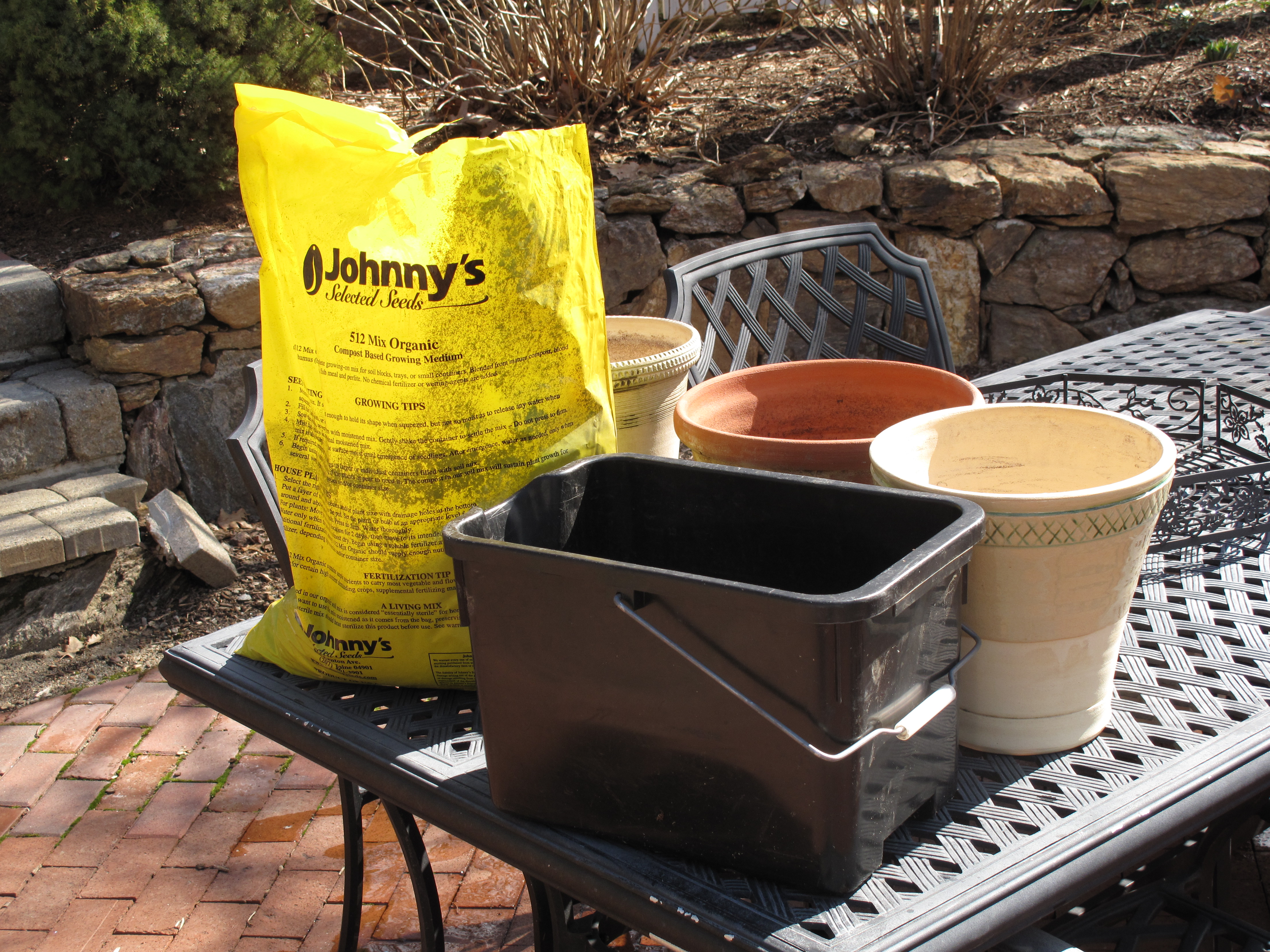
The first thing we learned is that you should avoid regular potting soil.  So we purchased a twenty quart sack of germination mix from our friends at Johnny’s Selected Seeds, http://www.johnnyseeds.com.  The soil is named ‘Johnny’s 512 Mix’.  512 Mix is made from a 1/2″ screened blend of sphagnum (brown) and sedge (black) peat mosses, compost, and perlite.  The mix contains enough nutrients to carry most plants from seed to transplant.  The mix also does not require as frequent watering as many other brands that are out there.   It is excellent for soil blocks, trays and small containers.
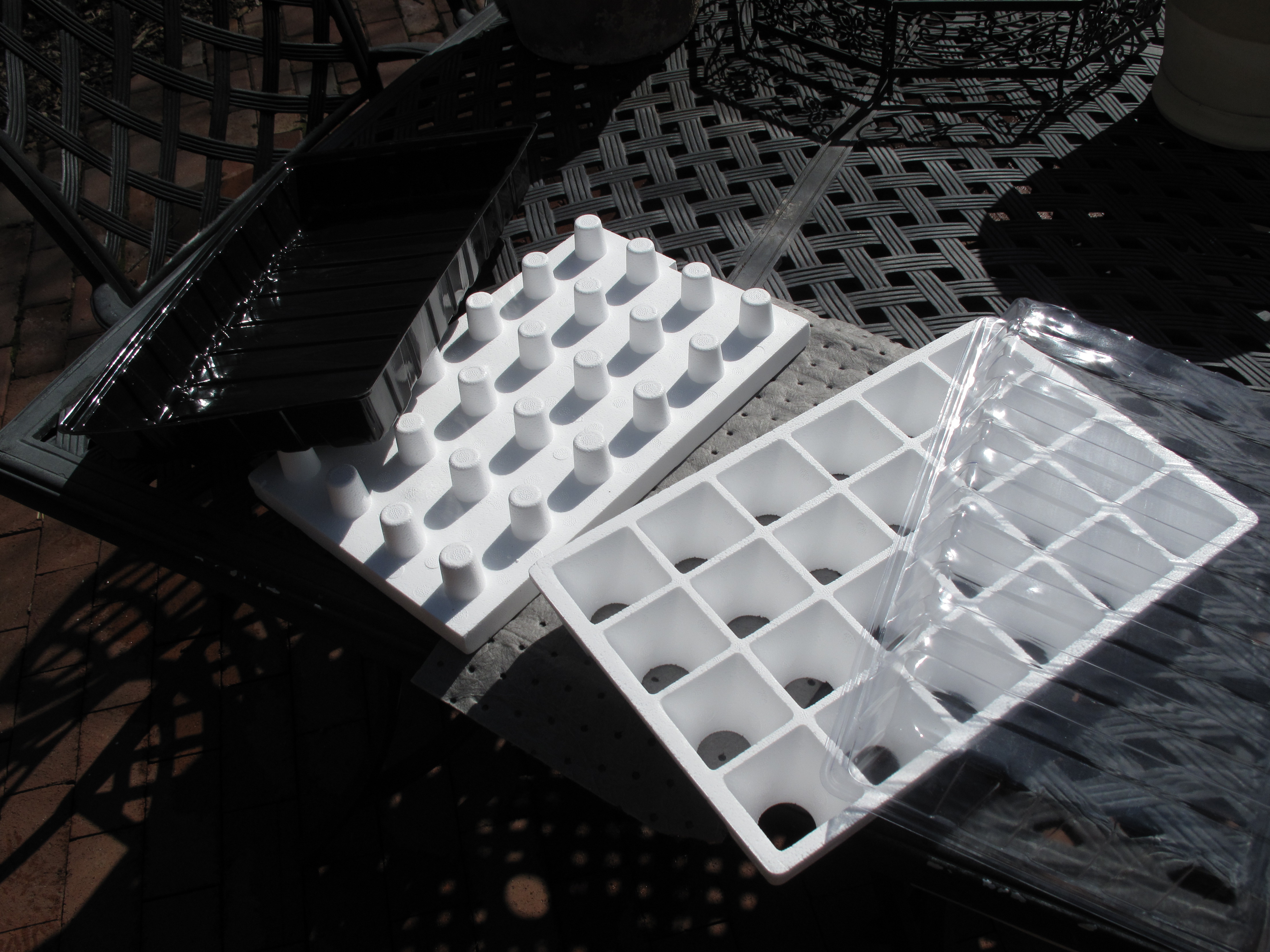
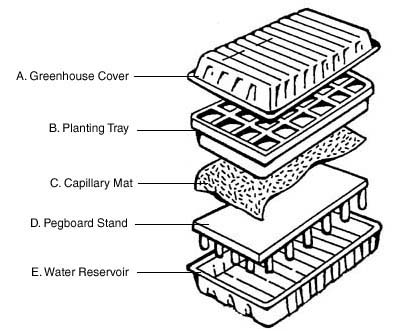
After moistening the soil with some water, we began the step by step utilization of our pretty amazing seed starting kit, the APS 24.  The Accelerated Propagation System (APS) is a complete self-watering growing system that makes starting plants from seeds a relatively easy task.  It is a five-part system that seems to take most of the work out of seed starting.  The five parts are as follows:  A)  The greenhouse cover that traps moisture and helps to keep the soil warm while under the grow light.  Warm soil is a must have for seed starting.  B)  The planting tray used to hold the germination mix and the seeds.  This is the main growing area.  C)  The capillary mat that is the watering system used to give the seeds the water they need to grow.  D)  A pegboard stand to put the seeds on top of while allowing water to reside on the bottom.  E)  The water reservoir to hold the water so that frequent watering directly onto the seeds or new plants is not necessary.  Here is a graphic from Gardener’s Supply Company, http://www.gardeners.com, where we bought the APS 24.
Here is our step by step process:
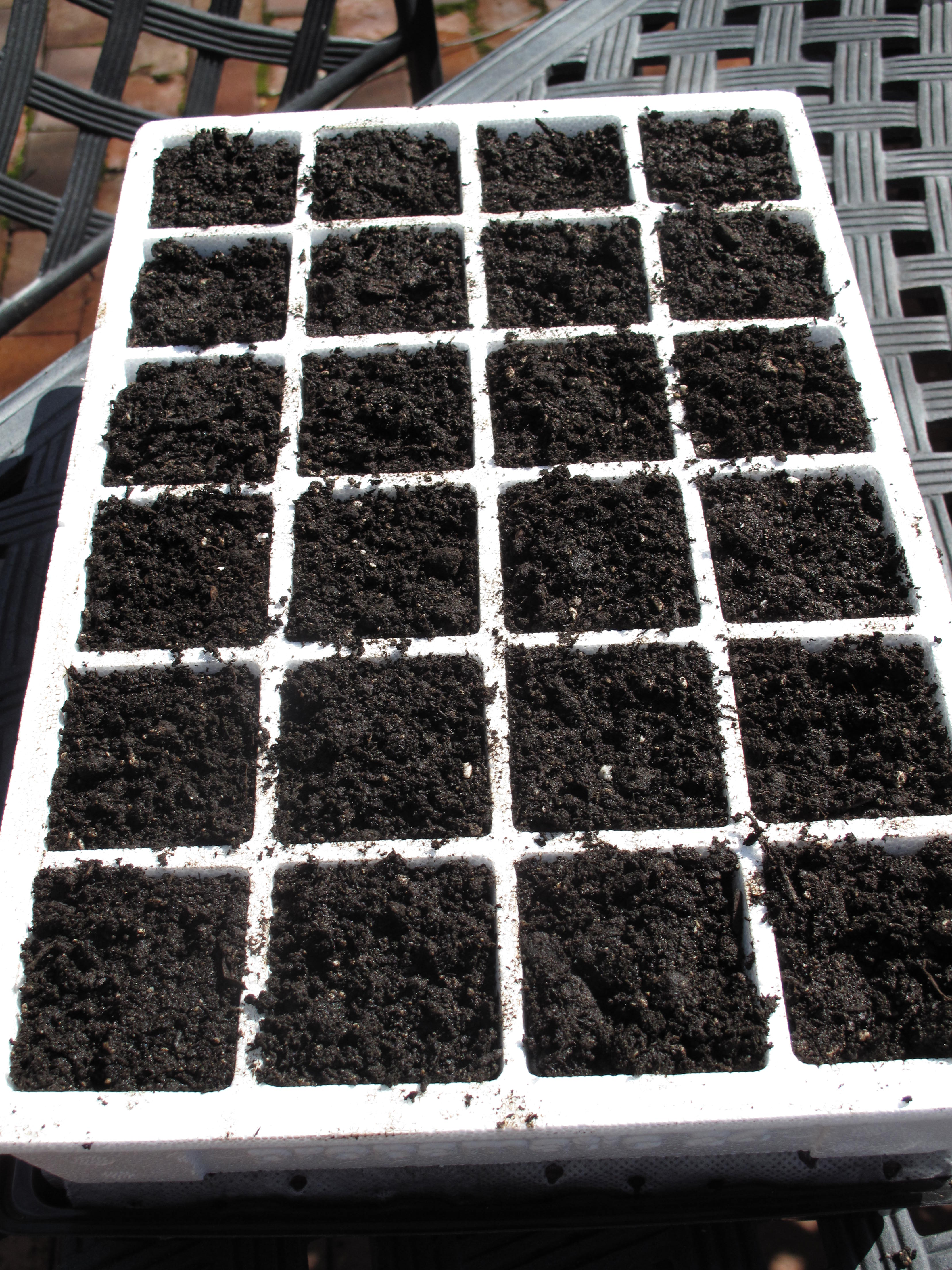
First, we firmly pressed the soil into each planting cell so that it will have good contact with the capillary mat.
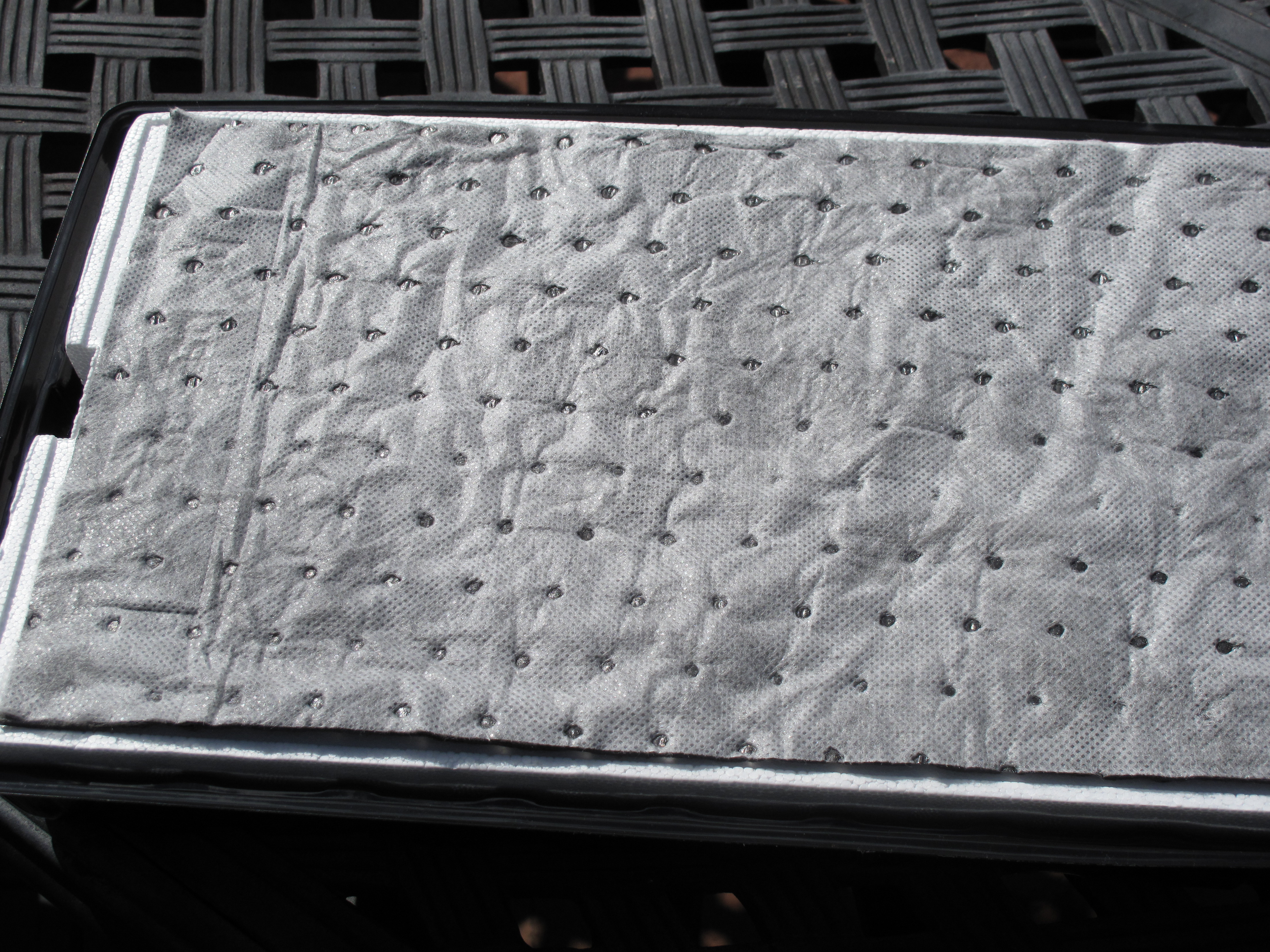
Second, we moistened the capillary mat and then laid it on the pegboard stand with the capillary mat extending over the unnotched end.  This is so that it will be laying in the water reservoir and will continually soak up water as it dries out.  This will keep the germination mix moist throughout the growing process.

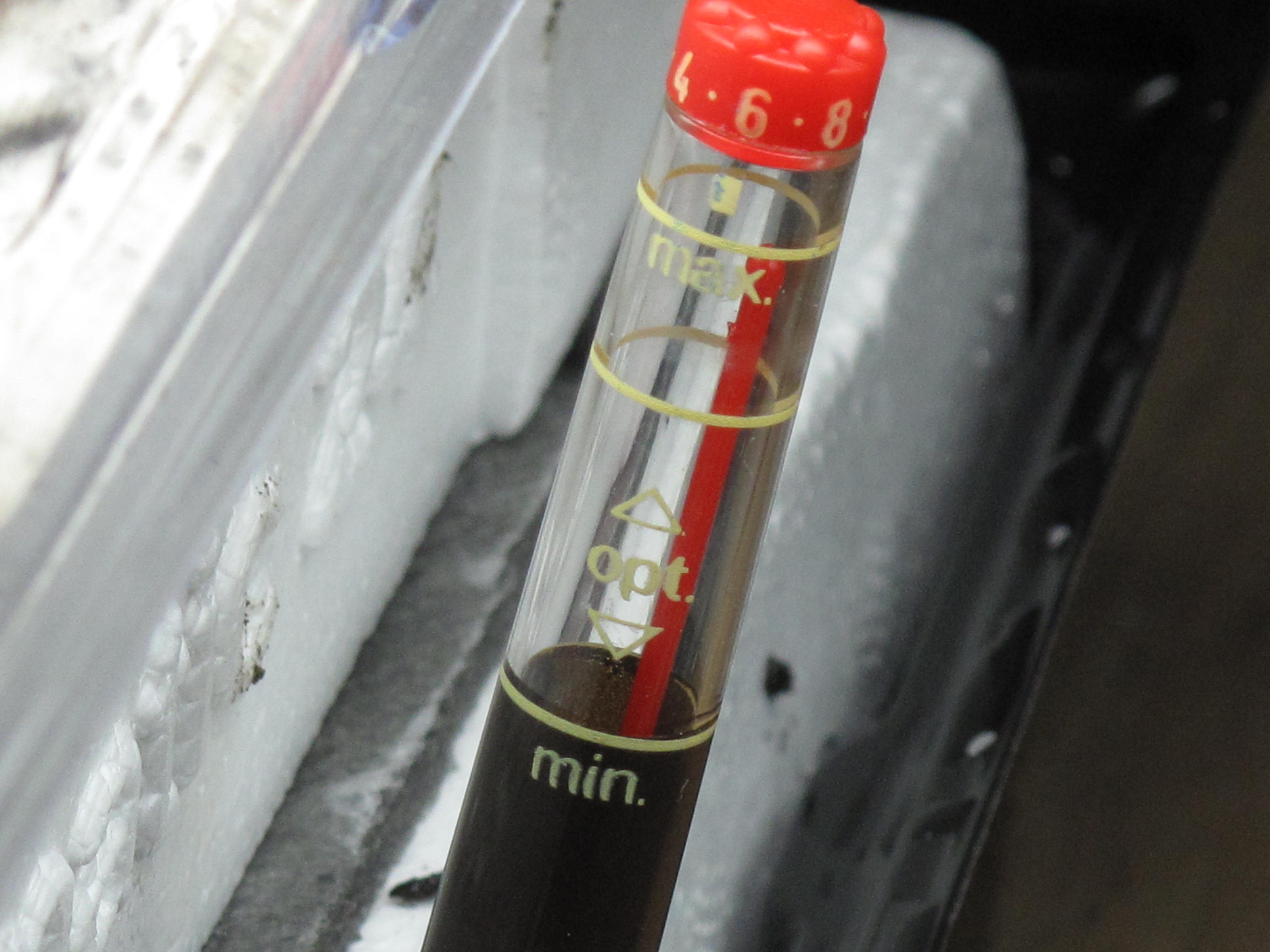
Third, we placed the pegboard stand and capillary mat in the water reservoir, peg side down.  We needed to make sure the extended end of the capillary mat was inside the water reservoir for watering purposes.  We then filled the water reservoir with water at the notched end of the pegboard stand.  We can now check the level of the water by looking at the water gauge we bought that fits into the notched opening of the pegboard stand.
Next, we placed the planting tray on top of the capillary mat and pegboard stand, then lifted it up to make sure the soil touched the capillary mat under each cell.

We then planted two seeds into each cell and marked each row of cells with a marker in order to be able to know what seed is planted.  Each cell is designed to hold one plant.  As each seed grows, we will decide which one looks the stronger of the two planted in each cell and cut out the weaker one.  The first batch of seeds planted are the ones that enjoy cooler soil.  They are eggplant, cabbage, brussels sprouts and cauliflower.  The second batch of seeds that we plant will be at the beginning of April and consist of seeds that prefer a warmer soil condition.  This will include tomatoes and artichokes (a fun test to see if they can grow in Connecticut).

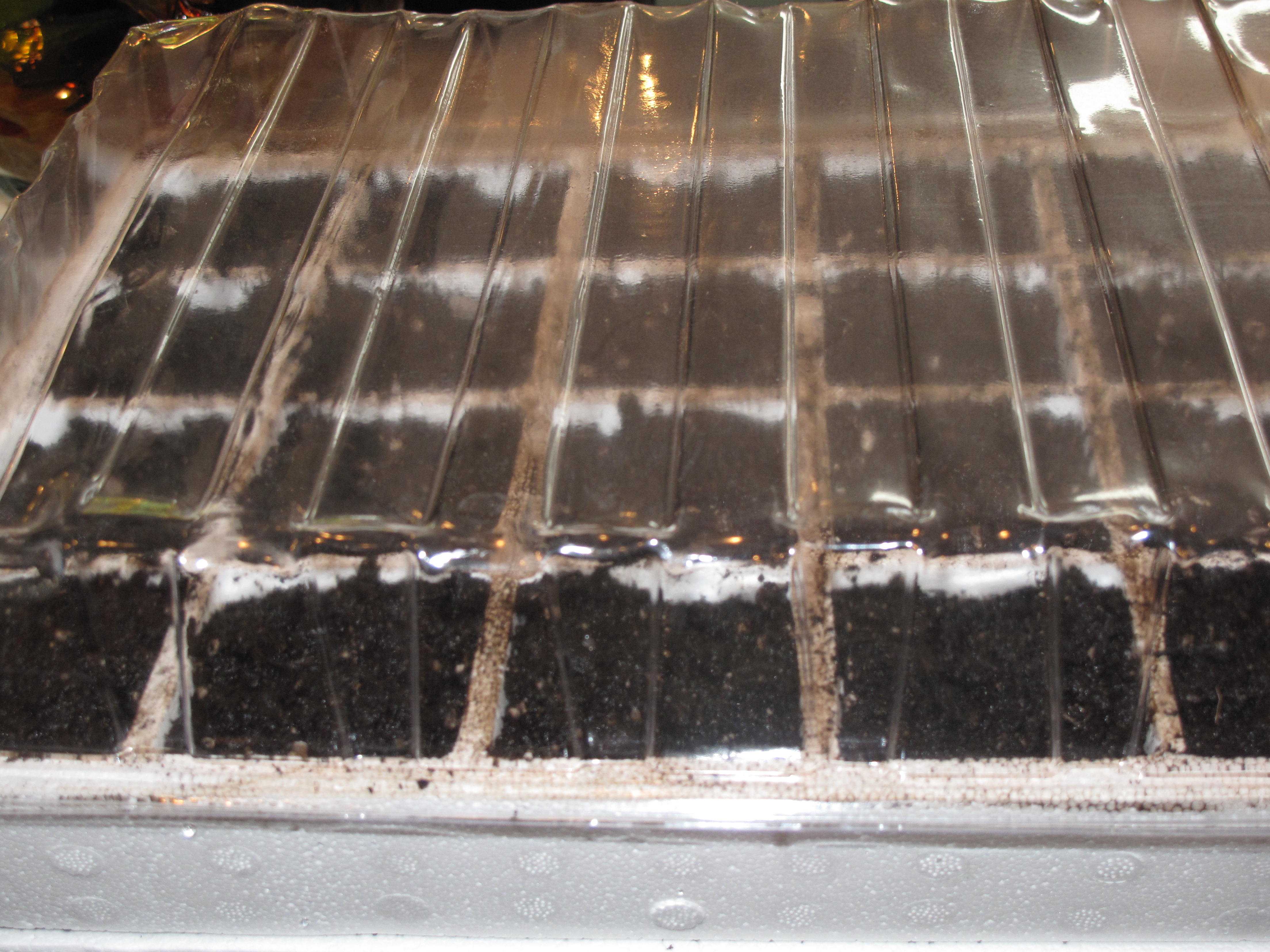
After planting, we gently watered the soil thoroughly from above and placed the greenhouse cover on top of the planting tray.  Watering the soil from above ensures that the soil will have good moisture contact with the capillary mat and continue to wick moisture to the germinating seeds. The greenhouse cover will keep the soil moist and warm and help our seeds quickly germinate.  We will remove the greenhouse cover as soon as our plants emerge. 

Our last step was to place the seeded APS 24 under the grow light.

We are keeping the grow light on an electric timer and keeping the light on for 14 hours a day.  Here’s hoping that we have success and all of our seeds sprout.  It is our first time growing plants from seeds, so you never know, do you?  Keep your fingers crossed for us.  We are excited to see the results in the coming months.  We hope you are too!  Do you grow your garden plants from seed or do you buy them from a nursery?
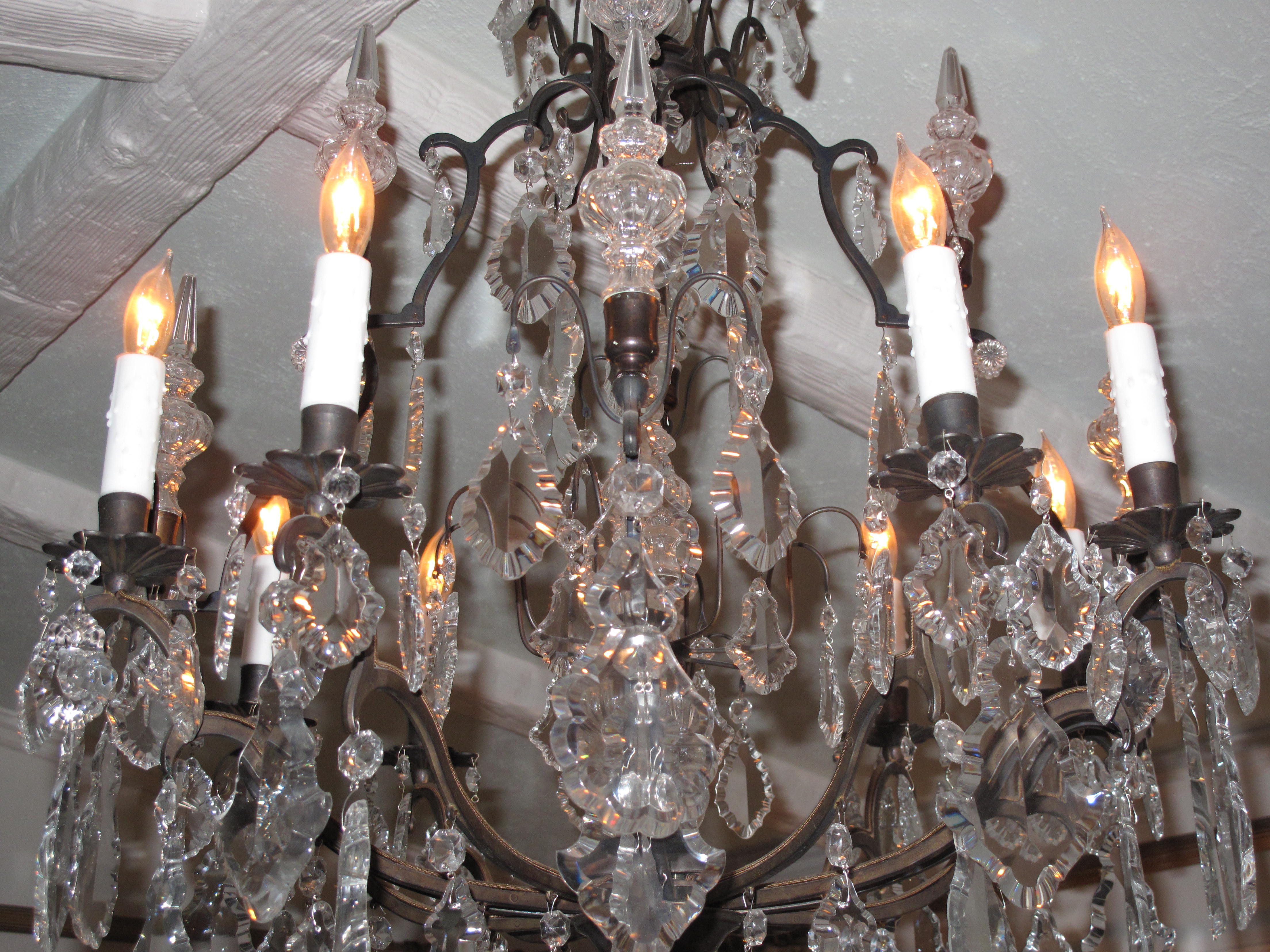
Thinking Of My Citrus House Guests

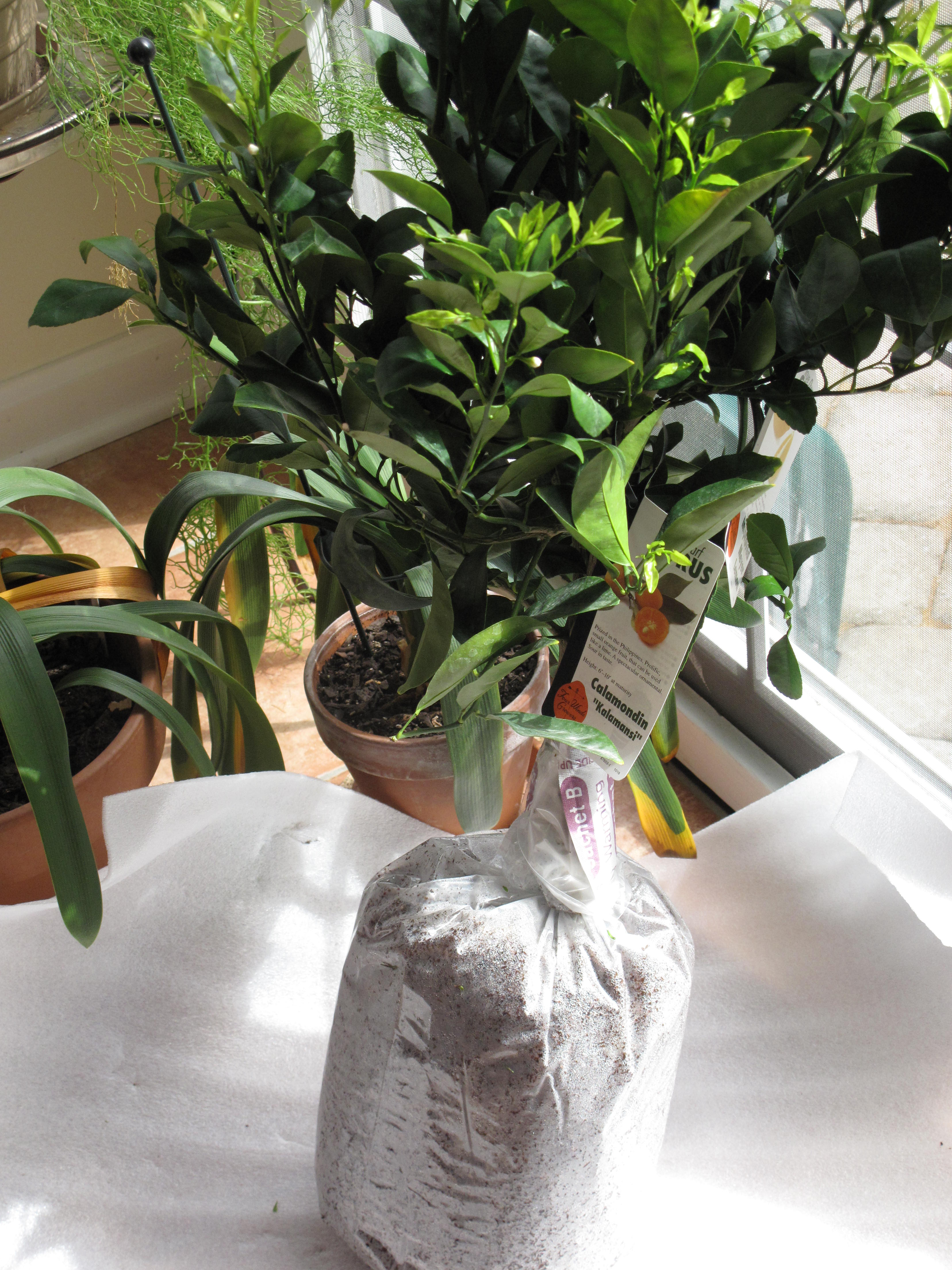
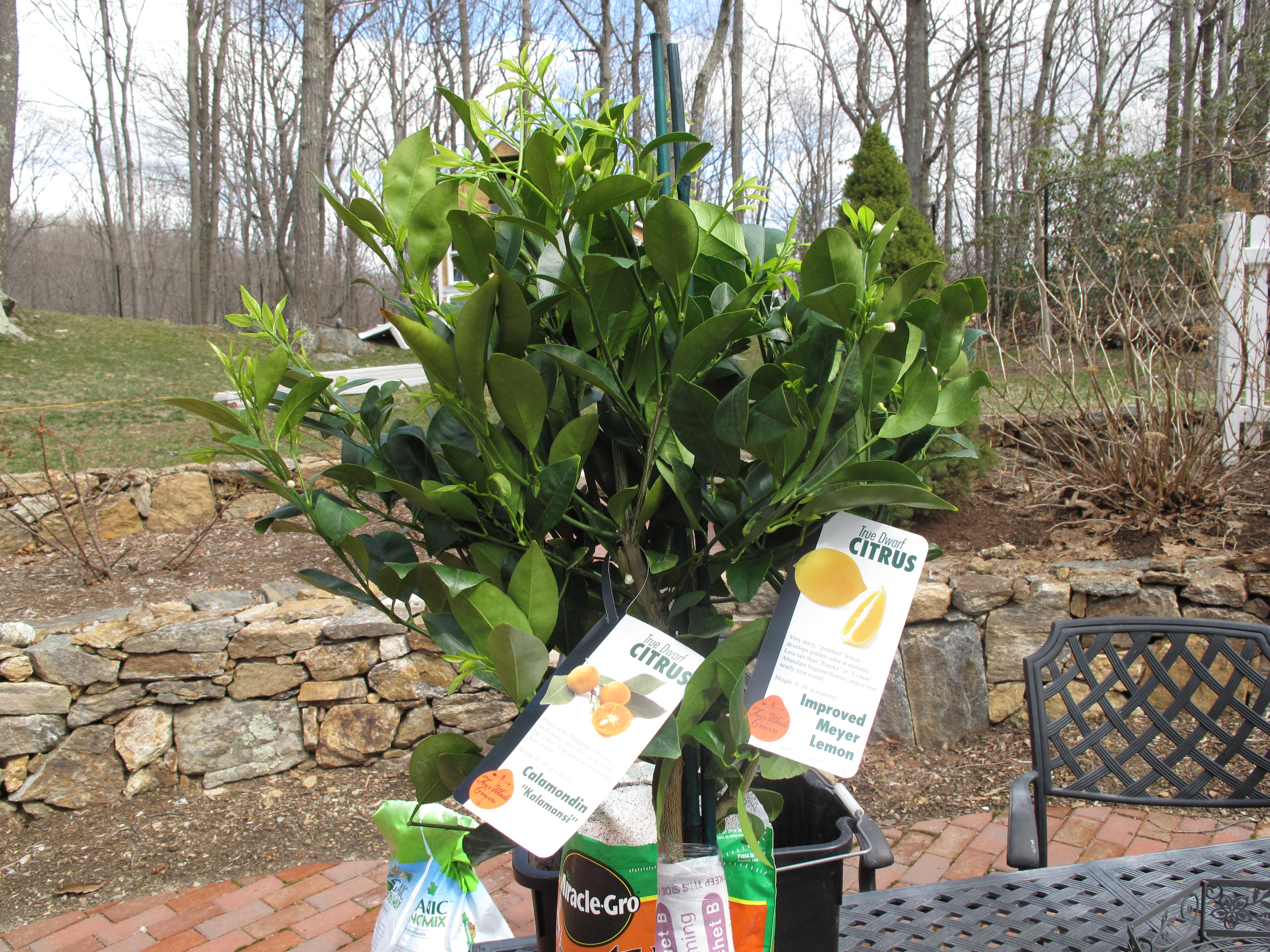
This is a picture of our two most recent house guests.  While they are living in the house right now, they will be moving outside later, in the early Summer.  What you are looking at are two dwarf citrus trees that we purchased with the hopes of getting some citrus fruit from them to use in the kitchen.  Our two house guests traveled all the way from California to be transplanted into clay pots here on Glen Road.  Come and watch from their arrival to transplant.  Here’s hoping for some oranges and lemons later this season!

Our citrus trees are a dwarf variety, which is a plant that is grafted onto special rootstock that prevents the tree from growing too large.  We chose two to three-year-old dwarf trees as they will produce blooms and fruit much faster than a younger tree.  From research on various internet sites, we decided to purchase our trees from Four Winds Growers, http://www.fourwindsgrowers.com.  Four Winds Growers is located in Winters, California.  Their founder began propagating and growing quality dwarf citrus trees in California about sixty years ago because he believed the gardening world needed more choices than just the little orange dwarf trees available only from Florida at the time.  Today, this four generation, family owned nursery continues the tradition. They now grow over 250,000 quality dwarf citrus trees for containers and home gardens each year.

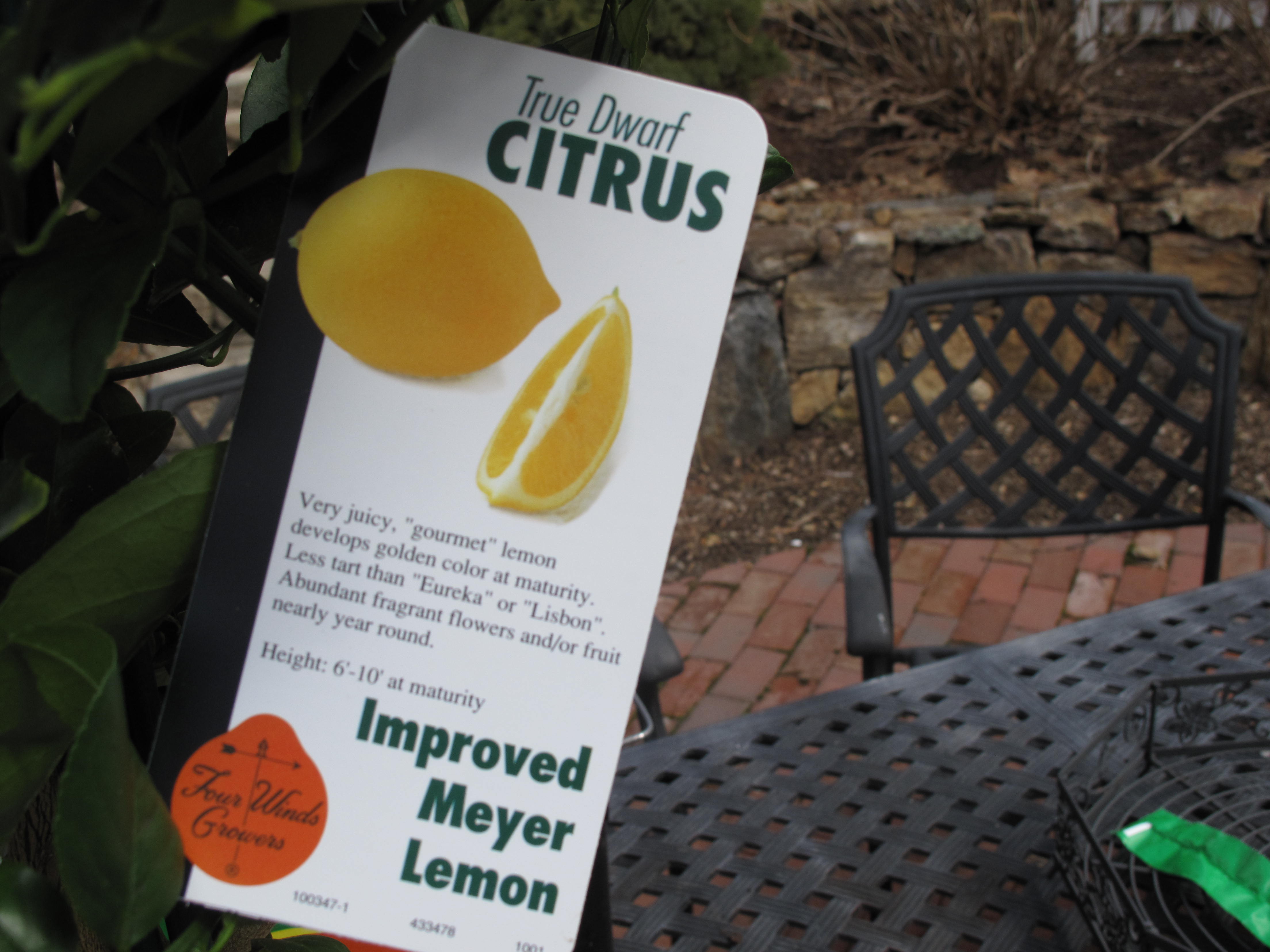
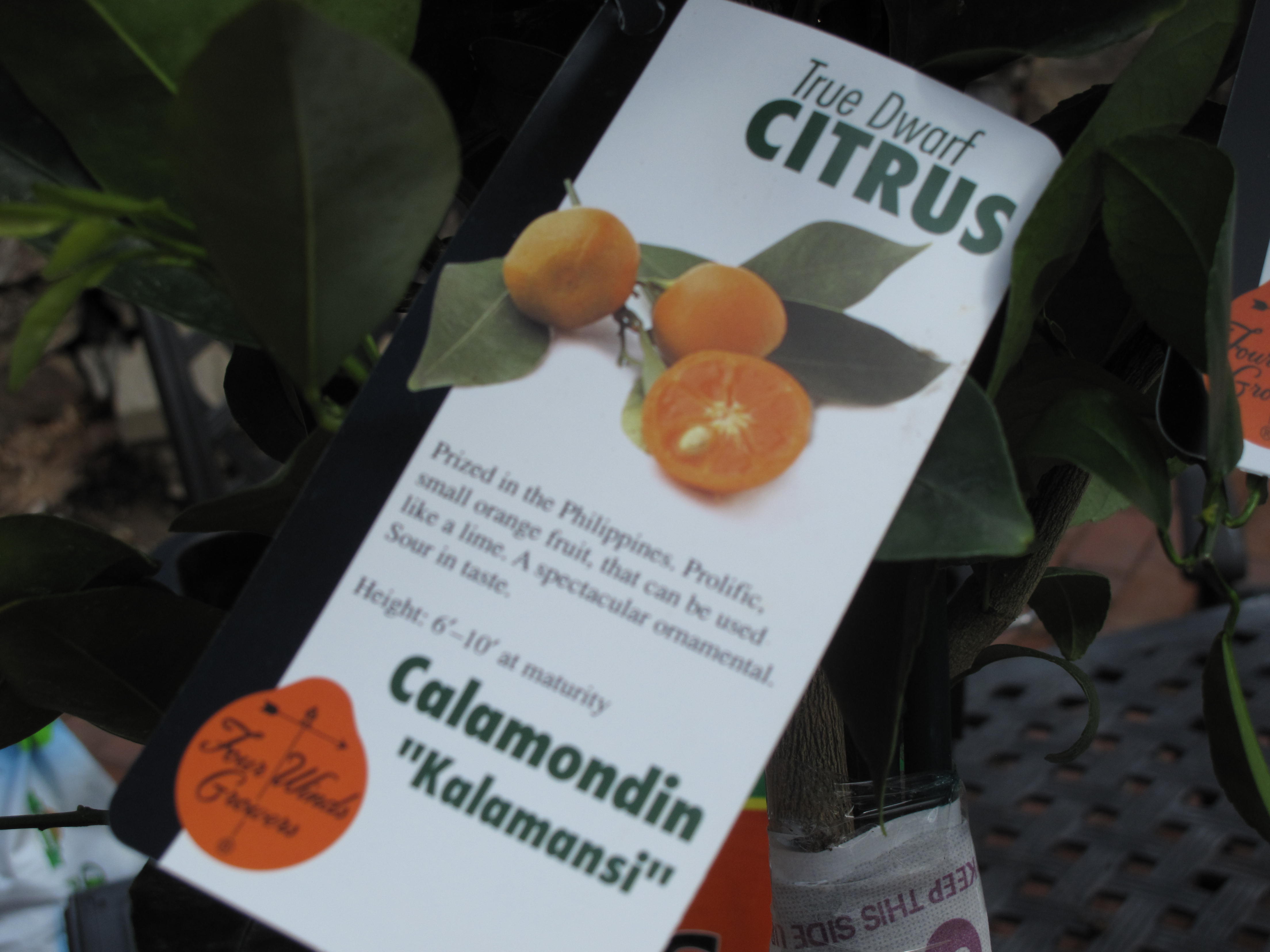
We selected two varieties to grow in our home.  An ‘Improved Meyer’ lemon tree and a ‘Calamondin’ orange tree.  Each was noted as being excellent for beginners and for container citrus gardening–indoors and out.

‘Improved Meyer’ dwarf lemon is a favorite cooking lemon.  This small, evergreen tree bears fragrant white flowers and lovely, yellow-orange fruit.  Its small habit, glossy, deep-green foliage and year-round attractive form make it excellent for the home garden.  More cold tolerant than the standard lemon, this variety is also sweeter and has fewer seeds.  Grown in containers, it can easily be moved indoors in colder climates, where it will continue to produce fruit.

The ‘Calamondin’ orange, a cross between a kumquat and an orange, is a favorite among gardeners for its variegated foliage and its small ornamental fruit.  The flowers are extremely fragrant and the fruit, which is very sour, is used to make marmalade.  Once established in a pot, the ‘Calamondin’ orange is very easy to grow.  Keep it in full sun and fertilize it twice a month in the active growing season.  It will flower in late Winter or early Spring and fruit thereafter. The fruit will hold on for an awesome ornamental display for months.

The first time we ordered from Four Winds, our order was cancelled.  The simple reason–it was too cold of a journey.  The second time we ordered, the weather was warmer and we chose two-day shipping.  When the trees arrived, they had an interesting attachment above the root.  The attachment was a warming sachet.  Its purpose was to keep the trunks of each tree warm during shipping.  Even when we opened the trees two days later, the sachet was still warm to the touch and helped keep the trees alive during their journey from California to Connecticut. 

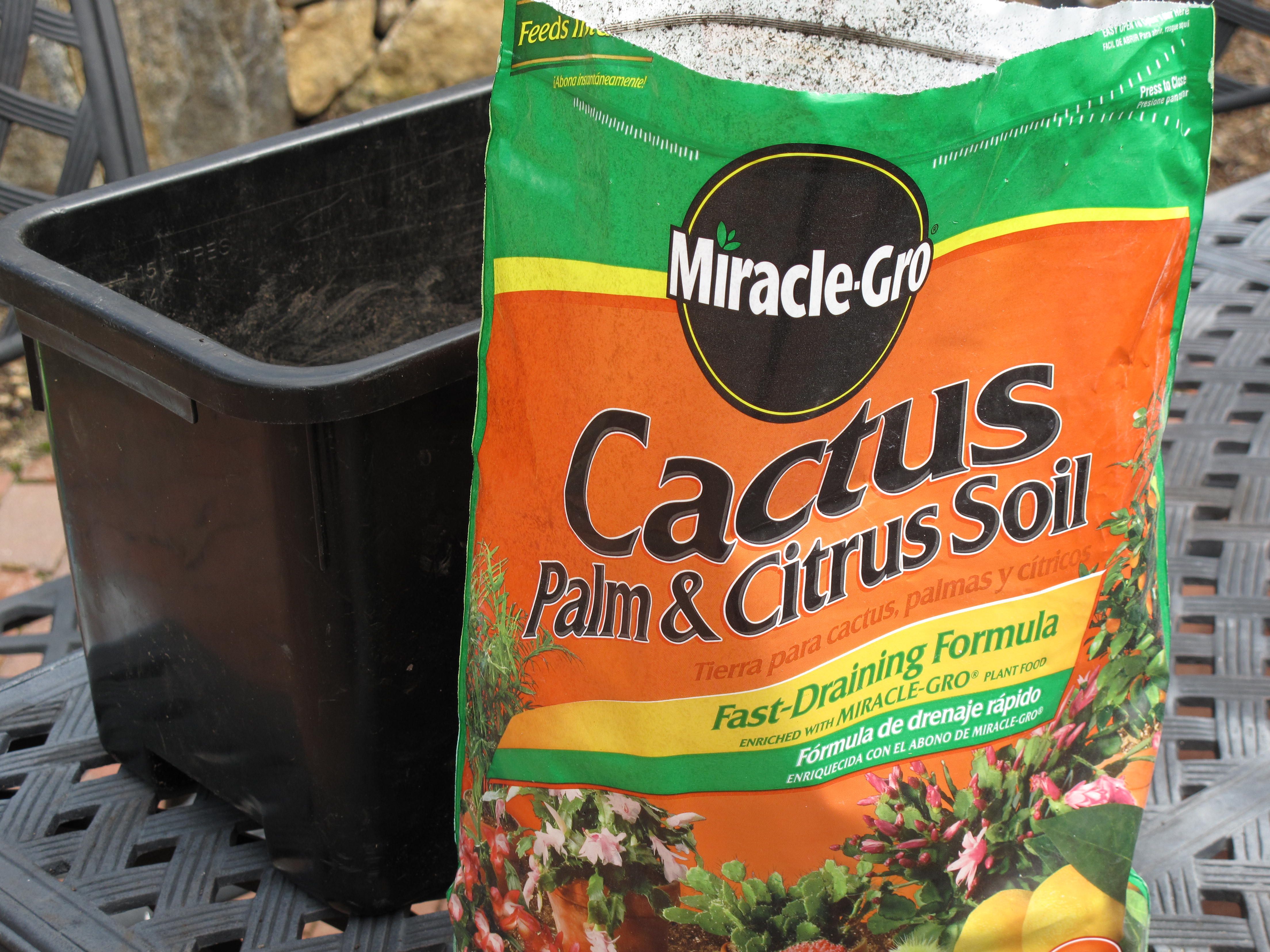
A well-drained soil was encouraged in the research that we performed.  It was recommended to use a slightly acidic (pH 6 to 7), loam-based potting mix.  Instead of mixing our own, we purchased a premixed potting soil formulated specifically for citrus trees.  We moistened the soil and then placed it into two pots with each tree.

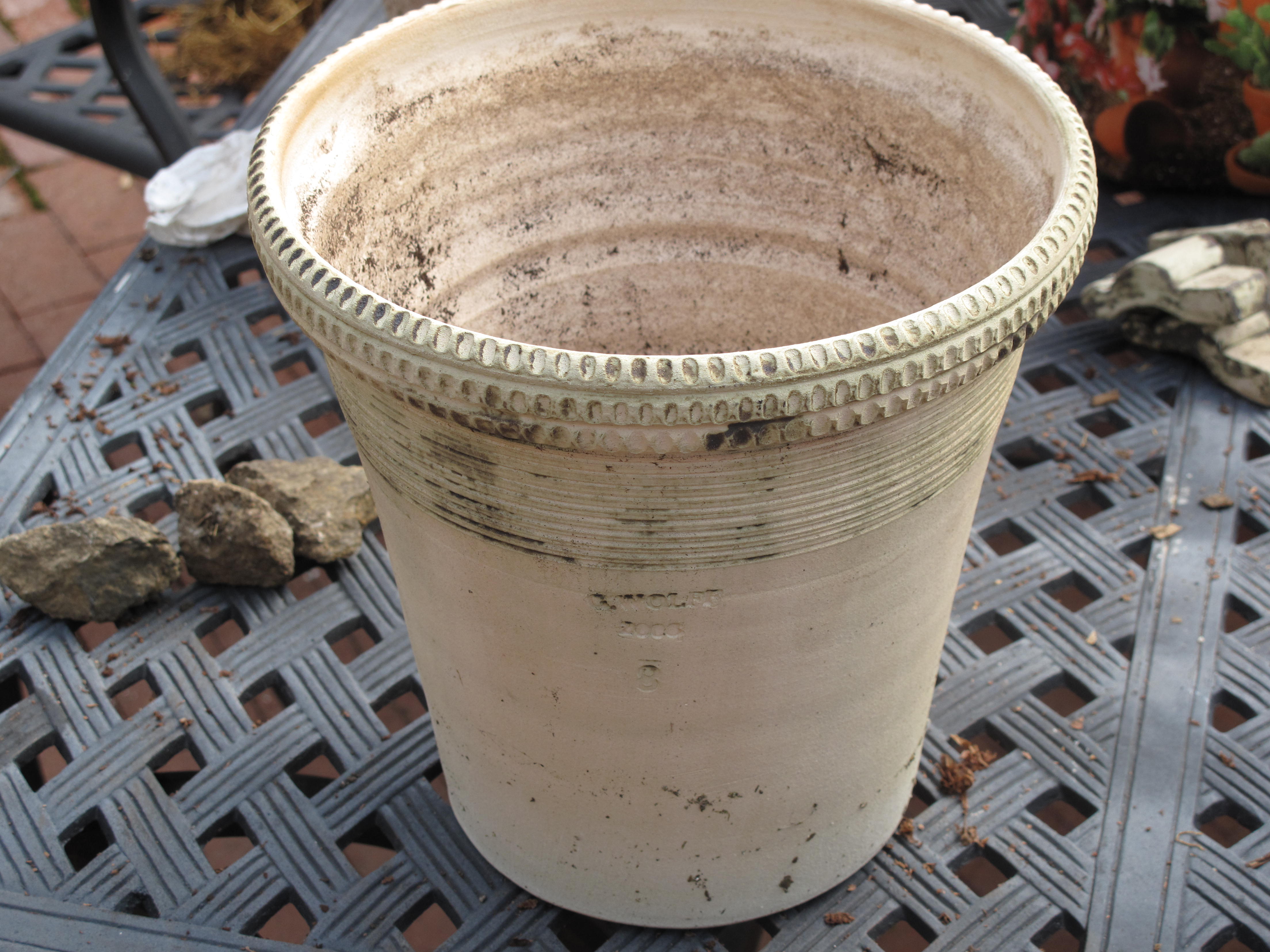
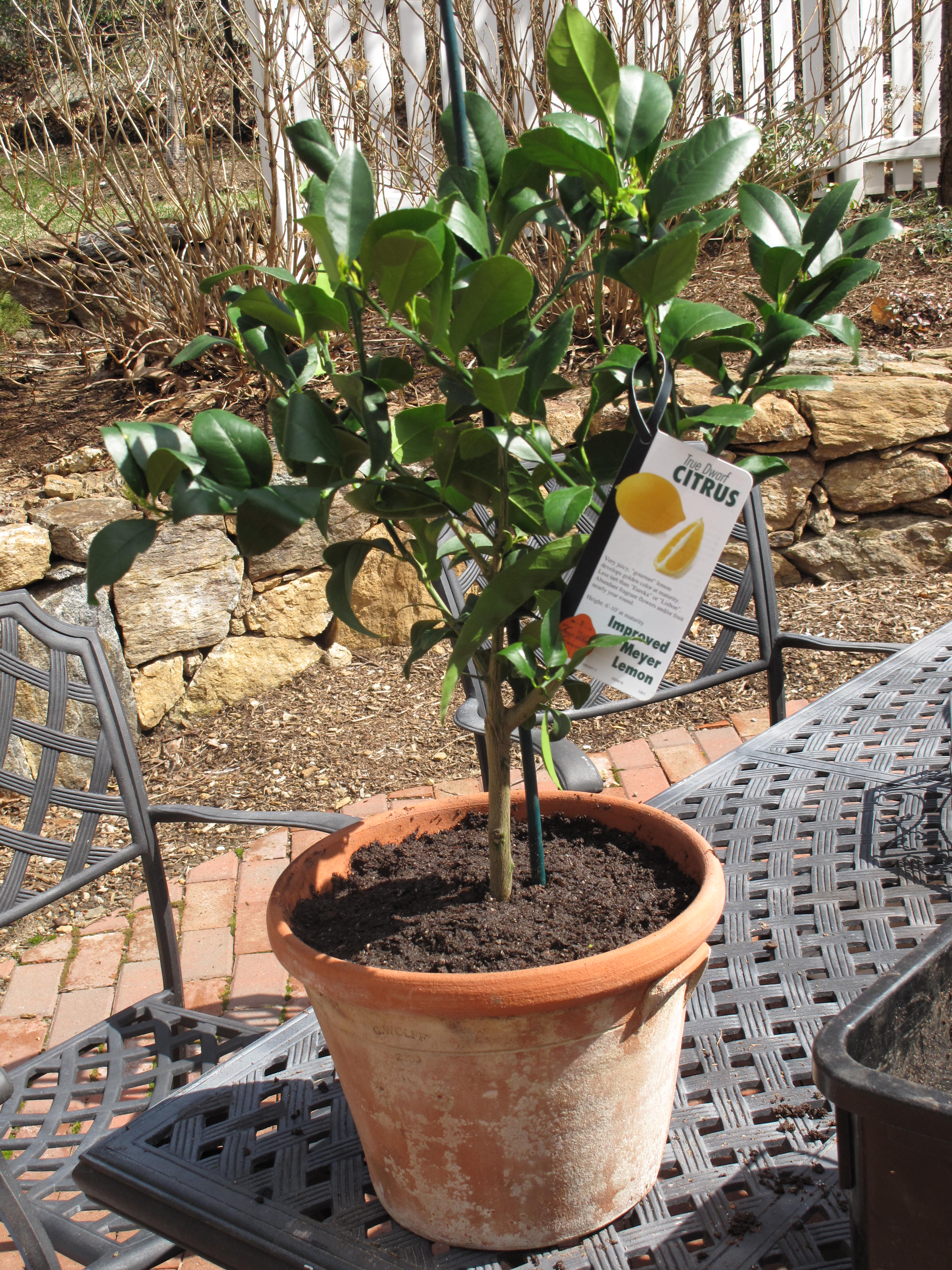
A pot with adequate drainage is essential.  We could select either a clay, ceramic or plastic pot slightly larger than the root ball.  We went with clay pots that have several holes in them at the bottom.  We also filled the drainage dishes with stones to provide air circulation.  Here is the finished product after transplanting:

Here is the ‘Improved Meyer’ lemon tree.

Last but not least, here is the ‘Calamondin’ orange tree.

Both trees are now resting peacefully in our kitchen in a bright and sunny, south-facing patio door.  We will need to get started hunting for marmalade and Meyer lemon recipes.  Maybe we shouldn’t get ahead of ourselves….we can wait until at least they bloom or form fruit before we look for recipes.  We can’t wait for that to happen.  We’ll keep you posted on their success here on Acorns On Glen.  Do you have any great citrus recipes that you can share here on Acorns On Glen, especially orange marmalade or Meyer lemon recipes?

All About Beans

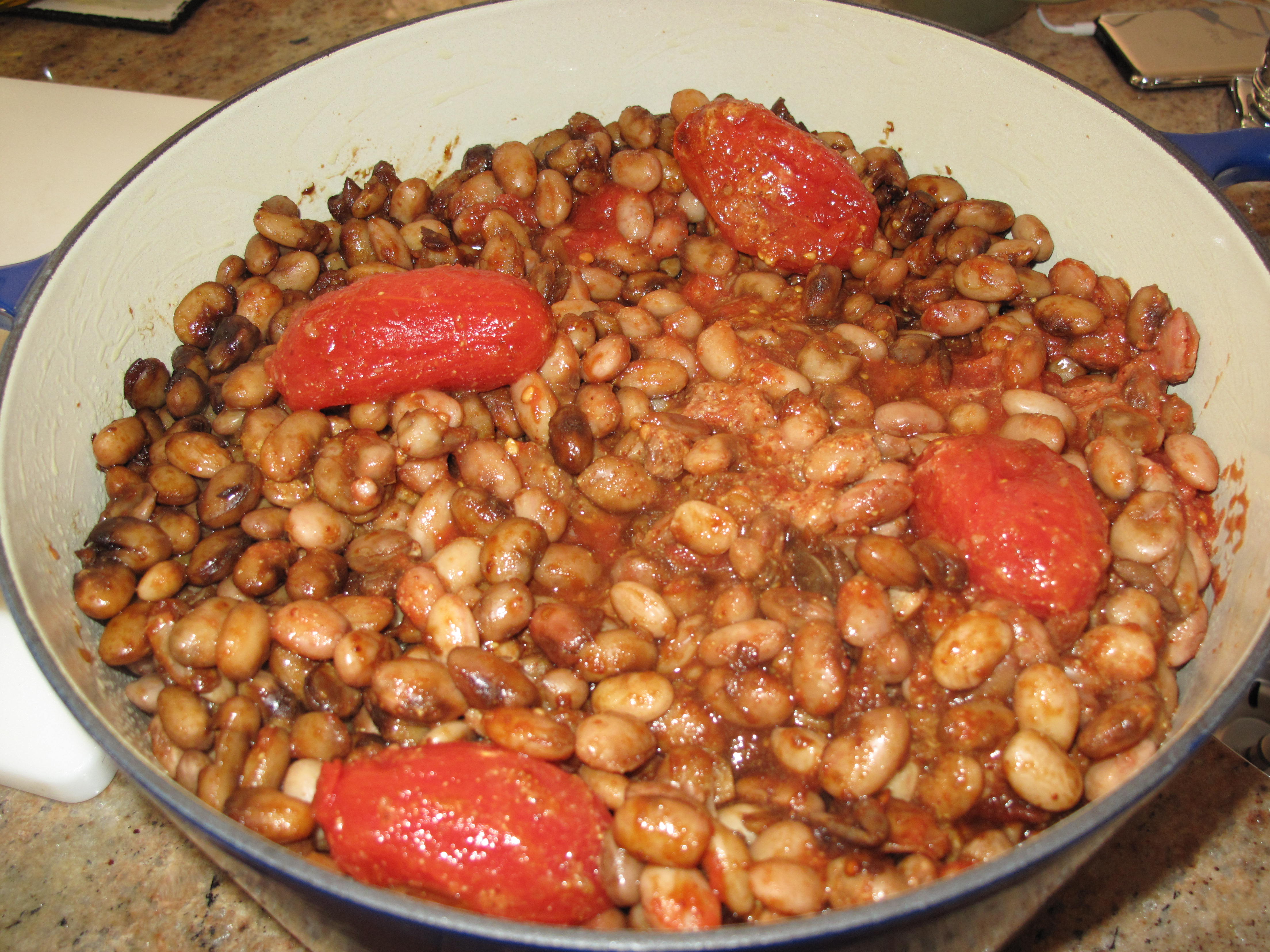
This is a pot of easy-to-make baked beans.   The recipe is from garden blogger and author Margaret Roach.  She was recently on an episode of “The Martha Stewart Show” to celebrate the publication of her latest book and she cooked these with Martha.  Given that they were vegetarian, I decided to make some.  I think it is a good idea to try and eat a meatless meal as often as you can.  I felt good that everything in the pot was fresh.  I read the side of a can of baked beans in the supermarket and there were some ingredients that I could not pronounce.  How can they be good for you?  With this recipe, you know you are getting quality food.  This recipe makes a lot of baked beans so you can freeze what is left over and eat them at a later time.  Even though this recipe is vegetarian, if you are a meat eater, try substituting thick-cut bacon for the onions.  This recipe serves six.  However, I doubled the recipe to ensure I had a lot of baked beans left over to freeze.  Join me now as I make a pot of vegetarian baked beans:  

Ingredients:

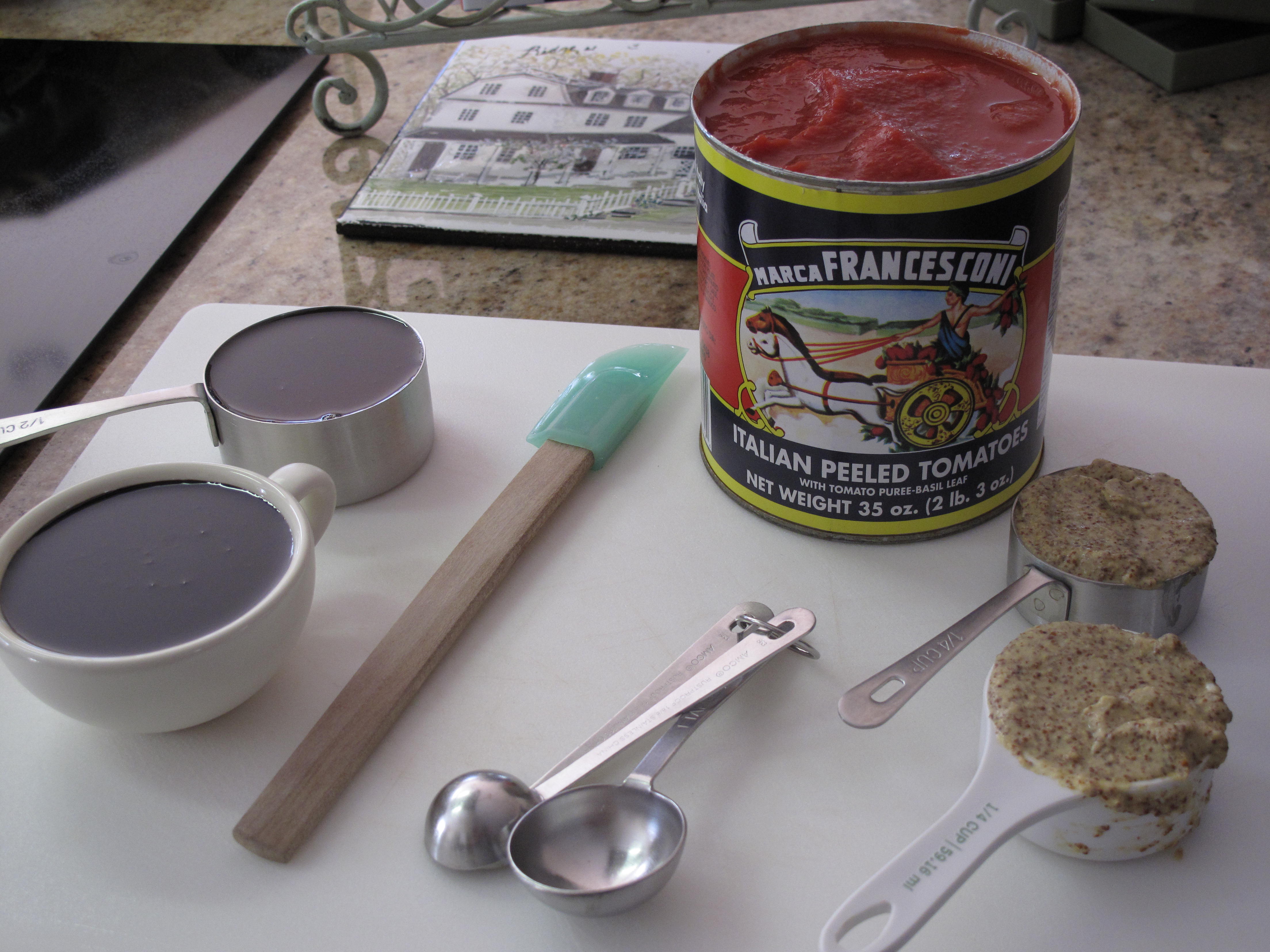
  • 1 pound dried cranberry, navy or yellow eye beans
  • 1/4 cup molasses, preferably organic
  • 1/4 cup maple syrup
  • 1/4 cup grainy mustard
  • 6 fresh, peeled, or canned whole plum tomatoes (a large 35-ounce can holds 12 tomatoes)
  • 2 tablespoons olive oil
  • 2 medium onions, peeled and quartered
  • Boiling water
  • Coarse salt and freshly ground black pepper

Before we begin cooking, let’s talk about the beans I used, again thanks to Margaret Roach.  In her TV segment, she mentioned a place to buy great beans.  The beans come from Rancho Gordo Specialty Foods in Napa, California.  What makes these beans special is that they are grown from heirloom seeds.  I used cranberry beans in the baked beans that I cooked.  Visit Rancho Gordo at their website, http://www.ranchogordo.com.

Directions:

Preheat oven to 325 degrees.

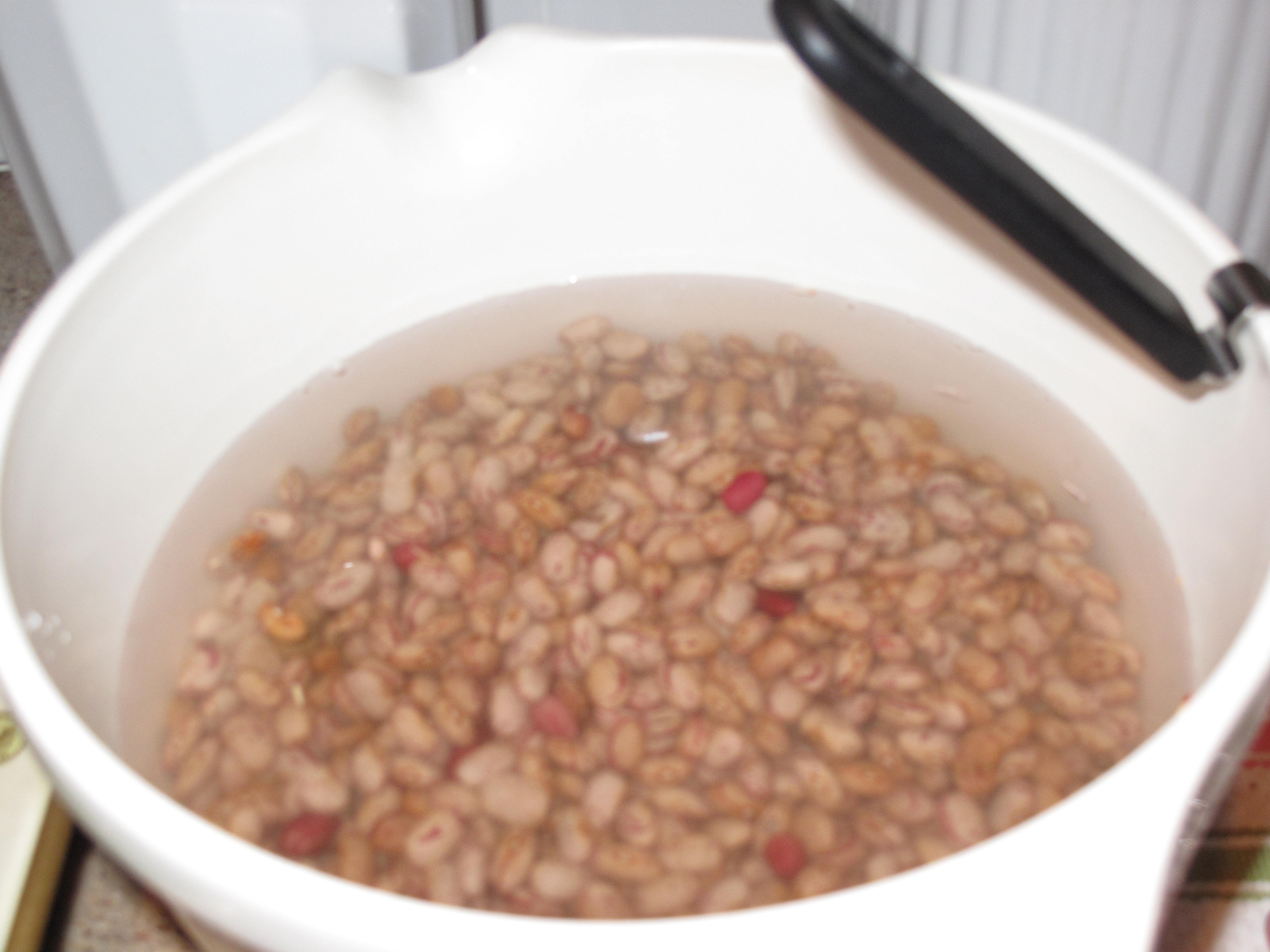
Place beans in a large bowl and add enough water to cover; let soak overnight.

Drain and place into a pot; add enough water to cover and simmer over medium-high heat for 30 minutes. 

Drain and transfer to a large bowl; stir in molasses, maple syrup, mustard, and tomatoes.  Set aside.

Coat the bottom of a Dutch oven or a 9-by-13-inch high-sided baking dish with olive oil.  Add onions and top with bean mixture.  Add enough boiling water to cover bean mixture by 1 inch.  Cover Dutch oven with lid or baking dish with parchment paper-lined aluminum foil.  Transfer to oven and bake until beans are softened, about 1 1/2 hours, checking water level and adding more as necessary.

Uncover beans and continue baking until thick and syrupy, about 45 minutes more.  Season with salt and pepper and serve.

These baked beans taste great.  They can be a great winter comfort food, but I also like baked beans during the summer with a grilled hamburger or hot dog.  Is there anything more American than that?  I have to tell you that you will not miss the bacon if you make the vegetarian version.  The beans I used were also much better than those found in canned baked beans.  Bigger, plumper, a little more substantial when you chew them…Rancho Gordo beans are a real find.  Thanks again to Margaret Roach for the bean find and the recipe.  You won’t be sorry you made these baked beans.  Do you have other vegetarian recipes you can share on Acorns On Glen?