Hot For Horseradish

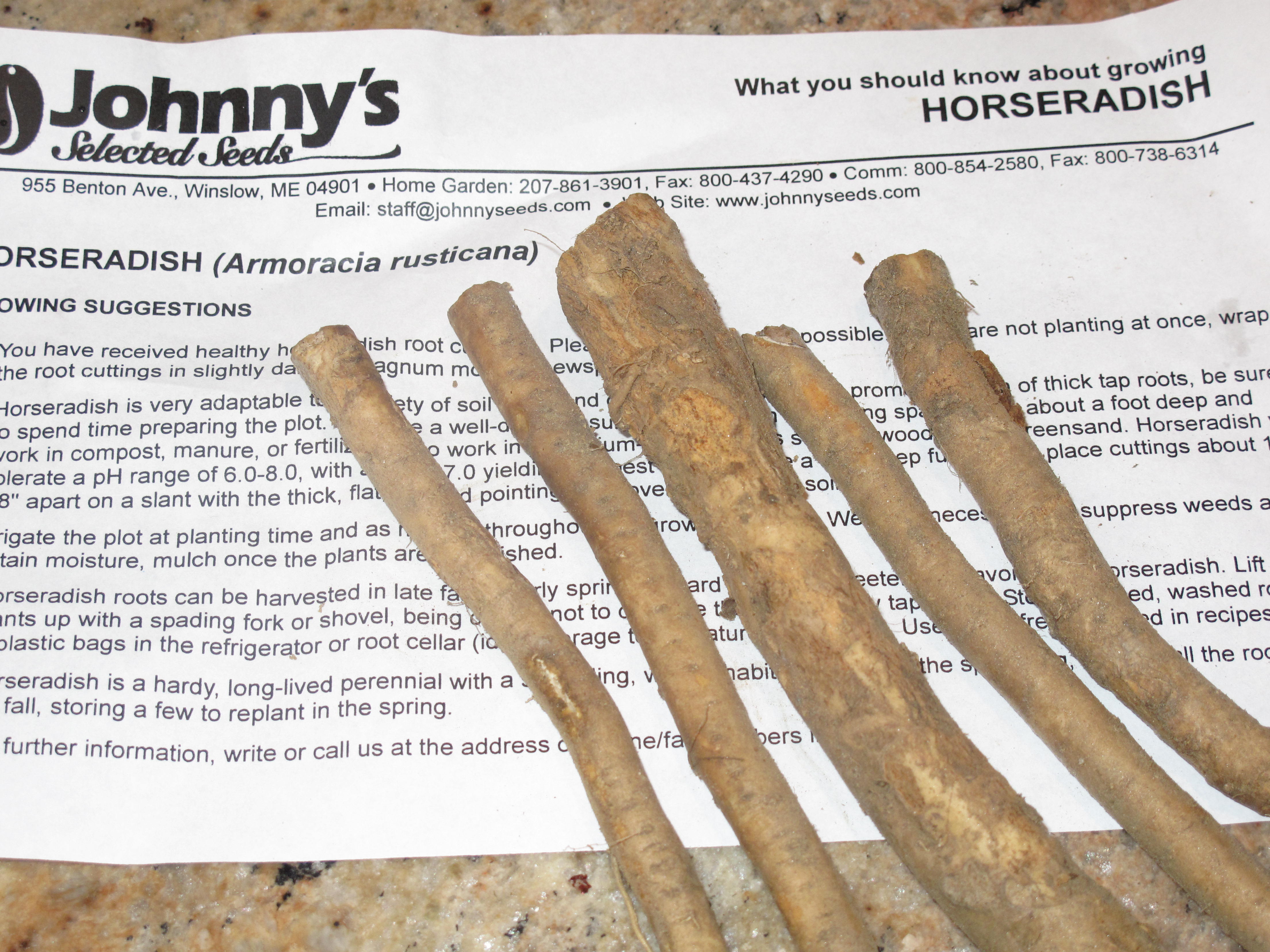
This is a love story about all things hot.  Not hot like the sun, but hot to your taste.  We love foods that have a little heat to them here on Glen Road.  In fact, we are always taking recipes and putting a little heat into them.  We add cherry peppers into broccoli rabe, we put cayenne pepper into almost anything and there is nothing better than cold clams with tabasco sauce, to name a few.  However, our favorite is freshly roasted beef or a polish sausage with a little side of homemade horseradish.  Funny thing is, we don’t have any horseradish that grows in our garden.  When we want horseradish, we need to buy the root at our local organic produce market.  Well, this is about to change because we have planted a bed of five horseradish roots.  The five little brown stalks appear to be so innocent, but in a year they will produce thick roots that are filled with fire.  These roots were planted down from our newly planted rhubarb patch, right behind the espalier apple trees.  Let’s get the heat started with a little horseradish history from the internet:

Horseradish (Armoracia rusticana) is in the brassica family, which includes turnips, kale, mustard greens, broccoli rabe, daikon radish and many other plants with varying degrees of pungency and a similar taste.  Native to the temperate regions of Europe and Asia, it is an ancient herb.  The Romans carried horseradish to Europe as a medicinal herb and as a flavoring.  It was cultivated in Egypt before the exodus of the Hebrew slaves around 1500 B.C., and is often the symbolic bitter herb at the Passover Seder.

By the 16th century, the pungent root was spreading throughout England, where it was described for  its many uses, including as an aphrodisiac, a treatment for tuberculosis, a mustard plaster and a dewormer.  The common name probably evolved from the German “meerrettich,” which means sea-radish, which was misunderstood by the English, who associated “meer” with “mahre,” an old horse.
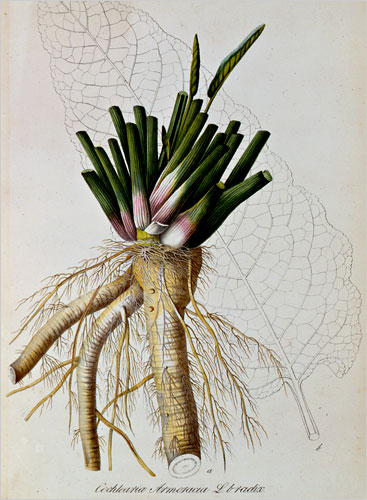
Undisturbed, the root doesn’t have a strong smell or flavor. But crushing or grinding it produces isothiocyanates, a kind of mustard oil, which is what gives horseradish its flavor and heat.  Adding vinegar stops the reaction because it’s an acid.  It also stabilizes the isothiocyanates, so you can still get that flavor a week later.  Tradition calls for grinding the root outside, because the chemical reaction triggered creates a gas that not only makes you weep, but can irritate lungs and nostrils.  This is actually a defense mechanism for the plant if it’s wounded.

We planted our horseradish in a long furrow about six inches deep.  Each root has a top and a bottom identified by the slicing made by the grower.  The top is identified by a straight slice and the bottom is identified by a diagonal slice.  When we placed them in the furrow, we put them in at an angle, with the straight sliced top pointing upwards.  Once in place, we covered the top of the roots with about four inches of soil, pressed the soil into place and watered.  While we won’t harvest any horseradish this year, the roots will produce beautiful green leaves that will make a nice complement to the equally as beautiful rhubarb leaves that we previously planted along the back side of the espaliers.  Next year, we will harvest and grind a few of the roots, add some white vinegar and salt and begin to enjoy some heat.  As my Grandmother used to say, we can only harvest the roots in months that contain an ‘R’ in them.  Months that don’t contain an ‘R’ are too hot and the root will not produce optimal flavor.
So here’s to horseradish, named “Herb of the Year 2011” by the International Herb Association.  We will look forward to your pretty leaves this year and then the addition of your hotness to our meats, mashed potatoes and seafood in 2012.  We can’t wait.  What hot foods do you and your family like to cook or eat?

When Rhubarb And Strawberries Unite

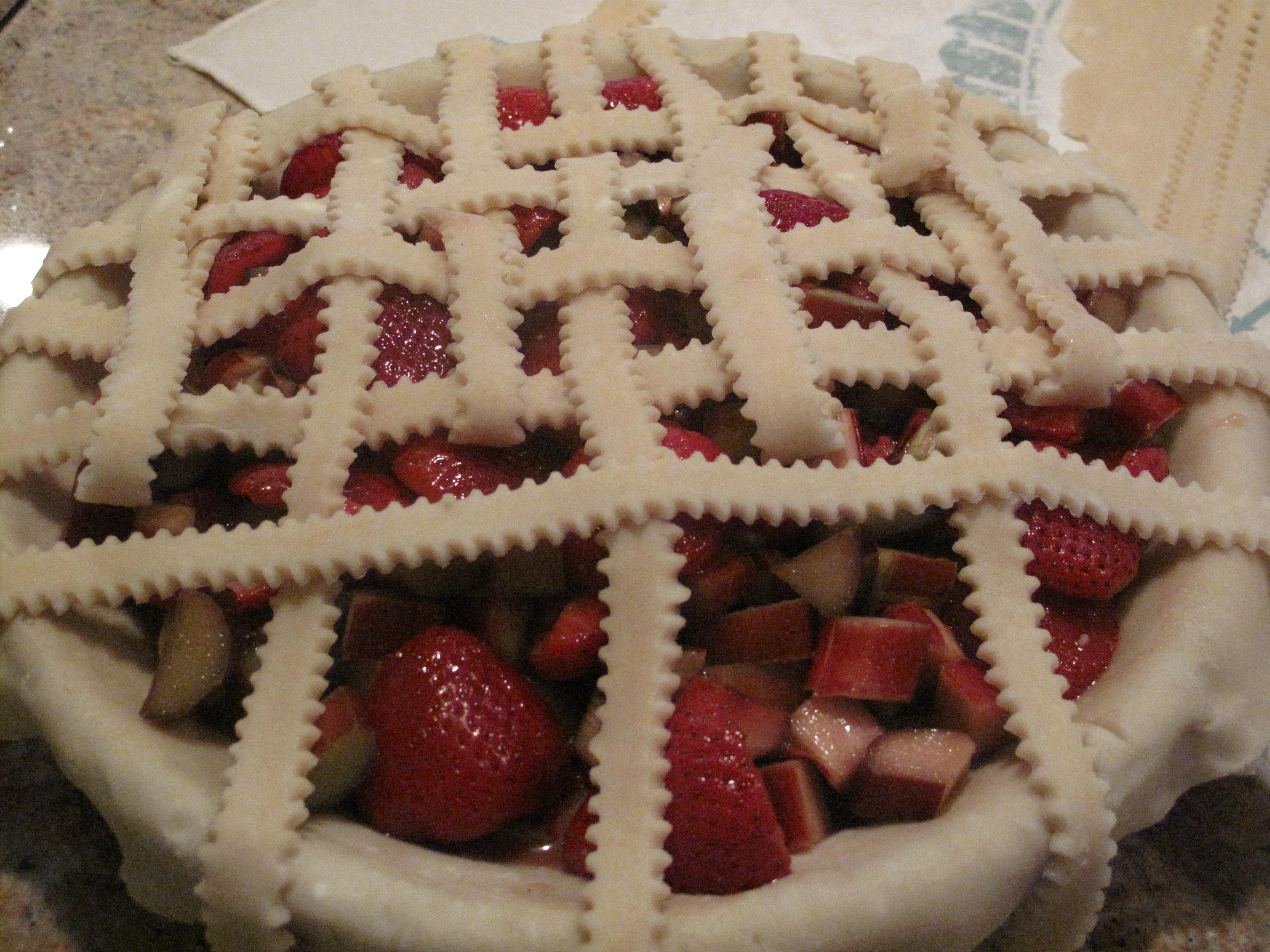
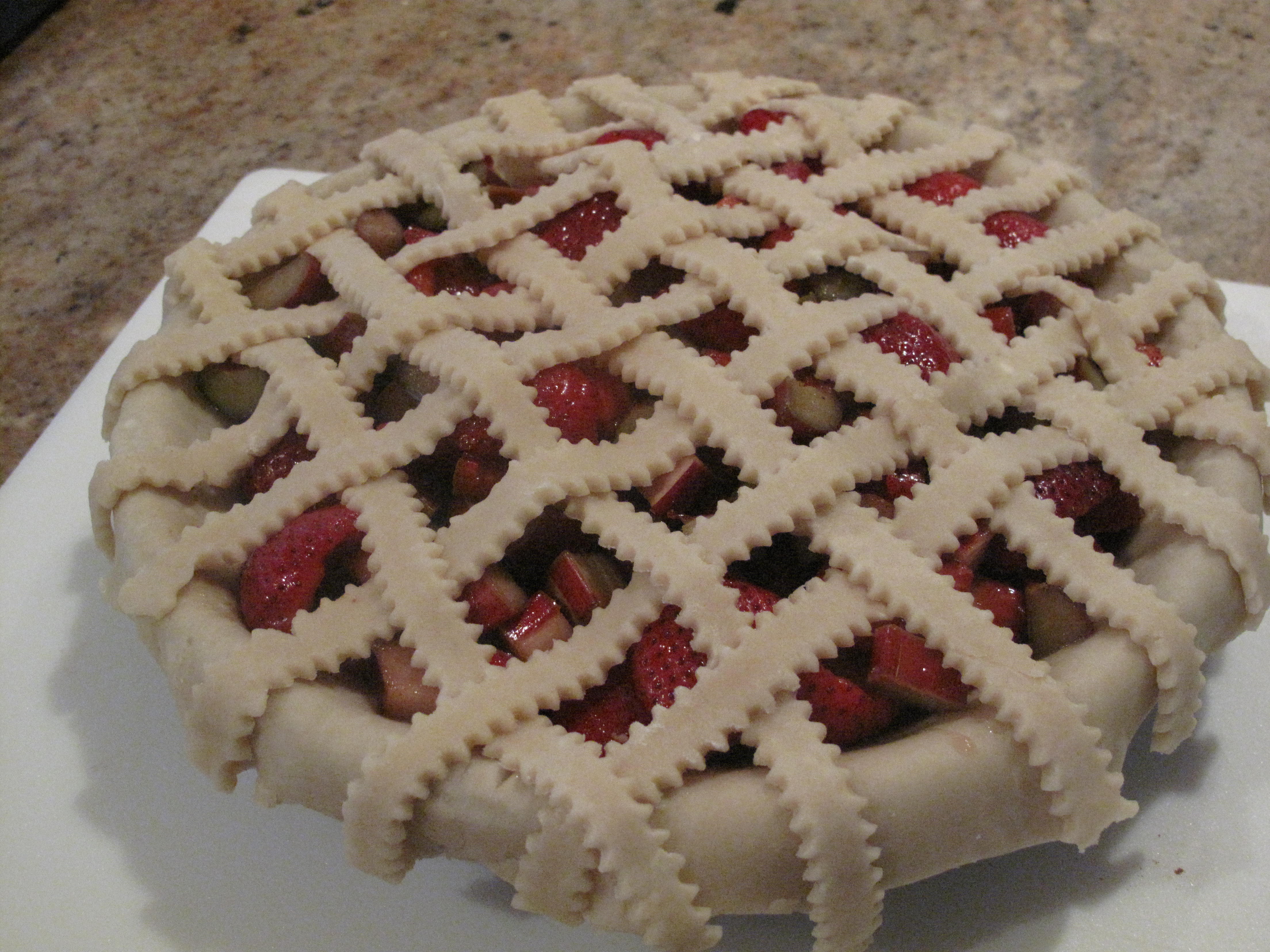
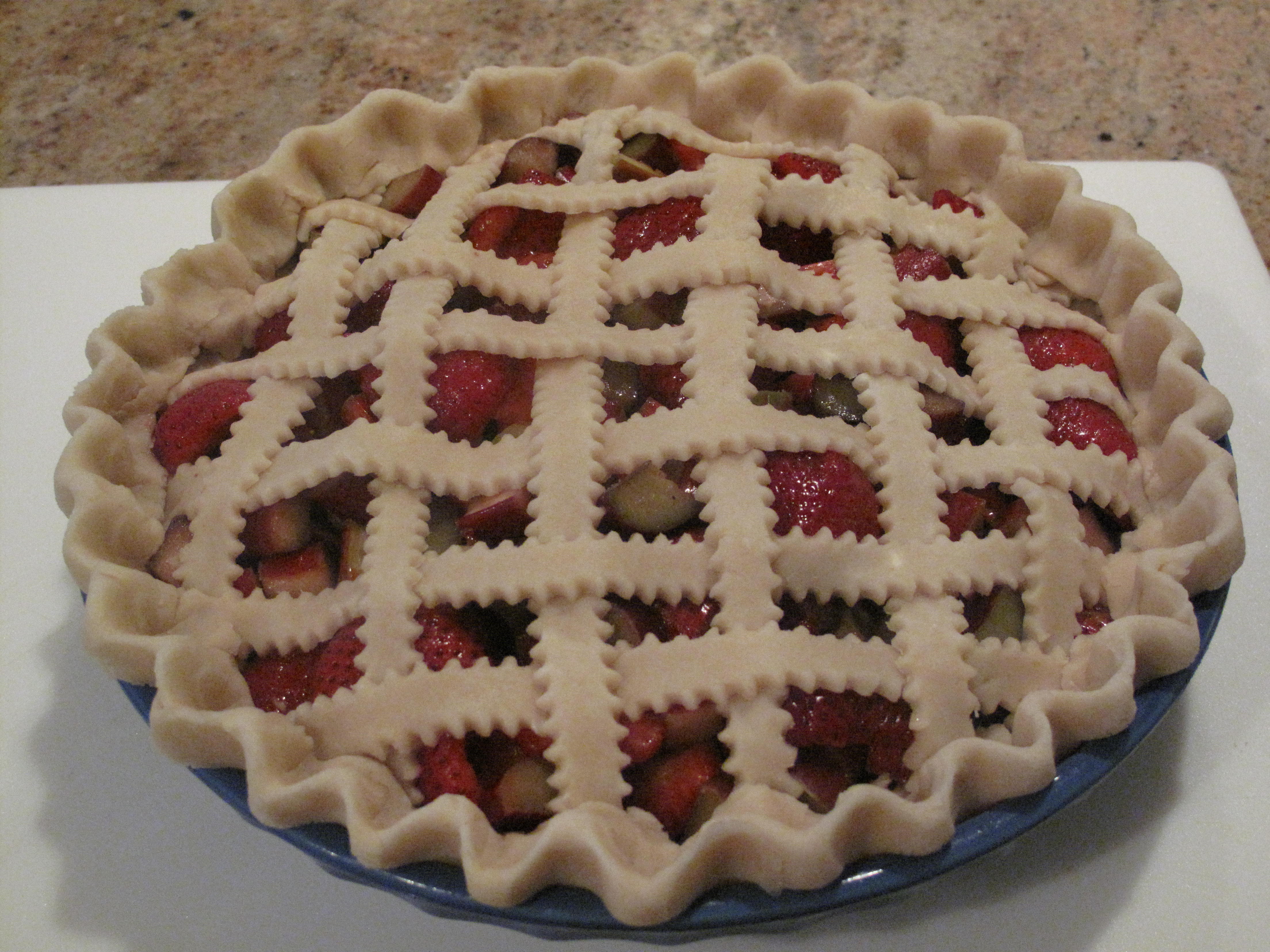
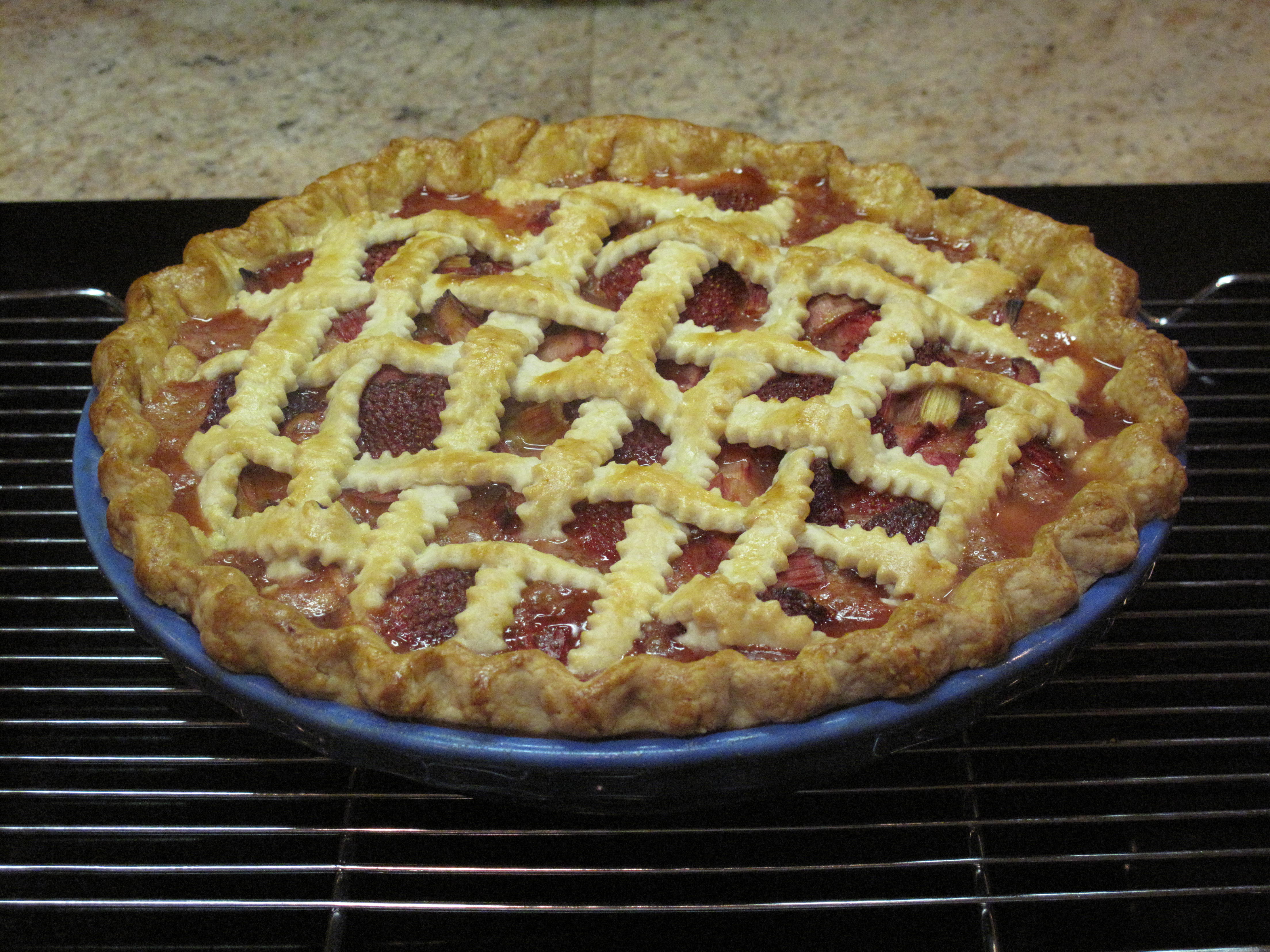
 This pie always reminds me of Spring.  It is a rhubarb and strawberry pie with a lattice top crust.  Making a pie is always intimidating to me.  It’s the crust.  Either I have a problem rolling it out or I have a problem getting it into the pie pan.  A lot of people tell me they have the same issues, but I keep trying to perfect the art of pie making here on Glen Road.  This pie was a surprise in that for the first time in a long time I didn’t have any issues.  I even put a lattice top on it without making myself nuts.  It must have been the deep breaths and the frequent praying.  The idea of rhubarb and strawberries mixed together in this pie was so perfect for Spring.  I couldn’t wait to get a piece.  We’ve talked about rhubarb and strawberries a lot here on Acorns On Glen.  Spring just seemed the perfect time to mix them together for everyone to enjoy.  Let’s get baking!

 Ingredients:

For crust:
3 cups all-purpose flour
2 1/2 teaspoons sugar
3/4 teaspoon salt
2/3 cup chilled solid vegetable shortening, cut into pieces
1/2 cup plus 2 tablespoons (1 1/4 sticks) chilled unsalted butter, cut into pieces
Up to 10 tablespoons ice water
For filling:
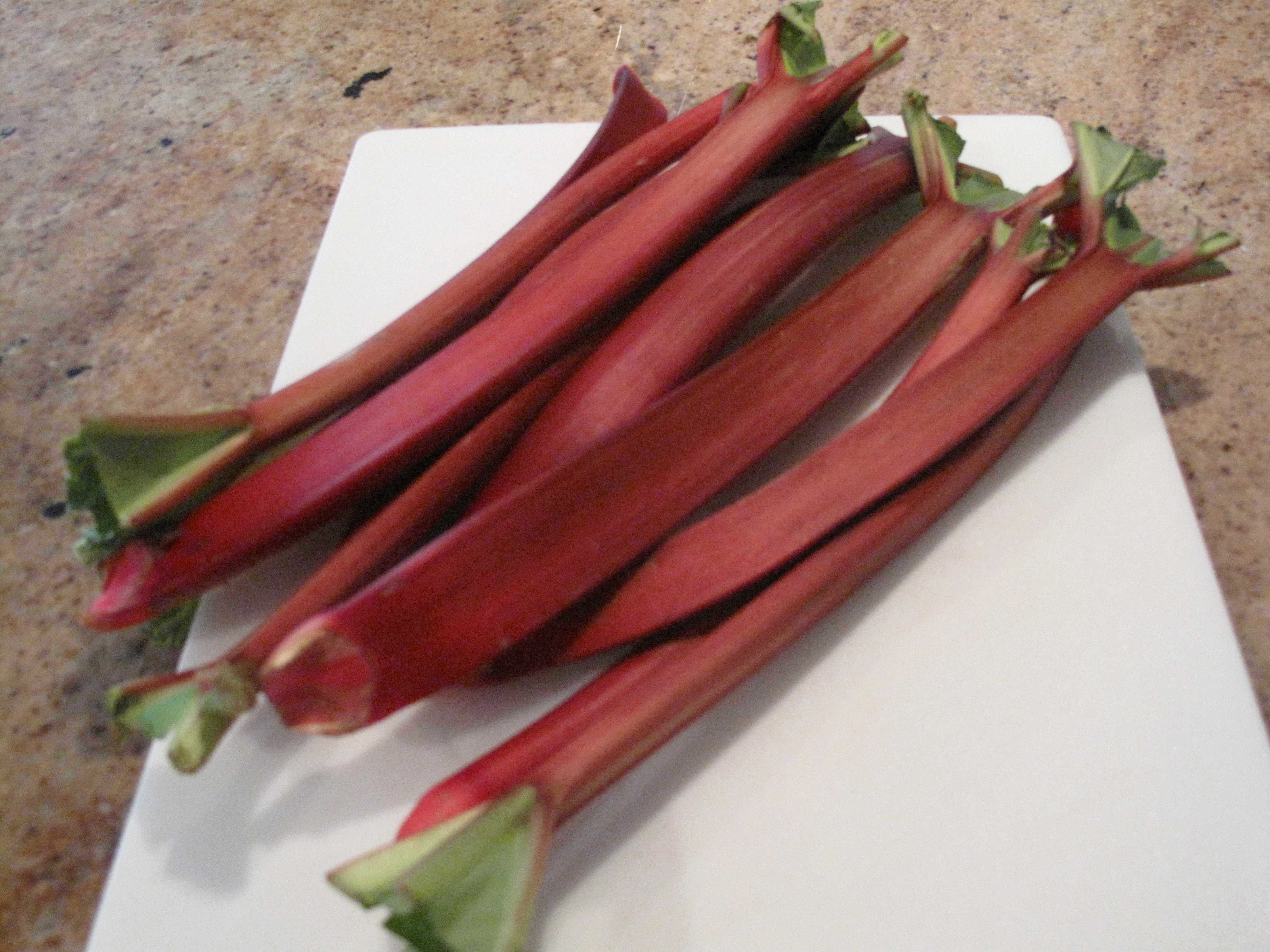
3 1/2 cups 1/2-inch-thick slices of trimmed rhubarb (1 1/2 pounds untrimmed)
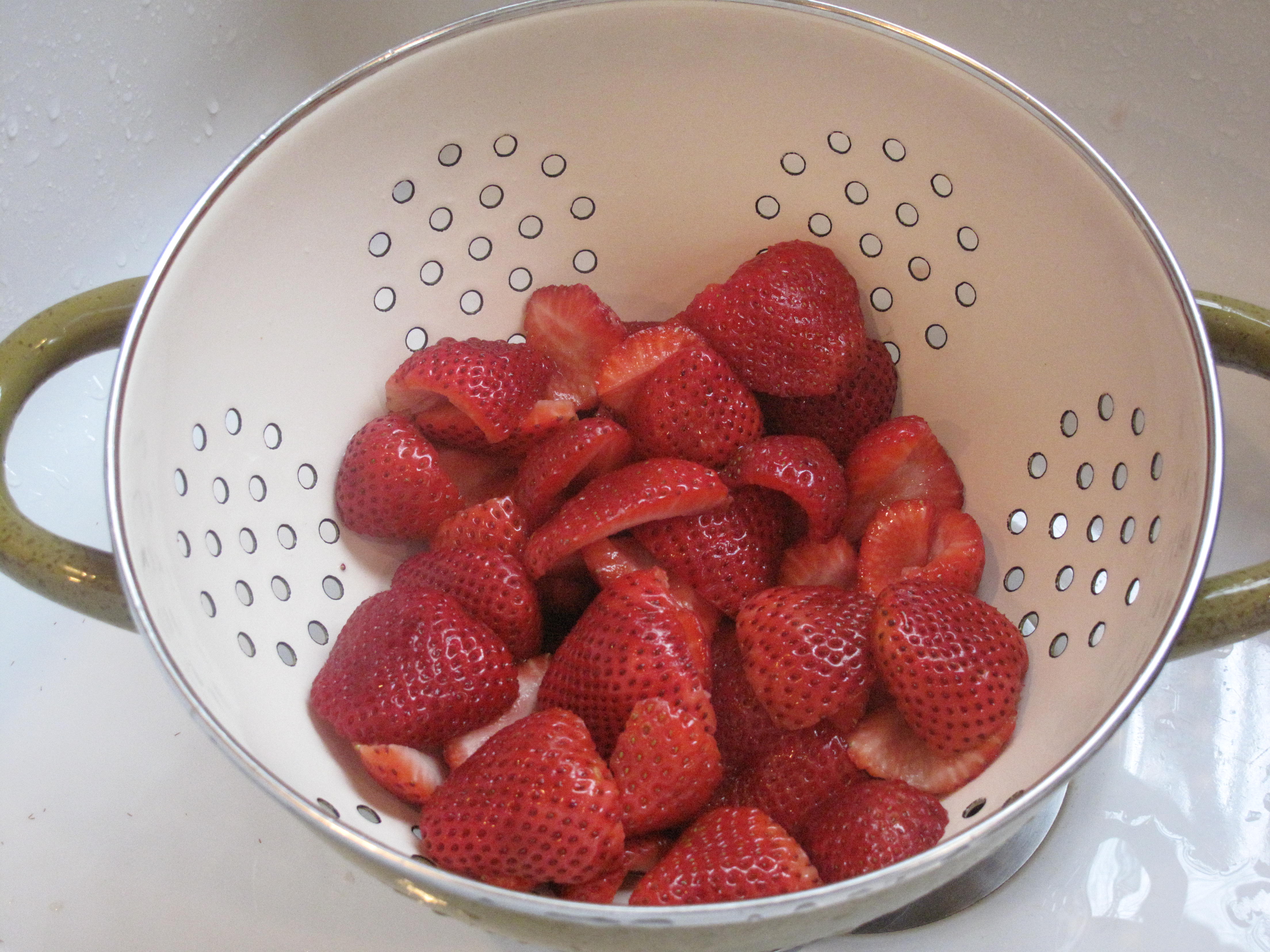
1 16-ounce container strawberries, hulled and halved (about 3 1/2 cups)
1/2 cup packed golden brown sugar
1/2 cup sugar
1/4 cup cornstarch
1 teaspoon ground cinnamon
1/4 teaspoon salt
1 large egg yolk beaten to blend with 1 teaspoon water (for glaze)

Directions:

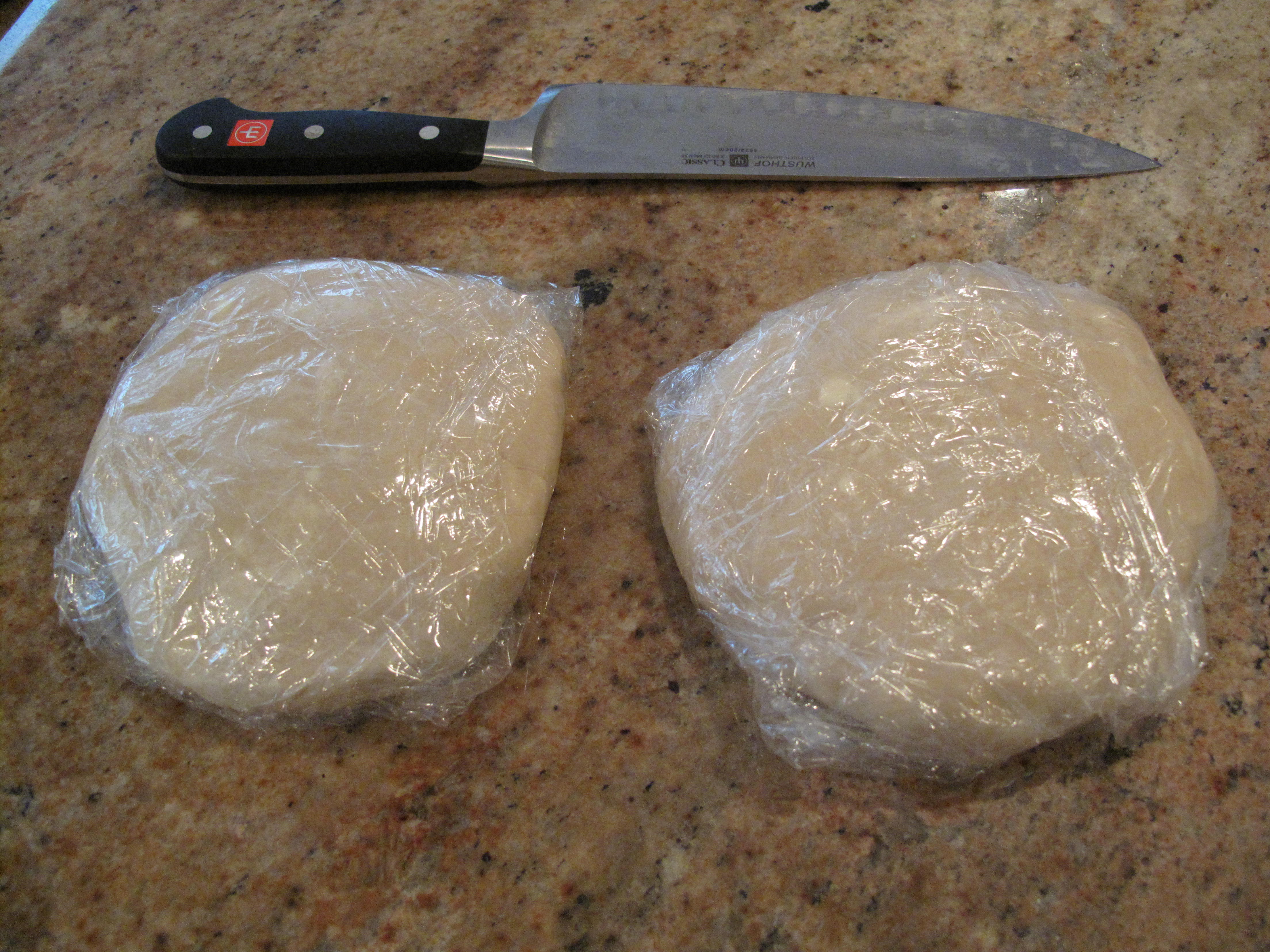
Make crust:  Combine flour, sugar and salt into a food processor.  Using the pulse button, cut in shortening and butter into the flour mixture until coarse meal forms.  Blend in enough ice water (2 tablespoons at a time) to form moist clumps.  Gather dough into a ball; cut in half.  Flatten each half into a disk.  Wrap separately in plastic; refrigerate until firm, about 1 hour (can be made 1 day ahead. Keep chilled. Let dough soften slightly at room temperature before rolling).

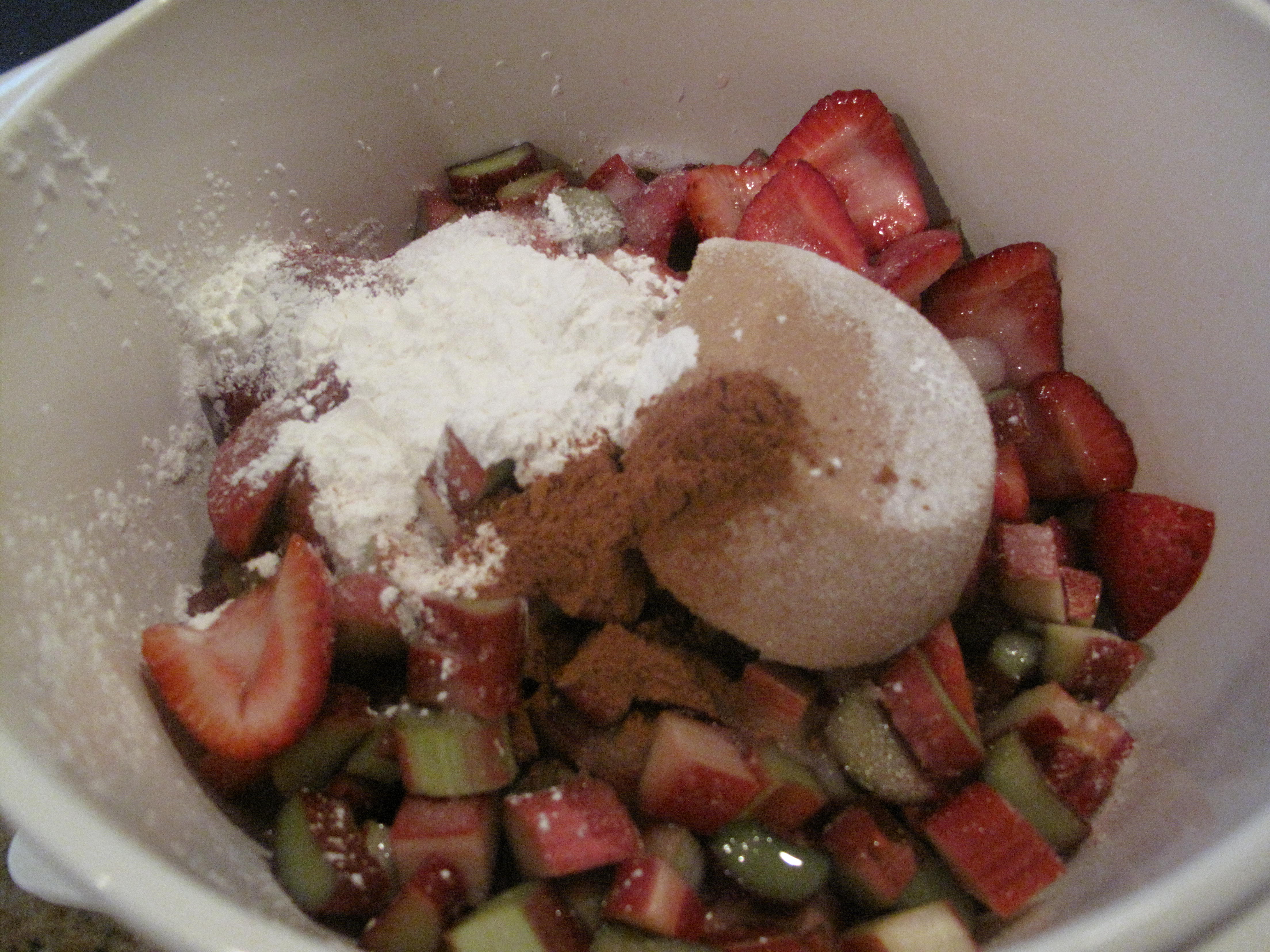
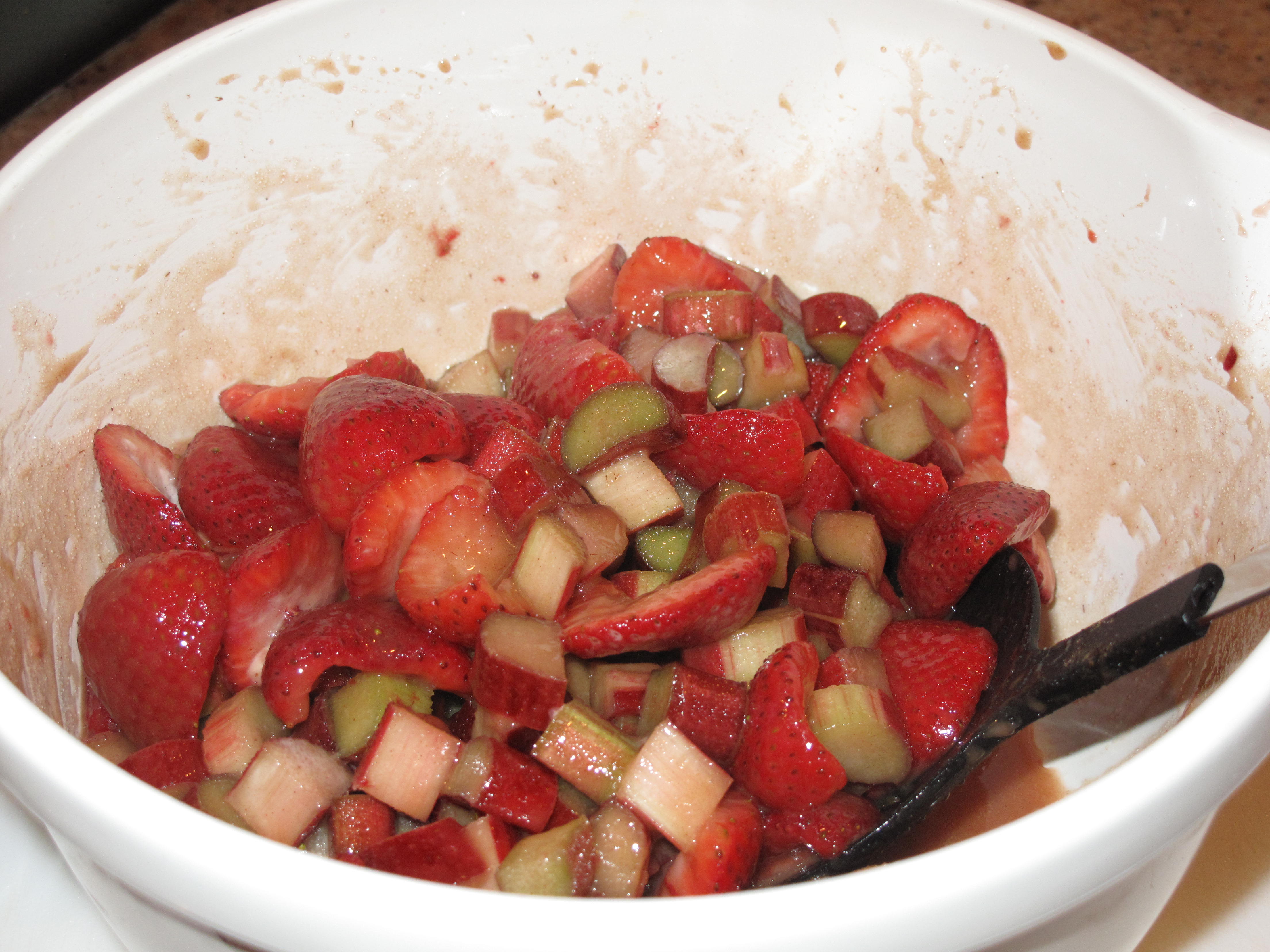
Make filling: Preheat oven to 400°F.  Combine first 7 ingredients into a large bowl.  Toss gently to blend.

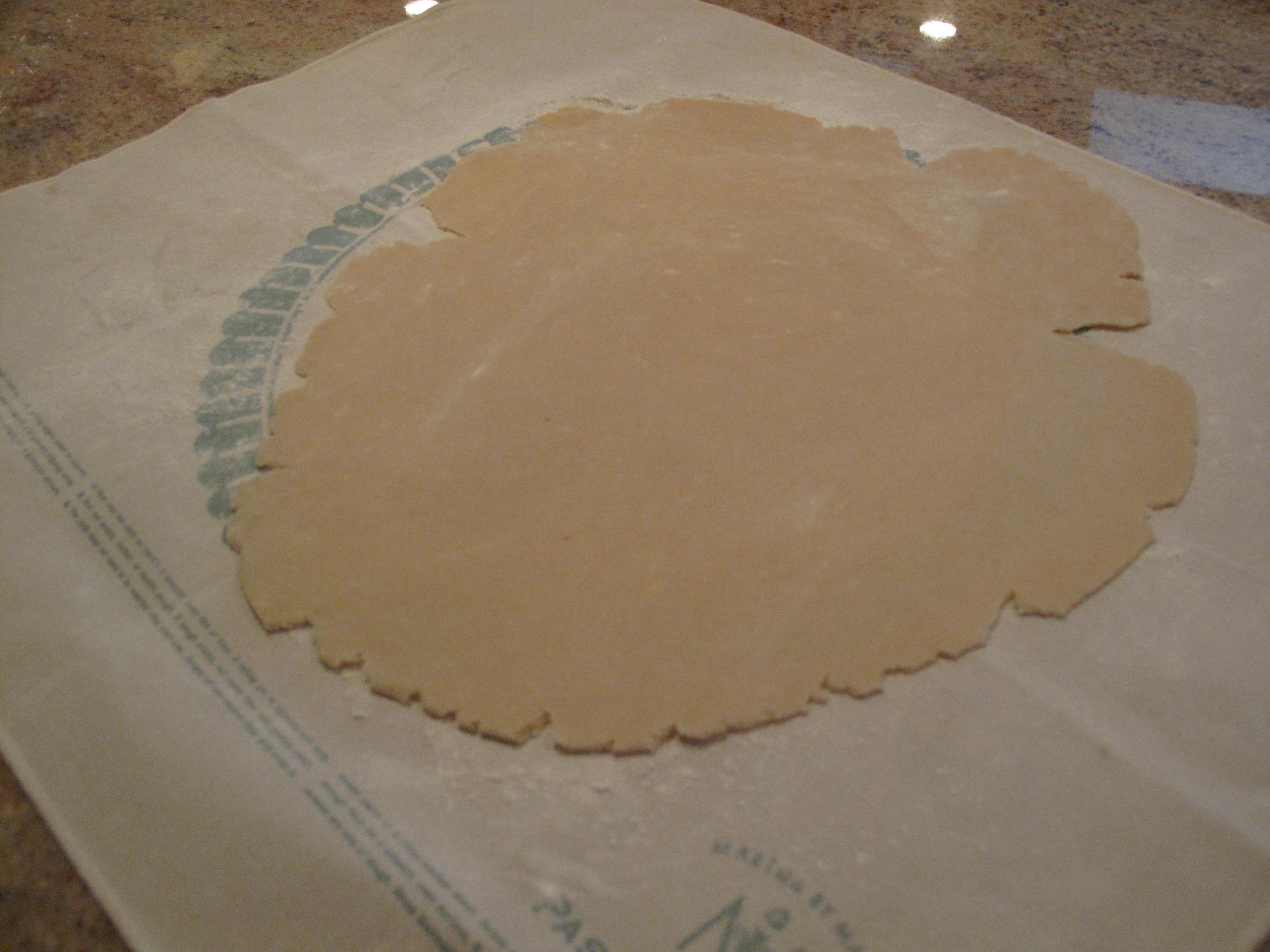
Assemble pie:  Roll out 1 dough disk on floured work surface into a 13-inch round.  Transfer to a 9-inch-diameter glass pie dish.  Trim excess dough, leaving a 3/4-inch overhang.  Place into refrigerator so the crust can continue to chill after being worked with in this step.  Chilled pie dough bakes the best.

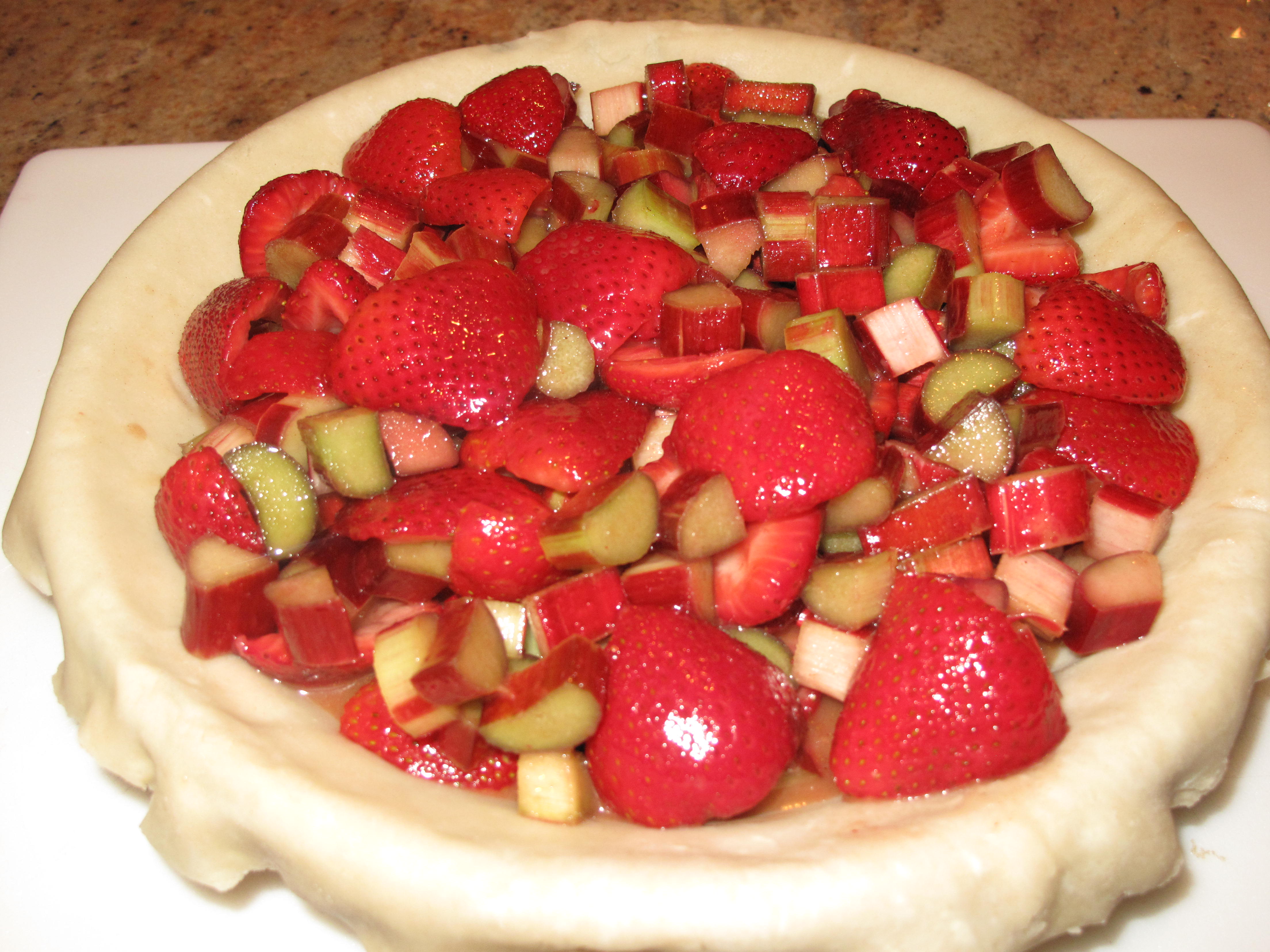
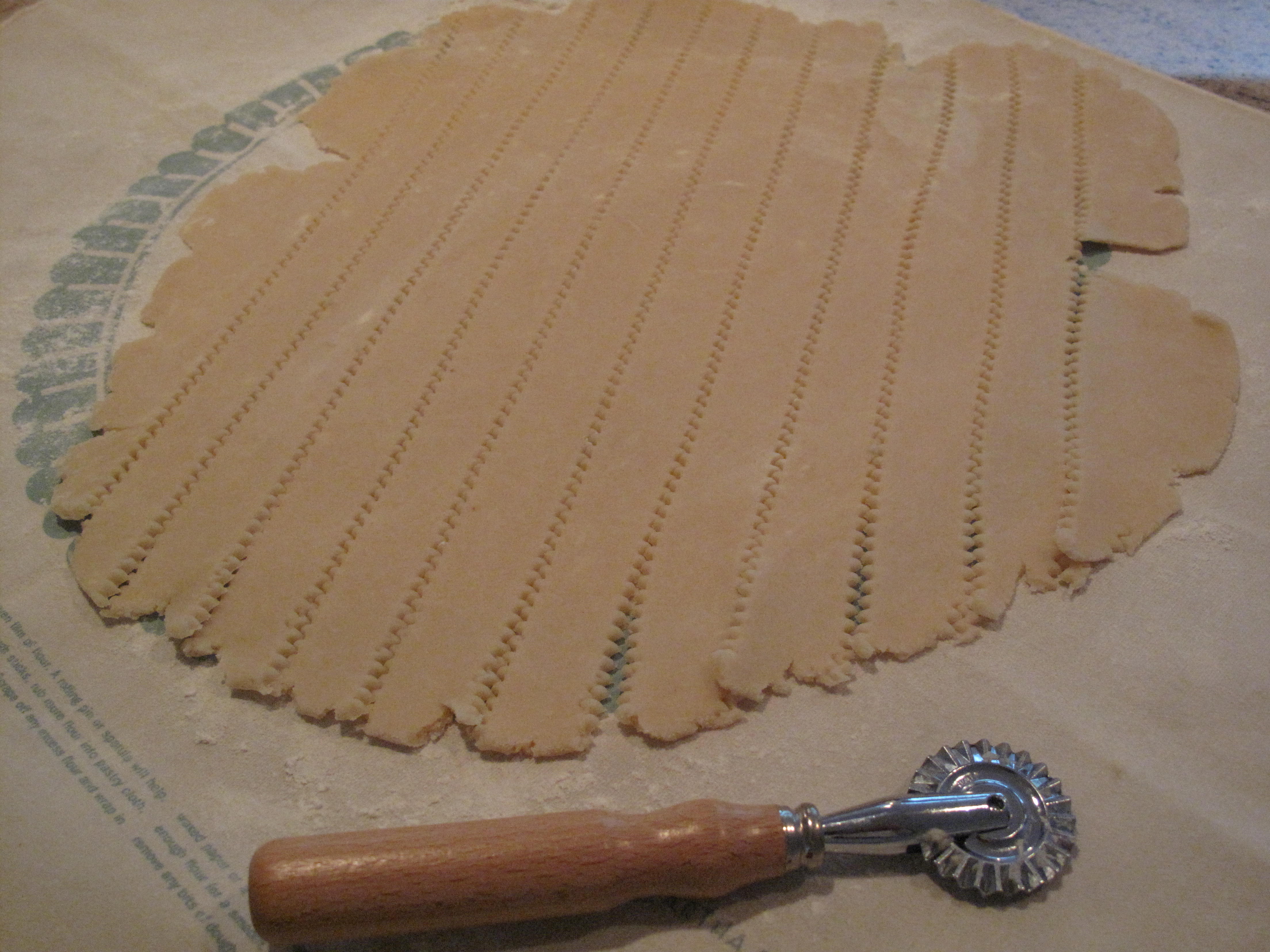
Roll out second dough disk on a lightly floured surface into another 13-inch round.  Cut into fourteen 1/2-inch-wide strips.  Spoon filling into crust.  Arrange 7 dough strips on top of filling, spacing evenly.  Form lattice by placing remaining dough strips in opposite direction on top of filling.  Trim ends of dough strips even with overhang of bottom crust.  Fold strip ends and overhang under, pressing to seal.  Crimp edges decoratively.  Brush glaze over crust.  Place pie back into refrigerator so that it can chill again for several minutes.  Chilled pie dough bakes the best.

Transfer pie to baking sheet.  Bake 25 minutes.  Reduce oven temperature to 350°F.   Bake pie until golden and filling thickens, about another 30-35 minutes.  Transfer pie to rack and cool completely.

During cooking, it is important to keep an eye on the pie and keep baking until the sauce in the pie gets thick (versus watery in form).  This may mean you will need to cover the edges of the crust with aluminum foil or a crust cover to prevent it from burning.  Once the sauce is thick, you know the pie is ready to take out of the oven.  The sauce will continue to thicken during the cooling process.  You can eat this pie plain or with a scoop of ice cream on top.  Eating something fresh and in season is the eighth wonder of the world.  This pie is the right pick for Spring.  I hope you like it.  What other Spring recipes are you cooking in your home?