Raising Rhubarb

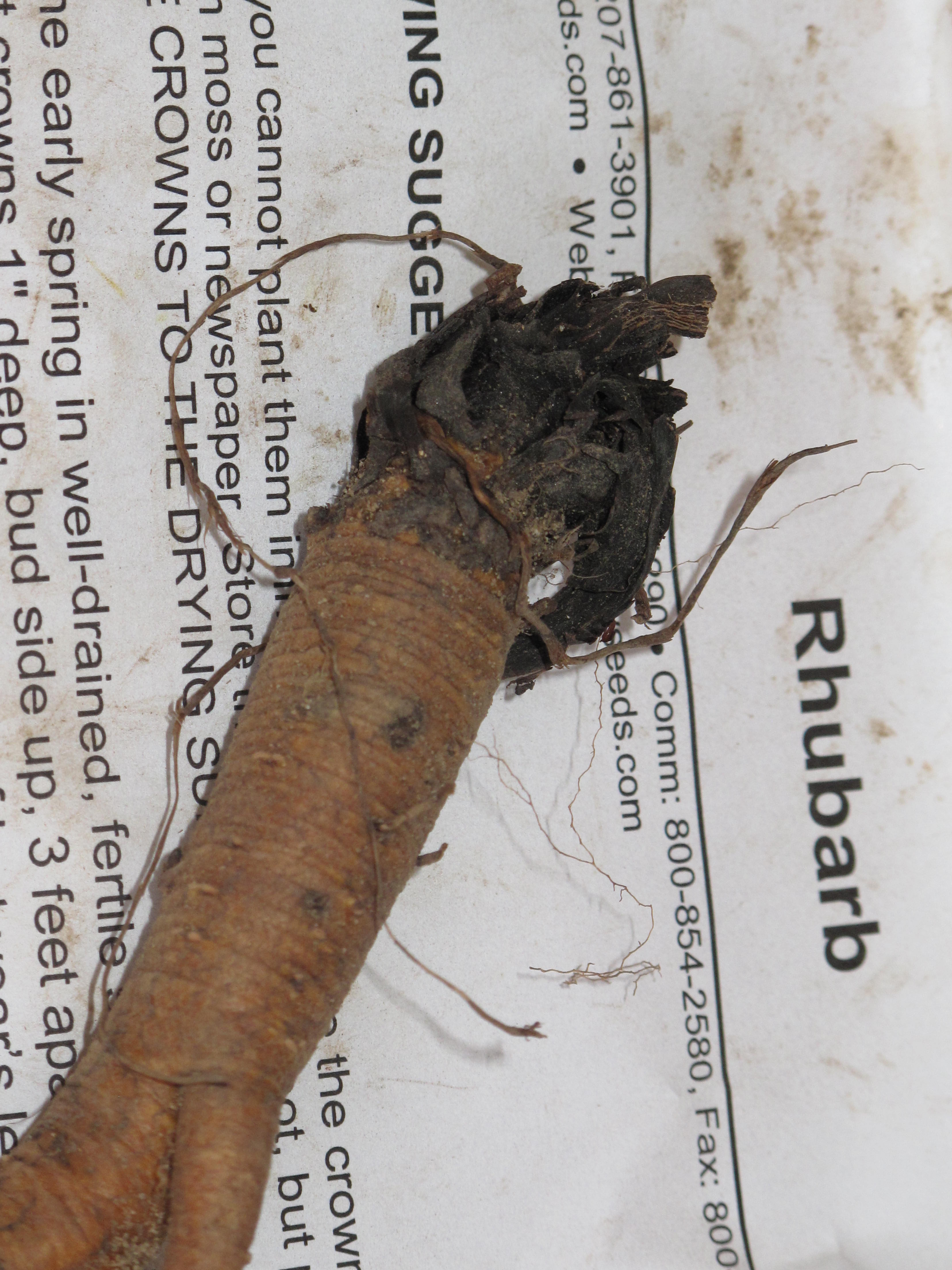
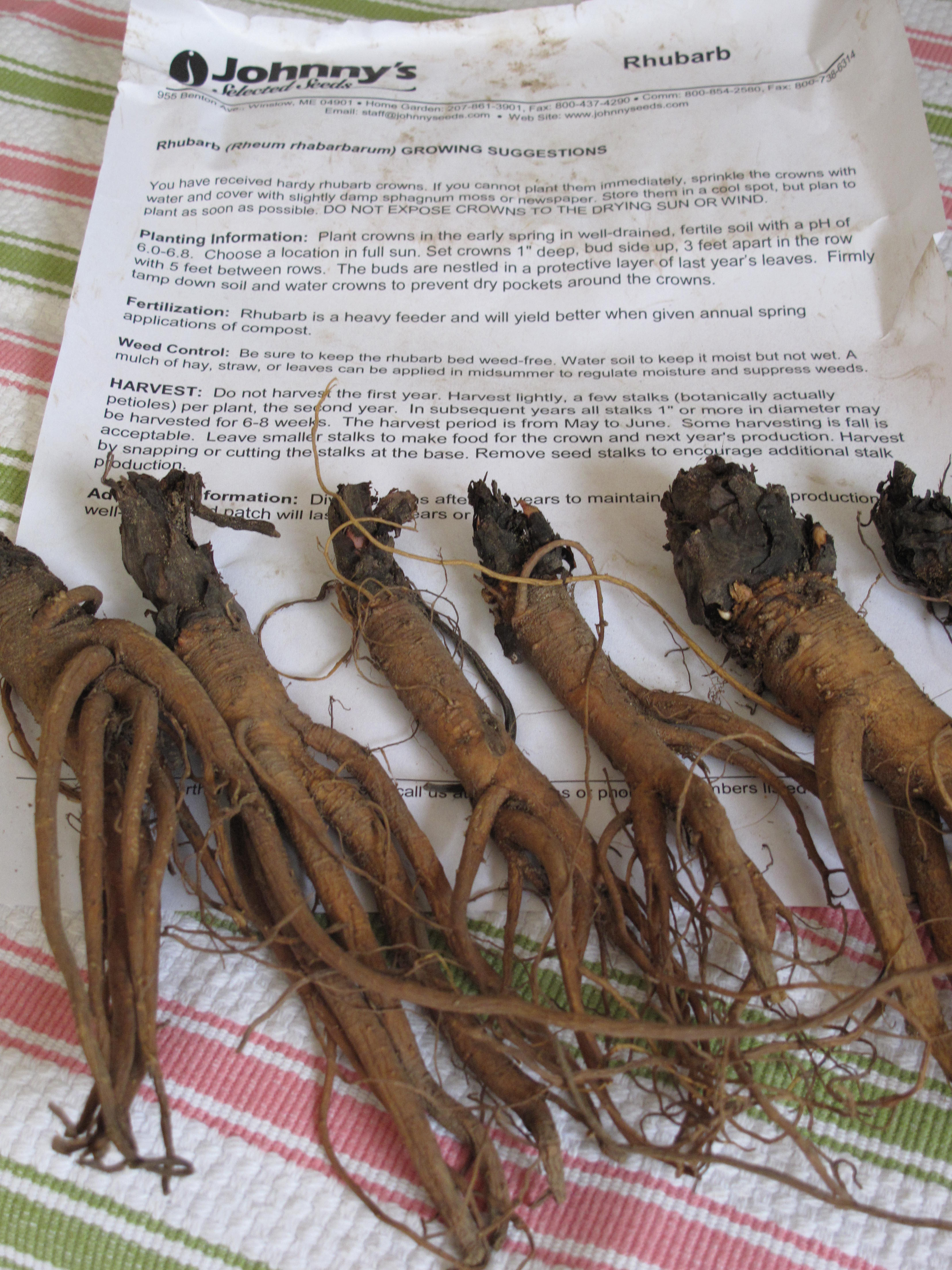
This is what I received this week…some rhubarb crowns ready for planting.  I have been obsessing about planting rhubarb, also know as rheum rhabarbarum, here on Glen Road for quite some time.  I’m sure it has to do with wanting to grow something that reminds me of my youth.  You must all know at this point that my Grandma was a great gardening inspiration in my life.  My Father was also inspirational, but due to my close relationship with Grandma, she brought me slowly into the process and let me get into the garden when I wanted to do it.  She slowly made me value it.  You know how it goes with parents…they want to bring you into it, but many times you feel forced and then you end up crying and rebelling and not wanting to do it.  I guess that is the sad story of all teenage angst…sorry Dad and Mom.  I’ve talked about her horseradish a few times, but my Grandma also had a killer rhubarb patch.  We ate a lot of rhubarb in Spring…rhubarb sauce, rhubarb pie….all of it so fresh and so tasty.  There were times my brother and I would snap off a stalk and chew on the tangy sweet and sour fruit in her backyard.  Do any of you remember the Schwann’s man?  In our town in Iowa, the Schwann’s man drove a pinkish peach truck up the road and you could stop him and buy frozen items.  Grandma bought pizza dough and ice cream.  In the Spring, she scooped this ice cream into whatever rhubarb creation she had made for the night.  How great was that? 

So I wanted to plant a rhubarb patch for a long time and this year, I got my wish.  I planted six crowns this weekend in some well-drained soil.  The patch was in a location that received full sun, just behind the two espalier apple trees.  I set the crowns about a foot apart, which is a little tight, but I’m sure they will be fine.  I watered the crowns very well and then placed a little over one inch of soil on top of them.  Then I firmly tamped down the soil to prevent any dry pockets from forming around the tender crowns.

There will be no harvest this first year.  During the second year, there may be a light harvest, actually a few stalks (botanically, actually petioles) per plant.  In subsequent years, all stalks one inch or more in diameter may be harvested for six to eight weeks.  The harvest period is from May to June.  Some harvesting in Fall is acceptable if we feel the urge.  However, smaller stalks should be left to make food for the crowns and next year’s production.  We will harvest by snapping or cutting the stalks at the base.  We need to remember to remove seed stalks to encourage additional stalks in the next year.  What I also know is that rhubarb leaves from un-harvested stalks are quite beautiful.  Don’t be afraid to plant them in a prominent spot in your garden given their beauty.

After three to five years, we will need to divide the crowns to maintain stalk size and production.  A well-maintained patch will last 10-15 years or longer.  That sounds like such a long time, but as my Grandma used to say, time goes by much quicker the older you get.  Here’s to a few stalks next year.  Do you grow rhubarb in your garden?

Strawberries and Bread

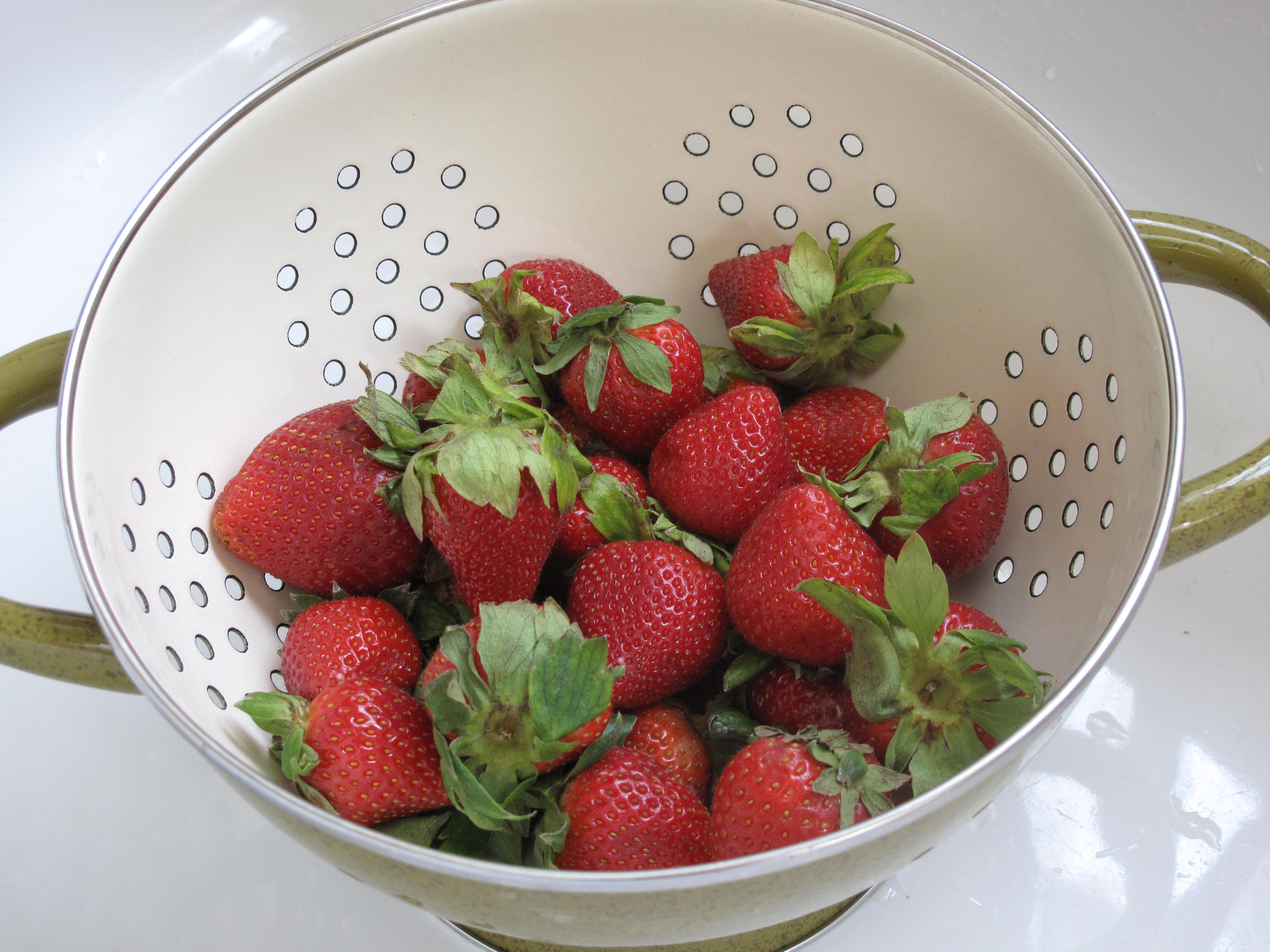
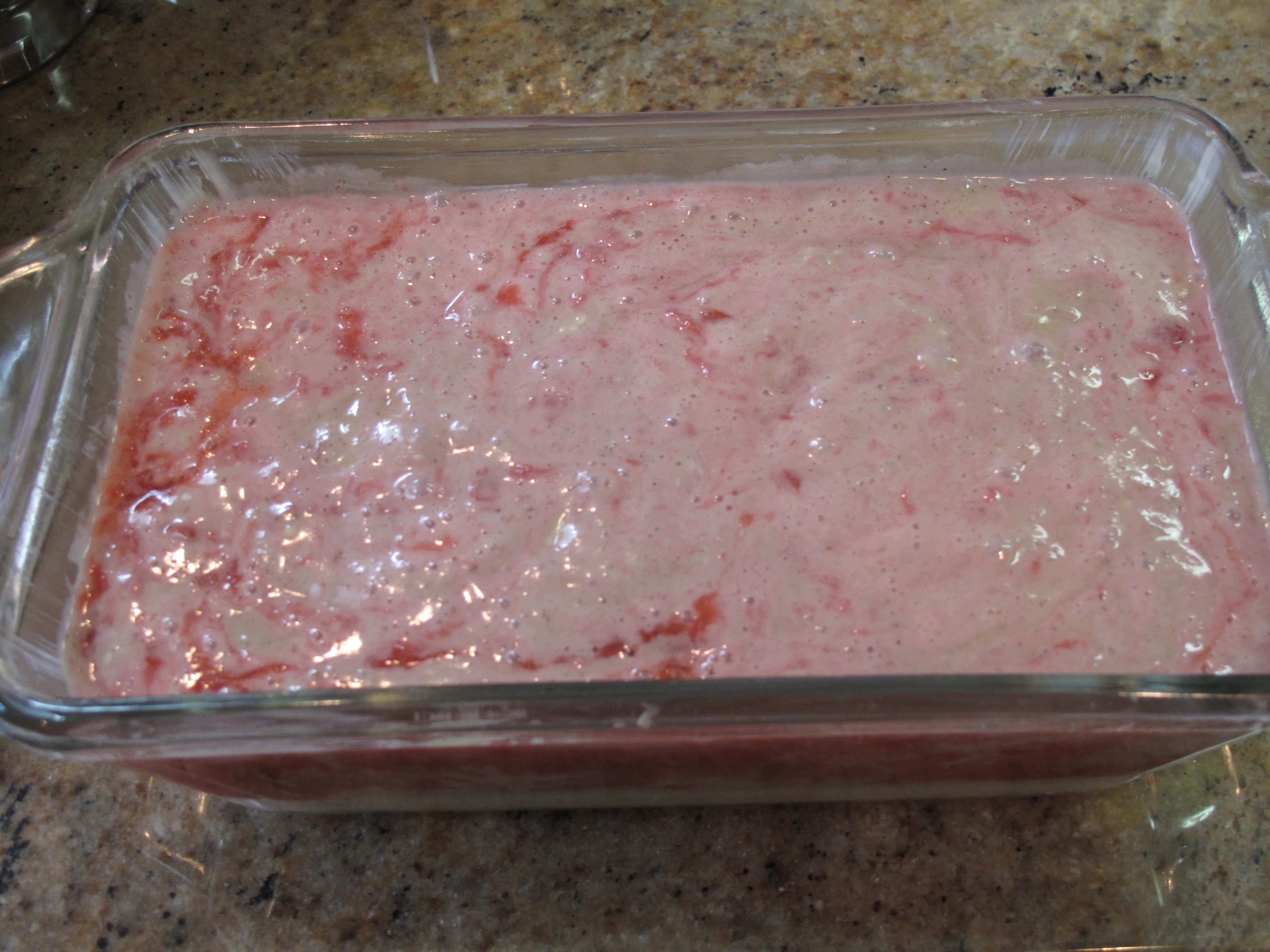
This is a pint of organic strawberries.  I got them at the organic market this week and needed to use them or they were going to go bad.  That’s the problem with strawberries for me.  You quickly need to use them or they need to be thrown out.  I know, you’re saying to me “that’s why them call them fresh”, but I wish they could last a little longer.  You know, like an apple or a pear.  Even given this one downside, the taste of a strawberry is one of my favorite fruit flavors.  So what should I make with them?  Shortcake seemed a little too summer like.  Strawberry ice cream was out given that it is still a little cold outside.  So I decided on making strawberry bread.  This recipe makes a very moist bread marbled with crushed strawberries.  It is a real change of pace and a great way to use those pesky strawberries that seem to lose their freshness way too fast.

Ingredients:

  • 5 tablespoons plus 1 teaspoon unsalted butter softened, plus more for pan
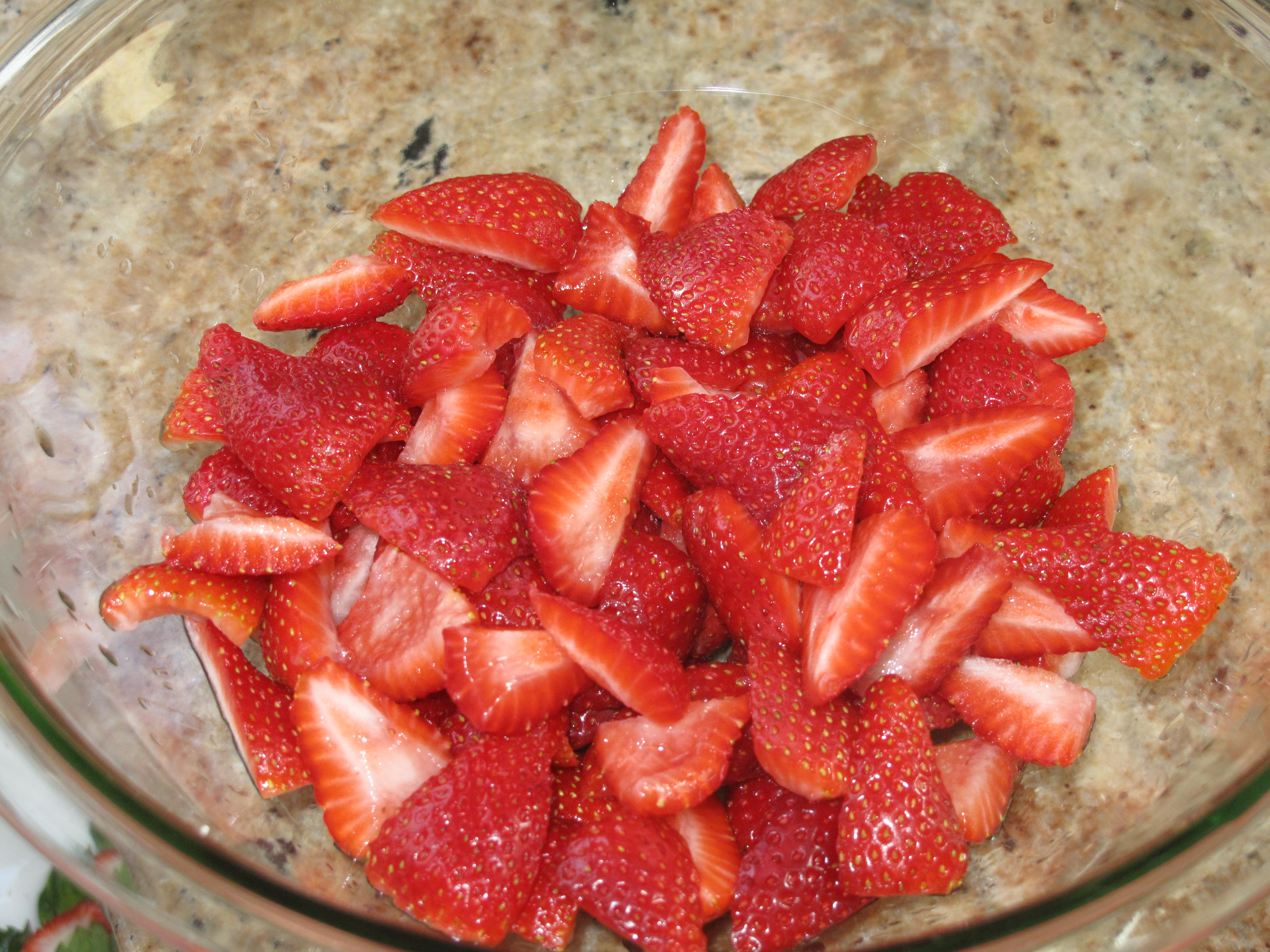
  • 1 pint strawberries rinsed, hulled, quartered, and mashed with a fork
  • 1 3/4 cups all-purpose flour
  • 1 teaspoon baking soda
  • 1/2 teaspoon ground cinnamon
  • 1/4 teaspoon baking powder
  • 1/4 teaspoon salt
  • 1 cup sugar
  • 2 large eggs

Directions:

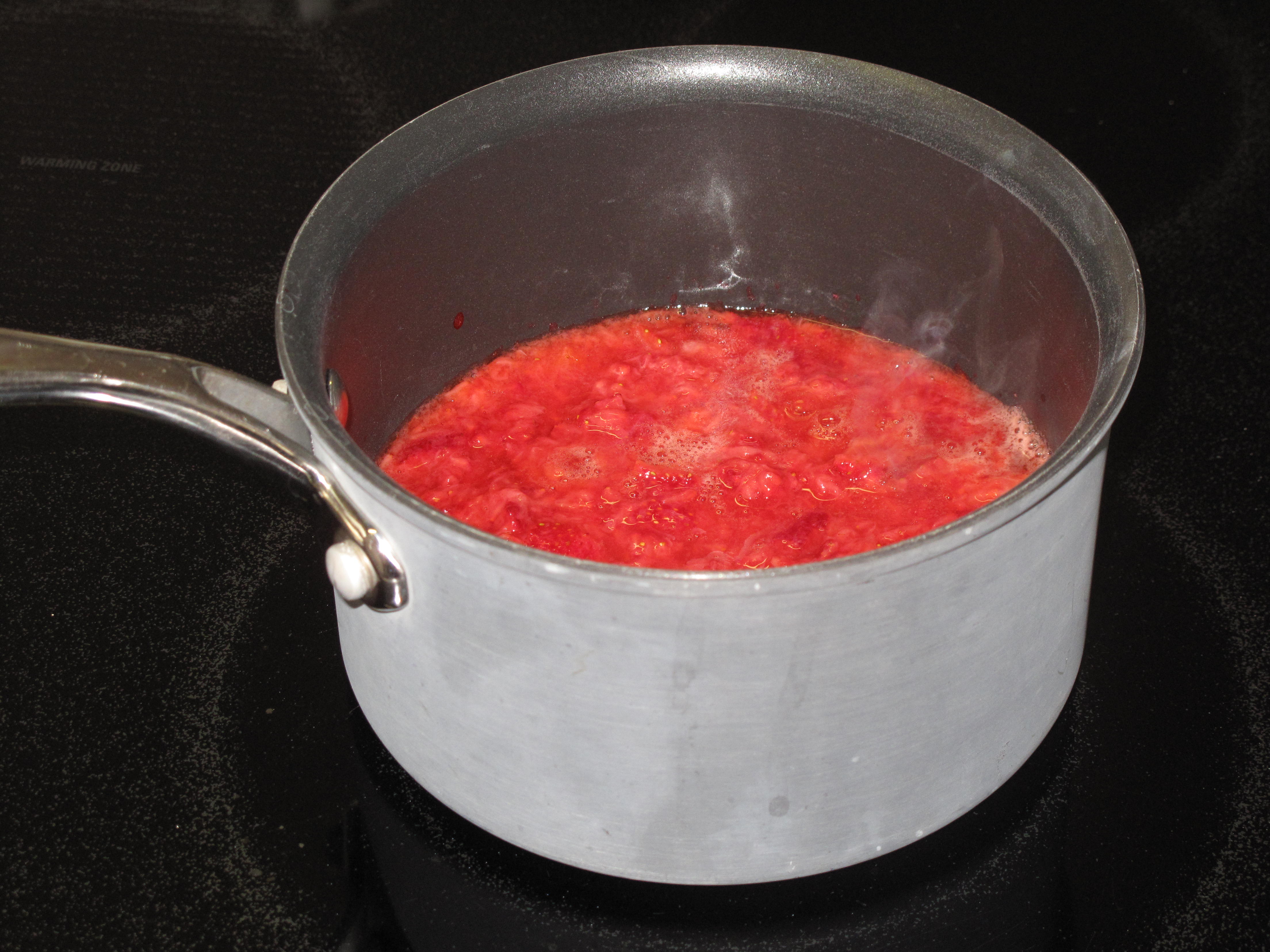
Preheat oven to 350 degrees. Butter an 8-by-4-inch loaf pan. In a small saucepan, bring strawberries to a boil over medium heat. Cook, stirring, 1 minute. Set aside.

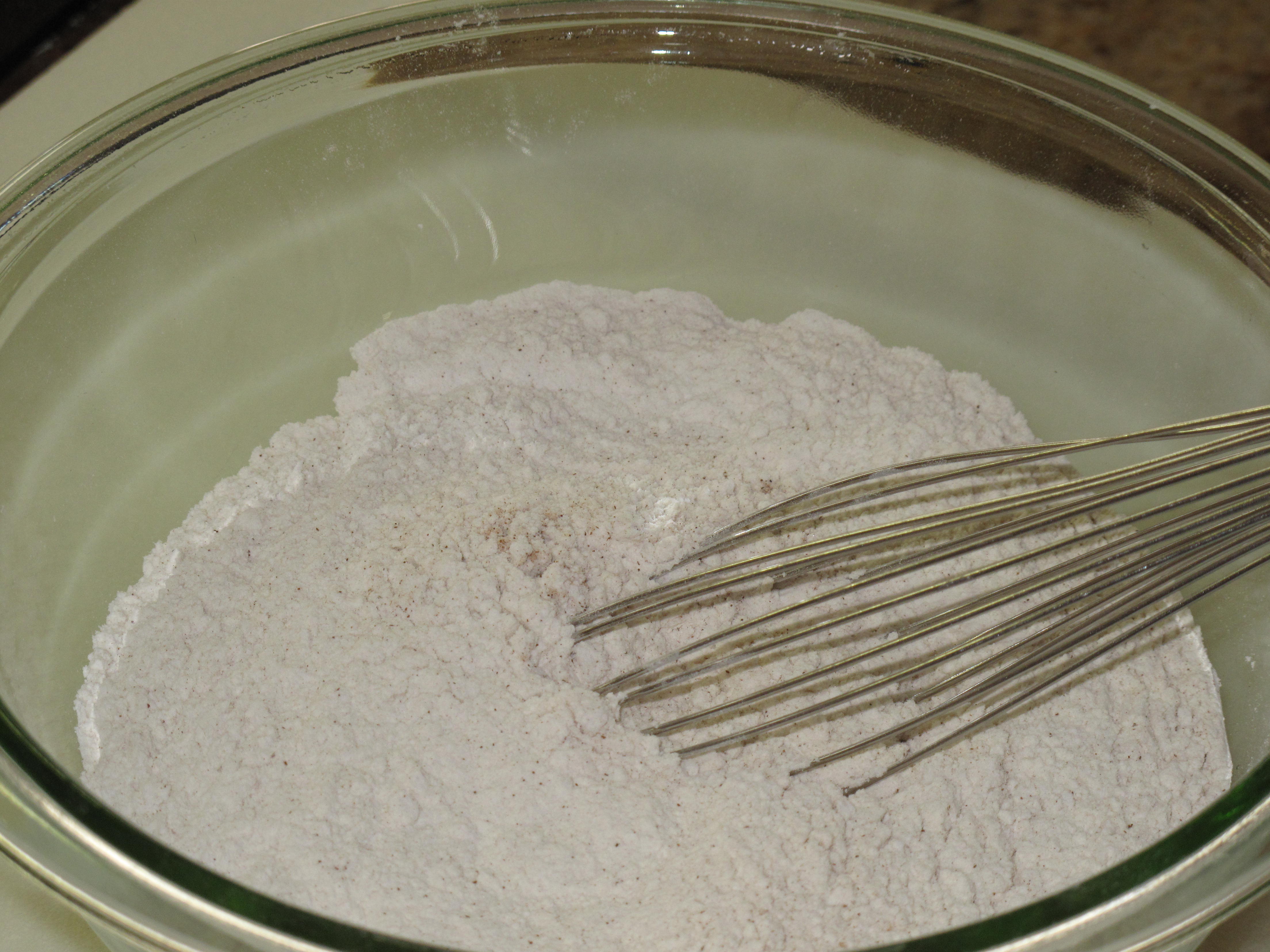
In a medium bowl, whisk together flour, baking soda, cinnamon, baking powder, and salt; set aside.

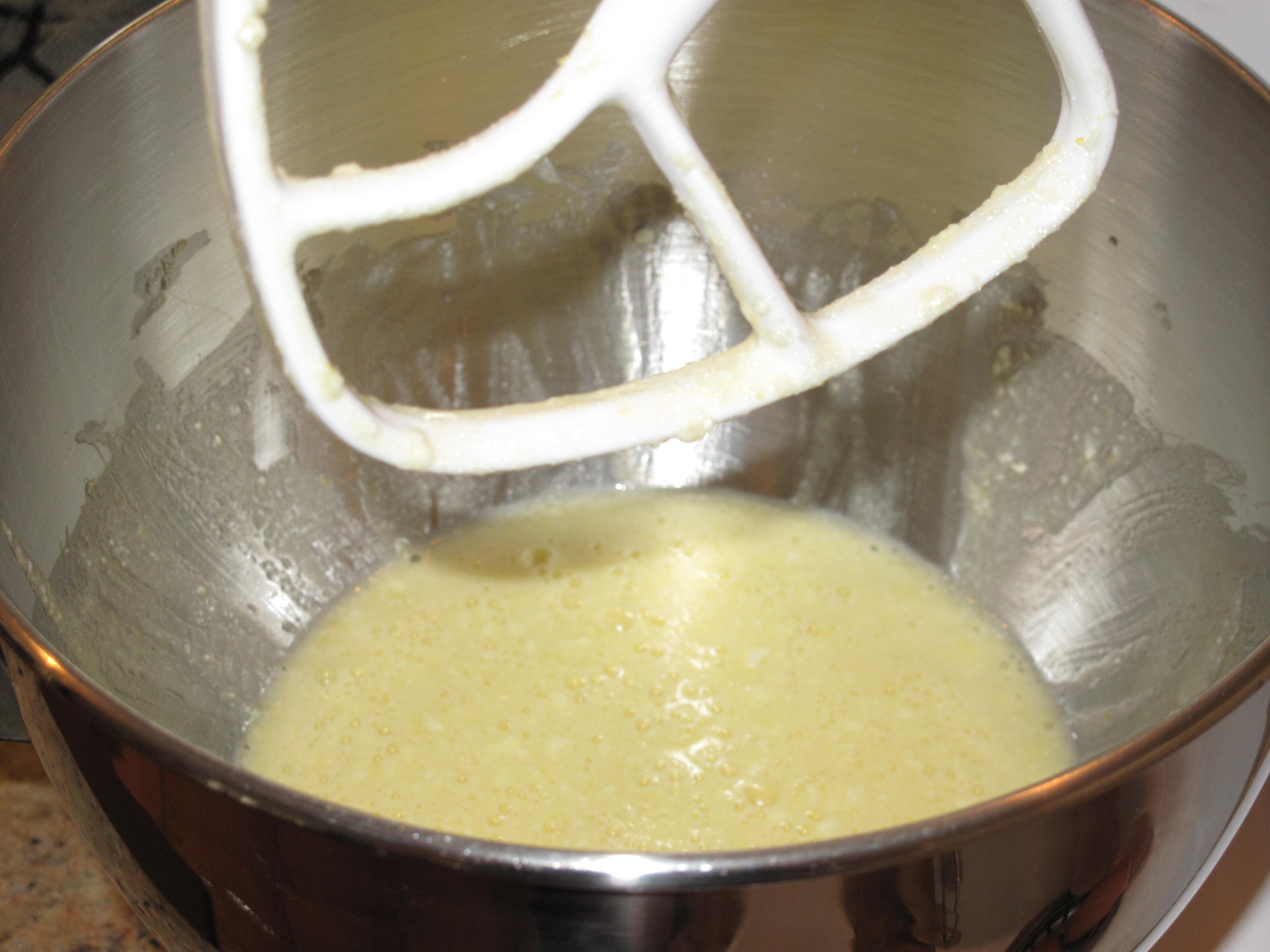
With an electric mixer, cream butter, sugar, and eggs in a mixing bowl until light and fluffy.

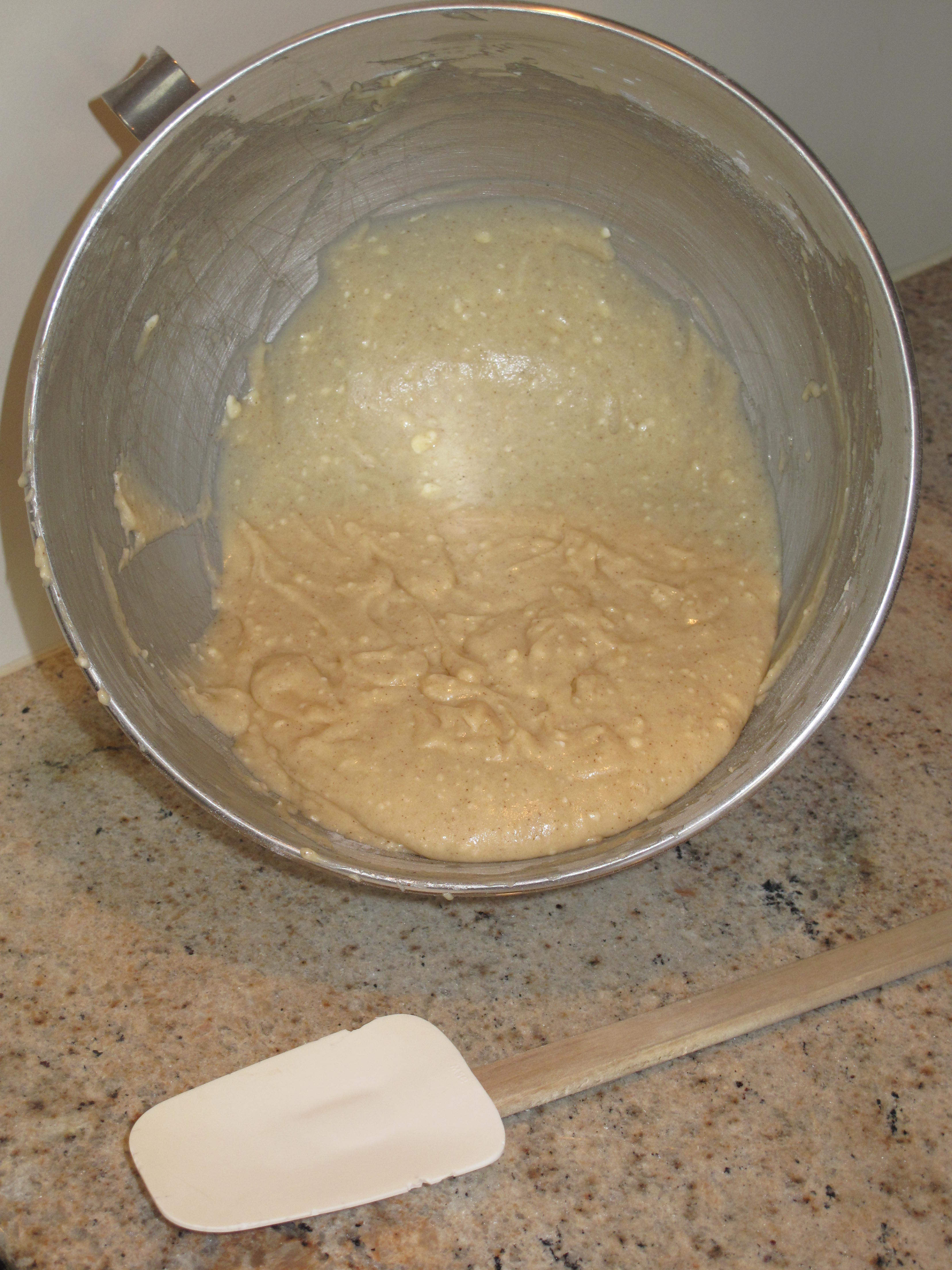
Add flour mixture alternately with 1/3 cup water, beginning and ending with flour.

Fold in reserved strawberries.  Scrape batter into prepared pan, smoothing top.

Bake until a toothpick inserted in center comes out clean, about 1 hour (tent with foil after 45 minutes if top is getting too dark). Cool in pan 10 minutes. Run a knife around edges; invert onto a rack. Reinvert; cool completely.

I love that the loaf is so golden brown in color and I wish you could have smelled my kitchen.  The smell of baking bread and strawberries filled the air.  Add a little butter or cream cheese to a slice for an added taste bonus.  This bread is great for breakfast, a snack or any time you need something a little sweet.  Try strawberry bread for a real change of pace.  Your bananas will be jealous.  What have you been baking this weekend?

When Did I Become Such A Follower?

This is the question I’ve been thinking about since we started Acorns On Glen.  When did I become such a follower?  Not when I was a kid.  In fourth grade, in the comments section of my report card, my teacher wrote that I was good at leading other children towards a common goal…..and that I was a good talker.  I was an officer in one of my grades in high school….I think it was freshman year.  I was editor of my school newspaper for a few years.  All signs were pointing in the right direction.  I was still a leader in college.  I was president of my pledge class at the fraternity.  I was a member of the elite summer orientation staff for incoming freshman.  Again, all signs were a go.   So when, as an adult, did I stop producing original ideas and leadership potential?  My vote…..when my sad ass discovered the internet and that damn do-it-yourself television.

Think back to your grandparents.  How did your grandmother learn to cook something simple, say a meatloaf?  She either learned by word of mouth or she learned by trial and error.  The recipe could have been handed down from generations of hard cooking women in her family.  She could have talked to a sister or a neighbor about making meatloaf and wrote down the ingredients and instructions that they gave her and then began to cook.  She used real, live human interaction versus online social networking.  She could have also gotten the idea in her head and cooked it through several different incarnations making sure to tweak things she didn’t like from the time before and remembering to keep things in it that were good.  Old time trial and error versus instant internet gratification.  With my family, maybe my father, aunts and uncle didn’t like my Grandma’s first shots at meatloaf making, but by the time I was a child, she had perfected her art.

The garden is the same story.  How did my Grandmother know to only dig horseradish and grind it up in months that contained an ‘R’ in them?  She was right.  Months without an ‘R’ produce lousy horseradish…Julys and Augusts are just too hot.  Again, she had an idea and either consulted a real, live person or experimented on her own.  Somehow, she managed to figure things out.  She must have talked with someone on the rules of horseradish or sat down to some sad tasting pulp, but she figured it out.  She accomplished tasks knowing she had done her own research, made all the decisions and had done it her way.  She was her own expert.

Now take me!  I’ll confess.  I look at all of the things that I do to my house, that I cook or bake in the kitchen or that I grow in my garden, and while I’m proud of my accomplishments, they have most likely come from someone else’s original idea.  Ideas from others that I’ve said “Wow, I’d like to do that” and either copied or took the initial idea and tweaked it to fit my lifestyle.  When is the last time I sat down and said I’d like to make a dish in the kitchen that contained a certain ingredient and then added it and other ingredients in a bowl trying to create my tasty little idea?  Never.  If I ever did do that, God forbid if it was bad tasting.  Would I try it again with some new twists or would I just abandon the idea altogether?  If the first time was a flop, would I try to think it through and make it a success a second or third time?  I doubt it.

I’ve made meatloaf and worked in my garden recently, just like my Grandma did years ago.  My meatloaf recipe came straight off the internet from http://www.MarthaStewart.com.  I found the recipe in less than a minute.  As I printed my step-by-step instructions out, I sat there in a panic thinking what was meant by “good” ketchup in the recipe.  What the hell is “bad” ketchup?  In the garden, I decided to plant artichokes this year and see if they would grow in Connecticut.  How did I come up with this idea?  A picture showing them growing in my area off of someone else’s iPhone.  So what was my next step?  I googled “artichoke growing” on the internet and received hundreds of sites with step-by-step growing instructions.  So I then ordered the seeds (off the internet) from a seed company I saw mentioned on a TV show and then planted them in a growing system I heard described on the radio and then put them under a grow light I saw on another internet site.  By the way, the grow light had four and a half stars attributed to it on the internet meaning it was a customer top favorite.  How could I get the one that seemed better, but with fewer stars attributed to it?  Do you see what I’m saying?  Not one original idea in my head.  No leadership; no innovation; no thought leadership.  I’m a lemming just following the leader until I eventually fall off the side of a cliff.

In business today, there must be a slew of followers.  Perfectionist people who scour for innovation and new ideas by reading the internet for hours.  Site by site; post by post.  Anything new and exciting is printed off or typed into their computer.  They search on Google to find exactly how to make the idea a reality.  They tweak the original just a little to call it their own.  Then they introduce the final product to the world.  In fact, aren’t followers in the business world now called great executors?  This new term utilized in order to soften the blow to a group of people trained to follow others versus taking a risk on their own.  An executor, that’s what I am.  Not a leader or a thought provoker, but rather someone who can execute someone else’s idea to perfection.  My meatloaf looked just like the picture in Martha’s recipe; my grow light artichokes are picture perfect. 

Ideas=F; Execution=A+……that’s me. 

I curse you, Martha, Emeril and Ina.  Up yours, Vern and you Design Stars.  May seeds never grow in your Victory Garden, Old Man Crockett! 

So how do people of today change this course?  How do we become thinkers again versus just executing?  If my Grandma were here, I’m sure she could sit down and think up a solution.  Me?  I’m just going to Google it.  What do you think about leaders versus followers in today’s world?

Blondies With A Twist

This is a plate of brown butter toffee blondies. I’m not sure the first time I ate a blondie.  Growing up, we always had cake or cookies around the house.  Every once in a while, we would make chocolate brownies.  I never remember a blondie.  In the cafeteria where I work, there is a dish of blondies for sale every day.  Maybe that is where I first ate one, who knows?  Bottom line, wherever they were introduced to me, I really like them.  When I eat one, I feel that they are a little bit like a cookie and a little bit like a brownie all rolled into one.  It is also nice to try something every once in a while that doesn’t have chocolate in it.  Don’t get me wrong, chocolate is still a great thing.  It’s just that every once in a while you want something different and these blondies do the trick.  There were two reasons I wanted to make this dessert.  First, this recipe uses toffee.  When I read this in the recipe, I was at a loss where I could buy toffee.  Finally, I discovered that you can buy toffee chips in the supermarket in the same section as chocolate or peanut butter chips.  Second, this recipe also calls for brown butter.  Brown butter is simply a method of cooking butter on the stove top until it turns a deep golden color.  At the bottom of the pan, there is a light layer of browned particles, which are the solids in the butter that were browned by the heat and then fell to the bottom of the pan.  Make sure you scrape them up and put them in the batter as they have excellent flavor.  Brown butter gives the blondies more depth of flavor.  I’ve heard brown butter referred to as a nutty flavor, but I simply think that it adds a deeper butter flavor to the blondies.  You taste a rich buttery sensation in your mouth when you bite into the dessert.  Try these blondies for a change of pace.  They are great!  Let’s start mixing and baking:

Ingredients:

  • 1 1/4 cups (2 1/2 sticks) unsalted butter, plus more for pan
  • 2 1/4 cups all-purpose flour, plus more for pan
  • 1 1/2 teaspoons baking powder
  • 1 1/2 teaspoons salt
  • 2 cups packed light-brown sugar
  • 1/2 cup granulated sugar
  • 3 large eggs
  • 2 1/2 teaspoons pure vanilla extract
  • 1 cup chopped walnuts (about 4 ounces)
  • 1 cup toffee bits (remember, you get these right beside the chocolate chips in the supermarket)
  • Directions:

    Preheat oven to 350 degrees. Butter and flour a 9-by-13-inch baking pan.

    In a saucepan over medium heat, cook the butter until it turns golden brown; remove from the heat, and let cool.

    At the beginning of the butter process.

    At the end of the butter process…see how golden brown in color.

    Whisk together flour, baking powder and salt.

    In the bowl of an electric mixer, combine browned butter and both sugars; stir with a wooden spoon until combined.

    Attach bowl to mixer and turn on; add eggs into mixture one at a time.

    Using the paddle attachment, beat on medium-high speed until light and fluffy, about 3 minutes.

    Add vanilla, and beat to combine.

    Add flour mixture, walnuts and toffee bits.  Mix until thoroughly combined and then pour into the prepared pan.

    Bake until a cake tester inserted in the center comes out clean, 35 to 40 minutes (do not overbake). Transfer to a wire rack to cool completely before turning out of pan onto a cutting board.

    Cut blondies into 3-inch squares. Blondies can be stored in an airtight container at room temperature for several days.

    So next time you are looking for a dessert with a little bit of something different, give these blondies a try.  Soft, chewy with that deep butter flavor and toffee goodness, you can’t go wrong with this recipe.  As well, the recipe was easy and quick which is always a plus.  Blondies…go for it!  Do you have any dessert recipes that have that little bit of something different to them that you can share on Acorns On Glen?

    Old Times Versus Modern Times…A Debate

    This is a reflection on now versus then, and which one is better.  Recently, my friend Jo and I were catching up and talking about the old times.  She and I grew up in the same small town in Iowa and while we have gone our separate ways, when we do connect, it is like we just talked yesterday.  She has been my friend since I can remember.  When someone knows all about your life, you know they are good friends.  For some reason, we were talking about books we were  both reading on the Civil War.  From that, both of us remembered a story from our Junior High days and were laughing about what would happen now if the same series of events unfolded.  I am going to tell the story the old way as best as I can remember and then I’m going to tell it the modern way.  What happened then versus what would happen now.  You can help decide which were better times.  It all starts in Mr. K.’s Social Studies class in 1977.

    Mr. K. was not necessarily a great teacher.  His method of teaching was reading to you from a copy of our Social Studies textbook.  There was nothing written on the chalk board, no group discussion, no questions.  Just Mr. K. droning on about what happened in the world from the beginning of recorded history to the start of World War II.  You see, our textbooks were outdated.  Being determined to finish reading the textbook to us before the year ended, Mr. K. ended where the book did, which was the beginning of World War II.  It would be much later in our lives before we ever heard stories of nuclear bomb shelters, John F. Kennedy, the Vietnam War or Martin Luther King, Jr.  Basically, no knowledge of history from 1943 through 1977 for the Class of ’82.

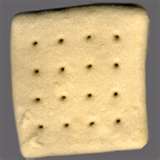
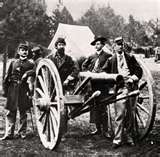
    In late Winter/early Spring of 1977, we had reached the Civil War.  Mr. K. read as eloquently as he could about what it was like during those days.  Many days, the soldiers had little, if anything, to eat.  In the darkest of times, they were reduced to frying up a thing called hardtack biscuits.  Hardtack biscuits  were a mixture of flour, water and salt that were then thrown into some hot oil and fried until golden brown.  No peanut butter, no jam on them.  Just a small flour biscuit was all these men would eat for days on end. 

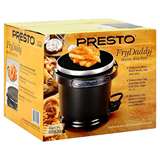
    That story did nothing for any of us, except for one classmate, Brian P.  In one of the rare times that I can remember in Mr. K.’s class, he actually raised his hand and ask to repeat the hardtack recipe.  Brian P. was so intrigued that he rushed home that afternoon to create an authentic Civil War moment for himself.  He pulled down his mother’s Fry Daddy, heated the lard inside to the highest temperature that was possible for the Fry Daddy to get to and began to make “at home” hardtack.  He mixed a large amount of flour and salt together with water until a very sticky ball was formed in the bowl.  He then spooned out six large globs of the mixture and placed them in the hot lard.  He was so excited.  He knew to fry them until golden.  He went to check on his Civil War staple and looked down into the Fry Daddy.  At that moment, the hard tack exploded.  There were too many air bubbles in the sticky mixture and they released into the grease at the same time poor Brian P. looked into the frying machine.  Hot grease rose out of the Fry Daddy like hot molten lava spews out of a volcano.  It hit Brian P. hard in the face and hands and created second degree burns all over his little white cherubic face, neck, hands and fingers.  He was burnt badly.  However, the next day, his mother sent him to school.
    We knew the next day that something was wrong.  We walked into Social Studies and it was not the same.  Mr. K. stood in front of us versus sitting at his desk.  He did not have the outdated textbook in his hands.  He didn’t call each of our names out and take attendance.  We were asked to quickly sit down for an important announcement.  We all sat down with the exception of Brian P.  He was not there.  He was absent.  Mr. K. proceeded to tell us the sad plight of Brian P. and his adventures in hardtack gone wrong.  We were told not to try the art of hardtack frying at home.  It was dangerous.  It would result in burns.  Then he motioned out into the hallway and in walked Brian P.  The class gasped and screamed at Brian P.’s bubbled up face.  Fried face, swollen eyelids, big lips and what appeared to be a webbed set of fingers.  One eyelid appeared to be inside out.  He sat down in his seat and said nothing.  People who sat near him leaned away.  Angie P. in our class asked to be excused as she thought she saw pus on one of his burns and she was going to get sick.  No one said a word as Mr. K. began reading about the Civil War as if nothing happened.

    That was then.  Now let me tell you the story if it happened now in modern times.

    Brian P. took his ear buds out of his ears and was flush with excitement.  The DVD he was watching on the school’s iMac was so interesting.  He was the first in his self-paced History class to get to the Civil War.  No one else knew or had even heard of hardtack as it was told to him from a long-ago taped Civil War veteran’s narrative who had made the biscuits for his troop.  He would go home this afternoon, he decided, and make a batch of “at home” hardtack to bring to his class in the morning in order to receive extra credit.  If he aced his History class, the sky was the limit at the number of private high schools where he had applied.  He could go anywhere!

    He went home and turned on the deep fat fryer that was part of the stove on the island of his parent’s kitchen.  Thank god Mom had wanted a replica of Paula Deen’s kitchen set up, complete with the built-in fryer.  Brian P. could hear the organic vegetable oil bubbling as it heated up for his project.  He mixed flour, salt and water into a large bowl until a sticky glob appeared.  He scooped out six mounds of the sticky mixture with an ice cream scoop his mom used only for cookie making and placed them in the hot oil.  He knew to wait until they were golden.  He looked over the fryer at the same time the “at home” hardtack exploded in his face. 

    Brain P.’s parents rushed into the kitchen.  His mother called 911 and gave a complete and detailed description of what had happened.  The ambulance and police were on their way.  Brian P.’s parents went to their fully stocked first aid kit and applied burn ointment to his wounds to stop the burning and to reduce pain.  Brian P.’s father went with him in the ambulance to the hospital.  His mother stayed at the house until Child Protective Services arrived to make sure there were no signs of child abuse or neglect at play here.  The other mother’s in the neighborhood would sneer for weeks at Brian P.’s mom asking amongst themselves what kind of mother leaves her child unattended in her Paula Deen kitchen.

    At the hospital, it was decided that Brian P. should be air lifted to a hospital with more of an advanced burn unit.  It was only second degree burns but better safe than sorry.  He was placed on an IV of fluids and an antibiotic.  His father also called in a favor from a collegue who asked his plastic surgeon friend in town if he could come to the new hospital in case there needed to be any stitches or facial work done.  How would Brian P. make it in his life with a scar or glaring spot of red on his face, neck or hands? 

    Brian P. did not return to school until six weeks later.  He was up to speed with the class, as his parents hired a tutor that taught him during the day the same lessons the other children were receiving in school.  His parents, however, had entered into a trial separation over who was at fault for the incident and the stress involved.  The class had already progressed to the Civil Rights Movement of the 1960s.  Each student told Brian P. of their interviews with law enforcement about if there was any funny business going on in history class.  Mr. K. had returned from his paid leave of absence that was done until further investigation had concluded.  Mr. K. was reprimanded, but not fired.  The self-paced DVDs were being reviewed by the parent’s association and might be replaced with newer ones based on the results of the Spring school fund raiser.

    In each story, Brian P. made a full recovery in all respects.  He had created a legacy for himself with a story that would be told for generations.  The great hardtack scandal would take on a life of its own.  As my friend Jo and I finished our look back at Brian P.’s bad luck, we talked about whether it was better then or better now.  Jo emailed me later and said how many of our classmates bring up the Brian P. hardtack story and his crispy little face.  She said she simply cannot believe, looking back on it, that his mother made him go to school like that.  That’s the kind of crap that used to happen.  That if it happened today, parents would get jailed.   He probably should have been in the hospital.   Her final words about Brian P. were that she thought she missed those days.  Those days of naïveté and ignorance were bliss.  That there was something to be said for all of it back then.  It got me to thinking and wondering what times were better and I decided to ask for your opinion.  Do you think times were better or worse back in the old times versus how they are now in modern times, especially as it relates to kids?

    All About Beans

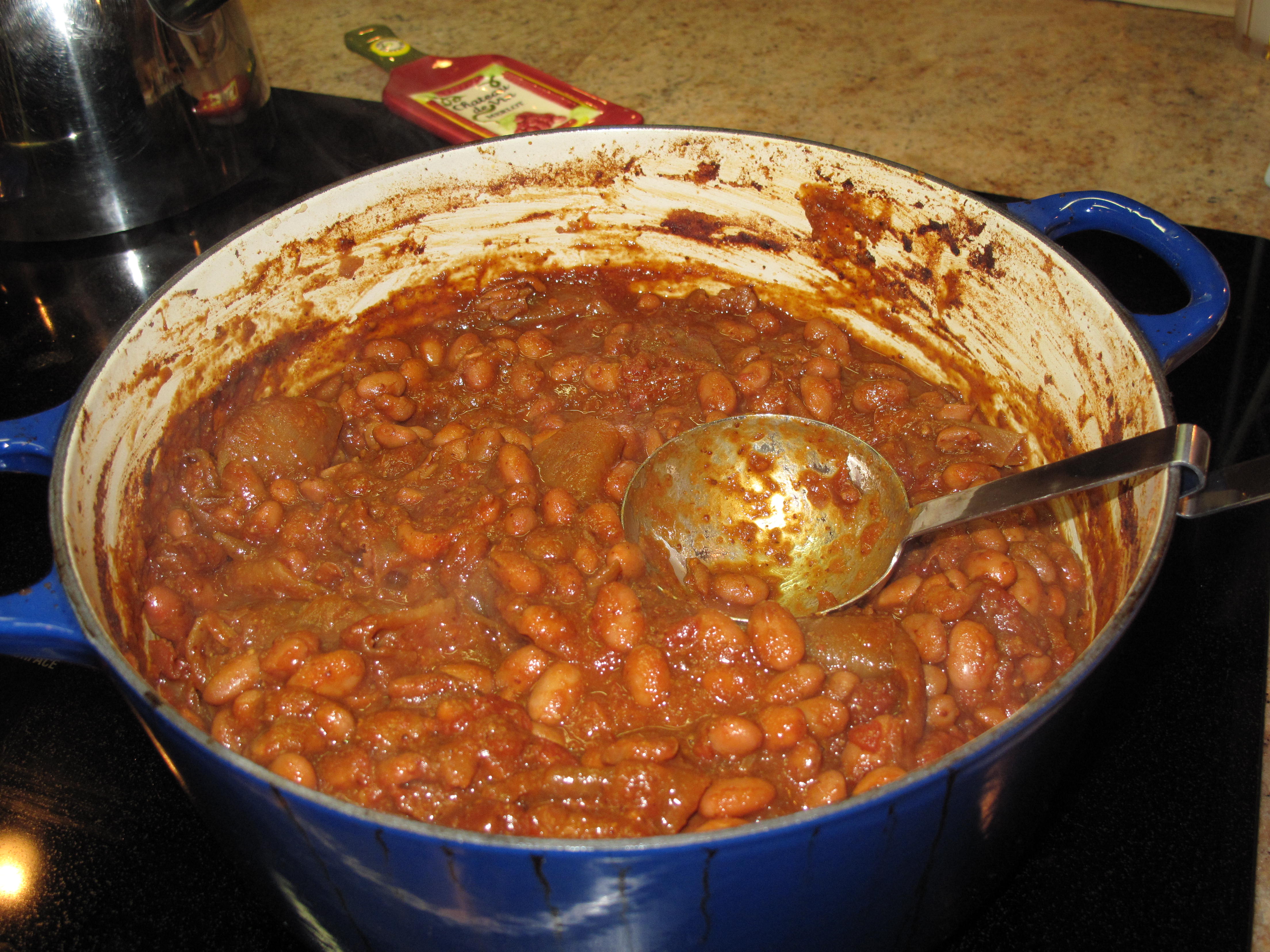
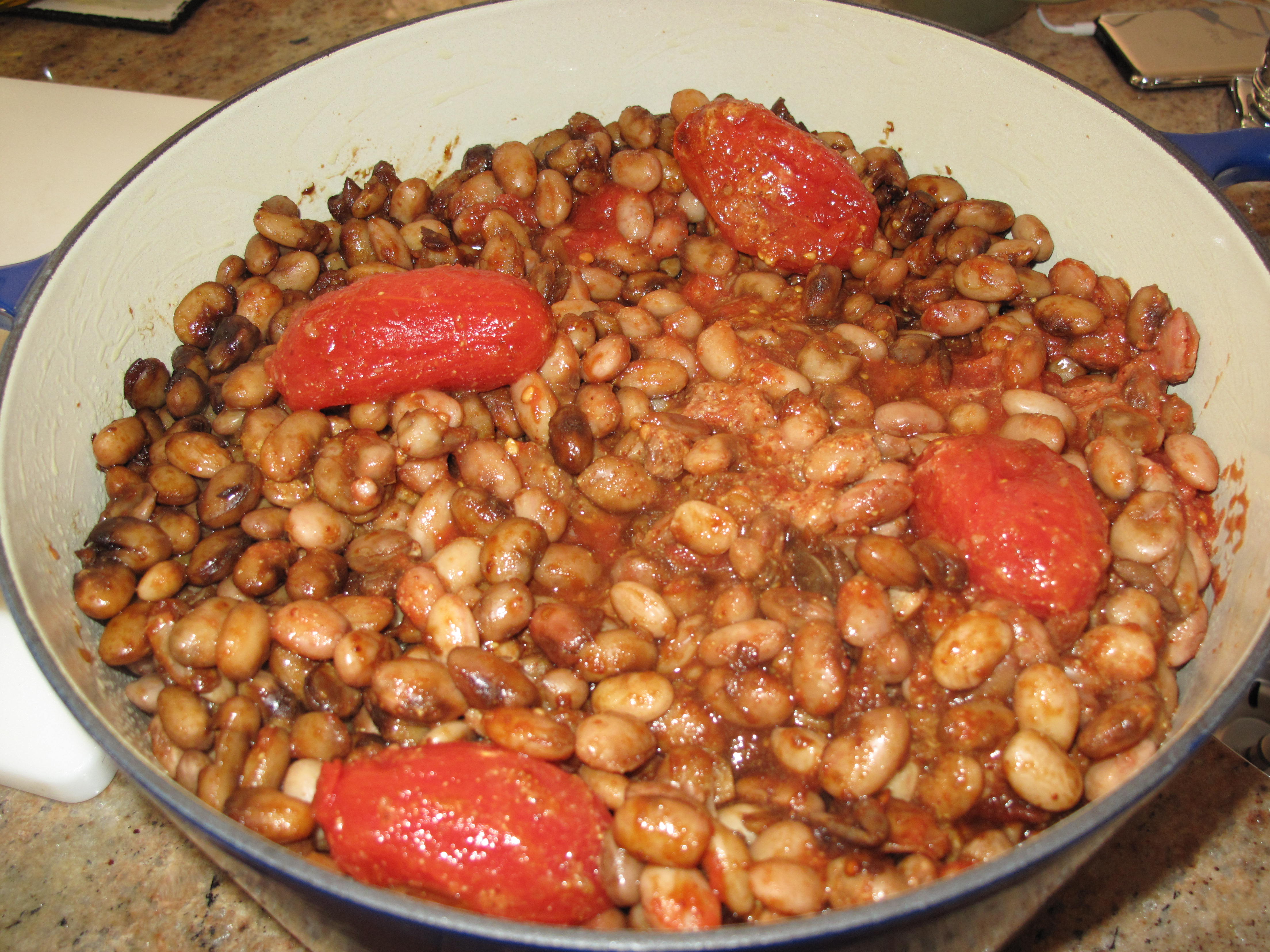
    This is a pot of easy-to-make baked beans.   The recipe is from garden blogger and author Margaret Roach.  She was recently on an episode of “The Martha Stewart Show” to celebrate the publication of her latest book and she cooked these with Martha.  Given that they were vegetarian, I decided to make some.  I think it is a good idea to try and eat a meatless meal as often as you can.  I felt good that everything in the pot was fresh.  I read the side of a can of baked beans in the supermarket and there were some ingredients that I could not pronounce.  How can they be good for you?  With this recipe, you know you are getting quality food.  This recipe makes a lot of baked beans so you can freeze what is left over and eat them at a later time.  Even though this recipe is vegetarian, if you are a meat eater, try substituting thick-cut bacon for the onions.  This recipe serves six.  However, I doubled the recipe to ensure I had a lot of baked beans left over to freeze.  Join me now as I make a pot of vegetarian baked beans:  

    Ingredients:

    • 1 pound dried cranberry, navy or yellow eye beans
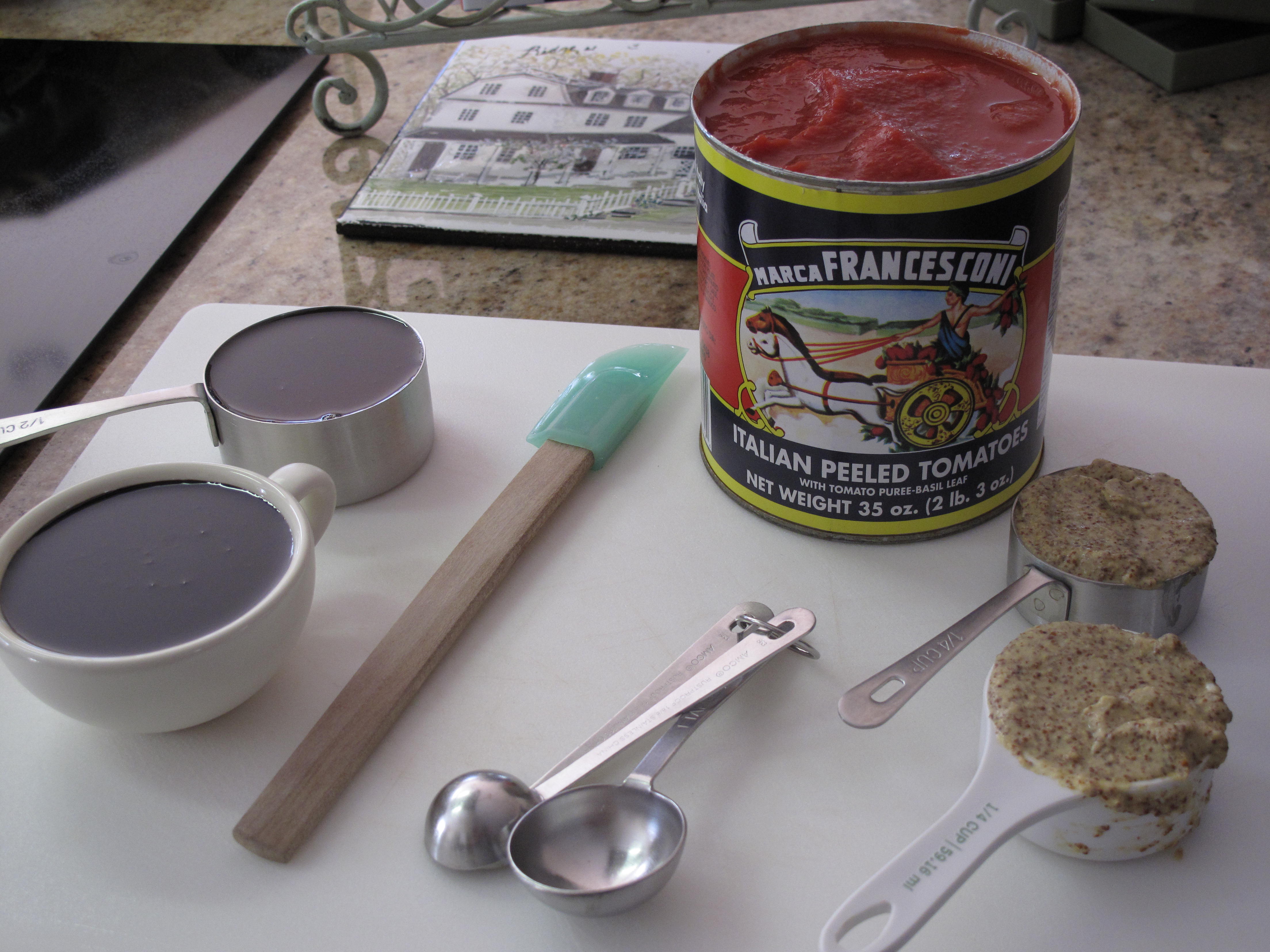
    • 1/4 cup molasses, preferably organic
    • 1/4 cup maple syrup
    • 1/4 cup grainy mustard
    • 6 fresh, peeled, or canned whole plum tomatoes (a large 35-ounce can holds 12 tomatoes)
    • 2 tablespoons olive oil
    • 2 medium onions, peeled and quartered
    • Boiling water
    • Coarse salt and freshly ground black pepper

    Before we begin cooking, let’s talk about the beans I used, again thanks to Margaret Roach.  In her TV segment, she mentioned a place to buy great beans.  The beans come from Rancho Gordo Specialty Foods in Napa, California.  What makes these beans special is that they are grown from heirloom seeds.  I used cranberry beans in the baked beans that I cooked.  Visit Rancho Gordo at their website, http://www.ranchogordo.com.

    Directions:

    Preheat oven to 325 degrees.

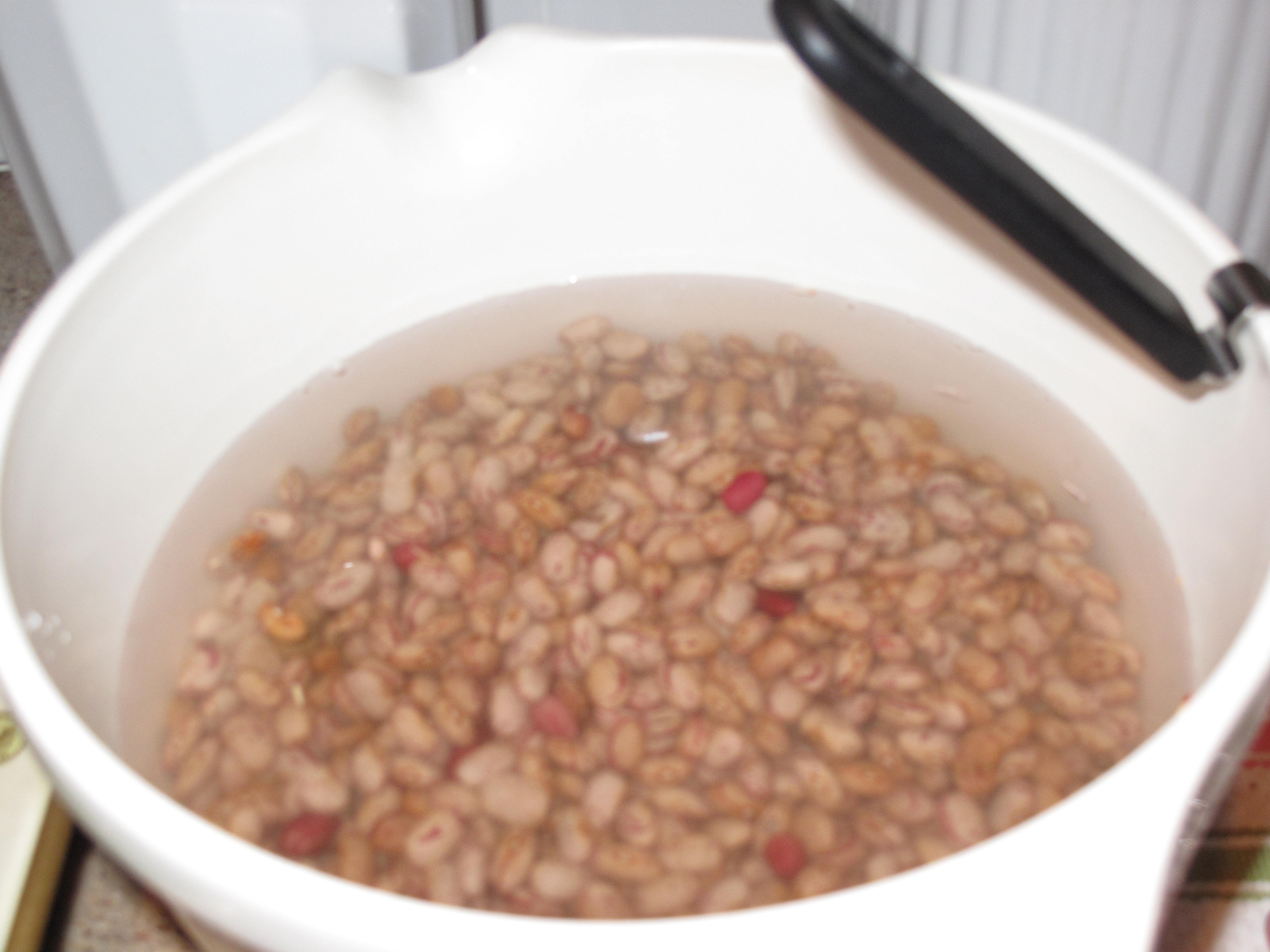
    Place beans in a large bowl and add enough water to cover; let soak overnight.

    Drain and place into a pot; add enough water to cover and simmer over medium-high heat for 30 minutes. 

    Drain and transfer to a large bowl; stir in molasses, maple syrup, mustard, and tomatoes.  Set aside.

    Coat the bottom of a Dutch oven or a 9-by-13-inch high-sided baking dish with olive oil.  Add onions and top with bean mixture.  Add enough boiling water to cover bean mixture by 1 inch.  Cover Dutch oven with lid or baking dish with parchment paper-lined aluminum foil.  Transfer to oven and bake until beans are softened, about 1 1/2 hours, checking water level and adding more as necessary.

    Uncover beans and continue baking until thick and syrupy, about 45 minutes more.  Season with salt and pepper and serve.

    These baked beans taste great.  They can be a great winter comfort food, but I also like baked beans during the summer with a grilled hamburger or hot dog.  Is there anything more American than that?  I have to tell you that you will not miss the bacon if you make the vegetarian version.  The beans I used were also much better than those found in canned baked beans.  Bigger, plumper, a little more substantial when you chew them…Rancho Gordo beans are a real find.  Thanks again to Margaret Roach for the bean find and the recipe.  You won’t be sorry you made these baked beans.  Do you have other vegetarian recipes you can share on Acorns On Glen?

    Another Great Steak Plus Fries!

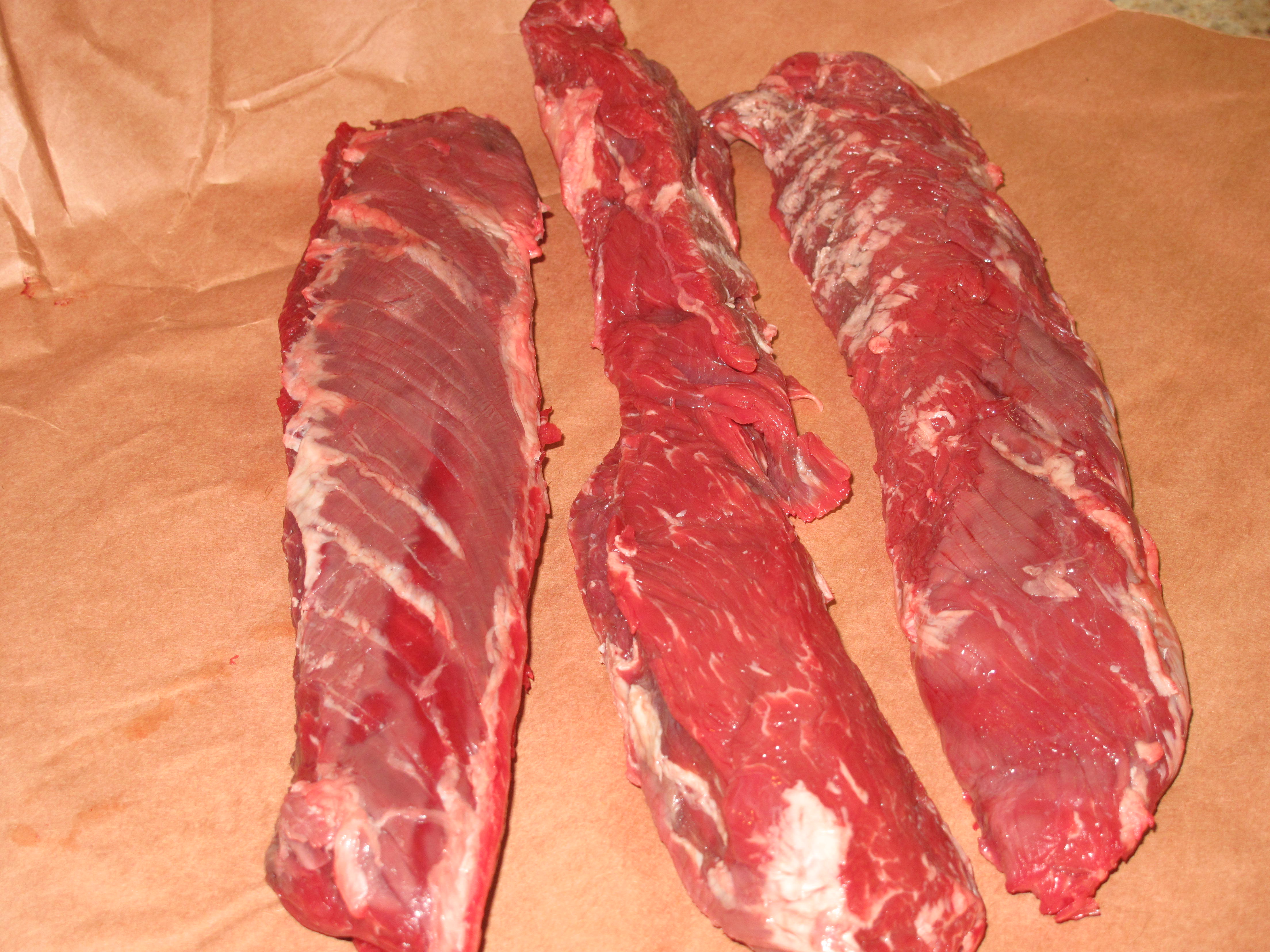
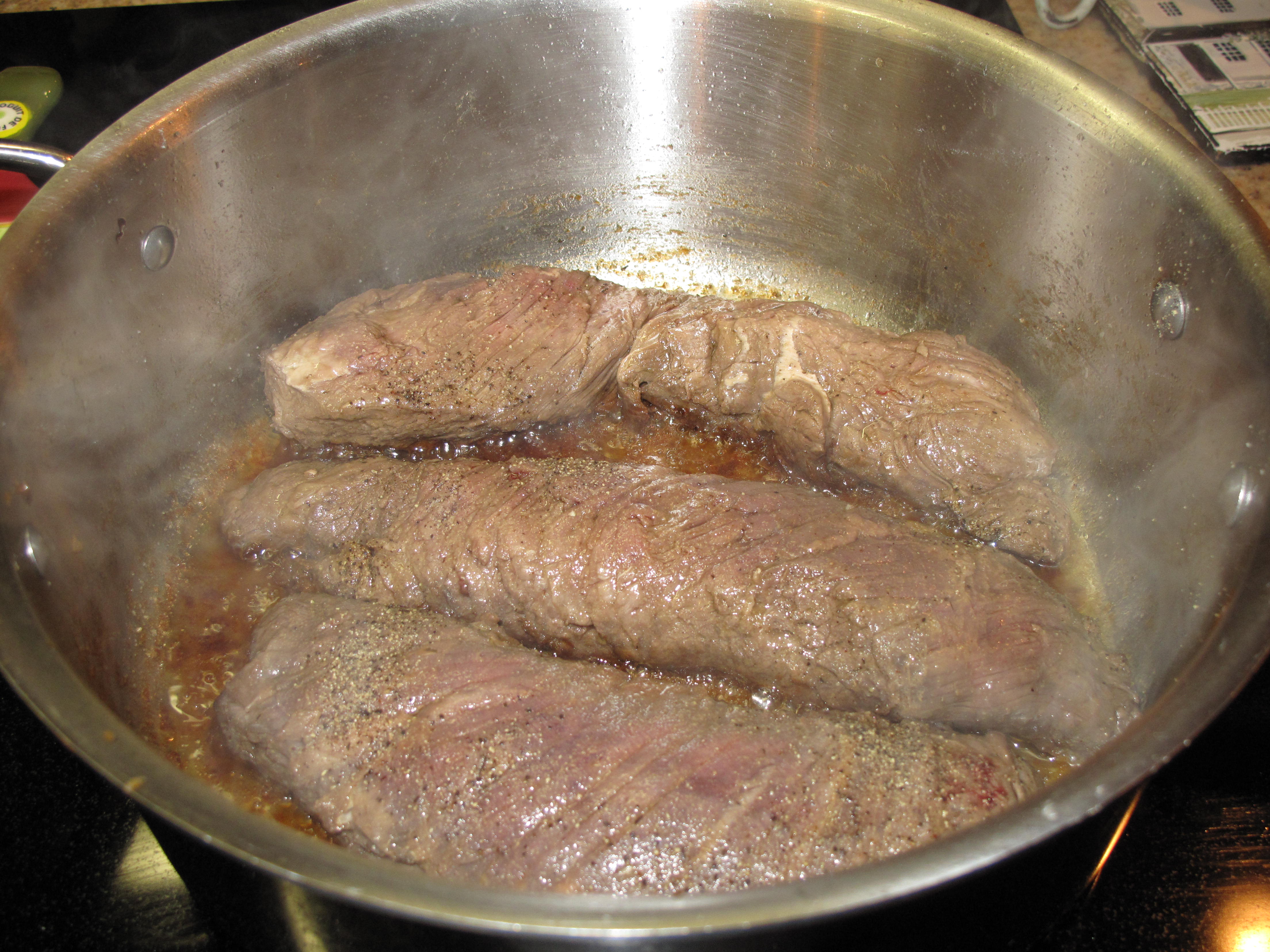
    This is another great steak recipe…..plus fries!  I know you will think this is a lie, but I don’t really eat that much red meat.  It really is by chance that I have posted so many steak recipes on Acorns On Glen.  I eat a lot of fish, pasta and chicken, but every so often, I crave a steak.  So the next time you crave a steak, here is a great recipe to cure your craving.  It all begins with that pretty little picture of meat above….the hanger steak.   

    A hanger steak is a cut of beef steak prized for its flavor.  In the past, it was sometimes known as “butcher’s steak” because butchers would often keep it for themselves rather than offer it for sale.  Hanger steak resembles flank steak in texture and flavor.  The hanger steak is not particularly tender and is best marinated and cooked quickly over high heat and served rare or medium-rare, to avoid toughness.  Anatomically, the hanger steak is said to “hang” from the diaphragm of the steer.  The diaphragm is one muscle, commonly cut into two separate cuts of meat: the “hanger steak” traditionally considered more flavorful, and the outer “skirt steak” composed of tougher muscle within the diaphragm. The hanger is attached to the last rib and the spine near the kidneys.  The hanger steak has historically been more popular in Europe, but over the last several years, it has slowly become more popular in the United States.

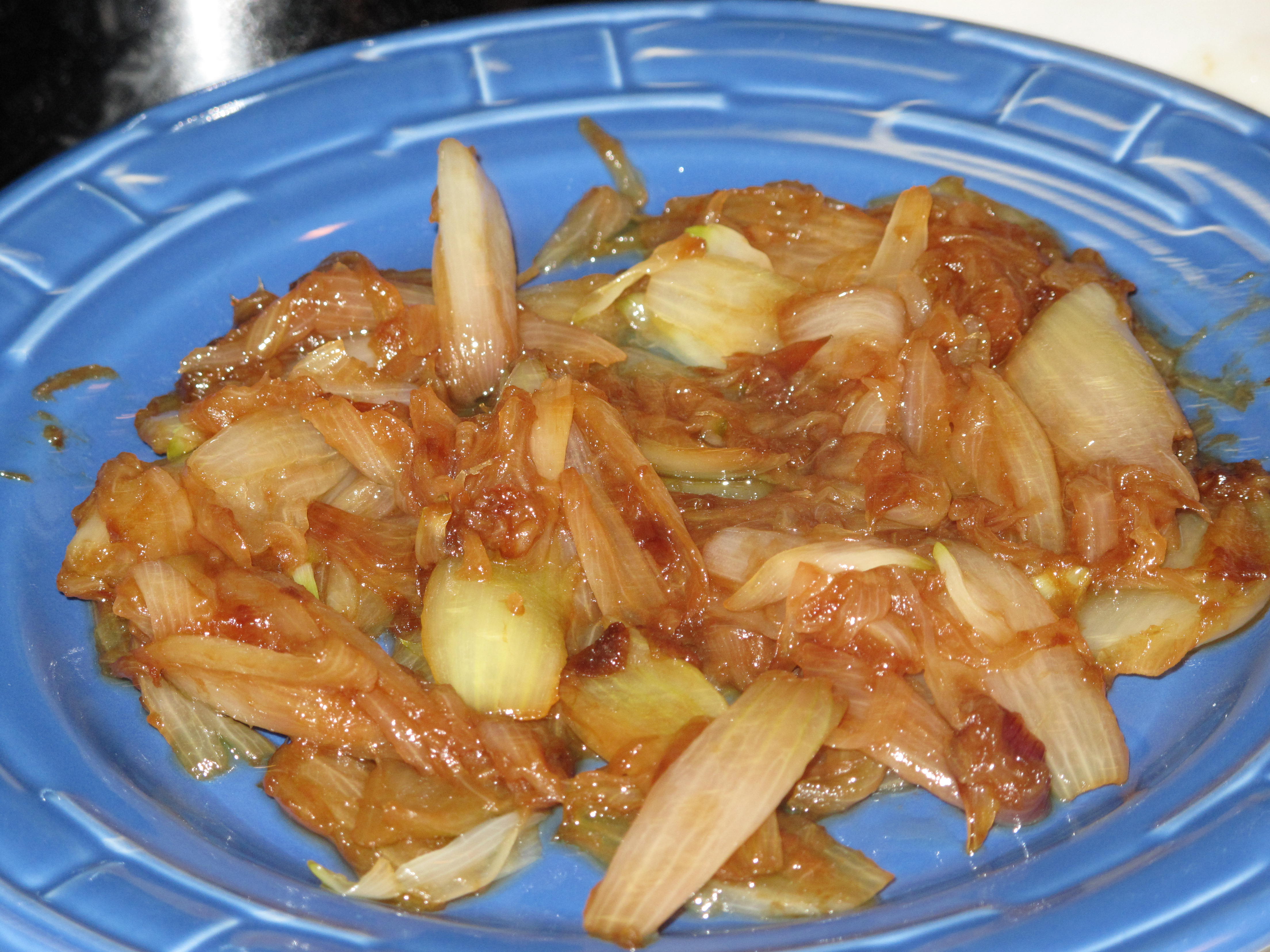
    What I liked about this recipe was how easy it was to prepare.  I loved the taste of the marinade and enjoyed serving the steak with Dijon mustard and carmelized shallots on the side.  The other great thing was the addition of the oven-baked fries into the mix.  I’ve never met a potato I didn’t like.  What could be bad about steak and fries?  I baked my fries into more of a hash brown looking dish versus cooking them longer so they would be crispy fries, but the choice is yours.  Here we go as we cook us up some steak and fries:
    Ingredients:

    For the steak:

    • 1/2 cup extra-virgin olive oil
    • 1/4 cup sherry vinegar
    • 2 garlic cloves, crushed
    • 4 teaspoons Dijon mustard, plus more for serving
    • 1 tablespoon Worcestershire sauce
    • 1 1/2 to 2 pounds of hanger steak
    • 5 medium shallots, halved or quartered
    • Coarse salt and freshly ground pepper

    Directions:

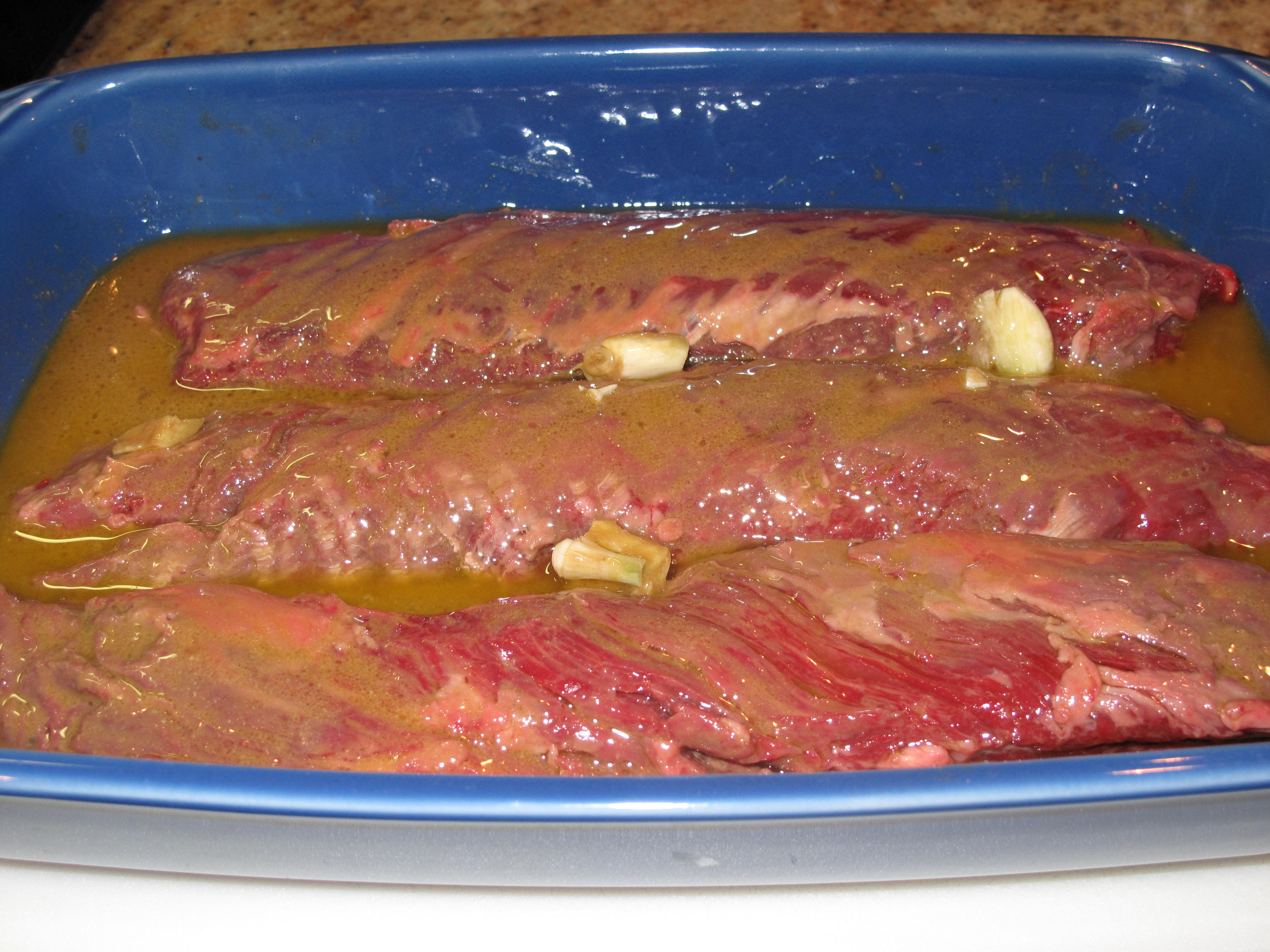
    Whisk together 1/4 cup oil, the vinegar, garlic, mustard and Worcestershire sauce in a large glass dish.  Place steak in dish; turn to coat with marinade.  Let steak marinate, turning often, for at least 20 minutes.  I kept my steak in the marinade for about an hour.

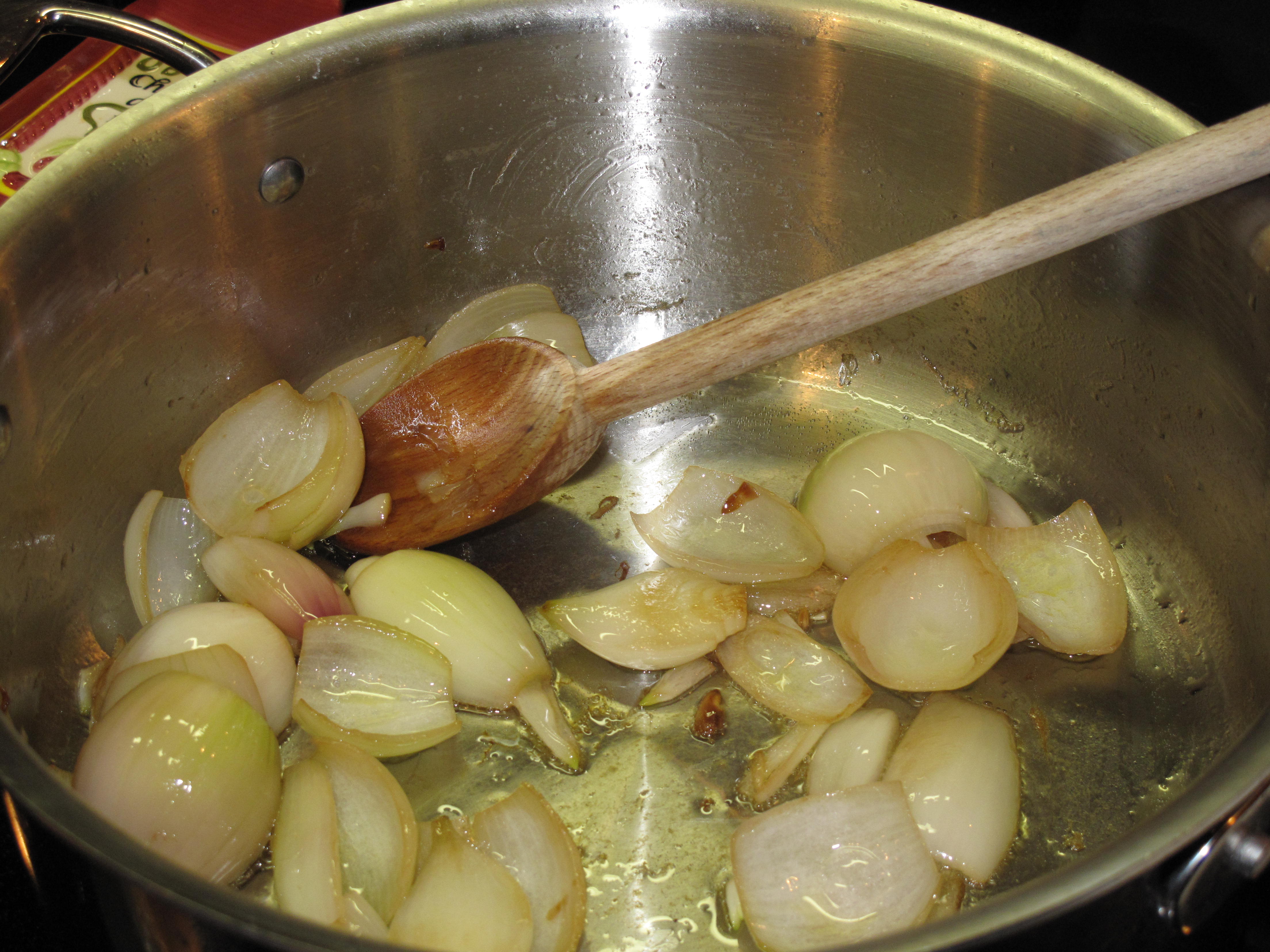
    Heat 2 tablespoons oil in a large skillet over medium-high heat.  Add shallots; cook, stirring often, until just golden, 2 to 3 minutes.  Reduce heat to medium-low.  Season with salt.  Cook, adding 1/4 cup water in batches as needed to keep shallots from sticking, until tender and caramelized, 15 to 18 minutes.  Transfer shallots to a plate.

    Wipe out skillet.  Heat 2 tablespoons oil over medium-high heat. Remove steak from marinade; pat dry.  Season with salt and pepper.

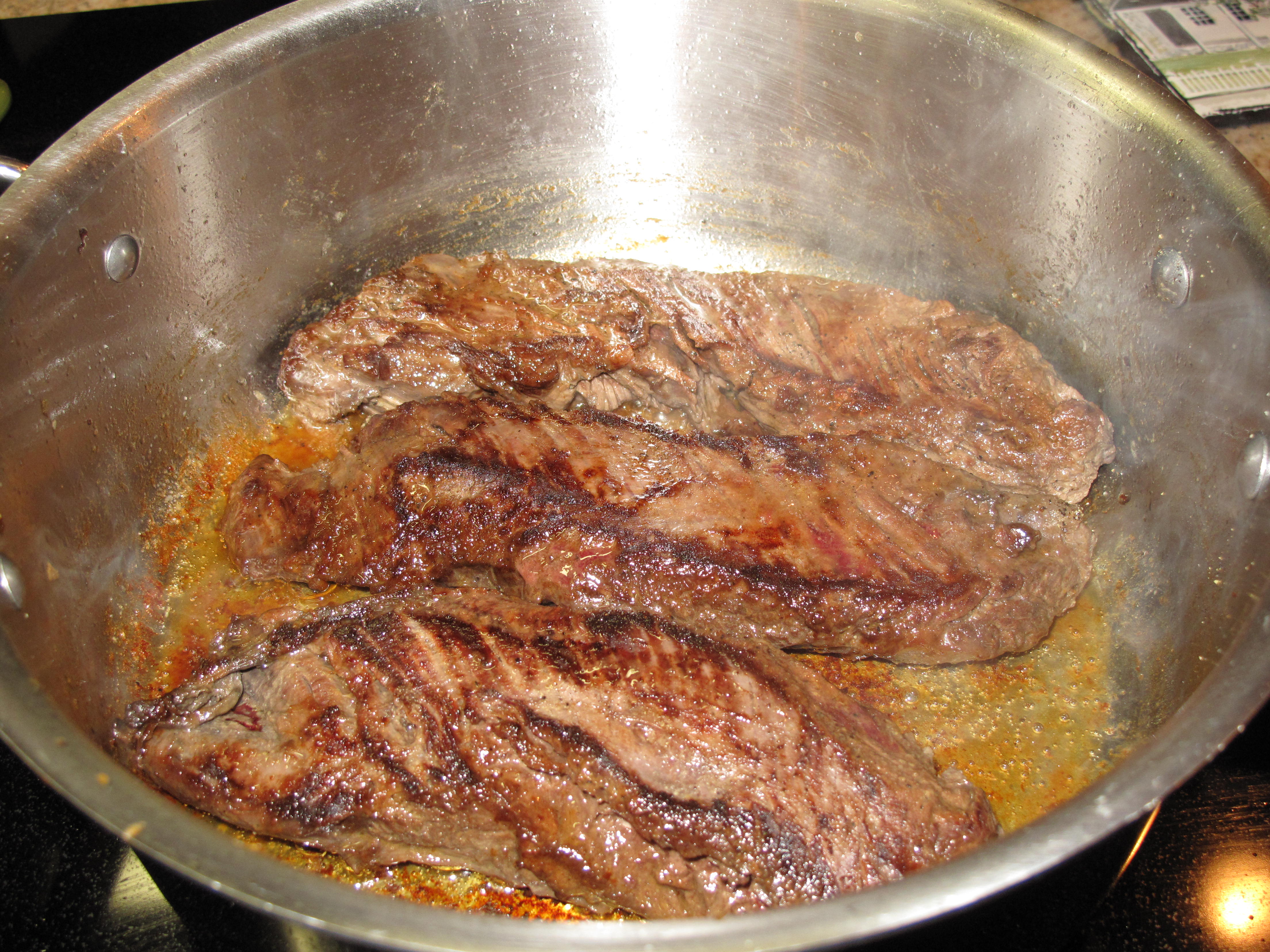
     Cook steak, turning once, until an instant-read thermometer registers 140 degrees (for medium-rare), 10 to 12 minutes per side.  Tent with foil; let stand at room temperature 10 minutes.  Season with pepper.

    Meanwhile, wipe out skillet; reheat shallots over medium heat.  Thinly slice the steak and serve with shallots and mustard.

    Ingredients:

    For the fries:

    • 2-3 russet potatoes (about 1 1/2 pounds), peeled
    • 3 tablespoons olive oil, plus more for baking sheets
    • Coarse salt and freshly ground pepper

    Directions:

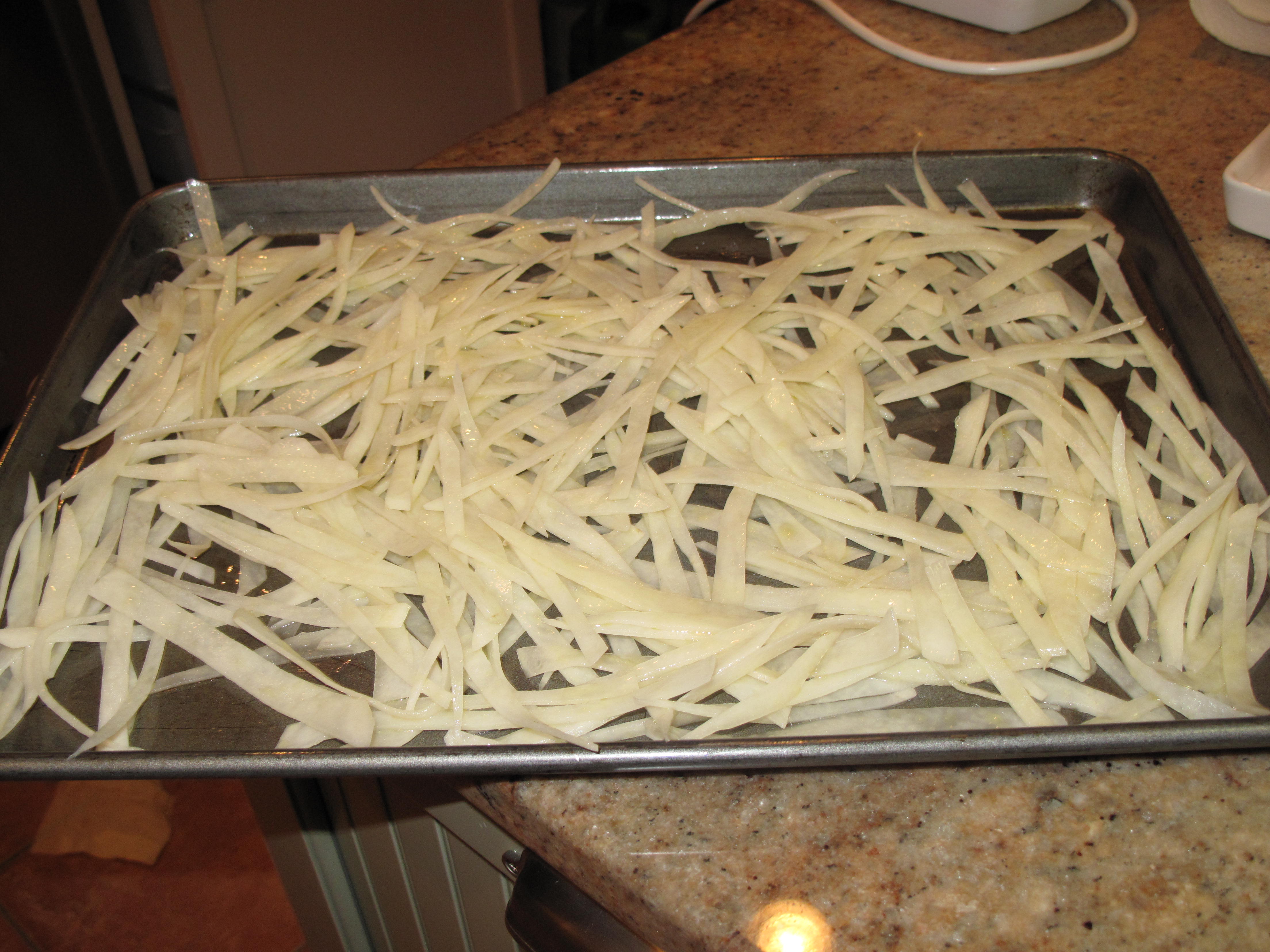
    Using a mandolin, cut the potatoes into ultra-thin shapes (or “shoestrings”).  You can do this up to four hours ahead; to prevent discoloration, place cut potatoes in a bowl of cold water in the refrigerator until ready to use, then gently pat dry with paper towels.

    Preheat oven to 425 degrees.  Lightly coat two baking sheets with oil.  Toss together potatoes, oil, and 1 teaspoon salt in a bowl.  Dividing evenly among prepared baking sheets, arrange potatoes in a single layer.

    Bake, turning potatoes with a metal spatula a few times and rotating sheets halfway through, until crisp and golden brown, 18 to 20 minutes.  Transfer potatoes to a large piece of parchment paper; let cool 5 minutes, then season with salt and pepper, and serve.

    Pretty easy, right?  Both recipes feed 4 people.  Although I have posted a couple of steak recipes here on Acorns On Glen, I have found that each one is very different based on the cut of steak that we used.  See which one you like better-ribeye vs. hanger steak.  I think you’ll find that both of them are equally as tasty as the other.  Enjoy!  Have you liked the recipes we’ve posted so far here on Acorns On Glen?

    When The Lid Blows Off The Pot – Another Way

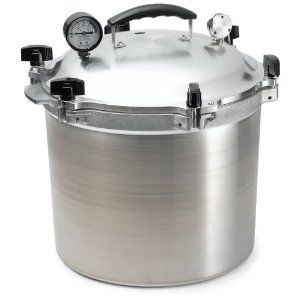
    This is an old-fashioned pressure cooker.  I had to laugh at a comment made by Kathy D yesterday about the title of my post.  She said she thought  the story would be about a failed pressure cooker experiment.  This reminded me of the things my mother told my brother and I when we were young.  The things that we were not allowed to do.  Only in my mother’s case, she would tell us not to do something, followed with a reason that would scar us for the rest of our lives.  Let me give you my top three “do not do this” warnings given to my brother and me from my mother which include her special twists for child terror.

    “Don’t play with matches”.  A simple request from any mother, right?  My mother started out right, “Don’t play with matches”, but then she would scare us to death with the rest of the story, “or you’ll end up catching on fire like I did”.  OK, it’s true, my mother did fall into a fire at a young age and was burnt very badly.  However, after we were warned, there was always a threat to whip up her sweater or blouse and show us where she was burned.  She’d come at us lightly tugging at the bottom of her top for added drama.  Although she didn’t say it, we knew what she was thinking.  Don’t you two even talk back and make me pull this up and show you!  It worked–she had experience with acts of fire….why would we go against her.  What kid wants to become a human torch?  My brother and I could not strike a match until we were taught around eighteen years of age.  Up until that point, the site of a match would terrify us.  We would tell everyone, “Sorry, we are not allowed to use a match, we don’t want to ignite”.  I’m still not good at lighting one to this day and can feel my hair melting off or my clothes going up in flames every time I light a candle or, god forbid, a bonfire.  That’s how much matches scare us, thanks to our mother.

    “Don’t eat that fish until I check for bones”.  We would look up and then it would come “because if you get a small bone in your throat this will be the last dinner you see before you choke to death”.  Make mine a hot dog please!  Until almost fourteen or so, my brother and I would never begin to eat fish until my mother pulled it apart piece by piece and ensured that it was bone free by pinching it between her fingers.  To this day, I can be at the most expensive restaurant with a piece of fish in front of me and when I feel a bone in my mouth I panic knowing that this small blade is going to slide down my throat, ripping it to shreds until it lodges, and then end a pretty good life in a tragic fashion.  When they tell my mother of my demise, she would lift her head, wipe her tears away and say to my father “Didn’t I warn them?”

    Now comes my favorite.  “Don’t ever use a pressure cooker and if you are around someone who is using one, leave immediately”.  Then the rest of the story, “You know that Coleen Jenkins (name changed to protect the innocent) was never right after her pressure cooker lid exploded in her face”.  In my home town, women cooked their asses off to please their man.  They baked, broiled, steamed, fried, roasted and pressure cooked.  Whatever it took to put a meal on the table.  What could be bad with chili in a minute or a 20 pound turkey in less than an hour?  I’m not sure that my brother or I ever met or knew Coleen Jenkins, but we could imagine her plight.  How could you not be damaged in some way by having a red-hot steel disc with attachments hit you smack in the face while it was traveling at the speed of light?  We would imagine her twisted mouth, dent in her forehead, slurred speech, one crossed eye.  That mental image was enough for my brother and I to picture in our minds to make sure that anything with a valve was not our friend.  I have a pressure cooker now.  When we use it here on Glen Road, I break into a cold sweat and run into the other room thinking out of sight, out of mind.  I pray, “Oh God, please don’t make us like Coleen Jenkins, I beg you!”

    What can I say?  It worked with my mother–no matches, no un-pinched fish and no pressure cookers for my brother or me until early adulthood.  She did her job…..well, in a different manner than most shall we say, but she did her job.  What crazy things were you told not to do by your mother when you were younger?