Estate Sale Stewartia To Honor ‘Now, Voyager’

This tree is to pay homage to our favorite movie, ‘Now, Voyager’.  Have you ever seen ‘Now, Voyager’?

The 1942 movie stars Bette Davis and Paul Henreid.  Charlotte Vale (Davis) suffers under the domination of her Boston matron mother until Dr. Jaquith gets her to visit his sanitarium where she is transformed from frump to elegant, independent lady.  When she goes off on a South American cruise, she falls in love with Jerry (Henreid), already married.  Back home she confronts her mother who dies of a heart attack.  Charlotte, guilt-ridden, returns to the sanitarium where she finds Jerry’s depressed daughter Tina.  Tina achieves happiness through her attachment to Charlotte and the two move back to Boston.  When Jerry sees how happy his daughter is, he leaves her with Charlotte.  What about marriage for Charlotte and Jerry? Davis utters one of her most famous lines, “Don’t ask for the moon when we have the stars.”

One of our favorite parts is when Jerry says that Charlotte looks like a camellia in a white dress she is wearing while on their cruise.  When she returns to Boston, Charlotte receives a corsage of camellia flowers from Jerry and then she continues to wear camellias on her dresses as a reminder of her love for him.

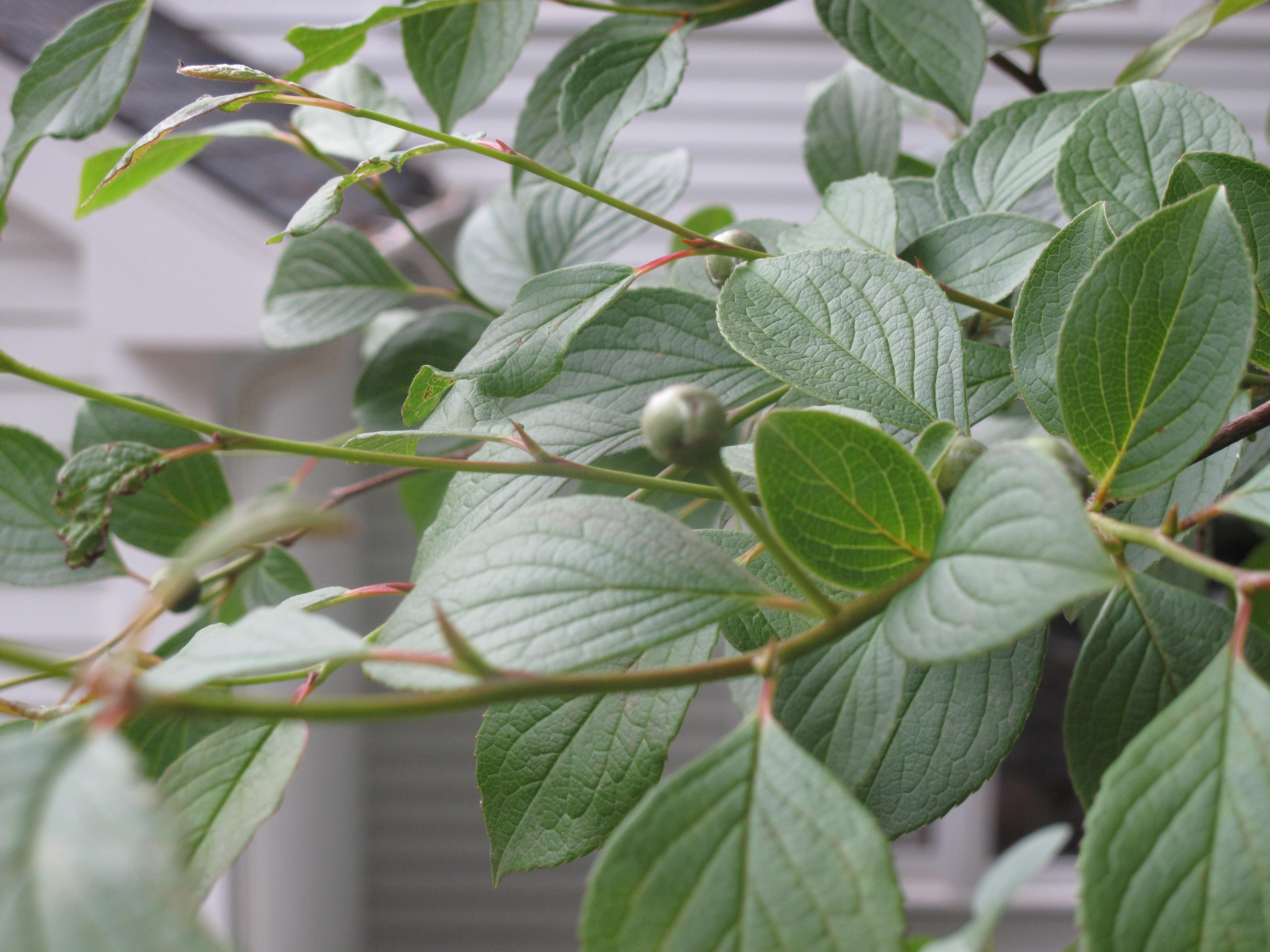
Two weeks ago, I was contacted that there was an estate sale in the area that included garden plants from the estate.  I have never heard of that in my life.  The estate actually dug up mature trees, bushes and shrubs and sold them.  In looking at the plant list, I saw that there was a Stewartia Pseudocamellia that was over 10 feet tall.  While not a true camellia, the flowers are so close, I knew I had to have it in our yard to pay homage to ‘Now, Voyager’.  I won the auction for the Stewartia and had it planted in our backyard.  Here’s a little background on our Stewartia:

Stewartia Pseudocamellia is a plant species in the genus Stewartia in the family Theaceae, native to Japan and Korea.  It is a small to medium-sized deciduous tree, often with multiple stems and/or low branching trunks.  The bark is smooth textured, exfoliating as the plants age and has a camouflaged or mottled appearance with patterns of dull orange and green with grey mixed in.  Because of this, it has great Winter appeal as it displays its bark against the snowy landscape.

The trees are pyramidal to rounded in shape with deep green colored foliage.  Young stems have a zig-zag shape with flattened, divergent buds.  The leaves are arranged alternately on the stems with an elliptical shape and finely serrated edges.  In the fall the foliage turns yellow, red or purple. 

The flowers have five white petals with orange anthers and are shaped like Camellia flowers, round and flat to somewhat cupped.  They are produced in Summer, generally in June until the end of August.  Each flower is short-lived, but many are produced that open over many weeks.  The fruit is a brown capsule, triangular in shape with four or five angles, persistent on the trees but not showy.

We’ve often said that we like plants in our garden on Glen Road that are unique in nature or have a story behind them.  So the Stewartia fits right into what we like in the garden.  So now you know that on a clear night when the moon and the stars are shining bright, we will be outside standing by the Stewartia talking about ‘Now, Voyager’.  The two of us and the Yorkie….let’s consider her our Tina.  What are your favorite old-time movies?

Lots Of Bling – Christie’s Important Jewels

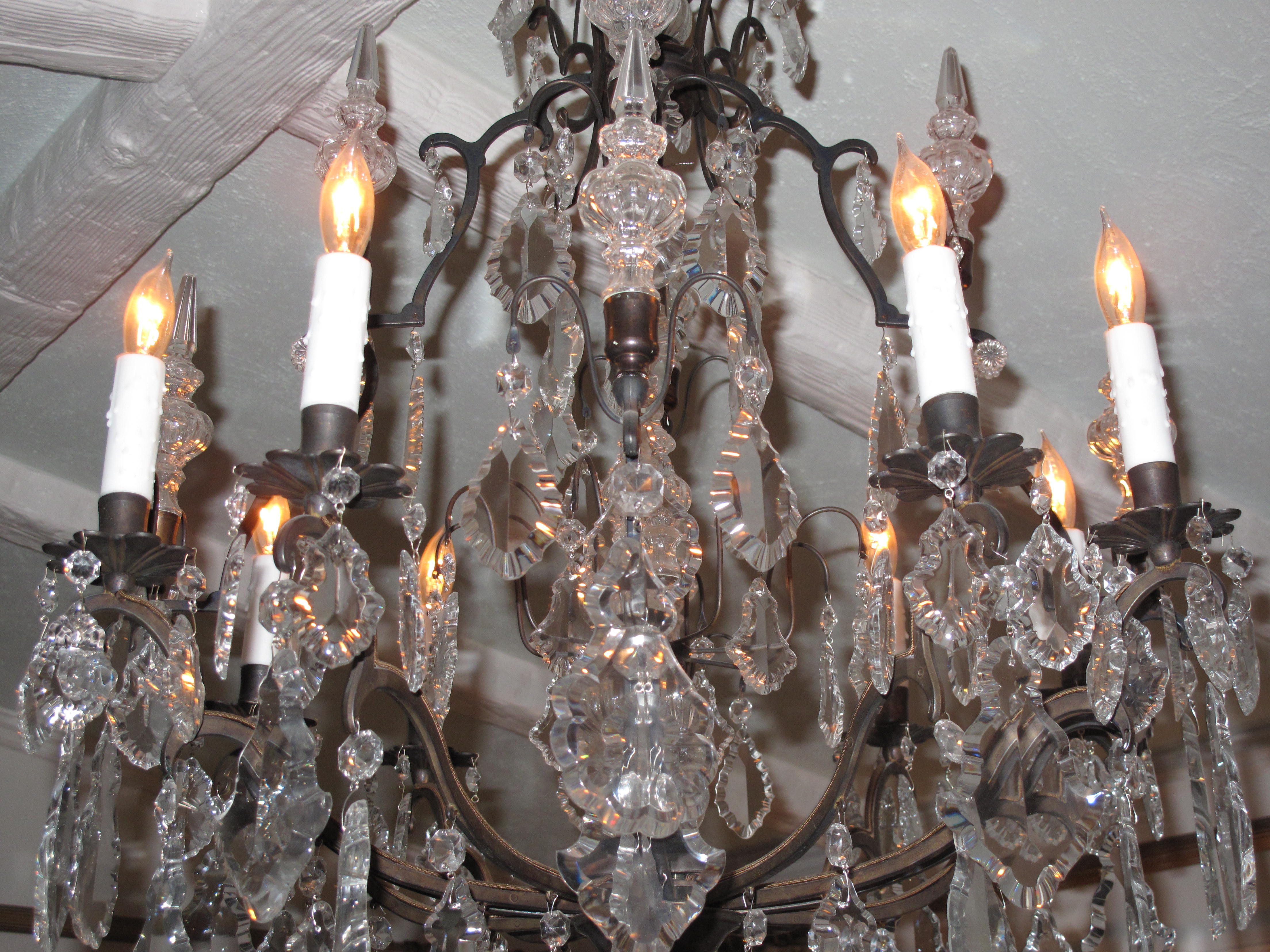
This is some major bling.  We were invited to a private viewing event for Christie’s Important Jewels auction before the auction takes place on Tuesday, June 14 at 10:00 AM.  We have always like jewelry.  Both of our mothers love to wear jewelry and they both own a lot.  We like the beauty, but also like how fine jewelry is made.  You need to have quite an intricate construction if you hope to hold onto your massive stones.  We also like the history of jewelry.  Pieces like we saw at Christie’s auction house have a story.  Whether it is suppressed emotions that come out in Victorian jewelry or Hollywood-style sex and glamour that come out from more recent pieces, finding out who wore it, how it was made and why it is being sold is always a great story.  The auction contained 125 pieces….some more understated than others.  The pictures were all taken from our i-Phone.  They aren’t too bad considering they were taken with a phone through glass viewing cases and bright lights.  Here are a few photos of our favorite pieces we wanted to share with you.  Enjoy!!

This is an emerald and diamond ribbon bow, designed as a cluster of marquise and pear-shaped diamonds and emeralds.  The bow is enhanced by calibre-cut emerald detail and is mounted in gold and platinum.  The bow is signed by Sabbadini.

$7,000 – $10,000 (or as high as the bidding goes)

This ring is set with a pear-shaped diamond, weighing approximately 10.01 carats, flanked on either side by a pear-shaped diamond, each weighing approximately 1.02 carats mounted in platinum.

$1,100,000  – $1,500,000

This is a diamond, ruby, onyx and gold cuff by Verdura.  The wide onyx cuff centering on a sculpted gold plaque, set with cabochon rubies and circular-cut diamonds, mounted in gold.  Christie’s research has found that this cuff is the widest onyx Verdura cuff to be offered at auction.

$20,000 – $30,000

This diamond bracelet is designed as an openwork circular and single-cut diamond wide band, set at the center with a graduated series of baguette-cut diamonds, mounted in white gold.

$10,000 – $15,000

Stunner alert!  The necklace is set with a graduated series of five cabochon emeralds, each within a circular-cut diamond surround, spaced by circular-cut diamond swags, to the circular-cut diamond scalloped backchain and cabochon emerald clasp (which you can’t see from this photo), mounted in platinum and 18k gold.  The ear pendants (not earrings I guess if you are loaded) each suspend a pear-shaped cabochon emerald, within a graduated circular-cut diamond surround, from a circular-cut diamond link, the surmount set with a cabochon emerald, with a circular-cut diamond surround, mounted in platinum and gold.

Necklace $60,000 – $80,000

Ear Pendants $10,000 – $15,000

The star of the show!  A diamond ring set with an oval-cut diamond, weighing approximately 46.51 carats, flanked on either side by a pear-shaped diamond, weighing approximately 1.01 carats, mounted in platinum.  The catalog from Christie’s says it is the property of a distinguished lady.  We’re thinking Elizabeth Taylor’s estate, but who knows??

$2,500,000 – $3,500,000 (wrap it up….we’ll take two)

We hope you liked our little virtual jewelry show.  If you can afford a majority of these pieces, please let us know so we can adopt you as soon as possible.  It’s fun to do something different and we wanted to share this night with you.  Let us know if you would like us to place a bid for you.  You can trust us with your cash.  Have you ever seen bling like this before in your life?

When Did I Become Such A Follower?

This is the question I’ve been thinking about since we started Acorns On Glen.  When did I become such a follower?  Not when I was a kid.  In fourth grade, in the comments section of my report card, my teacher wrote that I was good at leading other children towards a common goal…..and that I was a good talker.  I was an officer in one of my grades in high school….I think it was freshman year.  I was editor of my school newspaper for a few years.  All signs were pointing in the right direction.  I was still a leader in college.  I was president of my pledge class at the fraternity.  I was a member of the elite summer orientation staff for incoming freshman.  Again, all signs were a go.   So when, as an adult, did I stop producing original ideas and leadership potential?  My vote…..when my sad ass discovered the internet and that damn do-it-yourself television.

Think back to your grandparents.  How did your grandmother learn to cook something simple, say a meatloaf?  She either learned by word of mouth or she learned by trial and error.  The recipe could have been handed down from generations of hard cooking women in her family.  She could have talked to a sister or a neighbor about making meatloaf and wrote down the ingredients and instructions that they gave her and then began to cook.  She used real, live human interaction versus online social networking.  She could have also gotten the idea in her head and cooked it through several different incarnations making sure to tweak things she didn’t like from the time before and remembering to keep things in it that were good.  Old time trial and error versus instant internet gratification.  With my family, maybe my father, aunts and uncle didn’t like my Grandma’s first shots at meatloaf making, but by the time I was a child, she had perfected her art.

The garden is the same story.  How did my Grandmother know to only dig horseradish and grind it up in months that contained an ‘R’ in them?  She was right.  Months without an ‘R’ produce lousy horseradish…Julys and Augusts are just too hot.  Again, she had an idea and either consulted a real, live person or experimented on her own.  Somehow, she managed to figure things out.  She must have talked with someone on the rules of horseradish or sat down to some sad tasting pulp, but she figured it out.  She accomplished tasks knowing she had done her own research, made all the decisions and had done it her way.  She was her own expert.

Now take me!  I’ll confess.  I look at all of the things that I do to my house, that I cook or bake in the kitchen or that I grow in my garden, and while I’m proud of my accomplishments, they have most likely come from someone else’s original idea.  Ideas from others that I’ve said “Wow, I’d like to do that” and either copied or took the initial idea and tweaked it to fit my lifestyle.  When is the last time I sat down and said I’d like to make a dish in the kitchen that contained a certain ingredient and then added it and other ingredients in a bowl trying to create my tasty little idea?  Never.  If I ever did do that, God forbid if it was bad tasting.  Would I try it again with some new twists or would I just abandon the idea altogether?  If the first time was a flop, would I try to think it through and make it a success a second or third time?  I doubt it.

I’ve made meatloaf and worked in my garden recently, just like my Grandma did years ago.  My meatloaf recipe came straight off the internet from http://www.MarthaStewart.com.  I found the recipe in less than a minute.  As I printed my step-by-step instructions out, I sat there in a panic thinking what was meant by “good” ketchup in the recipe.  What the hell is “bad” ketchup?  In the garden, I decided to plant artichokes this year and see if they would grow in Connecticut.  How did I come up with this idea?  A picture showing them growing in my area off of someone else’s iPhone.  So what was my next step?  I googled “artichoke growing” on the internet and received hundreds of sites with step-by-step growing instructions.  So I then ordered the seeds (off the internet) from a seed company I saw mentioned on a TV show and then planted them in a growing system I heard described on the radio and then put them under a grow light I saw on another internet site.  By the way, the grow light had four and a half stars attributed to it on the internet meaning it was a customer top favorite.  How could I get the one that seemed better, but with fewer stars attributed to it?  Do you see what I’m saying?  Not one original idea in my head.  No leadership; no innovation; no thought leadership.  I’m a lemming just following the leader until I eventually fall off the side of a cliff.

In business today, there must be a slew of followers.  Perfectionist people who scour for innovation and new ideas by reading the internet for hours.  Site by site; post by post.  Anything new and exciting is printed off or typed into their computer.  They search on Google to find exactly how to make the idea a reality.  They tweak the original just a little to call it their own.  Then they introduce the final product to the world.  In fact, aren’t followers in the business world now called great executors?  This new term utilized in order to soften the blow to a group of people trained to follow others versus taking a risk on their own.  An executor, that’s what I am.  Not a leader or a thought provoker, but rather someone who can execute someone else’s idea to perfection.  My meatloaf looked just like the picture in Martha’s recipe; my grow light artichokes are picture perfect. 

Ideas=F; Execution=A+……that’s me. 

I curse you, Martha, Emeril and Ina.  Up yours, Vern and you Design Stars.  May seeds never grow in your Victory Garden, Old Man Crockett! 

So how do people of today change this course?  How do we become thinkers again versus just executing?  If my Grandma were here, I’m sure she could sit down and think up a solution.  Me?  I’m just going to Google it.  What do you think about leaders versus followers in today’s world?

Old Times Versus Modern Times…A Debate

This is a reflection on now versus then, and which one is better.  Recently, my friend Jo and I were catching up and talking about the old times.  She and I grew up in the same small town in Iowa and while we have gone our separate ways, when we do connect, it is like we just talked yesterday.  She has been my friend since I can remember.  When someone knows all about your life, you know they are good friends.  For some reason, we were talking about books we were  both reading on the Civil War.  From that, both of us remembered a story from our Junior High days and were laughing about what would happen now if the same series of events unfolded.  I am going to tell the story the old way as best as I can remember and then I’m going to tell it the modern way.  What happened then versus what would happen now.  You can help decide which were better times.  It all starts in Mr. K.’s Social Studies class in 1977.

Mr. K. was not necessarily a great teacher.  His method of teaching was reading to you from a copy of our Social Studies textbook.  There was nothing written on the chalk board, no group discussion, no questions.  Just Mr. K. droning on about what happened in the world from the beginning of recorded history to the start of World War II.  You see, our textbooks were outdated.  Being determined to finish reading the textbook to us before the year ended, Mr. K. ended where the book did, which was the beginning of World War II.  It would be much later in our lives before we ever heard stories of nuclear bomb shelters, John F. Kennedy, the Vietnam War or Martin Luther King, Jr.  Basically, no knowledge of history from 1943 through 1977 for the Class of ’82.

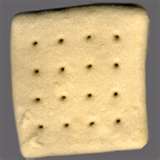
In late Winter/early Spring of 1977, we had reached the Civil War.  Mr. K. read as eloquently as he could about what it was like during those days.  Many days, the soldiers had little, if anything, to eat.  In the darkest of times, they were reduced to frying up a thing called hardtack biscuits.  Hardtack biscuits  were a mixture of flour, water and salt that were then thrown into some hot oil and fried until golden brown.  No peanut butter, no jam on them.  Just a small flour biscuit was all these men would eat for days on end. 

That story did nothing for any of us, except for one classmate, Brian P.  In one of the rare times that I can remember in Mr. K.’s class, he actually raised his hand and ask to repeat the hardtack recipe.  Brian P. was so intrigued that he rushed home that afternoon to create an authentic Civil War moment for himself.  He pulled down his mother’s Fry Daddy, heated the lard inside to the highest temperature that was possible for the Fry Daddy to get to and began to make “at home” hardtack.  He mixed a large amount of flour and salt together with water until a very sticky ball was formed in the bowl.  He then spooned out six large globs of the mixture and placed them in the hot lard.  He was so excited.  He knew to fry them until golden.  He went to check on his Civil War staple and looked down into the Fry Daddy.  At that moment, the hard tack exploded.  There were too many air bubbles in the sticky mixture and they released into the grease at the same time poor Brian P. looked into the frying machine.  Hot grease rose out of the Fry Daddy like hot molten lava spews out of a volcano.  It hit Brian P. hard in the face and hands and created second degree burns all over his little white cherubic face, neck, hands and fingers.  He was burnt badly.  However, the next day, his mother sent him to school.

We knew the next day that something was wrong.  We walked into Social Studies and it was not the same.  Mr. K. stood in front of us versus sitting at his desk.  He did not have the outdated textbook in his hands.  He didn’t call each of our names out and take attendance.  We were asked to quickly sit down for an important announcement.  We all sat down with the exception of Brian P.  He was not there.  He was absent.  Mr. K. proceeded to tell us the sad plight of Brian P. and his adventures in hardtack gone wrong.  We were told not to try the art of hardtack frying at home.  It was dangerous.  It would result in burns.  Then he motioned out into the hallway and in walked Brian P.  The class gasped and screamed at Brian P.’s bubbled up face.  Fried face, swollen eyelids, big lips and what appeared to be a webbed set of fingers.  One eyelid appeared to be inside out.  He sat down in his seat and said nothing.  People who sat near him leaned away.  Angie P. in our class asked to be excused as she thought she saw pus on one of his burns and she was going to get sick.  No one said a word as Mr. K. began reading about the Civil War as if nothing happened.

That was then.  Now let me tell you the story if it happened now in modern times.

Brian P. took his ear buds out of his ears and was flush with excitement.  The DVD he was watching on the school’s iMac was so interesting.  He was the first in his self-paced History class to get to the Civil War.  No one else knew or had even heard of hardtack as it was told to him from a long-ago taped Civil War veteran’s narrative who had made the biscuits for his troop.  He would go home this afternoon, he decided, and make a batch of “at home” hardtack to bring to his class in the morning in order to receive extra credit.  If he aced his History class, the sky was the limit at the number of private high schools where he had applied.  He could go anywhere!

He went home and turned on the deep fat fryer that was part of the stove on the island of his parent’s kitchen.  Thank god Mom had wanted a replica of Paula Deen’s kitchen set up, complete with the built-in fryer.  Brian P. could hear the organic vegetable oil bubbling as it heated up for his project.  He mixed flour, salt and water into a large bowl until a sticky glob appeared.  He scooped out six mounds of the sticky mixture with an ice cream scoop his mom used only for cookie making and placed them in the hot oil.  He knew to wait until they were golden.  He looked over the fryer at the same time the “at home” hardtack exploded in his face. 

Brain P.’s parents rushed into the kitchen.  His mother called 911 and gave a complete and detailed description of what had happened.  The ambulance and police were on their way.  Brian P.’s parents went to their fully stocked first aid kit and applied burn ointment to his wounds to stop the burning and to reduce pain.  Brian P.’s father went with him in the ambulance to the hospital.  His mother stayed at the house until Child Protective Services arrived to make sure there were no signs of child abuse or neglect at play here.  The other mother’s in the neighborhood would sneer for weeks at Brian P.’s mom asking amongst themselves what kind of mother leaves her child unattended in her Paula Deen kitchen.

At the hospital, it was decided that Brian P. should be air lifted to a hospital with more of an advanced burn unit.  It was only second degree burns but better safe than sorry.  He was placed on an IV of fluids and an antibiotic.  His father also called in a favor from a collegue who asked his plastic surgeon friend in town if he could come to the new hospital in case there needed to be any stitches or facial work done.  How would Brian P. make it in his life with a scar or glaring spot of red on his face, neck or hands? 

Brian P. did not return to school until six weeks later.  He was up to speed with the class, as his parents hired a tutor that taught him during the day the same lessons the other children were receiving in school.  His parents, however, had entered into a trial separation over who was at fault for the incident and the stress involved.  The class had already progressed to the Civil Rights Movement of the 1960s.  Each student told Brian P. of their interviews with law enforcement about if there was any funny business going on in history class.  Mr. K. had returned from his paid leave of absence that was done until further investigation had concluded.  Mr. K. was reprimanded, but not fired.  The self-paced DVDs were being reviewed by the parent’s association and might be replaced with newer ones based on the results of the Spring school fund raiser.

In each story, Brian P. made a full recovery in all respects.  He had created a legacy for himself with a story that would be told for generations.  The great hardtack scandal would take on a life of its own.  As my friend Jo and I finished our look back at Brian P.’s bad luck, we talked about whether it was better then or better now.  Jo emailed me later and said how many of our classmates bring up the Brian P. hardtack story and his crispy little face.  She said she simply cannot believe, looking back on it, that his mother made him go to school like that.  That’s the kind of crap that used to happen.  That if it happened today, parents would get jailed.   He probably should have been in the hospital.   Her final words about Brian P. were that she thought she missed those days.  Those days of naïveté and ignorance were bliss.  That there was something to be said for all of it back then.  It got me to thinking and wondering what times were better and I decided to ask for your opinion.  Do you think times were better or worse back in the old times versus how they are now in modern times, especially as it relates to kids?

New Beginnings (aka My First Blog Post)…

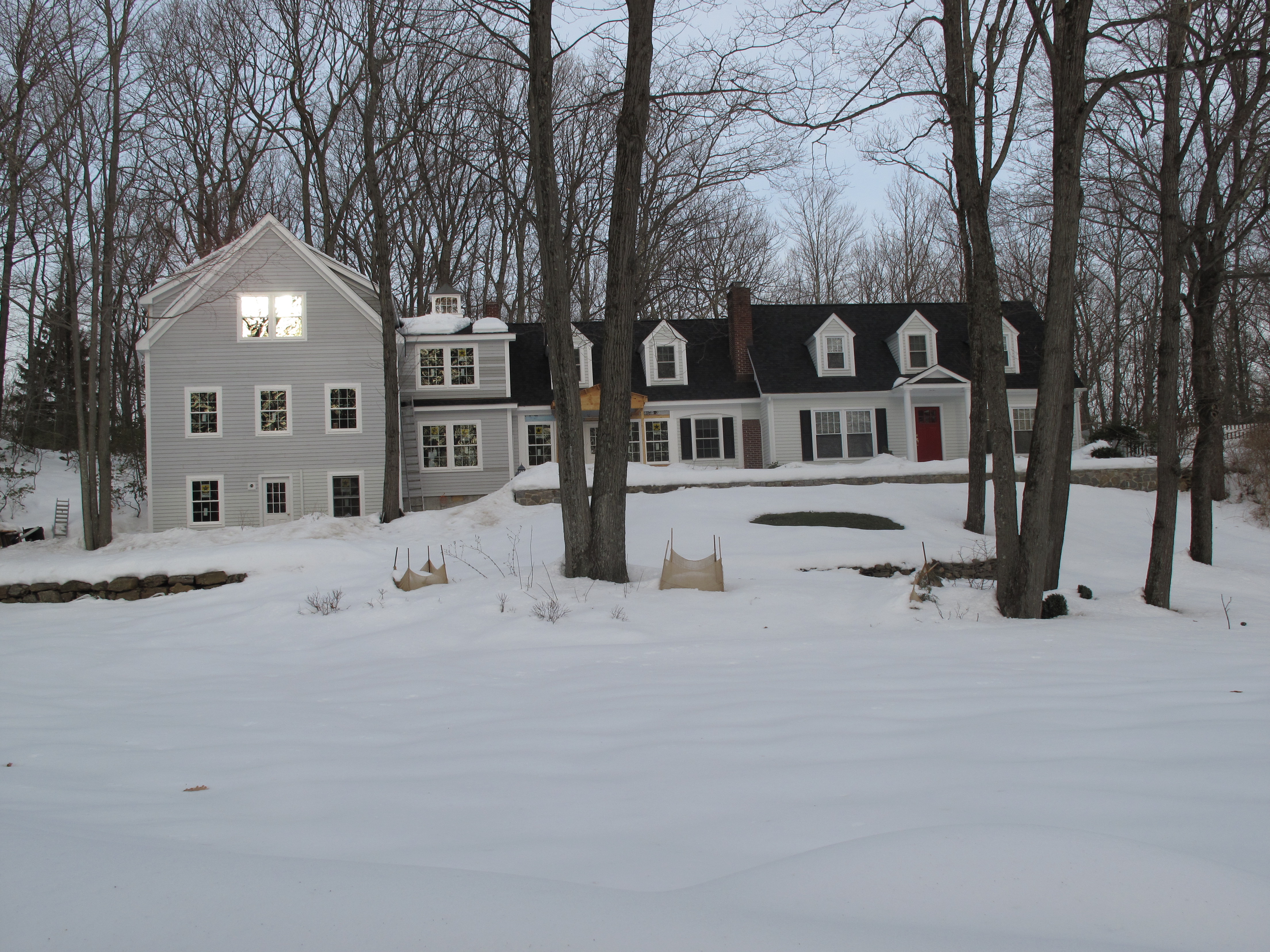
This is my house.  It sits on Glen Road in Connecticut.  If you look closely, you may be able to see some oak trees that drop acorns out of the sky onto our roof every autumn.  Sometimes they fall so hard they remind me of bullets out of a gun.  Don’t get into their way!  So now you get my site name, Acorns on Glen.  The picture is what I want my blog to describe….beginnings.  If you look to the left, you will see the new construction.  I know…who builds in the winter, especially this winter?  Me!  Around 1,500 square feet to attach the garage to the main house.  New space, new decorating…..new beginnings.  Also, look at the snow.  Underneath the nearly three feet of ice-covered snow, I have planted so many plants and they are all waiting to rise up in spring…..more new beginnings.  I know that there are thousands of sites that are trying to find out what is “real” in life.  You may like them better, but maybe you’ll like mine.  If you do, I thank you, and, if you don’t, I understand.  In the next few weeks, get to know me, my family, my town and my new beginnings.  It all starts now….let’s begin!