News From The Garden

This is an update on our 2011 garden.  We want to keep everyone up to date on what’s going on outside in the actual garden and inside under the grow light.  This weekend provided some great weather (finally!) to really spend some quality time in the garden.  We started the morning planting the remaining seeds into our last APS 24 growing system and placed them in the basement under the grow light.  Our earlier planting was with seeds that prefer cooler soil temperature.  This weekend, it was seeds that prefer warmer soil temperatures.  Remember, our two batch planting philosophy?  The seeds planted this weekend included three varieties of tomatoes and artichokes.  Yes, artichokes!!  We’ve heard that they can grow and prosper in Connecticut, so we thought this would be our fun garden experiment for 2011.  Can Glen Road enjoy some stuffed artichokes at harvest time?  Keep your fingers crossed.

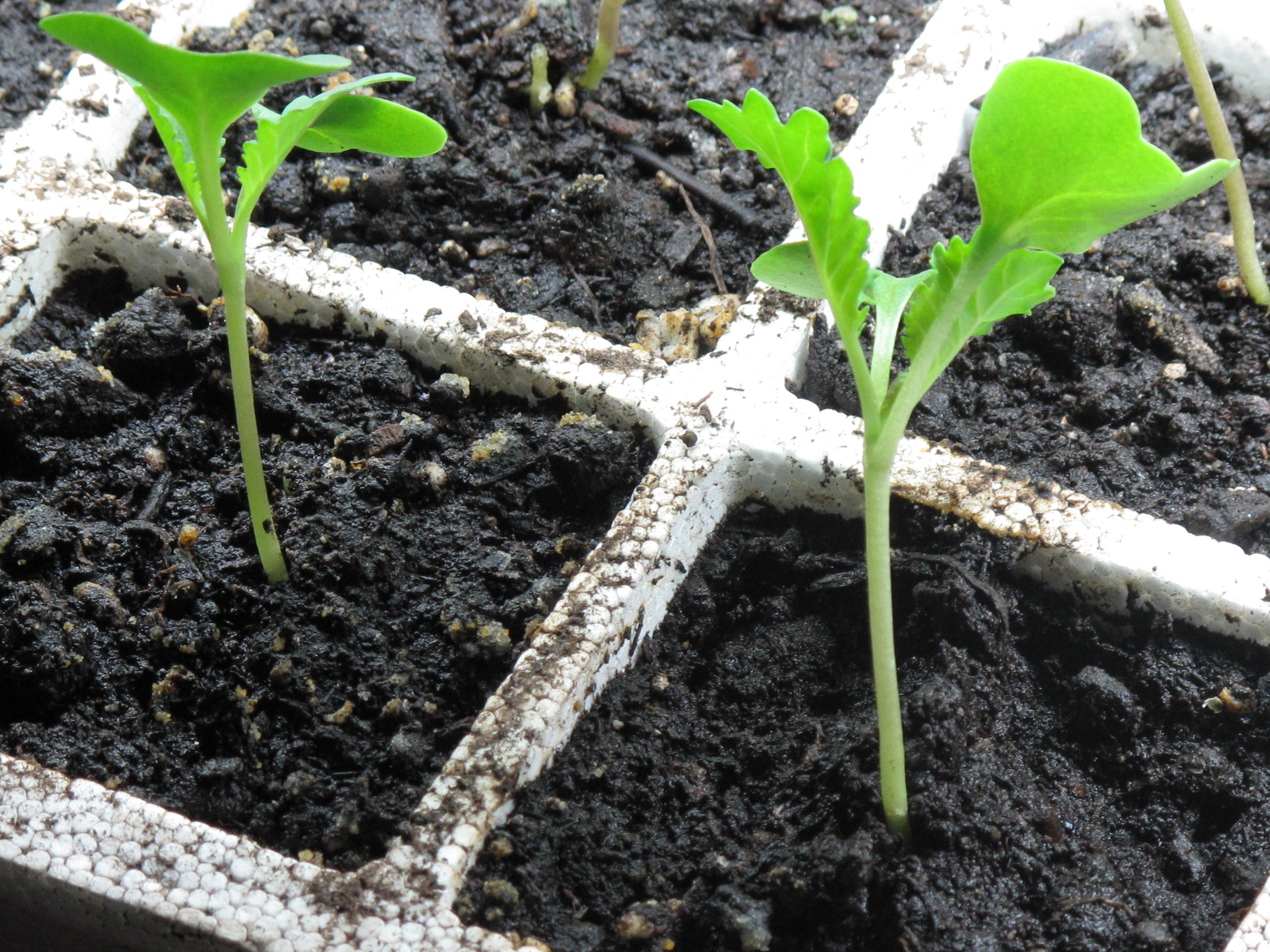
Inside the house, the first batch of seeds placed under the grow light are actually growing quite nicely.  We’re happy to say that all of the seeds have sprouted and we have identified the strongest seedlings and removed the others in the cell.  Only one plant per cell allowed.  The weaker sprouts were removed by clipping them off with a pair of scissors.  While the cabbage, brussels sprouts and cauliflower are over an inch high now, the eggplant is a little smaller and growing more slowly, so we decided to wait two more weeks before we remove their weaker seedlings.  The picture above is a look at our cabbage and here are the smaller eggplant seedlings.

Outside we were able to expand our seed planting to more than just spinach.  Since the spinach seeds have been out in the garden since Thanksgiving 2010, we thought it was only fair to plant six more rows of seeds and grow some friends for the spinach.  First, we turned under the crop cover of winter rye grass so that it would start to decompose and enrich the soil with its nutrients.  Then we planted some seeds that thrive in early Spring’s cooler soil.  This included one row of round radishes, two rows of French breakfast radishes, two rows of lettuce mix and one row of arugula.  After the rows were planted, we stretched out a longer piece of floating row cover and placed it over all the rows of vegetables that are in the garden-the six rows planted today and the four rows of spinach that have been there since last year.
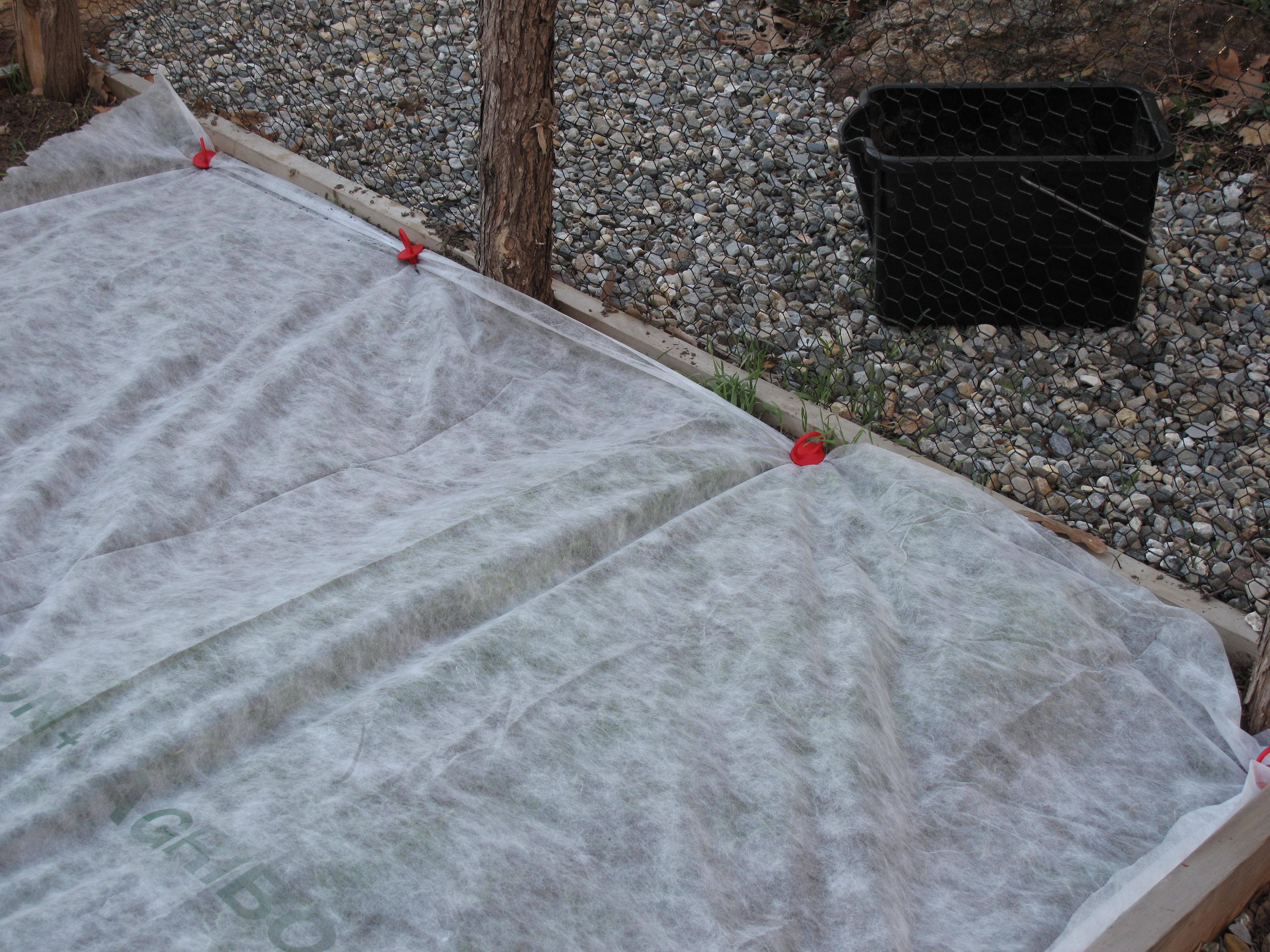
We were wondering when the floating row covers could be removed for good and had gotten some mixed answers, so we decided to consult with an expert and last week asked when the covers could be permanently removed to none other than Martha Stewart on her live radio show.  She told us that the row covers needed to be in place for quite a while longer as it is just too cold to remove them at this time.  She said it was fine on warm days to pull the cover up and let the plants be in the direct sunlight, but that we needed to cover them back up before nightfall.  We also started to talk about a few vegetables that we don’t grow because they spread out too much and take over the limited space we have in our raised beds.  She said we should reconsider our stance on growing such things as cucumbers, zucchini and peas.  So we started thinking and surfing the internet.

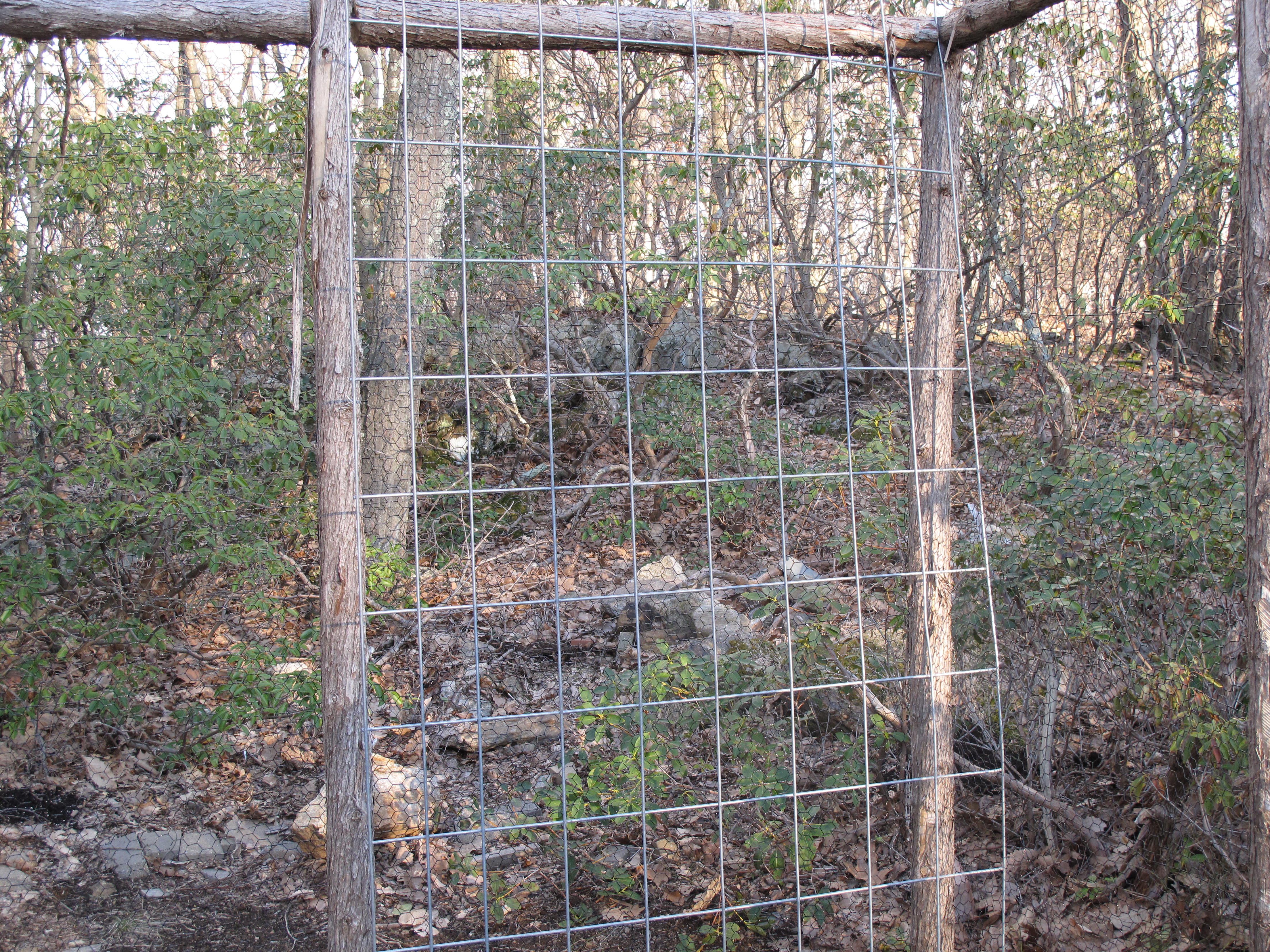
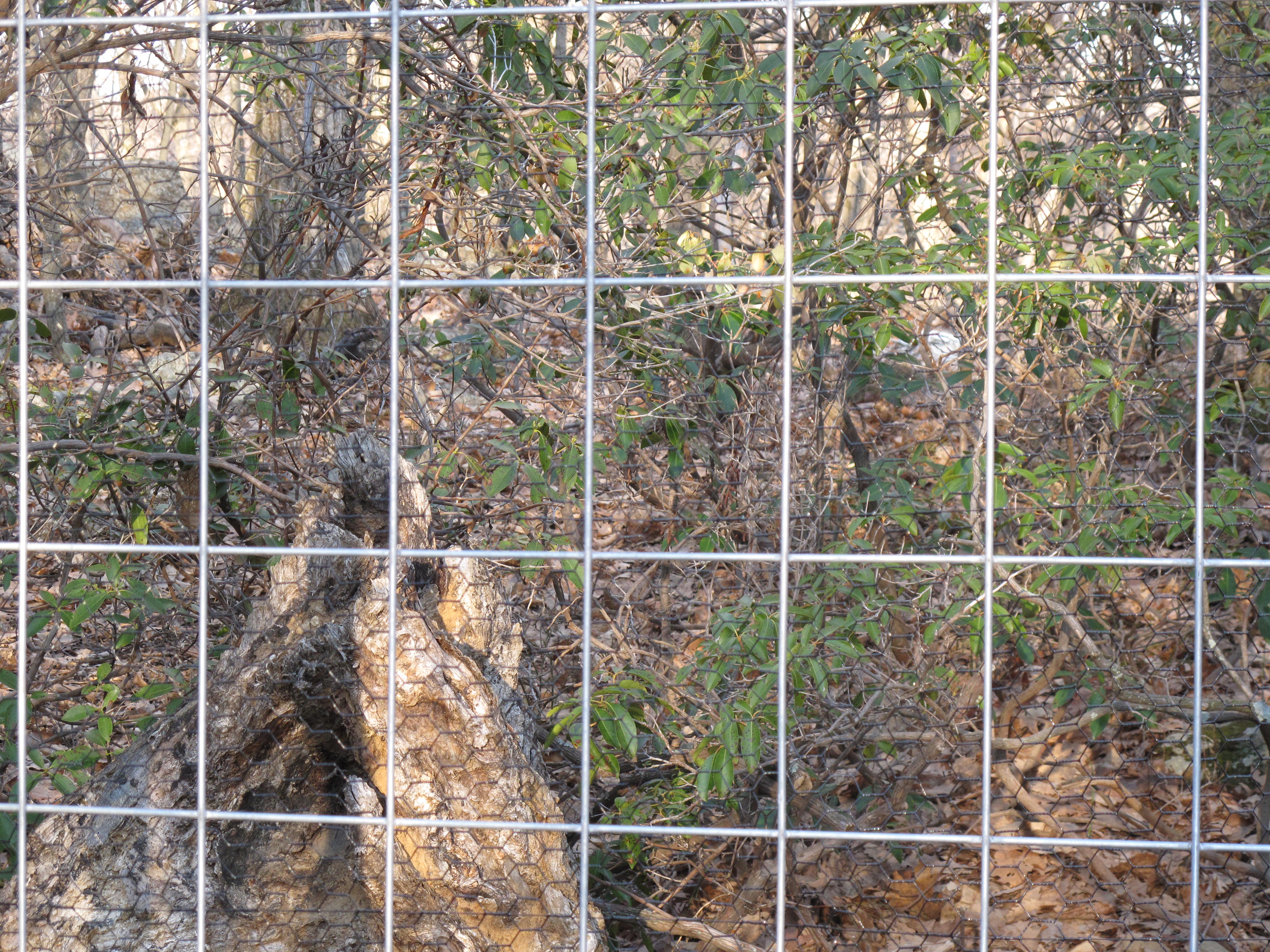
What we found was an idea that we saw on several different gardening sites that we visited.  We took a trip to our local farm supply store and bought a 16 foot livestock panel.  A livestock panel is actually used for temporary fencing on a farm.  In our case, we used a bolt cutter to turn the one piece panel into two, 8 foot panels.  Each panel was then taken into two of the raised beds and the cut ends were pushed into the soil and then the panels was gently leaned up against the garden fencing.


Later in Spring, we will accumulate some dirt into mounds in each of the beds at the base of the fencing and plant cucumbers and zucchini.  We will then train the vines to grow upwards and weave through the panels with the vegetables hanging down from the panels, making them easier to pick.  Since the vines will grow upwards versus outwards on the ground, it means more room for other plantings in our small garden.  We’ve asked whether the vegetables will drop off their vines due to their weight and upward growth and everyone has told us not to worry.  We believe them, but we secretly have our doubts. 
So for the beginning of April, we are feeling that our garden is on schedule and everything is growing as expected.  From here on out, we know that the garden will consume a lot of our time, but the result is worth it.  Nothing tastes better than home-grown vegetables.  Are you working in your garden right now or is it still too cold?

Old Times Versus Modern Times…A Debate

This is a reflection on now versus then, and which one is better.  Recently, my friend Jo and I were catching up and talking about the old times.  She and I grew up in the same small town in Iowa and while we have gone our separate ways, when we do connect, it is like we just talked yesterday.  She has been my friend since I can remember.  When someone knows all about your life, you know they are good friends.  For some reason, we were talking about books we were  both reading on the Civil War.  From that, both of us remembered a story from our Junior High days and were laughing about what would happen now if the same series of events unfolded.  I am going to tell the story the old way as best as I can remember and then I’m going to tell it the modern way.  What happened then versus what would happen now.  You can help decide which were better times.  It all starts in Mr. K.’s Social Studies class in 1977.

Mr. K. was not necessarily a great teacher.  His method of teaching was reading to you from a copy of our Social Studies textbook.  There was nothing written on the chalk board, no group discussion, no questions.  Just Mr. K. droning on about what happened in the world from the beginning of recorded history to the start of World War II.  You see, our textbooks were outdated.  Being determined to finish reading the textbook to us before the year ended, Mr. K. ended where the book did, which was the beginning of World War II.  It would be much later in our lives before we ever heard stories of nuclear bomb shelters, John F. Kennedy, the Vietnam War or Martin Luther King, Jr.  Basically, no knowledge of history from 1943 through 1977 for the Class of ’82.

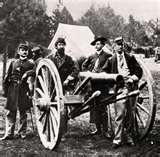
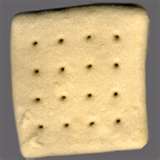
In late Winter/early Spring of 1977, we had reached the Civil War.  Mr. K. read as eloquently as he could about what it was like during those days.  Many days, the soldiers had little, if anything, to eat.  In the darkest of times, they were reduced to frying up a thing called hardtack biscuits.  Hardtack biscuits  were a mixture of flour, water and salt that were then thrown into some hot oil and fried until golden brown.  No peanut butter, no jam on them.  Just a small flour biscuit was all these men would eat for days on end. 

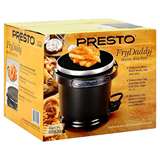
That story did nothing for any of us, except for one classmate, Brian P.  In one of the rare times that I can remember in Mr. K.’s class, he actually raised his hand and ask to repeat the hardtack recipe.  Brian P. was so intrigued that he rushed home that afternoon to create an authentic Civil War moment for himself.  He pulled down his mother’s Fry Daddy, heated the lard inside to the highest temperature that was possible for the Fry Daddy to get to and began to make “at home” hardtack.  He mixed a large amount of flour and salt together with water until a very sticky ball was formed in the bowl.  He then spooned out six large globs of the mixture and placed them in the hot lard.  He was so excited.  He knew to fry them until golden.  He went to check on his Civil War staple and looked down into the Fry Daddy.  At that moment, the hard tack exploded.  There were too many air bubbles in the sticky mixture and they released into the grease at the same time poor Brian P. looked into the frying machine.  Hot grease rose out of the Fry Daddy like hot molten lava spews out of a volcano.  It hit Brian P. hard in the face and hands and created second degree burns all over his little white cherubic face, neck, hands and fingers.  He was burnt badly.  However, the next day, his mother sent him to school.

We knew the next day that something was wrong.  We walked into Social Studies and it was not the same.  Mr. K. stood in front of us versus sitting at his desk.  He did not have the outdated textbook in his hands.  He didn’t call each of our names out and take attendance.  We were asked to quickly sit down for an important announcement.  We all sat down with the exception of Brian P.  He was not there.  He was absent.  Mr. K. proceeded to tell us the sad plight of Brian P. and his adventures in hardtack gone wrong.  We were told not to try the art of hardtack frying at home.  It was dangerous.  It would result in burns.  Then he motioned out into the hallway and in walked Brian P.  The class gasped and screamed at Brian P.’s bubbled up face.  Fried face, swollen eyelids, big lips and what appeared to be a webbed set of fingers.  One eyelid appeared to be inside out.  He sat down in his seat and said nothing.  People who sat near him leaned away.  Angie P. in our class asked to be excused as she thought she saw pus on one of his burns and she was going to get sick.  No one said a word as Mr. K. began reading about the Civil War as if nothing happened.

That was then.  Now let me tell you the story if it happened now in modern times.

Brian P. took his ear buds out of his ears and was flush with excitement.  The DVD he was watching on the school’s iMac was so interesting.  He was the first in his self-paced History class to get to the Civil War.  No one else knew or had even heard of hardtack as it was told to him from a long-ago taped Civil War veteran’s narrative who had made the biscuits for his troop.  He would go home this afternoon, he decided, and make a batch of “at home” hardtack to bring to his class in the morning in order to receive extra credit.  If he aced his History class, the sky was the limit at the number of private high schools where he had applied.  He could go anywhere!

He went home and turned on the deep fat fryer that was part of the stove on the island of his parent’s kitchen.  Thank god Mom had wanted a replica of Paula Deen’s kitchen set up, complete with the built-in fryer.  Brian P. could hear the organic vegetable oil bubbling as it heated up for his project.  He mixed flour, salt and water into a large bowl until a sticky glob appeared.  He scooped out six mounds of the sticky mixture with an ice cream scoop his mom used only for cookie making and placed them in the hot oil.  He knew to wait until they were golden.  He looked over the fryer at the same time the “at home” hardtack exploded in his face. 

Brain P.’s parents rushed into the kitchen.  His mother called 911 and gave a complete and detailed description of what had happened.  The ambulance and police were on their way.  Brian P.’s parents went to their fully stocked first aid kit and applied burn ointment to his wounds to stop the burning and to reduce pain.  Brian P.’s father went with him in the ambulance to the hospital.  His mother stayed at the house until Child Protective Services arrived to make sure there were no signs of child abuse or neglect at play here.  The other mother’s in the neighborhood would sneer for weeks at Brian P.’s mom asking amongst themselves what kind of mother leaves her child unattended in her Paula Deen kitchen.

At the hospital, it was decided that Brian P. should be air lifted to a hospital with more of an advanced burn unit.  It was only second degree burns but better safe than sorry.  He was placed on an IV of fluids and an antibiotic.  His father also called in a favor from a collegue who asked his plastic surgeon friend in town if he could come to the new hospital in case there needed to be any stitches or facial work done.  How would Brian P. make it in his life with a scar or glaring spot of red on his face, neck or hands? 

Brian P. did not return to school until six weeks later.  He was up to speed with the class, as his parents hired a tutor that taught him during the day the same lessons the other children were receiving in school.  His parents, however, had entered into a trial separation over who was at fault for the incident and the stress involved.  The class had already progressed to the Civil Rights Movement of the 1960s.  Each student told Brian P. of their interviews with law enforcement about if there was any funny business going on in history class.  Mr. K. had returned from his paid leave of absence that was done until further investigation had concluded.  Mr. K. was reprimanded, but not fired.  The self-paced DVDs were being reviewed by the parent’s association and might be replaced with newer ones based on the results of the Spring school fund raiser.

In each story, Brian P. made a full recovery in all respects.  He had created a legacy for himself with a story that would be told for generations.  The great hardtack scandal would take on a life of its own.  As my friend Jo and I finished our look back at Brian P.’s bad luck, we talked about whether it was better then or better now.  Jo emailed me later and said how many of our classmates bring up the Brian P. hardtack story and his crispy little face.  She said she simply cannot believe, looking back on it, that his mother made him go to school like that.  That’s the kind of crap that used to happen.  That if it happened today, parents would get jailed.   He probably should have been in the hospital.   Her final words about Brian P. were that she thought she missed those days.  Those days of naïveté and ignorance were bliss.  That there was something to be said for all of it back then.  It got me to thinking and wondering what times were better and I decided to ask for your opinion.  Do you think times were better or worse back in the old times versus how they are now in modern times, especially as it relates to kids?