South Carolina’s Unbelievable Angel Oak

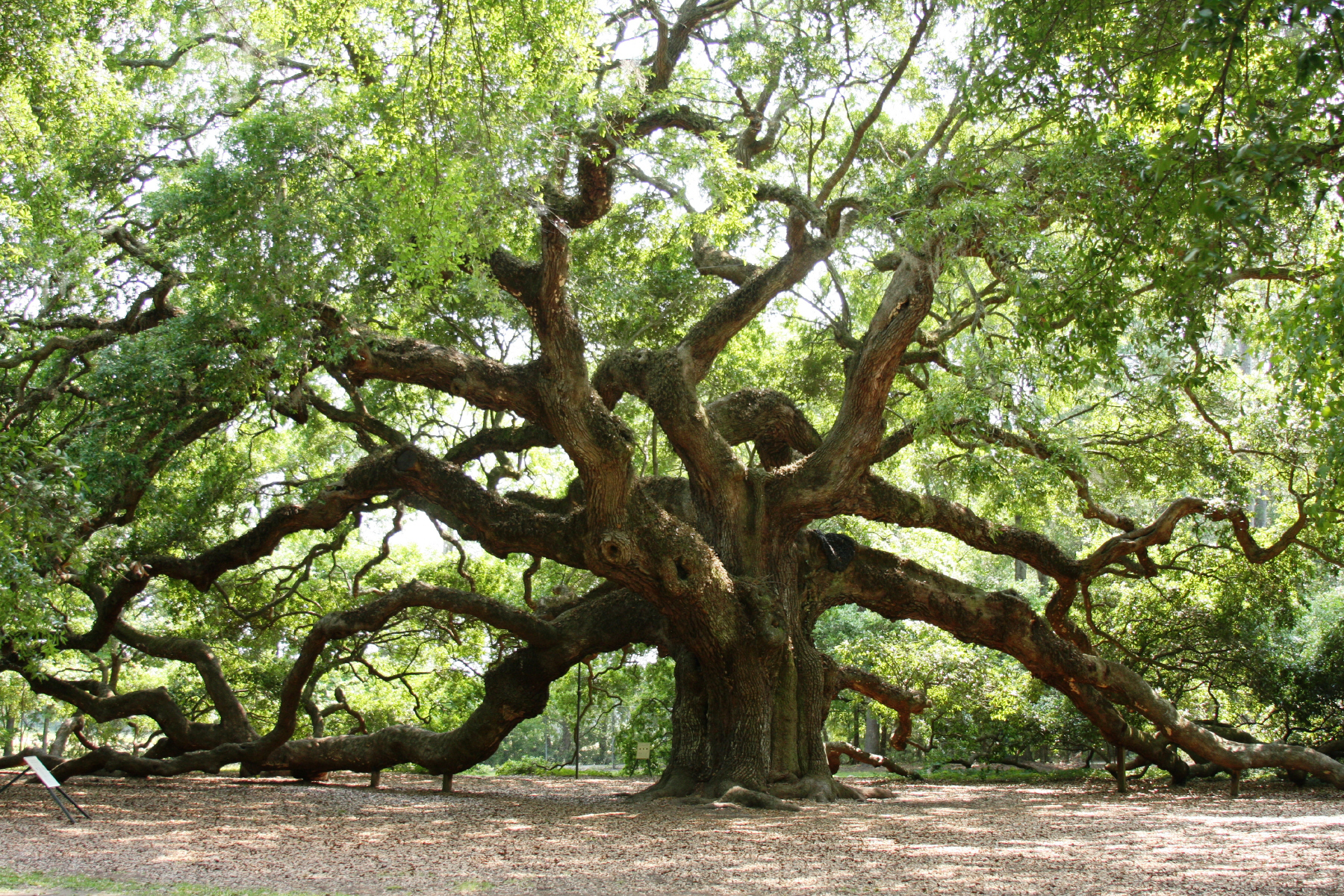
This is Angel Oak on John’s Island in South Carolina.  When we were ready to make the trek from Charleston to Kiawah, our friends drove their car and we hired a car service.  Our driver begged us to take a few minutes to stop and see this tree.  He said it was one of South Carolina’s best kept secrets and we needed to stop and take a look.
The Angel Oak is a Live Oak (Quercus viginiana) that is a native species found through the South Carolina coastal low country.  Many people think that the name Angel Oak has something to do with angels from heaven, but it just refers to the last name of its previous owners.

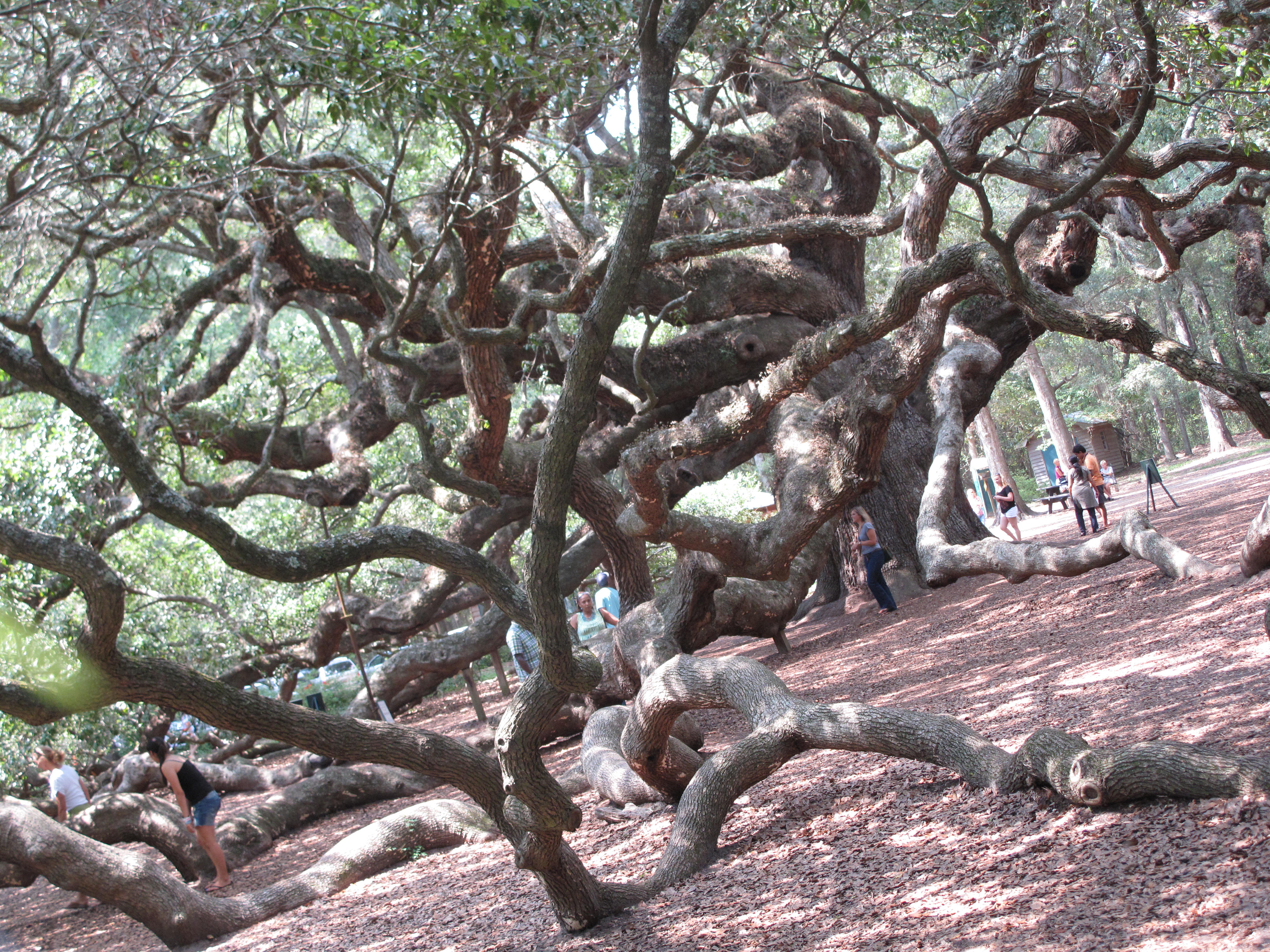
Towering over 65 feet high, the Angel Oak has shaded John’s Island, South Carolina, for over 1,400 years.  This means that the oak would have sprouted 1,000 years before Columbus’ arrival in the New World.  Recorded history traces the ownership of the live oak and surrounding land, back to the year 1717, when Abraham Waight received it as part of a small land grant.  The tree stayed in the Waight family for four generations and was then part of a marriage settlement to Justus Angel and Martha Waight Tucker Angel.  In modern times, the Angel Oak has become the focal point of a public park.  Today the live oak has a diameter of spread reaching 160 feet, a circumference of nearly 25 feet and covers 17,100 square feet of ground.  Angel Oak’s largest limb has a circumference of 11.25 feet and a length of 89 feet.  Talk about a large and long arm!
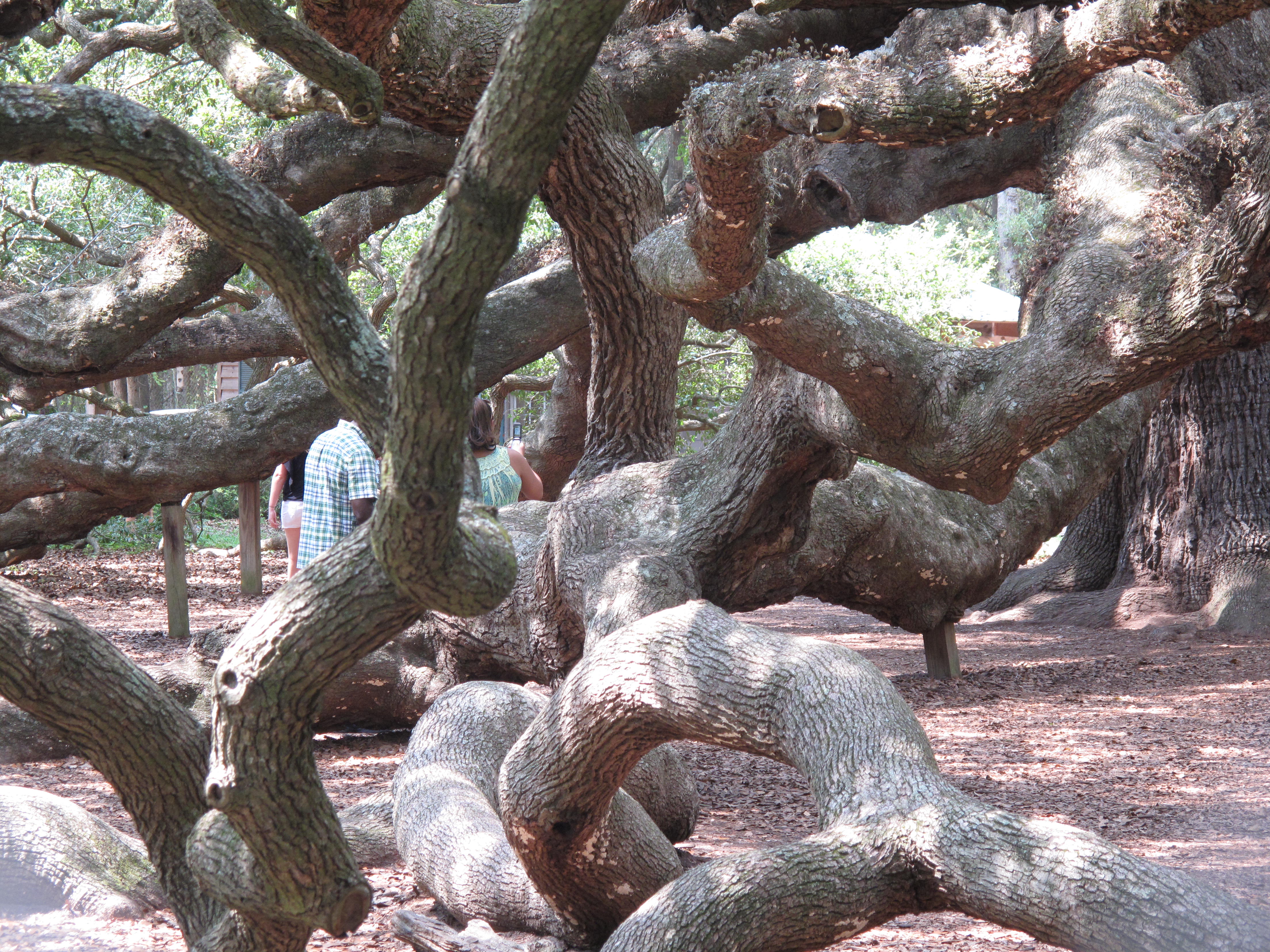
Angel Oak has in the past few years been threatened by proposed development in the area and the destruction of the surrounding woods.  While Angel Oak will not be cut down, many residents of the area believe the surrounding woods help to protect the prized oak from storms and helps allow proper moisture and drainage.  Residents also believe the surrounding woods help filter out harmful pollutants before they reach the Angel Oak tree.
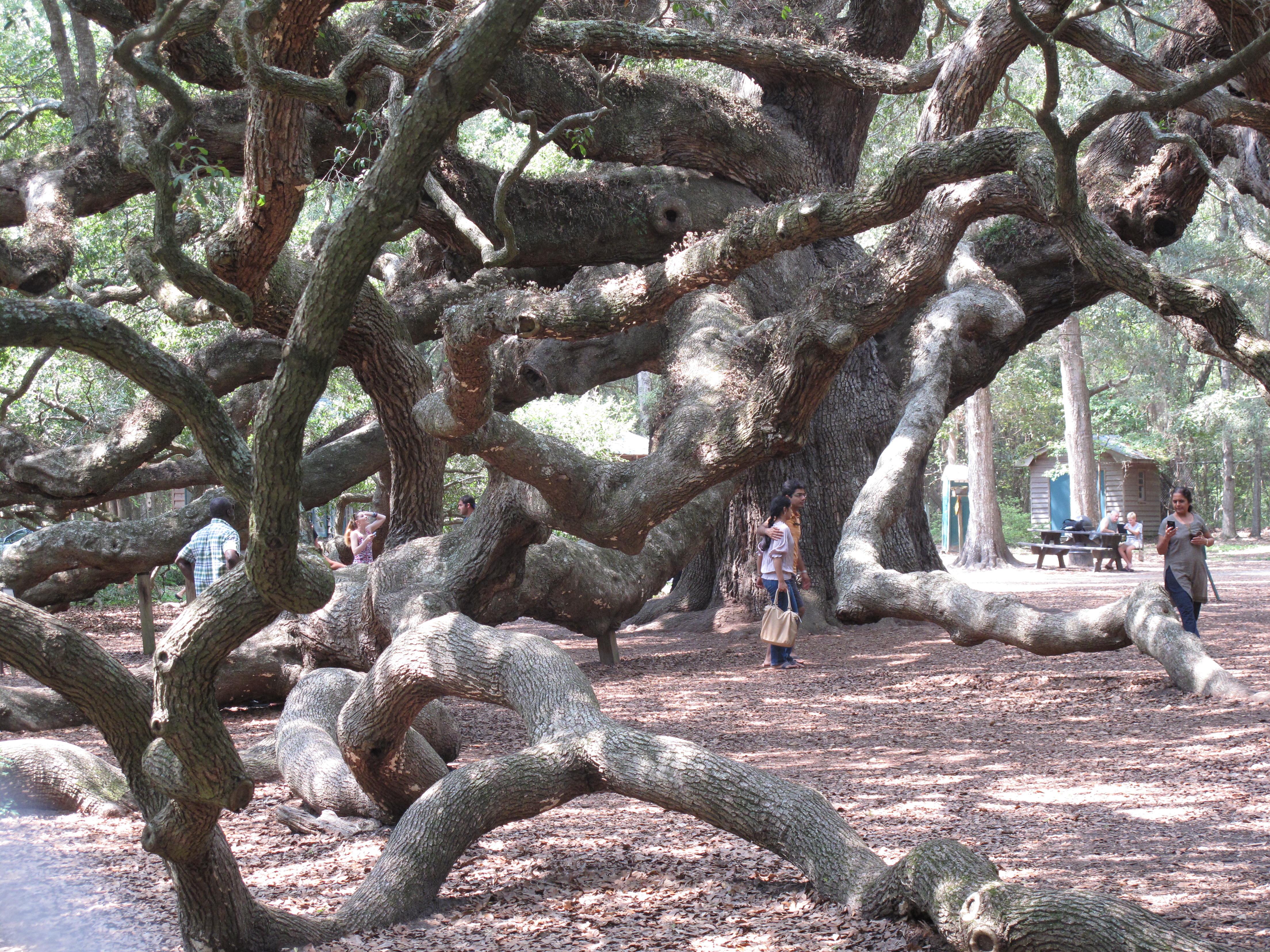
We were very happy to take a little turn off the beaten path and get a chance to see Angel Oak.  Know that the pictures don’t do justice to how large and majestic the oak tree actually is when you see it in person.  It is said to be the oldest living thing east of the Mississippi River.  It sure is a sight worth seeing.  Have you ever seen Angel Oak or heard of it?
Our Rose of Sharon(s)

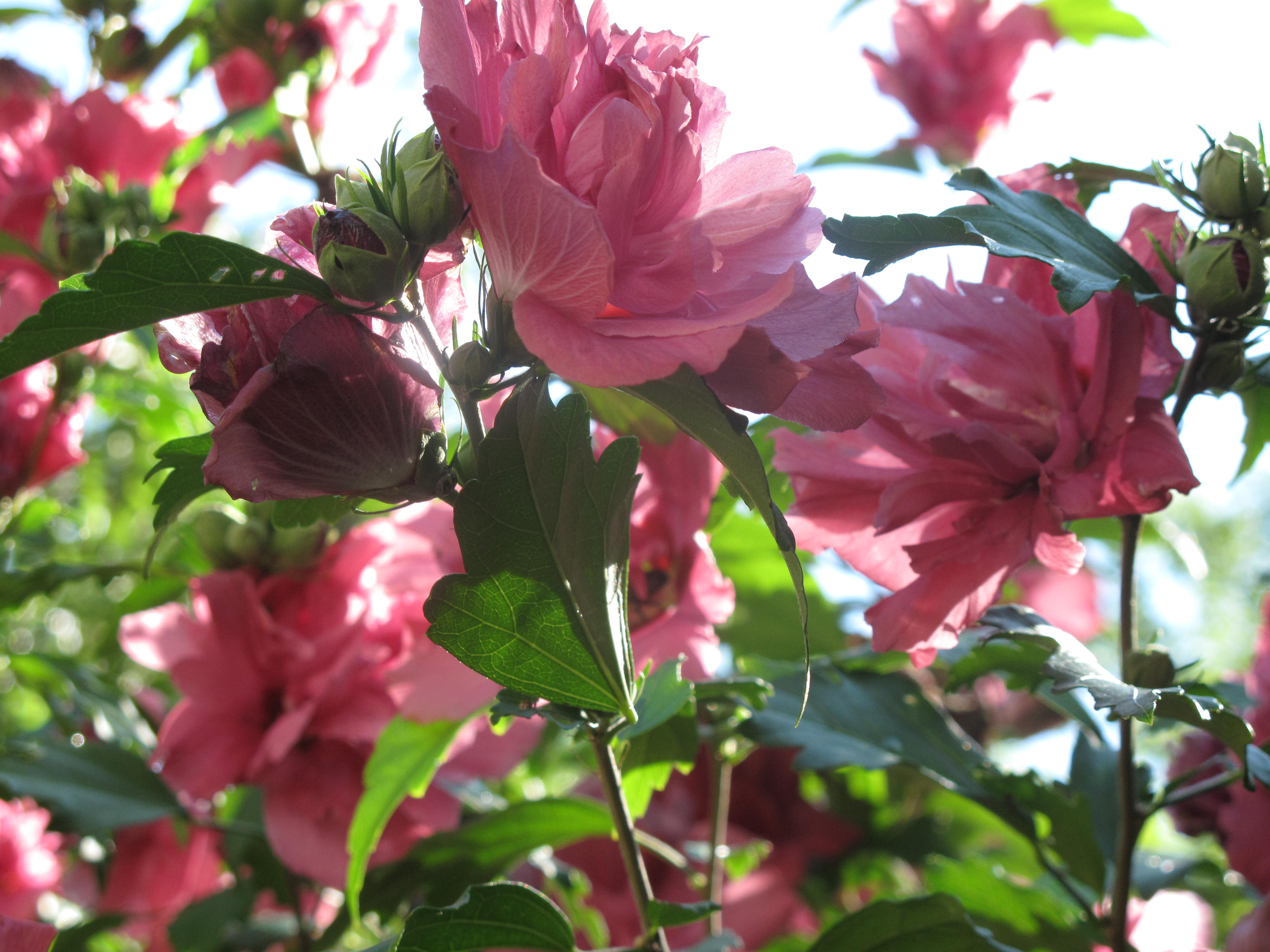
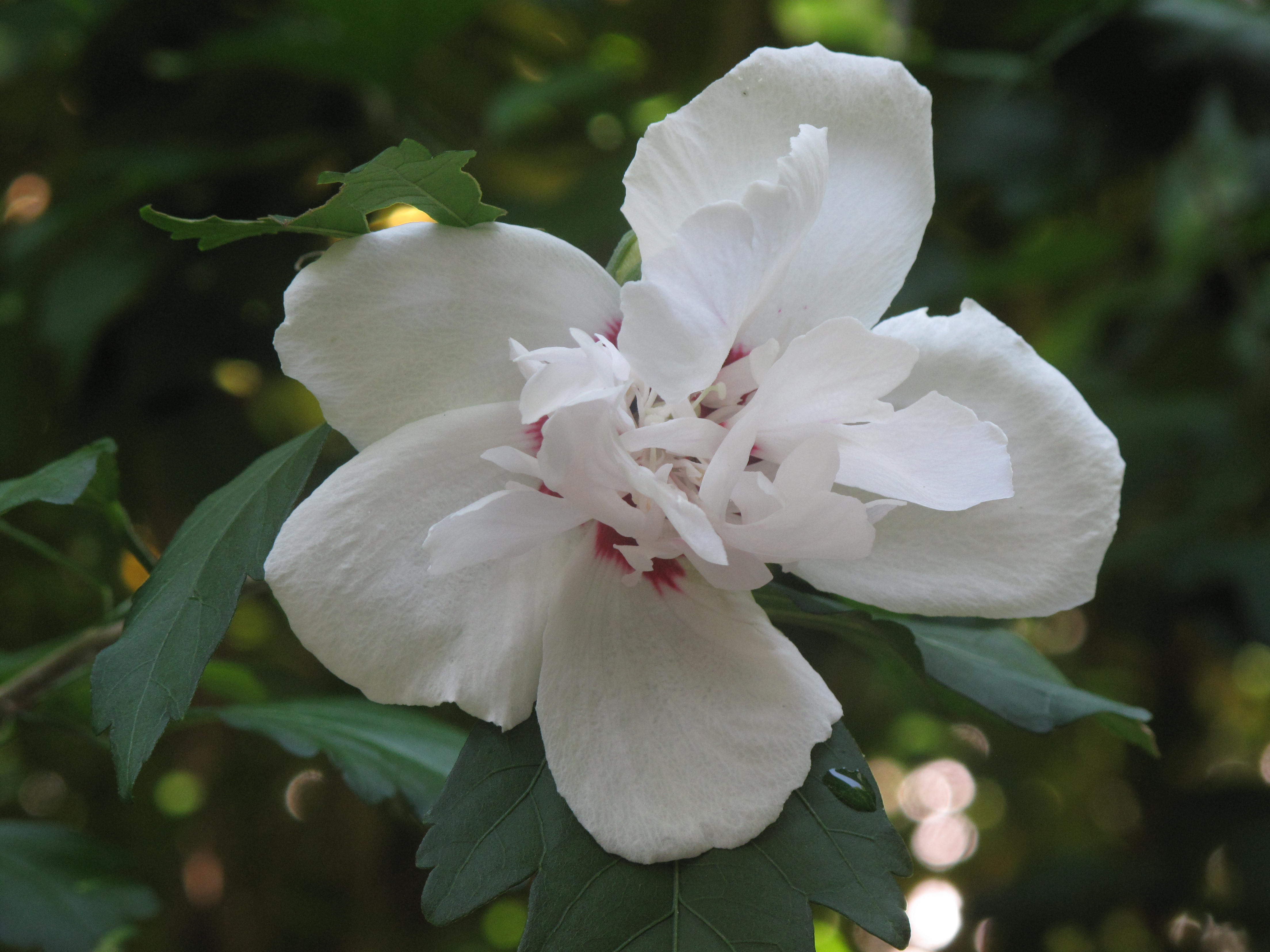
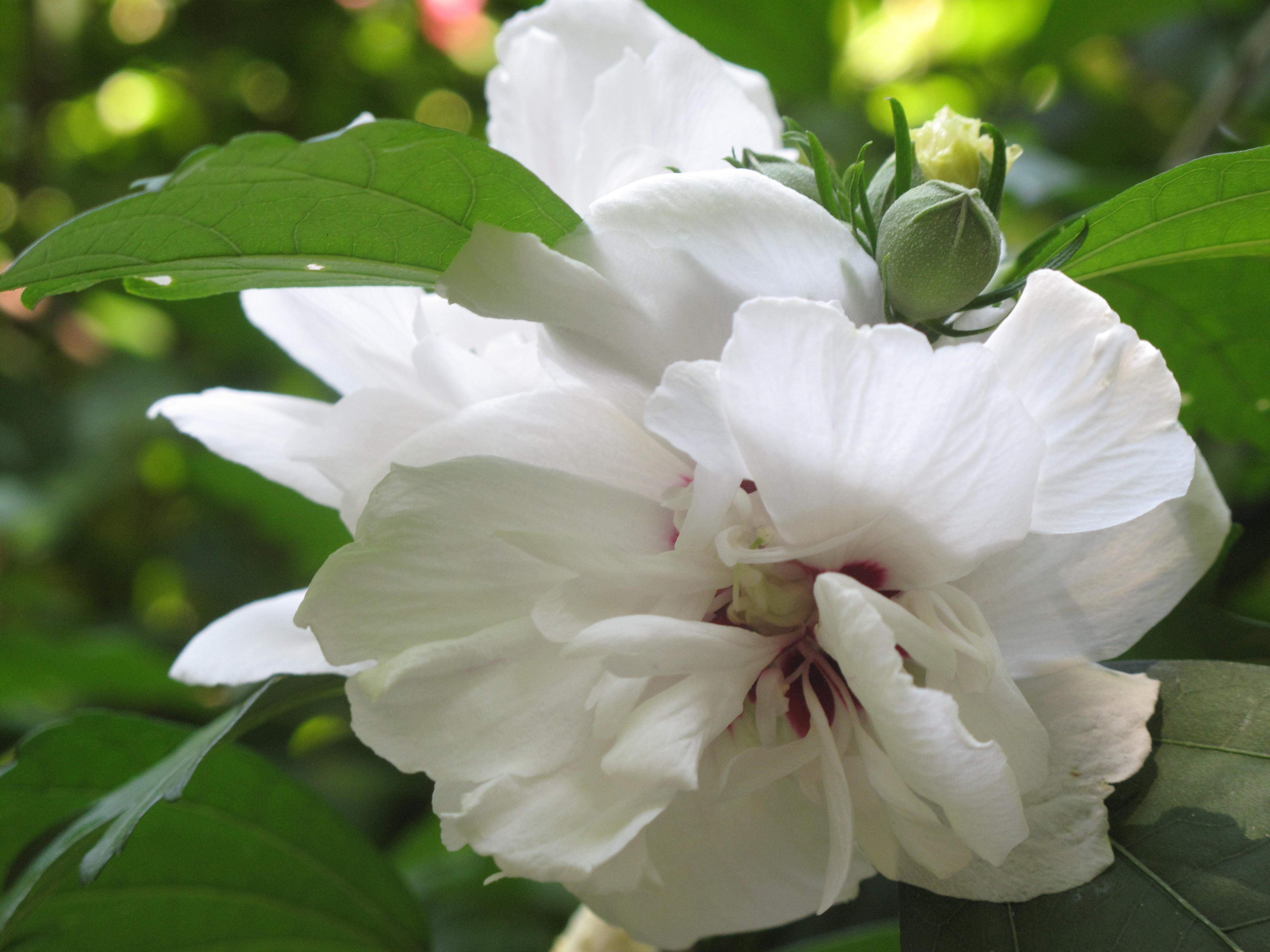
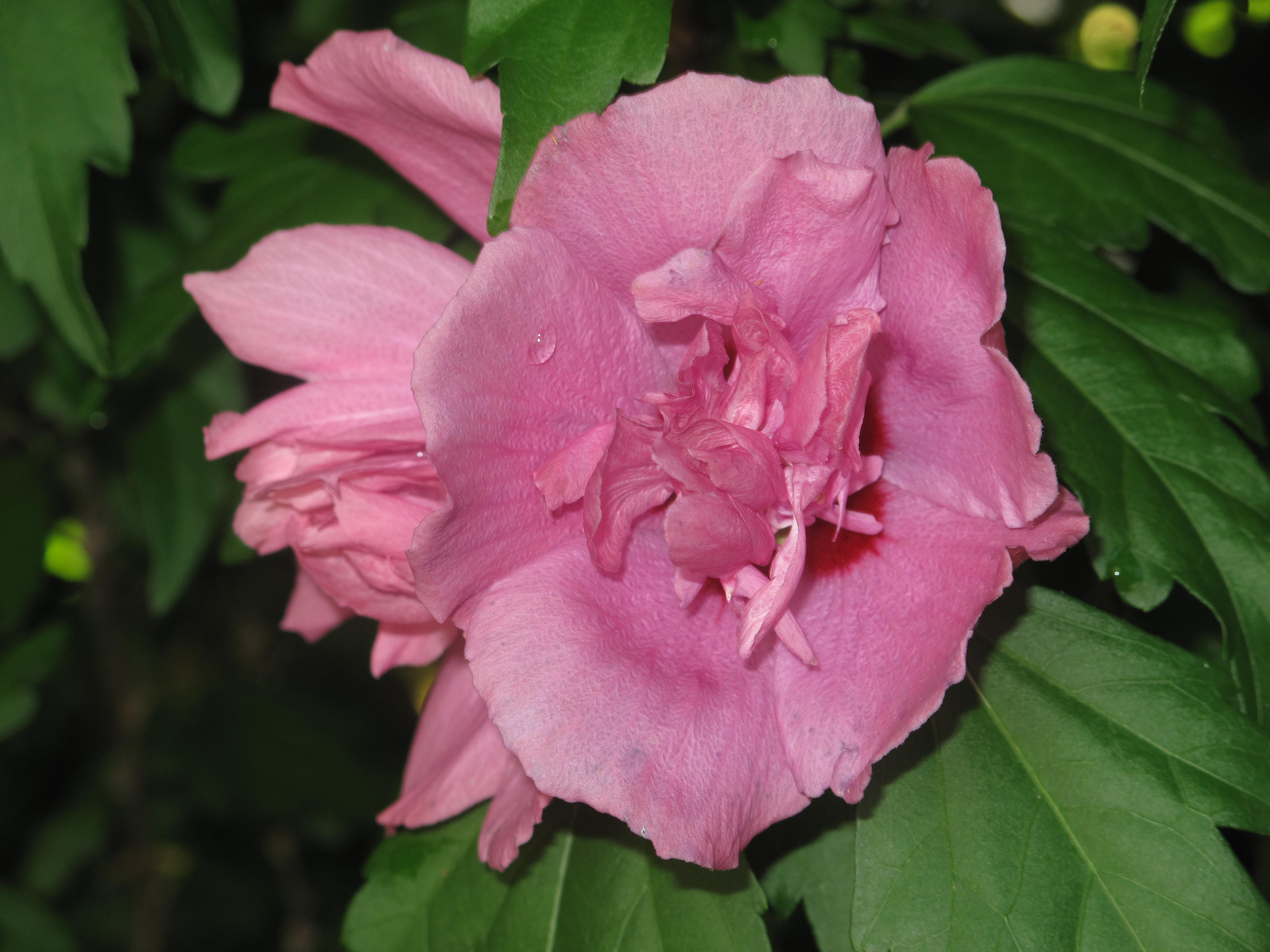
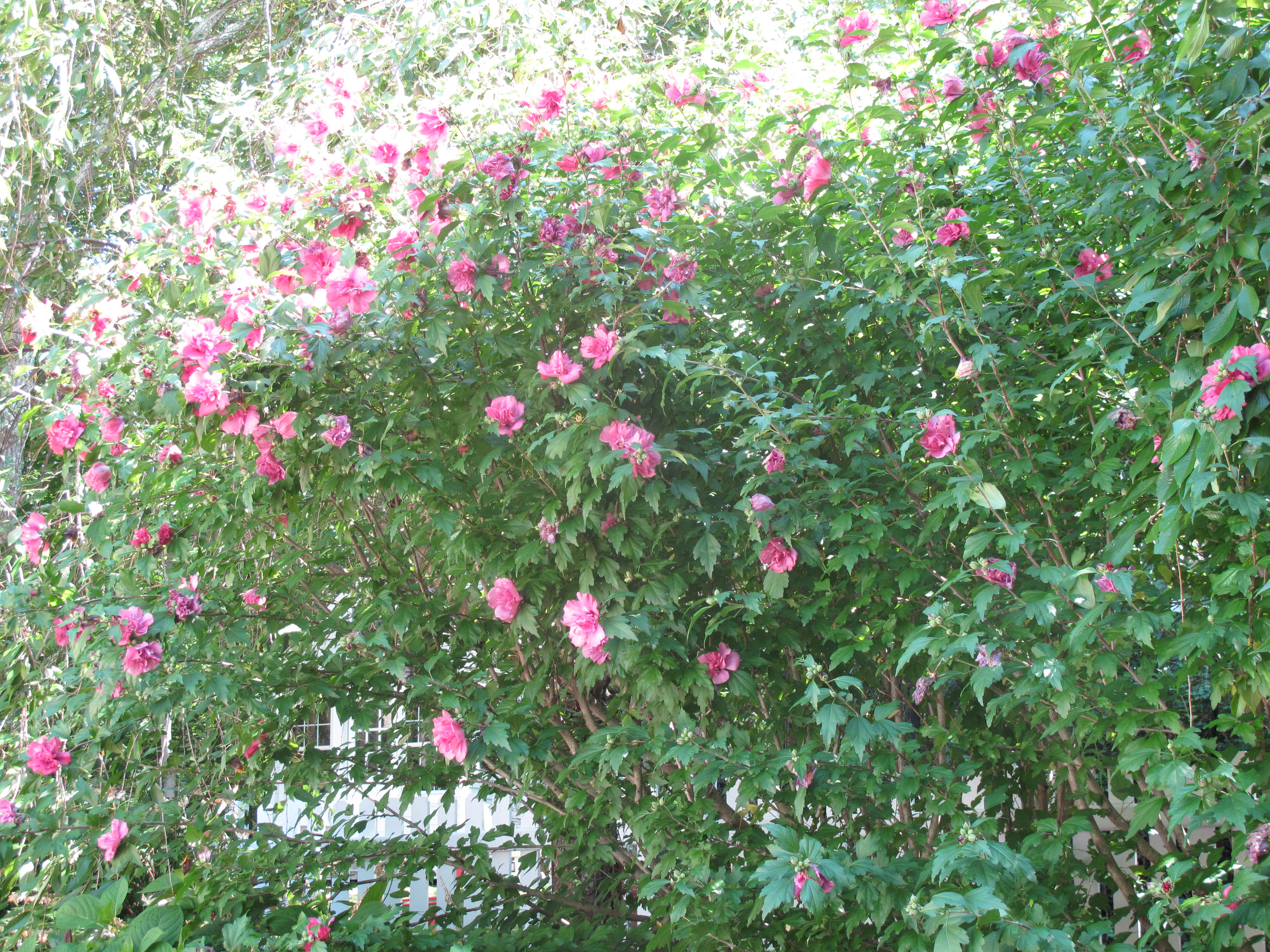
This is our Rose of Sharon shrub, otherwise known as Hibiscus syriacus.  Given that the shrub is over 10 feet tall, it is on the mature side and has been in the backyard garden since we moved to Glen Road.  The shrub itself is actually four shrubs that grow together to appear as one shrub.  Our little optical illusion.  In the Winter, you can see all four individual shrubs, but in the Summer they appear as one.

The two shrubs in the front of the cluster are the traditional pink Rose of Sharon variety.  The two shrubs in the back of the cluster are actually Rose of Sharon in a white variety.

The value of a Rose of Sharon shrub is its late-summer bloom, usually beginning around the start of August.  The Rose of Sharon is not a true rose and doesn’t grow like one.  There are a number of varieties in shades of pink, purple, blue, lavender, red and white.  The flowers are usually 3 to 5 inches in diameter.  The Rose of Sharon is a tall, bushy plant reaching as high as 15 feet.

Plants should be set in while still young and protected with mulch until they are well established.  Until they are mature like the ones we have, you have to be careful as they are susceptible to winterkill.  They grow in sun or part shade and they like moist, humusy soil with good drainage.

Pruning need only be done if you prefer a smaller plant.  You should cut back stems to laterals to control size and produce vigorous growth.  Remove dead or damaged wood when discovered.  Prune in the Winter in mild climates and in Spring in colder ones.

We’re very happy to have such a late bloomer in our garden.  We are a little surprised at how gorgeous the shrub has flowered given the hot temperatures it has had to live in over the last few weeks.  I have read that the Rose of Sharon is guaranteed to attract a hummingbird to come and feed on its blooms, but so far we have not seen any.  😦  Lots of bees feeding on it, but no hummingbirds.  What’s blooming now in your neck of the woods?

More What’s Blooming – A Virtual Garden Tour

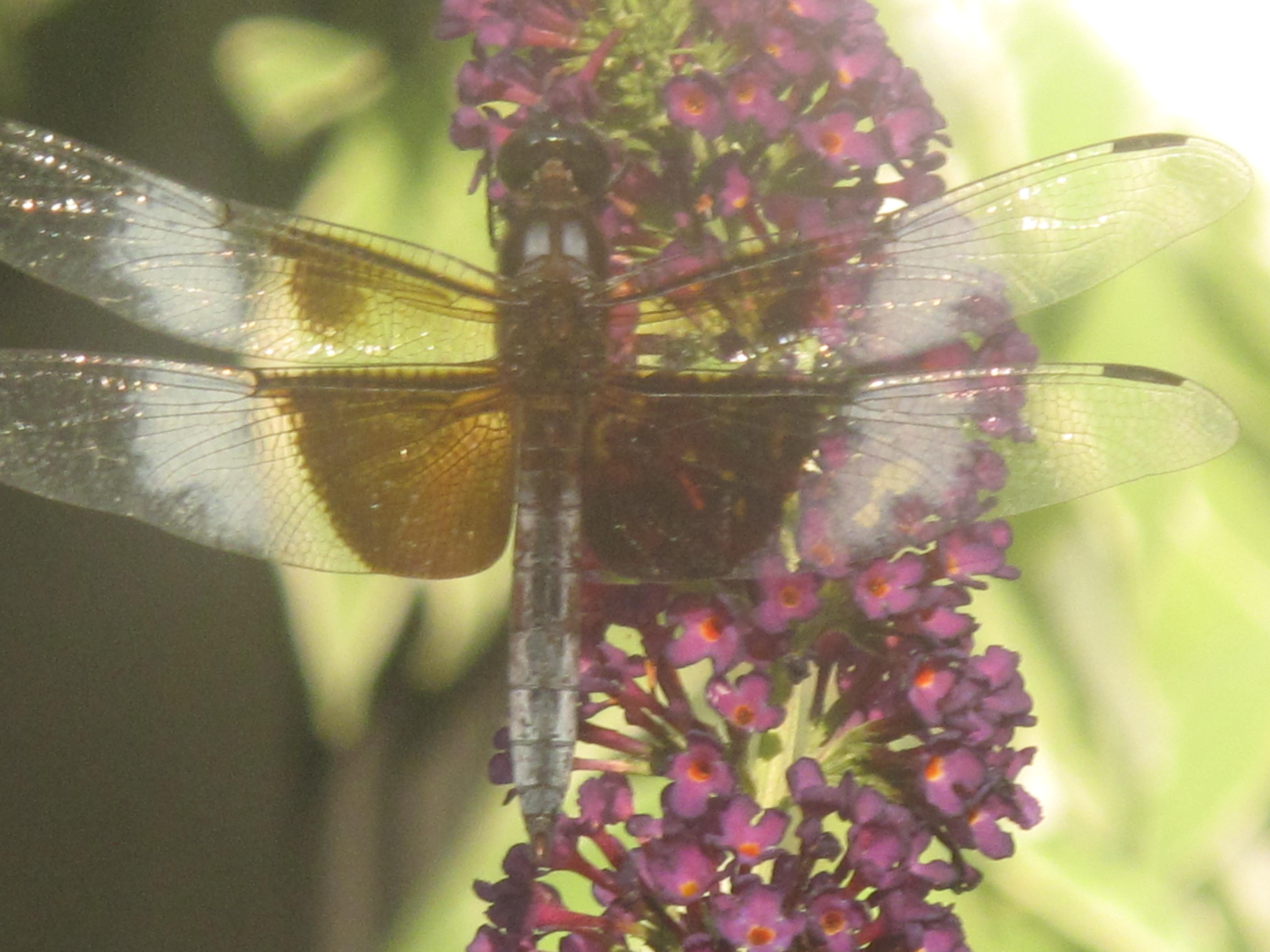
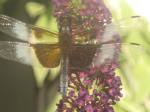
This is a shot that I can’t even believe I took.  Even with temperatures stuck in the high 80s and many times in the 90s, a dragonfly still has the energy to fly over and enjoy the bloom of a butterfly bush in our front yard.  Even better, the dragonfly waited around long enough for me to get a couple of shots with my camera.  It doesn’t usually happen like this for me when I’m out taking photos.  Most things fly away faster than I can aim, focus and snap a picture.  Yes, Summer is here.  Temperatures are high, rain is scarce and there is a lot of humidity.  That doesn’t mean that flowers and plants aren’t blooming here on Glen Road.  To the contrary, a number of plants are in full bloom even with the harsh conditions.  So we hope you take a few minutes and enjoy a virtual garden tour of what’s blooming in our garden right now.  Here is what is happening:

We hope you liked our little virtual garden tour.  It is amazing that there can be so many blooms given the temperatures we have been dealing with here in Connecticut.  It just goes to show you that there is always a flower of some sort for every season.  All of the plants in this tour require very little water and still show off a dynamic and beautiful display of blooms.  What, if anything, is blooming in your neck of the woods given the hot temperatures we have been having?

A Toad’s House Or Did We Buy Some Bad Real Estate?

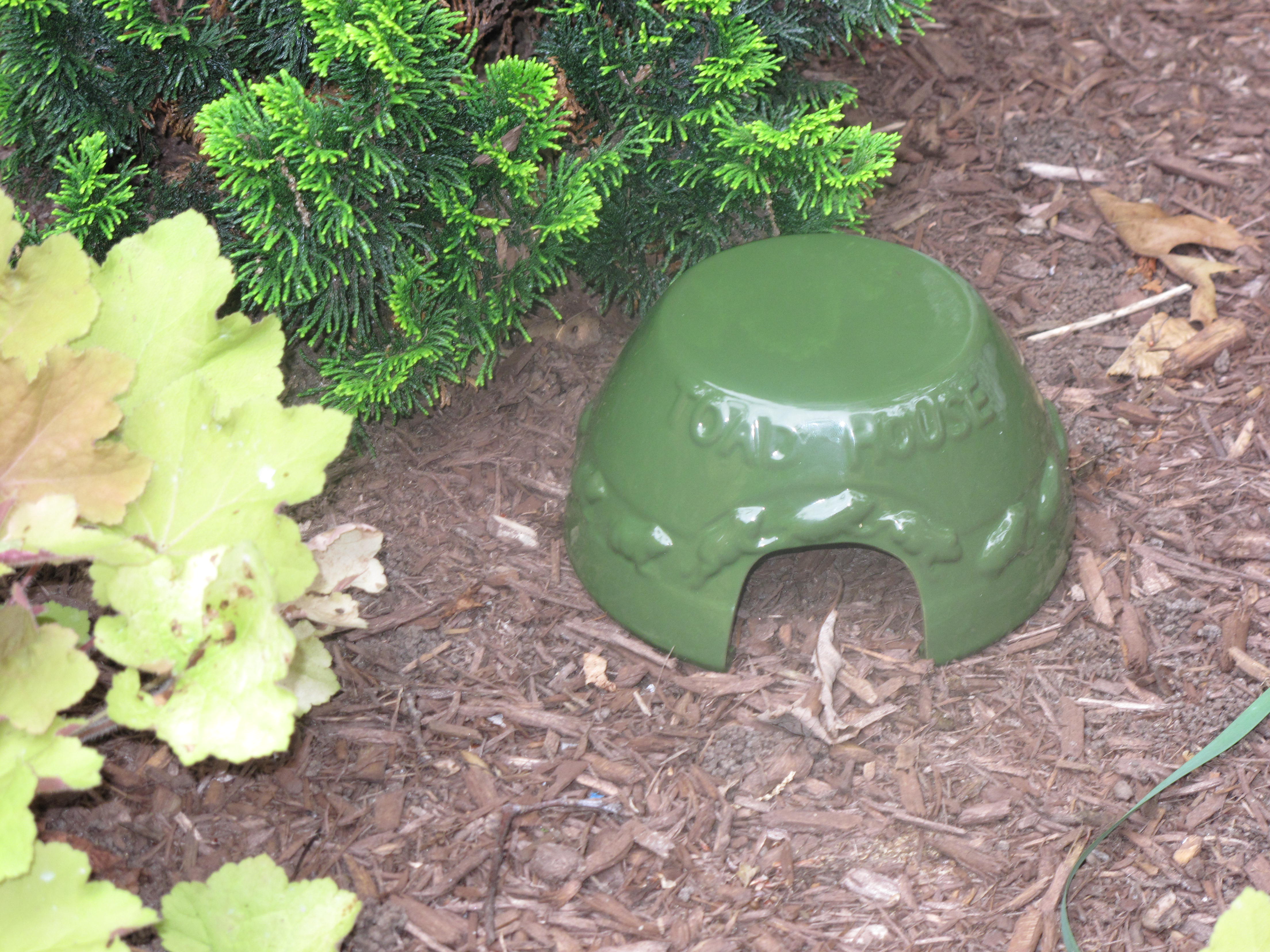
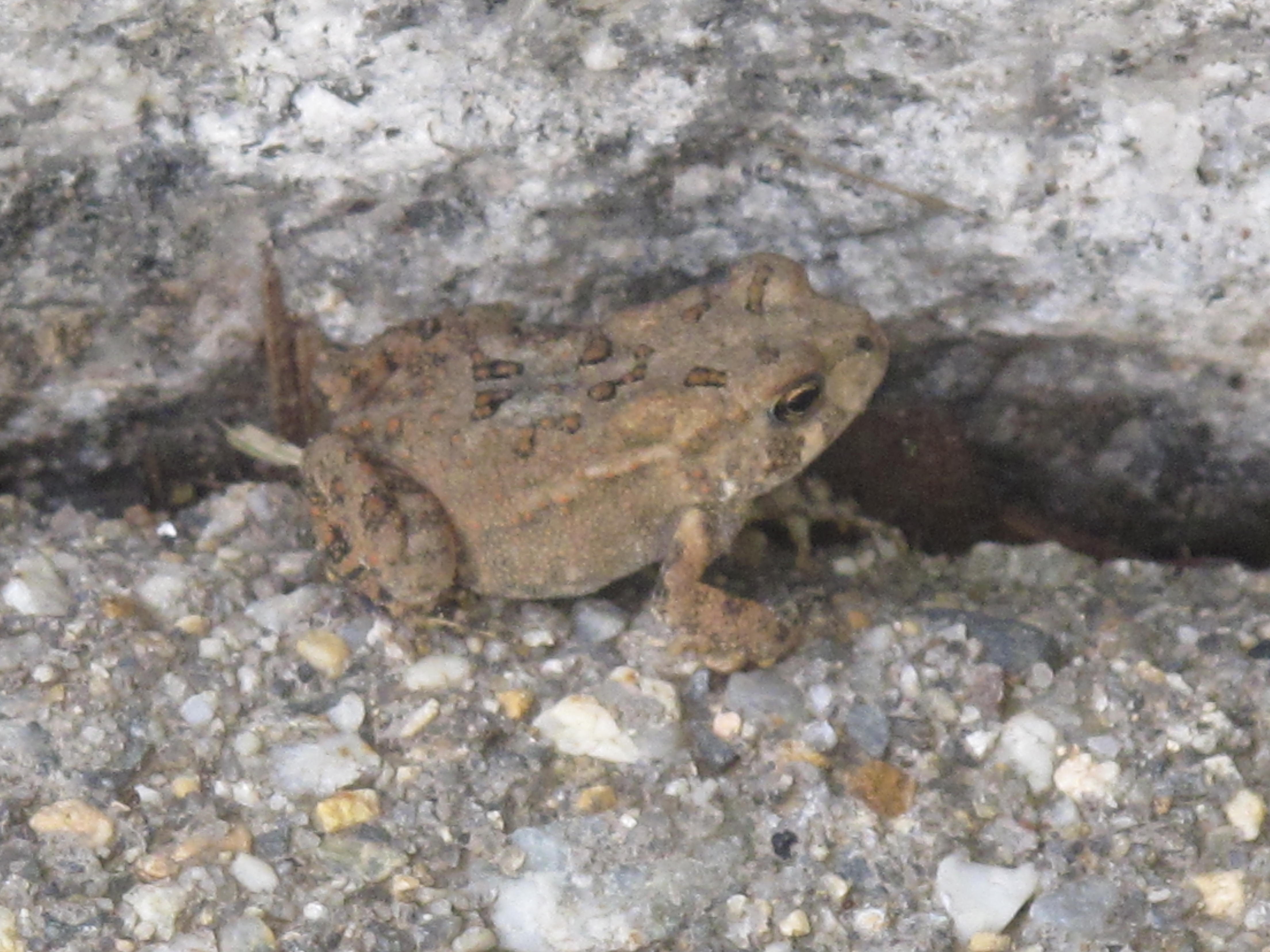
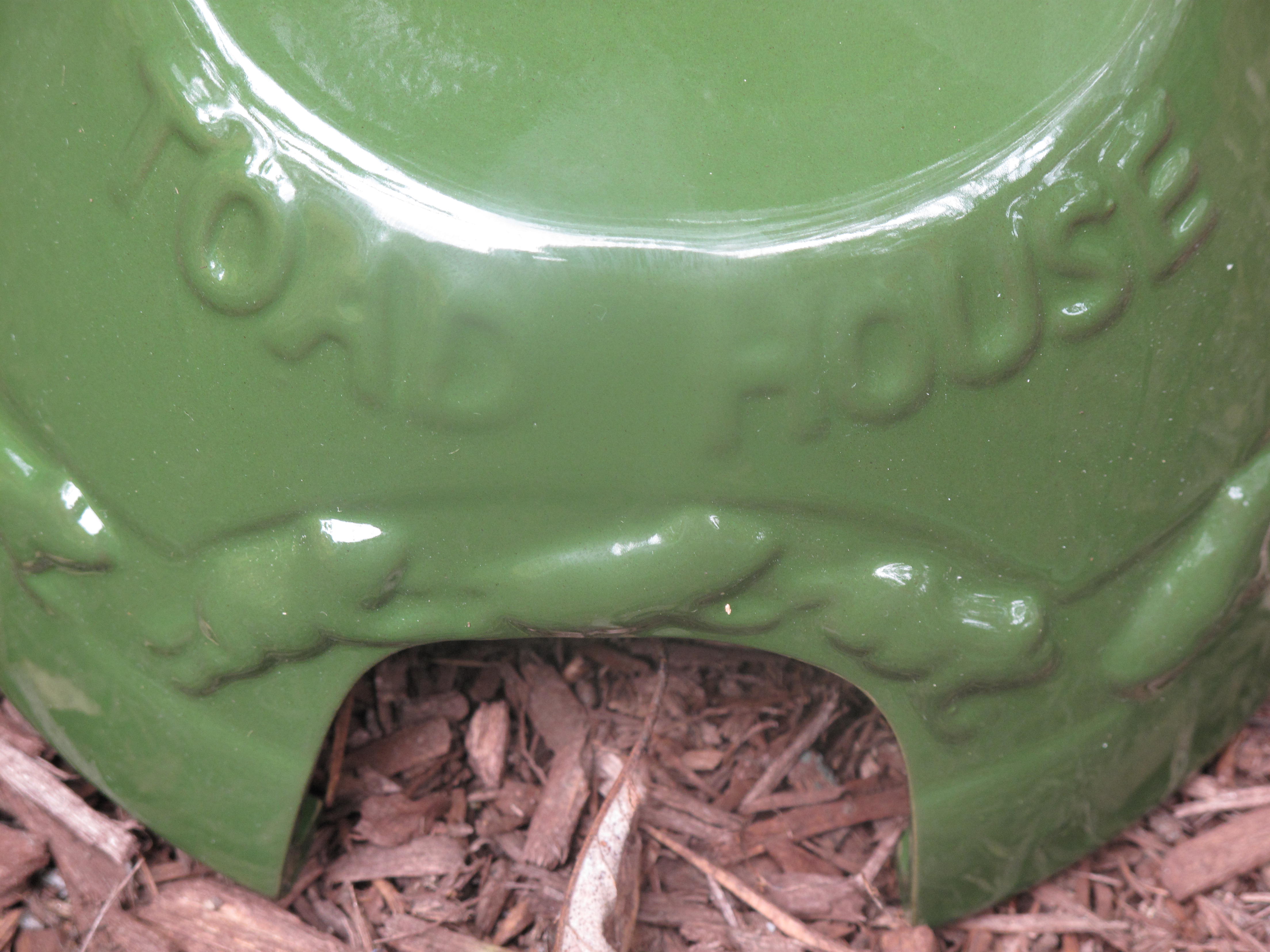
This is a toad house.  Have you ever heard of such a thing?  Neither had we until someone commented on Acorns On Glen that I should buy this guy a house.  Remember our little half-inch toad friend?

So we are told that these little guys like a house built for them that they can live under and not worry about predators likes snakes to eat them up during the night.  We guess we understand…who wouldn’t like a house built for them when they are born or when they get married?  Even more, would you like to get eaten during the night by a snake?  The little ceramic houses also protect them from the elements….sun, rain, etc.

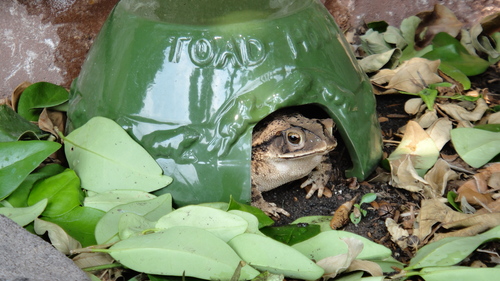
So if all thing go according to plan, we should have a toad or two living in the two apartments that we constructed in a very short amount of time….one in the back yard and one in the front yard.  This is what we hope our happy toad family looks like in their new home.  Think ‘Extreme Makeover, Home Edition’ for toads.

Let us know….good idea or a huge rip-off?  Each house cost $13…not a huge investment and if it is successful, how great would it be to see where our toads live and be able to point it out to all of our city friends.  If it doesn’t work, can’t you buy plastic toads at the garden supply store and try to trick all your friends into believing they are real?  We’ll keep you posted on how they are received by the toad community.  I’m off to buy an ab cruncher and a few knives off the television.  Aren’t they guaranteed for success as well….just like the toad houses?  What do you think….will toads move in or will we have a vacancy all the rest of the Summer?

A Picture Is Worth A Thousand Words – Dragonfly Dreams

This is a little dragonfly warming up in the early morning sun.  They always look so magical and mystical.  Friends with the faeries and gnomes that live out in the woods or so my little five-year old neighbors like to tell me.  Makes me want to curl up and lay in the sun all Saturday as well.  What are your plans for the weekend?

A Picture Is Worth A Thousand Words – Critters I Like

This is the kind of critters I like to see on Glen Road.  The stone kind.  The kind that doesn’t jump, hiss, run, slither or scurry.  They just sit there and do absolutely nothing.  Sort of what we did this weekend after our July 4th party.  What critter horror stories do you have to share here at Acorns On Glen?

A Picture Is Worth A Thousand Words – Bee Nice

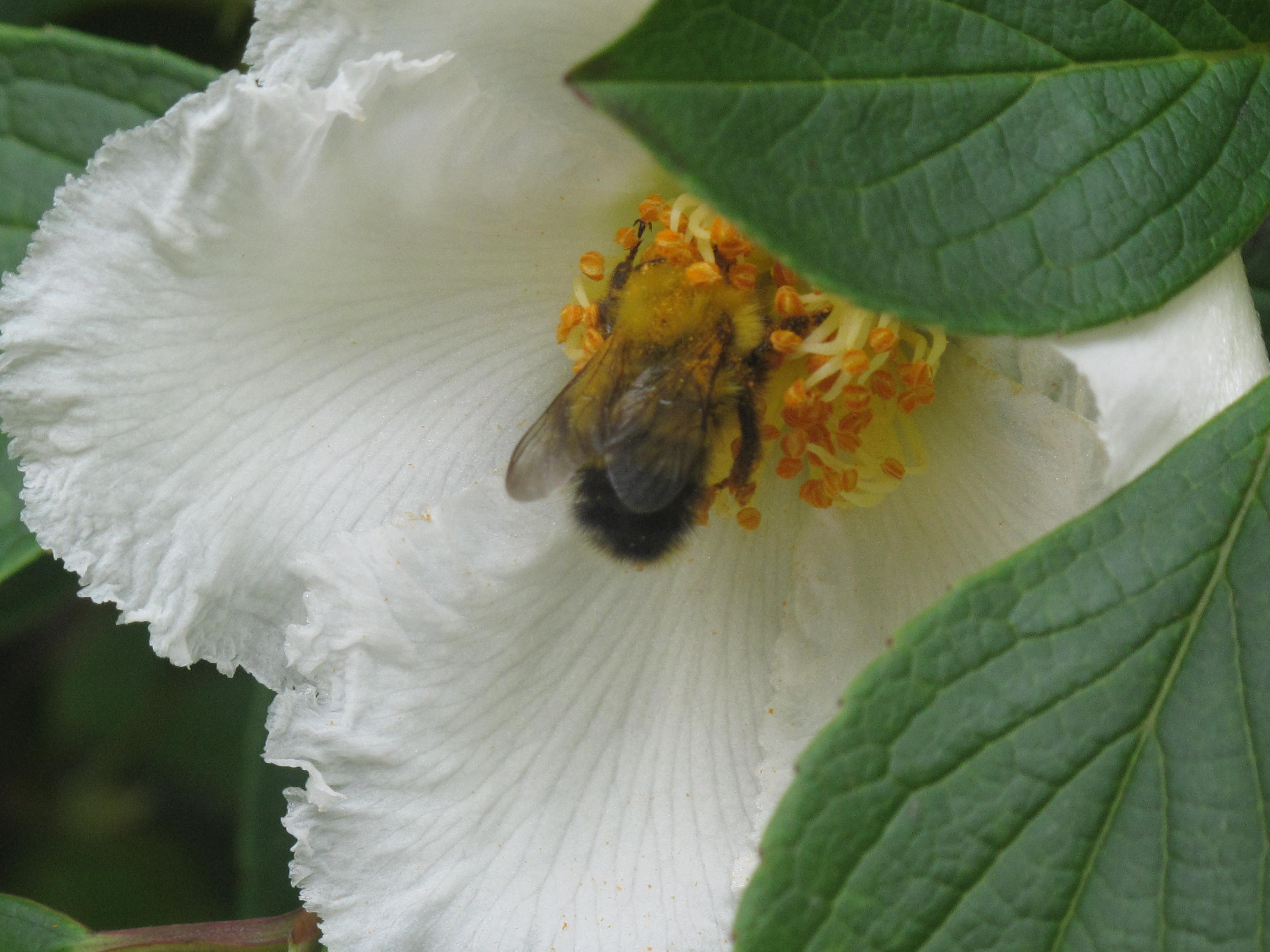
This is a Stewartia bloom with a bee enjoying a little bit of its pollen. If you look close, you can see the bee covered in pollen on its top and even down its wings. Bet he’ll be popular back in the hive. We have often thought about buying some hives and becoming real life bee keepers. Sounds a little dangerous, but fun. Do you or someone you know keep their own bees?

Critter Alert – What Is It?

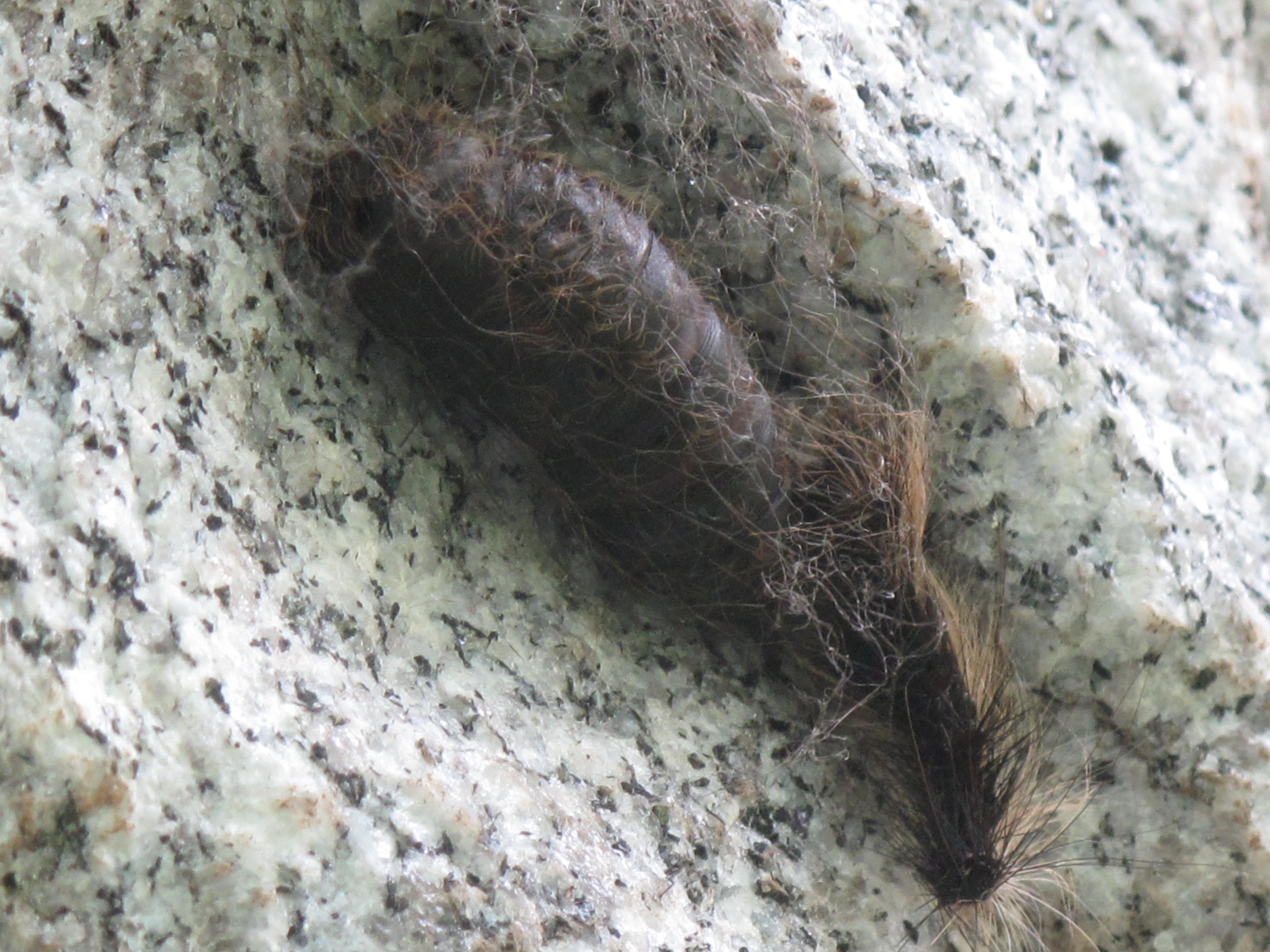
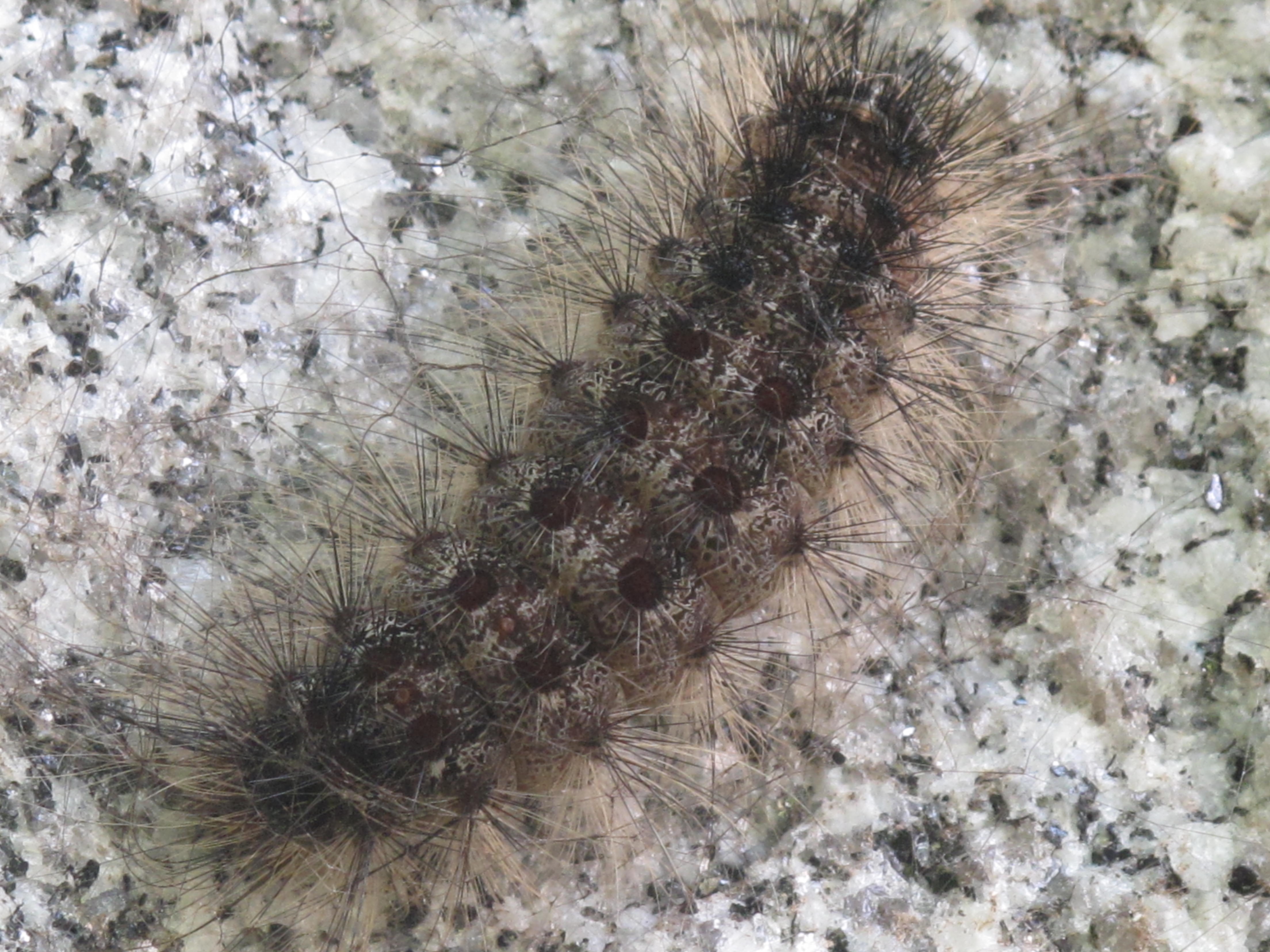
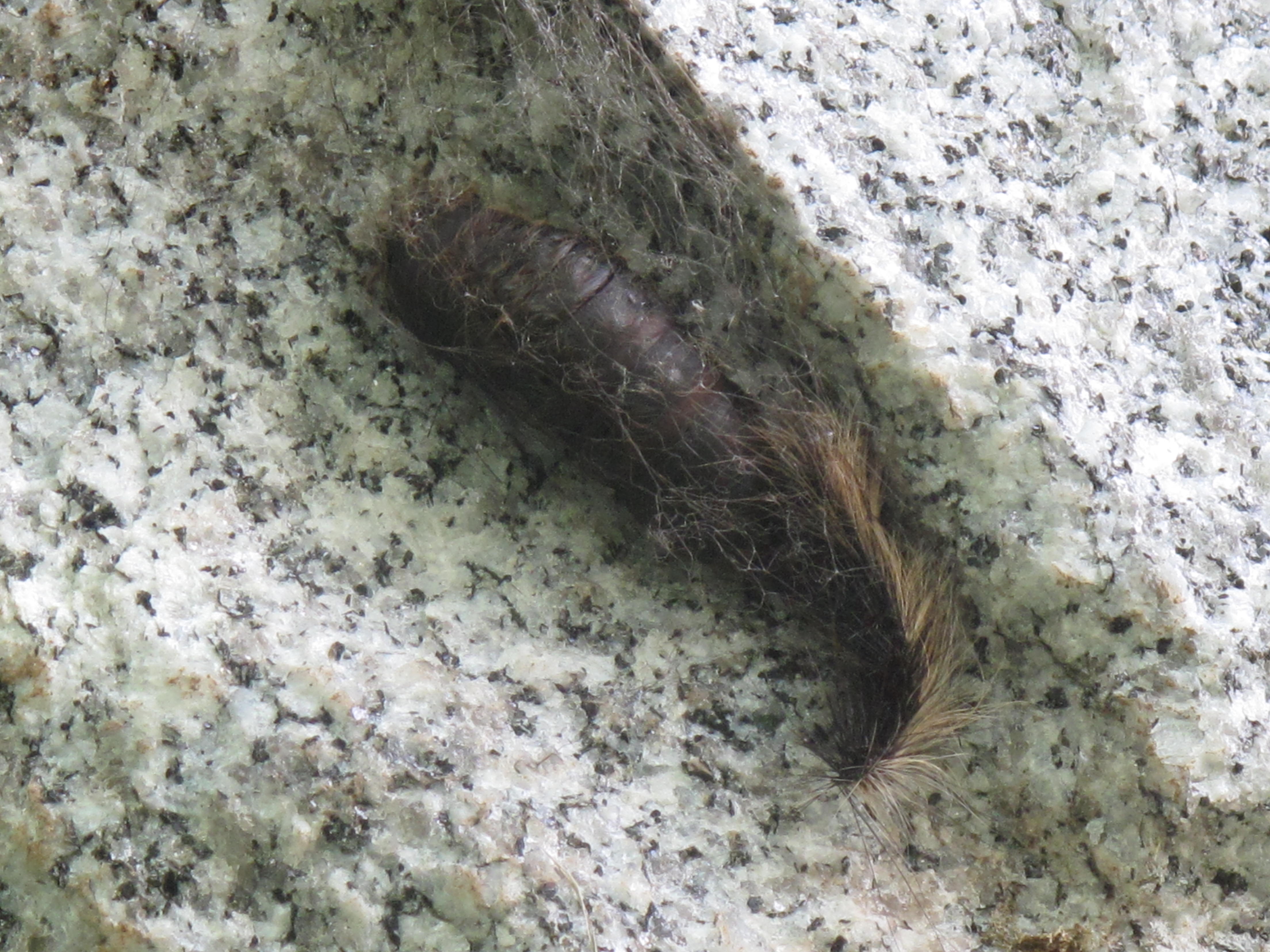
This is what I found on the granite posts that support our espalier apple trees.  What the hell is it?  A larvae of some sort with some fur or hair sticking out on the bottom.  When I saw this on the post, I almost threw up.  Again, what don’t I like?  What’s my least favorite part of living in the woods of Connecticut?  Yes, the critters.  It can be as big as a beaver or as small as a hairy larvae, but the site of something like this from nature sets me free.  I don’t really know when my critter fears began.  As a kid I was always one with nature.  I caught frogs and toads, tried to catch fish with my hands, used to watch the pheasant and quail fly around in the fields behind my house.  Something changed and all I know now is that there is no joy…there is just a rush of heat through my body as my natural instincts instruct me to run for safety.  It’s the weirdest thing.

The larvae has to be related to the caterpillar I found on the other side of the post.  As a young kid, I would have grabbed the caterpillar, rubbed its furry little body and maybe put it into a jar with air holes poked into the top to watch it turn into a moth or a butterfly.  Now, I attach the telescopic lens to my camera and zoom in from across the yard to get the picture.

Here’s what I’m hoping.  Maybe the larvae and caterpillar have something to do with the luna moth that was stuck to the side of the house for so many days last month.  Maybe the luna gracefully flew to the granite post to leave one more generation of its beautiful family and this is what I found.  With my critter luck, I know that this caterpillar probably produced the larvae and out will come some hideous moth with fangs, a large wasp with a six-inch stinger or some strain of garden eating worm.  Let’s pray for the luna moth!

So rest assured that I will be hitting the internet this afternoon trying to figure out what is stuck to the espalier posts.  I may even go to the book store and buy a moth/butterfly book to see if I can figure out what is growing in the back.  I pray it is not something hideous so I won’t have to go out there and knock it off the post.  That would mean the neighbors would get to see another round of me screaming and running around like a crazy person.  If you know what this is, please leave me a comment.  In other words…..What is it?

Tulips In A Tree

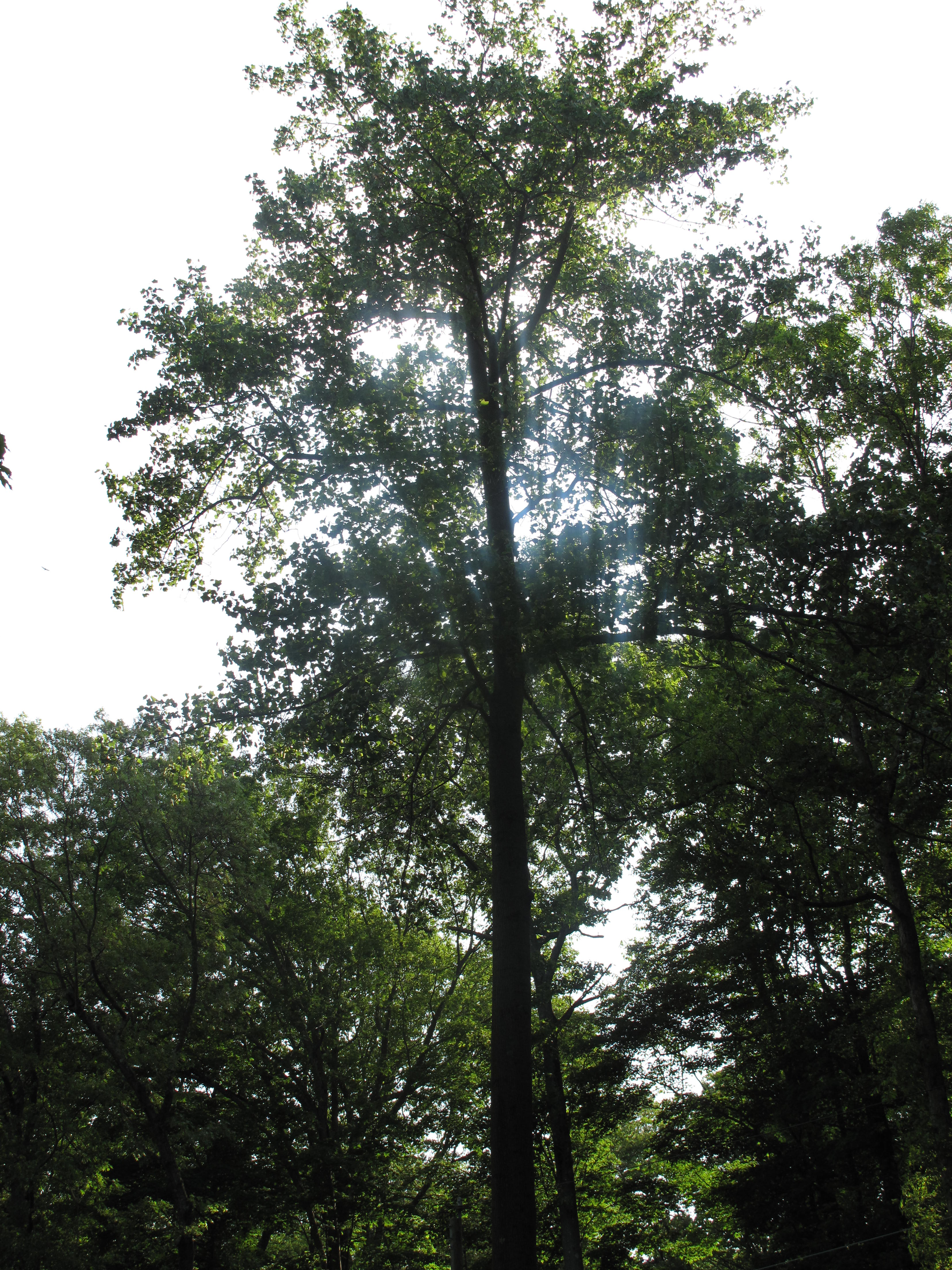
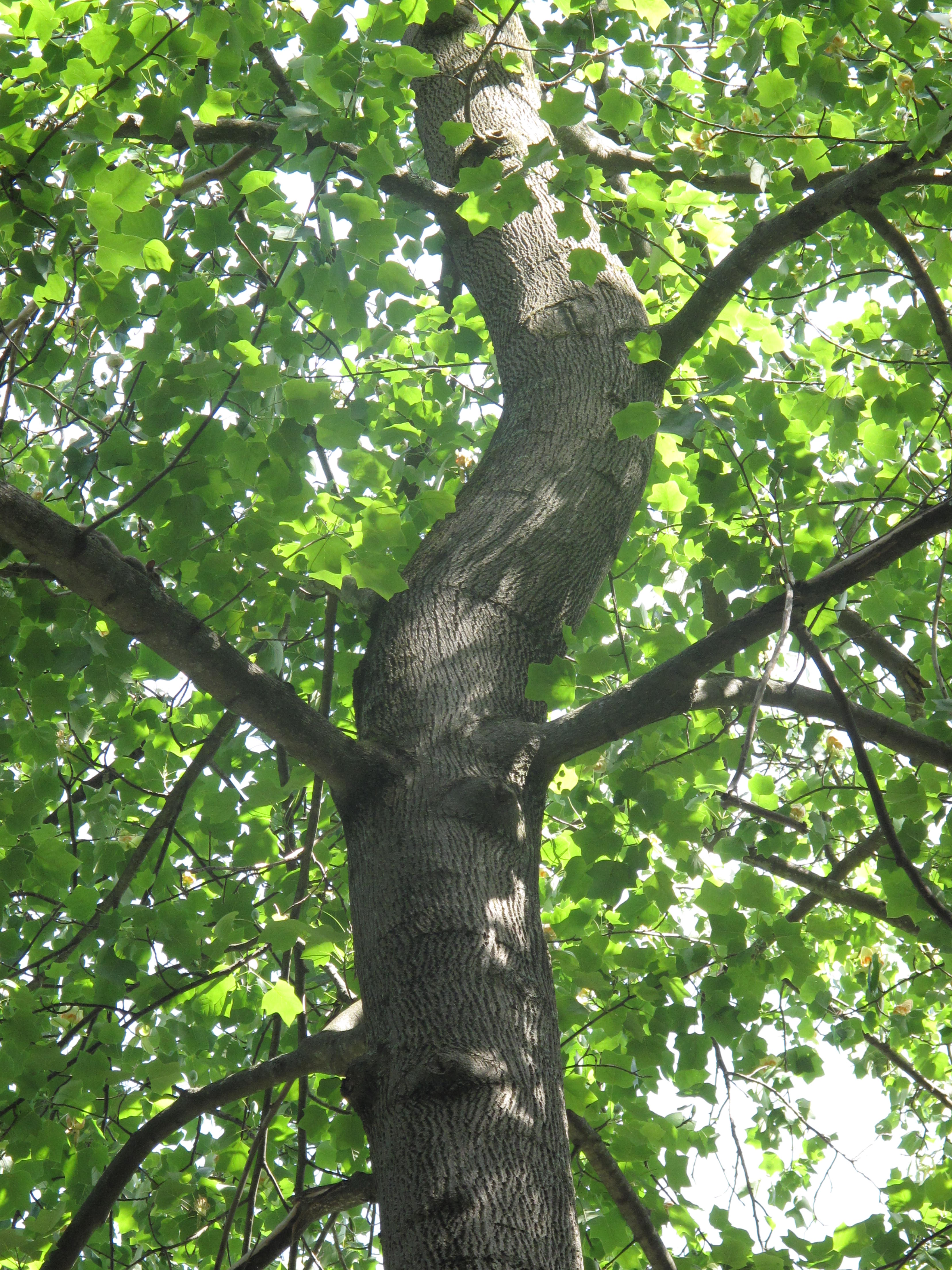
This is one of our favorite trees on Glen Road.  No picture can really do it justice in showing its height and how majestic it stands.  The tree is a Tulip tree, Liriodendron tulipifera.  It is also called a yellow poplar, tulip poplar, tulip magnolia or a white wood.  The Tulip tree is native to the eastern U.S. and is the state tree of Indiana and Tennessee.  Here on Glen Road, our Tulip tree stands very straight and very, very tall, until you get to the top.  At the top of the tree, there is a spot where the main trunk has a bend in it before it starts to grow straight again.  We have been told this is most likely where the tree was struck by lightning.

The Tulip tree is one of the tallest trees in the forest.  It may live 200 years.  The tree is deciduous, meaning it loses its leaves on a seasonal basis.  The Tulip tree is usually 70-90 feet tall.  However, it has been known to reach more than 180 feet tall.  The large, cup-shaped flowers don’t appear until the tree is between 15 and 25 years old.  The flowers are hard to see when in the tree because they grow high above the ground.  It is only when the wind blows them down that we are able to get a close-up view.

The Tulip tree leaf is simple and is shaped something like the outline of a Dutch tulip.  It is bright green on the top and paler green underneath.  In the Fall, it turns pale yellow.  The flower is perfect.  This means that it has both male and female parts.  It has green petals with orange splotches at the bottom.  The flowers appear in late May or early June.  In the Fall, the tree will drop its fruit.  The cone-shaped fruit is made up of clusters of samaras.  Each samara holds two seeds.  When the fruit dries and opens, the samaras scatter, carrying the seeds on the wind.

Tulip trees are very weak-wooded.  This means the limbs often break during ice and wind storms.  It is a good thing that our Tulip tree is near the end of the driveway and not near the house.  The wood is light yellow and very easy to carve.  That is why the wood is used today for crates, musical instruments, toys and roof shingles.

As we’ve said before, we love to grow unique plants here on Glen Road.  While we didn’t plant our Tulip tree, we are so glad that it is here.  Do you have any interesting trees or plants growing on your property that you can share with us here on Acorns On Glen?

A Snake Sighting And Then A House For Sale

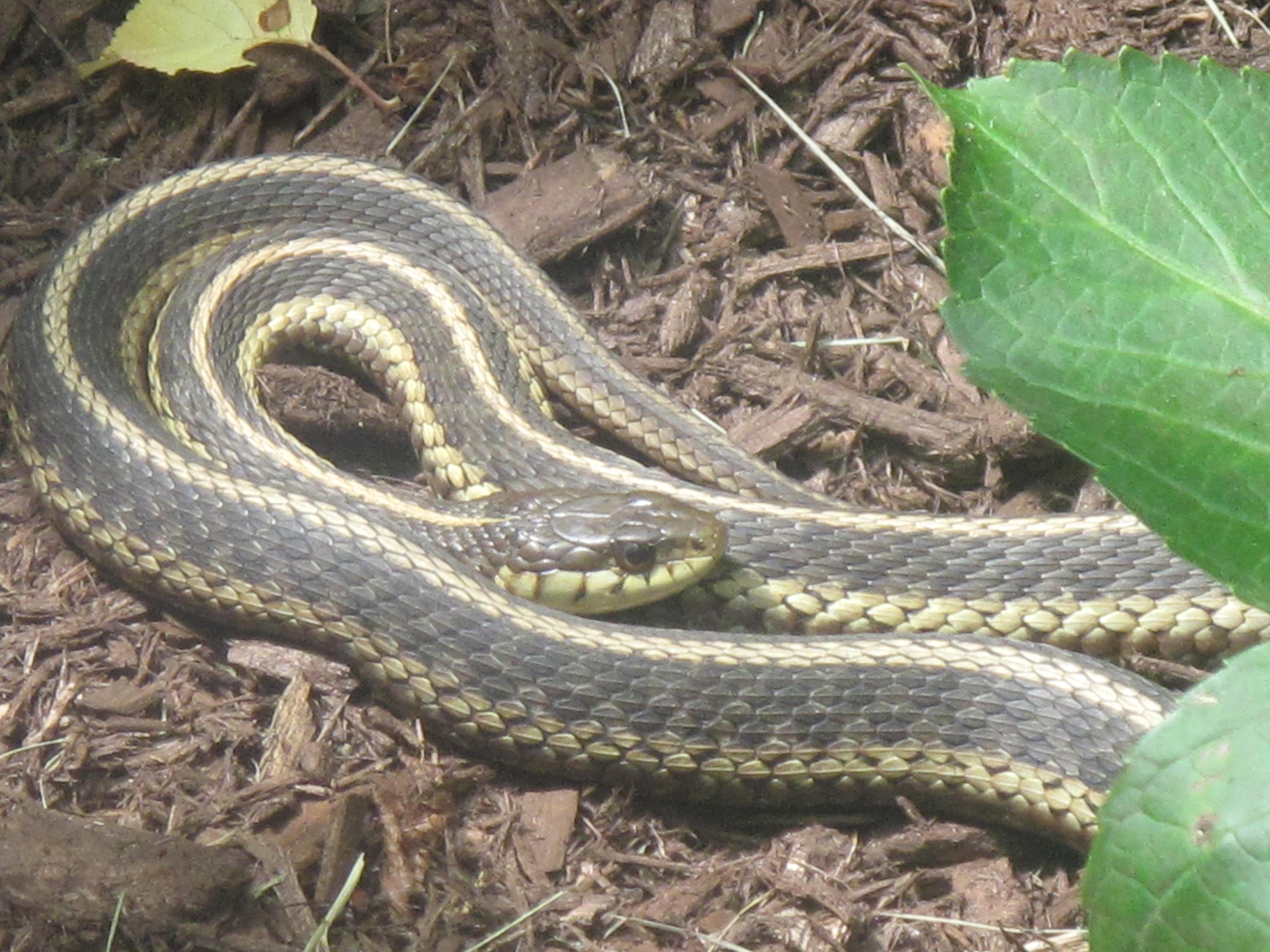
This was my surprise waiting for me in the garden.  Every time I screamed, it would slither off into the woods.  I would then run into the house, gather my courage and slowly go back outdoors.  There it would be–back in the same place in the garden.  We completed the same screaming, running, returning cycle about three times.  Remember, I don’t really like critters.  Remember the beaver, the chipmunks, the birds?  Why is God doing this to me?

I finally decided to be a man and go out and garden and pretend it wasn’t there.  I would even take pictures of the garter snake (see, I knew what kind of snake it was).  I would name it.  Lenny, that’s a good name.  I’ve read that if something has a name and a face, it is less threatening.  I decided I would even do some research to find out more about my reptile friend.  Here is some of my research:

The Garter snake is a Colubrid snake genus (Thamnophis) common across North America, ranging from Alaska and Canada to Central America.  It is the single most widely distributed genus of reptile in North America.  The garter snake is also the Massachusetts state reptile (I no longer like Boston).  Garter snakes are widespread throughout North America.  The common garter snake (Thamnophis sirtalis) is the only species of snake to be found in Alaska and is believed to be one of the northernmost species of snake in the worldThe genus is so far ranging due to its unparticular diet and adaptability to different biomes and landforms, with varying proximity to water.  Garter snakes, like all snakes, are carnivorous. Their diet consists of almost any creature that they are capable of overpowering:  slugs, earthworms, leeches, lizards, amphibians, birds, fish, toads and rodents (thank God that Yorkies weren’t on the list!). When living near the water, they will eat other aquatic animals.  Food is swallowed whole (similar to how several of my friends eat).  Garter snakes often adapt to eat whatever they can find, and whenever, because food can be scarce or abundant.

By the end of the day, Lenny had slithered off and I didn’t see him again.  I know he is out there, but I haven’t seen him.  As long as he is out there eating mice and bad bugs, I’ll get used to knowing that a garter snake slithers among us here at Glen Road.  I don’t like it, but I’ll get used to it.  I mean, it’s not like Mother Nature issues restraining orders.  I’m calm now.  I’m going outside to pull the ‘For Sale’ sign out of the front lawn.  Do you have any ideas on how to keep snakes as far away as possible from you, your house and your garden?