Hot For Horseradish

This is a love story about all things hot.  Not hot like the sun, but hot to your taste.  We love foods that have a little heat to them here on Glen Road.  In fact, we are always taking recipes and putting a little heat into them.  We add cherry peppers into broccoli rabe, we put cayenne pepper into almost anything and there is nothing better than cold clams with tabasco sauce, to name a few.  However, our favorite is freshly roasted beef or a polish sausage with a little side of homemade horseradish.  Funny thing is, we don’t have any horseradish that grows in our garden.  When we want horseradish, we need to buy the root at our local organic produce market.  Well, this is about to change because we have planted a bed of five horseradish roots.  The five little brown stalks appear to be so innocent, but in a year they will produce thick roots that are filled with fire.  These roots were planted down from our newly planted rhubarb patch, right behind the espalier apple trees.  Let’s get the heat started with a little horseradish history from the internet:

Horseradish (Armoracia rusticana) is in the brassica family, which includes turnips, kale, mustard greens, broccoli rabe, daikon radish and many other plants with varying degrees of pungency and a similar taste.  Native to the temperate regions of Europe and Asia, it is an ancient herb.  The Romans carried horseradish to Europe as a medicinal herb and as a flavoring.  It was cultivated in Egypt before the exodus of the Hebrew slaves around 1500 B.C., and is often the symbolic bitter herb at the Passover Seder.

By the 16th century, the pungent root was spreading throughout England, where it was described for  its many uses, including as an aphrodisiac, a treatment for tuberculosis, a mustard plaster and a dewormer.  The common name probably evolved from the German “meerrettich,” which means sea-radish, which was misunderstood by the English, who associated “meer” with “mahre,” an old horse.
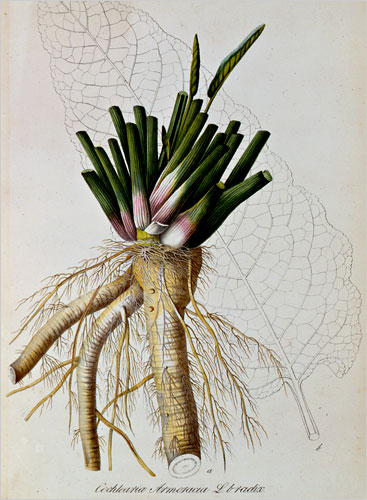
Undisturbed, the root doesn’t have a strong smell or flavor. But crushing or grinding it produces isothiocyanates, a kind of mustard oil, which is what gives horseradish its flavor and heat.  Adding vinegar stops the reaction because it’s an acid.  It also stabilizes the isothiocyanates, so you can still get that flavor a week later.  Tradition calls for grinding the root outside, because the chemical reaction triggered creates a gas that not only makes you weep, but can irritate lungs and nostrils.  This is actually a defense mechanism for the plant if it’s wounded.

We planted our horseradish in a long furrow about six inches deep.  Each root has a top and a bottom identified by the slicing made by the grower.  The top is identified by a straight slice and the bottom is identified by a diagonal slice.  When we placed them in the furrow, we put them in at an angle, with the straight sliced top pointing upwards.  Once in place, we covered the top of the roots with about four inches of soil, pressed the soil into place and watered.  While we won’t harvest any horseradish this year, the roots will produce beautiful green leaves that will make a nice complement to the equally as beautiful rhubarb leaves that we previously planted along the back side of the espaliers.  Next year, we will harvest and grind a few of the roots, add some white vinegar and salt and begin to enjoy some heat.  As my Grandmother used to say, we can only harvest the roots in months that contain an ‘R’ in them.  Months that don’t contain an ‘R’ are too hot and the root will not produce optimal flavor.
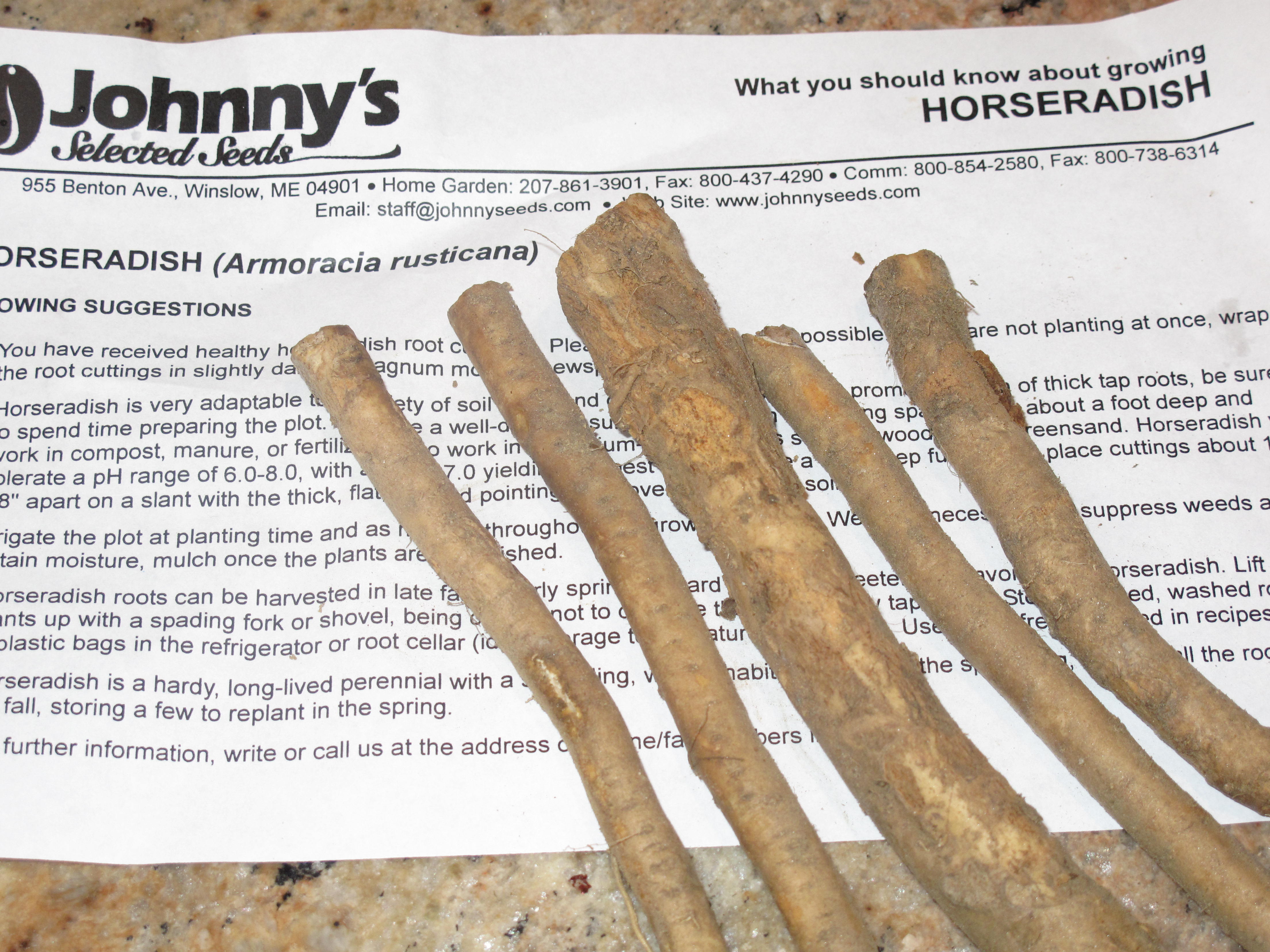
So here’s to horseradish, named “Herb of the Year 2011” by the International Herb Association.  We will look forward to your pretty leaves this year and then the addition of your hotness to our meats, mashed potatoes and seafood in 2012.  We can’t wait.  What hot foods do you and your family like to cook or eat?

Grace Kelly Moves To Glen Road

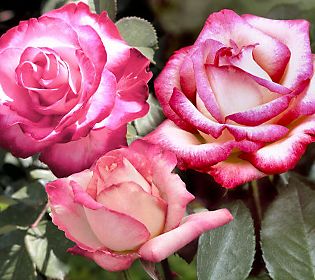
This is Grace Kelly.  As you can see, it is not the actress/princess that you were thinking.  ‘Grace Kelly’ is a variety of tree rose that we planted in a container this weekend so it can begin growing in time to bloom this Summer.  We have had tree roses on the patio almost every year we have lived here on Glen Road.  They have always grown quickly from the dormant tree that we get shipped to us. 

In early Summer, the tree rose begins to bloom and if you are diligent about removing the spent roses, the tree will continue blooming up until the end of the season.  Tree roses are not actually a class of rose, but rather a way of growing them.  A bush or climbing rose is simply grafted onto a straight trunk, giving the desired appearance.  Here is the rose bush that is at the top of the tree we purchased.

Very similar in appearance to a rose bush that you would buy at a nursery, except it is attached to the top of a long trunk.  The roots are about five inches long and we have always just filled a container with organic potting soil and put the tree rose into the soil so that it is covered up to the base of the trunk.  They require very little care other than providing about an inch of water per week and fertilizer every so often.

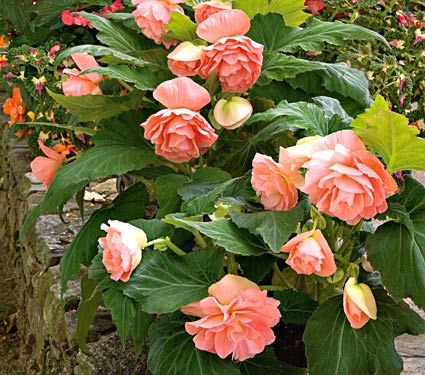
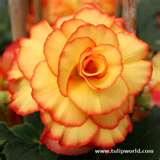
At the beginning of June, our tree roses have always produced an array of beautiful, full-sized rose buds.  The variety ‘Grace Kelly’ appears as beautiful as the woman it is named after.  Pale pink roses tipped in a dark pink to red.  Here are some pictures of our desired end state.  Grow, girl, grow!

So now Glen Road has had its first celebrity (er, celebrity tree rose) come visit in 2011.  Again, we have always planted these beautiful plants every year on Glen Road.  Since they are a perennial, you can also winter them and bring them back year after year.  To winter in mild zones, you need only wrap in-ground plants in straw or burlap.  To winter in northern zones, you must bend the plants without breaking its roots and cover with soil.  Containerized plants can be moved to an unheated, protected area.  Give a tree rose a try to brighten up your patio this Summer.  They are readily available on the internet and aren’t that expensive.  When’s the last time a princess stayed in your backyard?  Tell us what plants you are planting on your patio and deck this season?

Meet The Mantis

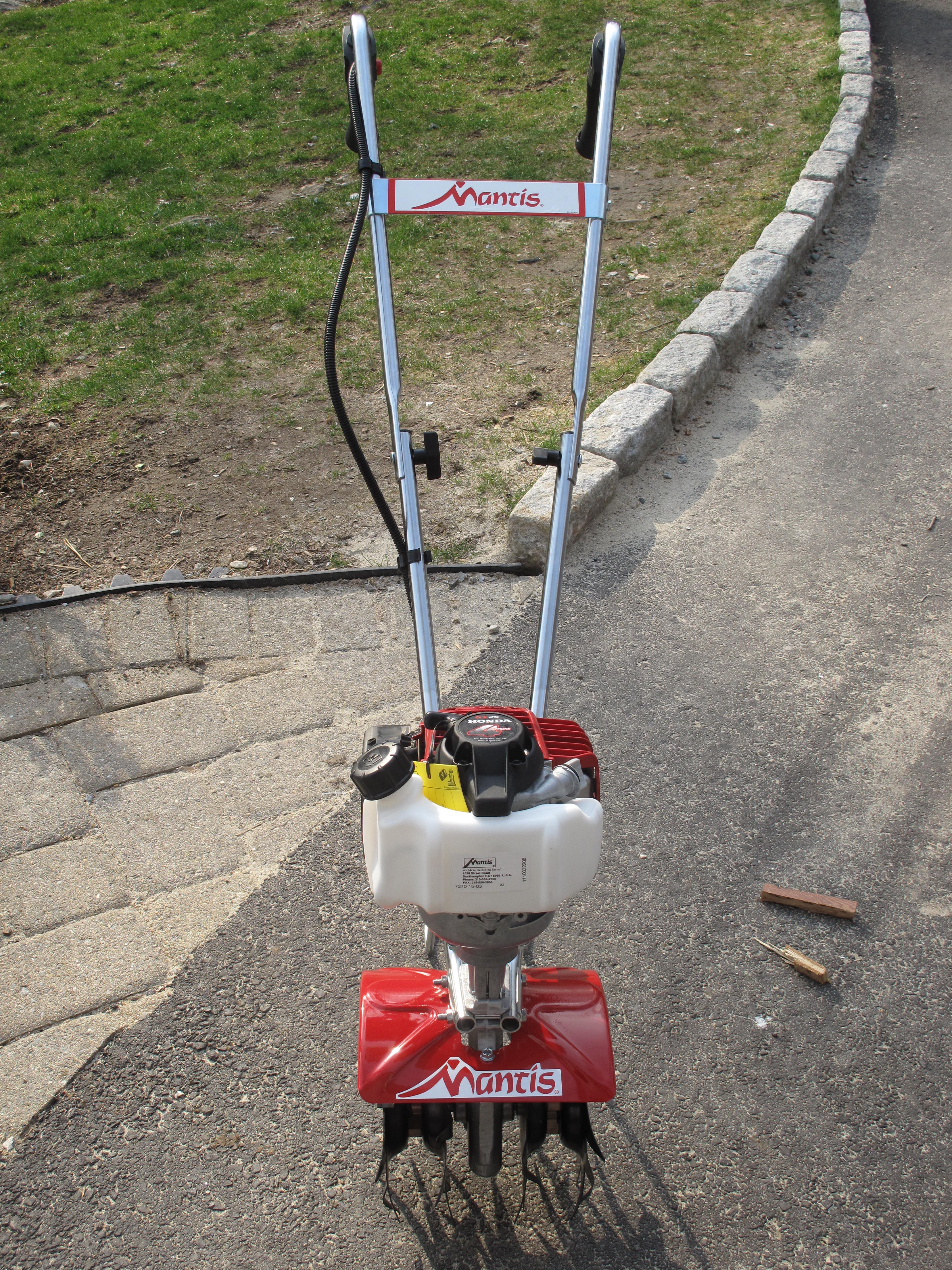
This is my new toy.  It is a Mantis 4-cycle rototiller.  I am going to use it in the raised bed garden to ready the rest of my soil for planting.  It will be great to turn my winter rye grass cover crop into the soil so that it can break down and release needed nutrients into the garden soil.  It will also cut down on my sore back and knees due to the fact that I won’t need to do these chores by hand anymore.  It will up to the Mantis (with a little help from me).

My Mantis weighs only 24 pounds and, given that it only have two tines attached, it is perfect for my small raised bed garden.  The tines can quickly cut through sod, clay, compacted soil or weeds.  It can also dig down 10 inches so my plants can establish themselves in soil that’s cool, deep and water retentive.  I’m hoping to use it all season–to dig my beds and plant my garden and then all the way to the end of the season when I will turn it all under and re-establish a new cover crop.

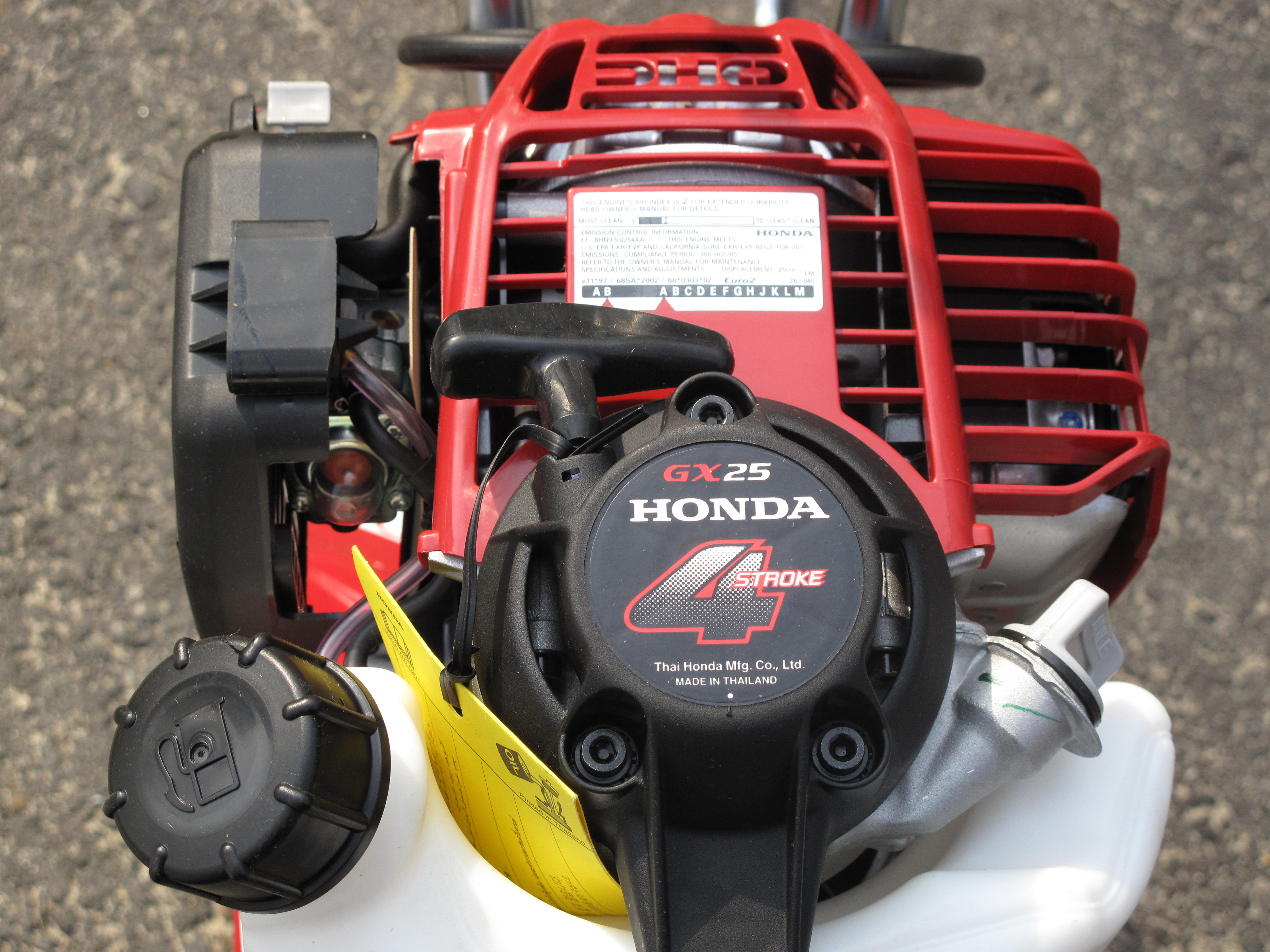
My Mantis is easy to start and there is no fuel mixing required.  It is 9 inches wide and has fold down handles.  It can run most of the day on one gallon of gas due to its powerful, Honda 4-cycle engine.  It even has a kickstand so I can “park” my rototiller anywhere and the kickstand flips up when I am tilling the soil.

The easy-grip handles include an on/off switch, a lock key that must be released before the rototiller can operate and an accelerator handle to start the tines working.  The tines are guaranteed for life, so I can only imagine how strong they work.  The tines can spin up to 240 rotations per minute, so that is plenty for the garden that I have here in Connecticut.

I can’t wait to get into the garden with my new toy and do some tilling.  I was so happy when I received the box containing my Mantis.  It reminded me of a little kid getting a bright, red wagon.  So watch out cover crop, your days are numbered.  My Mantis and I are coming to till until we drop…or run out of gas, whichever comes first.  What cool gardening tools are you using in your garden?

Raising Rhubarb

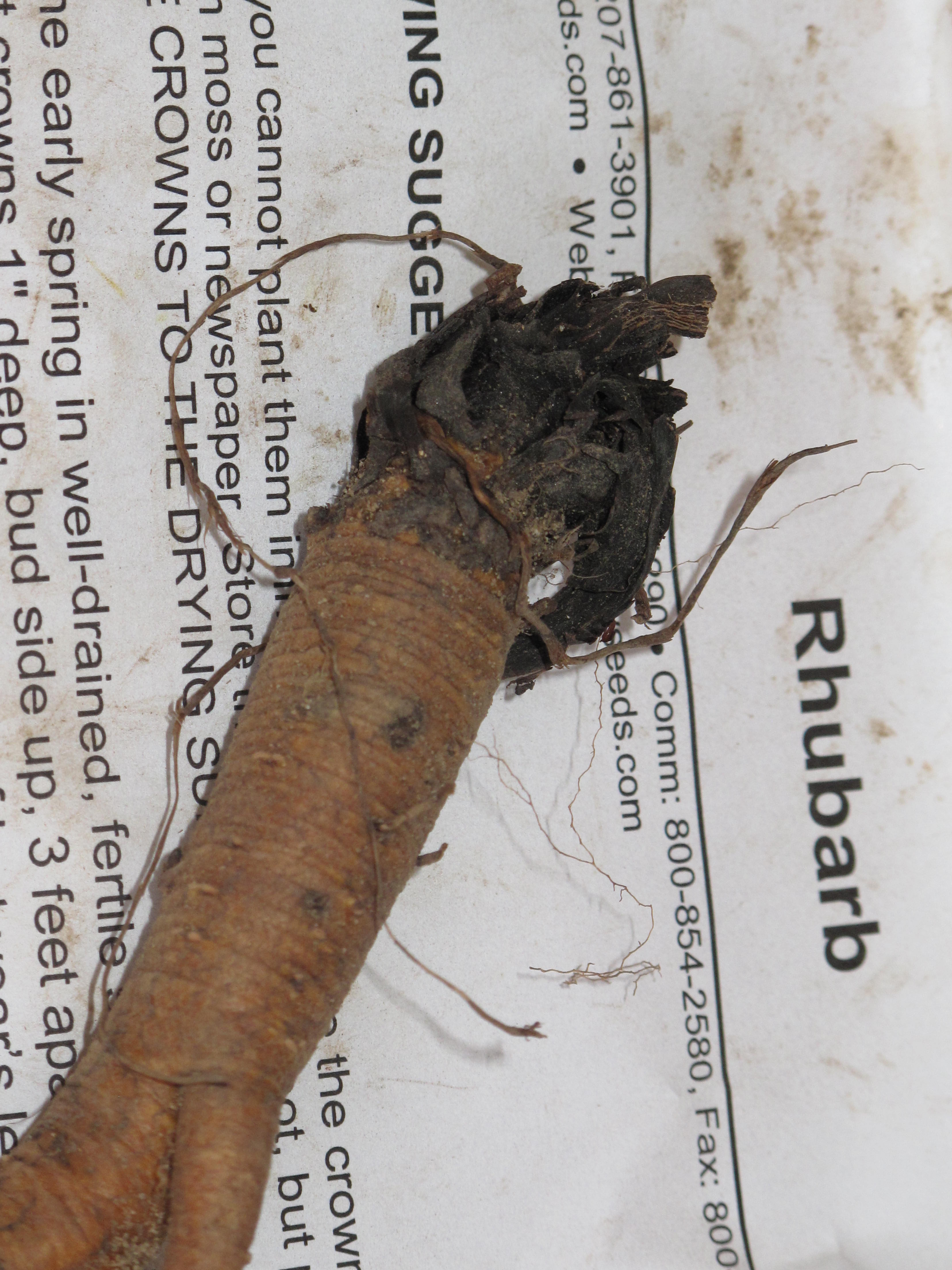
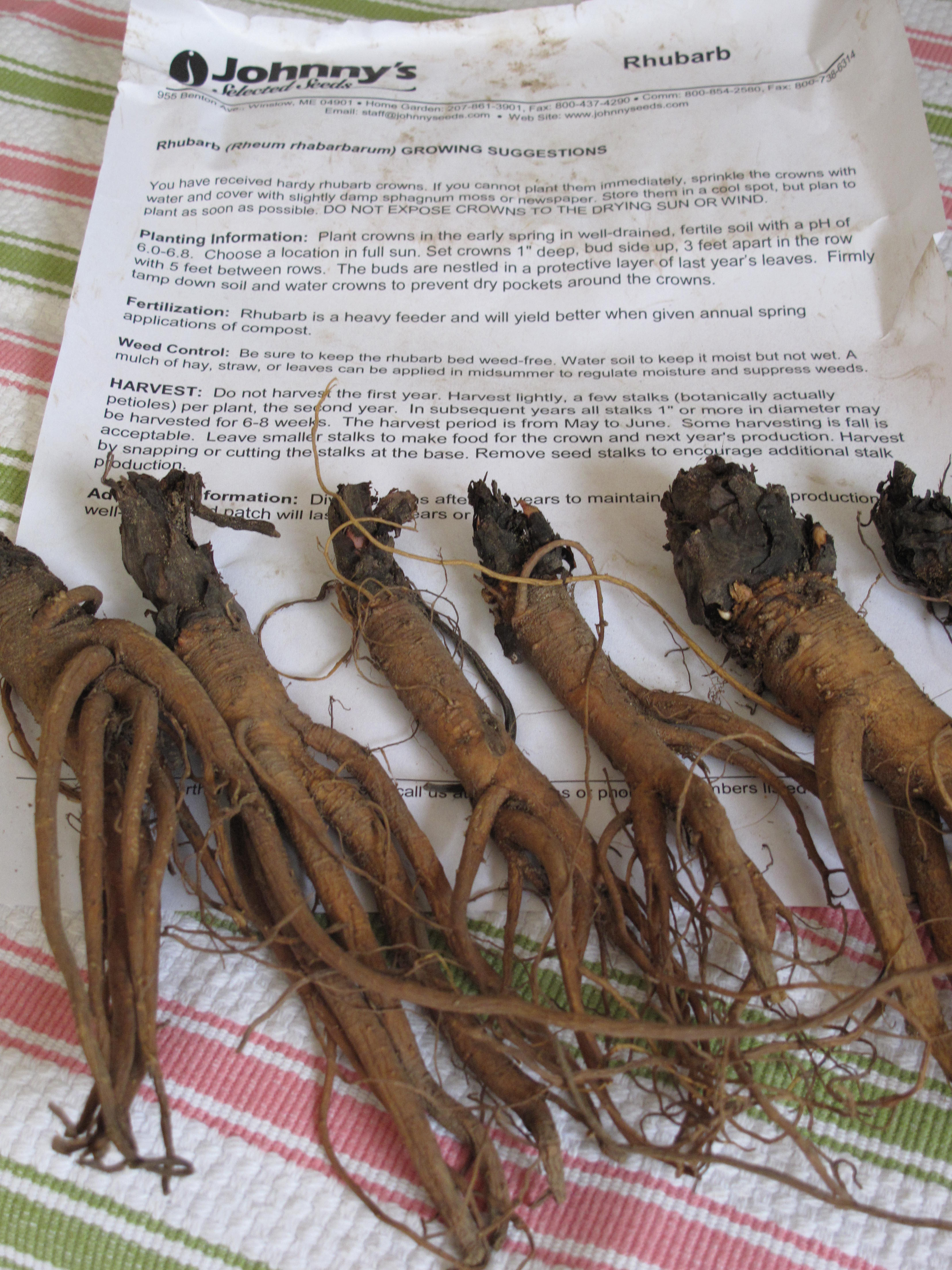
This is what I received this week…some rhubarb crowns ready for planting.  I have been obsessing about planting rhubarb, also know as rheum rhabarbarum, here on Glen Road for quite some time.  I’m sure it has to do with wanting to grow something that reminds me of my youth.  You must all know at this point that my Grandma was a great gardening inspiration in my life.  My Father was also inspirational, but due to my close relationship with Grandma, she brought me slowly into the process and let me get into the garden when I wanted to do it.  She slowly made me value it.  You know how it goes with parents…they want to bring you into it, but many times you feel forced and then you end up crying and rebelling and not wanting to do it.  I guess that is the sad story of all teenage angst…sorry Dad and Mom.  I’ve talked about her horseradish a few times, but my Grandma also had a killer rhubarb patch.  We ate a lot of rhubarb in Spring…rhubarb sauce, rhubarb pie….all of it so fresh and so tasty.  There were times my brother and I would snap off a stalk and chew on the tangy sweet and sour fruit in her backyard.  Do any of you remember the Schwann’s man?  In our town in Iowa, the Schwann’s man drove a pinkish peach truck up the road and you could stop him and buy frozen items.  Grandma bought pizza dough and ice cream.  In the Spring, she scooped this ice cream into whatever rhubarb creation she had made for the night.  How great was that? 
So I wanted to plant a rhubarb patch for a long time and this year, I got my wish.  I planted six crowns this weekend in some well-drained soil.  The patch was in a location that received full sun, just behind the two espalier apple trees.  I set the crowns about a foot apart, which is a little tight, but I’m sure they will be fine.  I watered the crowns very well and then placed a little over one inch of soil on top of them.  Then I firmly tamped down the soil to prevent any dry pockets from forming around the tender crowns.

There will be no harvest this first year.  During the second year, there may be a light harvest, actually a few stalks (botanically, actually petioles) per plant.  In subsequent years, all stalks one inch or more in diameter may be harvested for six to eight weeks.  The harvest period is from May to June.  Some harvesting in Fall is acceptable if we feel the urge.  However, smaller stalks should be left to make food for the crowns and next year’s production.  We will harvest by snapping or cutting the stalks at the base.  We need to remember to remove seed stalks to encourage additional stalks in the next year.  What I also know is that rhubarb leaves from un-harvested stalks are quite beautiful.  Don’t be afraid to plant them in a prominent spot in your garden given their beauty.

After three to five years, we will need to divide the crowns to maintain stalk size and production.  A well-maintained patch will last 10-15 years or longer.  That sounds like such a long time, but as my Grandma used to say, time goes by much quicker the older you get.  Here’s to a few stalks next year.  Do you grow rhubarb in your garden?

News From The Garden

This is an update on our 2011 garden.  We want to keep everyone up to date on what’s going on outside in the actual garden and inside under the grow light.  This weekend provided some great weather (finally!) to really spend some quality time in the garden.  We started the morning planting the remaining seeds into our last APS 24 growing system and placed them in the basement under the grow light.  Our earlier planting was with seeds that prefer cooler soil temperature.  This weekend, it was seeds that prefer warmer soil temperatures.  Remember, our two batch planting philosophy?  The seeds planted this weekend included three varieties of tomatoes and artichokes.  Yes, artichokes!!  We’ve heard that they can grow and prosper in Connecticut, so we thought this would be our fun garden experiment for 2011.  Can Glen Road enjoy some stuffed artichokes at harvest time?  Keep your fingers crossed.

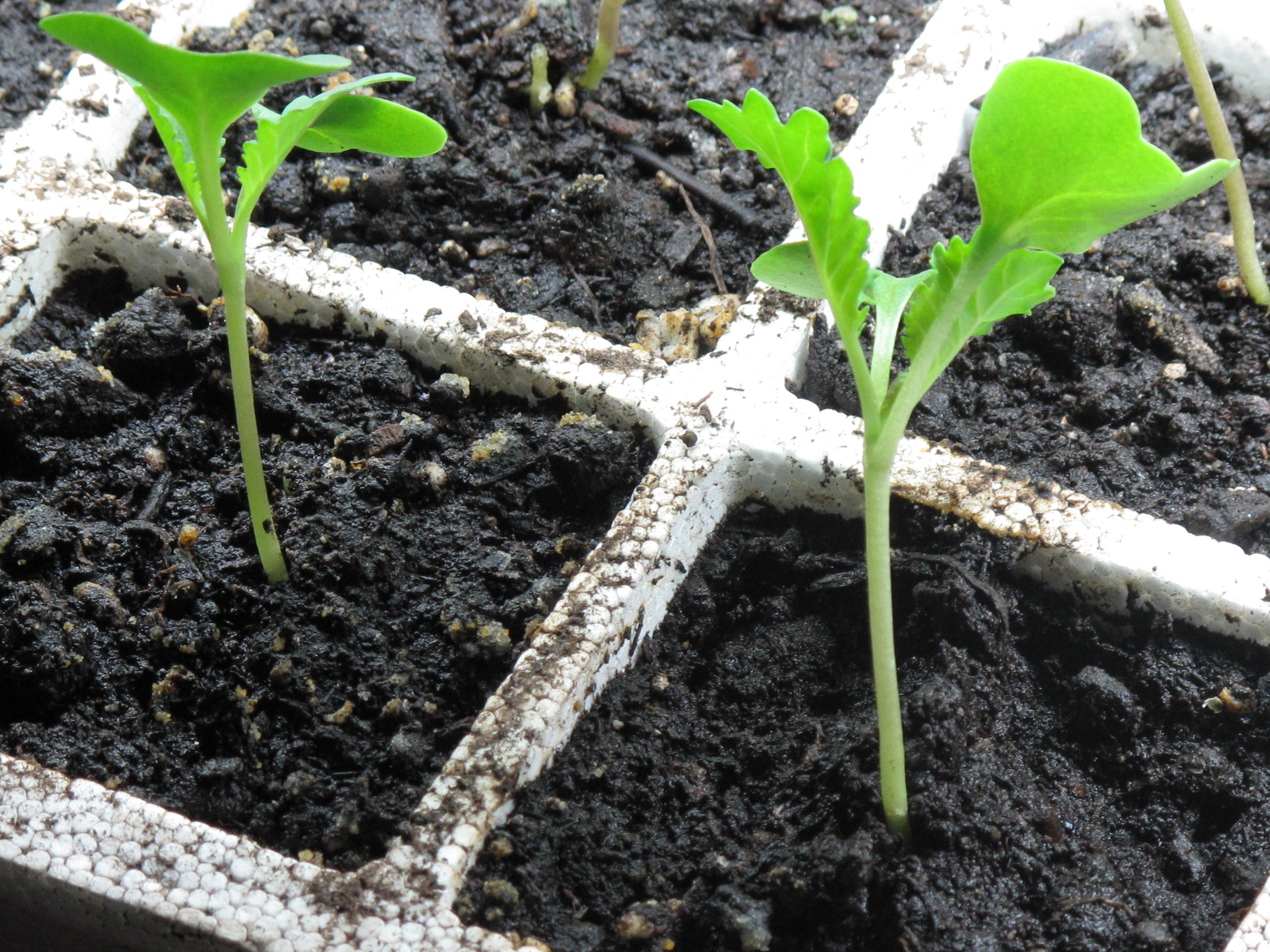
Inside the house, the first batch of seeds placed under the grow light are actually growing quite nicely.  We’re happy to say that all of the seeds have sprouted and we have identified the strongest seedlings and removed the others in the cell.  Only one plant per cell allowed.  The weaker sprouts were removed by clipping them off with a pair of scissors.  While the cabbage, brussels sprouts and cauliflower are over an inch high now, the eggplant is a little smaller and growing more slowly, so we decided to wait two more weeks before we remove their weaker seedlings.  The picture above is a look at our cabbage and here are the smaller eggplant seedlings.

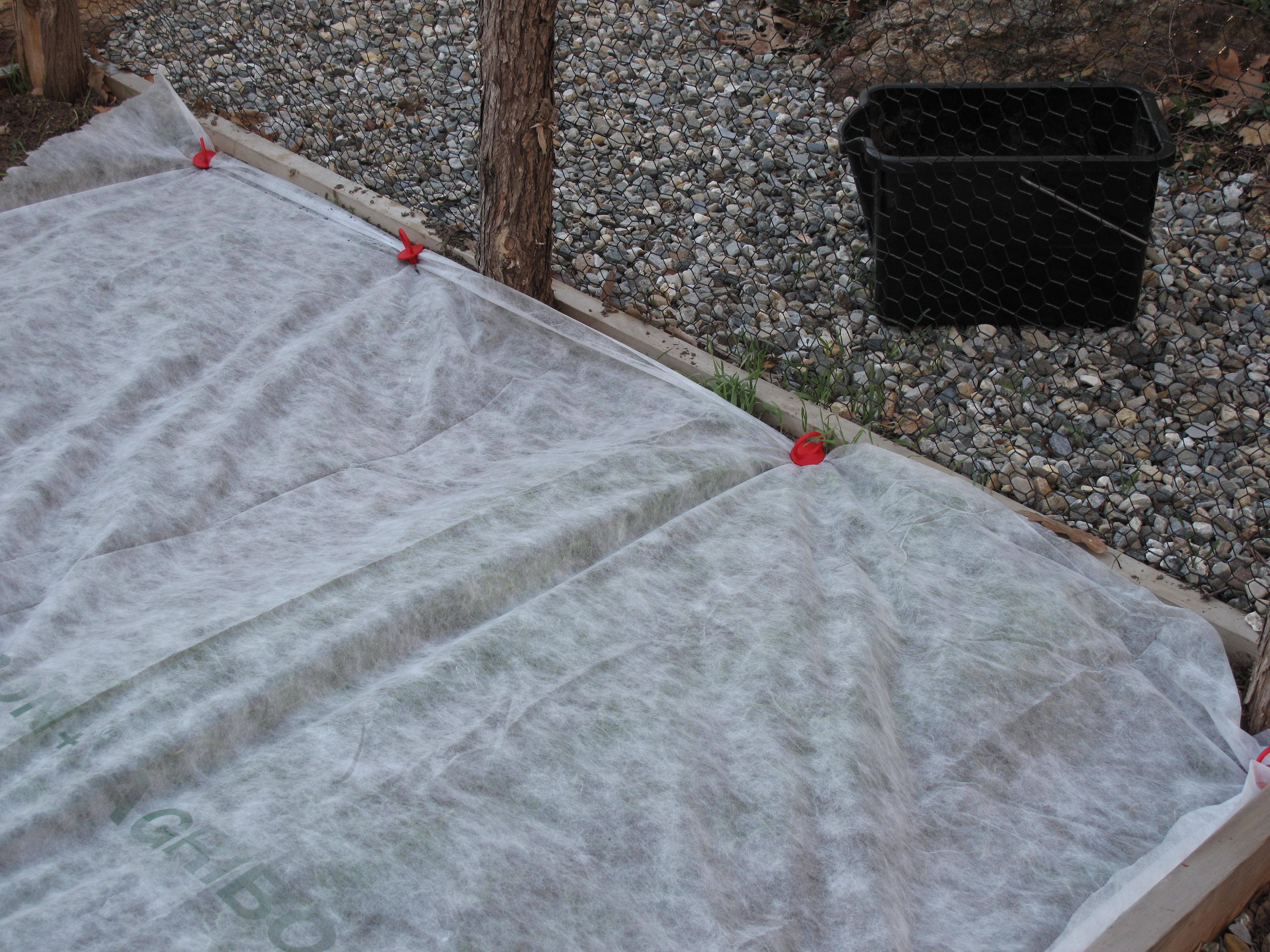
Outside we were able to expand our seed planting to more than just spinach.  Since the spinach seeds have been out in the garden since Thanksgiving 2010, we thought it was only fair to plant six more rows of seeds and grow some friends for the spinach.  First, we turned under the crop cover of winter rye grass so that it would start to decompose and enrich the soil with its nutrients.  Then we planted some seeds that thrive in early Spring’s cooler soil.  This included one row of round radishes, two rows of French breakfast radishes, two rows of lettuce mix and one row of arugula.  After the rows were planted, we stretched out a longer piece of floating row cover and placed it over all the rows of vegetables that are in the garden-the six rows planted today and the four rows of spinach that have been there since last year.

We were wondering when the floating row covers could be removed for good and had gotten some mixed answers, so we decided to consult with an expert and last week asked when the covers could be permanently removed to none other than Martha Stewart on her live radio show.  She told us that the row covers needed to be in place for quite a while longer as it is just too cold to remove them at this time.  She said it was fine on warm days to pull the cover up and let the plants be in the direct sunlight, but that we needed to cover them back up before nightfall.  We also started to talk about a few vegetables that we don’t grow because they spread out too much and take over the limited space we have in our raised beds.  She said we should reconsider our stance on growing such things as cucumbers, zucchini and peas.  So we started thinking and surfing the internet.

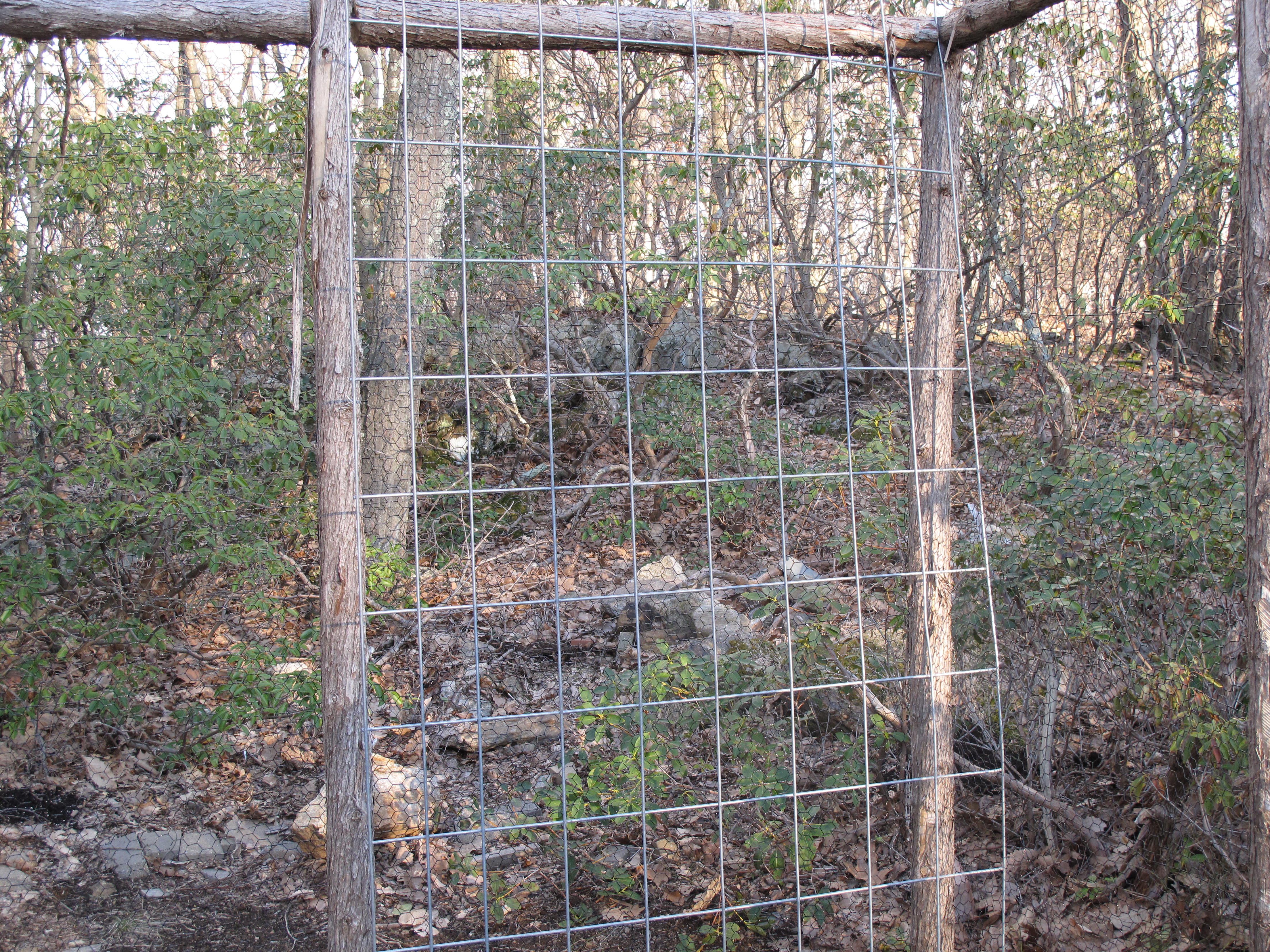
What we found was an idea that we saw on several different gardening sites that we visited.  We took a trip to our local farm supply store and bought a 16 foot livestock panel.  A livestock panel is actually used for temporary fencing on a farm.  In our case, we used a bolt cutter to turn the one piece panel into two, 8 foot panels.  Each panel was then taken into two of the raised beds and the cut ends were pushed into the soil and then the panels was gently leaned up against the garden fencing.


Later in Spring, we will accumulate some dirt into mounds in each of the beds at the base of the fencing and plant cucumbers and zucchini.  We will then train the vines to grow upwards and weave through the panels with the vegetables hanging down from the panels, making them easier to pick.  Since the vines will grow upwards versus outwards on the ground, it means more room for other plantings in our small garden.  We’ve asked whether the vegetables will drop off their vines due to their weight and upward growth and everyone has told us not to worry.  We believe them, but we secretly have our doubts. 

So for the beginning of April, we are feeling that our garden is on schedule and everything is growing as expected.  From here on out, we know that the garden will consume a lot of our time, but the result is worth it.  Nothing tastes better than home-grown vegetables.  Are you working in your garden right now or is it still too cold?

Time For Tuberous Begonias

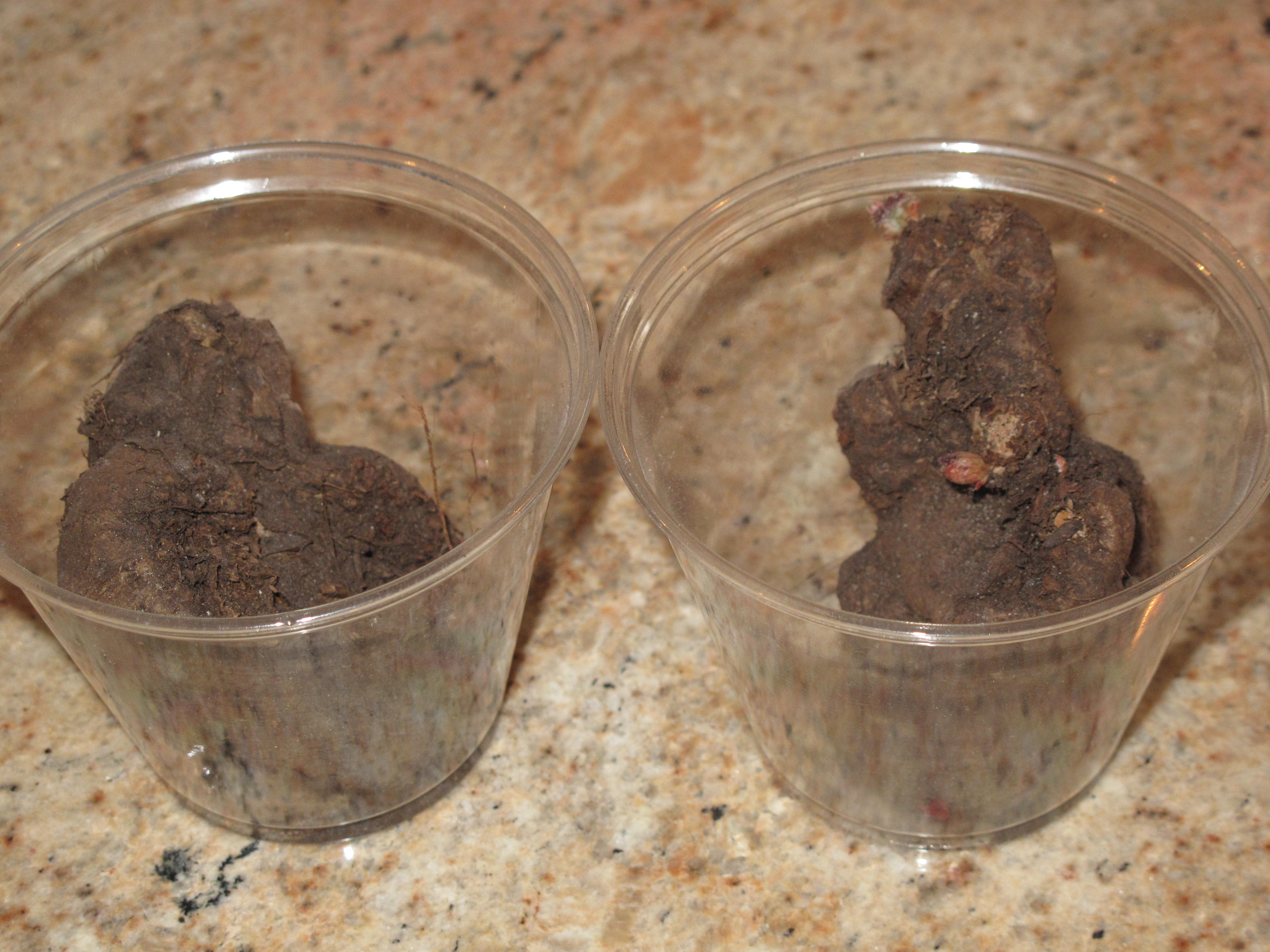
This is a set of begonia tubers. More specifically, they are a set of Blackmore and Langdon begonia tubers.  For over 100 years, Blackmore and Langdon have offered tuberous begonias that produce spectacular flowers in a wide range of colors over a very long season and do all of this in shade.  In the North where I live, the tubers should be started indoors in late Winter or early Spring to bloom by Summer.  They need well-drained soil, indirect light and moderate temperatures.  While not as popular as the wax begonias that are planted more in beds, tuberous begonias are more spectacular and are most commonly planted in containers or boxes.

Its scientific name, Begonia tuberhybrida, means they grow from a tuber (similar to a bulb) and its many varieties are hybrids.  As is often the case with hybrids, there are different varieties.  The tuberous begonia flowers come in all shapes, sizes and colors.  Some flowers are upright, while others loosely hang down.  Some are single petaled, others, probably most, are double petaled.  The male flowers tend to be quite large, up to 6 inches in diameter, and showy.  The female flowers are smaller, 1 to 3 inches in diameter, but still showy.  About the only common factor among the varieties are the leaves, which are almost always dark green in color, quite large and arrow shaped.

I have had these two begonia tubers for quite some time.  I purchased both tubers from White Flower Farm, http://www.whiteflowerfarm.com.  The ‘Picotee’ tuber has been growing in a pot on my porch for over eight years.  The ‘John Smith’ tuber has been around since 2008.  When the plants die off in October, I simply dig the tubers out of the soil, break the spent stems from the tubers and then place them in the basement in wood chips until they are ready to plant again in mid-March.

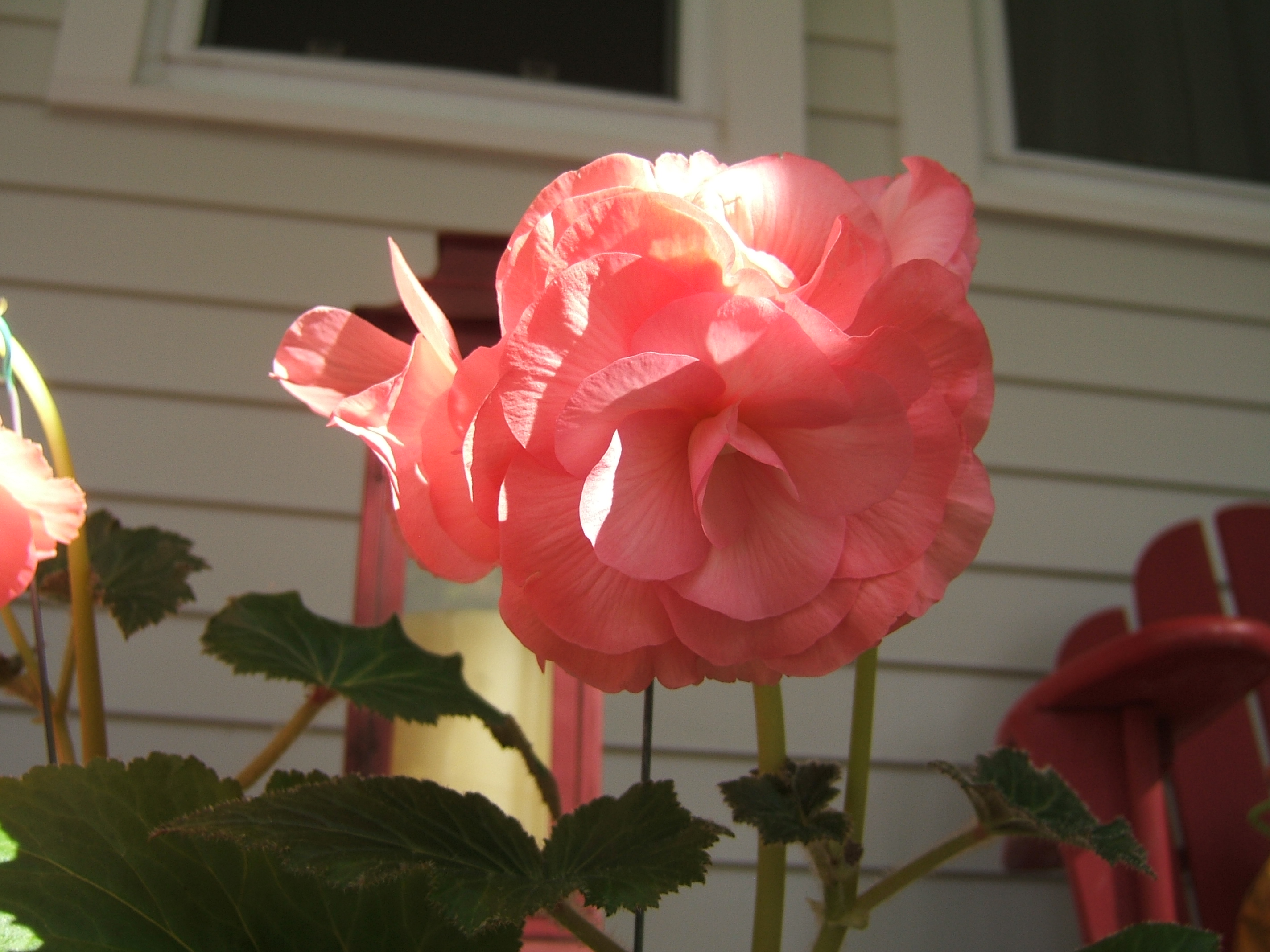
‘Picotee’ has a salmon colored double bloom.  It grows almost a foot tall each year and produces a number of massive sized blooms.  It does not produce scent of any kind.

‘John Smith’ has double, rosebud blossoms that are ruffled in a delicate peach color.  It has the distinction of being the first scented upright begonia. Its fragrance varies from rose-like to a hint of citrus.  The creation of the first perfumed, upright begonia took time, more than ten years.  It was named to honor Blackmore and Langdon’s lead begonia grower, who bred and developed this breakthrough.  ‘John Smith’ was a highlight of the Royal Horticultural Society’s Chelsea Garden Show in 2007.

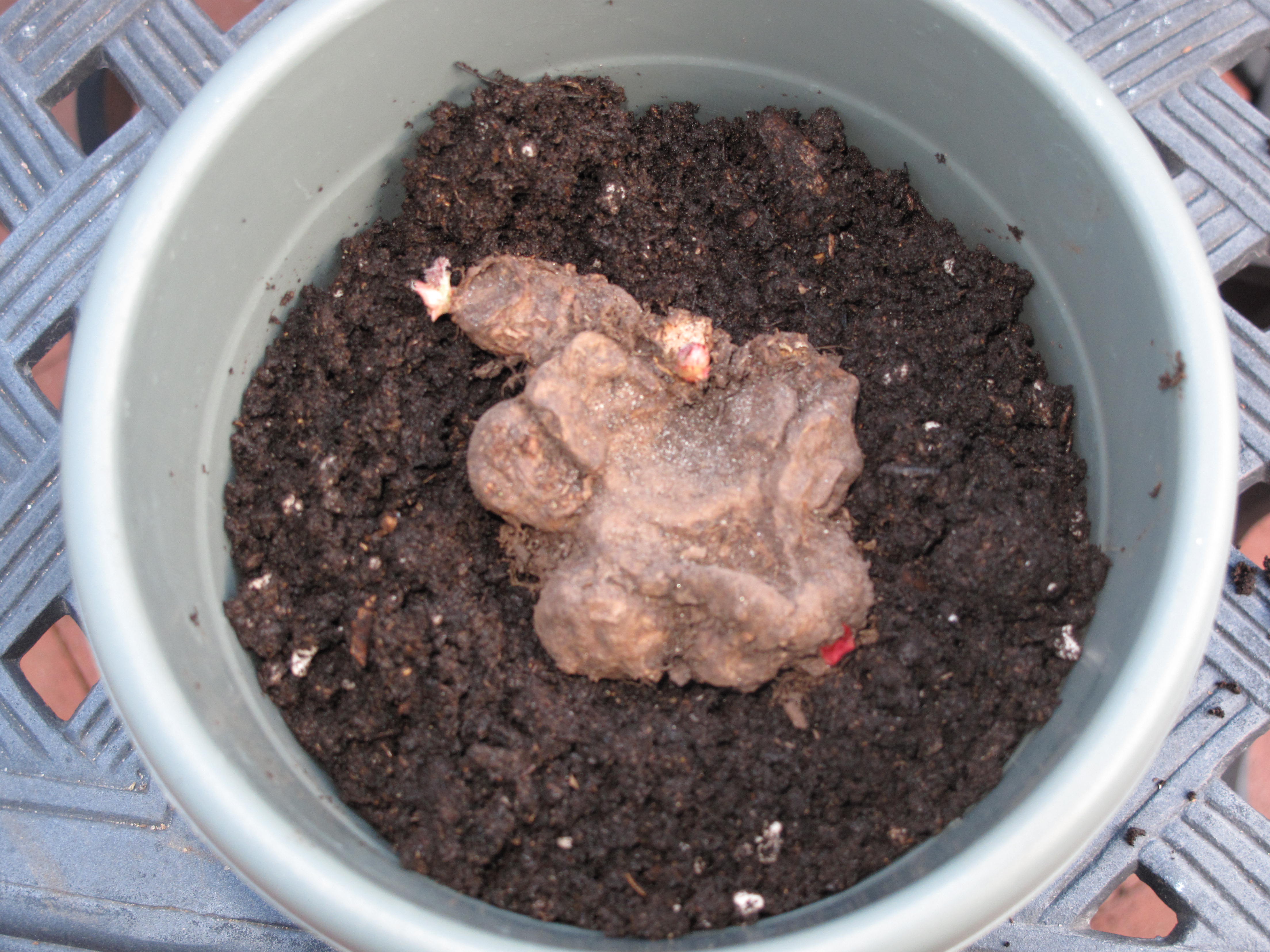
Every mid-March, I bring my tubers up from the basement and plant them.  I start with 6-to-7″ pots.  I fill each pot about two-thirds full of organic potting soil and place one tuber into each pot’s soil.  It is important to put the tuber’s concave side facing up.  Notice the small buds that appear on the tuber.  This is the year’s new growth.

I fill the rest of the pots to the rim with more soil.  Throughout the growing season, I transplant the begonias to bigger pots as the plants grow larger and larger.

To see details on the complete planting process for a tuberous begonia, here is a short video from the growers at White Flower Farm:

I’ll keep you posted on their journey throughout this year.  They have been such a beautiful addition to my front porch for so many years, I really can’t picture my porch without them.  If you have the time and the money (the tubers are not cheap), I encourage you to give Blackmore and Langdon tuberous begonias a try.  You’ll be glad you did.  Do you grow any spectacular plants in your garden that you would like to share on Acorns On Glen?

Germination Nation

This is the beginning of the vegetables that we are going to eat this Summer and Autumn.  Hopefully, I should say, hopefully this is the beginning of the vegetables we are going to eat.  Why?  Because this is the first year since we built the raised bed garden that we are going the distance.  Yes, we are attempting to start our garden from seed this year versus a mix of seeds we directly sow into the ground along with nursery-purchased plants for those vegetables that don’t grow so well from a seed planted in mid to late-May.  Earlier in February, we put together the Jump Start grow light in our basement.  This was the first step for seed germination.  Now it is time to plant the seeds that we ordered earlier in the month and let them grow under the light until we plant them in the garden from mid to end-of-May.  I’ve decided to plant the seeds in two batches.  The first batch is seeds that produce plants that grow better in cooler soil.  These are the ones I will plant outside around mid-May.  The second batch is seeds that require warmer soil.  These will be the ones I plant outside at the end-of-May.  You know we had the grow light and the seeds.  Now let’s take it from there and show you the way we are starting our seeds for the 2011 garden.  It all starts with some soil.

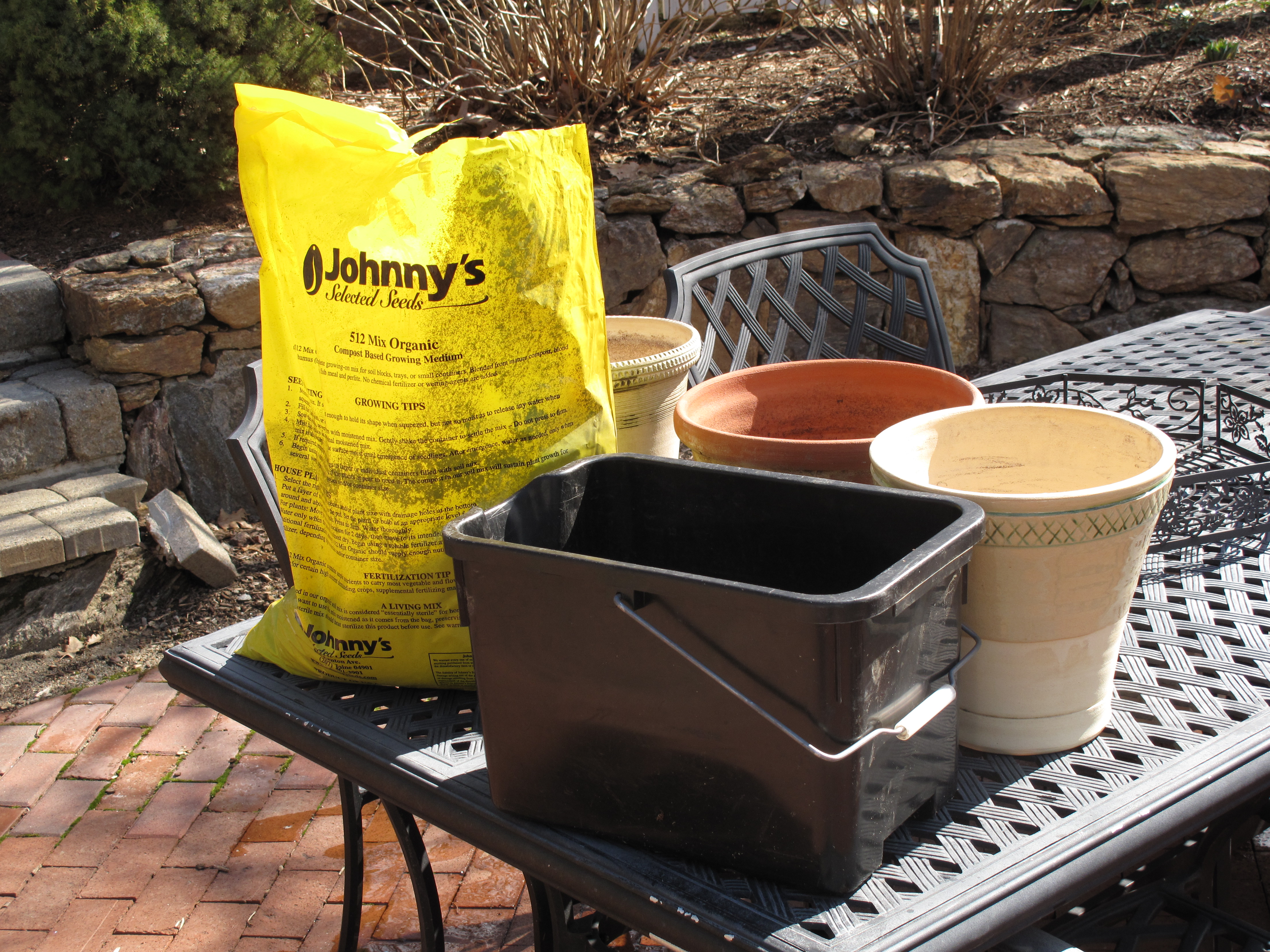
The first thing we learned is that you should avoid regular potting soil.  So we purchased a twenty quart sack of germination mix from our friends at Johnny’s Selected Seeds, http://www.johnnyseeds.com.  The soil is named ‘Johnny’s 512 Mix’.  512 Mix is made from a 1/2″ screened blend of sphagnum (brown) and sedge (black) peat mosses, compost, and perlite.  The mix contains enough nutrients to carry most plants from seed to transplant.  The mix also does not require as frequent watering as many other brands that are out there.   It is excellent for soil blocks, trays and small containers.

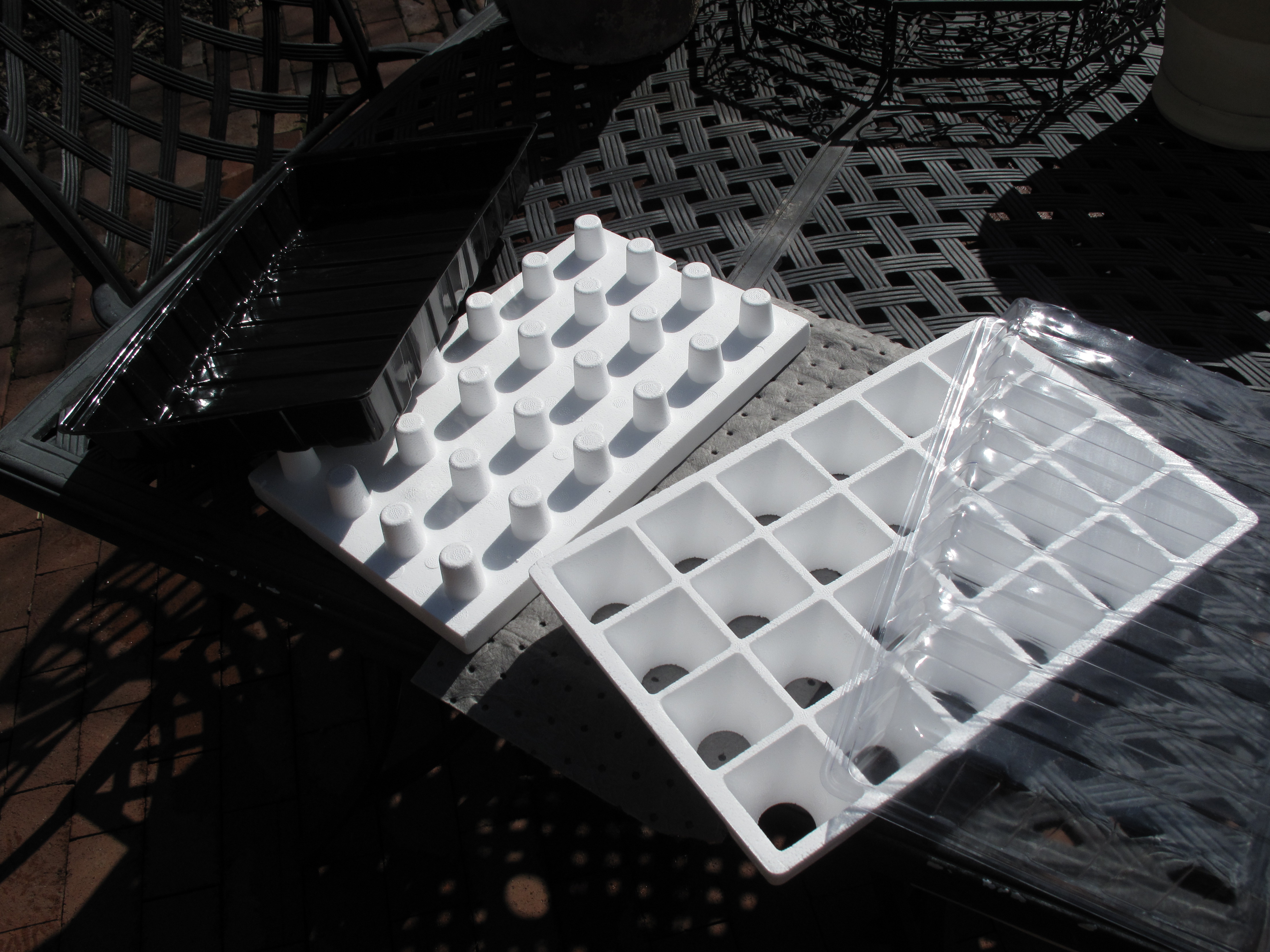
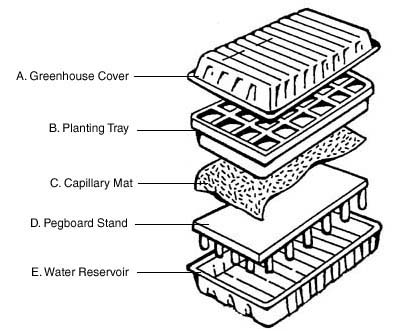
After moistening the soil with some water, we began the step by step utilization of our pretty amazing seed starting kit, the APS 24.  The Accelerated Propagation System (APS) is a complete self-watering growing system that makes starting plants from seeds a relatively easy task.  It is a five-part system that seems to take most of the work out of seed starting.  The five parts are as follows:  A)  The greenhouse cover that traps moisture and helps to keep the soil warm while under the grow light.  Warm soil is a must have for seed starting.  B)  The planting tray used to hold the germination mix and the seeds.  This is the main growing area.  C)  The capillary mat that is the watering system used to give the seeds the water they need to grow.  D)  A pegboard stand to put the seeds on top of while allowing water to reside on the bottom.  E)  The water reservoir to hold the water so that frequent watering directly onto the seeds or new plants is not necessary.  Here is a graphic from Gardener’s Supply Company, http://www.gardeners.com, where we bought the APS 24.

Here is our step by step process:

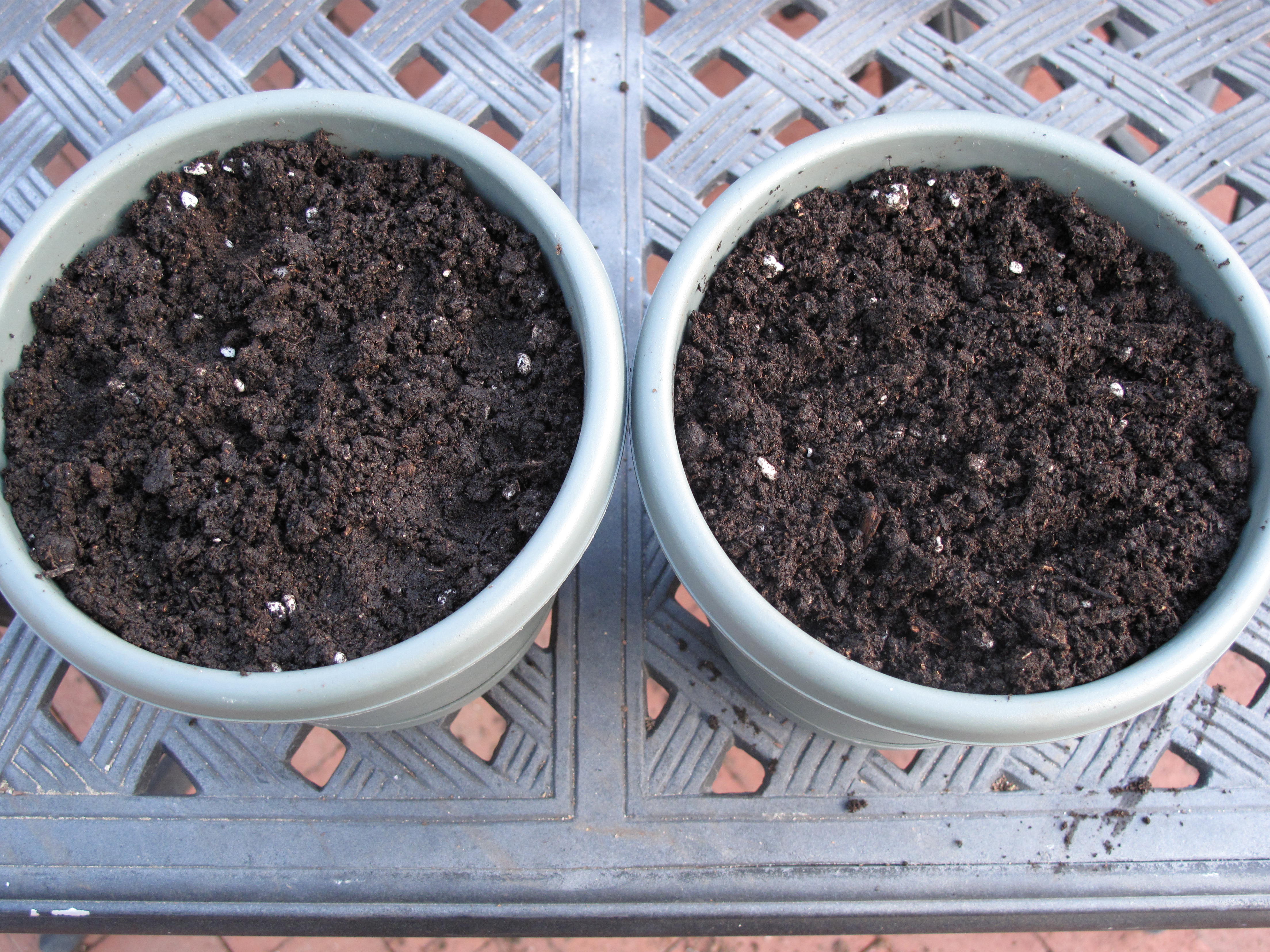
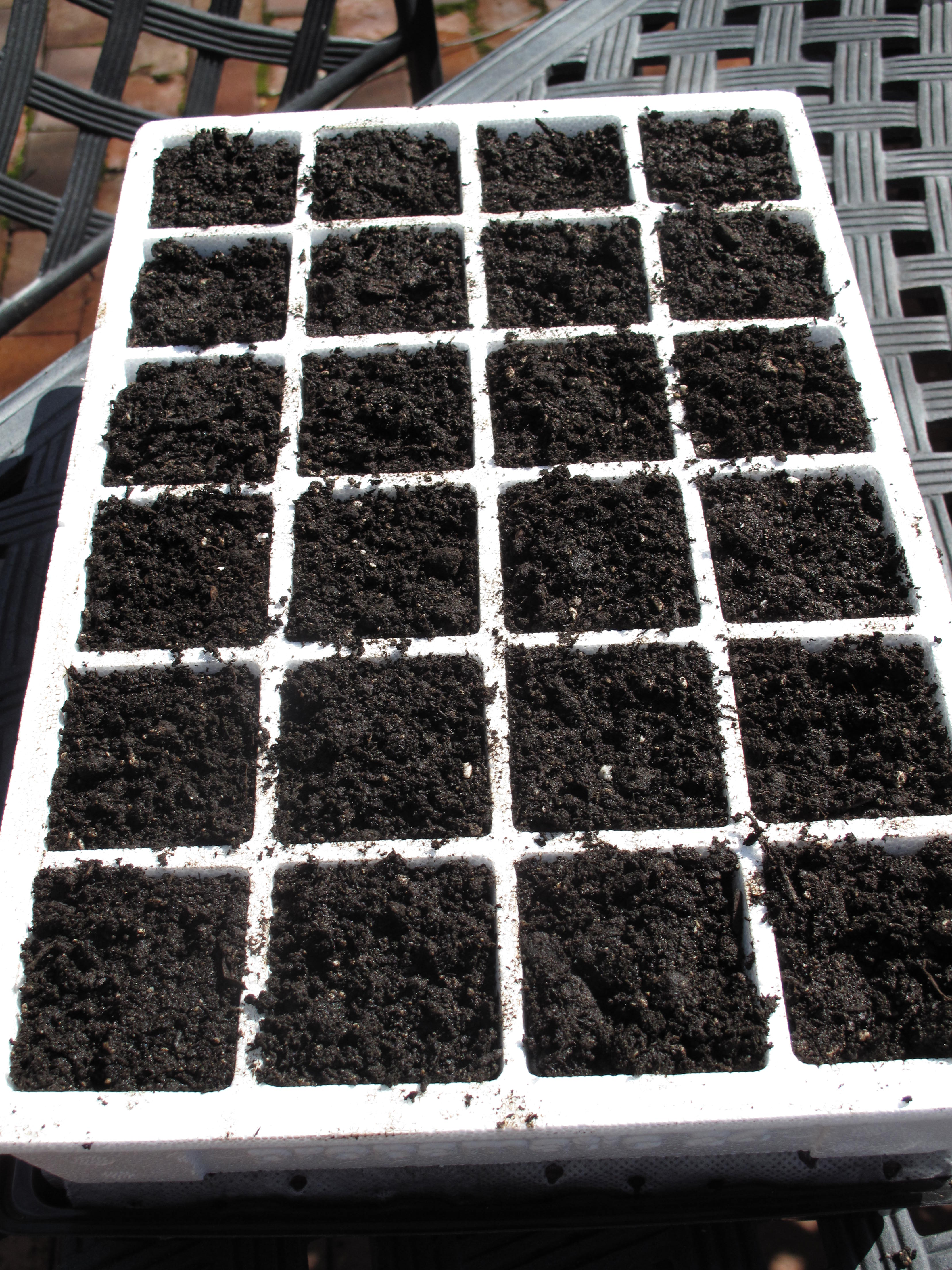
First, we firmly pressed the soil into each planting cell so that it will have good contact with the capillary mat.

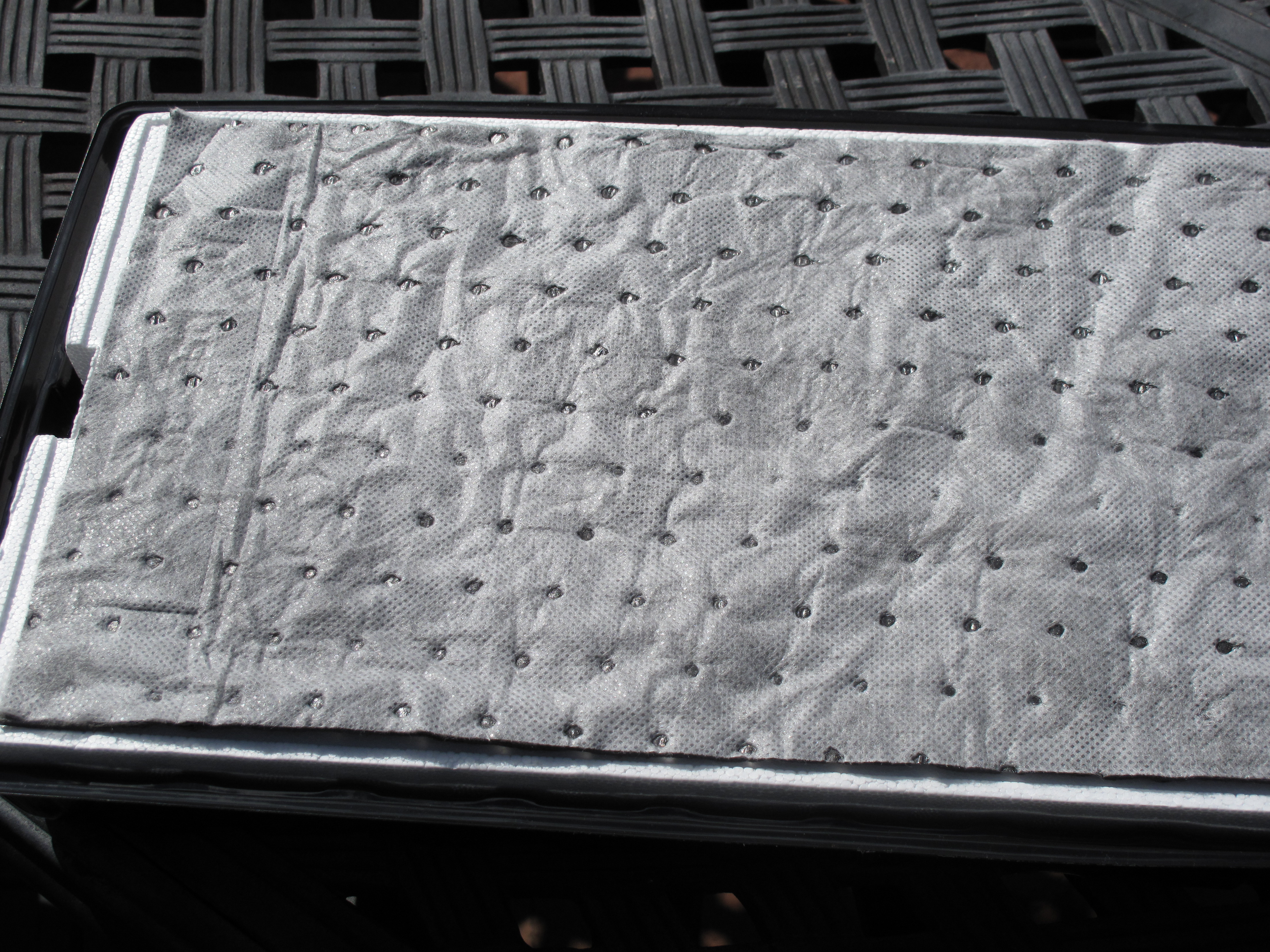
Second, we moistened the capillary mat and then laid it on the pegboard stand with the capillary mat extending over the unnotched end.  This is so that it will be laying in the water reservoir and will continually soak up water as it dries out.  This will keep the germination mix moist throughout the growing process.

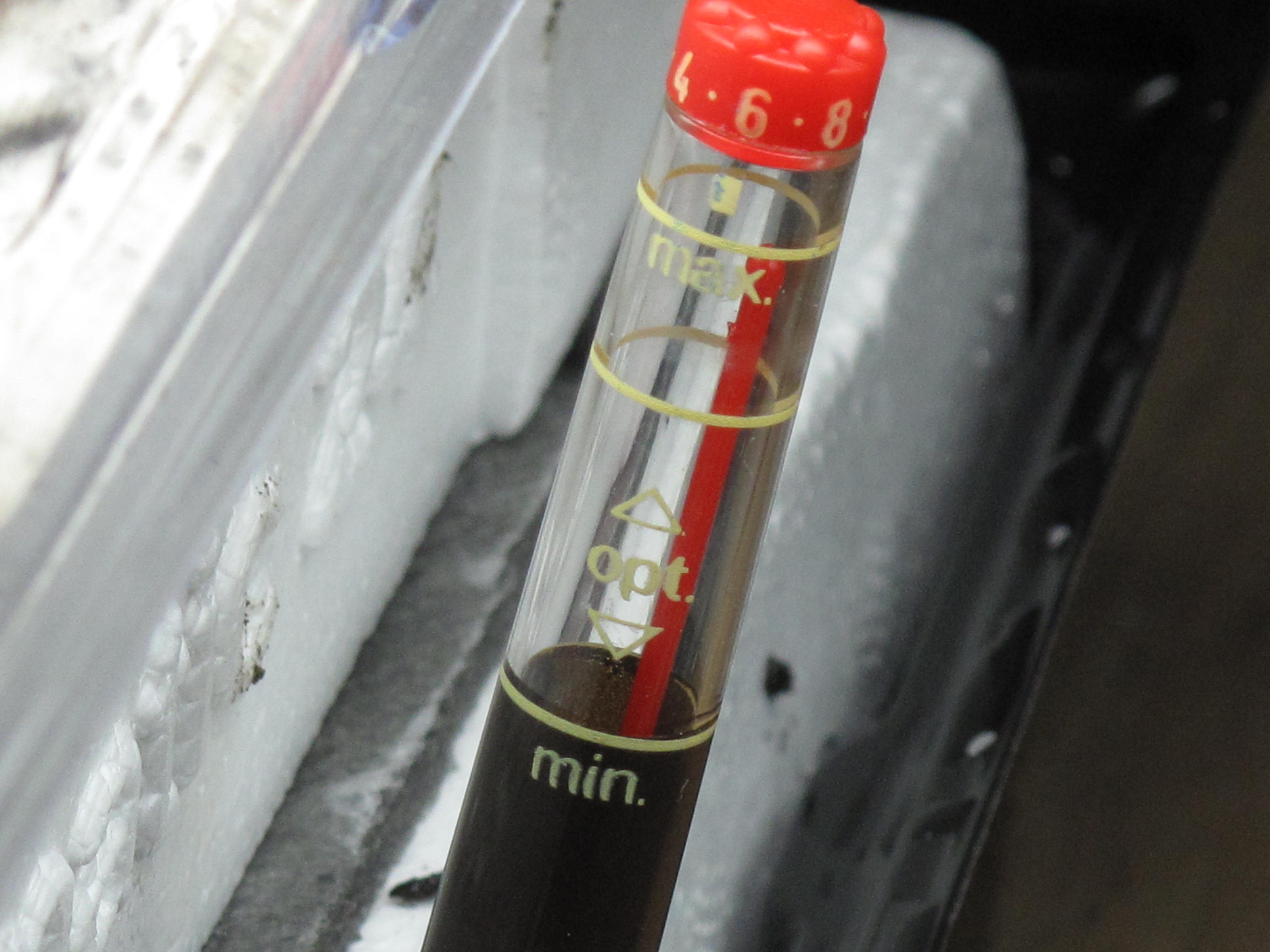
Third, we placed the pegboard stand and capillary mat in the water reservoir, peg side down.  We needed to make sure the extended end of the capillary mat was inside the water reservoir for watering purposes.  We then filled the water reservoir with water at the notched end of the pegboard stand.  We can now check the level of the water by looking at the water gauge we bought that fits into the notched opening of the pegboard stand.

Next, we placed the planting tray on top of the capillary mat and pegboard stand, then lifted it up to make sure the soil touched the capillary mat under each cell.

We then planted two seeds into each cell and marked each row of cells with a marker in order to be able to know what seed is planted.  Each cell is designed to hold one plant.  As each seed grows, we will decide which one looks the stronger of the two planted in each cell and cut out the weaker one.  The first batch of seeds planted are the ones that enjoy cooler soil.  They are eggplant, cabbage, brussels sprouts and cauliflower.  The second batch of seeds that we plant will be at the beginning of April and consist of seeds that prefer a warmer soil condition.  This will include tomatoes and artichokes (a fun test to see if they can grow in Connecticut).

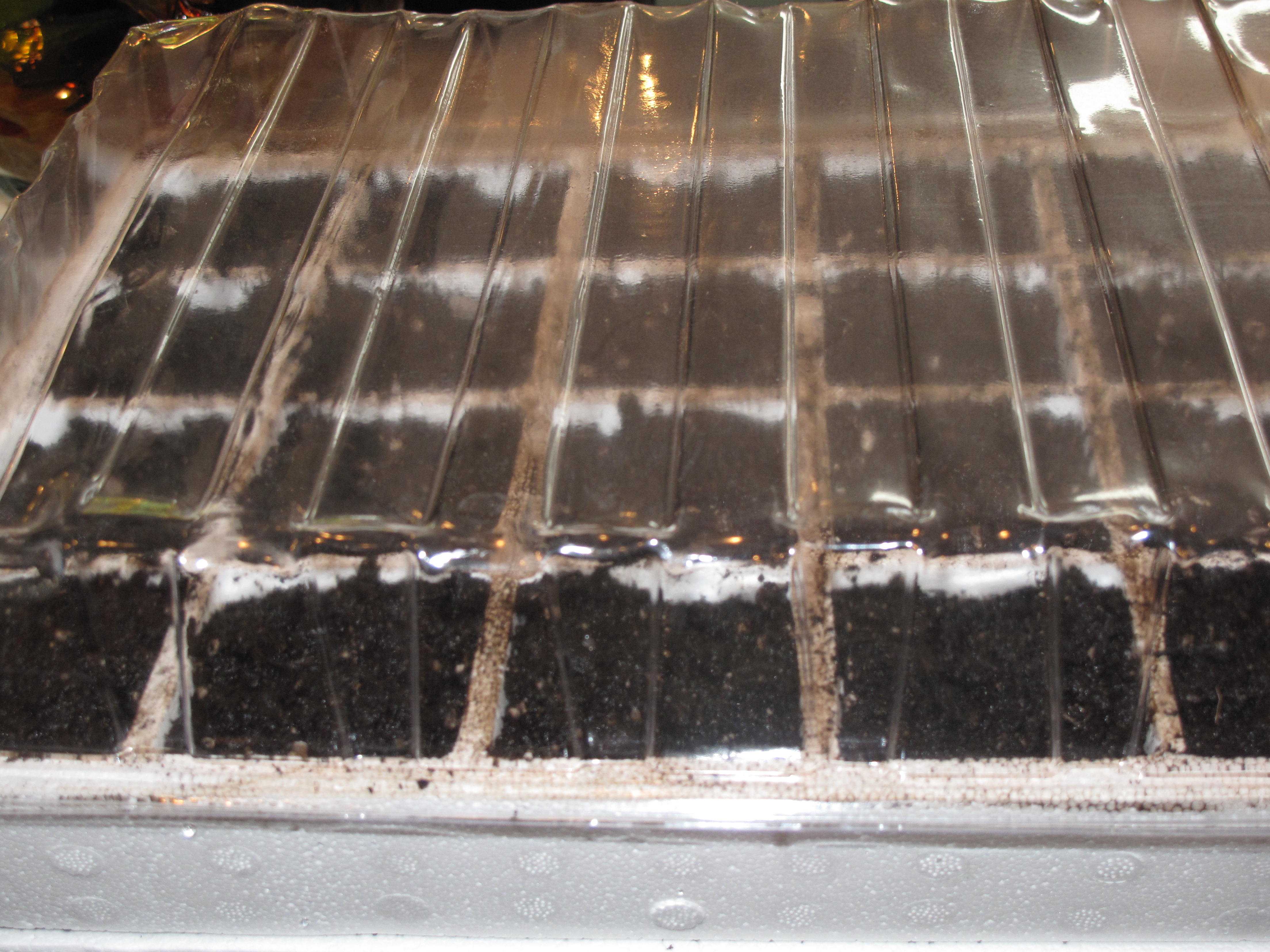
After planting, we gently watered the soil thoroughly from above and placed the greenhouse cover on top of the planting tray.  Watering the soil from above ensures that the soil will have good moisture contact with the capillary mat and continue to wick moisture to the germinating seeds. The greenhouse cover will keep the soil moist and warm and help our seeds quickly germinate.  We will remove the greenhouse cover as soon as our plants emerge. 

Our last step was to place the seeded APS 24 under the grow light.

We are keeping the grow light on an electric timer and keeping the light on for 14 hours a day.  Here’s hoping that we have success and all of our seeds sprout.  It is our first time growing plants from seeds, so you never know, do you?  Keep your fingers crossed for us.  We are excited to see the results in the coming months.  We hope you are too!  Do you grow your garden plants from seed or do you buy them from a nursery?

Meet My Garden

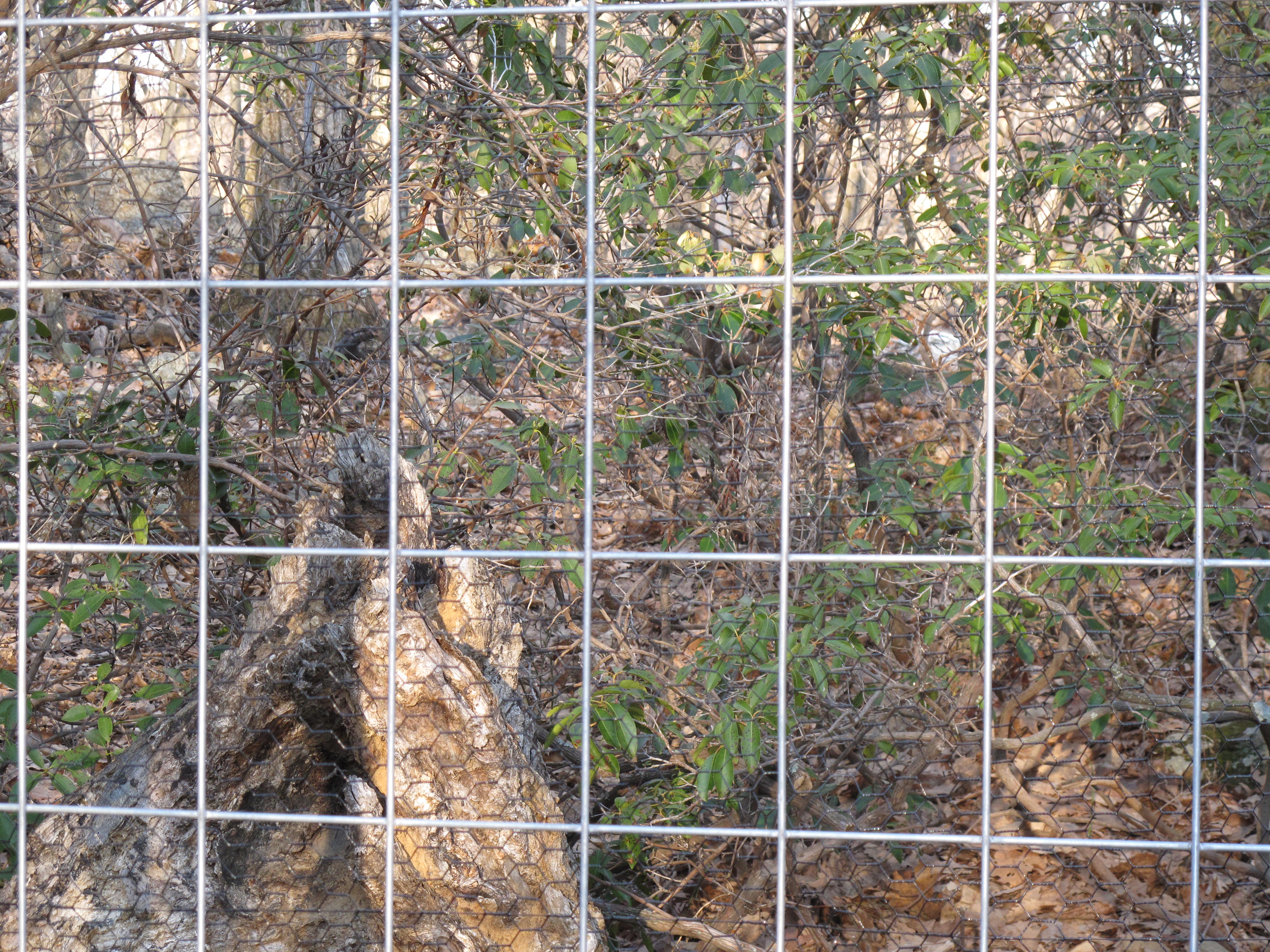
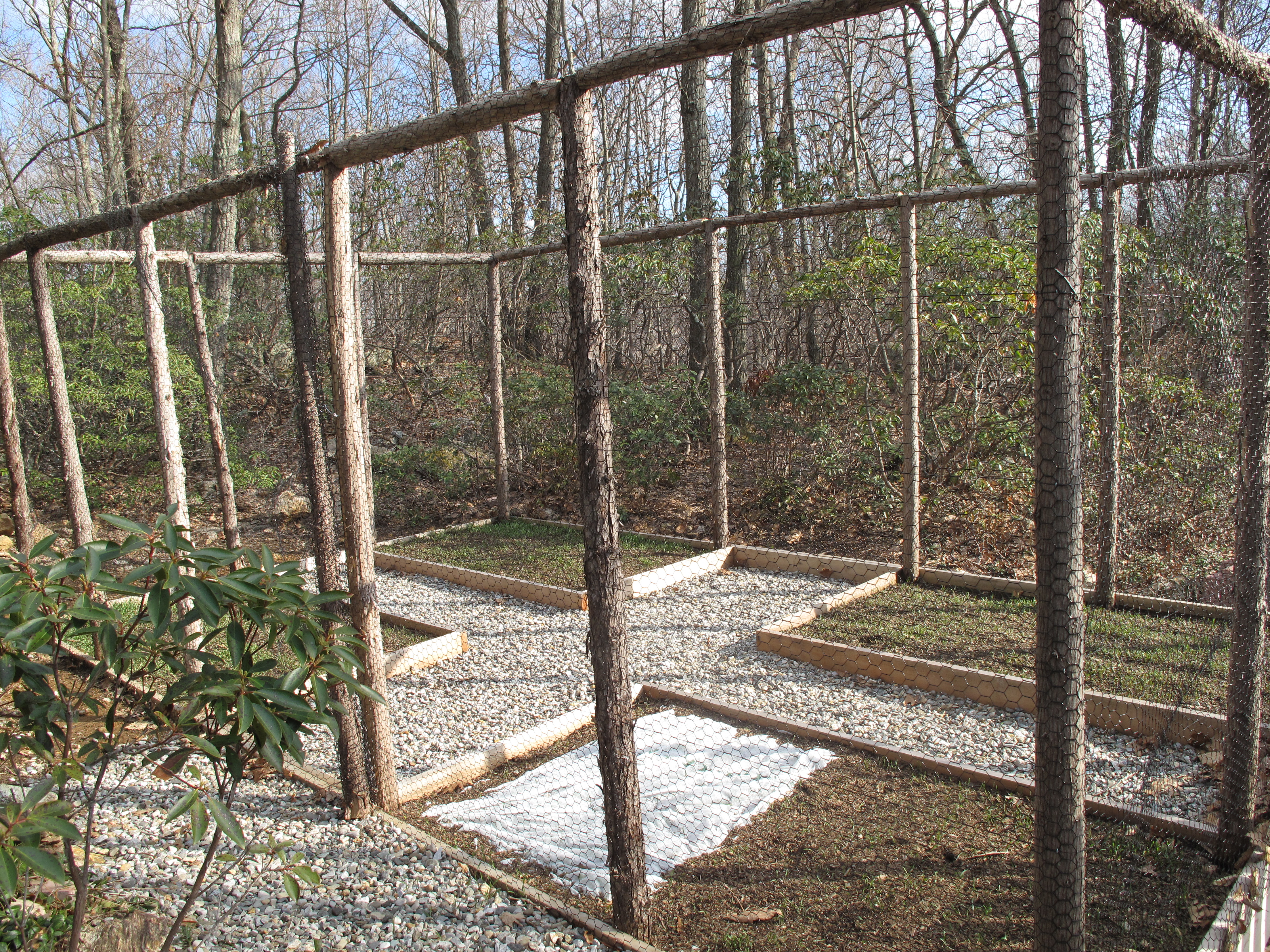
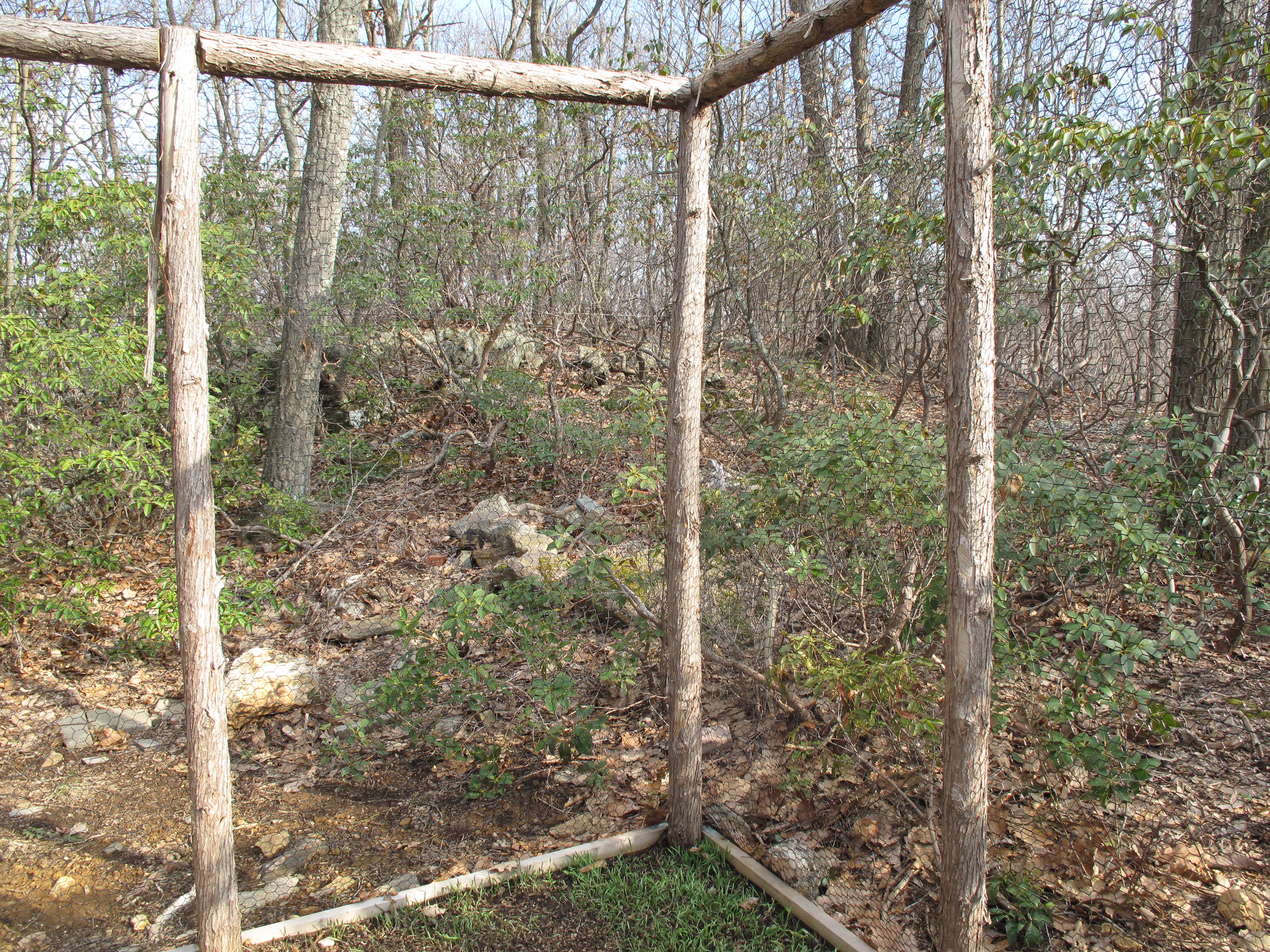
This is my garden.  You’ve probably noticed that I’ve been busy this week introducing you to all of my favorite places here on Glen Road.  I want you to see how they look now, so we can marvel together on Acorns On Glen over what they will become from now until Autumn.  My garden sits at the back of the property and is outside of the fence that guards the rest of the yard from visits by deer.  We learned in our very first year that while Bambi is cute, Bambi will also eat every last plant that can be found on your property.  The next year we installed a six foot tall fence in the woods that surrounds our property in order to keep the deer out.  During all the seasons, except Winter, the forest growth makes the fence appear almost invisible.  Because we built the garden outside of the fence, we installed protection to ensure our garden is not wiped out by deer like we experienced in our first year on Glen Road.

The actual garden is approximately 20 feet long by 10 feet wide.  Each of the four beds inside is close to 8 feet long by 4 feet wide with a white rock path that seperates each bed.  I try to organically garden as much as possible, so it was important to me that all of the construction material used was not chemically treated in any way.  Many raised bed gardens use treated wood to avoid decay, but I opted out of that.  I didn’t want any chemicals seeping into the soil that we use to grow and then those chemicals getting into me through the vegetables that we plant, harvest and eat.   

I love the fact that my garden is surrounded by forest on all sides.  I didn’t need to remove any trees in the area I selected.  There was nothing in this area before the garden was constructed except for brush and rock.  The area is also very sunny, which is important if you hope to grow strong and healthy vegetables. 

My garden is my sanctuary.  I go there to garden, of course, but it also serves as a place that provides me great amounts of peace and tranquillity after a long week at work.  My garden also acts as my psychiatrist because I become calm and centered in the garden and then I am able to make the best decisions around what I need to do and what I do not need to do in my life.  The garden also connects me to nature.  I marvel at the lessons that nature teaches you if you just stop and take notice.  My garden is also my way of meditating.  There is nothing better than hearing the sound of wind, the warmth of sun on your shoulders, watching a seed grow, the feeling of soil on your hands to center you and make you one with the higher spirit.        

At the current time, all of my beds have a cover crop on them.  The cover crop is primarily winter rye grass and some red clover that I will turn into the soil in April.  As it decomposes into the soil, it will add nutrients to provide the garden with what it needs to grow vegetables.  Think of the cover crop as my garden’s vitamin pill.

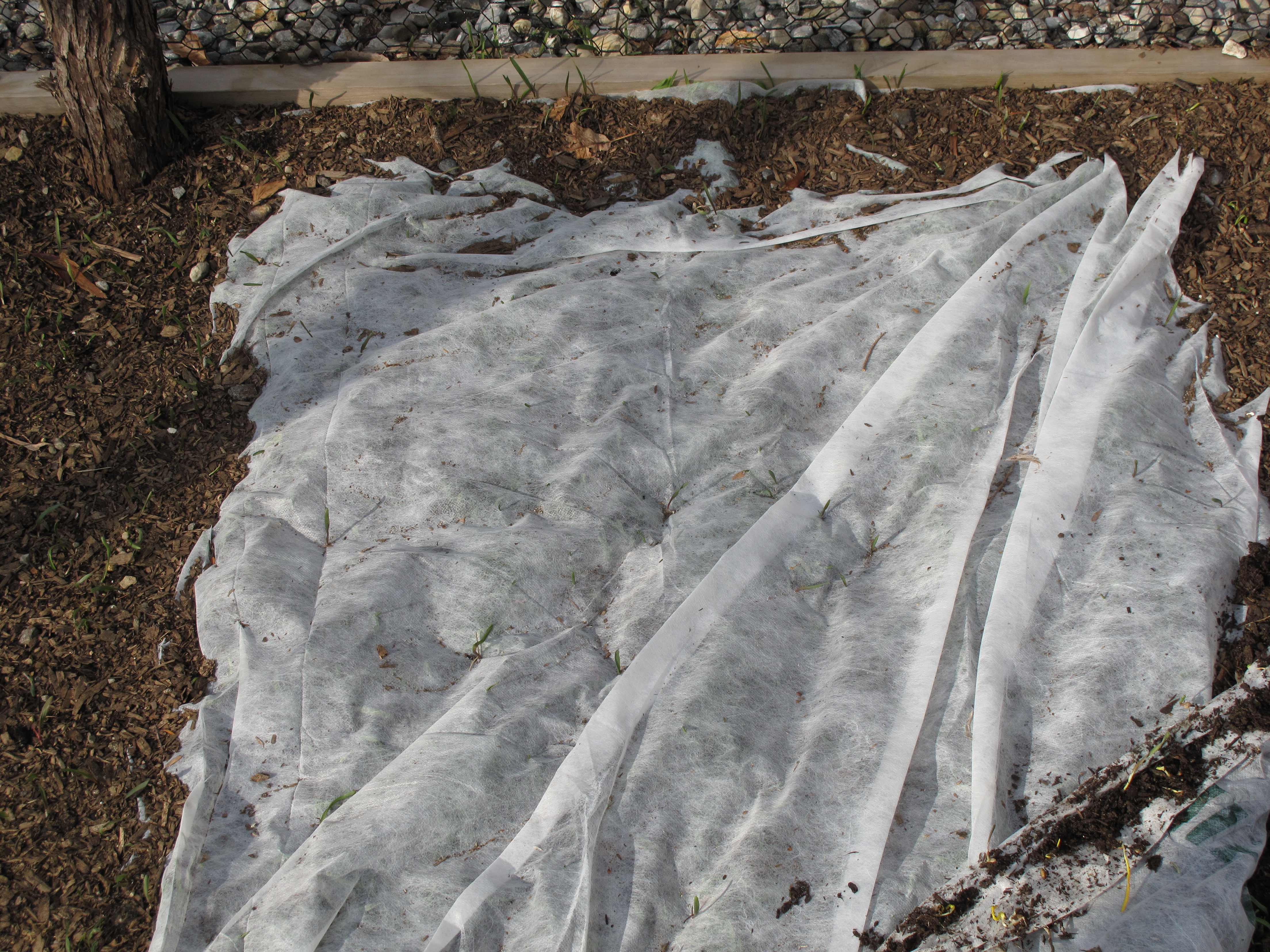
In the picture at the top of the post, you will see what appears to be a white blanket covering about half of the soil in one of the raised beds.  This is a floating row cover that is protecting four rows of spinach.  Last Thanksgiving, I put on my thickest Winter coat and gloves and dug four rows where I planted spinach.  I then covered the area with a floating row cover to protect the spinach seeds from Winter snow and ice and the frigid temperatures.  The floating row covers also help to hold some heat in around the soil to help the spinach seeds sprout in the Spring when temperatures get a little warmer.  Spinach is one of a number of vegetables that do the best if grown in cooler temperatures.  It is true because I took up the floating row cover for the day and there were the four rows of spinach at almost an inch high.  Pretty good given the Winter we endured here in Connecticut.  With all the snow and ice, I thought that the spinach was going to be a lost cause.  I’m glad I was wrong!  I hope to be enjoying some spinach with garlic and oil in a few short weeks.  I will permanently remove the floating row cover in the beginning of May when the temperature rises and frost is less likely to occur.


I used two different types of spinach varieties in my Thanksgiving planting.  One was a smooth-leaf spinach which is the traditional kind that most people are used to and the second one was a savoy-leaf spinach, which is a spinach with a more curly leaf. 

  • ‘Space’ is the smooth-leaf variety.  It has medium dark green leaves with are upright and smooth to maybe a little savoyed. 
  • ”Tyee’ is the savoyed-leaf variety.  Again, the folks at Johnny’s Selected Seeds, http://www.johnnyseeds.com, really came through.  They were the first to offer ‘Tyee’ and it is now considered the standard of savoyed spinach for its bolt resistance and vigorous growth.  Dark green leaves with an upright growth habit.  I was told it was ideal for over-wintering.

So now you know where I will be most weekends from now until the early Winter.  The garden is one of my favorite spots and one of my earliest childhood memories.  I will always remember the gardening lessons I received at a young age from my Grandmother and my Father.  Honestly, they were organic gardeners way before organic was cool and necessary in today’s environment.  I have learned all of what I know in the garden primarily through them.  What are you doing in your garden that you would like to share at Acorns On Glen? 

Meet The Espaliers

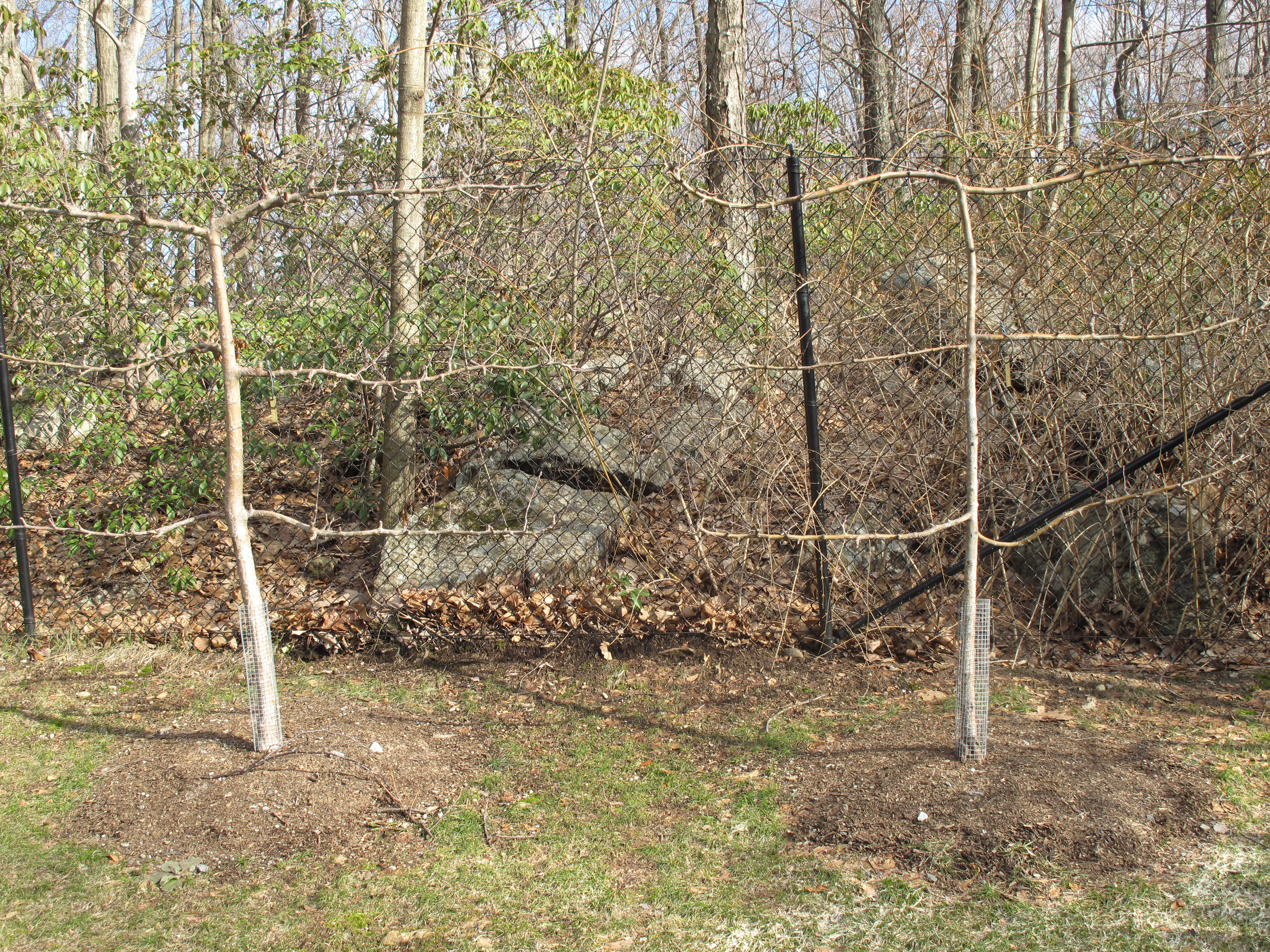
This is my set of espalier apple trees.  They may be a little hard to see without leaves or fruit on them, but there are two of them.  Each tree has six horizontal branches on them–two at the top, two in the middle and two towards the bottom of the tree.  They are waiting for Spring to take full charge of the weather and then they will bud and sprout leaves.  I also hope to get a few apples from them this year.  The trees were purchased last year towards the middle of Summer at a local nursery that specializes in trees of all kinds.  While the tree nursery is not open to the public, my friend is a landscaper and was able to buy them on my behalf.  Each tree is approximately six feet tall and about five feet wide.  The first year, due to the trauma of their transplant, the trees were full of leaves but did not produce any fruit.  The nursery had told us that this was normal and that fruit should come on strong in the coming year for the trees.  When I bought them, the nursery said they were seven years old.  We are now going into their eighth year.  I wanted to show the bare trees now so that as they grow and prosper (meaning provide me with some apples) that we started at their 2011 beginning. 

A little history on espalier trees.  Espalier is a method of training and pruning a tree or shrub, forcing it to grow flat against a wall or a free-standing trellis.  The word espalier is French, and it comes from the Italian spalliera, meaning “something to rest the shoulder (spalla) against”.  During the 17th Century, the word initially referred only to the actual trellis or frame on which such a plant was trained to grow, but over time it has come to be used to describe both the practice and the plants themselves.  The practice was popularly used in the Middle Ages in Europe to produce fruit inside the walls of a typical castle courtyard without interfering with the open space and to decorate solid walls by planting flattened trees near them.  While they are very pretty in a garden, espalier trees are also an effective technique for producing an ample crop of fruit in a small space.

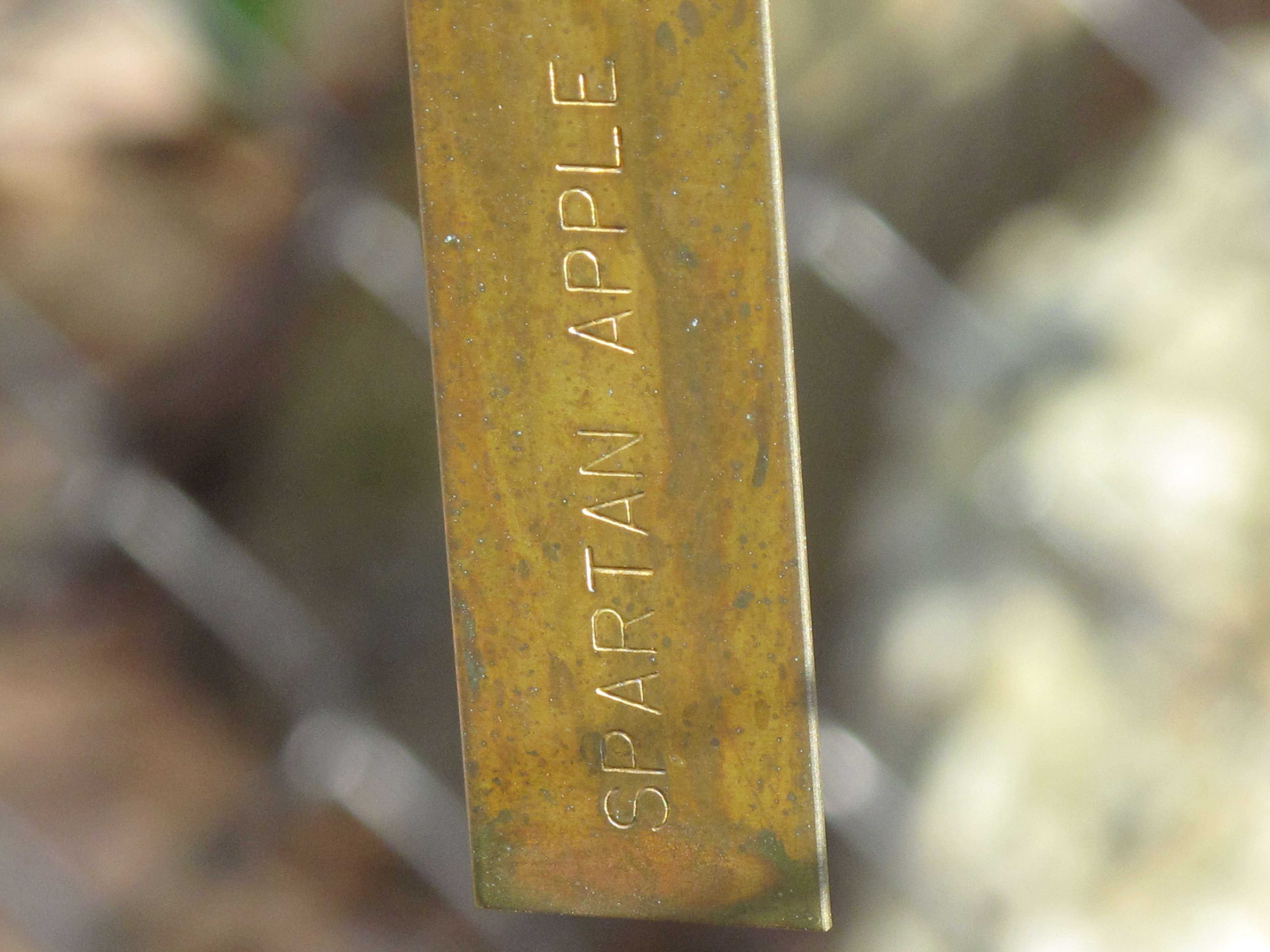
My espalier trees are two different varieties.  The first is a “Spartan” apple tree.

The Spartan apple is a cultivar developed by Dr. R. C. Palmer and introduced in 1936 from the Federal Agriculture Research Station in Summerland, British Columbia.  The Spartan is notable for being the first new breed of apple produced from a formal scientific breeding program.  The apple was supposed to be a cross between two North American varieties, the McIntosh and the Newtown Pippin, but recently it was discovered through genetic analysis that it didn’t have the Newtown Pippin as one of the parents and its identity remains a mystery.  The Spartan apple is considered a good all-purpose apple.  The apple is of medium size and has a bright red blush, but can have background patches of greens and yellows.

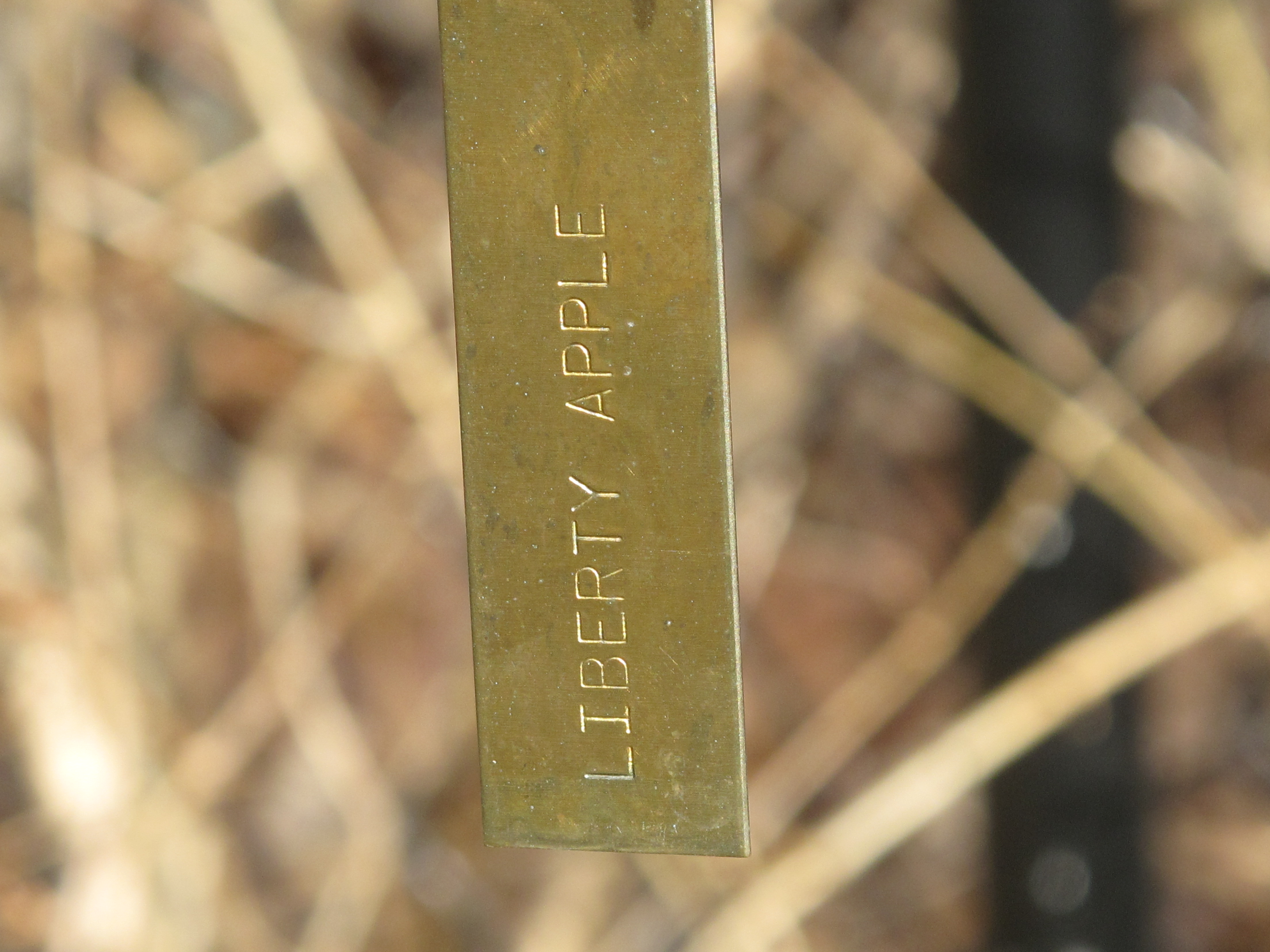
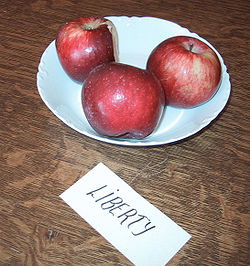
The second type of apple tree that is in the garden is a “Liberty” apple tree.

The Liberty apple is a hybrid cultivar developed by the New York State Agricultural Experiment Station. It was first pollinated in 1955 by crossing a Macoun with a ‘Perdue 54-12’ for the sake of acquiring disease resistances. It was first released to the public in 1974.  The skin is red and smooth with a juicy flesh.

So I hope you enjoyed meeting Mr. and Mrs. Espalier.  I will share their journey throughout this year.  Our goal will be a picture here on Acorns On Glen of an apple pie that contains the fruit from these two trees at the end of the season.  Keep your fingers crossed.  Next for our espalier couple is having my landscaper friend come and build a support system (a trellis or frame of sorts) for them to keep their branches straight and help provide support when the branches become heavier with their leaves and fruit.  There’s a lot more to come with our trees.  Do you have a favorite apple recipe that you would like to share here on Acorns On Glen?