Day 5 Without Electricity – Mother Nature Gets The Last Laugh

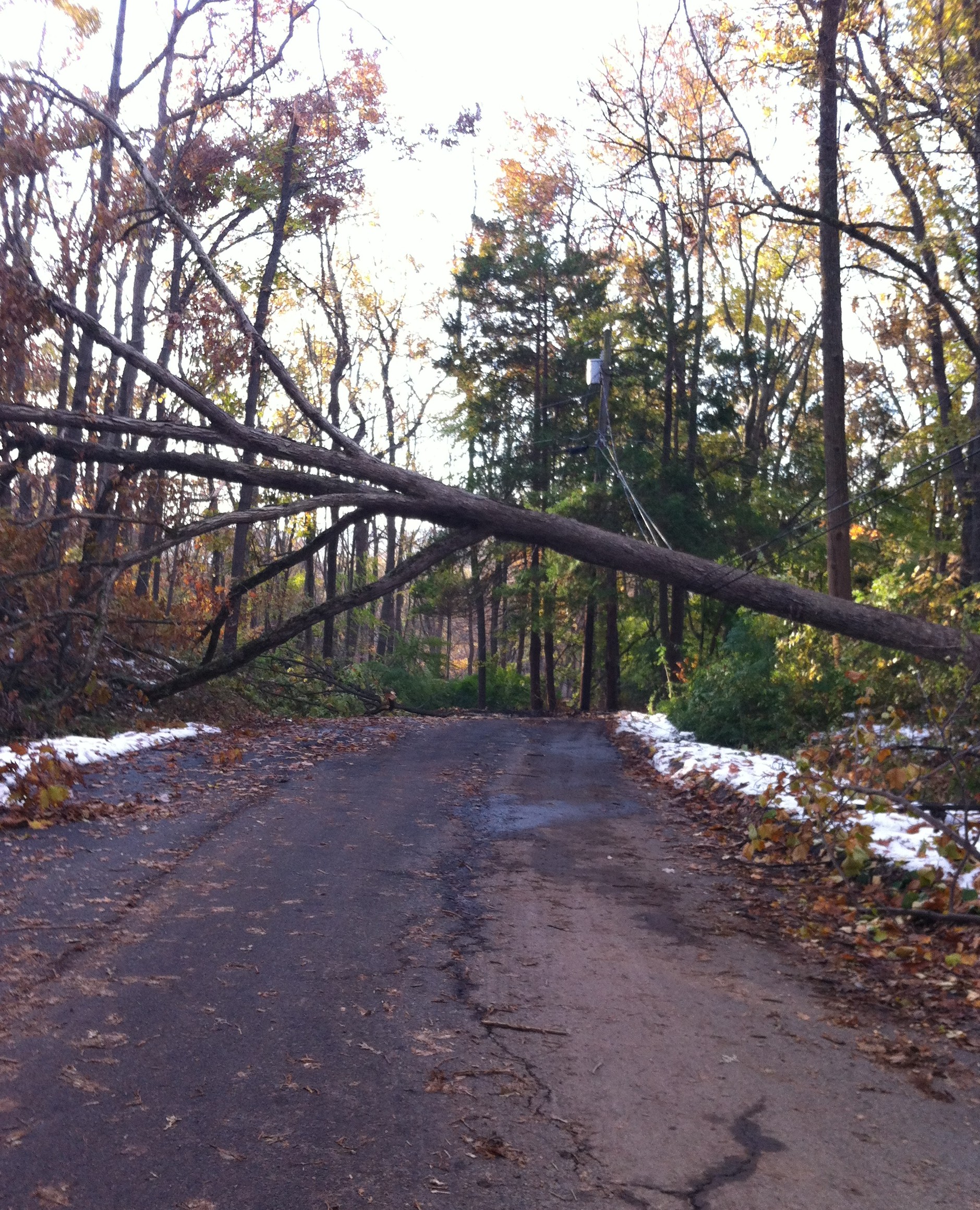
This is the reason we have no electricity.  About a hundred feet from our house, this tree balances on the power lines that should be supplying the homes in our neighborhood with electricity.  It has been balancing like this for five days since the big snowstorm on October 29.  No heat, no TV, no refrigerator or freezer, no internet, no Acorns On Glen….just quiet and cold and then complete darkness when night falls.  I have gone on the internet at work and see that the power company expects restoration for our home by 11 PM on Sunday, November 6th.  What!!

Our yard has also fared poorly with the snowstorm.  There are several large branches that have fallen.  The heavy snow and the leaves still on the trees were just too much for many of the town’s trees to bear.  You see ripped-off branches of all sizes at our house and throughout the town.  Smaller-sized garden plants, trees and bushes have really taken a beating.  We have a Japanese maple where the top just snapped off.  Most bushes seem to have their center limbs all broken off and laying on the ground.  Many plants just seem to have been beaten into the ground.  It may be too soon to assess the damage.  Some may come back with some growth and some will never come back.  It’s sure been a wild week.  Have you ever lost power and enjoyed a bath using water heated up in a pan on the grill?

An Old Fashioned Barn Party

This is the entrance to our friends’ barn in Bucks County, Pennsylvania.  Every October for the last several years, we have met at this barn to take part in an old fashioned barn party.  The barn on my friends’ property is very old and is constructed of stone and wood.  The top has a floor made of wooden beams with several stalls on top that most likely once housed larger animals like cows, horses or pigs.  Underneath is another level that most likely housed equipment and smaller animals like chickens, ducks and geese.  Over the years, my friends have restored their barn to its original appearance and the party is held to help raise money for old barn restoration in the area, to sell high-end craft items to the guests and general public who attend and offer up a great way to see old friends and family one more time before the holidays.  We also ate lots of food and drank lots of drinks (from coffee to wine to champagne).

This year the barn party also tried to teach guests a few tricks of the trade from local artisans.  There were booths and workshops where guests could see the looming of thread, hear live music played by a local musical group, learn to knit, learn to tie a fly for fly fishing or learn to make some wine among other things.  Of course there was an apple pie baking contest followed by a cookie baking contest with prizes for the top three finishers.  Come enjoy a few of the pictures that we took during the day.

This slideshow requires JavaScript.

By the end of the day, most of us had a bag full of craft goodies, a full stomach and an introduction to a new skill.  I am now a novice knitter learning in the class with some yarn and chopsticks for knitting needles.  It was also great to catch up with everyone, especially those that we don’t see on a regular basis.  It was a big day and a lot of work, but everyone had a great time.  Here’s to next year’s party!!  What Fall festivities go on in your neck of the woods?

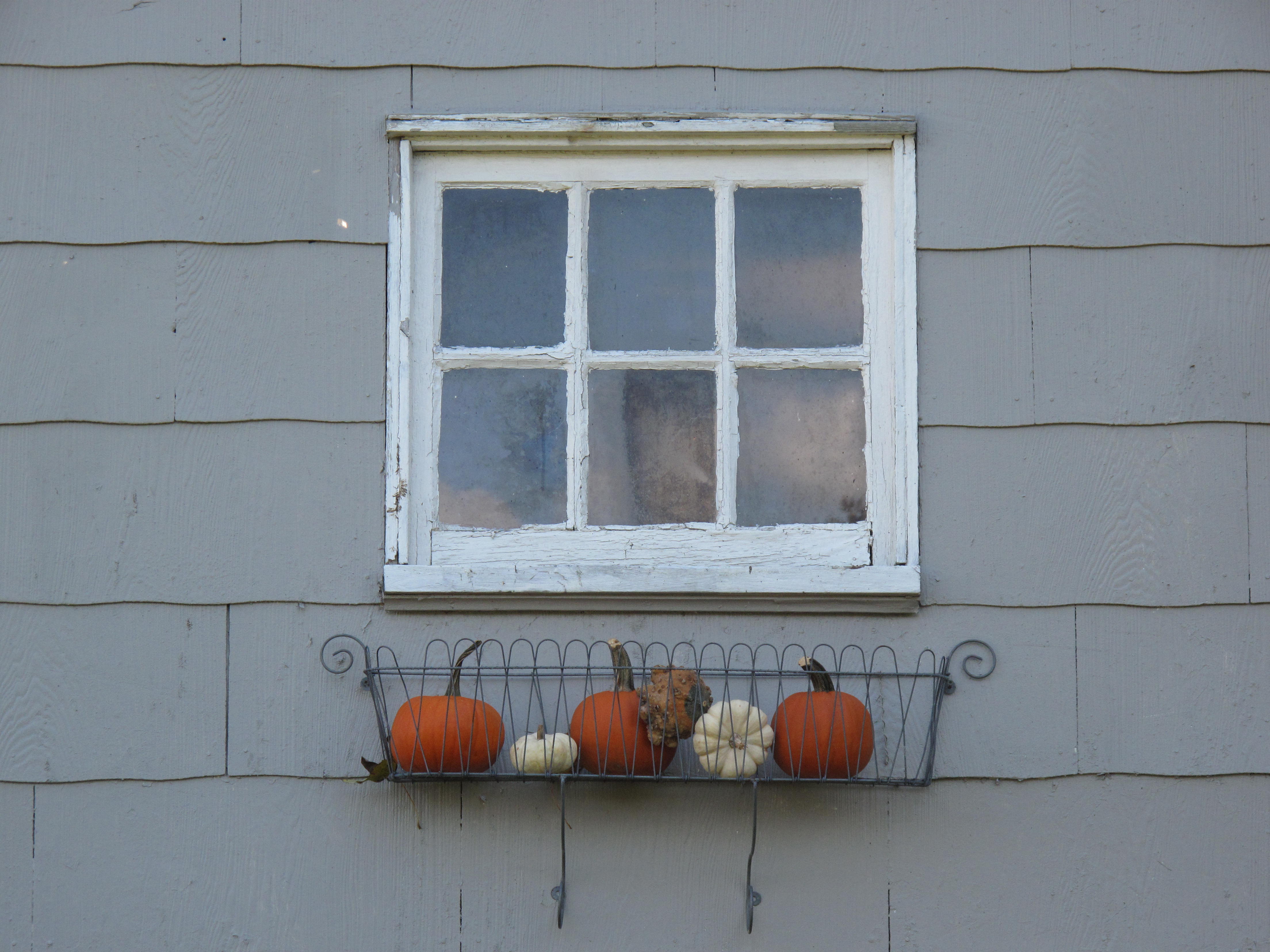
“Fall”ing For Pumpkins And Gourds

This is the easiest (and prettiest) way to know that Fall is here.  It’s the appearance of pumpkins and gourds almost everywhere you look.  From pumpkin patches, to pumpkin and gourd decorations on doorsteps of homes across the state and even in the aisles of our local supermarket, seeing pumpkins and gourds is one of my favorite Fall reminders.

I’m always amazed at the colors that pumpkins and gourds come in at the patches we go to find and buy them.  There are the traditional orange pumpkins and green gourds, but there are also ones in ivory, yellow and variegated to name a few.  The odder the color, the more I like it!  Are you seeing pumpkins and gourds everywhere you look in your community?

The Last Of Our Fall Bloomers

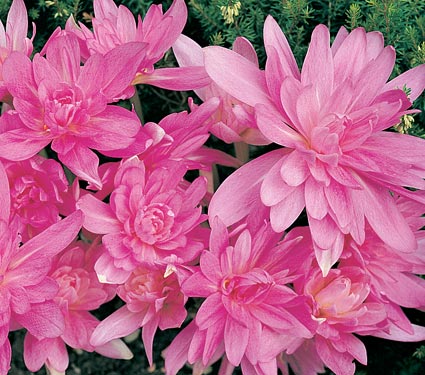
This is Colchicum ‘Water Lily’ and it is one of the last things to bloom for the season here on Glen Road.  It’s hard to imagine Fall without the appearance of our Colchicums.  Their bright blooms rise without warning and shine in the sharp light of Autumn.   We planted our bulbs at the base of our Japanese maple trees several years ago.  Colchicum ‘Water Lily’ produces several double, lilac-pink flowers.  Their silky texture is a great contrast to the ruddy complexion of Fall.

Sometimes called the Autumn Crocus, the Colchicum is a one-of-a-kind wonder in the flower kingdom.  They grow from corms, which are available in late summer, and the astonishing thing about them is that they will flower without being planted at all.  Just setting them on a sunny window sill is enough.  They can, however, be arranged in a shallow dish of gravel, pebbles, etc.  The best thing to do is plant them like we did outside in shallow soil in a sunny area where they will not be disturbed so that you can easily enjoy them on a yearly basis with minimal, if any, work involved.

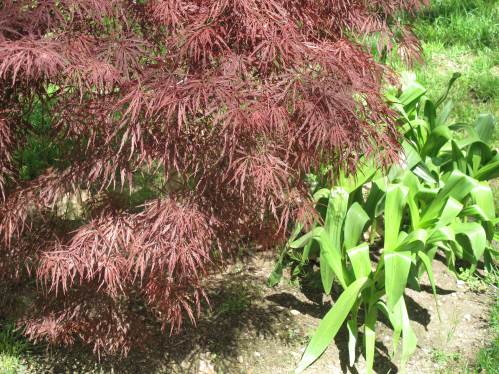
Colchicums come in various tones of pink and lavender and never fail to surprise with their delicate appearance amid the rougher weather of Fall.  It all starts in Spring, when a clump of broad, deer-proof leaves emerge, stay for a while and then vanish by midsummer.  Then in Fall, these dainty flowers emerge to show off their brilliant color.  Here is an older shot of their Spring appearance.  See their leaves on the right?

So we are officially near the end of the 2011 garden season with the blooming of our Colchicums.  It is a good feeling mixed with some sadness.  Like the plants, all gardeners need to re-energize during the Winter, but we will miss all of the pretty blooms that we have seen over the Spring and Summer.  What final blooms do you see in your garden that signal the end of the growing season?

The Busy Bee Bush Is Now Buzzing

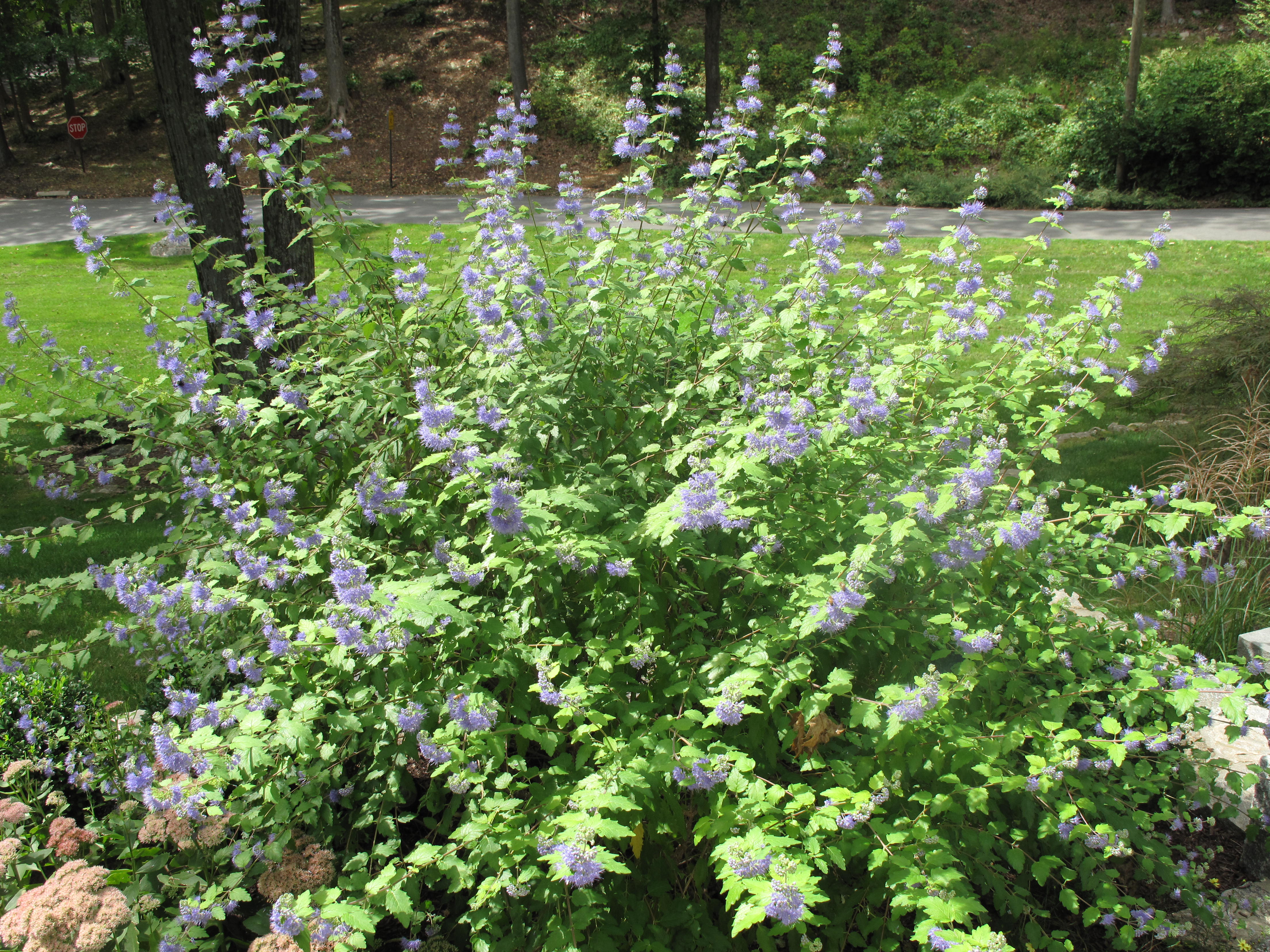
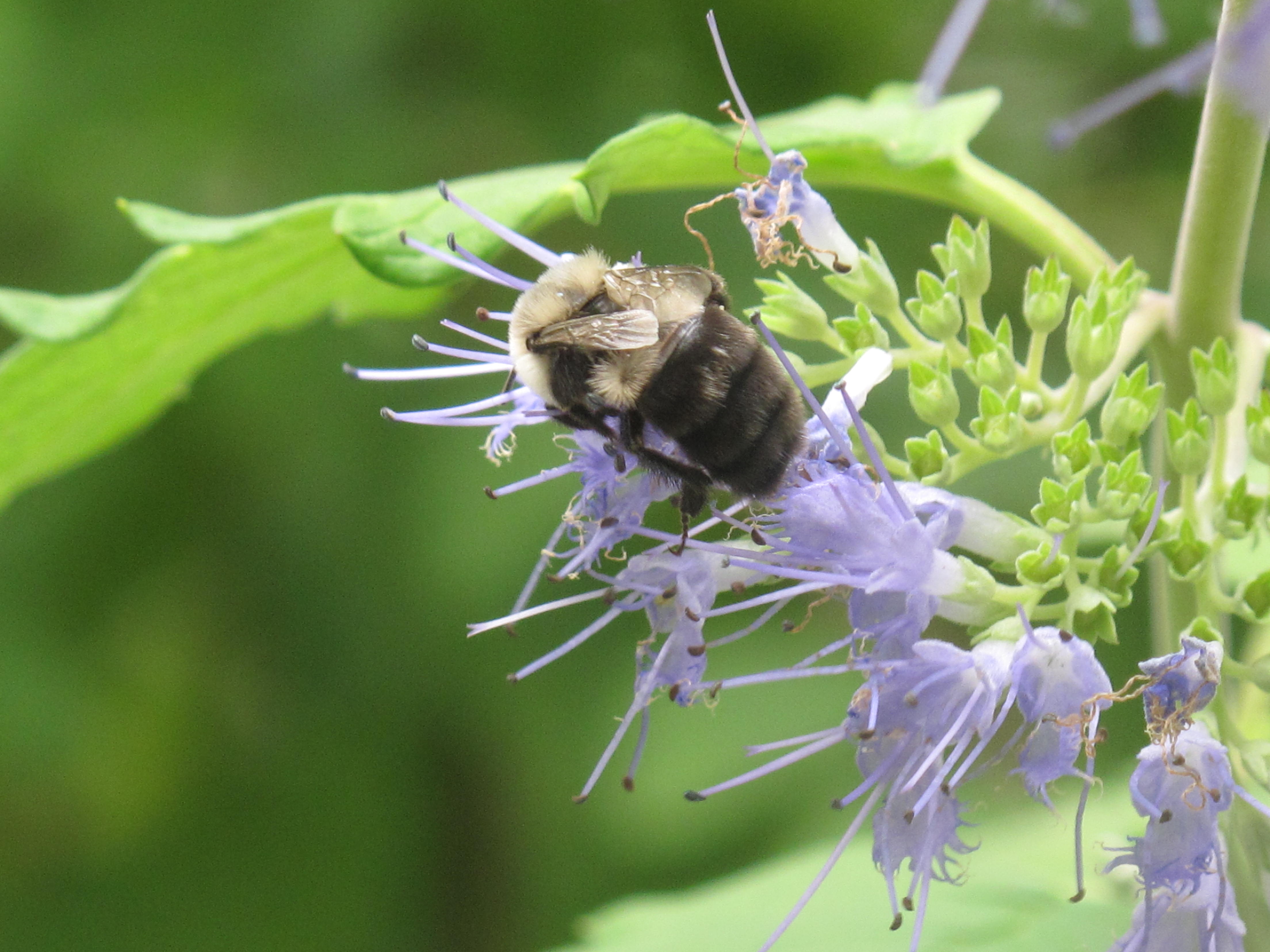
This is Spirea ‘Blue Mist’ that protects our front door from the front yard.  It is another one of the plants that bloom here on Glen Road in September.  When the blue flowers show their pretty faces, you will soon have every bee within a small radius of the house coming over to visit to collect some special end-of-the-season pollen and nectar.  The bees are so intent on collecting pollen and nectar that you can stand right next to the tree and they don’t care.  They don’t fly at you or swarm at you.  All the bees are intent on doing is collecting pollen and nectar and then going back to the hive to make preparations for the Winter.  Sometimes when there is no wind and you listen very closely, it almost sounds as if the Spirea is actually buzzing.

Our Spirea ‘Blue Mist’ is quite a grower.  By the time we hit September bloom time, the bush is over four feet high and about as many feet wide.  No matter how small I trim it down in the Winter and Spring, this Spirea always has a growth spurt in August as if to do so to show itself off to all the bees in the neighborhood.  At the start of the Spring, our Spirea ‘Blue Mist’ was pruned down to one foot tall and one foot wide.  That is some fast growing in a few short months to get to four feet and it does this in some of the hottest months of the year.

Caryopteris’s (the botanical name for Spirea ‘Blue Mist’) low mounding habit makes it perfect as a border plant for massing purposes and works wonders in dry, sunny spots.   There are blue foot-long flower spikes that cover this plant in September and this make for quite a visual display.  Spirea ‘Blue Mist’ is also many times referred to as a Bluebeard, which is not too difficult to understand where this name comes from due to the look of the blooms.

Did you ever hear of a bush that provides the house with lots of laughter?  Well, our Spirea does just that.  How?  Well, in terms of our friends, there are three groups:

  1. The first group that walks past the Spirea that is filled with bees and they don’t notice a thing.
  2. The second group are those people who notice the bees and take a look, but aren’t really scared
  3. The last group are those people who notice the bush filled with bees and become terrified and take off running to our front door screaming and yelling for us to open up as soon as possible!

Since no one has ever gotten stung by one of the Spirea bees, we always laugh at those terrified individuals that are part of group 3.  We know it is not right, but we can’t help it.  We apologize to those folks in advance.  So if you are interested in a late-blooming bush for your garden that can also add some comedy to your every day life, give Spirea ‘Blue Mist’ a shot.  Trust us, the neighborhood will be….buzzing.  What late season bloomers do you have in your garden?

A Picture Is Worth A Thousand Words – Twisted Sister

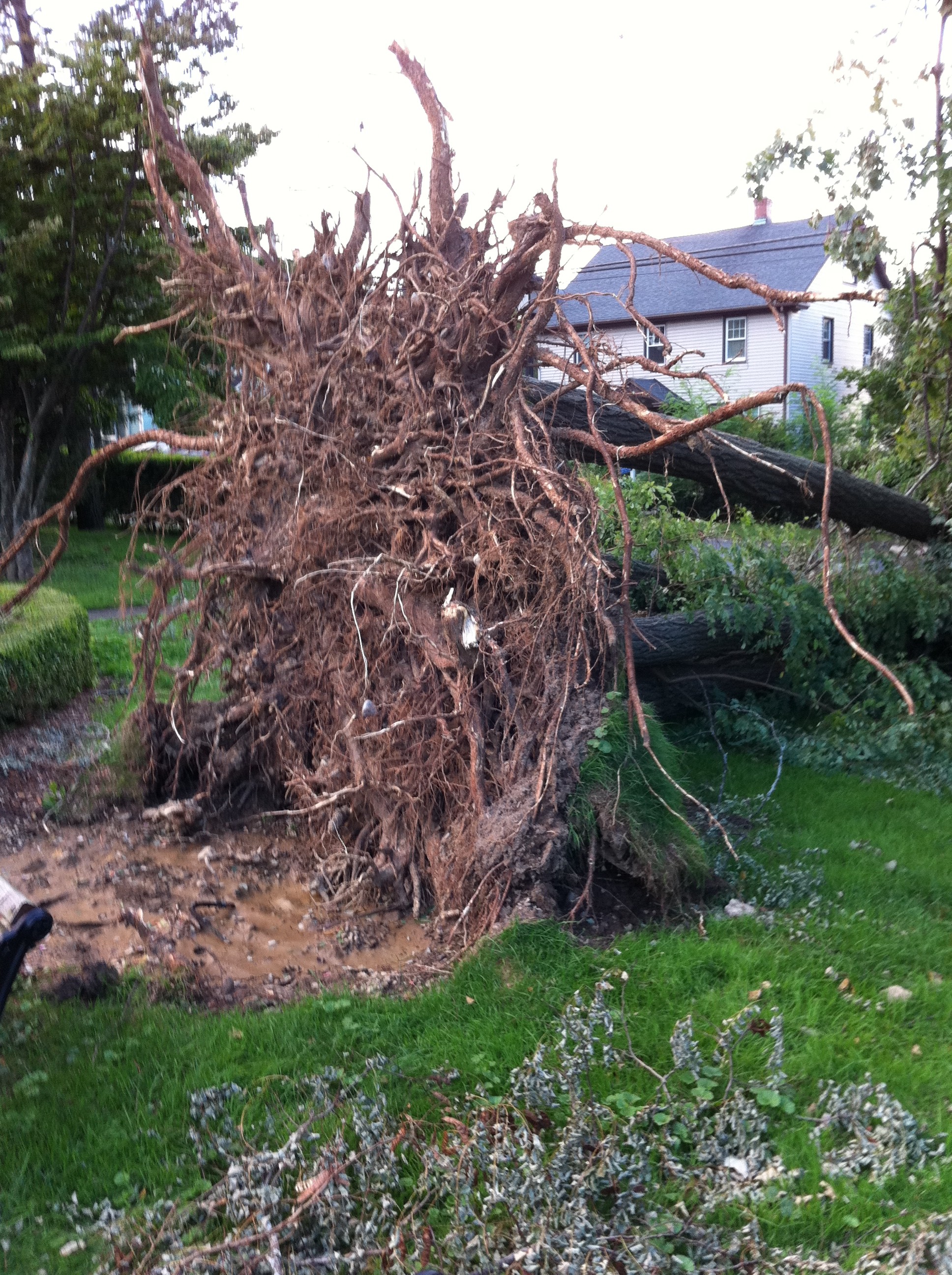
This is a tangled and twisted reminder that all of the clean up work from Hurricane Irene is not completed yet here in Connecticut.  This tree looks like it was pulled like a weed out of the garden….roots and all….and then tossed aside to wilt and die.  Maybe this is Medusa’s head with snakes growing from all sides?  Little by little, trees like this are getting cleared away in our community.  In time, the effects of the hurricane will be just a distant memory.  What does this mass of tree roots look like to you?

How I Know Autumn Is Here

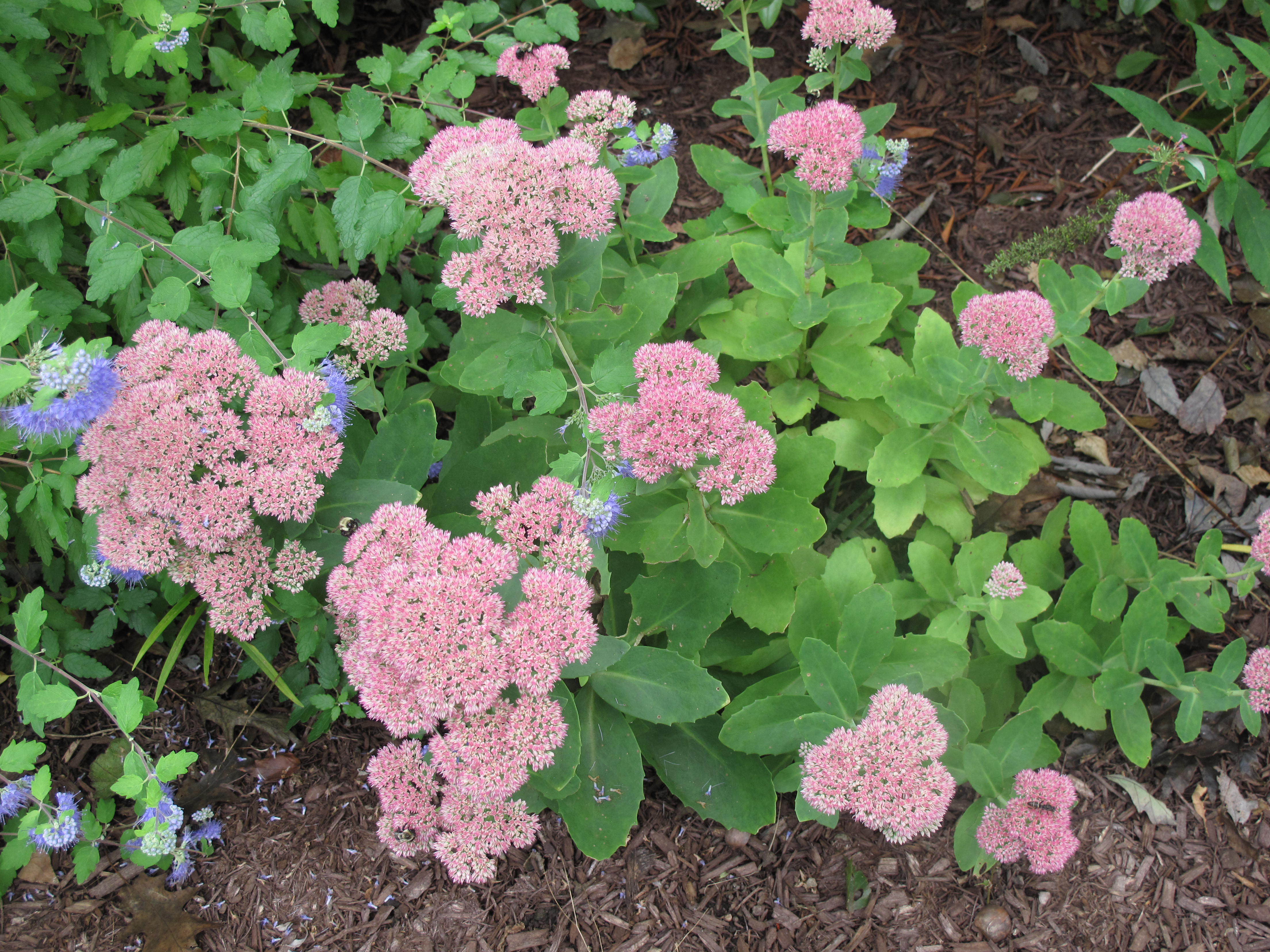
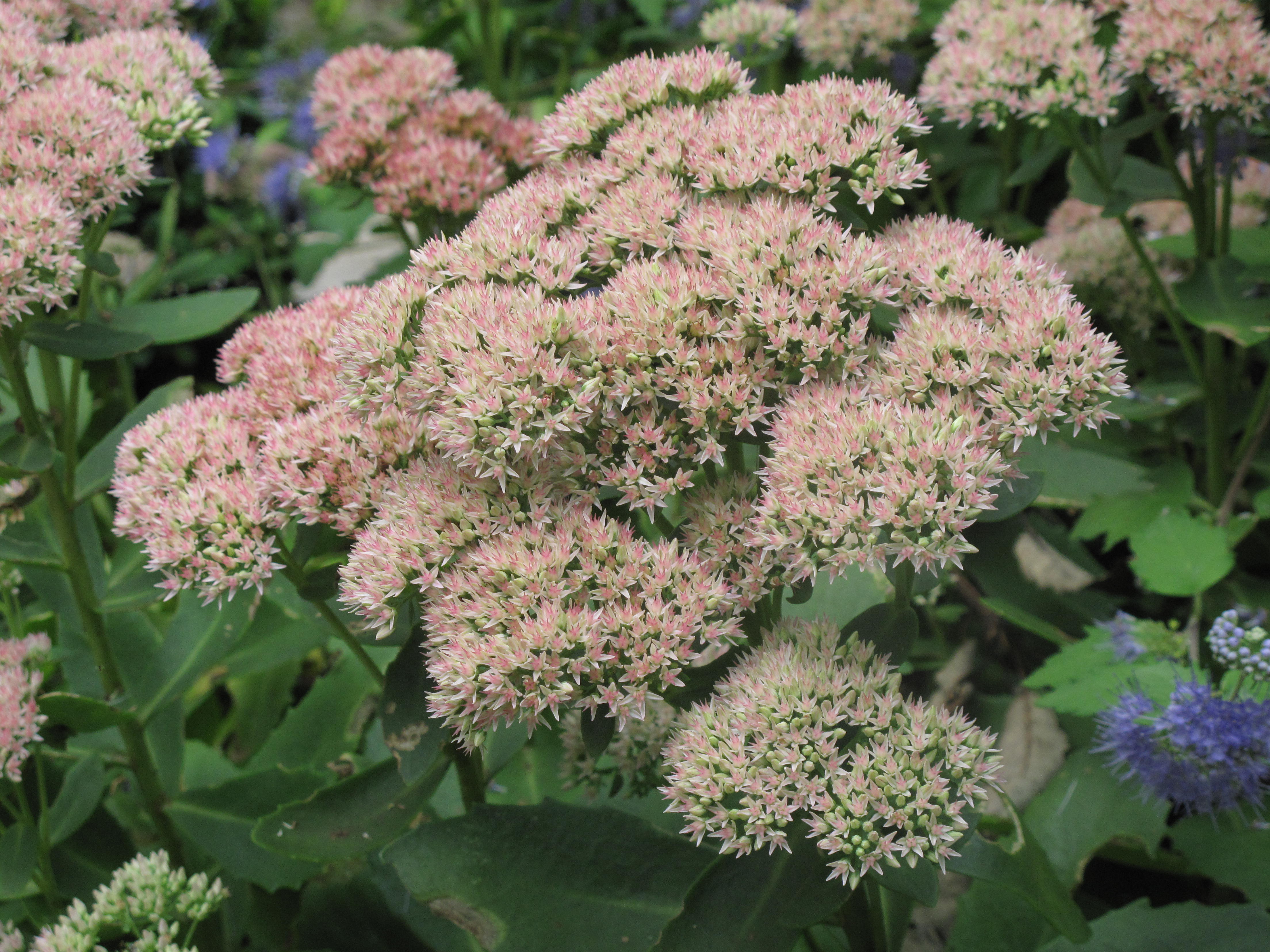
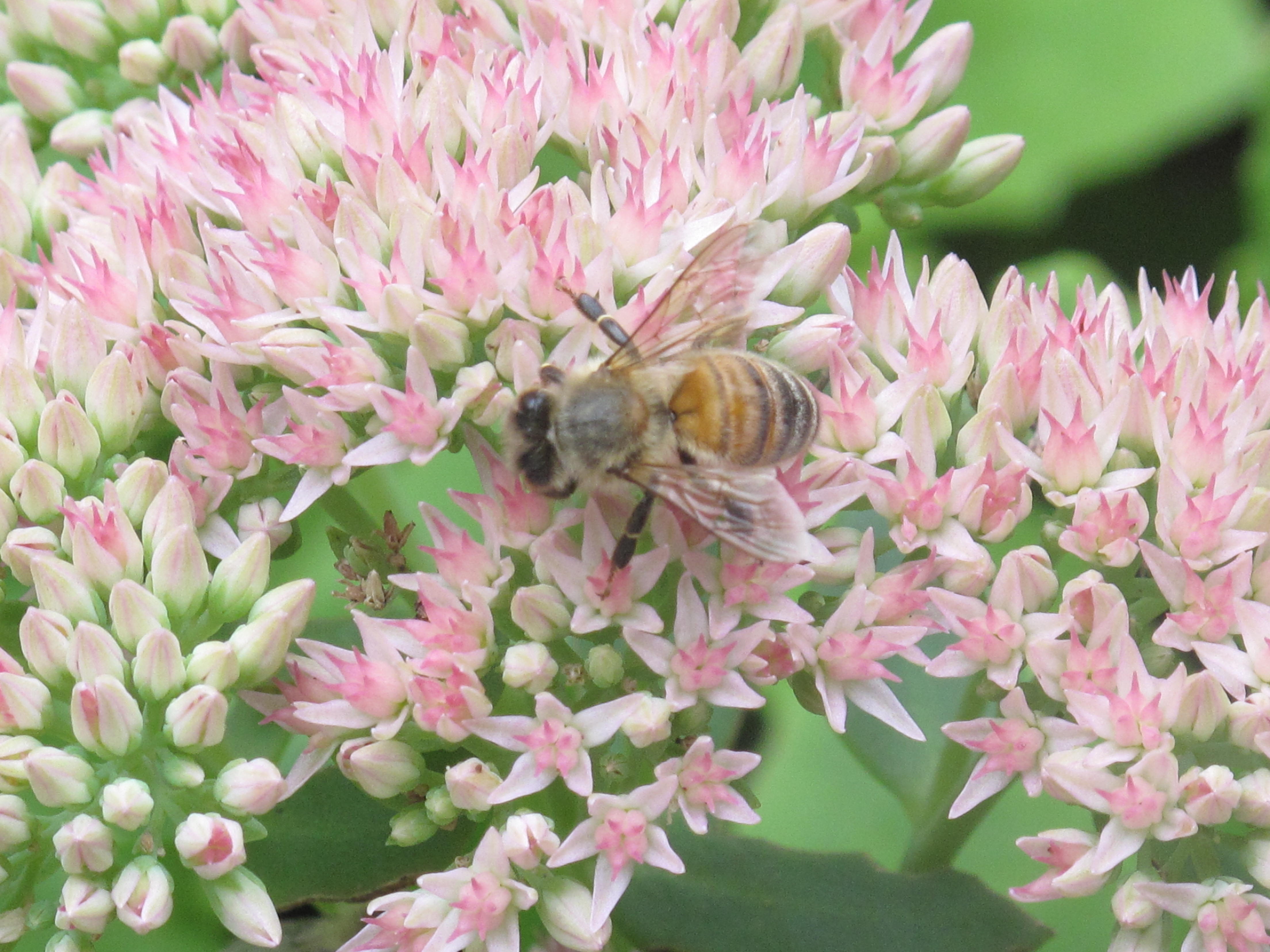
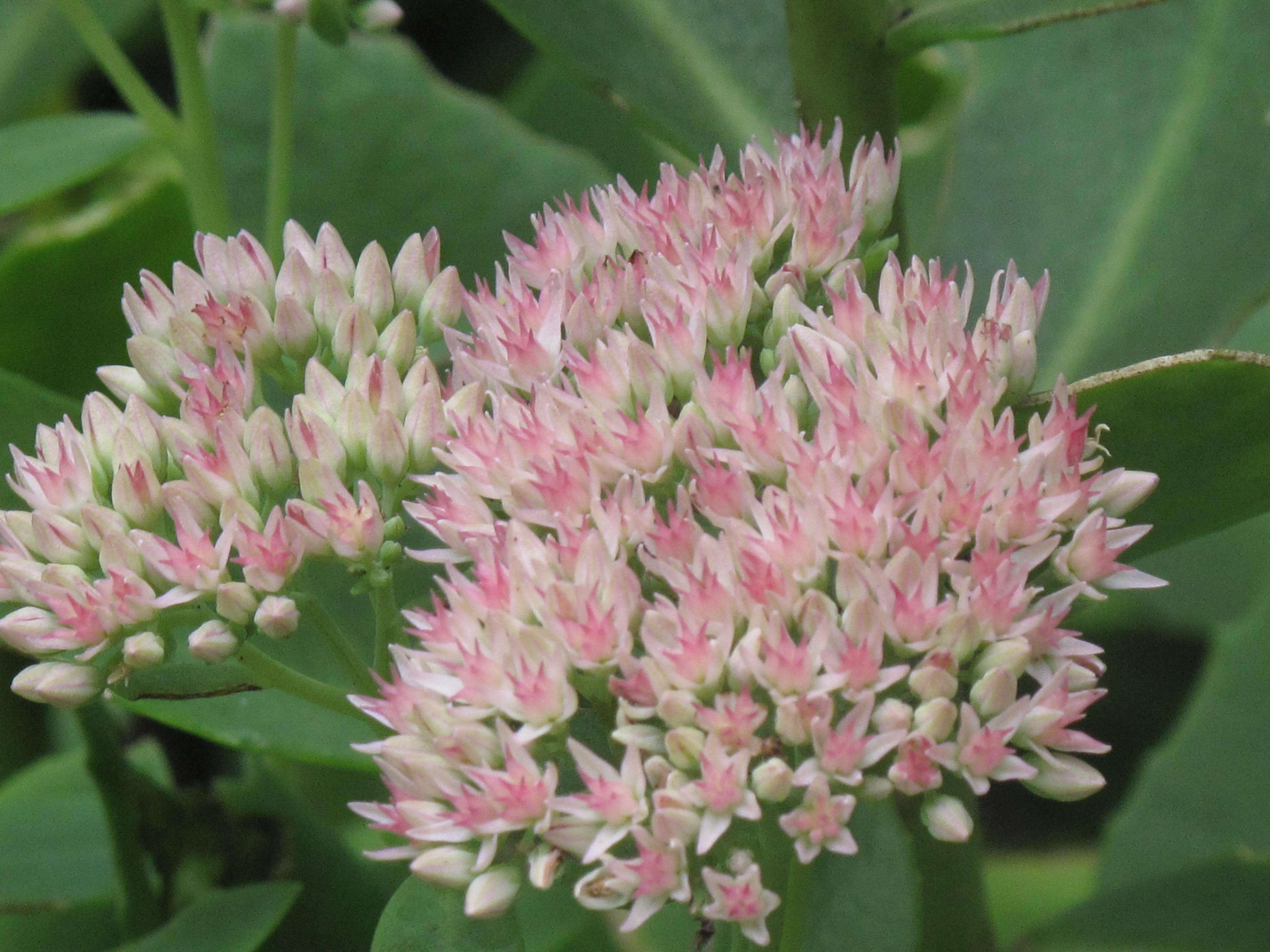
This is a Sedum ‘Autumn Joy’ and my sure-fire way of detecting Autumn’s presence among us.  The plant grows through Spring and Summer in our garden, but it is Autumn where the Sedum changes color from green to pinkish red.  It is my first wake up call that most things in our garden are now in their final stages and our appreciation of all things green is rapidly coming to a close with Winter only a few months away. 


Autumn starts a new season of flowers and blooms, second in spectacle only to Spring.  Sedum ‘Autumn Joy’ stalks appear in Spring and its flower heads form in July.  The flat corymbs that it produces look like broccoli until they change color.  In September on Glen Road, the flowers start to color up, turning a pinkish red.  Slowly the flowers turn red, and late in Autumn, the flowers on the Sedum ‘Autumn Joy’ turn a deeper rusty-red.  When frost finally takes the final life out of the Sedum, we cut it completely to the ground and say goodbye until the coming Spring.  I have read that many people do not cut the spent blooms away at frost time because of its great Winter appeal against the back drop of white snow.

Th Sedum ‘Autumn Joy’ is an excellent plant for those places you just don’t water often.  It is very drought tolerant and will turn a lighter shade of color if given too much water.  Plant where the Sedum ‘Autumn Joy’ will see a lot of sunshine as the leaves can actually turn floppy with too much shade.

The coloring to pinkish red on the Sedum ‘Autumn Joy’ is always a wake up call to begin Autumn chores.  When I see it change color, I think about getting Winter clothes out of storage, making sure the rakes can be found for leaf clean up and scheduling out our garden clean-up dates on my calendar.  From a gardener perspective, it makes me sad in a way to know that the garden will be leaving us for a while, but at the same time, this break is appreciated after a long season of planting and weeding.  As much as it reminds me that the garden is going to go away to re-energize for another season, it also reminds me of the fact that I too need this re-energizing period of time before I begin to think about my garden in 2012.  What things happen where you live that signal that Autumn is here? 

South Carolina’s Unbelievable Angel Oak

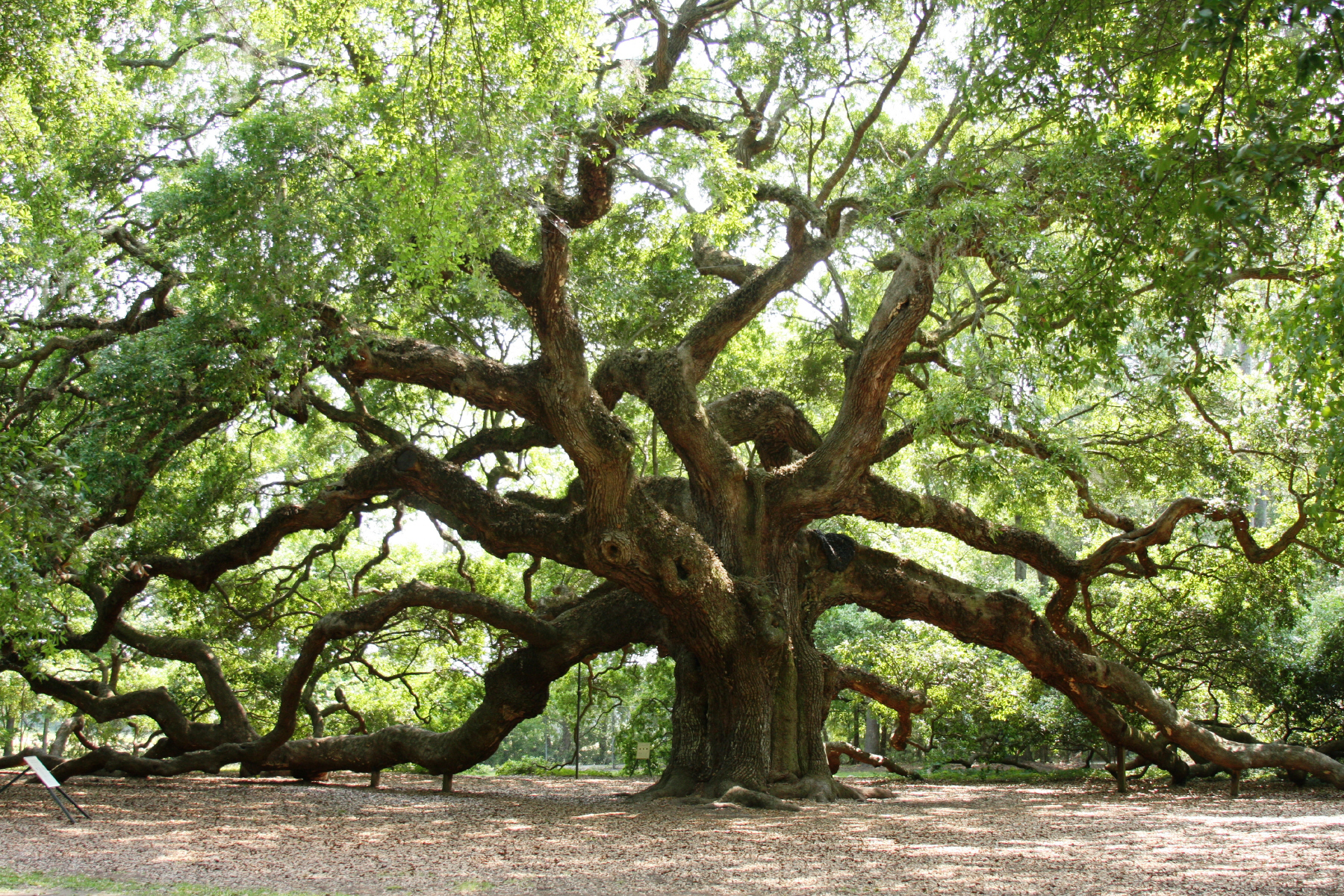
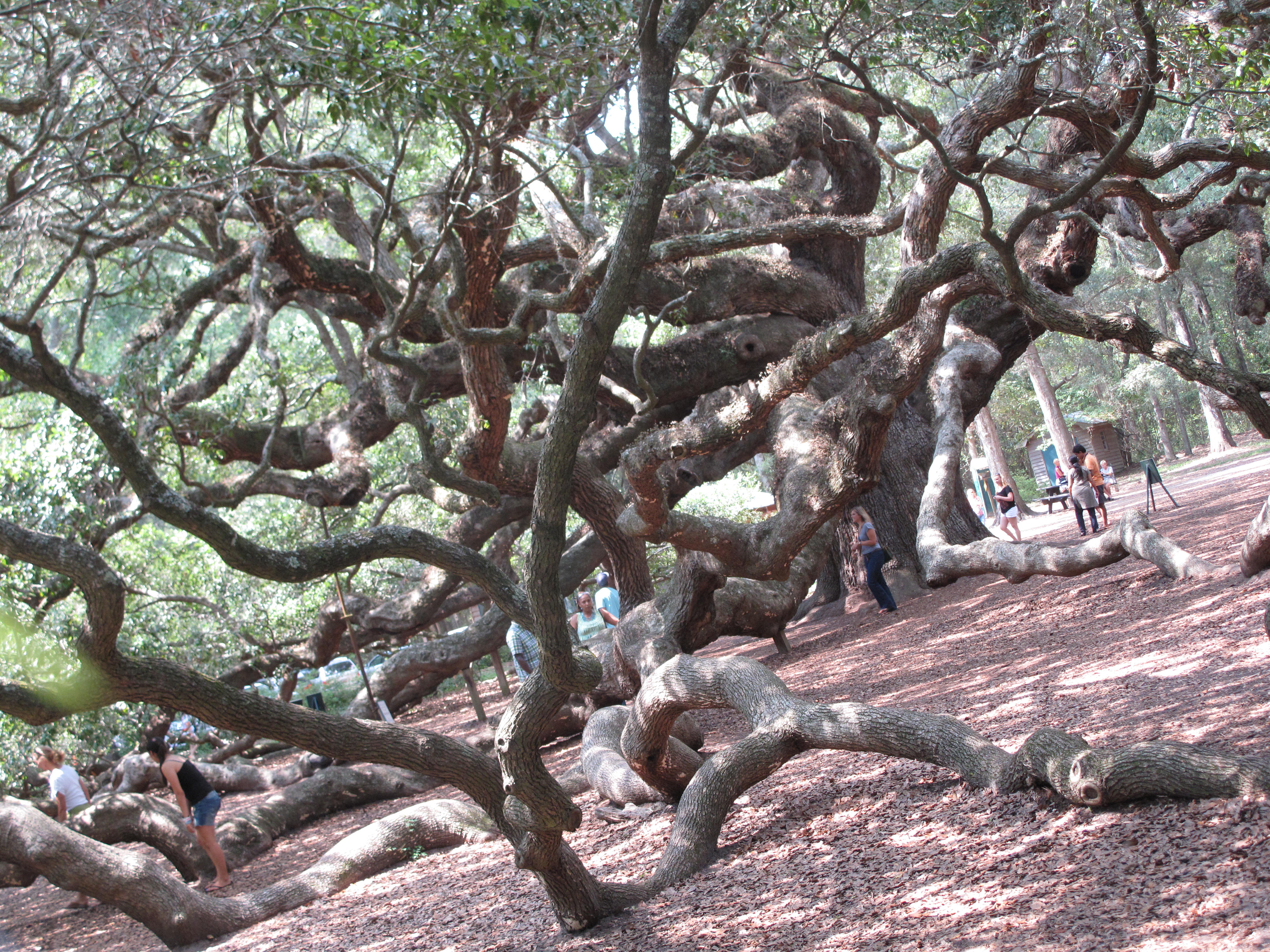
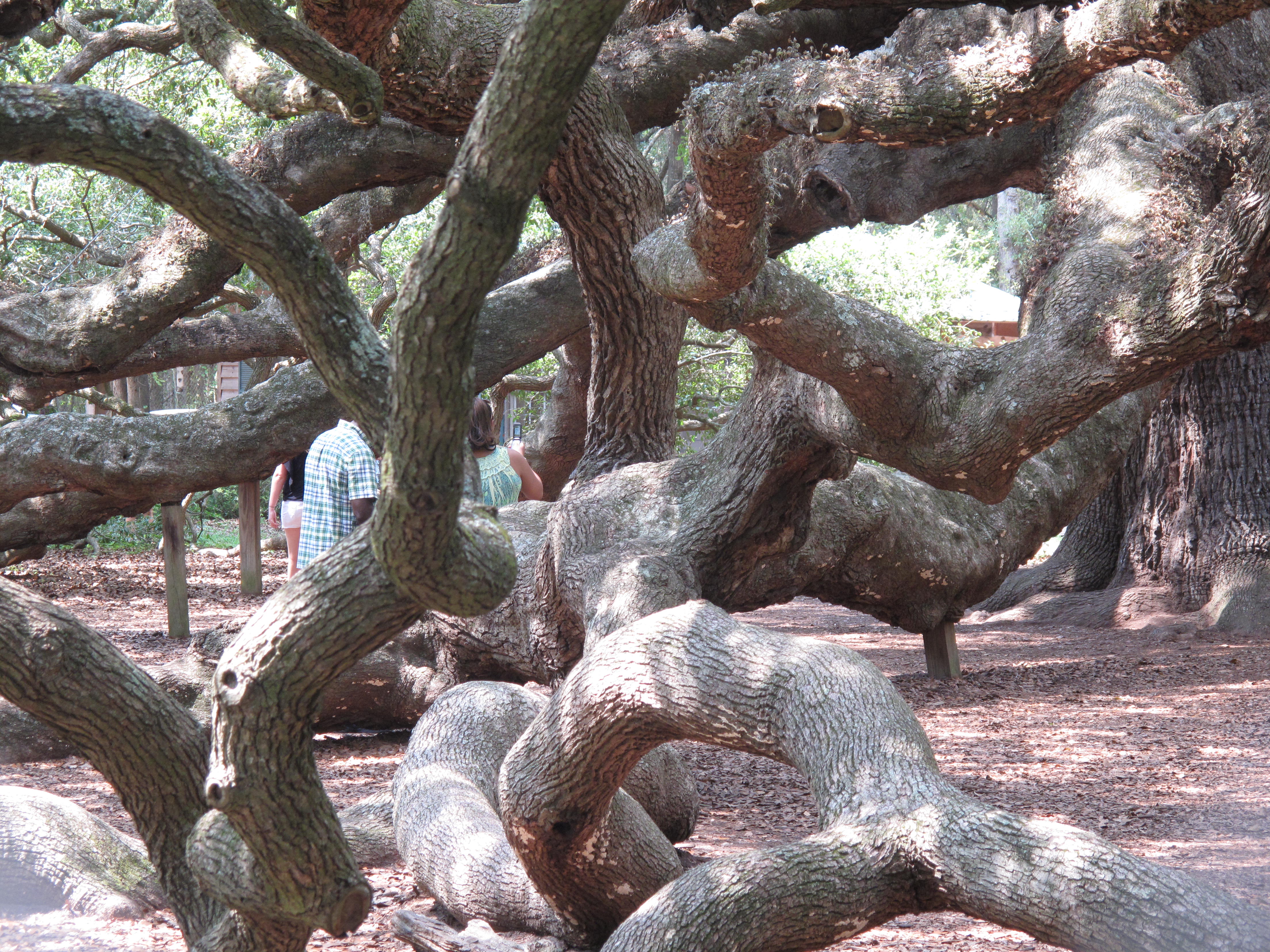
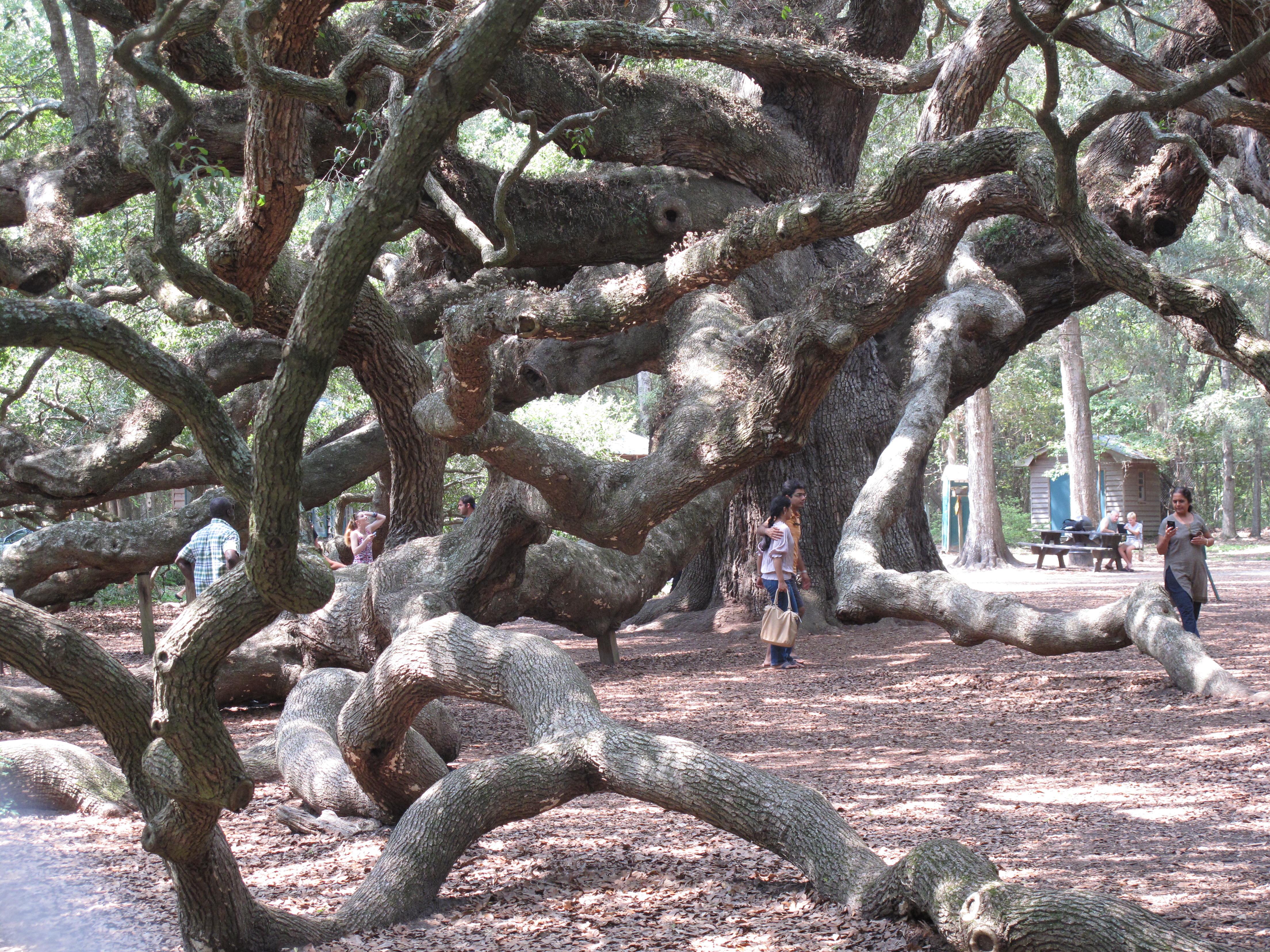
This is Angel Oak on John’s Island in South Carolina.  When we were ready to make the trek from Charleston to Kiawah, our friends drove their car and we hired a car service.  Our driver begged us to take a few minutes to stop and see this tree.  He said it was one of South Carolina’s best kept secrets and we needed to stop and take a look.

The Angel Oak is a Live Oak (Quercus viginiana) that is a native species found through the South Carolina coastal low country.  Many people think that the name Angel Oak has something to do with angels from heaven, but it just refers to the last name of its previous owners.

Towering over 65 feet high, the Angel Oak has shaded John’s Island, South Carolina, for over 1,400 years.  This means that the oak would have sprouted 1,000 years before Columbus’ arrival in the New World.  Recorded history traces the ownership of the live oak and surrounding land, back to the year 1717, when Abraham Waight received it as part of a small land grant.  The tree stayed in the Waight family for four generations and was then part of a marriage settlement to Justus Angel and Martha Waight Tucker Angel.  In modern times, the Angel Oak has become the focal point of a public park.  Today the live oak has a diameter of spread reaching 160 feet, a circumference of nearly 25 feet and covers 17,100 square feet of ground.  Angel Oak’s largest limb has a circumference of 11.25 feet and a length of 89 feet.  Talk about a large and long arm!

Angel Oak has in the past few years been threatened by proposed development in the area and the destruction of the surrounding woods.  While Angel Oak will not be cut down, many residents of the area believe the surrounding woods help to protect the prized oak from storms and helps allow proper moisture and drainage.  Residents also believe the surrounding woods help filter out harmful pollutants before they reach the Angel Oak tree.

We were very happy to take a little turn off the beaten path and get a chance to see Angel Oak.  Know that the pictures don’t do justice to how large and majestic the oak tree actually is when you see it in person.  It is said to be the oldest living thing east of the Mississippi River.  It sure is a sight worth seeing.  Have you ever seen Angel Oak or heard of it?

A Picture Is Worth A Thousand Words – Phlox You!

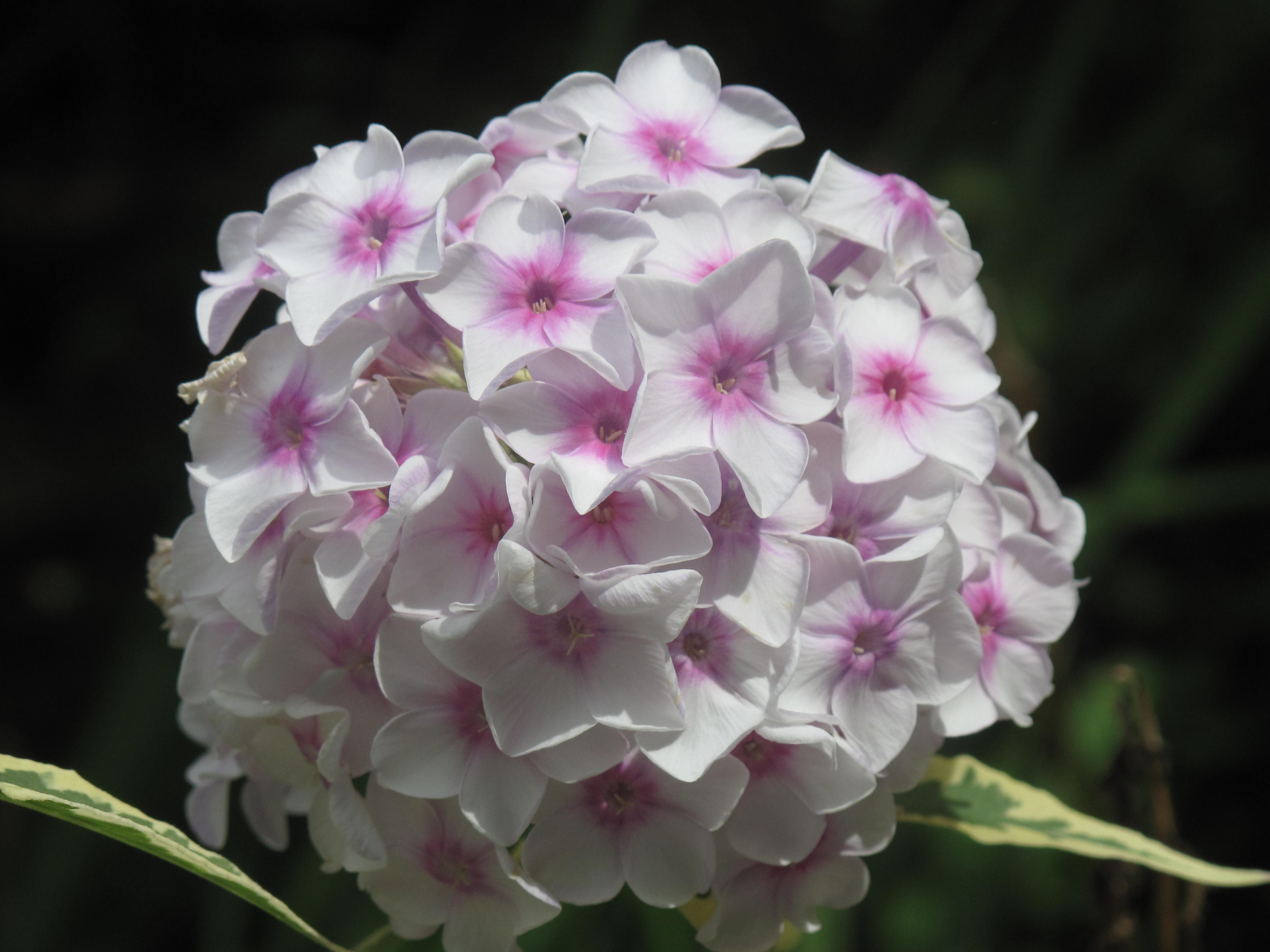
This is one of the remaining blooms in our garden.  How lovely is this Phlox bloom with its white flowers with intense pink centers?  We have had a lot of rain over the last week.  There were several fronts that moved through the Connecticut area that dumped quite a few inches of rain.  While you would think all the rain would be great for our plants, in most cases it just served to destroy any remaining blooms that were left in the garden.  A nice bloom takes a beating in heavy pouring rain!  So while most of the blooms were destroyed, this Phlox bloom held tough and is about all that remains in our garden.  How has your garden been doing in all this crazy weather we have been having?

A Picture Is Worth A Thousand Words – Brook, You Just Keep Babbling

This is our neighborhood babbling brook.  Glen Road has taken on a strict diet and exercise plan starting last Monday.  Healthy eating and several walks per week is the charge.  If you notice our food posts, most are desserts, so it is time to work a few of those calories off.  Most nights this week, we put on our sneakers and put JoJo on a leash and we take off for a 45 minute walk.  Yes, even JoJo has indulged a little too much this Summer and needs to lose a few pounds as well.  What has been great about these outdoor walks versus walking on a treadmill inside of a gym is that you can really take notice of all the cool things nature has to offer.  Like this little brook.  We’ve driven over the small bridge that is on top of it for six years, but we have never really stopped and looked at the water that flows through it.  We’ve never listened to the babbling water rushing around rocks and tree trunks.  We’ve never really taken a look at all of the brook’s bends and turns.  Our walks started for the exercise, but now have also gotten us closer to nature.  Who would have thought?  We never thought we would like to exercise, but this seems to work.  What do you notice when you take a walk around your neighborhood?