
This is a close up of our favorite flower here on Glen Road. Dicentra spectabilis, otherwise known as bleeding hearts. What’s blooming in your garden?

This is a close up of our favorite flower here on Glen Road. Dicentra spectabilis, otherwise known as bleeding hearts. What’s blooming in your garden?
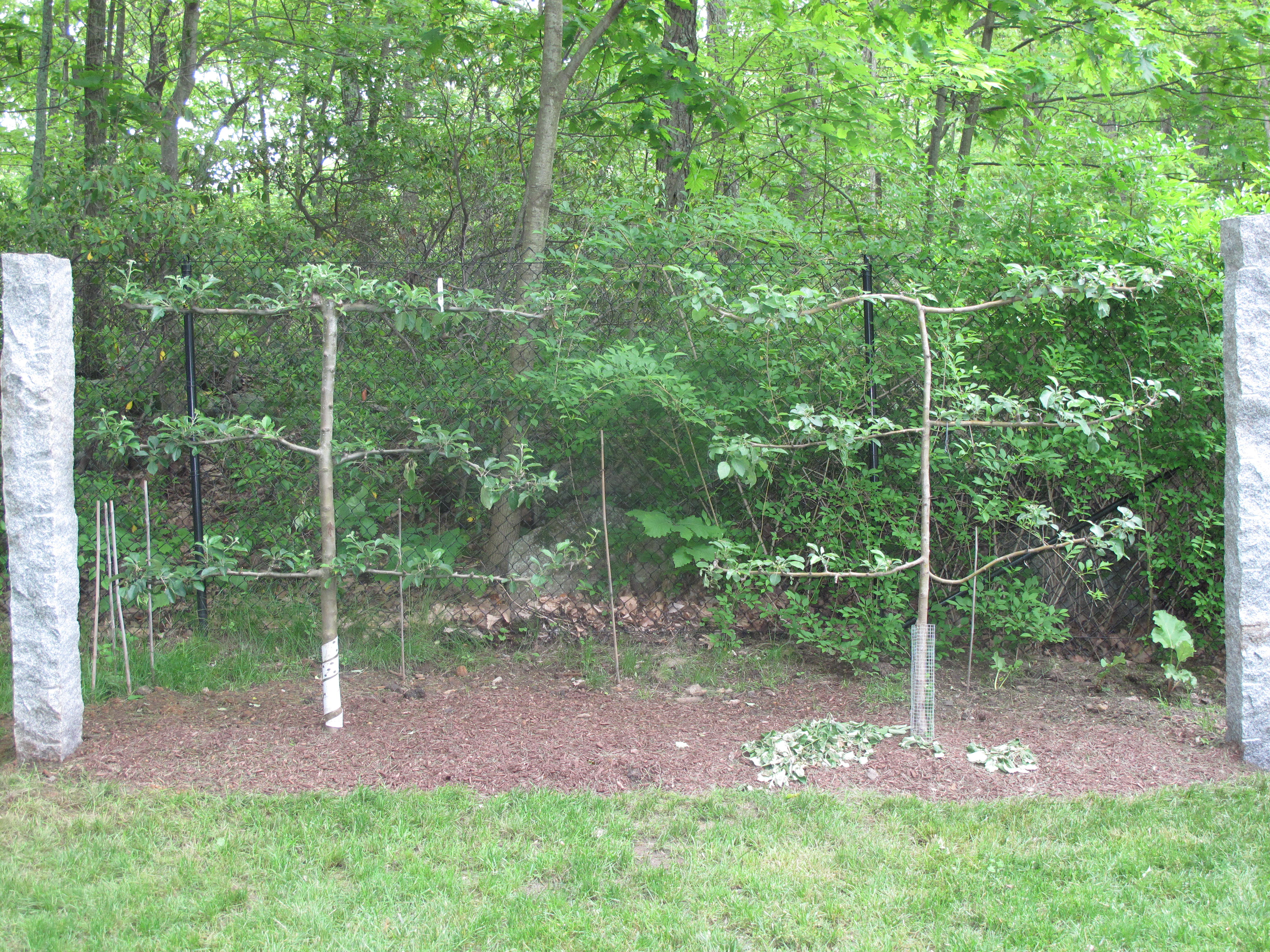
This is another story about our espalier apple grove…all two of our trees. Earlier this week, we wrote that we noticed that our Malus ‘Liberty’ was looking a little overgrown compared to its new cousin Malus ‘Gravenstein’. In other words, we noticed that ‘Liberty’ needed a little haircut. So a good pruning was in order. Our research had said that the espaliers should be pruned when dormant. However, since we are new to the pruning process, we decided to wait to see what was growing in a crazy manner and then cut it off. We just didn’t want to take a risk of cutting something out and realizing later that we had made a bad mistake. You can see the finished job in the picture above….haircut complete.
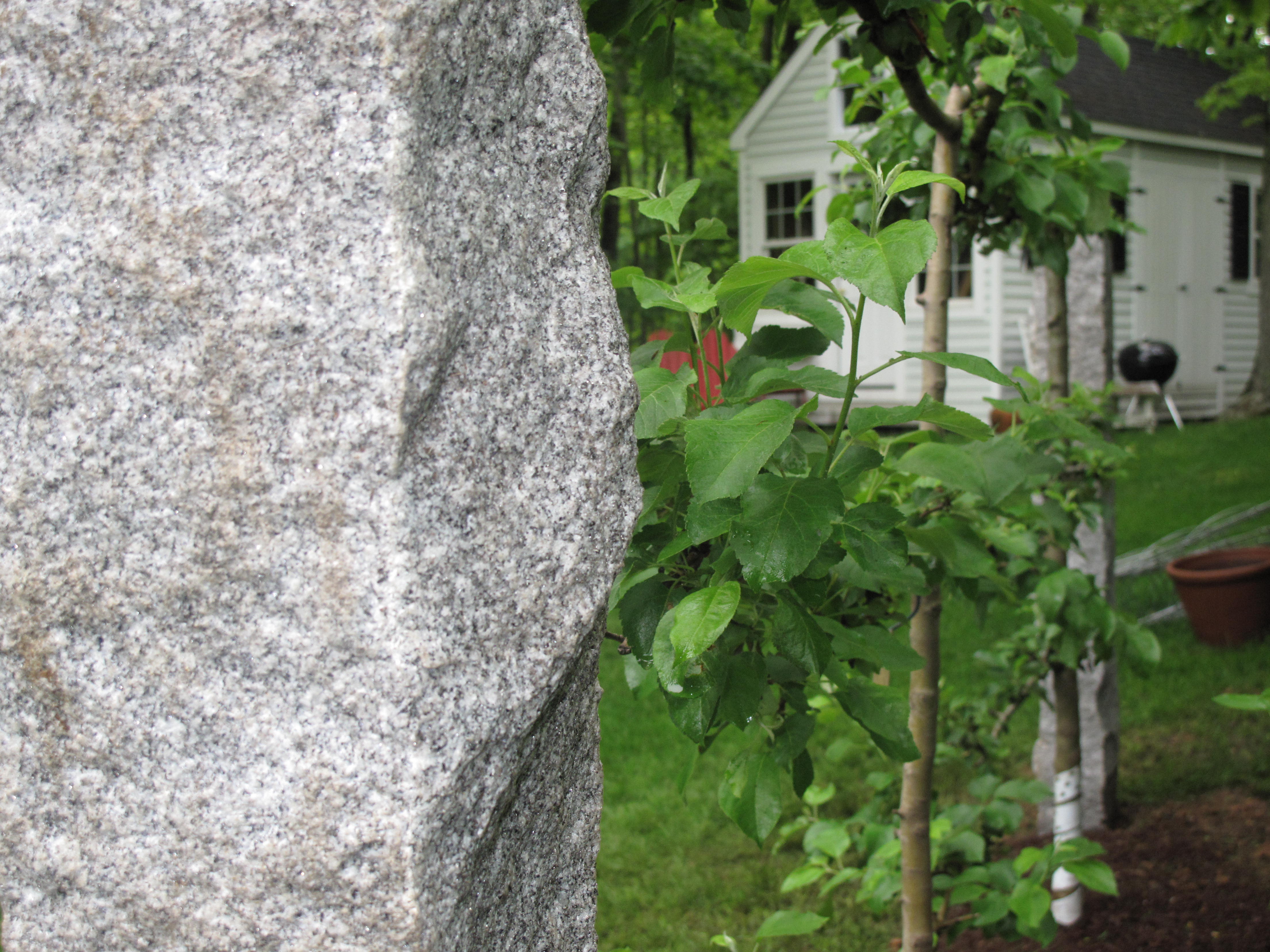
When we started our pruning job, we paid close attention to ‘Gravenstein’, which was pruned already, and compared it to ‘Liberty’, which was not. Notice in these pictures below that ‘Gravenstein’ has leaves that are close to the branch and spurs on the branch and there are no long vertical growths coming out. If you are asking what a spur is, the best way to describe it is a very short piece of branch where the apple tree flowers and sets fruit. Pruning encourages the tree to grow more of these fruiting spurs by removing competing suckers and unproductive wood. A sign of a well-trimmed espalier is the close-growing leaves without any vertical growth. ‘Gravenstein’ looked like this. However, ‘Liberty’ was not in such good shape. You can see it better in these pictures.
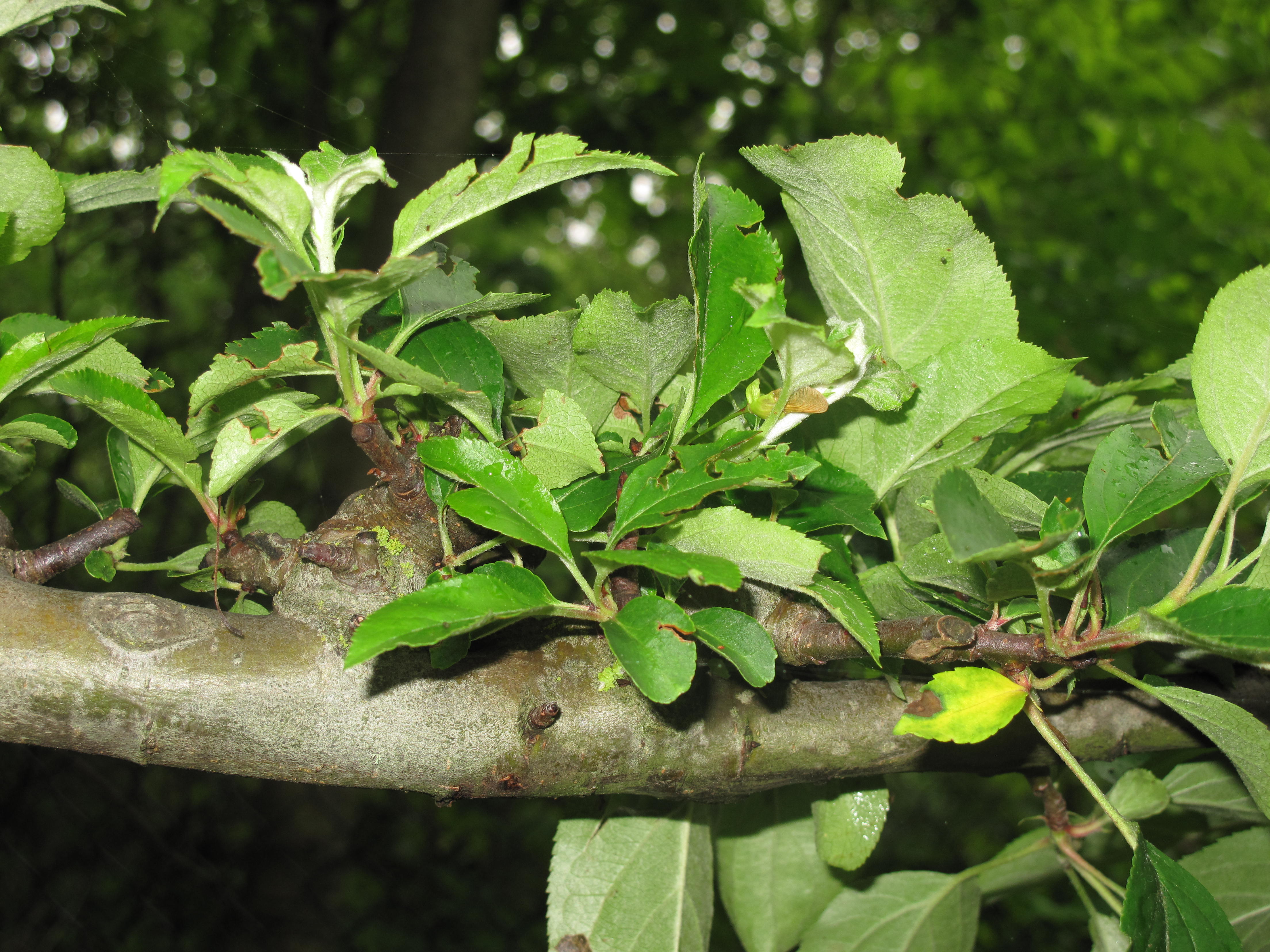
See the growth coming out of the ‘Gravenstein’ spur and main branch? The leaves are close to the spur and branch and never more than about two inches long.
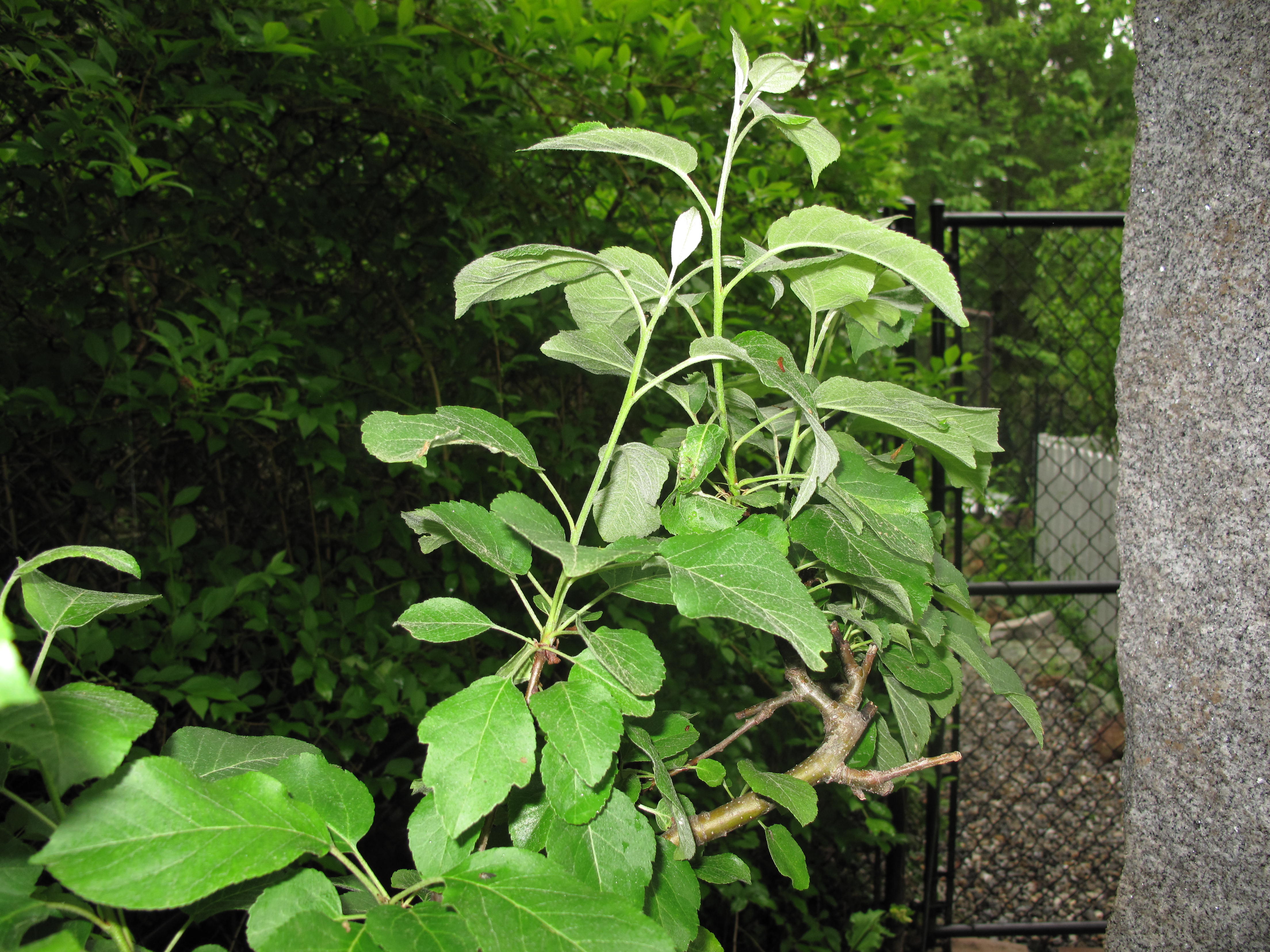
Here’s crazy cousin ‘Liberty’. See the vertical growth coming out of the branch. We pruned all of these vertical baby branches out and only kept close growing leaves near the spurs and branches to promote fruit growing.
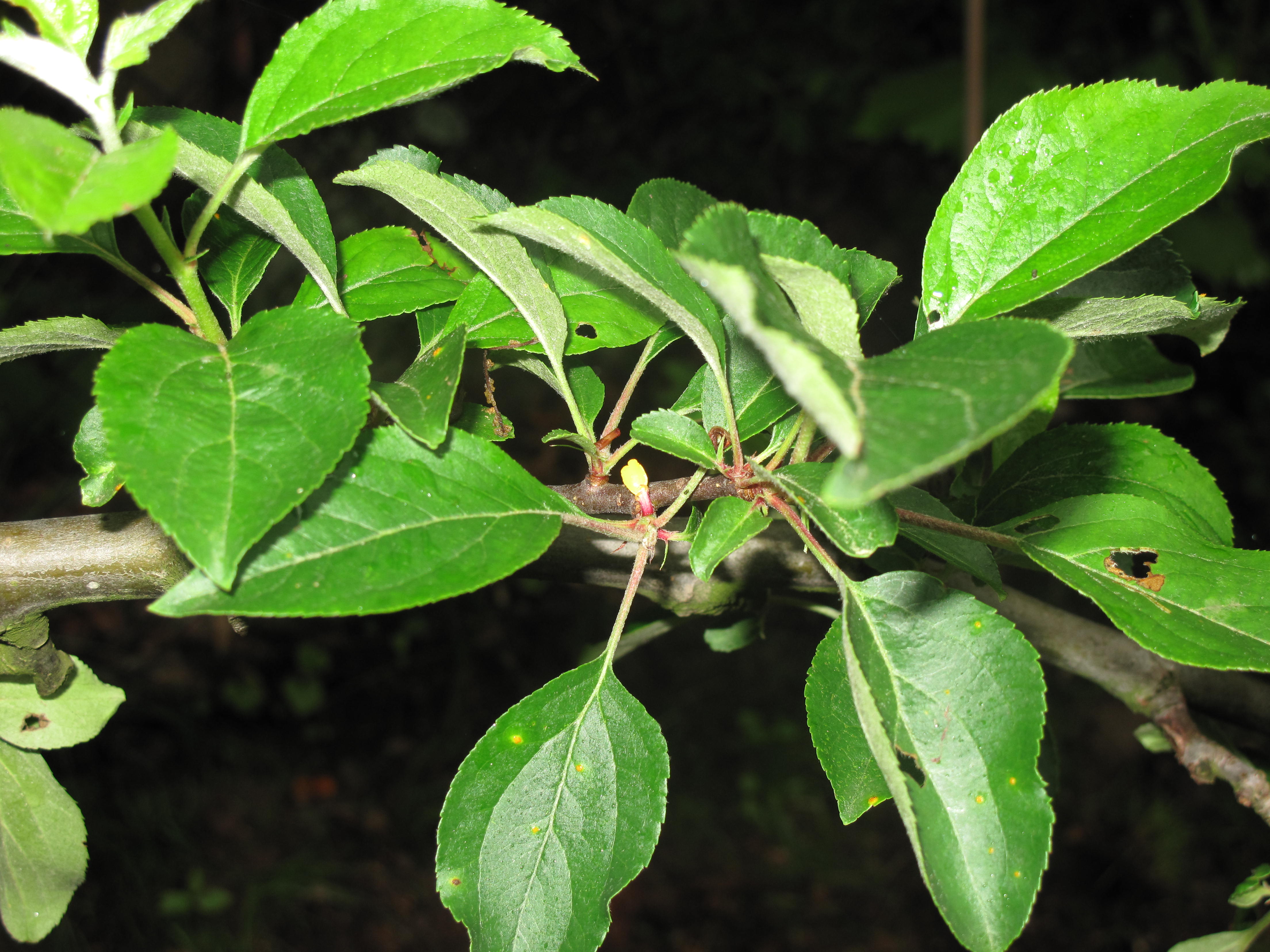
Another close up of the foliage on ‘Gravenstein’. See how tight and close the leaves are?
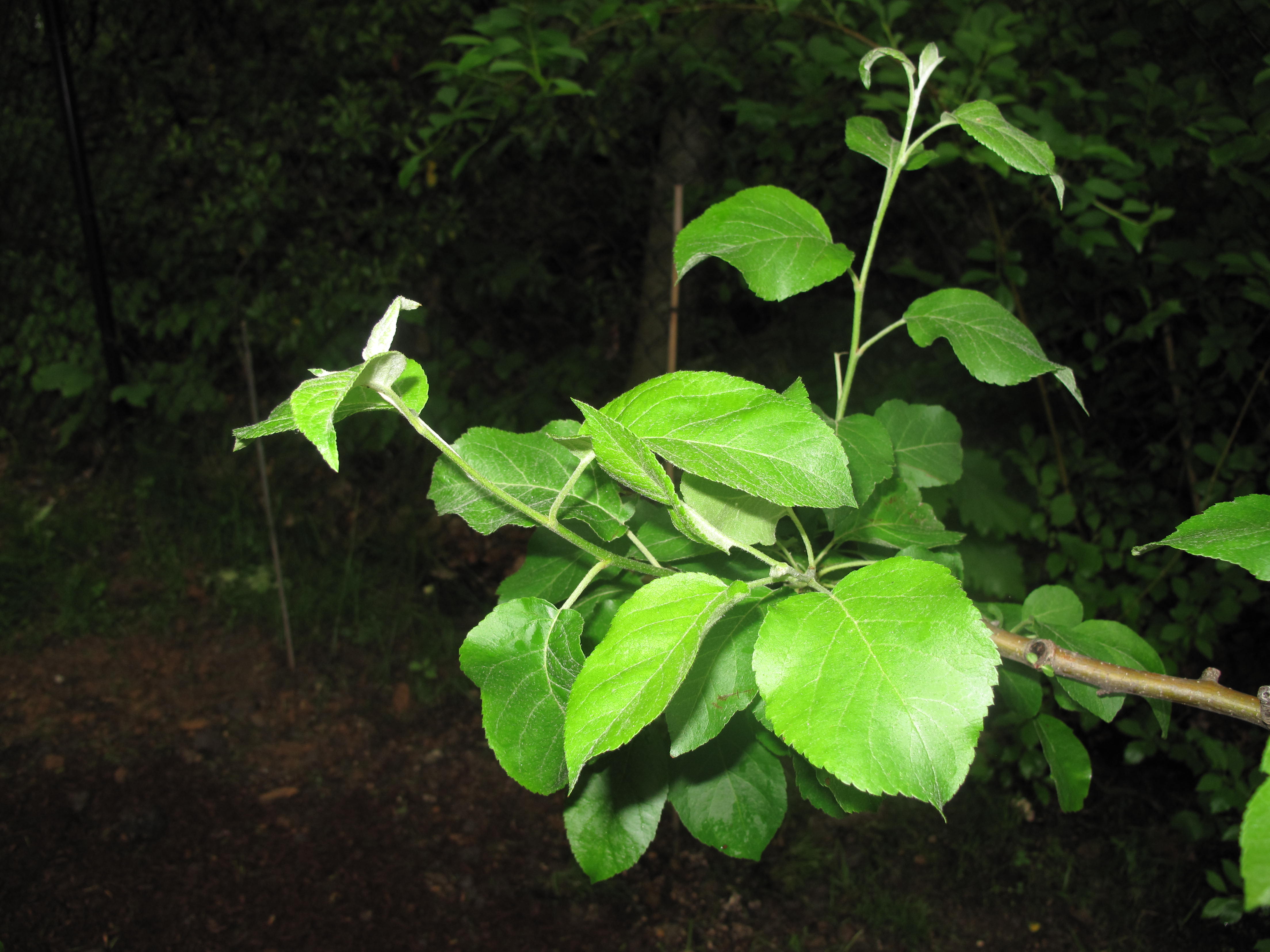
Another shot of ‘Liberty’. It doesn’t take much of an expert to see the long growth that needs to be cut off. Fortunately, none of the growth that needed to be cut off had any baby apples attached.
After pruning all the vertical growth off of ‘Liberty’, both espaliers looked pretty much the same with some beautiful leaves growing not more than two inches off of the main branch or growing spurs. All it took was some patience, some pruning shears and a barber-like mentality. No blow dry was necessary. Are you in the process of pruning any trees in your yard?

This is the progress in the vegetable garden this weekend. Not much went on, but with all the rain we have been experiencing, a little bit of work is a lot. We had laid a tray of vegetable plants out last week that were grown under our grow light in the basement, but the rain stopped us from putting them in the ground. This was probably a good thing as it gave the young plants some time to get used to the weather outside and begin to adapt to the new environment. Little did the young plants know that they were acclimating to a monsoon-type environment given all the precipitation that occurred last week. Finally, there was a small break in the weather and we rushed out to put the plants into the soil. Here is a little taste of what went into the ground.
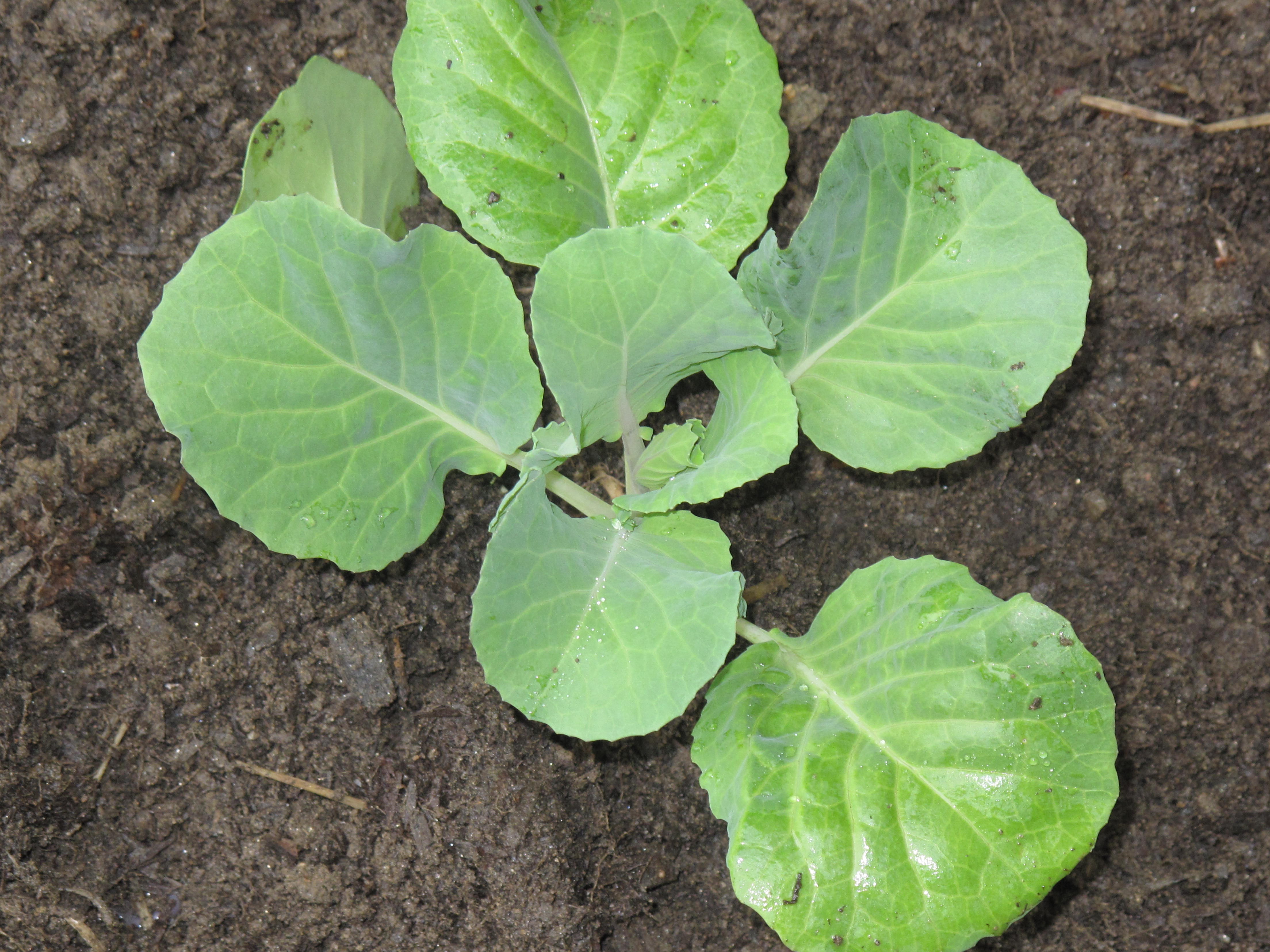
First, a little cabbage. We love cabbage and have a great soup recipe that is simple and delicious.
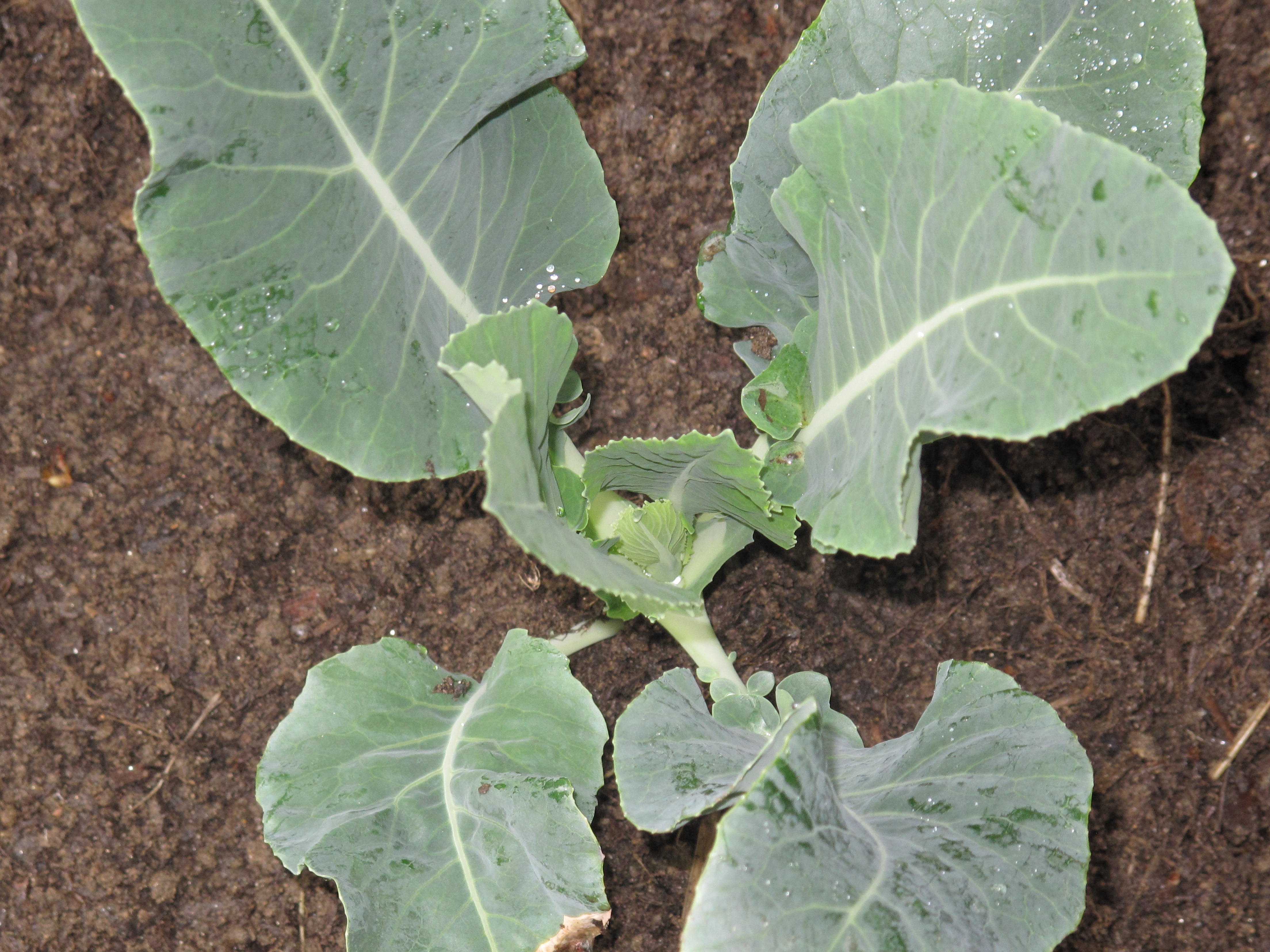
Let’s not forget our cauliflower. Lots of cauliflower macaroni for our Brooklyn Italian Grandmother to cook.

Are we the only ones that like brussels sprouts? Boiled and then mixed with salt, pepper and butter. Simple heaven!
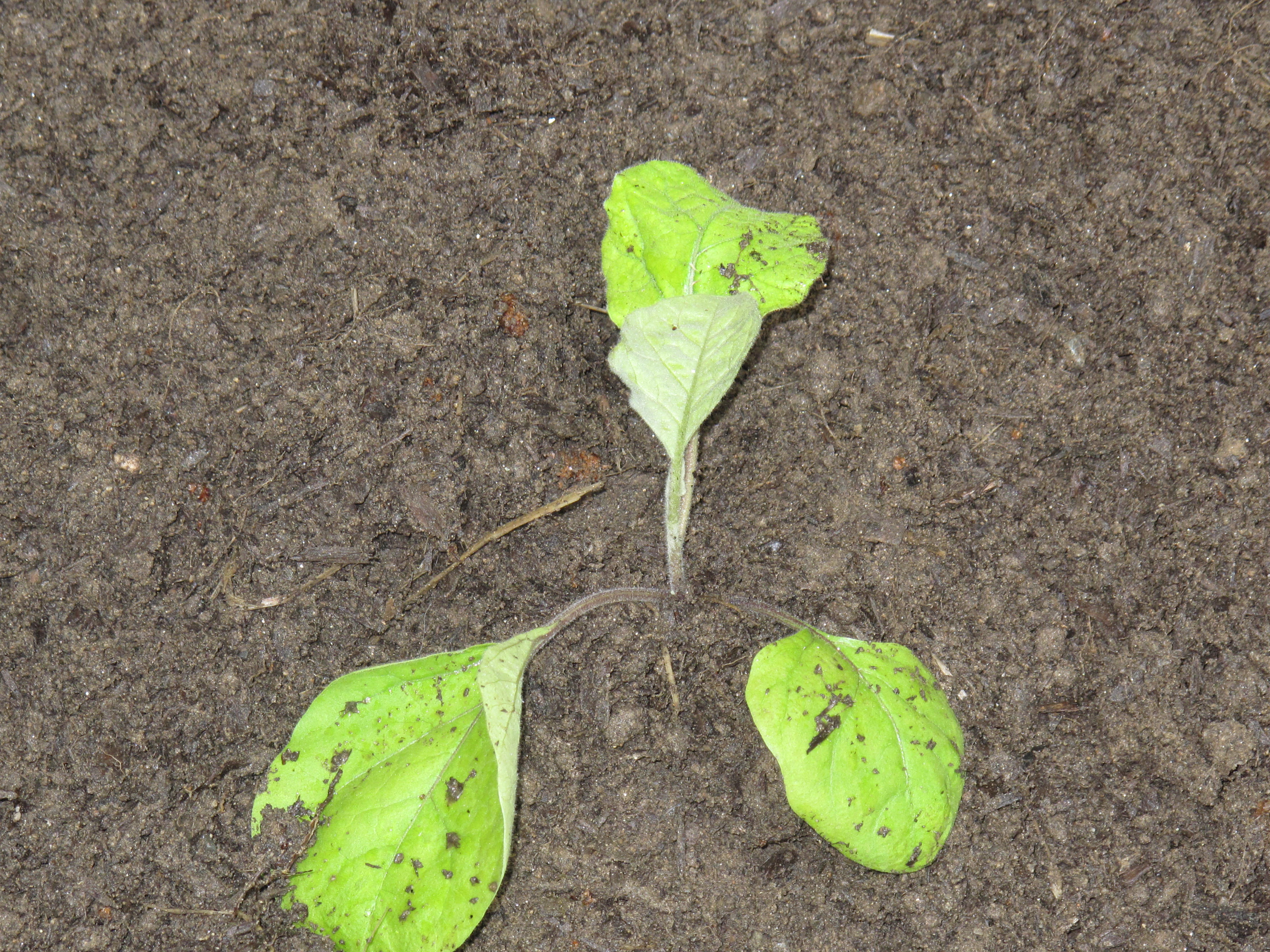
Last, but not least, a spindly looking eggplant. Hope it makes it!! We have so many eggplant recipes it is crazy.
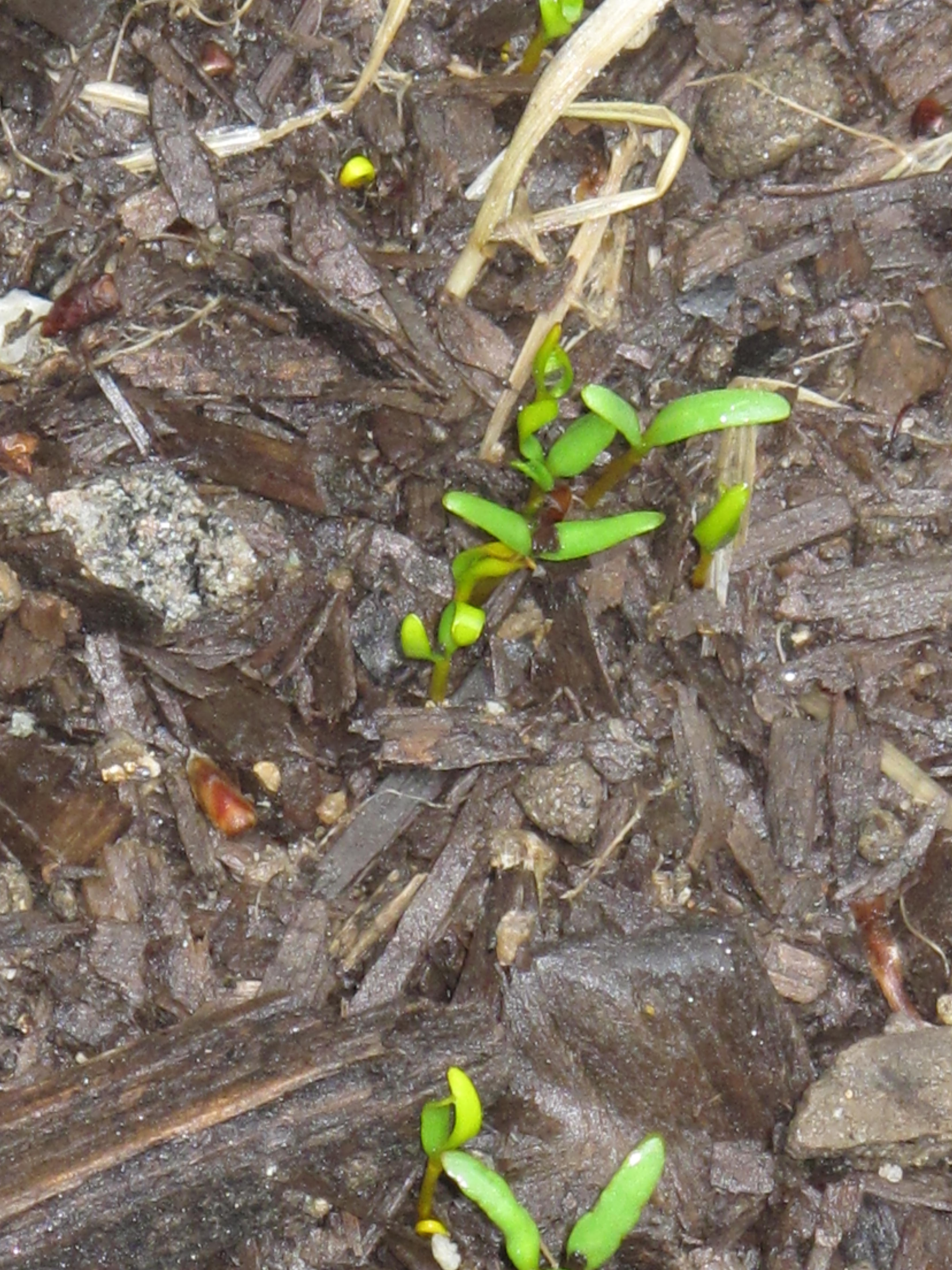
The rest of the garden is doing well. We couldn’t believe that some seeds that we planted last week were already sprouting. Here are the turnips peeking their heads out of the dirt.

Here are some beets that shot up too. These are the golden variety. Does this mean they are tougher than their dark red cousins?
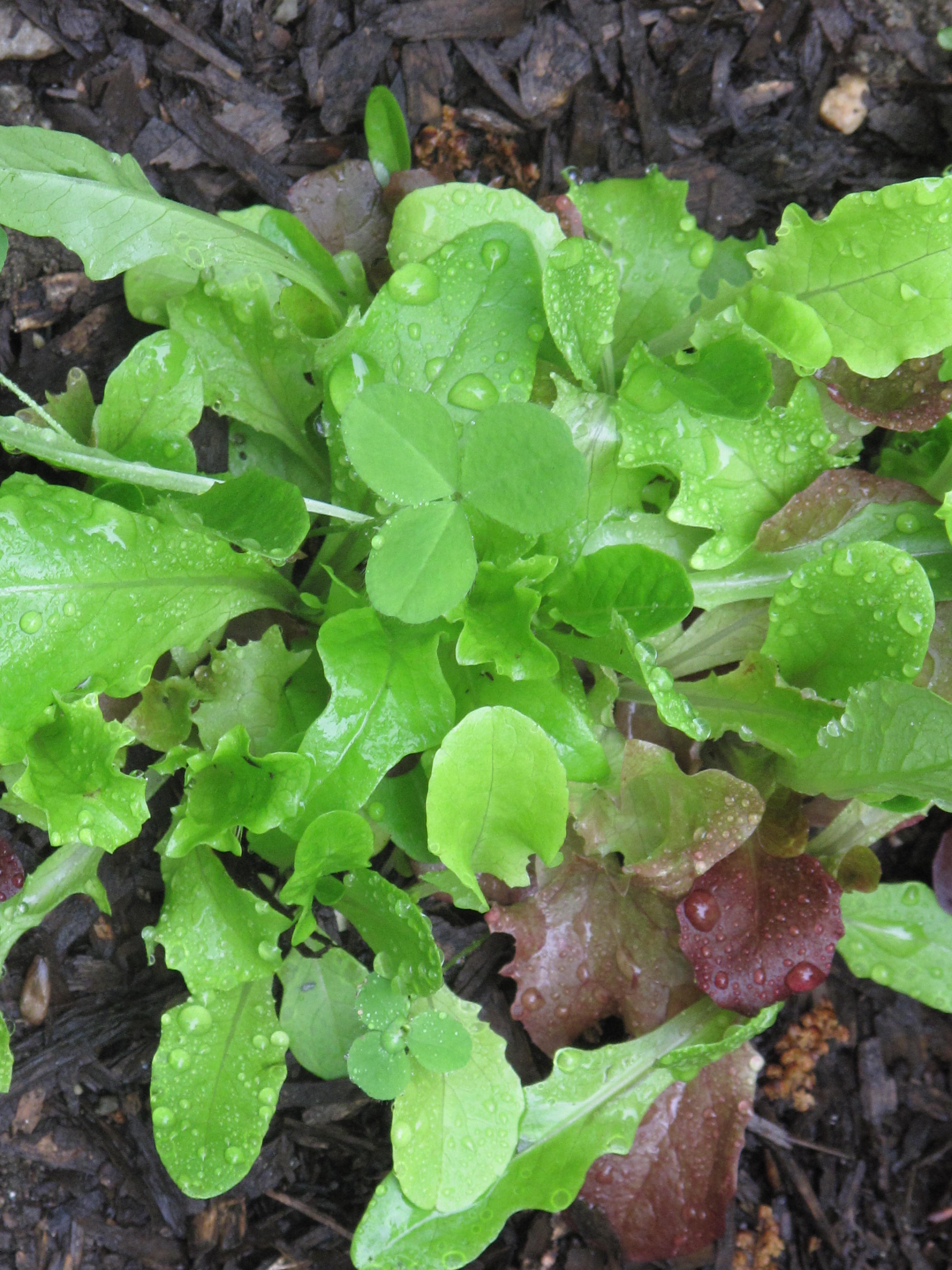
Our lettuce is almost ready for some picking. If we get a little hot weather, it should grow quickly and be in a salad bowl in no time. Doesn’t it look good with the raindrops stuck on the leaves? A little vinegar, some oil and a fork….that’s all we need when the lettuce is ready.
So not a great week for gardening-flowers or vegetables, but we guess Spring is known for lots of wet weather, right? The only thing that really benefited from all this rain was our newly seeded front lawn. So there you have it…we’ve found at least one benefit from all this crazy weather. For all of you gardeners out there, isn’t it a great feeling to see all your hard work finally grow into something edible? To see our seeds sprout or our grow light plants get put into dirt is a very proud and satisfying feeling. It makes all the hard work seem worth it. How is your garden growing and did you have crazy weather that set you back a bit?
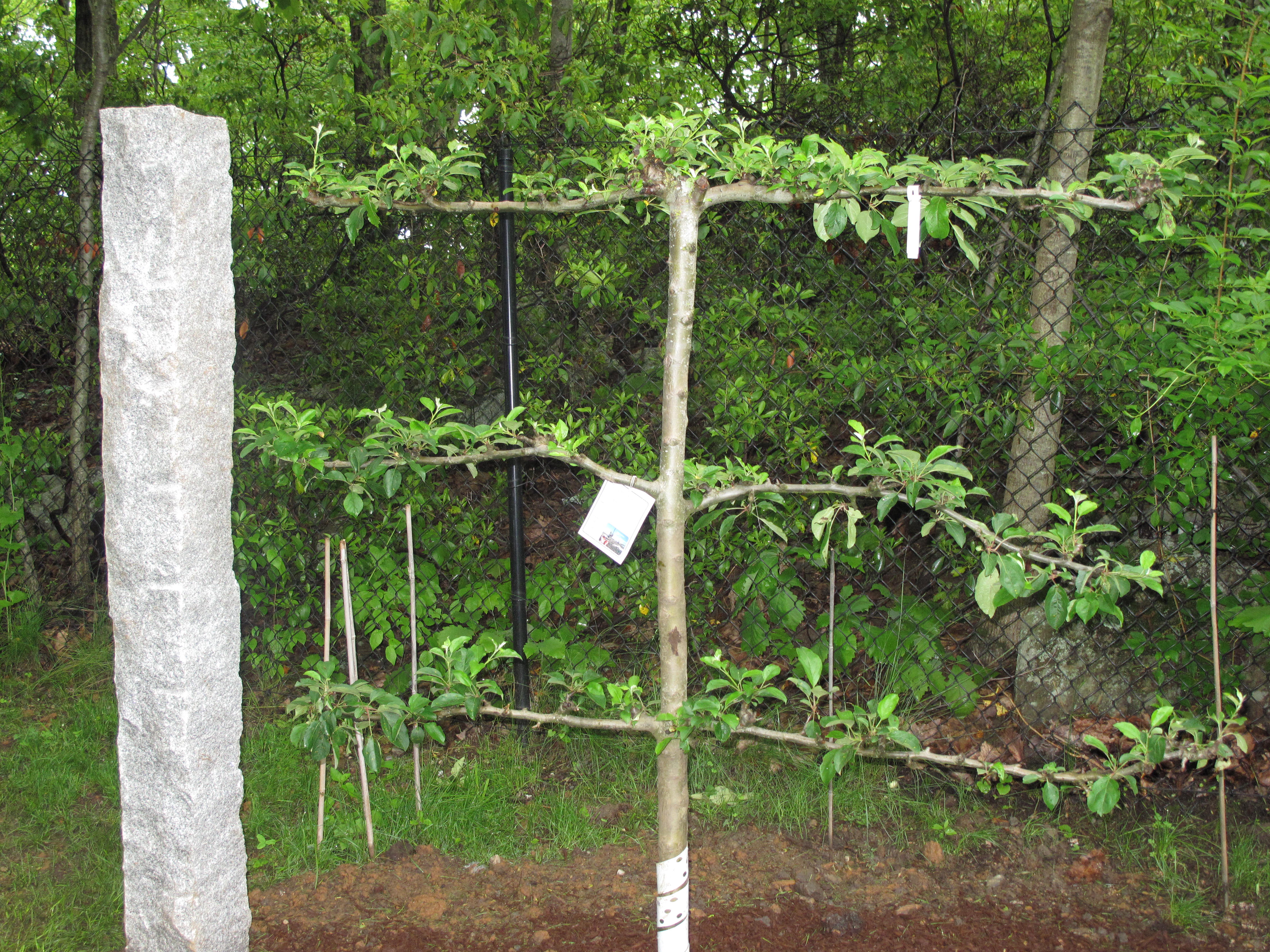
This is the new support system for the espalier apple trees. Remember the first time you met the espalier apple trees? A lot has happened since that time. First off, we noticed that one of the apple trees, Malus ‘Spartan’, did not fully come back this year from the hard winter we experienced. Although one side of the tree grew leaves, the other side had died. We then made the painful decision to take the tree out and replace it with a new one. However, when we went back to the nursery to buy a replacement, the nursery said the tree was guaranteed for a year and we received a free replacement. How cool!! So meet our new tree, Malus ‘Gravenstein’.
Gravenstein is a variety of apple native to Gråsten in South Jutland, Denmark. The variety was discovered in 1669 as a chance seedling, although there is some evidence that the variety originated in Italy and traveled north. The Gravenstein was introduced to western North America in the early 19th century, perhaps by Russian fur traders, who are said to have planted a tree at Fort Ross in 1811. The Gravenstein apple has a sweet, tart flavor. It is picked in July and August and is heavily used as a cooking apple, especially for apple sauce and apple cider. It does not keep well, so it is available only in season. In addition, their short stems and variable ripening times make harvesting and selling difficult. The skin is a delicately waxy yellow-green with crimson spots and reddish lines, but the apple may also occur in a classically red variation. Our older tree, Malus ‘Liberty’, is proud to meet its younger cousin.
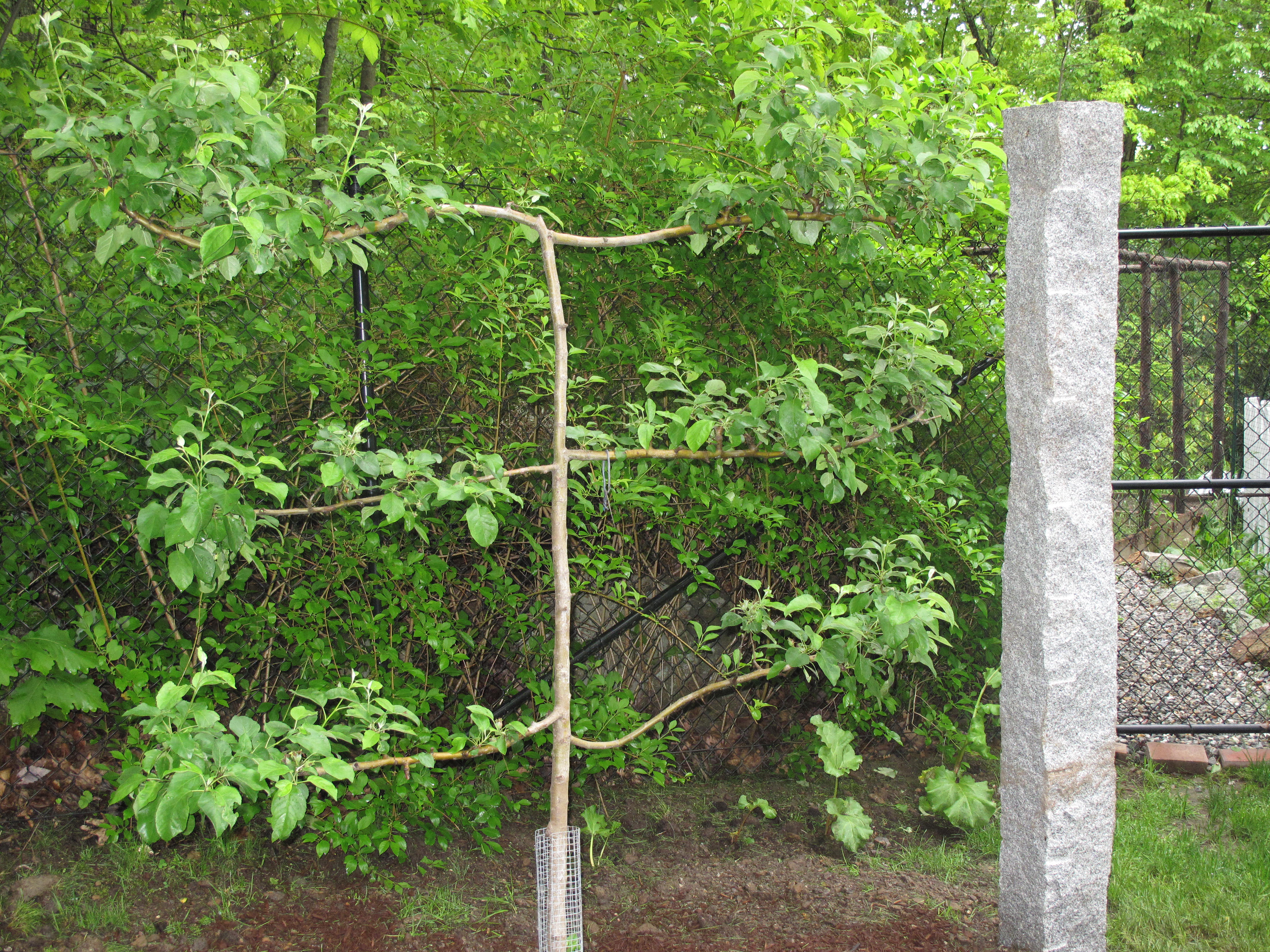
The other change in the espalier apple tree grove is that we began to realize that Malus ‘Liberty’ had branches that were beginning to bend. If you look at the picture above, you will see the bottom limb is bent or crooked. In order to fix this, we worked with a landscaper to embed two granite posts on either side of the trees. Although not completed yet, we will be running wire from one post to the other in three separate rows and tie each of the limbs to the wires for support. During the summer, we will tighten the ties that will move the limbs closer and closer to the wire and therefore making each limb straighter and straighter. The granite posts also give the area quite an architectural look and feel.

So a lot has been happening in the espalier apple tree grove….if you can call two trees a grove. We noticed that Malus ‘Liberty’ needed a little leaf trim so that will need to be done. After that, we will wait it out and hopefully get a few apples from the trees later in the Fall. Let’s keep our fingers crossed. Do you have any fruit trees in your garden and how do you care for them?
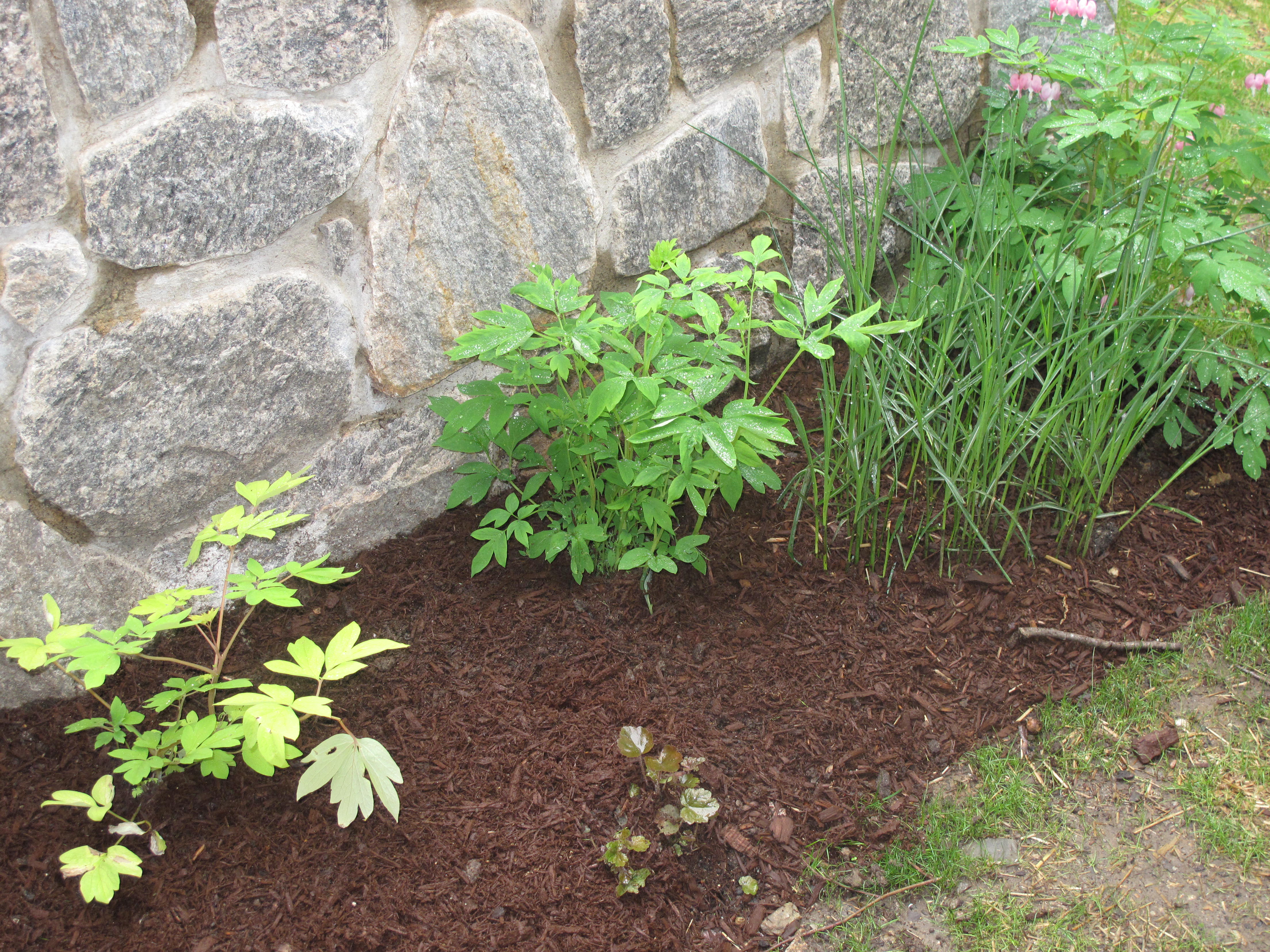
This has been a terrible week for gardening. We have had a solid week’s worth of rain. Sometimes, we feel the best time to plant and garden is on days when there is no direct sun and a little drizzle. This wasn’t the case the entire week. Most times, the rain came down in a torrential downpour. Crazy rain is tough for a gardener here in Connecticut at the end of May. The end of May is when it is time to get most things planted in the soil. We were getting nervous. Finally, there was a small break and so it was time to run out and plant.
There are two new plants that we added into our garden that we would like to introduce. The first is Dicentra spectabilis ‘Gold Heart’ seen above in its new home on the far left.

The old-fashioned bleeding heart has been one of our garden favorites for years. They are substantial plants that bear long, arching racemes of pink flowers. ‘Gold Heart’ is the same classic beauty, but with one marvelous variation: it has metallic gold leaves and peach-colored stems instead of the usual green. Blooms start here in Connecticut in May and last several weeks, finally subsiding with the arrival of the summer heat. They are long-lived, reliable and they will self sow. We planted ‘Gold Heart’ beside its cousins. Dicentra spectabilis ‘Alba’ is in the middle. ‘Alba’ produces white versus the more common pink flowers. A regular Dicentra spectabilis finishes out the row to the right and is already giving us a show of beautiful pink flowers.

The next new member of the garden is Uvularia grandiflora.
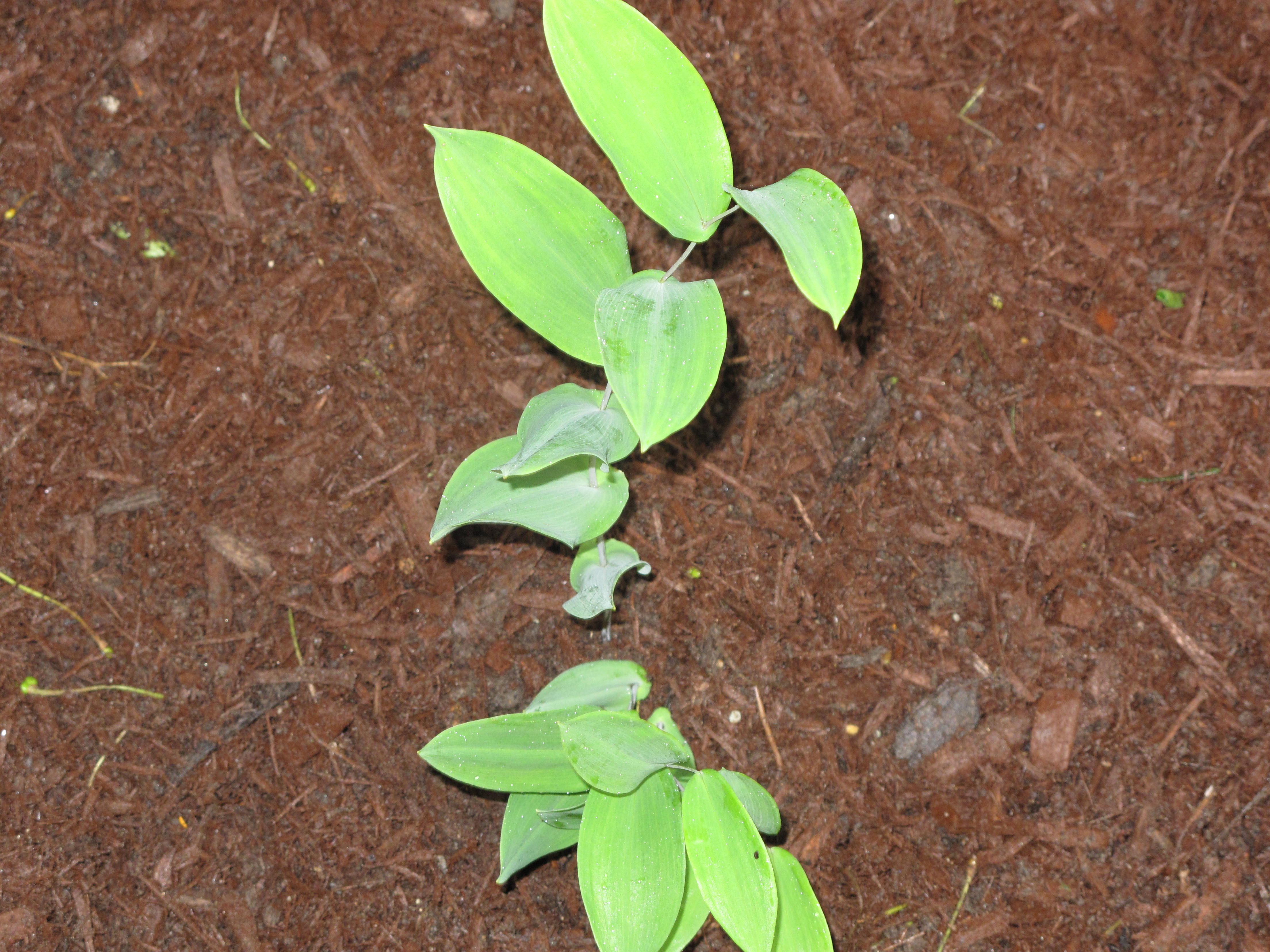
Also known as large-flowered bellwort, Uvularia grandiflora is a plant in the family Colchicaceae, native to eastern North America. It blooms in May, producing large yellow flowers. The top parts of the plant tend to bend downward due to the weight of the leaves and flowers. The light green stems are round and the leaves are perfoliate, meaning the stem appears to come through the leaves at the base.
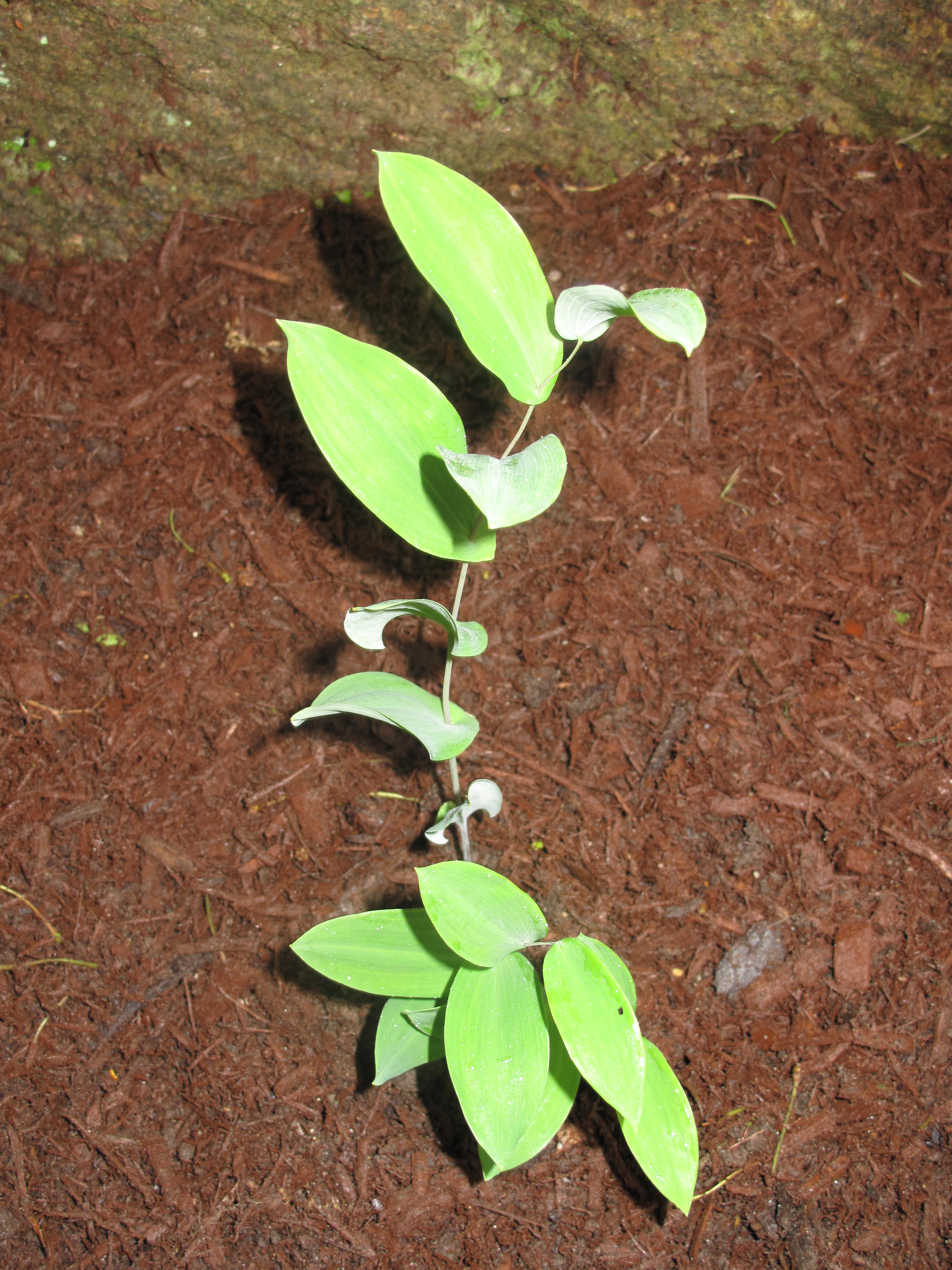
We love planting new plants into our garden. We especially like plants that are more on the rare and unique side, like the plants we just added. There wasn’t much time for us to plant more than these two new additions into our garden. Unfortunately, the rain returned. We are going back to building our ark in the meantime. Do you have any rare or unique plants that you like that you could share with us on Acorns On Glen?

This is the garden after a power gardening session that got as much as possible in the ground before the rain hit. We knew we didn’t have much time on Saturday morning to garden as the weather channels predicted a downpour of rain at some point in the afternoon. Mother Nature at her finest. We were actually able to get a lot accomplished before the first raindrops came down. Our garden probably doesn’t look any different to you than when you first saw our raised bed garden earlier this Spring. However, this time it is filled with seeds. There are zucchini and cucumber seeds planted around the wire trellis in the back of the bed, followed by green beans, turnips, golden beets and red beets. All of these seeds got planted and covered and then the rain started. We’ll be honest. We didn’t exactly meet our goal. We had also wanted to get some live plants into the ground that were scheduled for planting this weekend. These were some of the plants that are growing under our grow light in the basement. Our eggplant, cabbage, cauliflower and brussels sprouts will have to wait. Darn rain…good for the newly seeded lawn; bad for the backyard vegetable garden. Take a few minutes to see our vegetable garden work this weekend and also see our gorgeous azalea bushes in full bloom.


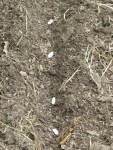


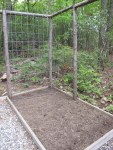


So we didn’t get all of our gardening chores completed this weekend due to the weather. Good Old Mother Nature is the hardest part of gardening. You never know if she will be too cold, too hot, too wet. The odds are sometimes better in Las Vegas. Did the weather get in your way of a full weekend of gardening?


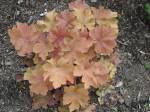


Things change so fast in the garden. I wish there was something that you could invent that would make these beautiful flowers and plants last longer. What plants and flowers are blooming in your garden right now?

This is the downside of gardening. Bugs, varmints, predators, insects. They eat your hard work faster than you can hit the back button on your browser. Squirrels, chipmunks, slugs when it’s wet…they can be fierce at times. Each Spring, however, this is the first one we deal with….the Japanese beetle. We’ll start off by giving the beetle some credit. It’s a pretty bug with its red top. When we traveled for work, United Airlines used to offer a Japanese bento box for lunch when you sat in business class. Bento is a single-portion takeout or home-packed meal common in Japanese cuisine. The bento box on United contained Asian-inspired foods and could be delivered to you whenever you were ready to eat. Every time we see the beetle, we think of the bento box and its pretty color. A pretty Asian lacquered red…a beautiful color….just like the color of the Japanese beetle. The bento box on United Airlines was a good thing. These Japanese beetles are a menace and must be destroyed.
Every year our lilies come up proud and strong. We look at them and think that they are fine for another day or two. They are good enough until we have time to come out and clean them of these beetles and their eggs that can mow our lilies down in a heartbeat. We should know better. The next day after we say or think this, we come outside and the lilies have holes all over them. Guess what did it? The beetles…these Japanese beetles. So Sunday was beetle killing day. We know this sounds rough, but they have to go for our lilies to live. So we pick them off and squeeze them between a cloth and we also brush their eggs off on the underside of the lily leaf. What a wonderful way to spend a Sunday. So we sit there saving our lilies and then remember the fact that these beetles are quite frisky. Porno beetles! Get a room!

The only thing more distressing than watching nature porn is discovering the big chunk this couple took out of the lily right below them. Sorry to all of you who have religion!
Speaking of the eggs the Japanese beetles lay, we sat there for two hours on Sunday brushing them off with a small brush. Not a great way to spend the day and also one that requires bifocals. These eggs are small and hard to see!

So this is the start of the crazy fight against the creatures that try to make our garden their meal. It’s a fight between them and us. We will tell you this….we’re determined to win. So, hopefully you are reading this before lunch because it is sort of disgusting, but the fight is on. It’s Acorns versus the critters. We will win. We are determined. We are armed. Hopefully, they will get tired before us. Because WE ARE THE CHAMPIONS….of the world garden. Are you dealing with bugs and varmints in your garden already this Spring?
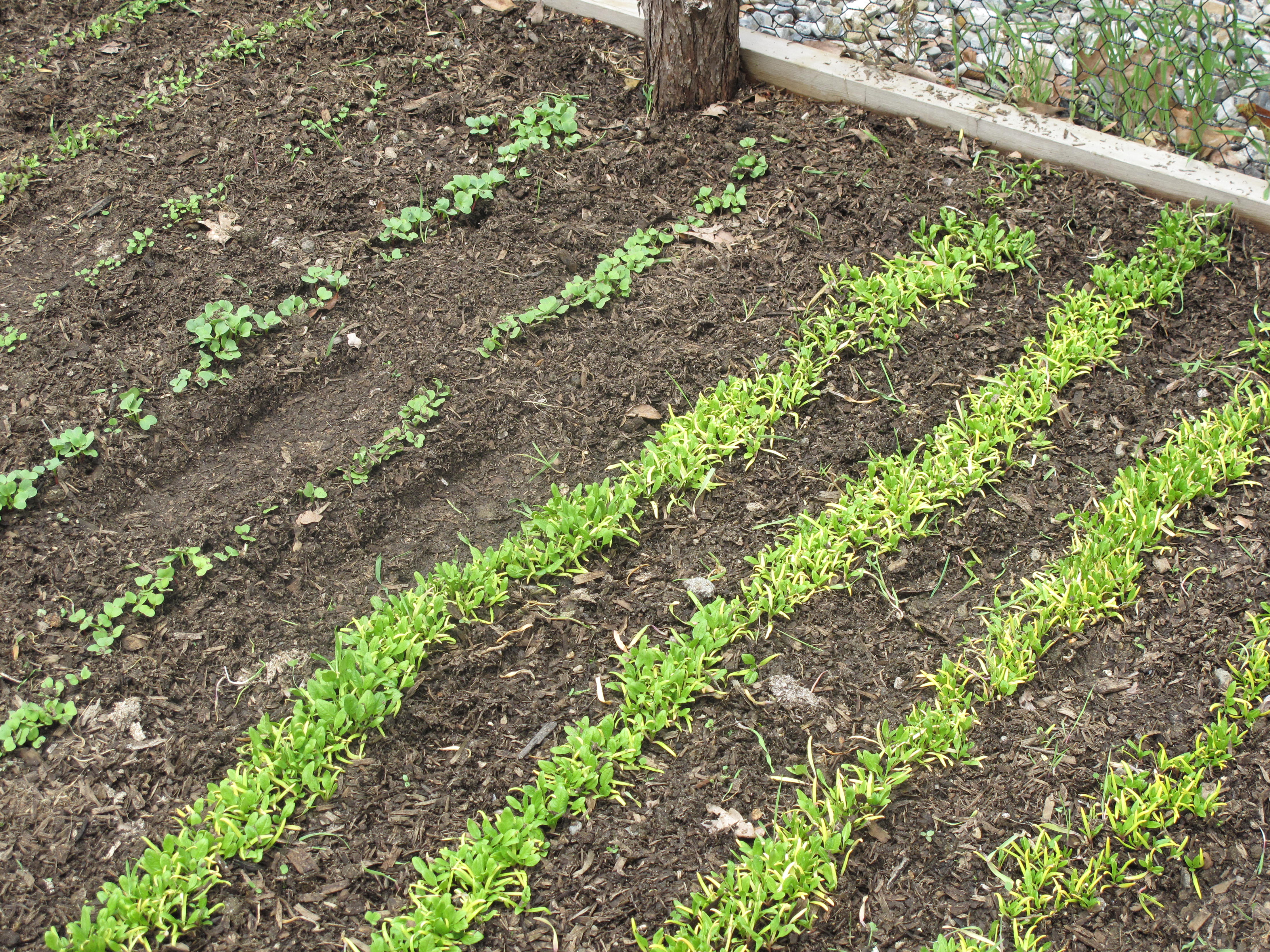
This is a garden update. Just a little update on all the planting that we’ve done over the last few months or so, both outside and inside. First off, the raised bed gardens are doing well. Above, you can see the rows of seeds that are beginning to pop out of the ground. From the lower right, the first four rows are the spinach rows that we planted on Thanksgiving 2010. Two flat leaf rows and two savoy leaf rows. Next is a row of round radishes, followed by a row of French radishes. They are the long variety of radish. Next is a row of arugula and then two rows of lettuce mix. Starting now through the end of the month, we will continue to plant more seeds and plants into the garden. Our last planting will be tomato plants given that they need to be put into the ground after the chance of frost has past.

Our tuberous begonias have shown their faces from the bulbs we planted. ‘Picotee’ is a little less bashful than ‘John Smith’. Remember him, the tuberous begonia with scent?
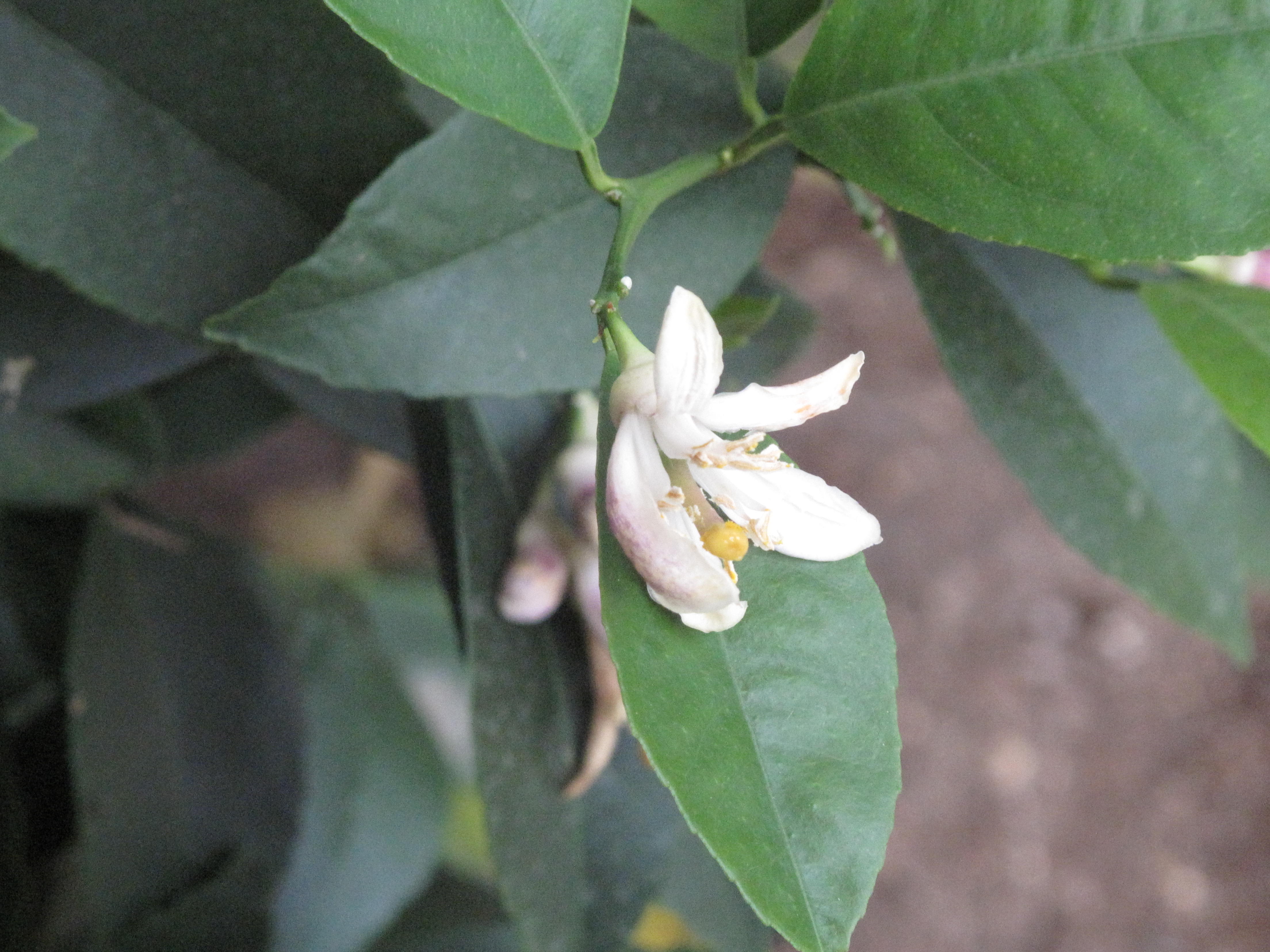
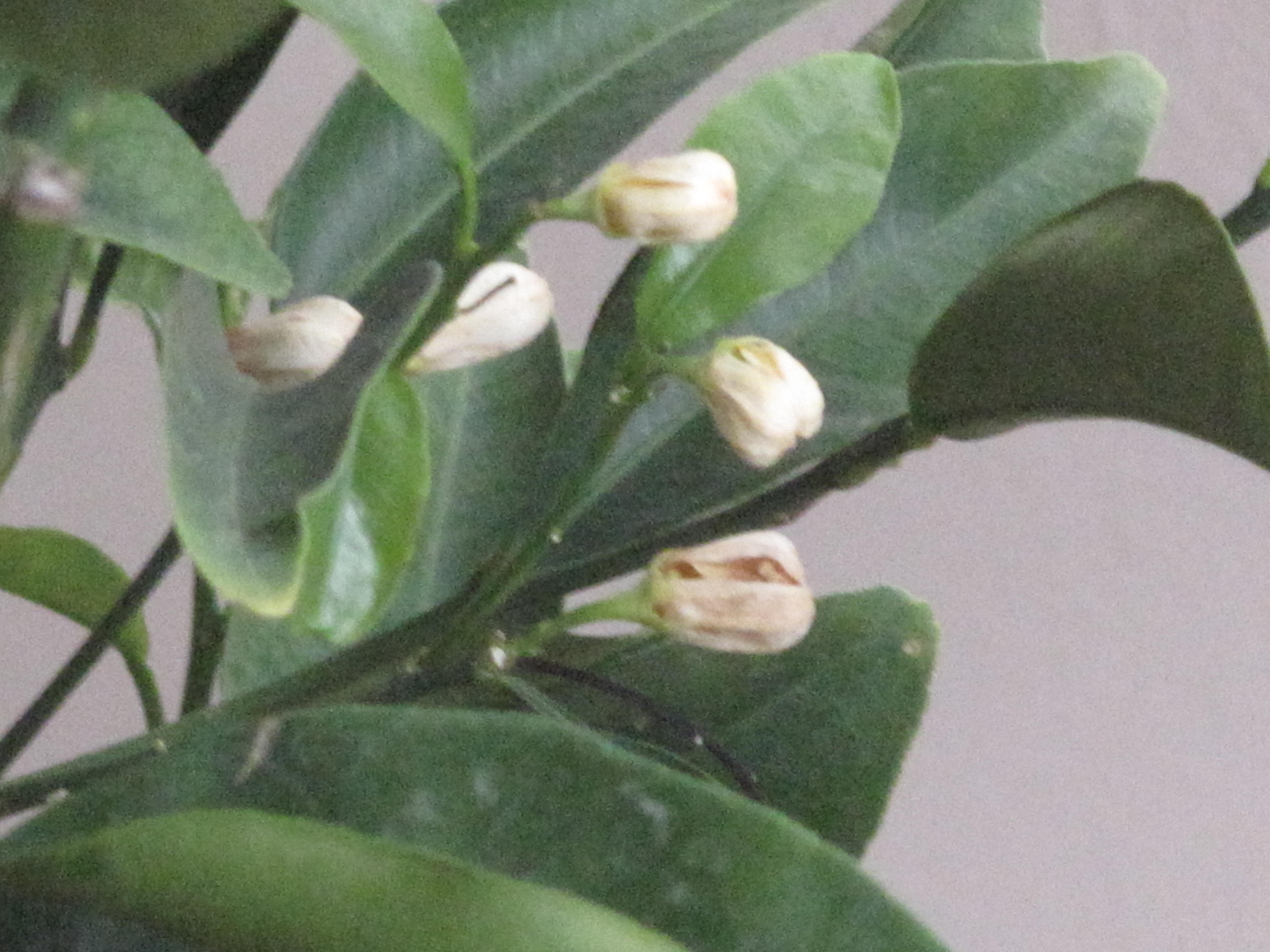
Here are the dwarf citrus trees. They are blooming so let’s hope that this means fruit is on the way. That is the Calamondin orange on the top and the Meyer Lemon on the bottom.
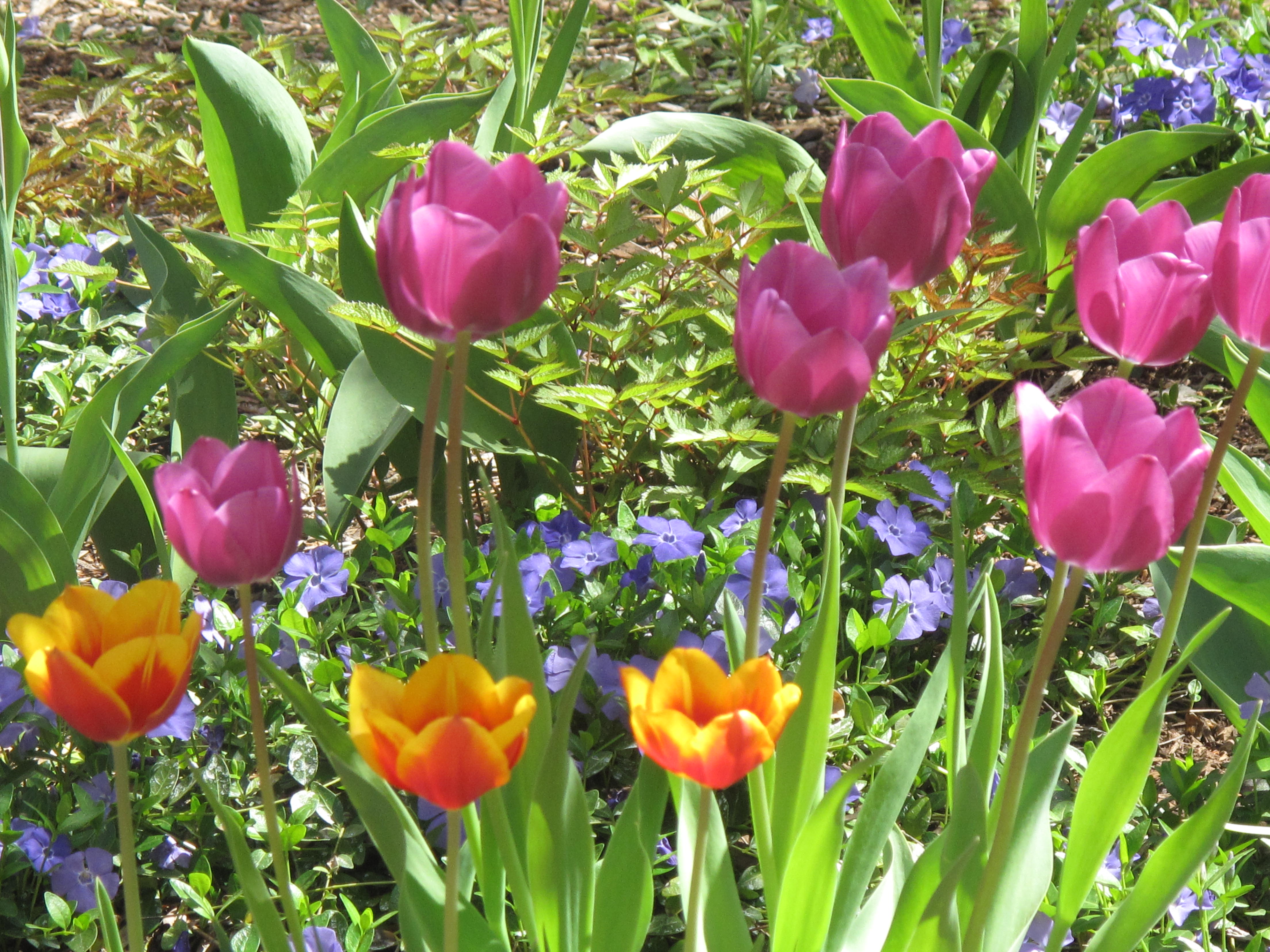
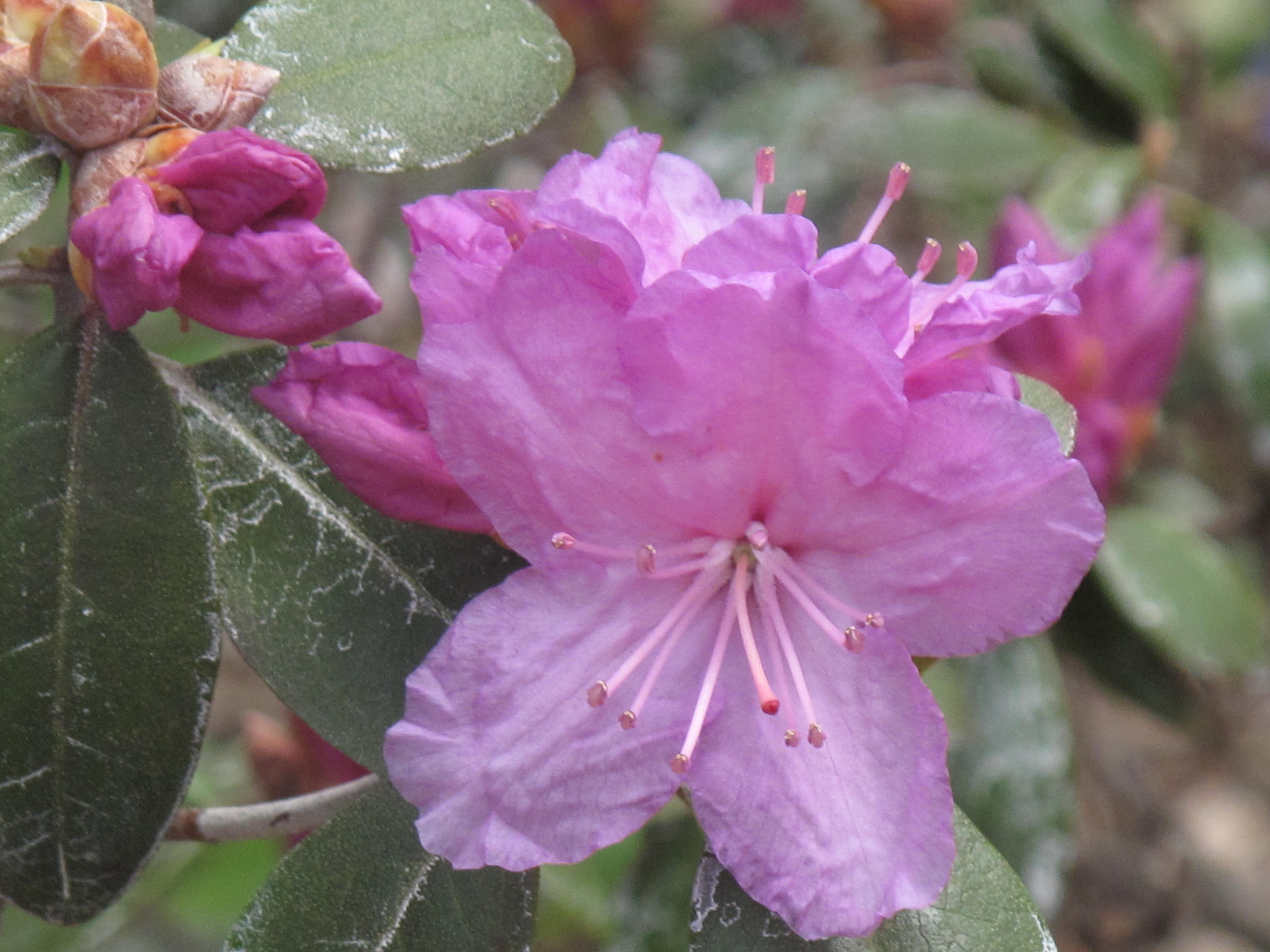
Flowers are popping out all over the yard. Here are some shots of our Tulips, our Rhododendron bushes and some Muscari armeniacum. All so pretty. We wish they would last longer.
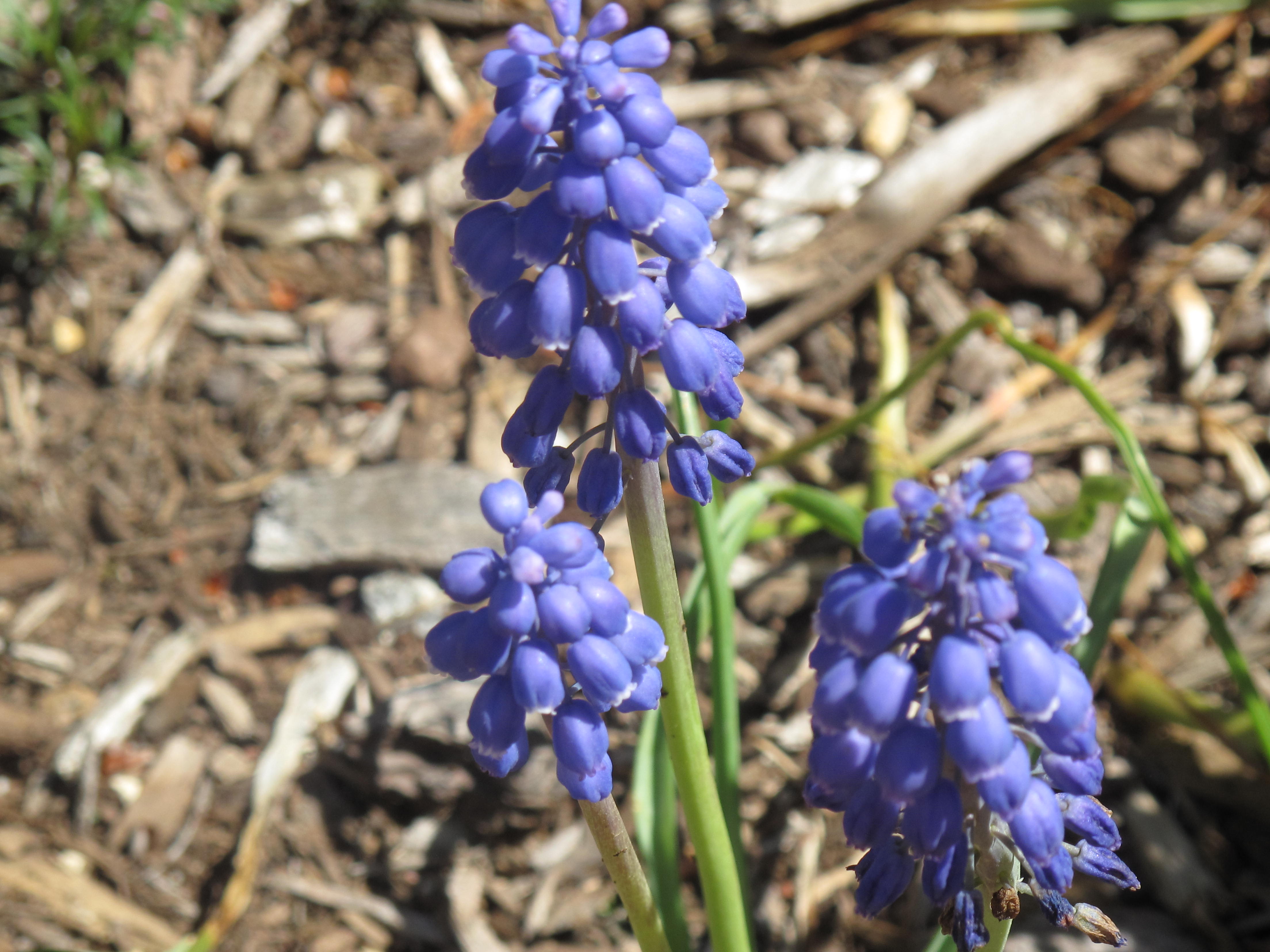
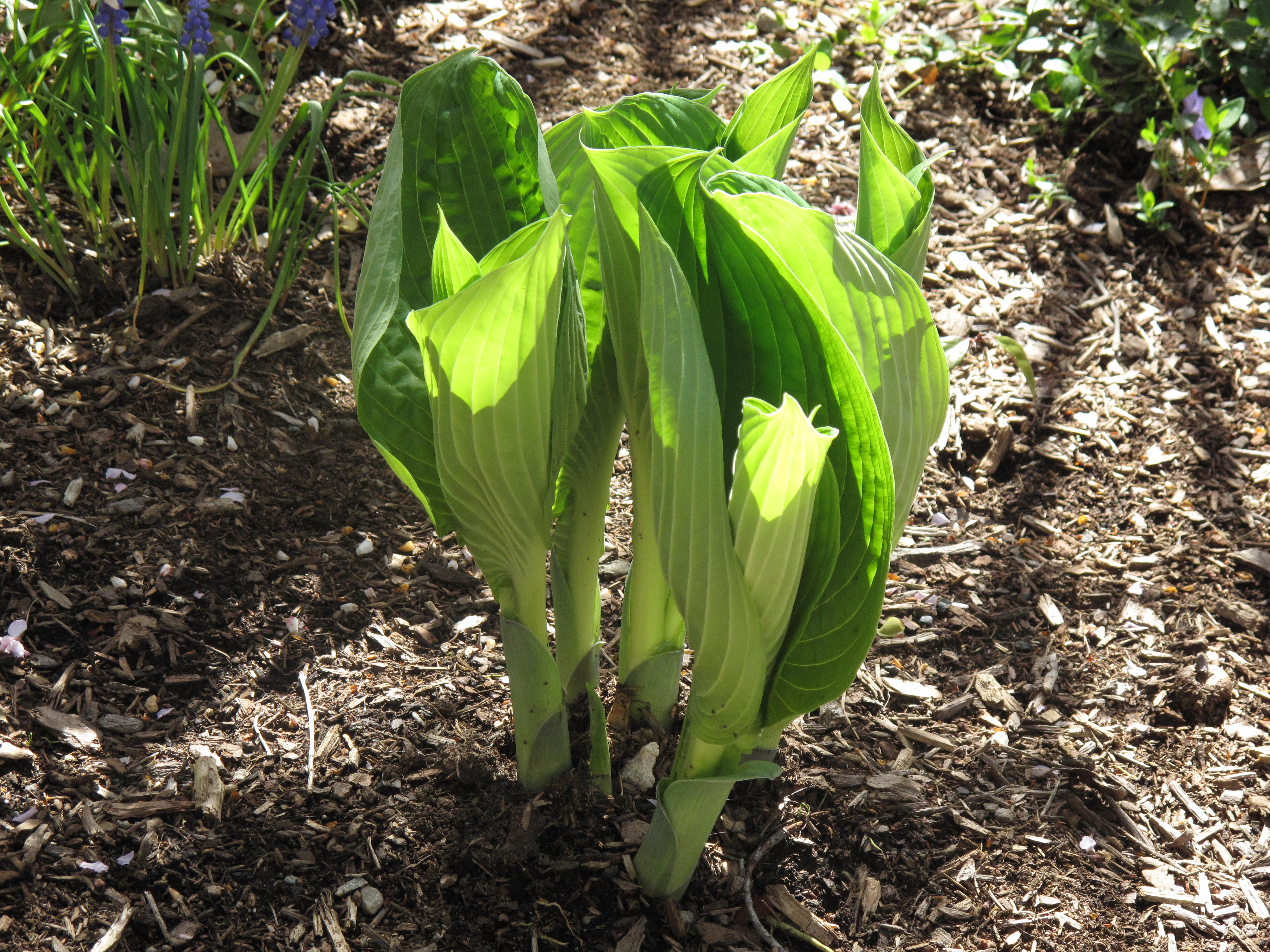
Lots of plants are also showing progress in the garden as well. Here is a Hosta getting ready to spread its wings and the slow-growing Stewartia pseudocamellia timidly saying hello.
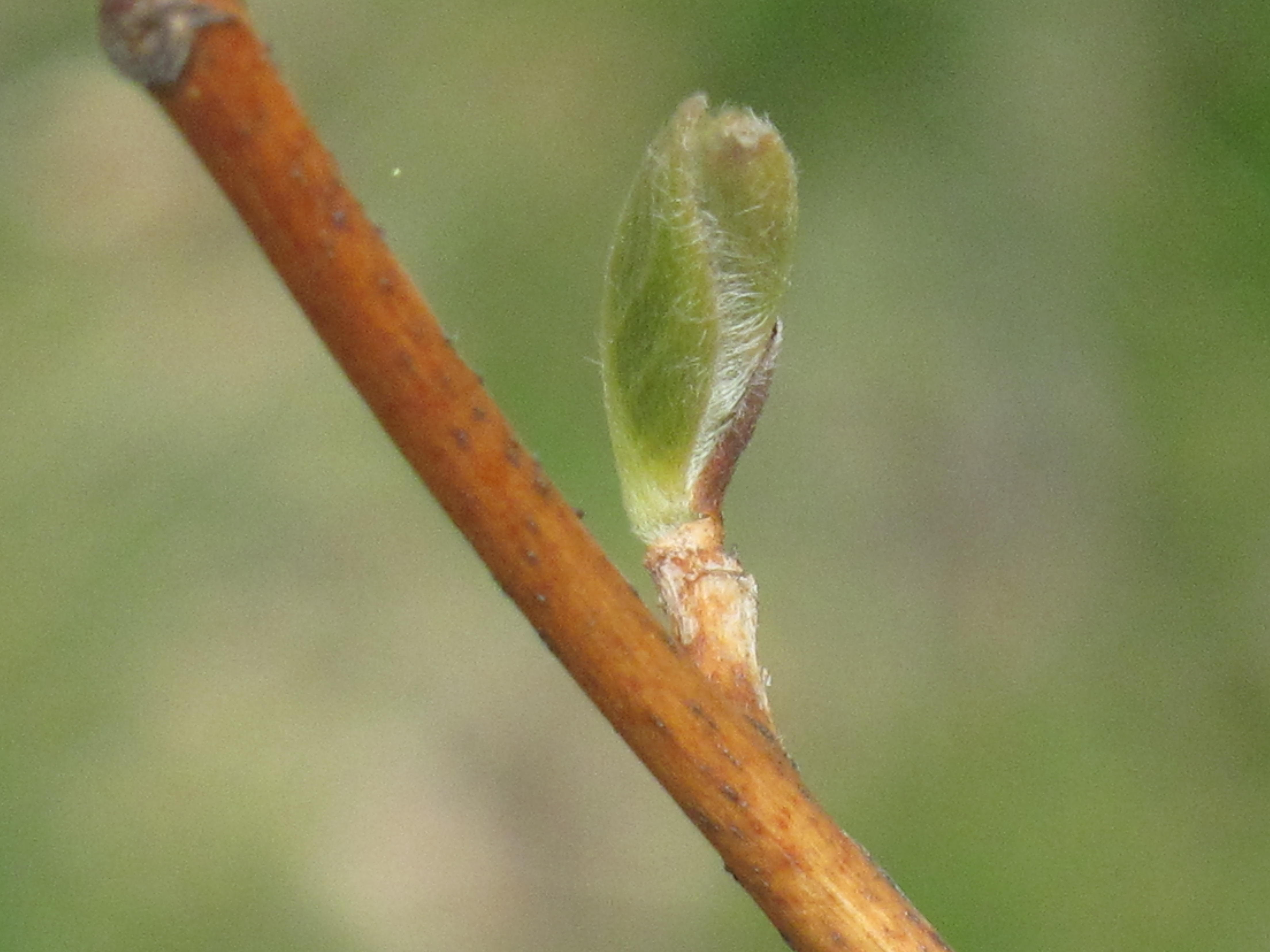
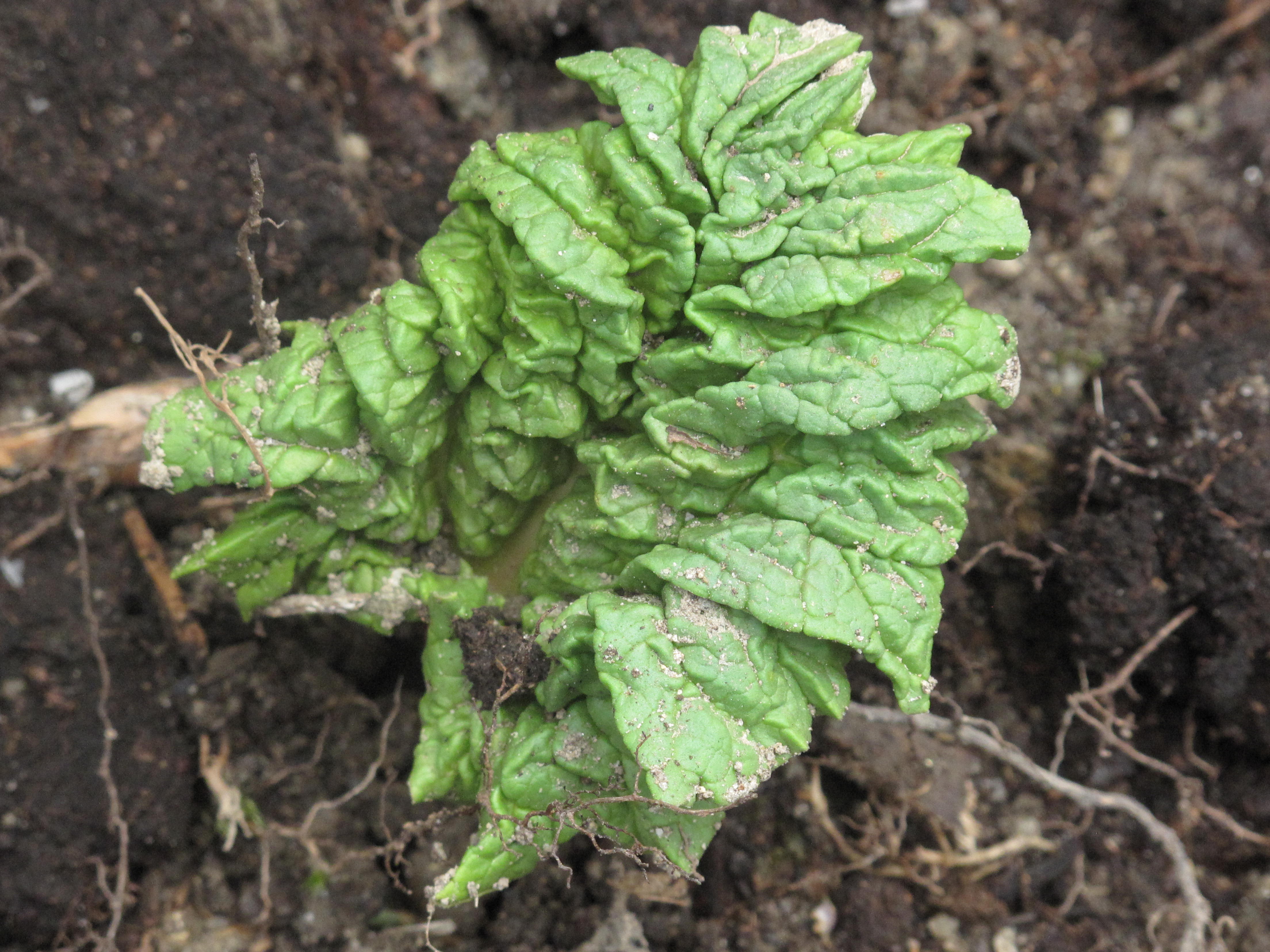
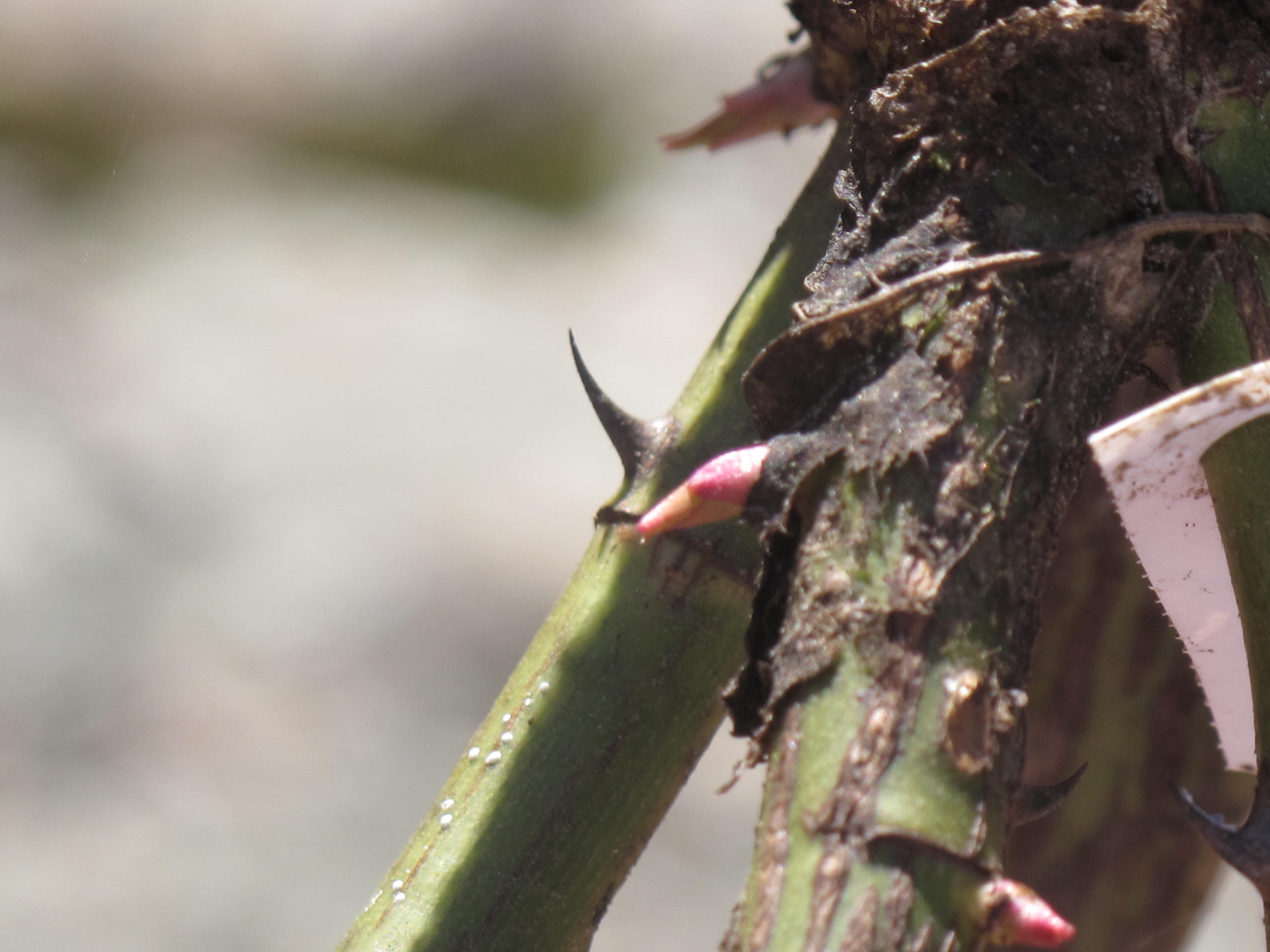
What is most interesting to us is how quickly plants that we’ve put into the ground for only a few weeks are already growing. Remember the Rhubarb and our princess tree rose ‘Grace Kelly’? They are already growing and budding.
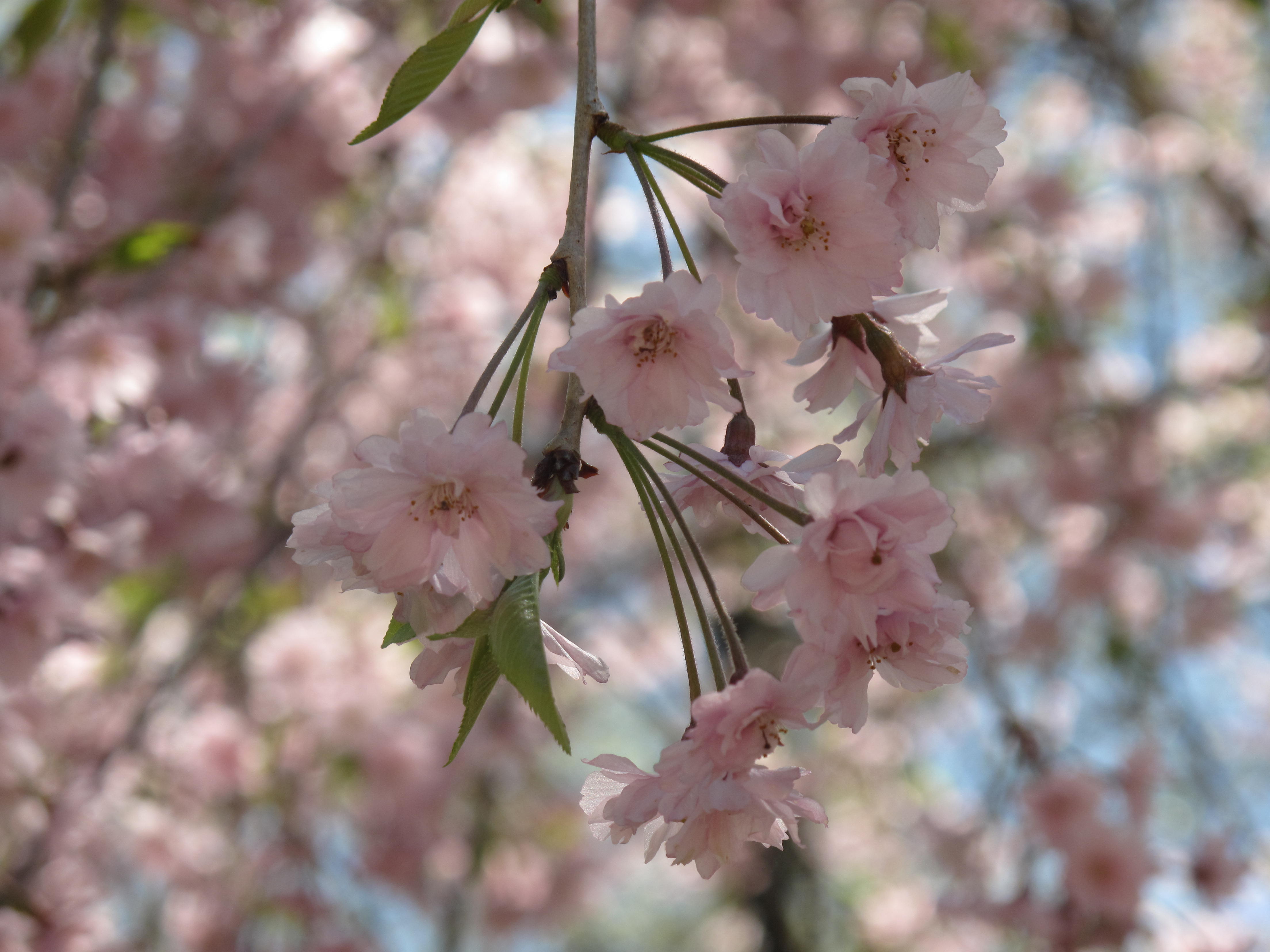
The best sign that Spring is here is the Weeping Cherry trees that we have here on Glen Road. When the blooms come out in full force, you know that the winter is most likely over. Hurray!! Here is a little glimpse of the blooms. We should hold our own Cherry Blossom Festival here on Glen Road.
So we hoped you enjoyed our little garden stroll and update. Things seem to be doing well. We are back outside now to keep things growing on schedule. From here on out, there will always be weeding, pruning, snipping, planting and picking to do to keep everything in order. How is your Spring garden growing?
 Acorns On Glen