Espalier Haircut Event

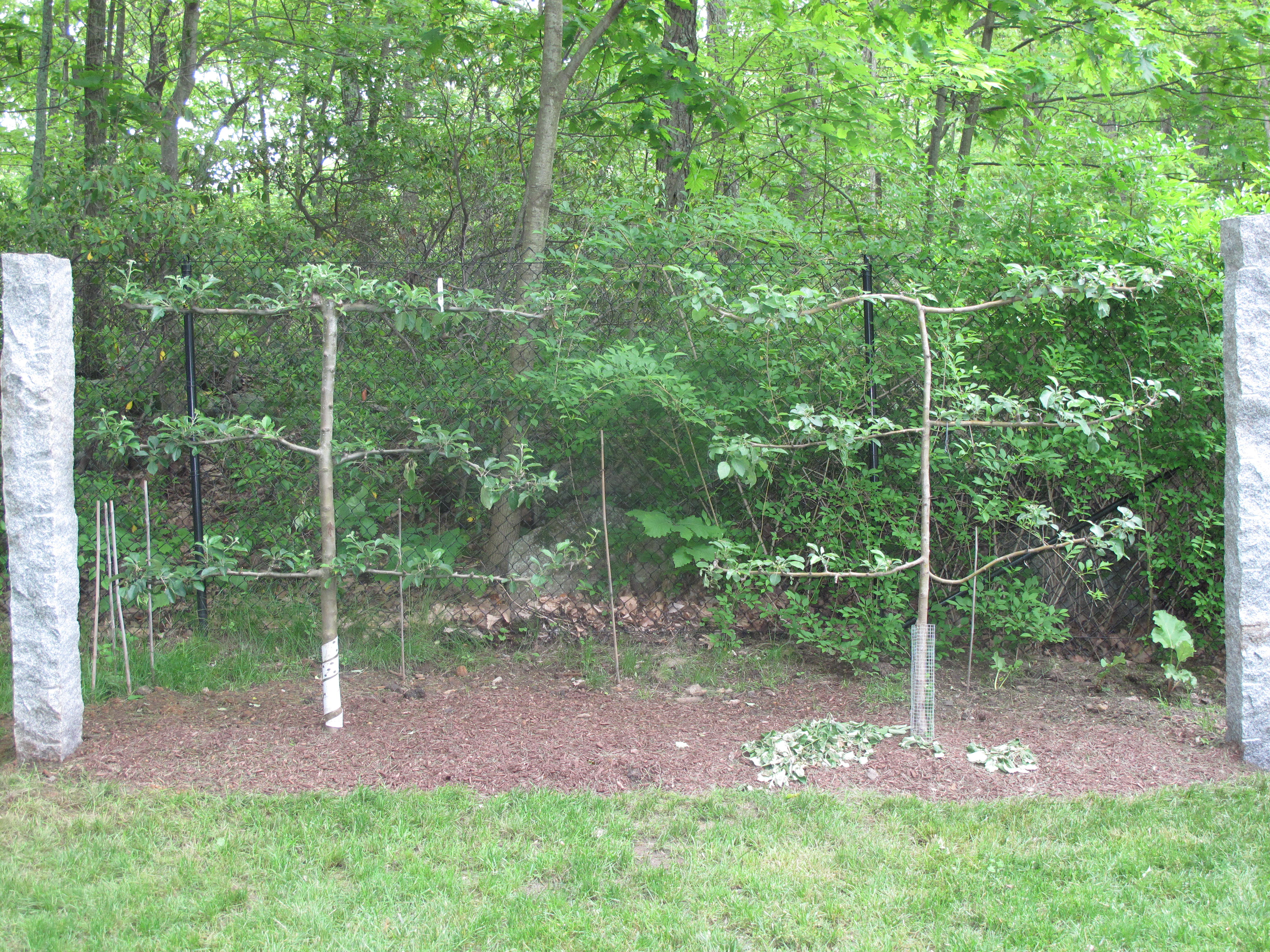
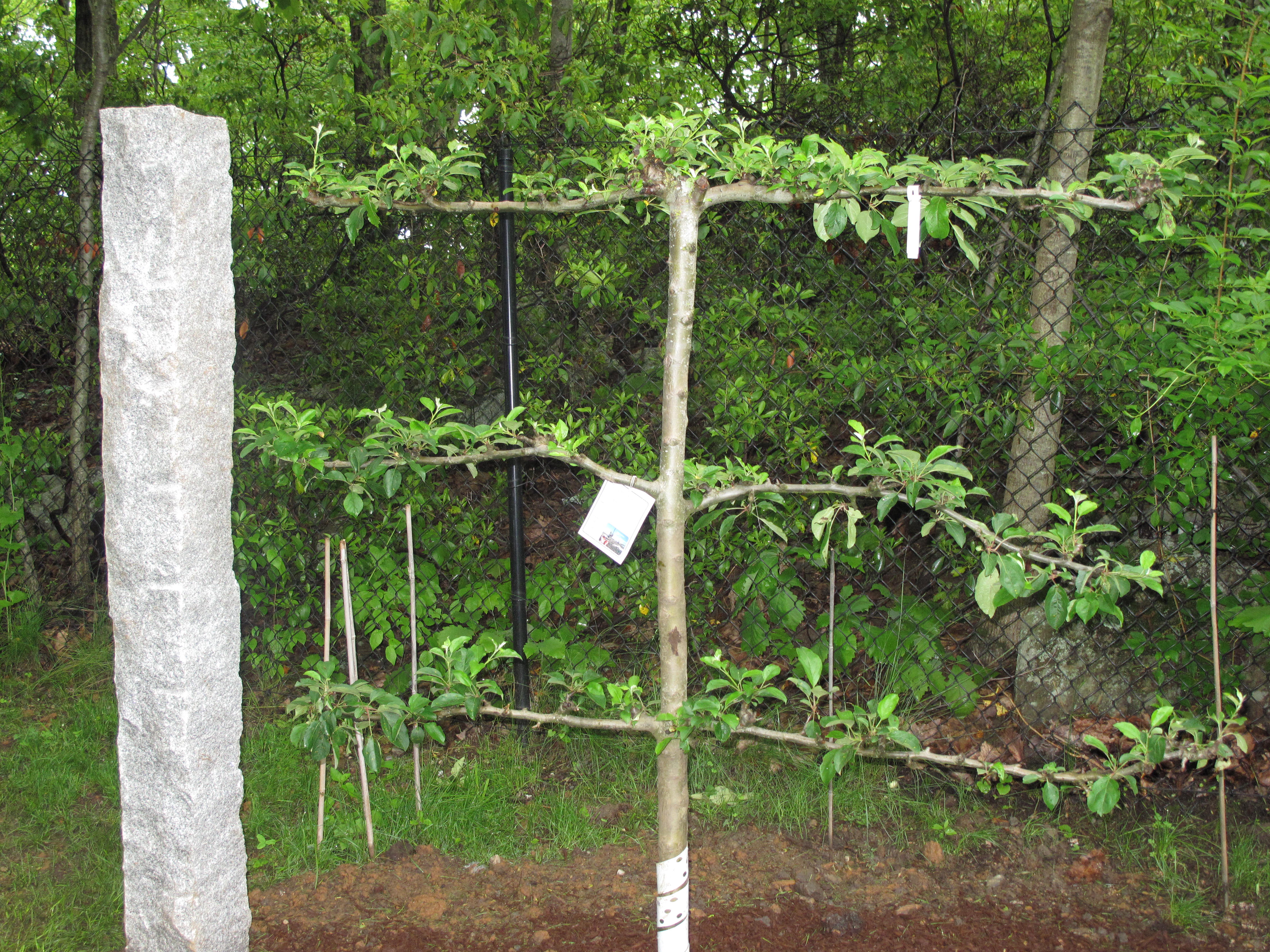
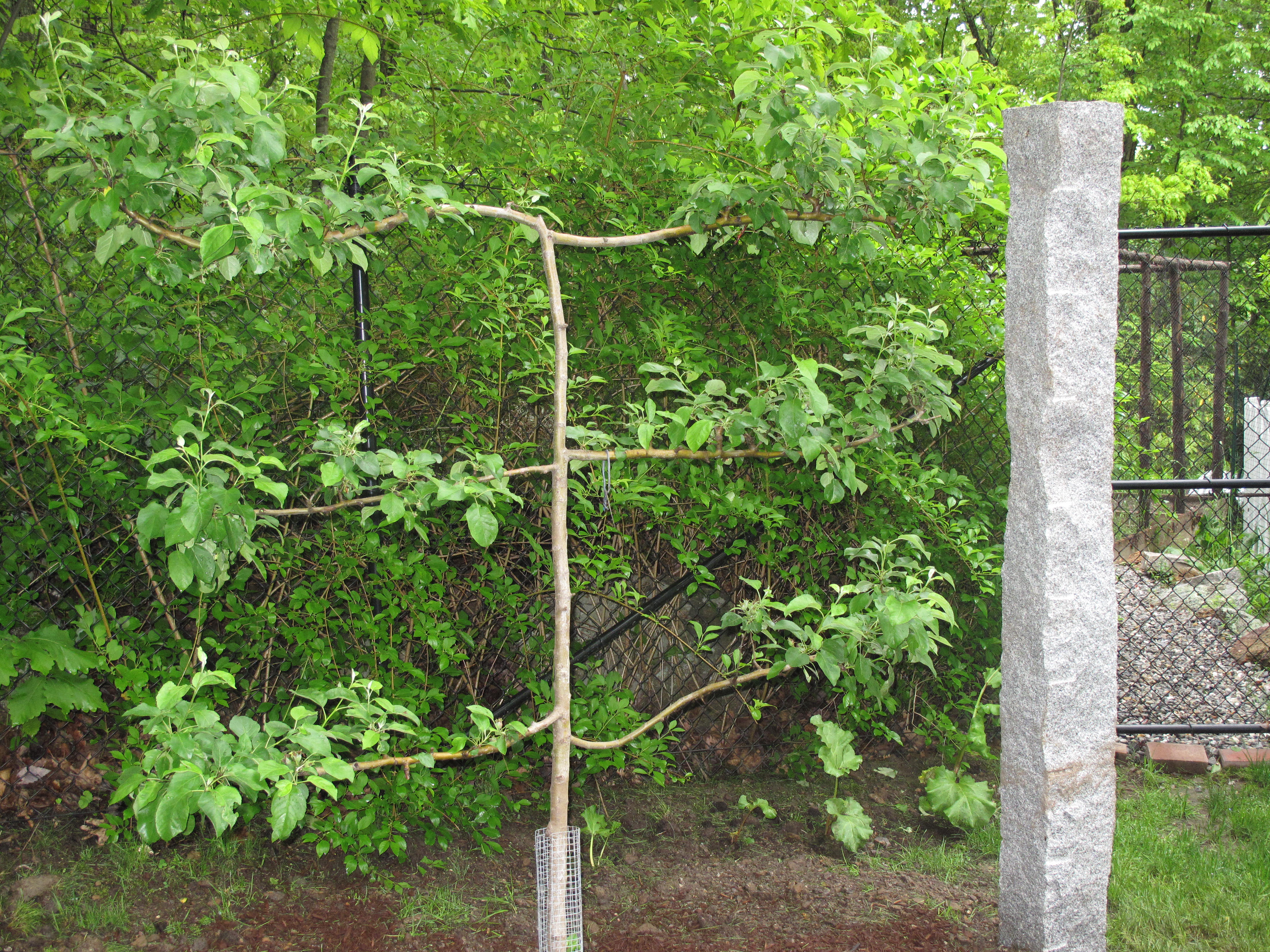
This is another story about our espalier apple grove…all two of our trees.  Earlier this week, we wrote that we noticed that our Malus ‘Liberty’ was looking a little overgrown compared to its new cousin Malus ‘Gravenstein’.  In other words, we noticed that ‘Liberty’ needed a little haircut.  So a good pruning was in order.  Our research had said that the espaliers should be pruned when dormant.  However, since we are new to the pruning process, we decided to wait to see what was growing in a crazy manner and then cut it off.  We just didn’t want to take a risk of cutting something out and realizing later that we had made a bad mistake.  You can see the finished job in the picture above….haircut complete.

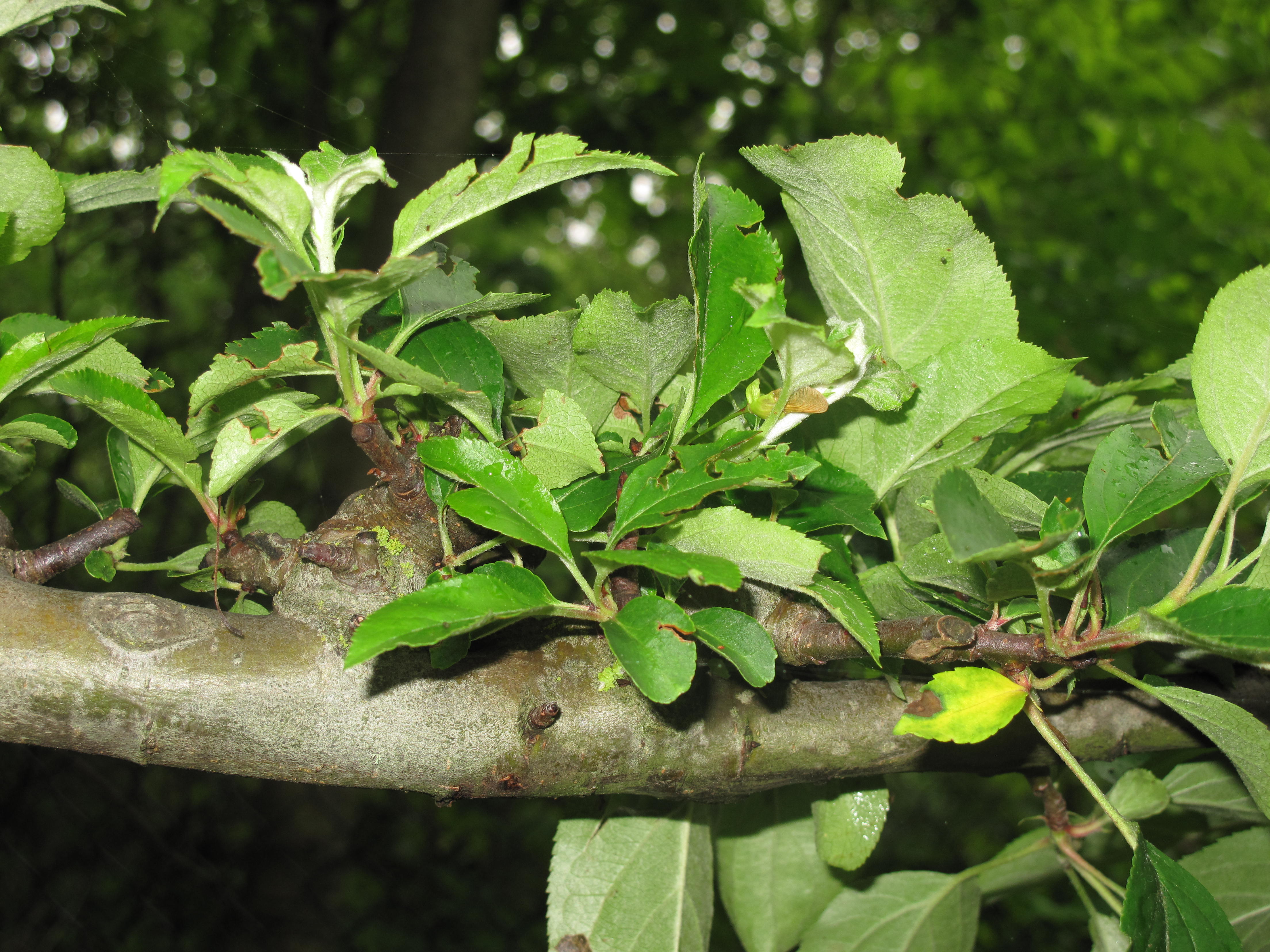
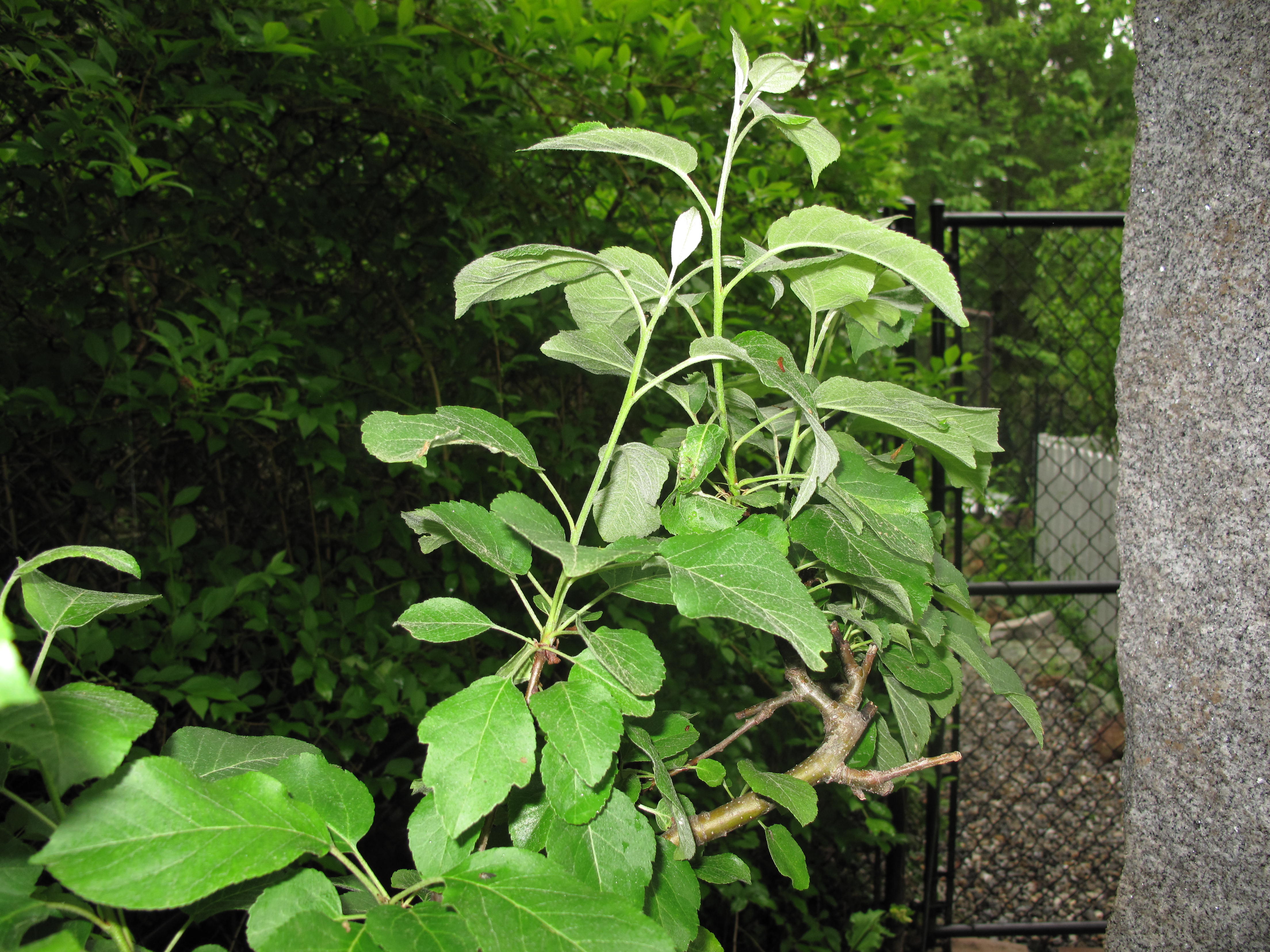
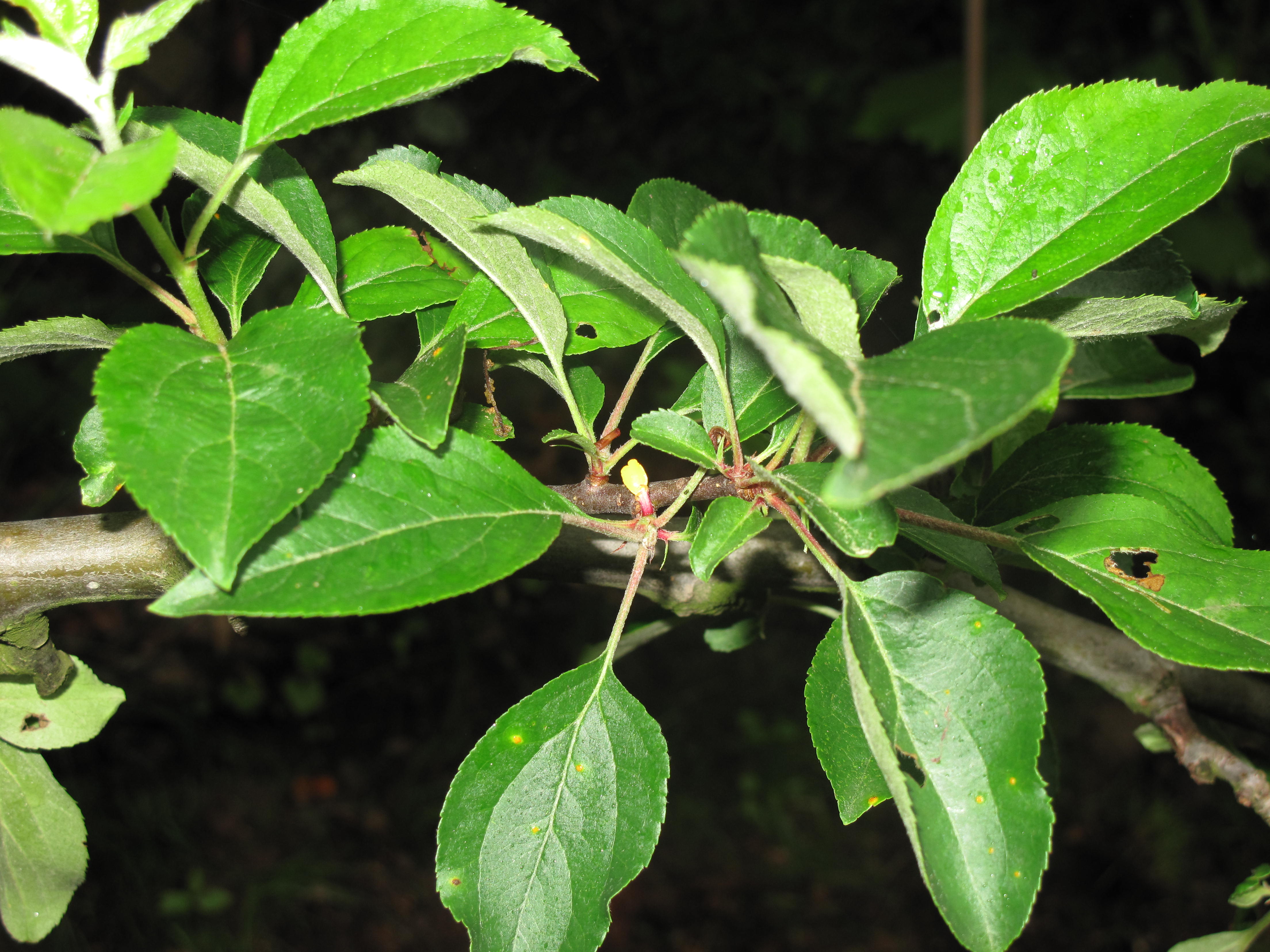
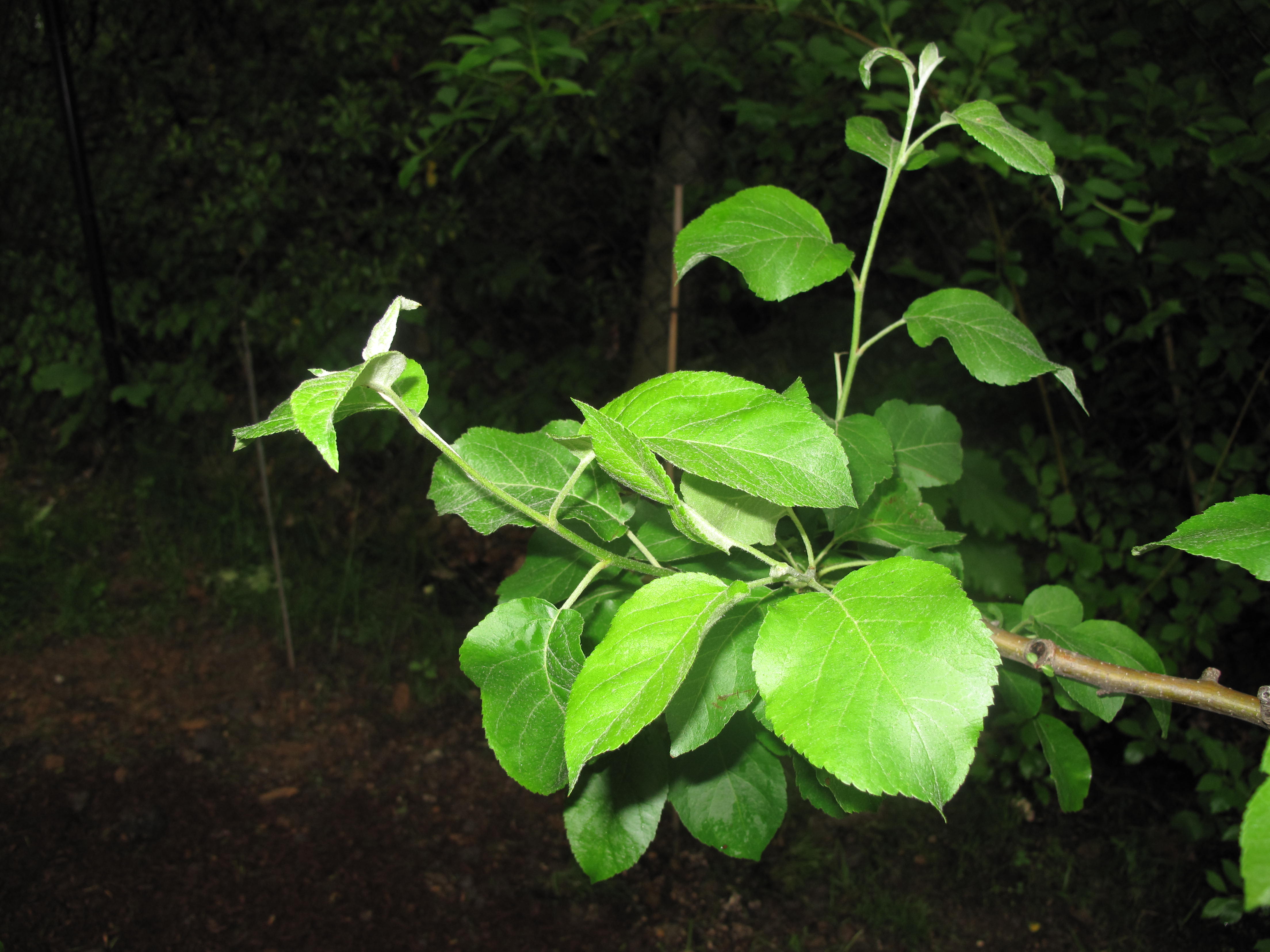
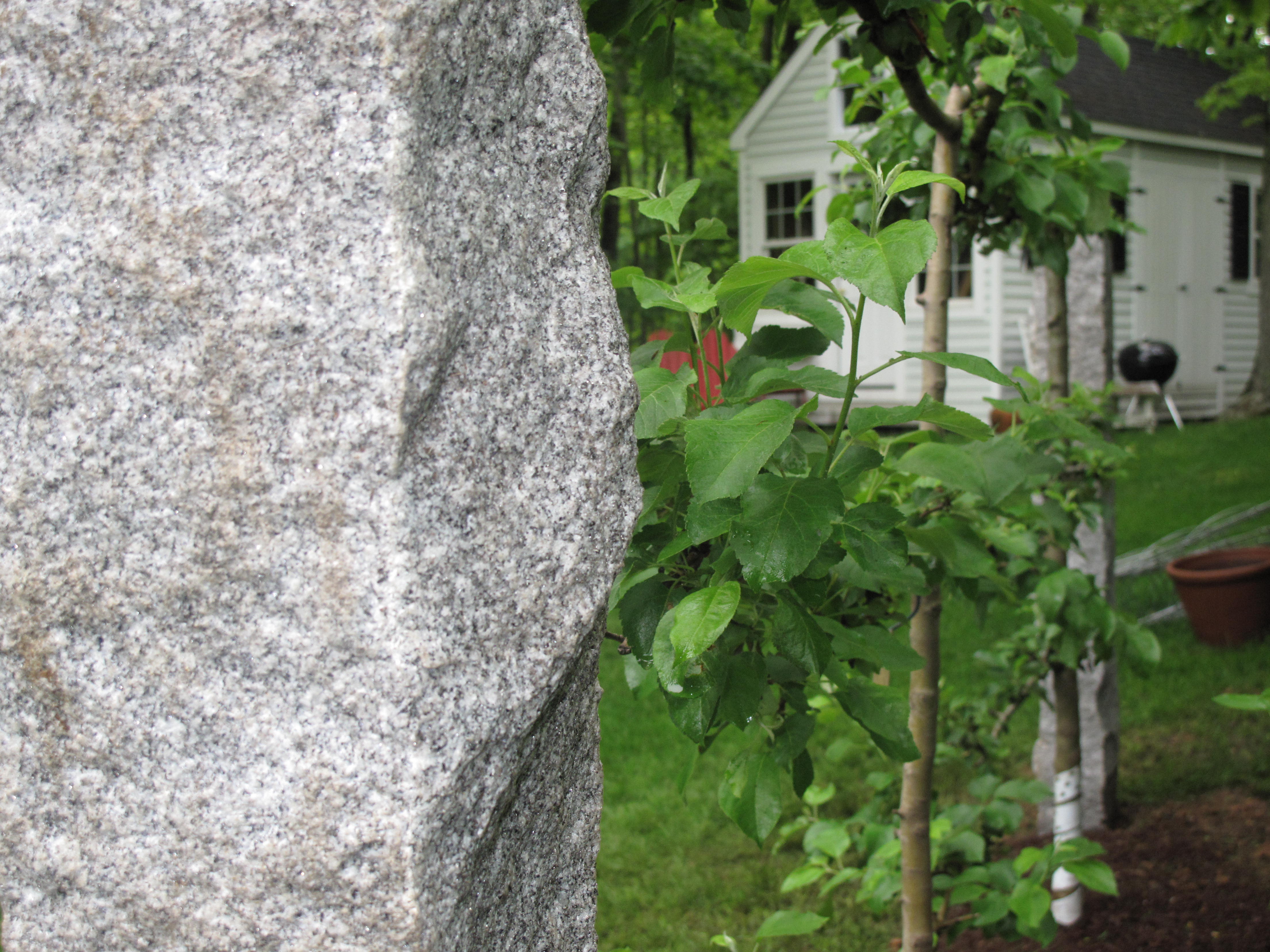
When we started our pruning job, we paid close attention to ‘Gravenstein’, which was pruned already, and compared it to ‘Liberty’, which was not.  Notice in these pictures below that ‘Gravenstein’ has leaves that are close to the branch and spurs on the branch and there are no long vertical growths coming out.  If you are asking what a spur is, the best way to describe it is a very short piece of branch where the apple tree flowers and sets fruit.  Pruning encourages the tree to grow more of these fruiting spurs by removing competing suckers and unproductive wood.  A sign of  a well-trimmed espalier is the close-growing leaves without any vertical growth.  ‘Gravenstein’ looked like this.  However, ‘Liberty’ was not in such good shape.  You can see it better in these pictures.

See the growth coming out of the ‘Gravenstein’ spur and main branch?  The leaves are close to the spur and branch and never more than about two inches long.

Here’s crazy cousin ‘Liberty’.  See the vertical growth coming out of the branch.  We pruned all of these vertical baby branches out and only kept close growing leaves near the spurs and branches to promote fruit growing.

Another close up of the foliage on ‘Gravenstein’.  See how tight and close the leaves are?

Another shot of ‘Liberty’.  It doesn’t take much of an expert to see the long growth that needs to be cut off.  Fortunately, none of the growth that needed to be cut off had any baby apples attached.

After pruning all the vertical growth off of ‘Liberty’, both espaliers looked pretty much the same with some beautiful leaves growing not more than two inches off of the main branch or growing spurs.  All it took was some patience, some pruning shears and a barber-like mentality.  No blow dry was necessary.  Are you in the process of pruning any trees in your yard? 

News From The Garden

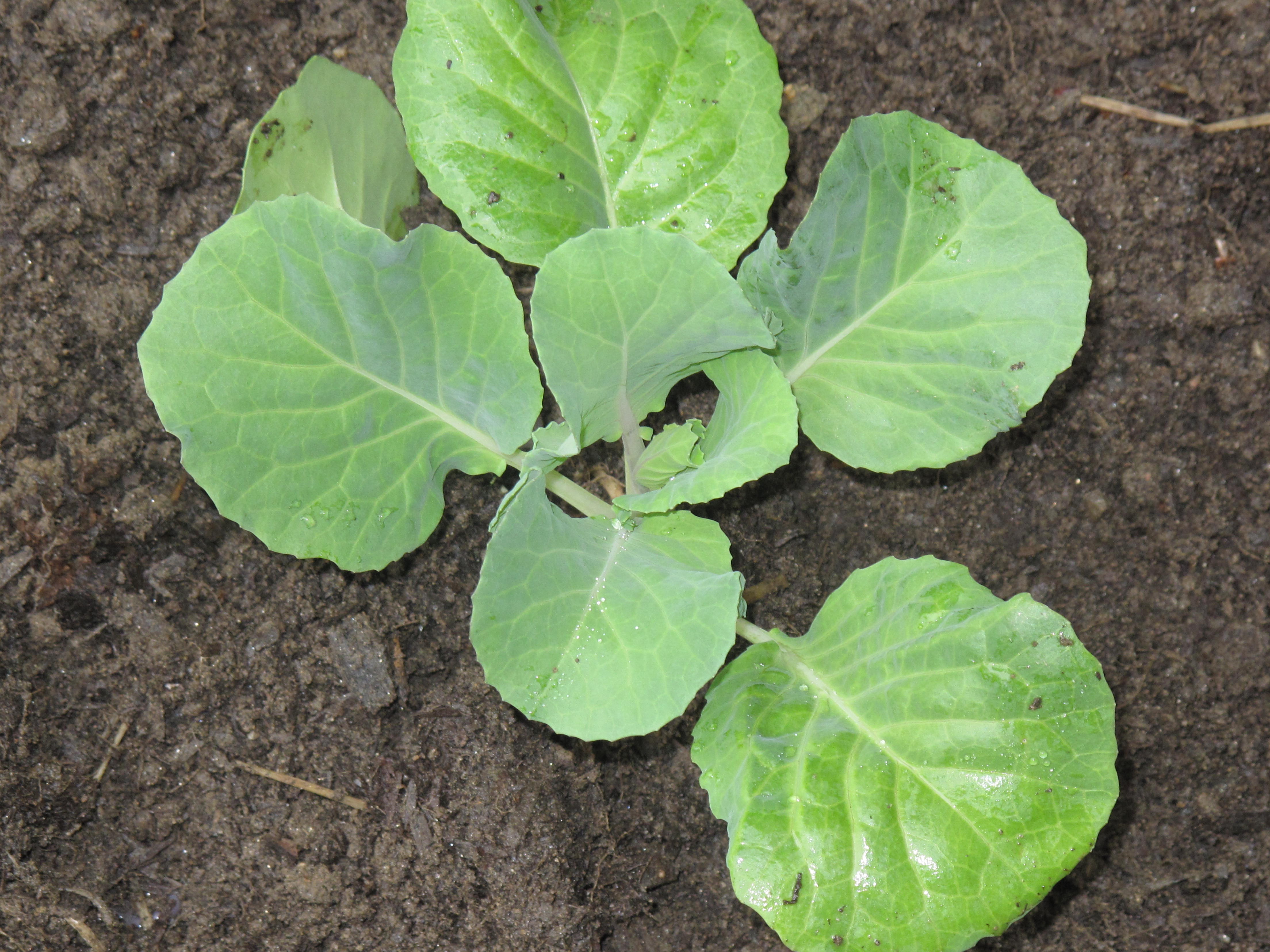
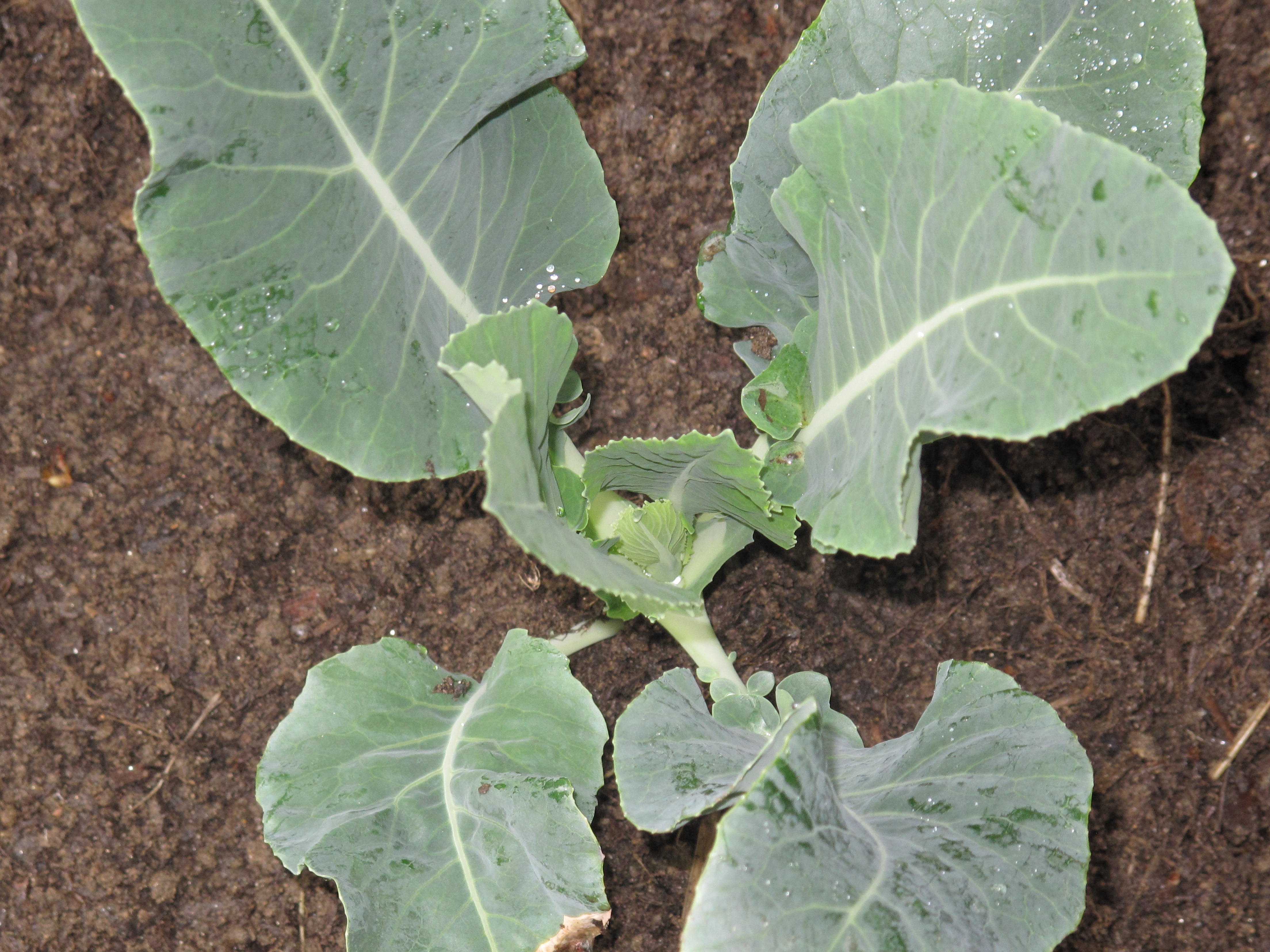
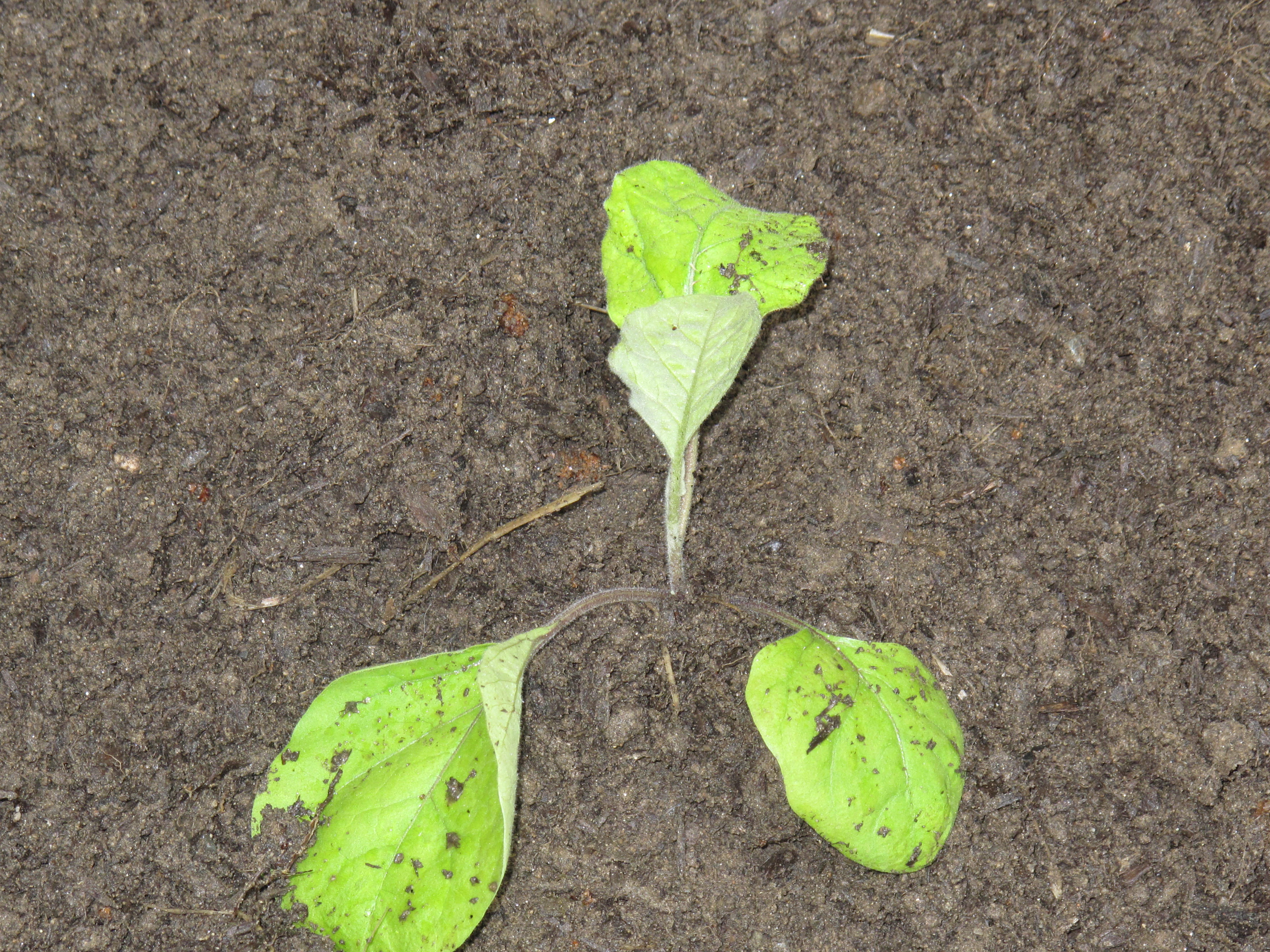
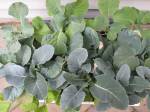
This is the progress in the vegetable garden this weekend.  Not much went on, but with all the rain we have been experiencing, a little bit of work is a lot.  We had laid a tray of vegetable plants out last week that were grown under our grow light in the basement, but the rain stopped us from putting them in the ground.  This was probably a good thing as it gave the young plants some time to get used to the weather outside and begin to adapt to the new environment.  Little did the young plants know that they were acclimating to a monsoon-type environment given all the precipitation that occurred last week.  Finally, there was a small break in the weather and we rushed out to put the plants into the soil.  Here is a little taste of what went into the ground.

First, a little cabbage.  We love cabbage and have a great soup recipe that is simple and delicious.

Let’s not forget our cauliflower.  Lots of cauliflower macaroni for our Brooklyn Italian Grandmother to cook.

Are we the only ones that like brussels sprouts?  Boiled and then mixed with salt, pepper and butter.  Simple heaven!

Last, but not least, a spindly looking eggplant.  Hope it makes it!!  We have so many eggplant recipes it is crazy.

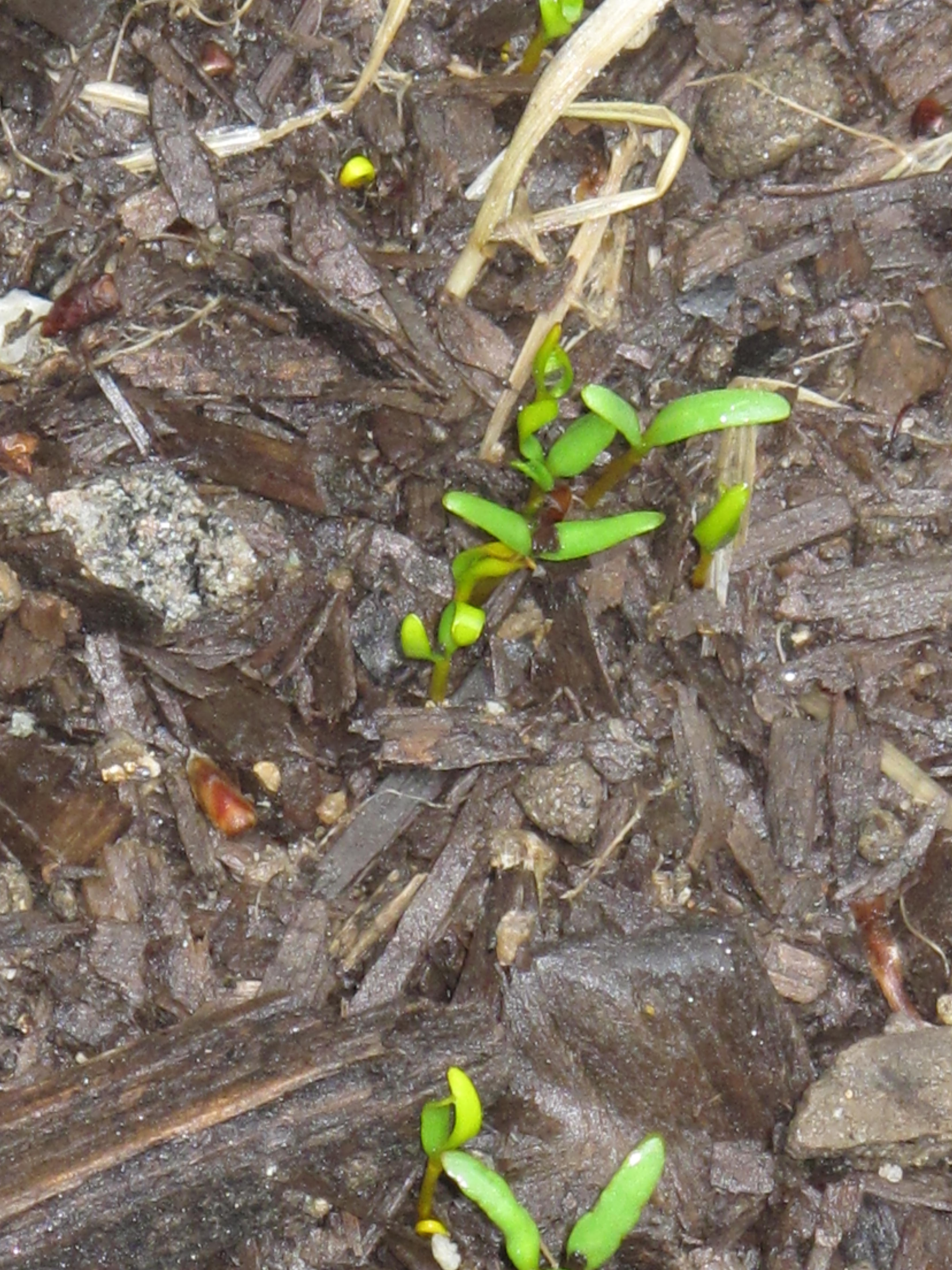
The rest of the garden is doing well.  We couldn’t believe that some seeds that we planted last week were already sprouting.  Here are the turnips peeking their heads out of the dirt.

Here are some beets that shot up too.  These are the golden variety.  Does this mean they are tougher than their dark red cousins?

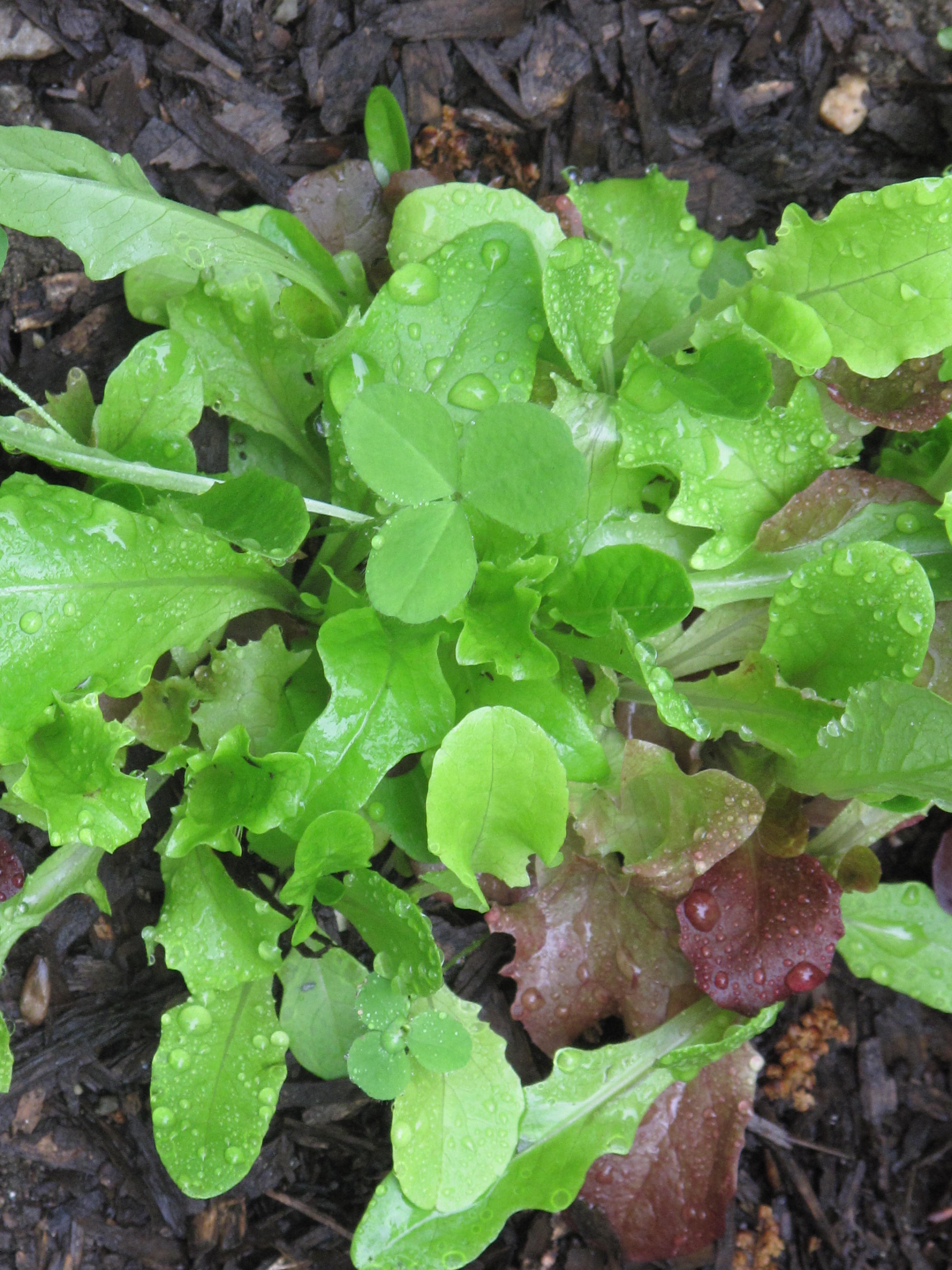
Our lettuce is almost ready for some picking.  If we get a little hot weather, it should grow quickly and be in a salad bowl in no time.  Doesn’t it look good with the raindrops stuck on the leaves?  A little vinegar, some oil and a fork….that’s all we need when the lettuce is ready.

So not a great week for gardening-flowers or vegetables, but we guess Spring is known for lots of wet weather, right?  The only thing that really benefited from all this rain was our newly seeded front lawn.  So there you have it…we’ve found at least one benefit from all this crazy weather.  For all of you gardeners out there, isn’t it a great feeling to see all your hard work finally grow into something edible?  To see our seeds sprout or our grow light plants get put into dirt is a very proud and satisfying feeling.  It makes all the hard work seem worth it.  How is your garden growing and did you have crazy weather that set you back a bit? 

Espalier Support Group

This is the new support system for the espalier apple trees.  Remember the first time you met the espalier apple trees?  A lot has happened since that time.  First off, we noticed that one of the apple trees, Malus ‘Spartan’, did not fully come back this year from the hard winter we experienced.  Although one side of the tree grew leaves, the other side had died.  We then made the painful decision to take the tree out and replace it with a new one.  However, when we went back to the nursery to buy a replacement, the nursery said the tree was guaranteed for a year and we received a free replacement.  How cool!!  So meet our new tree, Malus ‘Gravenstein’.

Gravenstein is a variety of apple native to Gråsten in South Jutland, Denmark.  The variety was discovered in 1669 as a chance seedling, although there is some evidence that the variety originated in Italy and traveled north.  The Gravenstein was introduced to western North America in the early 19th century, perhaps by Russian fur traders, who are said to have planted a tree at Fort Ross in 1811.  The Gravenstein apple has a sweet, tart flavor.  It is picked in July and August and is heavily used as a cooking apple, especially for apple sauce and apple cider.  It does not keep well, so it is available only in season.  In addition, their short stems and variable ripening times make harvesting and selling difficult.  The skin is a delicately waxy yellow-green with crimson spots and reddish lines, but the apple may also occur in a classically red variation.  Our older tree, Malus ‘Liberty’, is proud to meet its younger cousin.

The other change in the espalier apple tree grove is that we began to realize that Malus ‘Liberty’ had branches that were beginning to bend.  If you look at the picture above, you will see the bottom limb is bent or crooked.  In order to fix this, we worked with a landscaper to embed two granite posts on either side of the trees.  Although not completed yet, we will be running wire from one post to the other in three separate rows and tie each of the limbs to the wires for support.  During the summer, we will tighten the ties that will move the limbs closer and closer to the wire and therefore making each limb straighter and straighter.  The granite posts also give the area quite an architectural look and feel.

So a lot has been happening in the espalier apple tree grove….if you can call two trees a grove.  We noticed that Malus ‘Liberty’ needed a little leaf trim so that will need to be done.  After that, we will wait it out and hopefully get a few apples from the trees later in the Fall.  Let’s keep our fingers crossed.  Do you have any fruit trees in your garden and how do you care for them? 

Chocolate Love In A Bowl

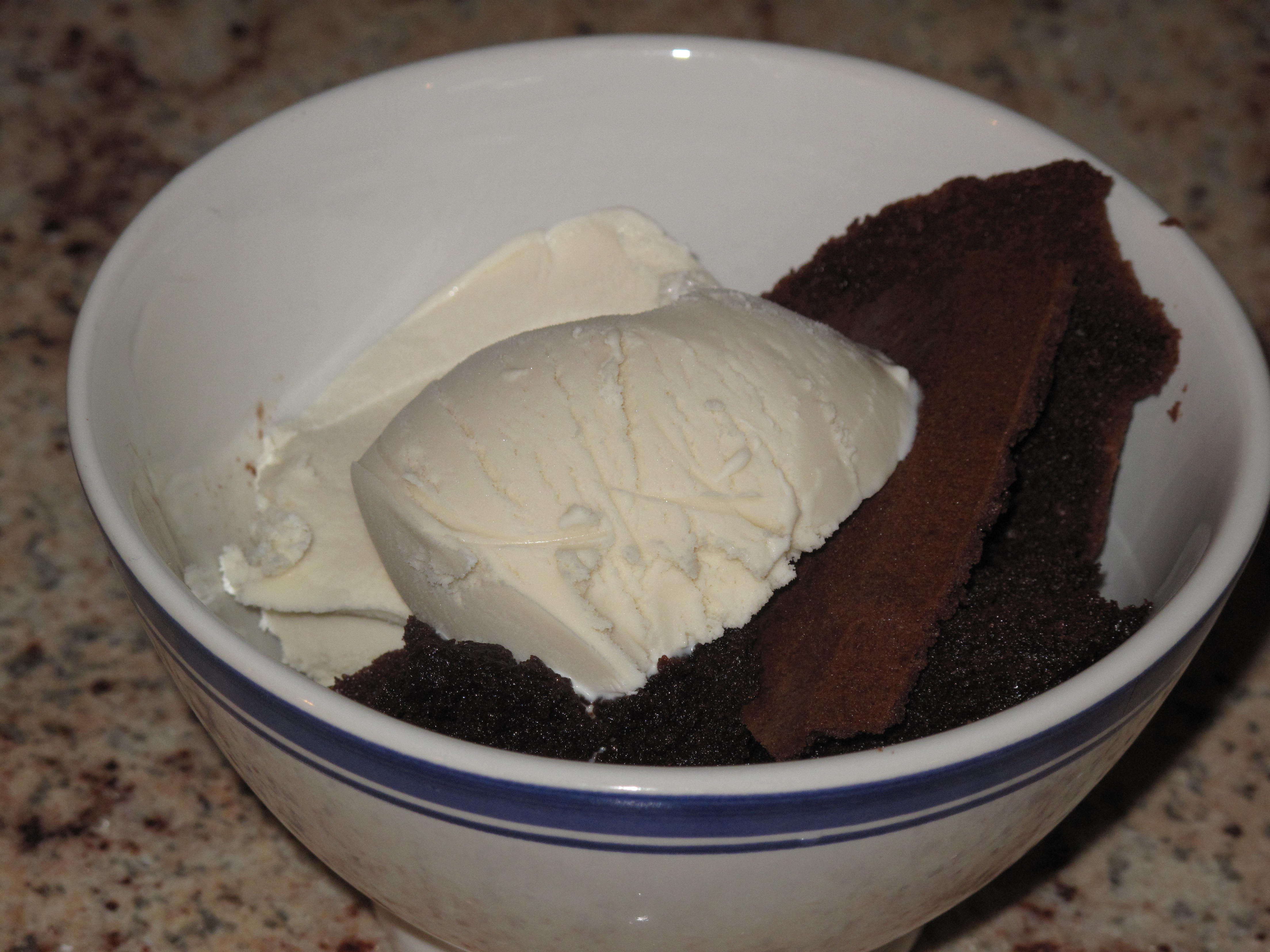
This is heaven in a bowl.  Warm, gooey chocolate with a blast of vanilla ice cream.  What could be bad with a dessert like this?  My answer:  Nothing!  If you are a chocolate lover, this dessert is perfect for you.  It is also pretty easy to assemble and bake which makes it a great choice when you don’t have a lot of time.  I’ve made this dessert for a while and I think I got it from an Anna Pump recipe.  Anna Pump is a wonderful chef, cookbook author, baker and innkeeper famous for her Hampton’s bakery, Loaves & Fishes.  She is not what I would call a “famous” food personality like a Martha or an Emeril, but she is often mentioned by many famous foodies as one of their inspirations.  If you don’t know about her, I encourage you to buy one of her cookbooks and enjoy one of her recipes.  She knows how to cook.  One taste of this Brownie Pudding and you’ll understand what I’m saying. 

Ingredients:

  • 1/2 pound (2 sticks) unsalted butter, plus extra for buttering the dish
  • 4 extra-large eggs, at room temperature
  • 2 cups sugar
  • 3/4 cup good cocoa powder
  • 1/2 cup all-purpose flour
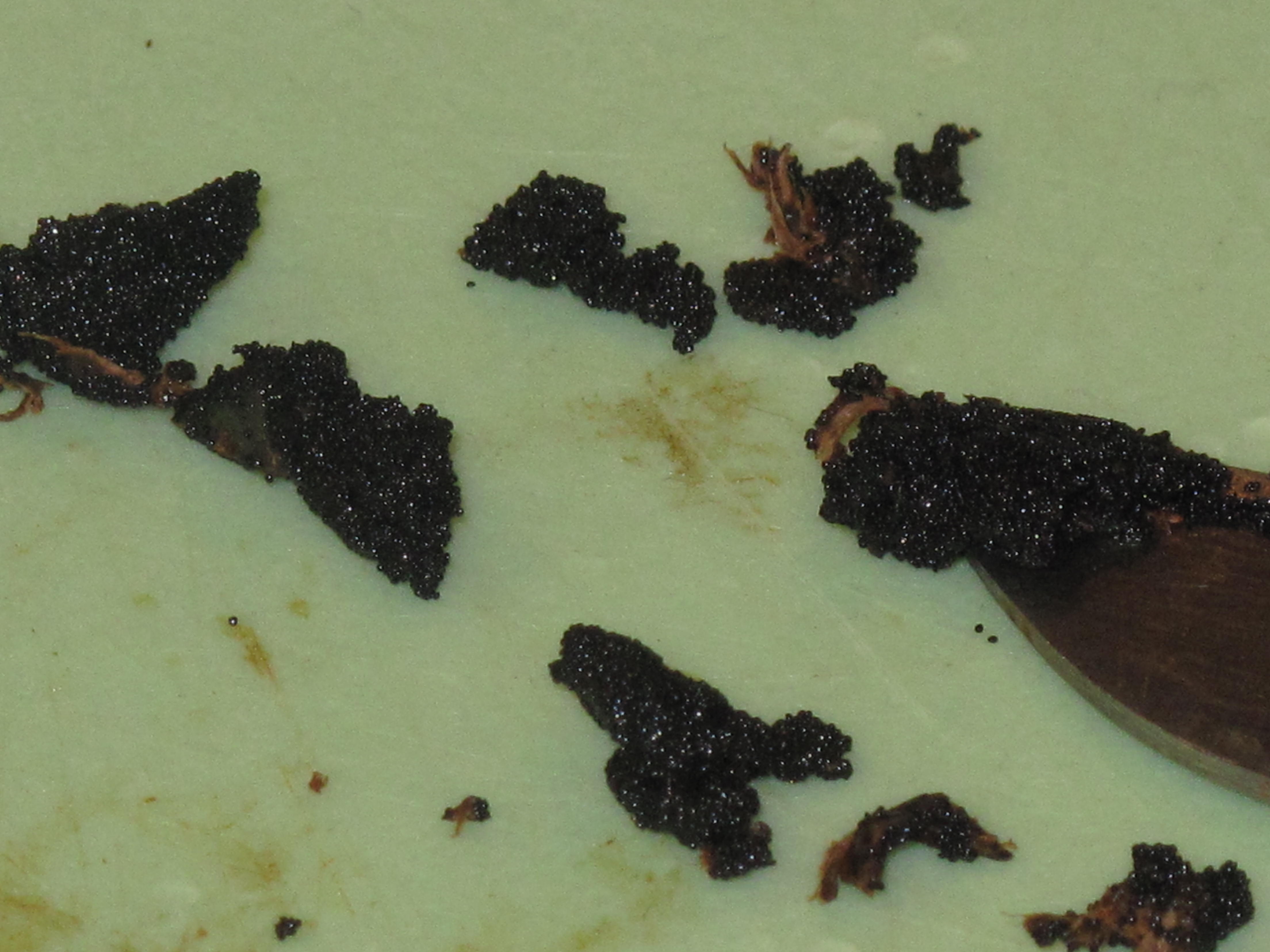
  • Seeds scraped from 1 vanilla bean (I have also substituted 1 teaspoon of pure vanilla extract when I didn’t have a vanilla bean in the pantry)
  • Vanilla ice cream, for serving

Directions:

Preheat the oven to 325 degrees F.  Lightly butter a 2-quart (9 by 12 by 2-inch) oval baking dish.  Melt the 1/2 pound of butter and set aside to cool.  In the bowl of an electric mixer fitted with the paddle attachment, beat the eggs and sugar on medium-high speed for 5 to 10 minutes, until very thick and light yellow.

Meanwhile, sift the cocoa powder and flour together and set aside. 

When the egg and sugar mixture is ready, reduce the speed to low and add the vanilla seeds and the cocoa powder and flour mixture.  Mix only until combined. 

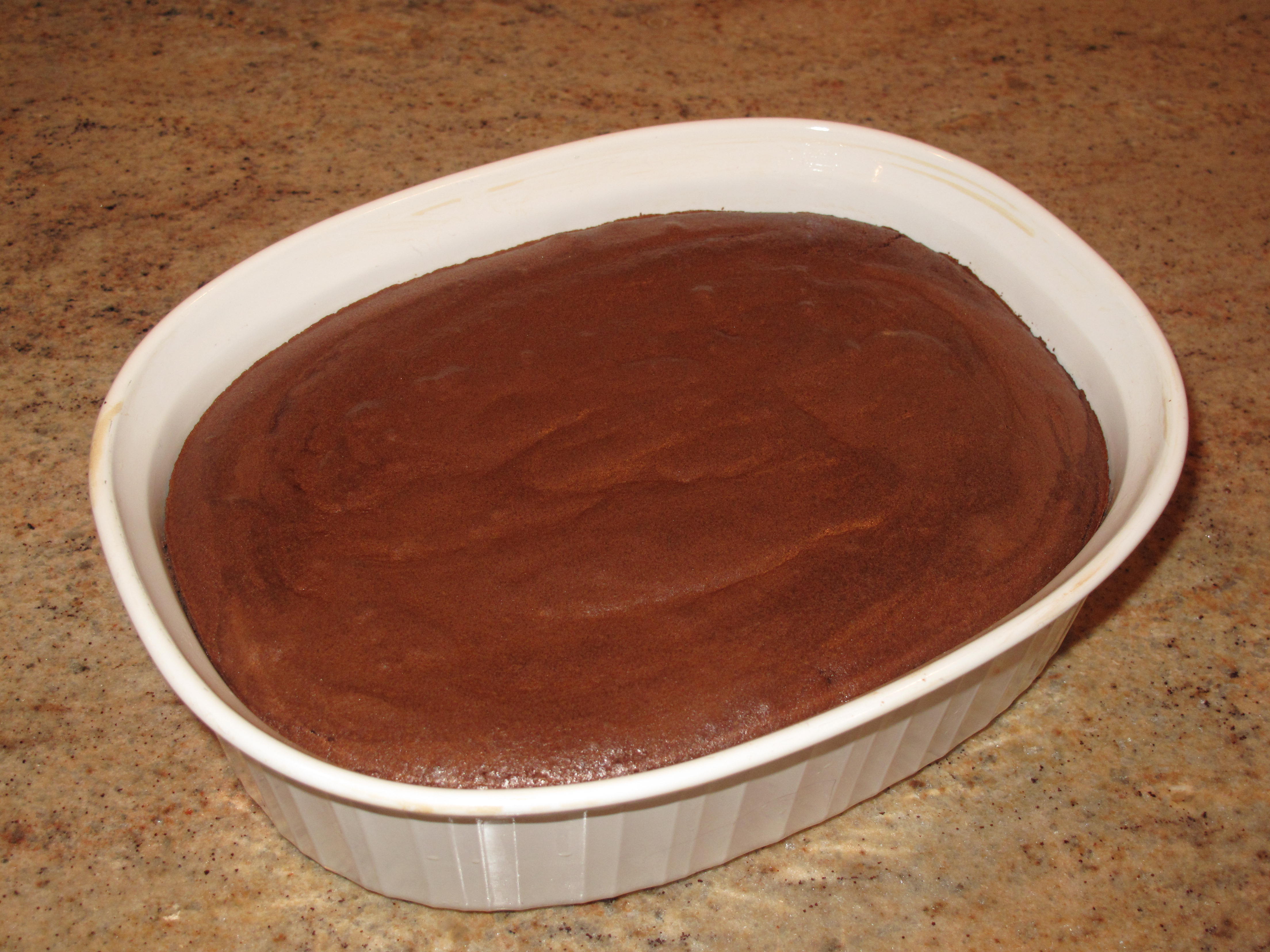
With mixer still on low, slowly pour in the cooled butter and mix again just until combined.  Pour the brownie mixture into the prepared dish and place it in a larger baking pan.  Add enough of the hottest tap water to the pan to come halfway up the side of the dish and bake for exactly 1 hour. 

A cake tester inserted 2 inches from the side will come out 3/4 clean.  The center will appear very under-baked; this dessert is between a brownie and a pudding.  Allow to cool and serve with vanilla ice cream.

The part I like about this dessert is the fact that it is part chocolate brownie and part chocolate pudding.  You sort of get the best of two chocolate worlds in one dish with this recipe.  If you are having friends over for dinner, this is a great one to serve…it always pleases.  We hope you like this dessert.  Anna Pump never disappoints.  What chocolate dessert recipes are your favorites?

The Italian Grandmother Makes Cauliflower Macaroni


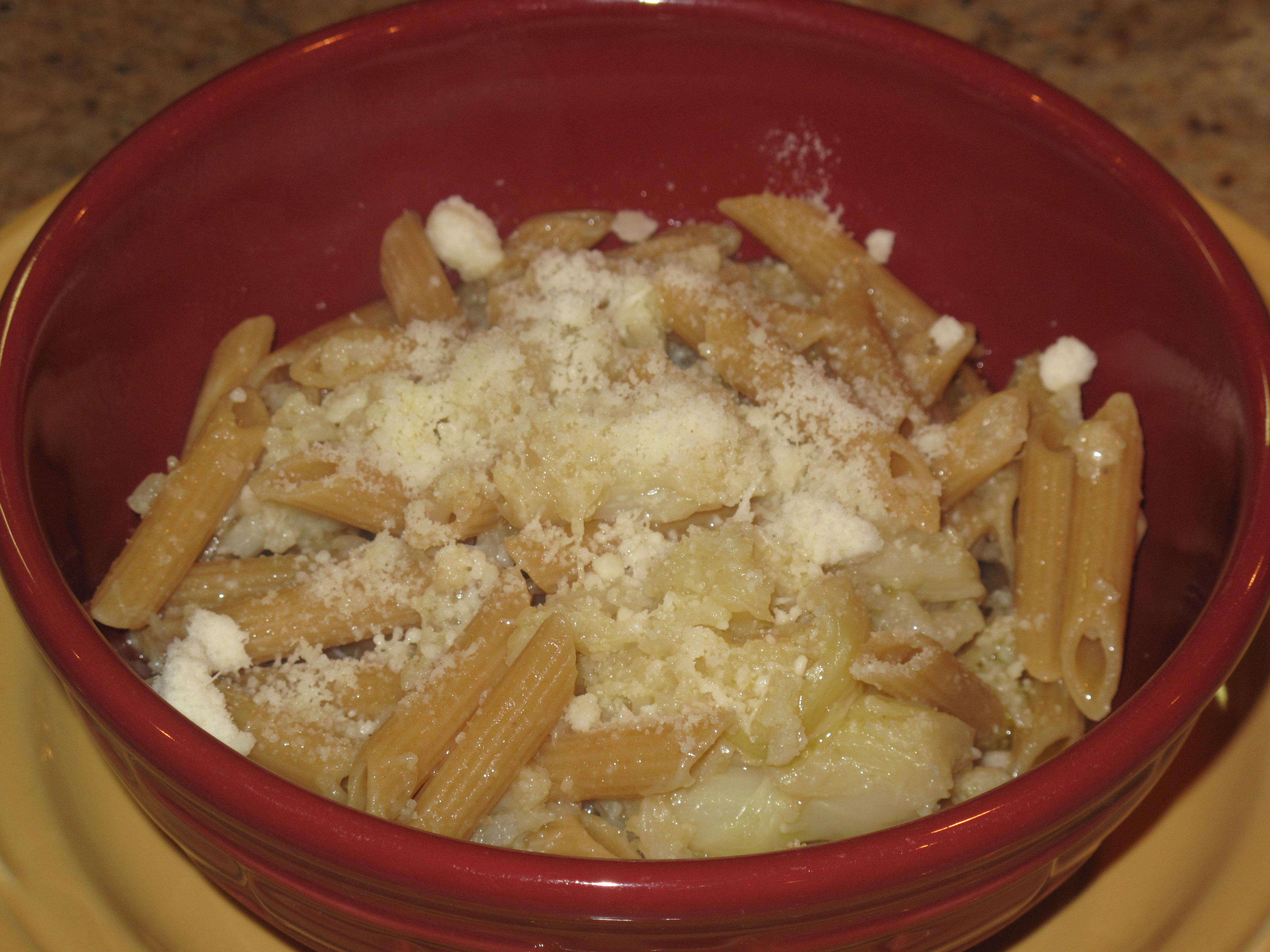
This is another great recipe from our Brooklyn Italian Grandmother.  It is quick, simple and delicious.  It is perfect for a weekday supper when you don’t have a lot of time to cook.  It also doesn’t use a lot of dishes which is great at clean up time.  We call it cauliflower macaroni, but feel free to use broccoli or zucchini if you like.  Our Brooklyn Italian Grandmother has made this recipe for quite a while and it is one of our favorites.  Our recipe makes a generous portion.  It feeds 4 to 6 people, depending on how hungry the crowd.  There is something so good when you keep the ingredients simple and fresh.  However, while the dish is simple and delicious, feel free to jazz it up with a few pieces of jewelry like our Italian Grandmother always does.

Ingredients:

  • 1 1/2 large heads of cauliflower
  • 1/4 cup of olive oil
  • 6 cloves of garlic, chopped (use more or less depending on how much you like garlic)
  • 32 ounces of chicken stock
  • 2 chicken bouillon cubes
  • 2 pounds penne or pasta of your choice (we used whole wheat penne)
  • Grated parmesan cheese and red pepper flakes to taste

Directions:

Clean cauliflower by separating each floret from the stalk and wash under cool water.  Don’t worry about the size of the florets because they will break down when mixed with the cooked pasta at the end of the recipe. 

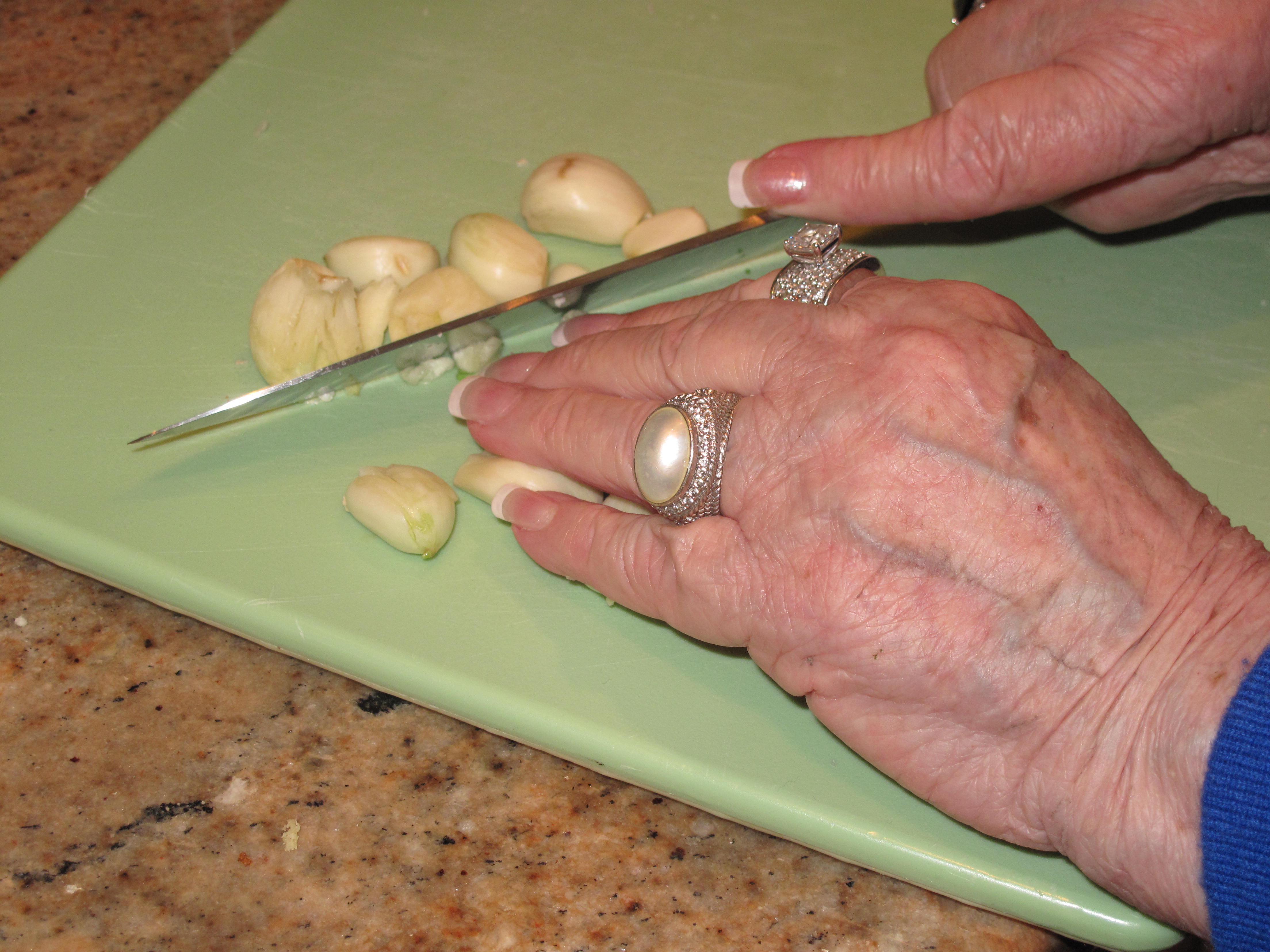
Clean and chop garlic cloves into small pieces.

  Hot Spring trend…pearls, diamonds and garlic.

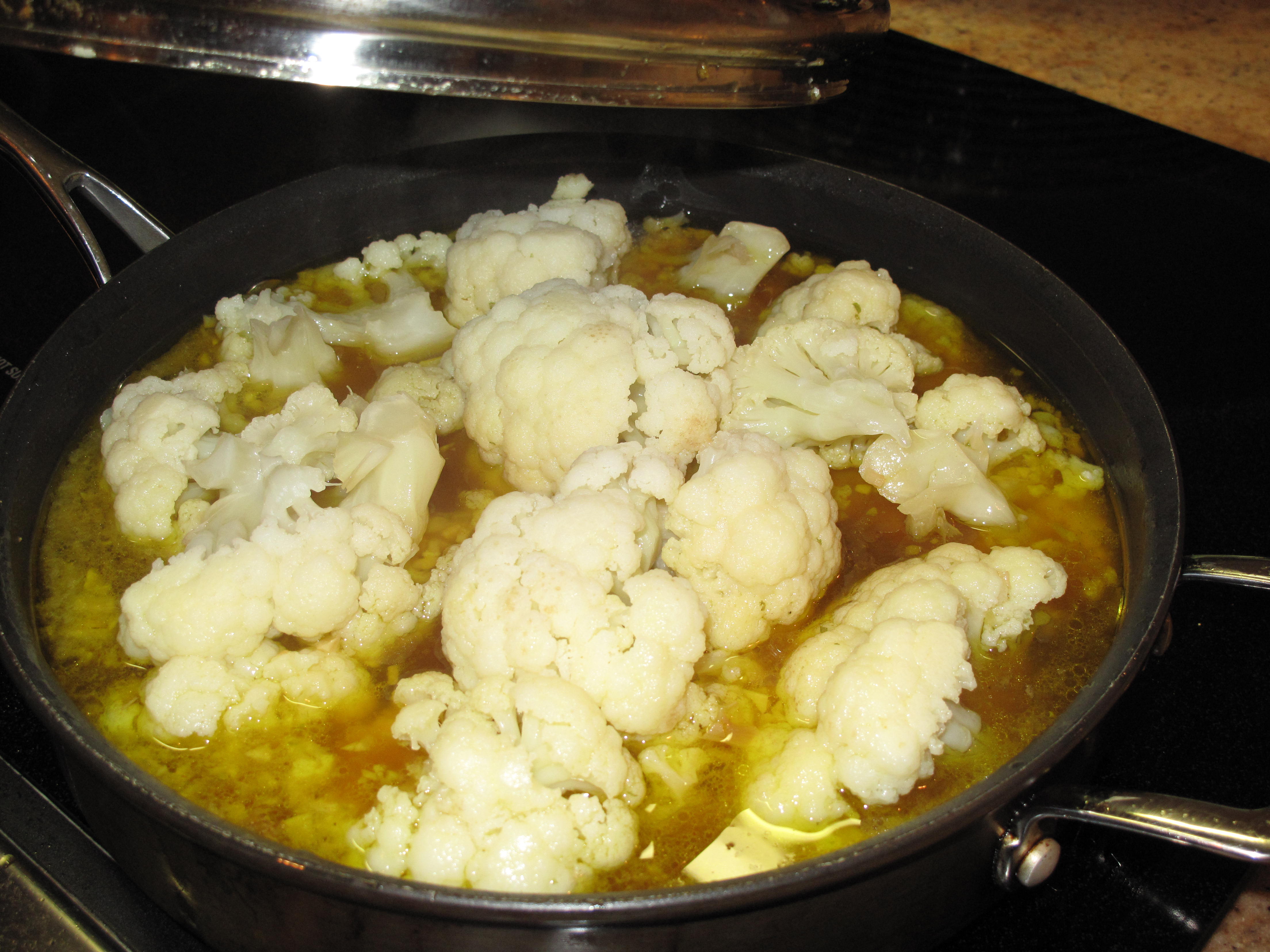
Heat olive oil in a large skillet and add garlic.  Sautee garlic until it is a golden color.

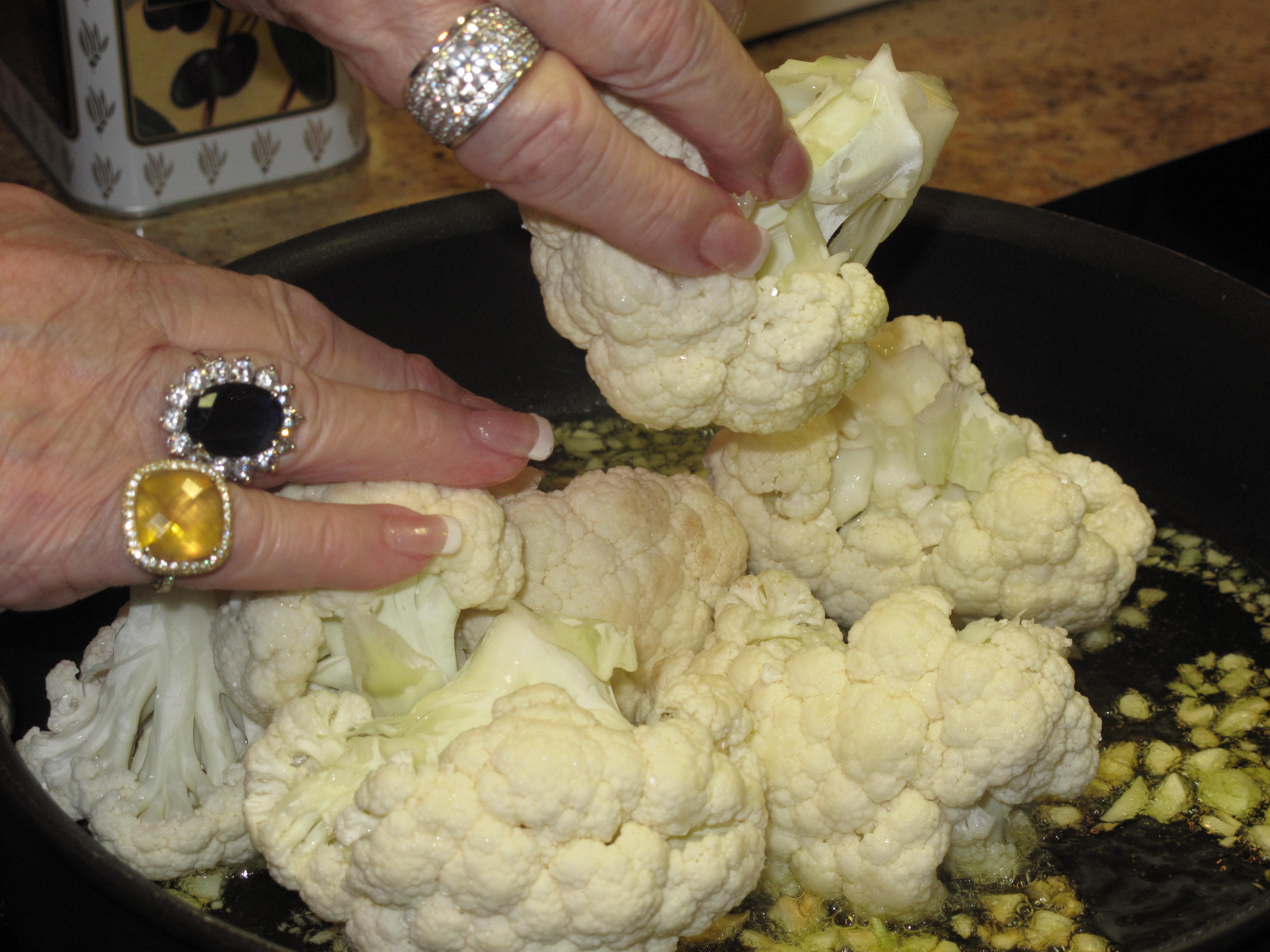
Add cauliflower.  Fill the pan with plenty of cauliflower as it will cook down. 

  A trifecta….three rings in one shot.  Isn’t that Catherine Middleton’s engagement ring on one of our Italian Grandmother’s fingers?

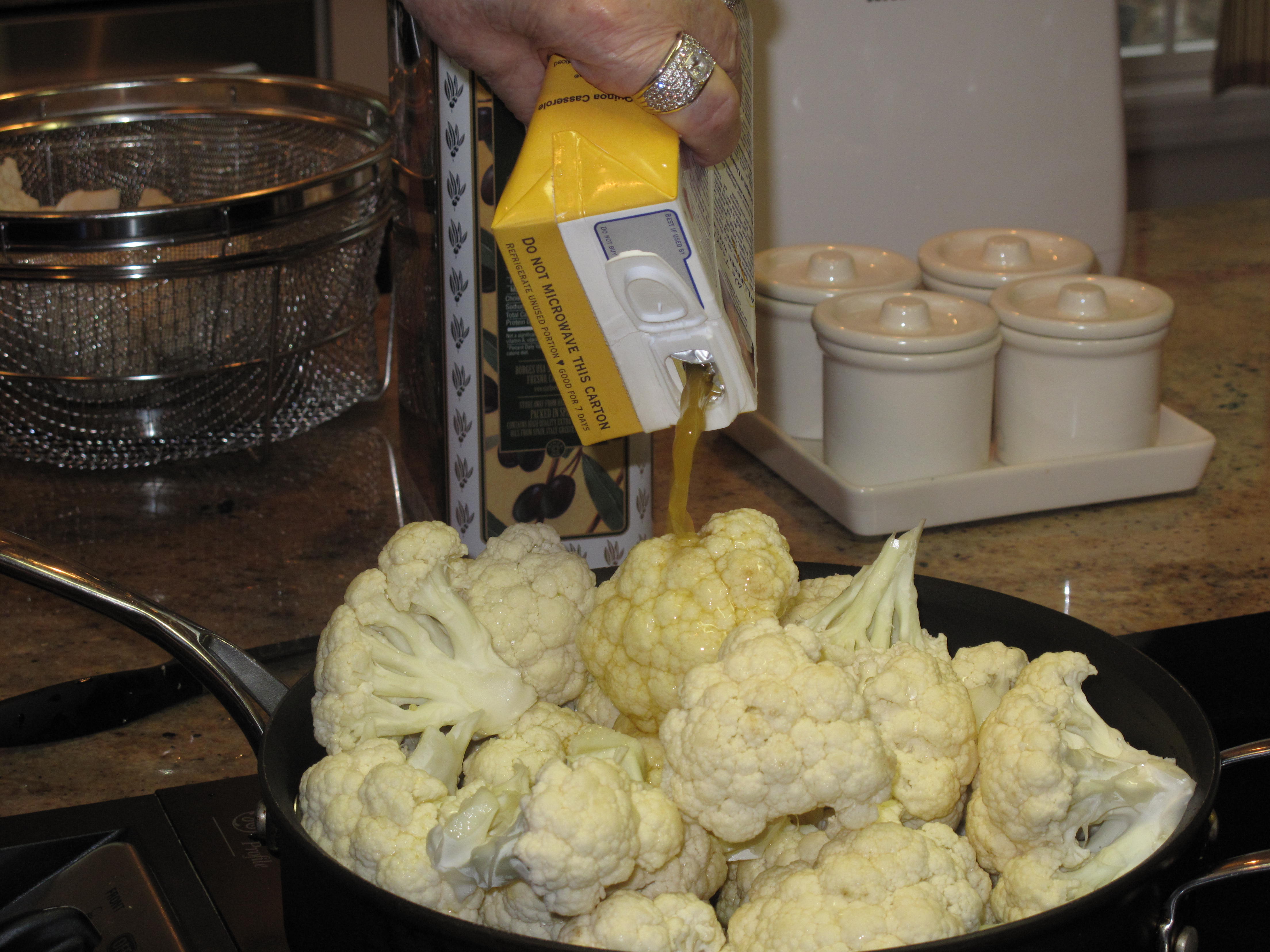
Add chicken stock and the chicken bouillon cubes. 

  Diamond ring alert at 12 o’clock.

Place a lid on the skillet and simmer the cauliflower in the stock until it is very tender.  You can do this ahead of time if you would like.  When the cauliflower is tender, remove it from the burner and set it aside or use it immediately.  If you do set it aside, make sure to reheat before you use it.

Place pasta in boiling salted water and cook until done.  Drain the pasta and return it to the pan. 

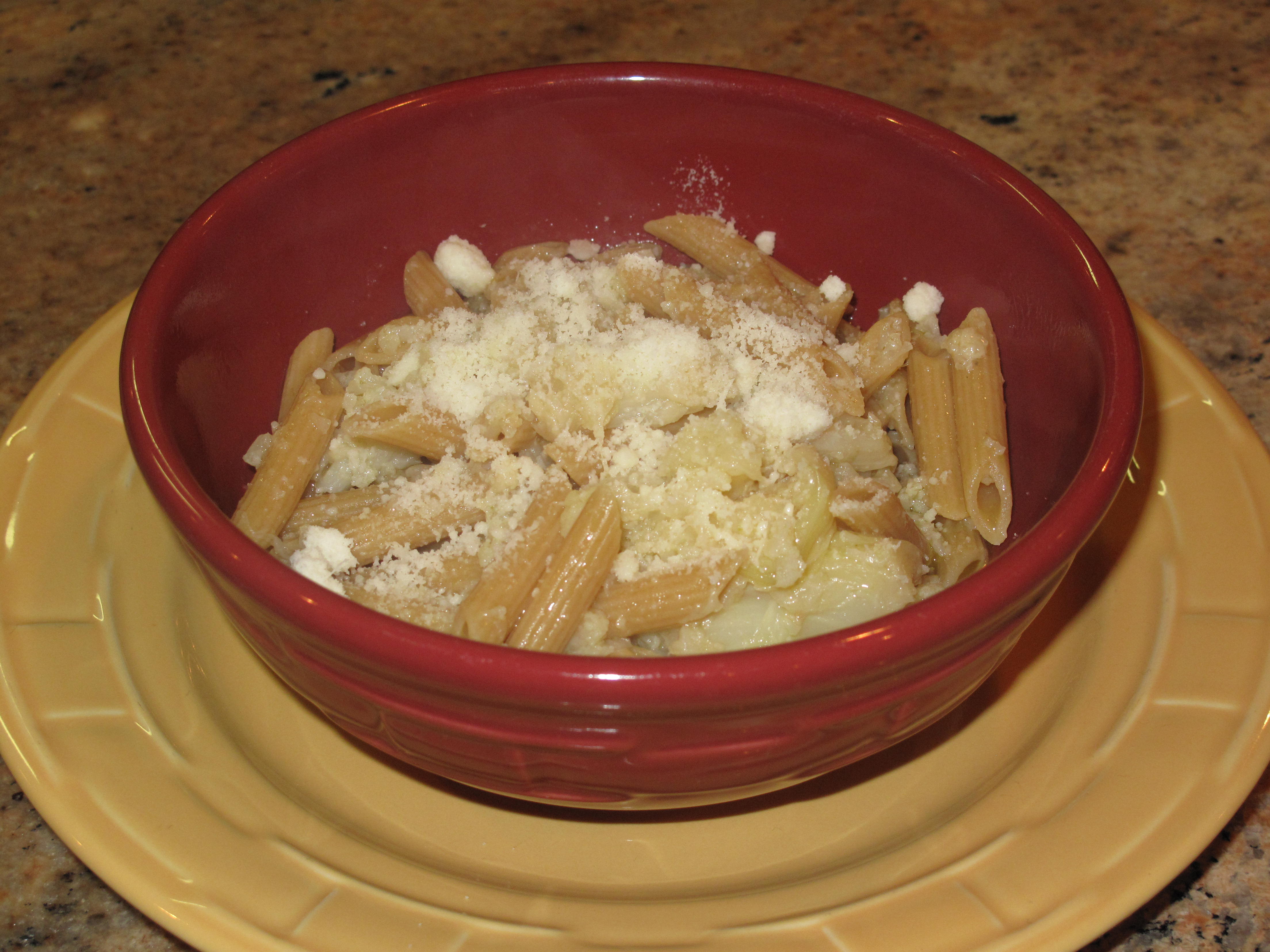
Place the cauliflower and broth on top of the pasta and mix with a spoon.  When mixing, the large cauliflower florets will break down into more manageable pieces.  Serve the pasta with plenty of grated Parmesan cheese and red pepper flakes on top.

The pasta is so delicious because there is rich chicken broth at the bottom that is so flavorful after being simmered with the browned garlic.  The garlic and the stock also add so much flavor to the cauliflower as well.  The grated cheese and red pepper flakes also add their own special kick.  Again, if you are not a lover of cauliflower, try using broccoli or zucchini instead.  We’ve used them all and the dish is always good.  The worst part is this–do you use a spoon (for the broth), a fork (for the pasta/cauliflower) or both?  Do you have any easy pasta dishes that you would like to share on Acorns On Glen?

Power Gardening Before The Rain

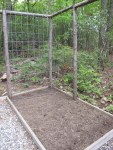
This is the garden after a power gardening session that got as much as possible in the ground before the rain hit.  We knew we didn’t have much time on Saturday morning to garden as the weather channels predicted a downpour of rain at some point in the afternoon.  Mother Nature at her finest.  We were actually able to get a lot accomplished before the first raindrops came down.  Our garden probably doesn’t look any different to you than when you first saw our raised bed garden earlier this Spring.  However, this time it is filled with seeds.  There are zucchini and cucumber seeds planted around the wire trellis in the back of the bed, followed by green beans, turnips, golden beets and red beets.  All of these seeds got planted and covered and then the rain started.  We’ll be honest.  We didn’t exactly meet our goal.  We had also wanted to get some live plants into the ground that were scheduled for planting this weekend.  These were some of the plants that are growing under our grow light in the basement.  Our eggplant, cabbage, cauliflower and brussels sprouts will have to wait.  Darn rain…good for the newly seeded lawn; bad for the backyard vegetable garden.  Take a few minutes to see our vegetable garden work this weekend and also see our gorgeous azalea bushes in full bloom.

So we didn’t get all of our gardening chores completed this weekend due to the weather.  Good Old Mother Nature is the hardest part of gardening.  You never know if she will be too cold, too hot, too wet.  The odds are sometimes better in Las Vegas.  Did the weather get in your way of a full weekend of gardening?

Spaghetti Carbonara A Little Lighter Than Normal


This is spaghetti carbonara a little lighter than what you normally see in an Italian restaurant.  We can’t take credit for it.  The recipe came to us from Rufus’ Food and Spirits Guide.  Rufus is the hardest working cook we know and his blog inspires you to cook more and think about the food that you eat.  It is a great site and well worth a visit.  He has frequently commented on our posts here at Acorns On Glen so we have spent some time on his blog and found this great recipe that we had to try……mushroom spaghetti carbonara.  This sounded right down our alley and we cooked it up as soon as we had the time.  So hats off to you Rufus and your great recipes and thanks for your support of Acorns On Glen.

Ingredients:

  • 1 lb spaghetti
  • ¼ lb pancetta or 3 slices high-quality bacon diced fine.  I used pancetta.

  • ½ cup mushrooms sliced 1/8” thick.  I used shiitake mushrooms.

  • 1 shallot minced

  • 1 egg yolk
  • 3 tbsp heavy whipping cream
  • 2 tbsp fresh parsley
  • ½ cup grated Romano
  • Pepper/salt to taste

Directions:

Beat egg yolk and cream in a bowl. Season with black pepper. Set aside.

Place diced pancetta or bacon in a frying pan.  Over medium heat, render fat and brown meat.  Reserve two tablespoons of drippings.  If using pancetta, add butter if needed.

Saute scallion on low in the reserved drippings until browned.

Add mushrooms and cook as a single layer flipping as needed.  When mushrooms begin to brown turn off heat.

Meanwhile, in a separate pot, boil heavily salted water.  Cook spaghetti to al dente.  Strain and return to pot.  Season with pepper.  While pasta remains hot add egg mixture.  Stir constantly until noodles are coated to cook the egg.  Add bacon and mushrooms to pasta.  Stir well.  Add cheese and mix again.  Garnish with fresh parsley.

YUM!!  What we loved about this carbonara is that it was not too thick and heavy.  You can actually get a better mixture of flavors than the normal carbonara with bacon floating in a heavy mixture of egg yolks and cream.  I guess this lighter version is also pretty good for the heart and waist line as well.  Again, thanks Rufus for the great recipe.  Please check out his great blog and let him know who sent you.  Do you have any lighter-fare recipes that you can share on Acorns On Glen?

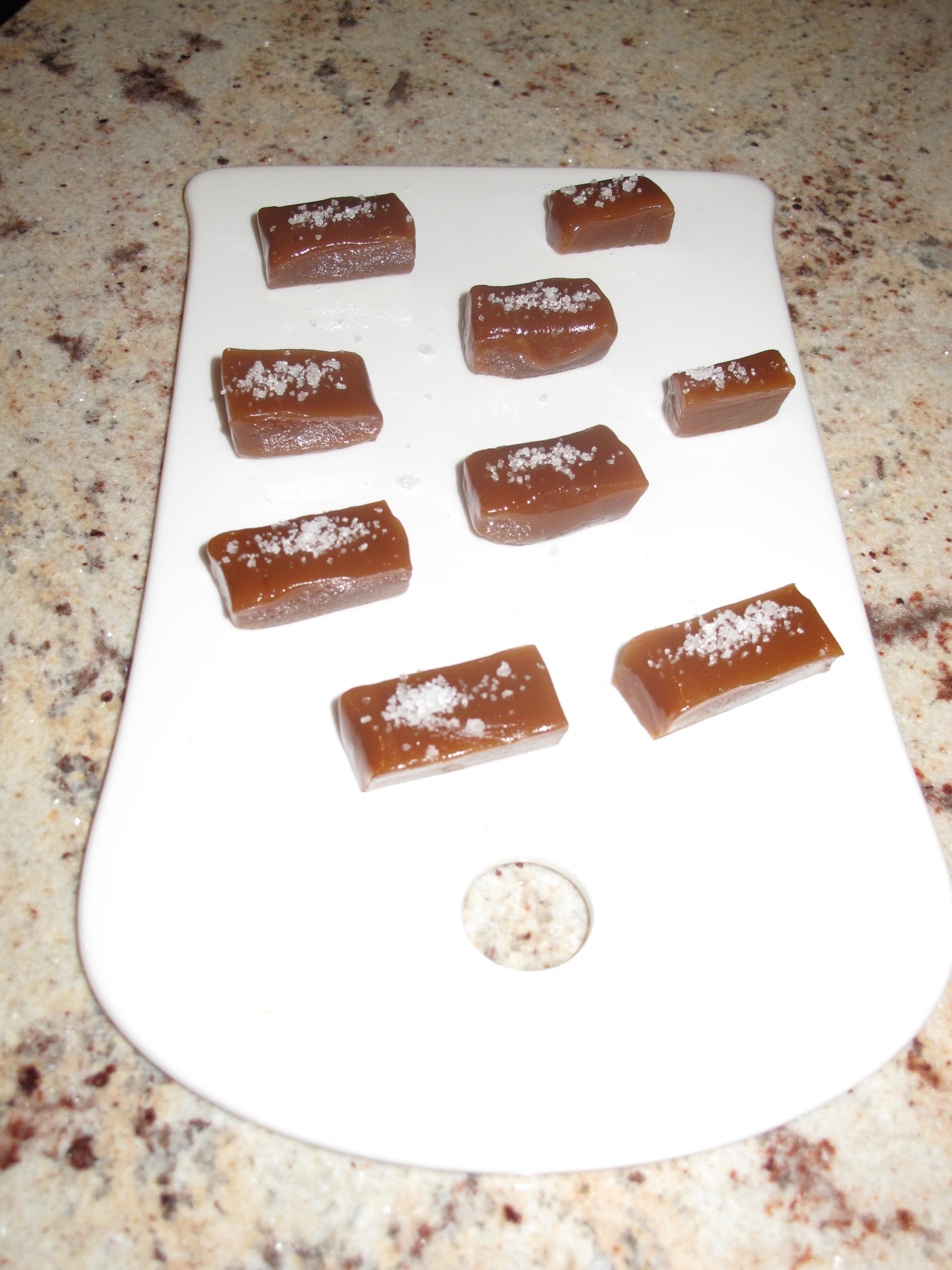
Fleur De Sel Caramels

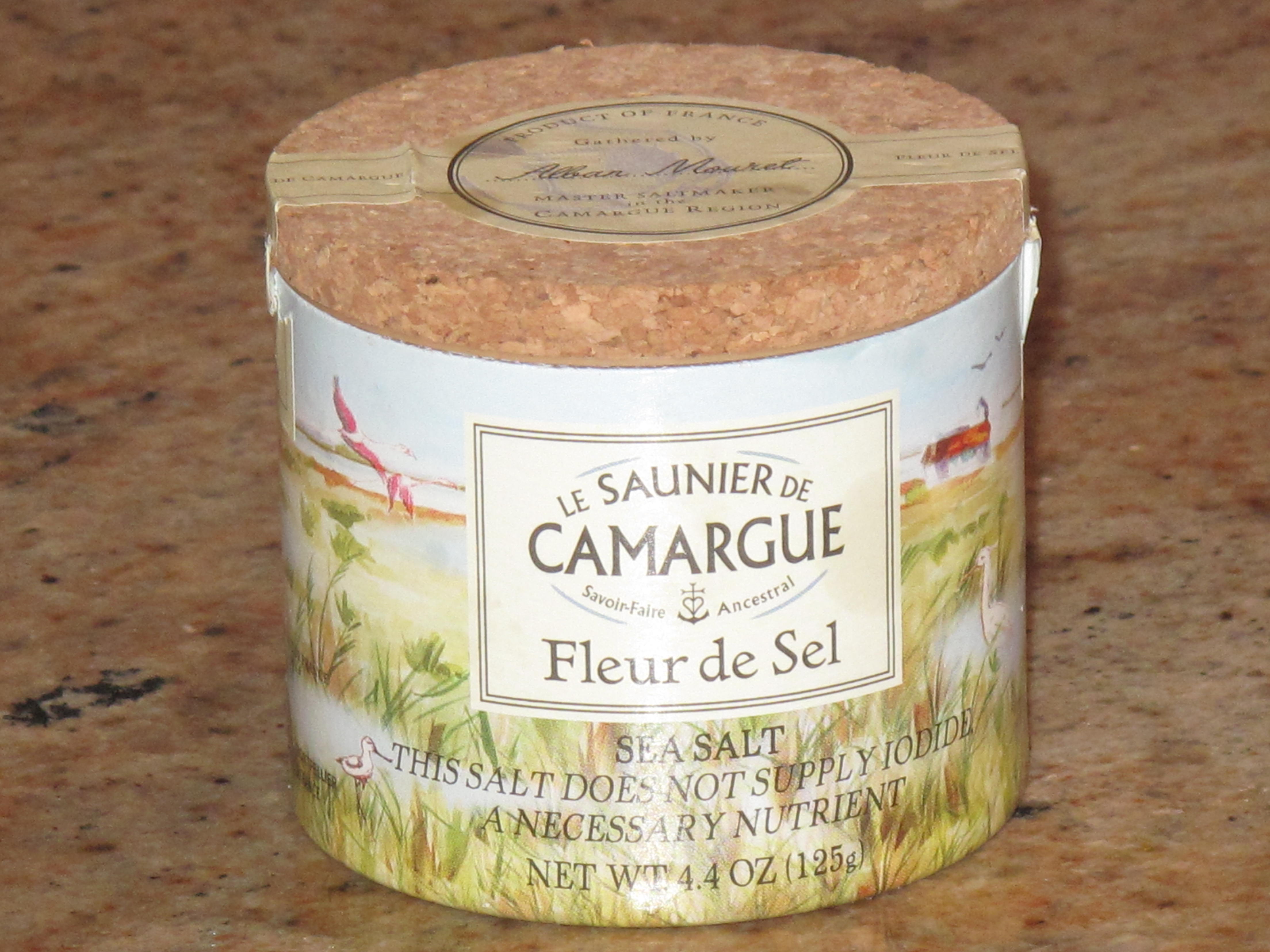
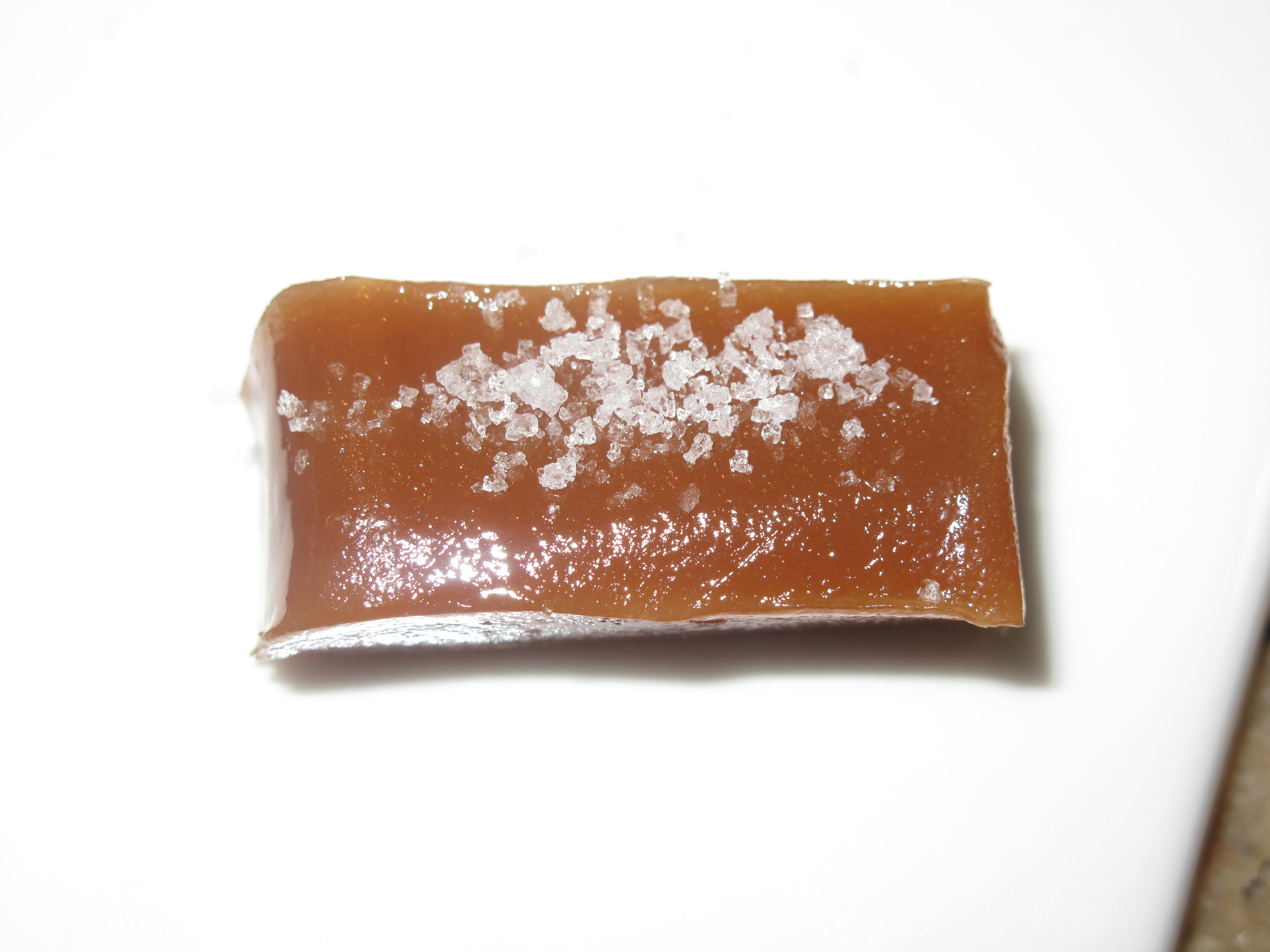
This is a good little dessert or a nice piece of candy when you are craving sweets.  It’s key ingredient is salt.  Salt is very popular today.  I’m not talking about table salt (i.e., the Morton’s kind), but more the designer salts that have been on the market for quite a while, but have only now seemed to pick up in popularity.  You know, salts like sea salt, smoked salts, imported salts.  If you are a unique type of salt these days, chances are you are in some glamorous recipe.  Which brings me to our caramels.  These caramels are made with fleur de sel.  Fleur de sel (“Flower of salt” in French) is a hand-harvested sea salt collected by workers who scrape only the top layer of salt before it sinks to the bottom of large salt pans.  Traditional French fleur de sel is collected off the coast of Brittany, most notably in the towns of Guérande, Noirmoutier and Camargue.  Due to its relative scarcity, fleur de sel is one of the more expensive salts.  Fleur de sel is often slightly grey due to the sand collected in the process of harvesting the salt from the pans.  Fleur de sel also contains more mineral complexity than table salt.

Its presence in these caramels makes for a delicious taste, mixing the sweet and buttery taste of the caramels with the salty and savory taste of the fleur de sel.  It’s the right balance that seems to keep people asking for more.  I have them on strict rations here on Glen Road, otherwise we would eat the entire pan in a few hours.  Trust me, they are addictive.

Ingredients:

  • Vegetable oil
  • 1 1/2 cups sugar
  • 1/4 cup light corn syrup
  • 1 cup heavy cream
  • 5 tablespoons unsalted butter
  • 1 teaspoon fine fleur de sel, plus extra for sprinkling
  • 1/2 teaspoon pure vanilla extract

Directions:

Line an 8-inch-square baking pan with parchment paper, allowing it to drape over the sides, then brush the paper lightly with oil.

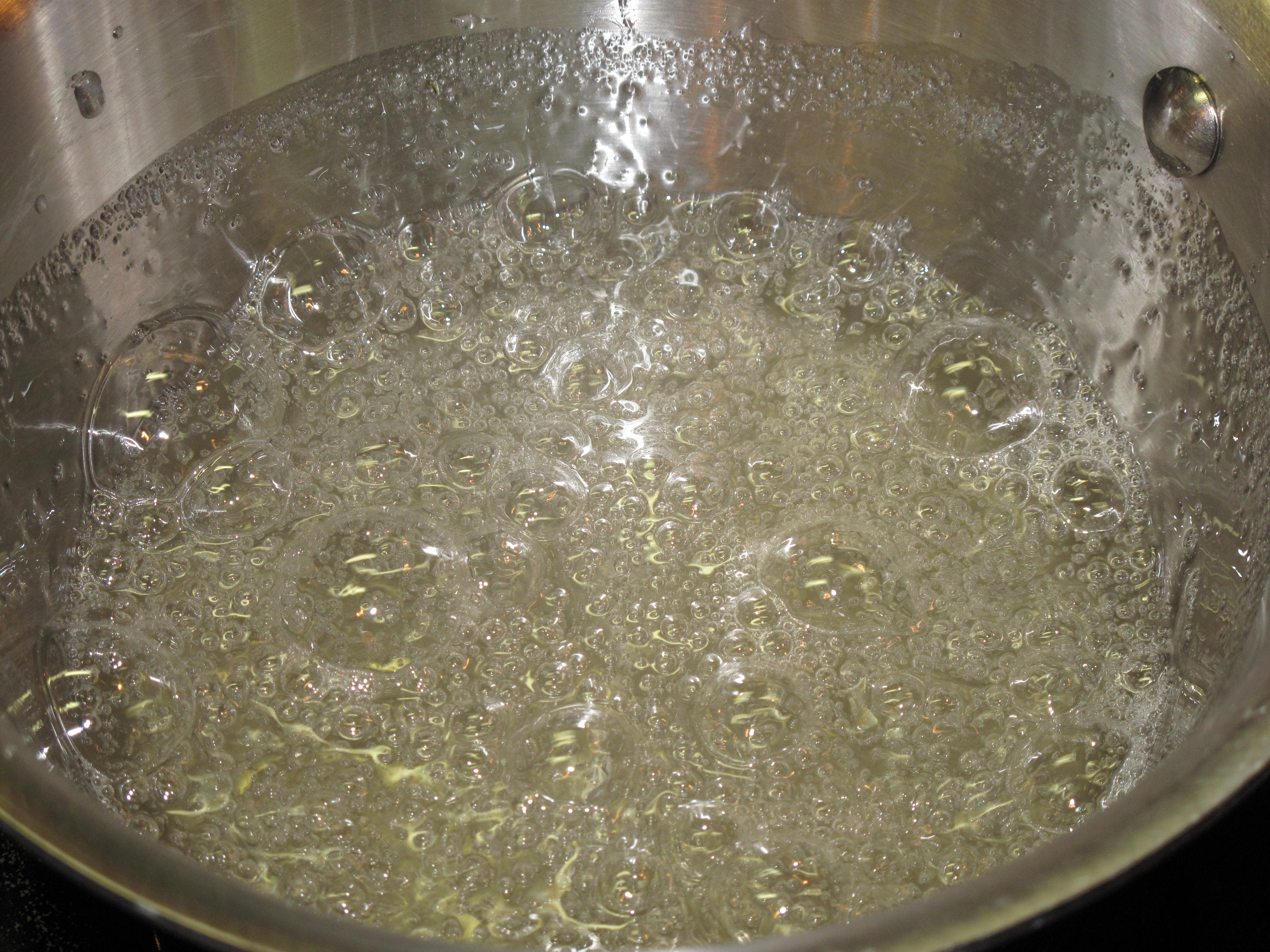
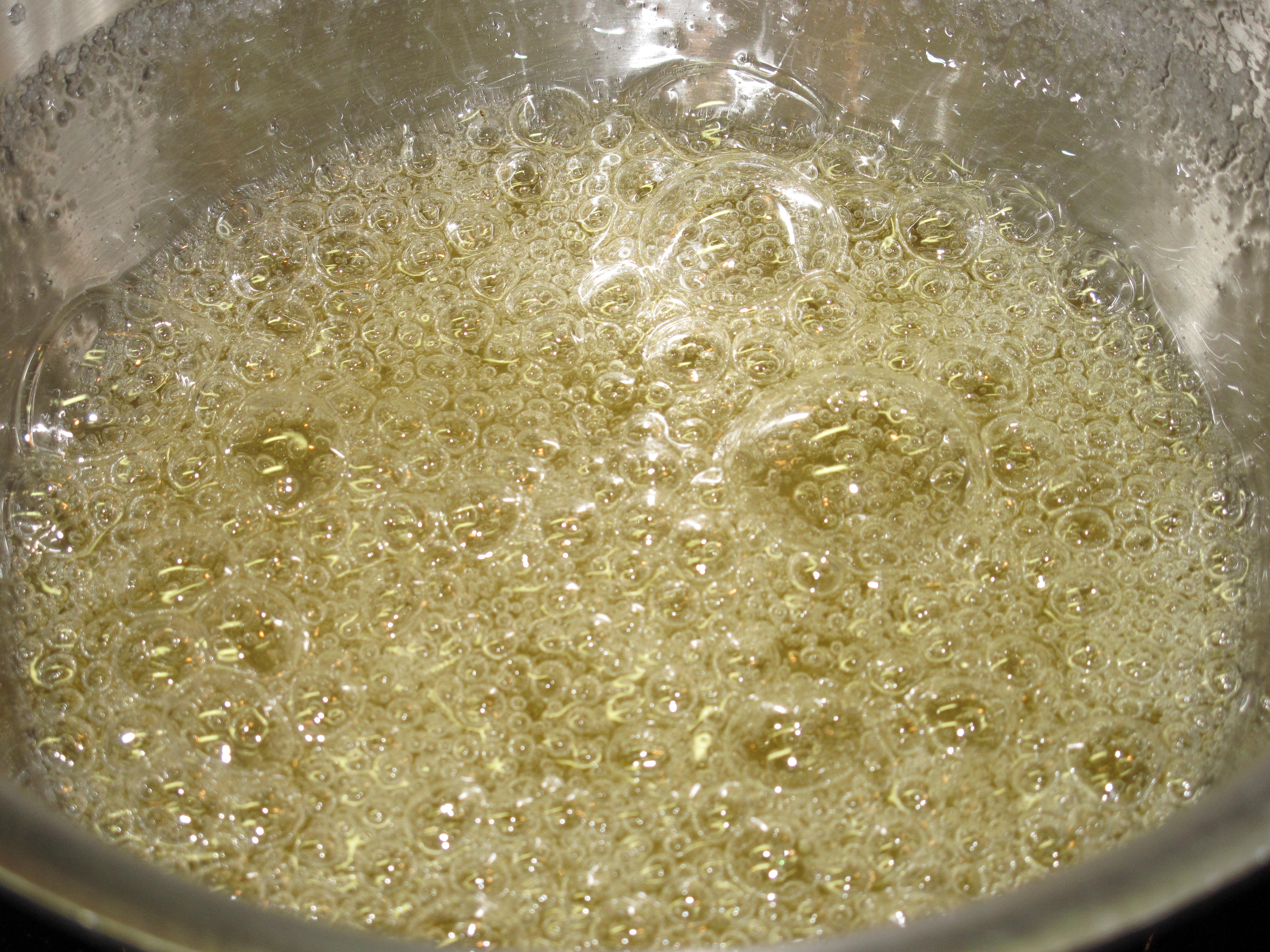
In a deep saucepan (6 inches wide and 4 1/2 inches deep), combine 1/4 cup water, the sugar and corn syrup and bring them to a boil over medium-high heat.

Boil until the mixture is a warm golden brown.  Don’t stir-just swirl the pan.  Be careful, when the sugar mixture begins to turn brown, it can quickly go from brown to burnt.  Once it turns warm golden brown, immediately take it off the heat.

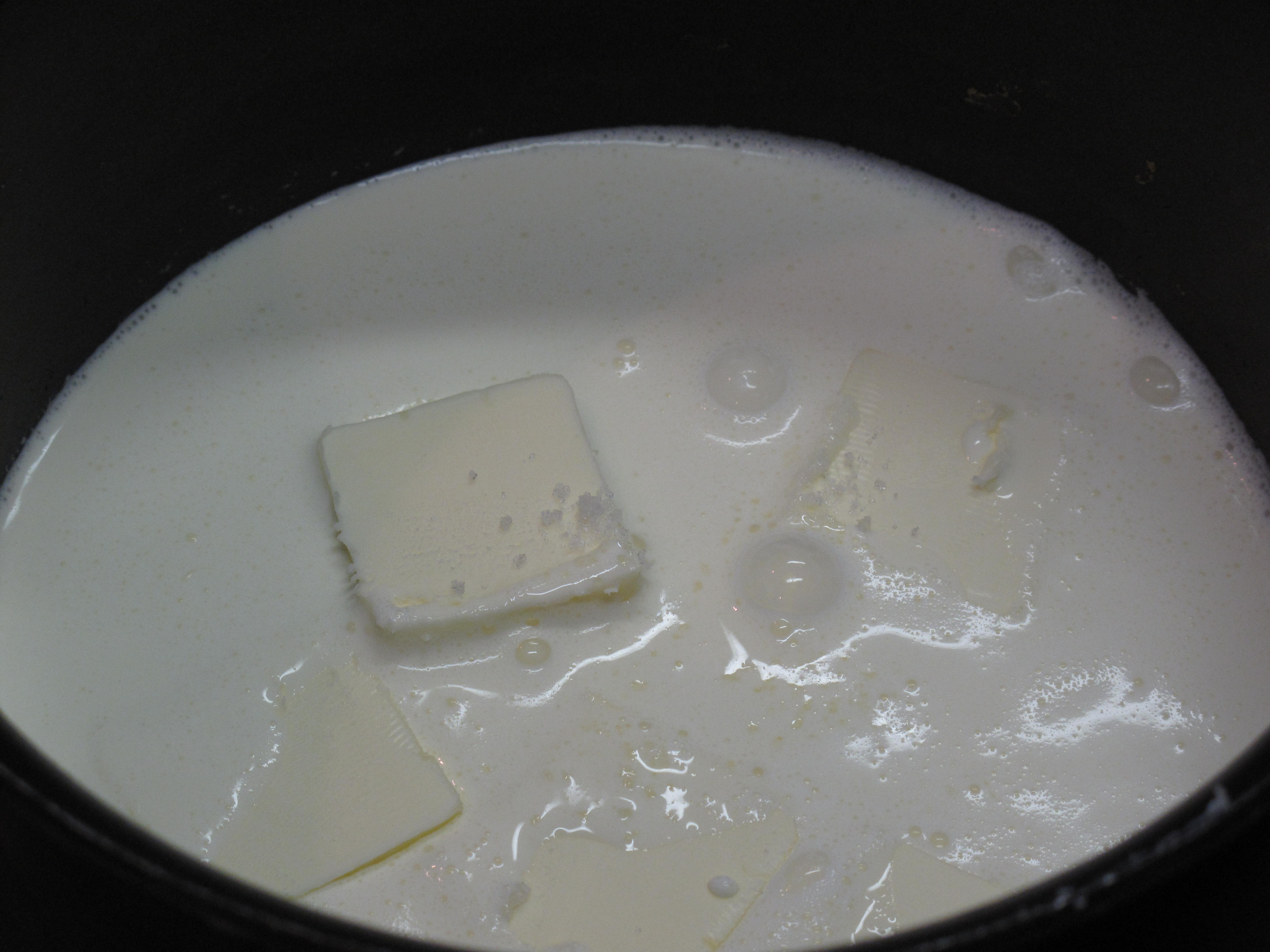
In the meantime, in a small pot, bring the cream, butter and 1 teaspoon of fleur de sel to a simmer over medium heat. Turn off the heat and set aside.

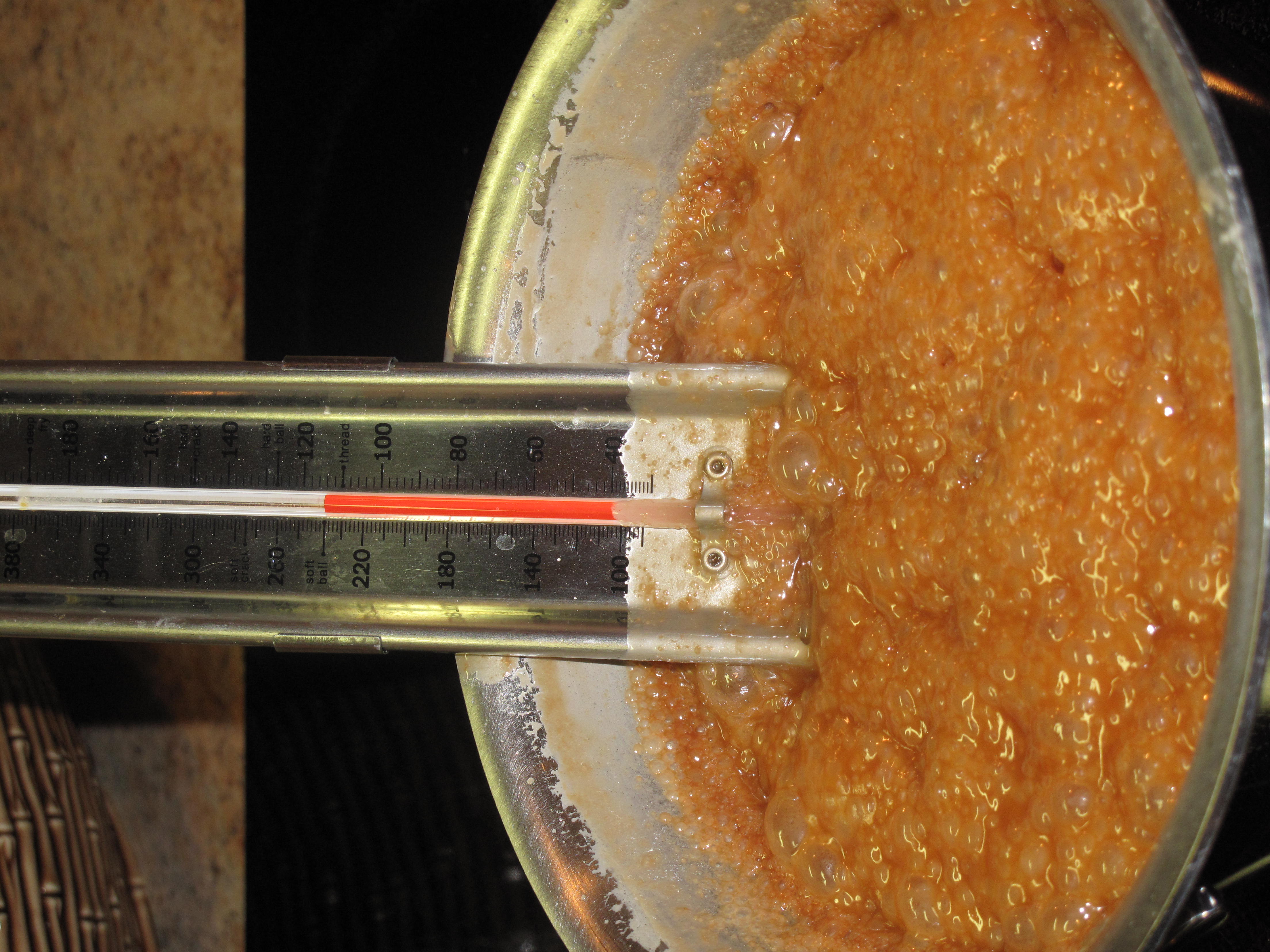
When the sugar mixture is done, turn off the heat and slowly add the cream mixture to the sugar mixture.  Be careful as it will bubble up violently.  Stir in the vanilla with a wooden spoon and cook over medium-low heat for about 10 minutes, until the mixture reaches 248 degrees F (firm ball) on a candy thermometer.

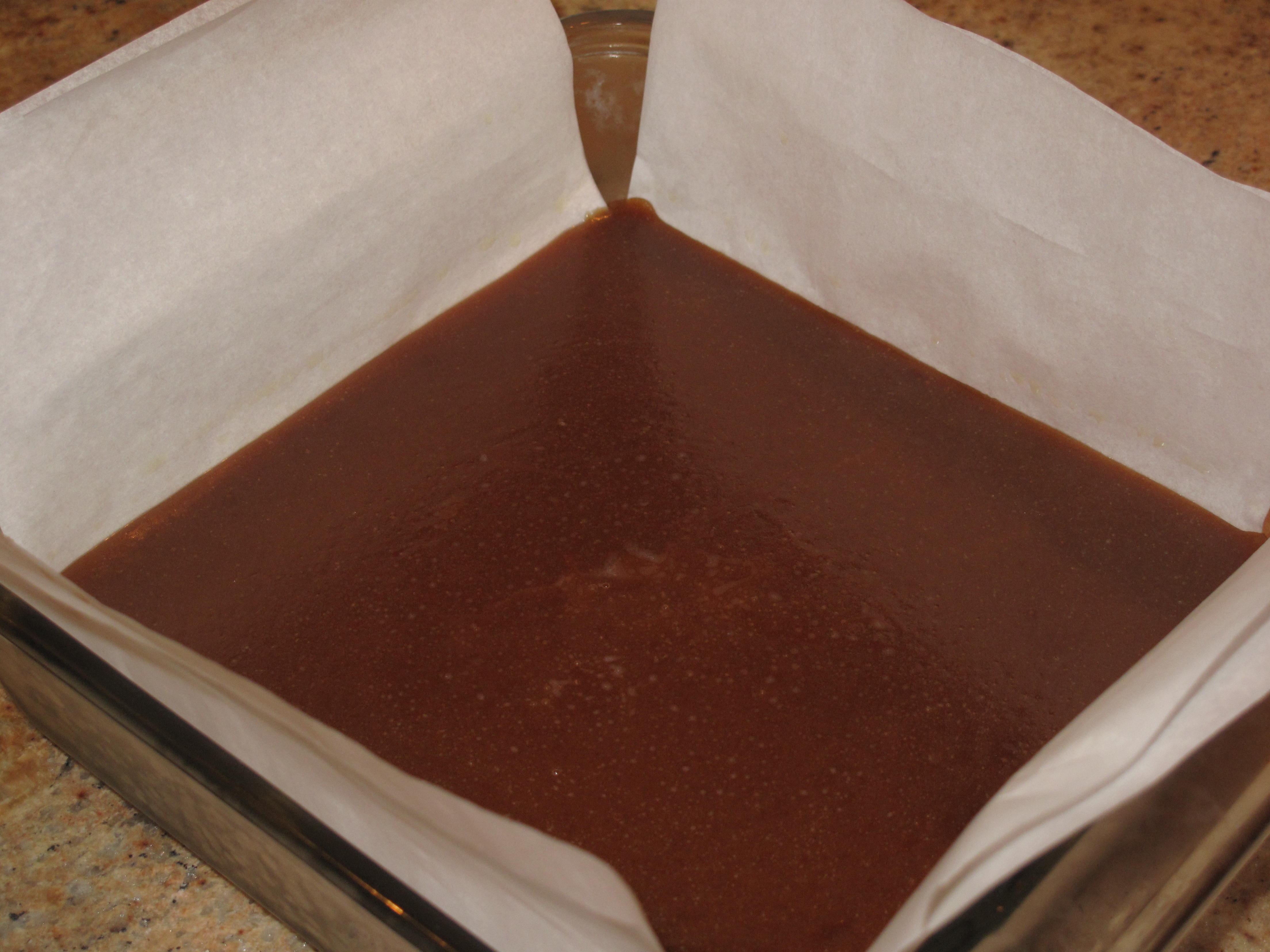
Very carefully (remember that it’s hot!) pour the caramel into the prepared pan and refrigerate for a few hours, until firm.

When the caramel is cold, loosen the sheet from the pan onto a cutting board. Cut the caramel into several 1-2″ lengths and then cut into pieces.  Sprinkle each piece with fleur de sel.  Remember that it’s easier to cut the caramels if you brush the knife with flavorless oil.

Cut glassine or parchment paper into 4-by-5-inch pieces and wrap each caramel individually, twisting the ends. You can also place the slices directly onto a plate or serving platter.  Store in the refrigerator and serve the caramels slightly chilled.

We like to serve these caramels on a plate after dinner as a dessert.  If it is a large dinner party, we like to place them out with the other desserts for anyone that wants just a little bite of something sweet.  Most times, however, we just like to make them and eat them when we need a little candy.  Trust me, they don’t usually last too long however you decide to serve them.  Get into the designer salt craze and give these fleur de sel caramels a try.  They are so good, you can’t quit eating them.  Your teeth will be stuck together until the last one is gone…trust us!  Do you have any recipes you can share on Acorns On Glen that contain designer salt in them?

Salute Spring With A Hummingbird Cake

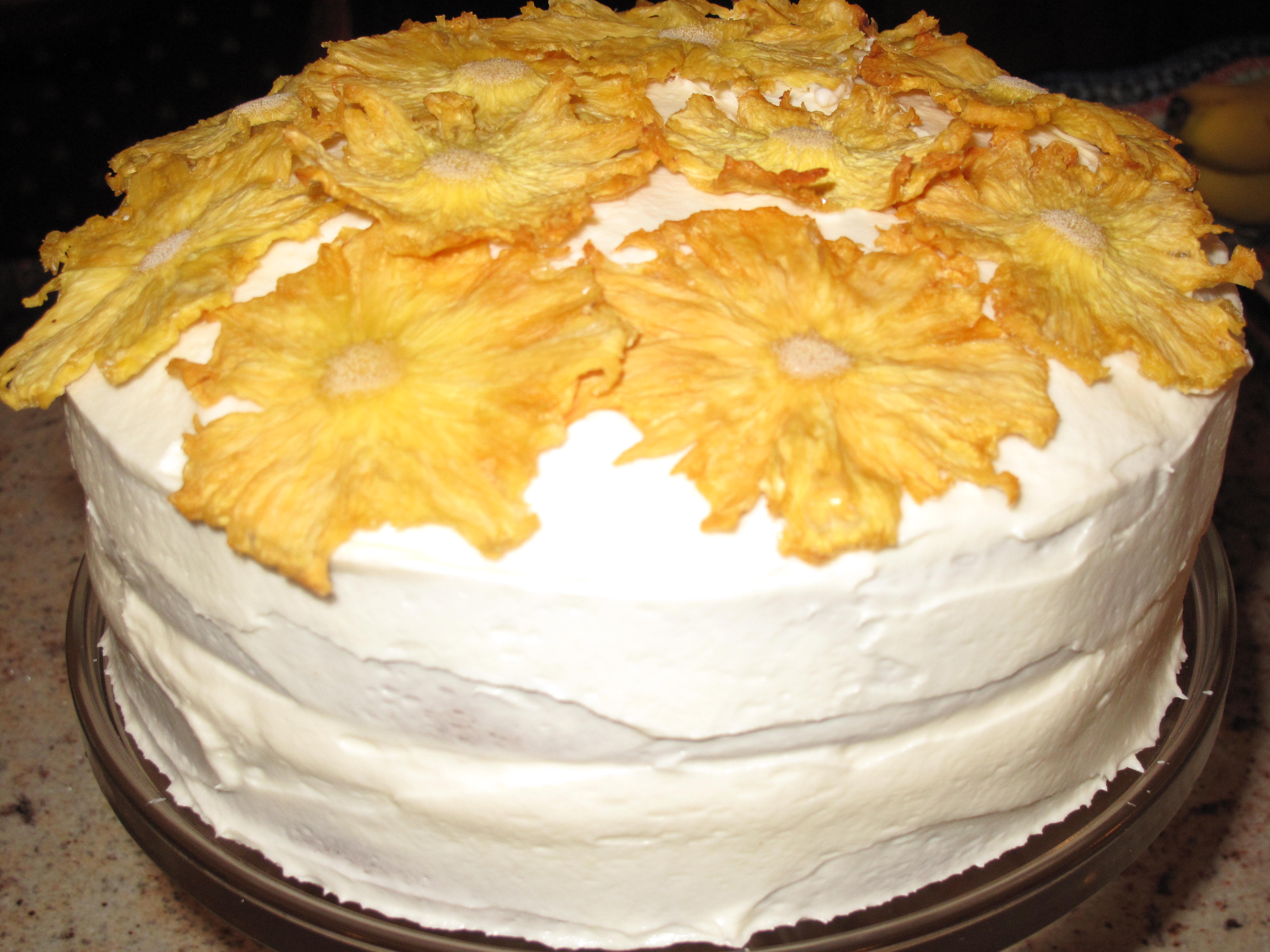
This is a cake to bake when you want to celebrate Spring.  This is a hummingbird cake which is a great way to salute Spring.  I’ve had the recipe for years from an old ‘Martha Stewart Living’ magazine but I had never made it.  This weekend, I was looking at my actual hummingbird feeders and for some reason decided to make the hummingbird cake.  I guess I will do anything to get a hummingbird to come live on Glen Road.  Other than this cake, we have not been given this opportunity in the six years we’ve been here.  I guess the cake will have to do at this time.

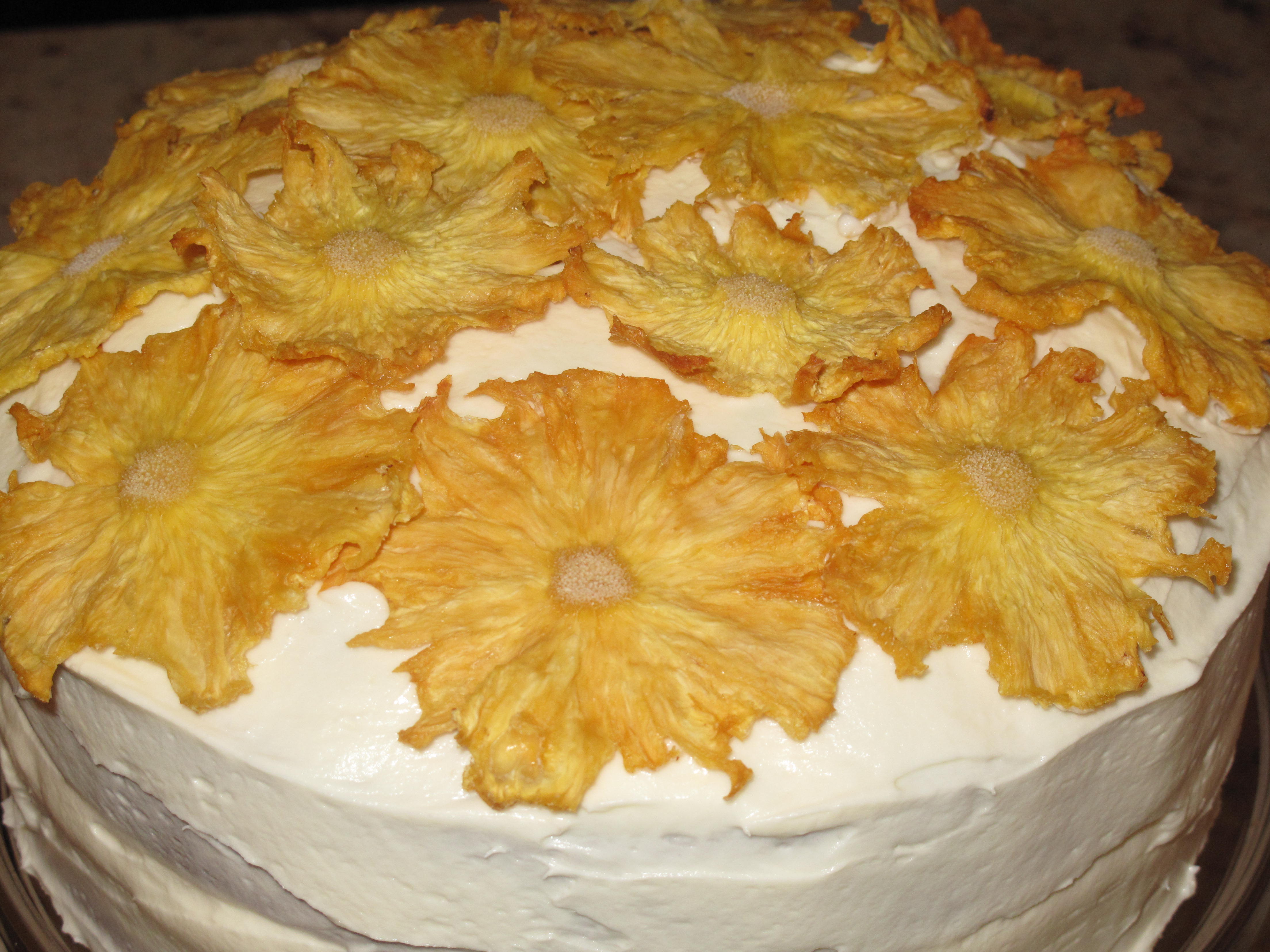
Does anyone know the reason they call this cake a hummingbird cake?  My clipped recipe says that its delicious taste makes people who eat it hum with delight.  It also says that it is as sweet as the sugared water that attracts its namesake.  All I can say is that this is a delicious cake.  The cake itself mixes pineapple, pecans, bananas and coconut into a thick, rich batter.  It is frosted with a delicious cream cheese frosting.  I even took the extra step of making elegant dried pineapple flowers to put on top of the cake.  While the pineapple flowers look difficult, they are actually quite easy.  If you have some spare hours or are obsessed in making an elegant cake statement, the hummingbird cake is for you.  Again, it’s not quick, but it is super delicious.  I wrapped my head around making this cake by thinking of doing it in three stages:  making the pineapple flowers, proceeding to making and baking the cake and then finishing the cake by frosting it.  Let’s start with step one and make the dried pineapple flowers that are used for decorating the top of the cake and are edible as well.

Ingredients:

  • 1 to 2 large pineapples (I used one large pineapple and got about 12 flowers)

Directions:

Preheat oven to 225 degrees.  Line baking sheets with Silpats (French nonstick baking mats) or parchment paper.
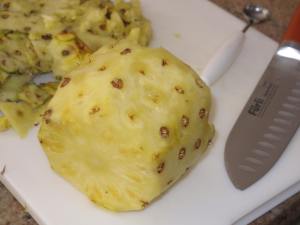
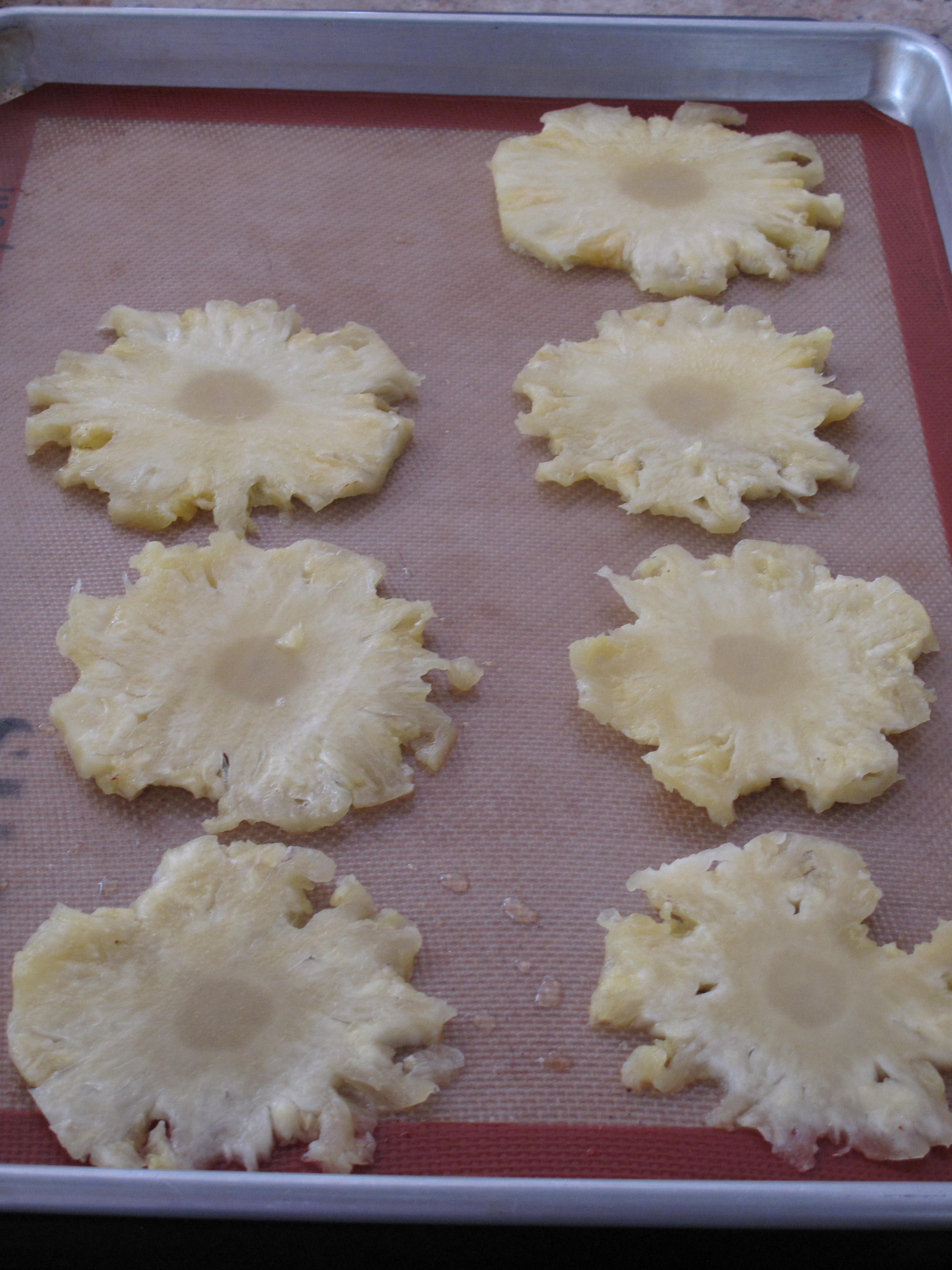
Peel pineapple(s).  Using a small melon baller, remove and discard “eyes”.  Slice pineapple very thin.  Place slices on baking sheets. 
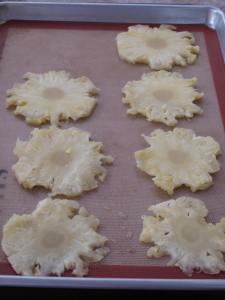
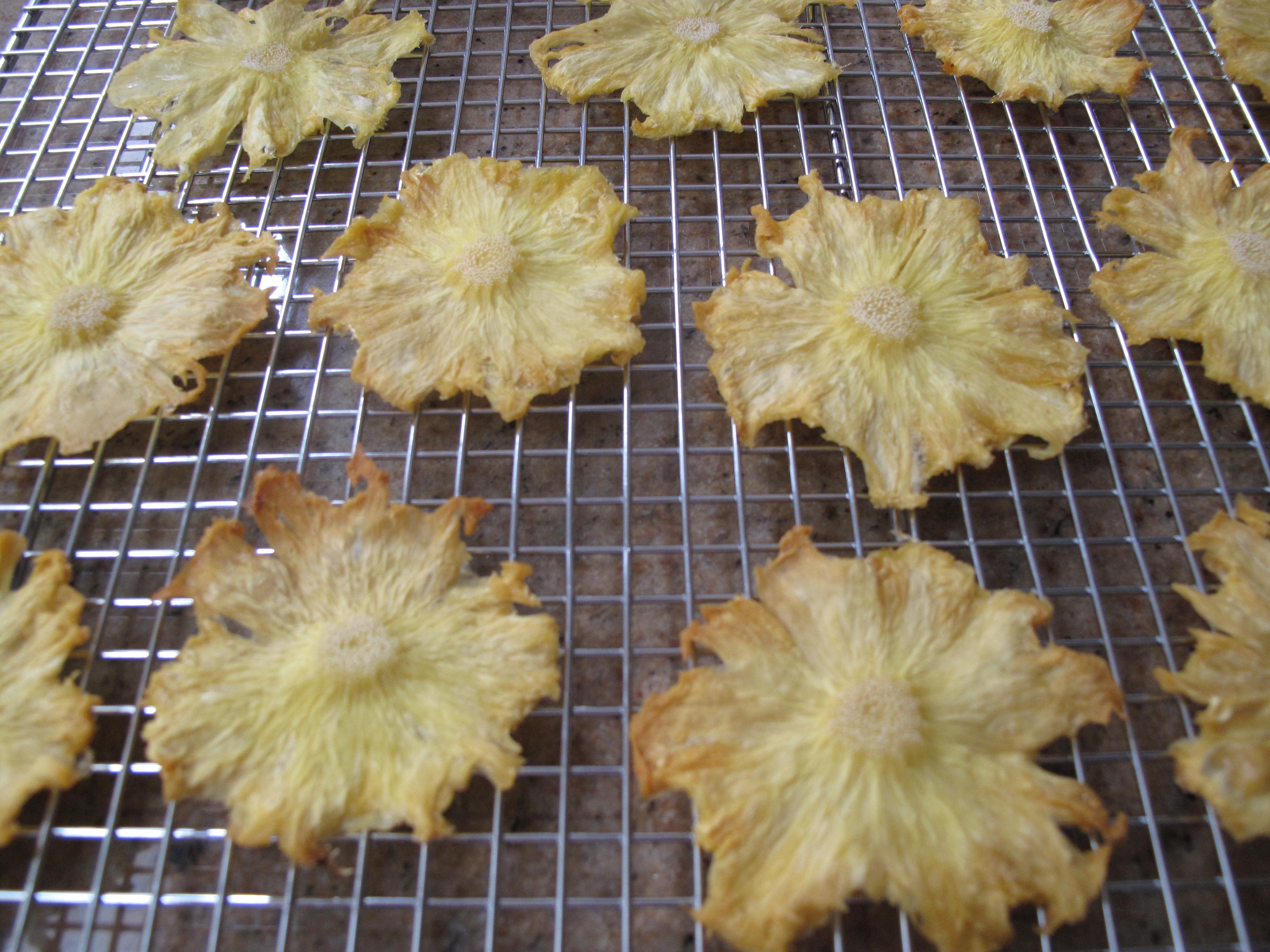
Cook until tops look dried, about 30 minutes.  Flip slices; cook until completely dried, 25 to 30 minutes more.  Cool on a wire rack. You can refrigerate the flowers in an airtight container up to 3 days.  Note:  For me, the cooking process took about twice as long, most likely due to the fact that my slices were not super thin.  Continue baking the flowers until they feel dry to your touch.  If you take them out and they still feel moist, they are not done yet and need to go back into the oven.  Here are the flowers after drying is complete.

Step two, let’s make and bake the cake.

Ingredients:

  • Unsalted butter, room temperature, for pans and racks
  • 3 cups all-purpose flour, plus more for pans
  • 1 teaspoon baking soda
  • 1 teaspoon ground cinnamon
  • 1/2 teaspoon salt
  • 1 cup vegetable oil
  • 2 teaspoons pure vanilla extract
  • 2 cups sugar
  • 3 large eggs
  • 3 cups mashed ripe banana, about 4 large
  • 1 can (8 ounces) crushed pineapple, drained
  • 1 cup chopped pecans
  • 1 cup flaked coconut, unsweetened (I bought mine at the local health food store from the bins.  It is the only place where I can find flaked coconut without added sugar.)

Directions:

Preheat oven to 350 degrees, with rack in the center.  Butter two 9-by-2-inch round cake pans.  Line the bottoms of the pans with parchment paper.  Butter paper and dust the pans with flour, tapping out any excess. Set aside. 

In a medium bowl, sift together flour, baking soda, cinnamon, and salt; set aside.

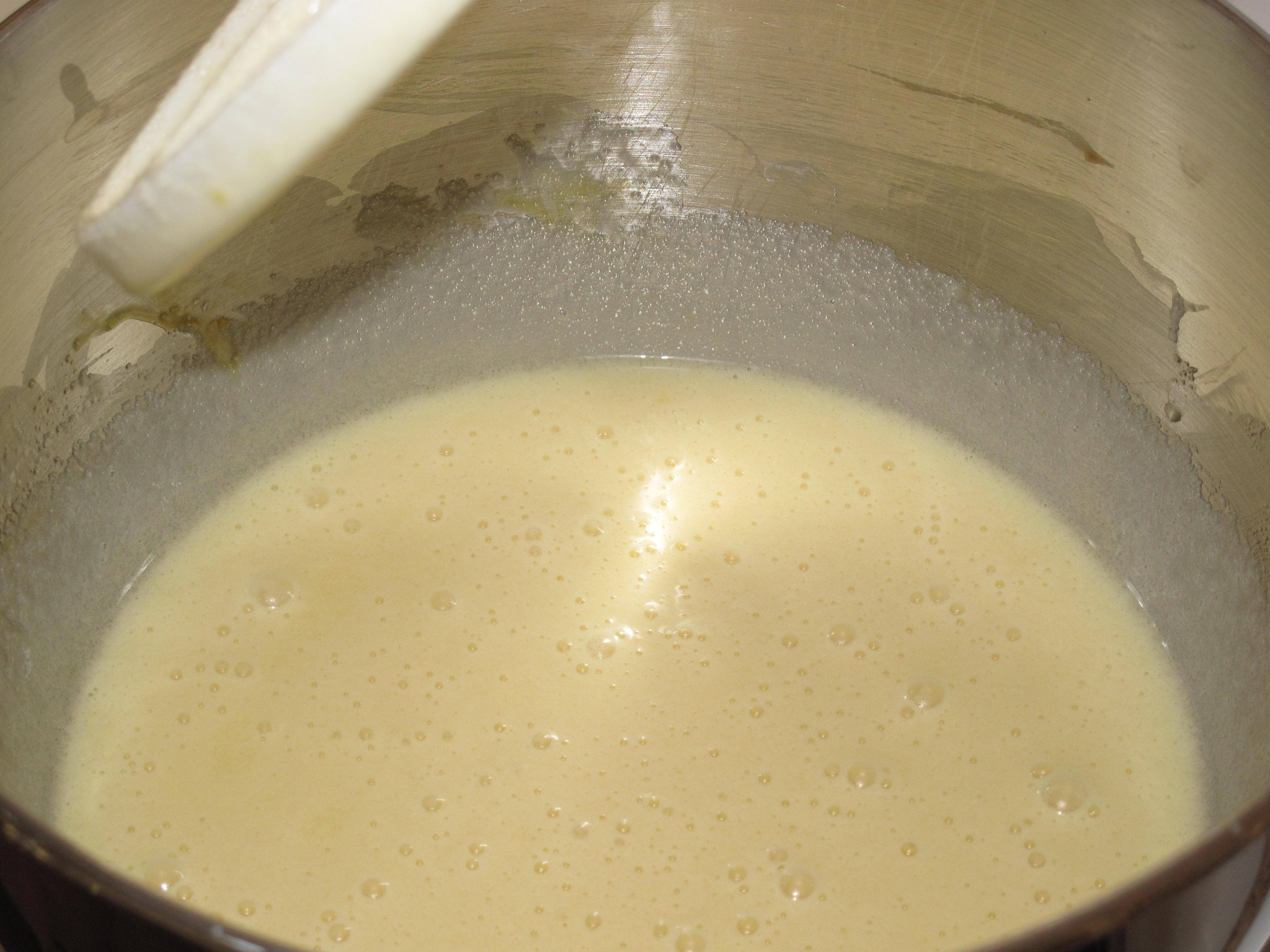
In the bowl of an electric mixer, beat oil, vanilla, and sugar until combined, about 2 minutes.  Add eggs one at a time, incorporating each before adding the next.  Beat at medium speed until mixture is pale yellow and fluffy, about 3 minutes.
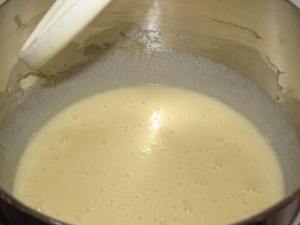
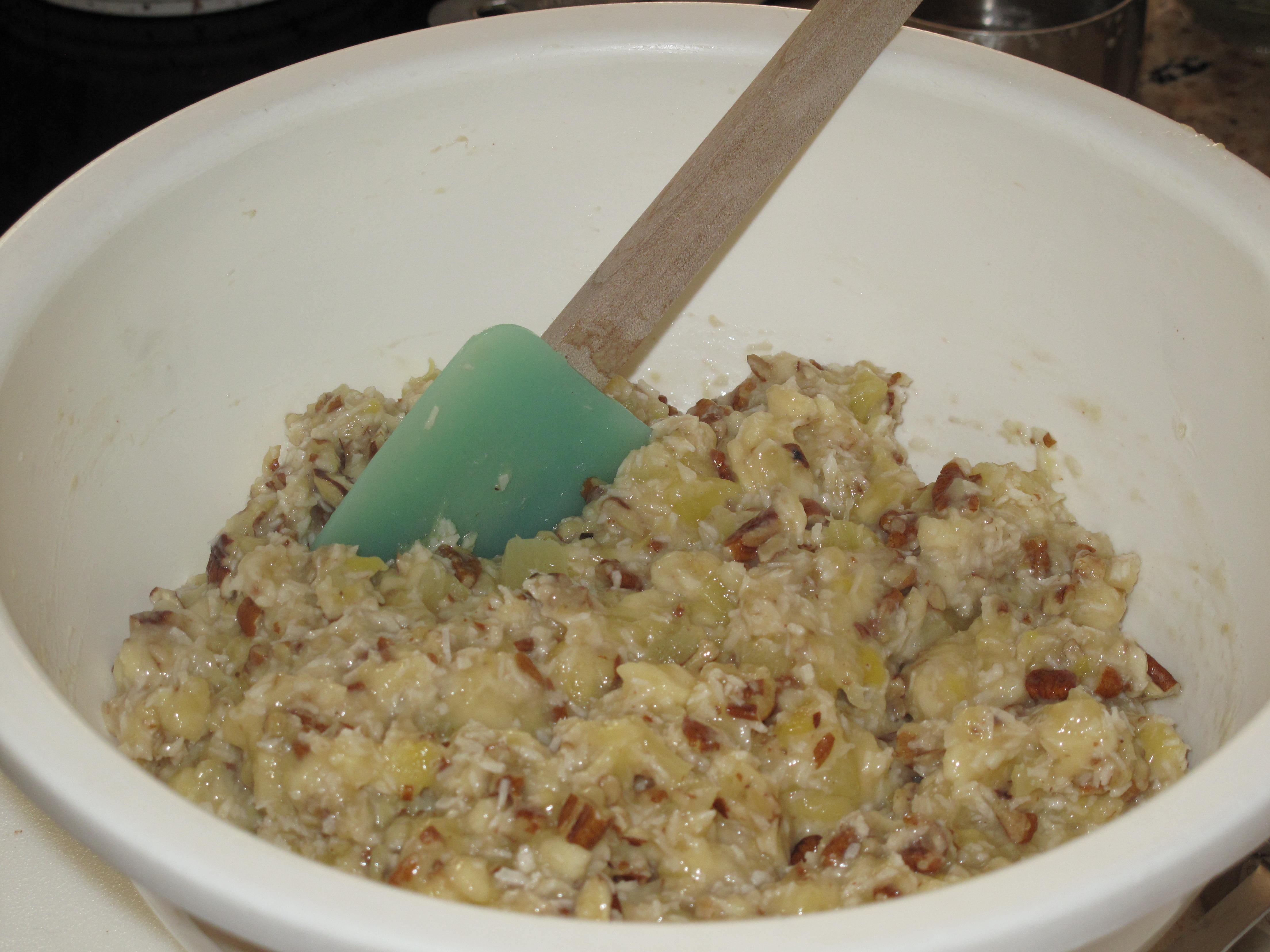
In a medium bowl, mix together banana, pineapple, pecans and coconut.
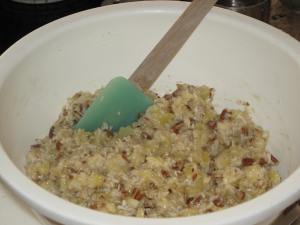
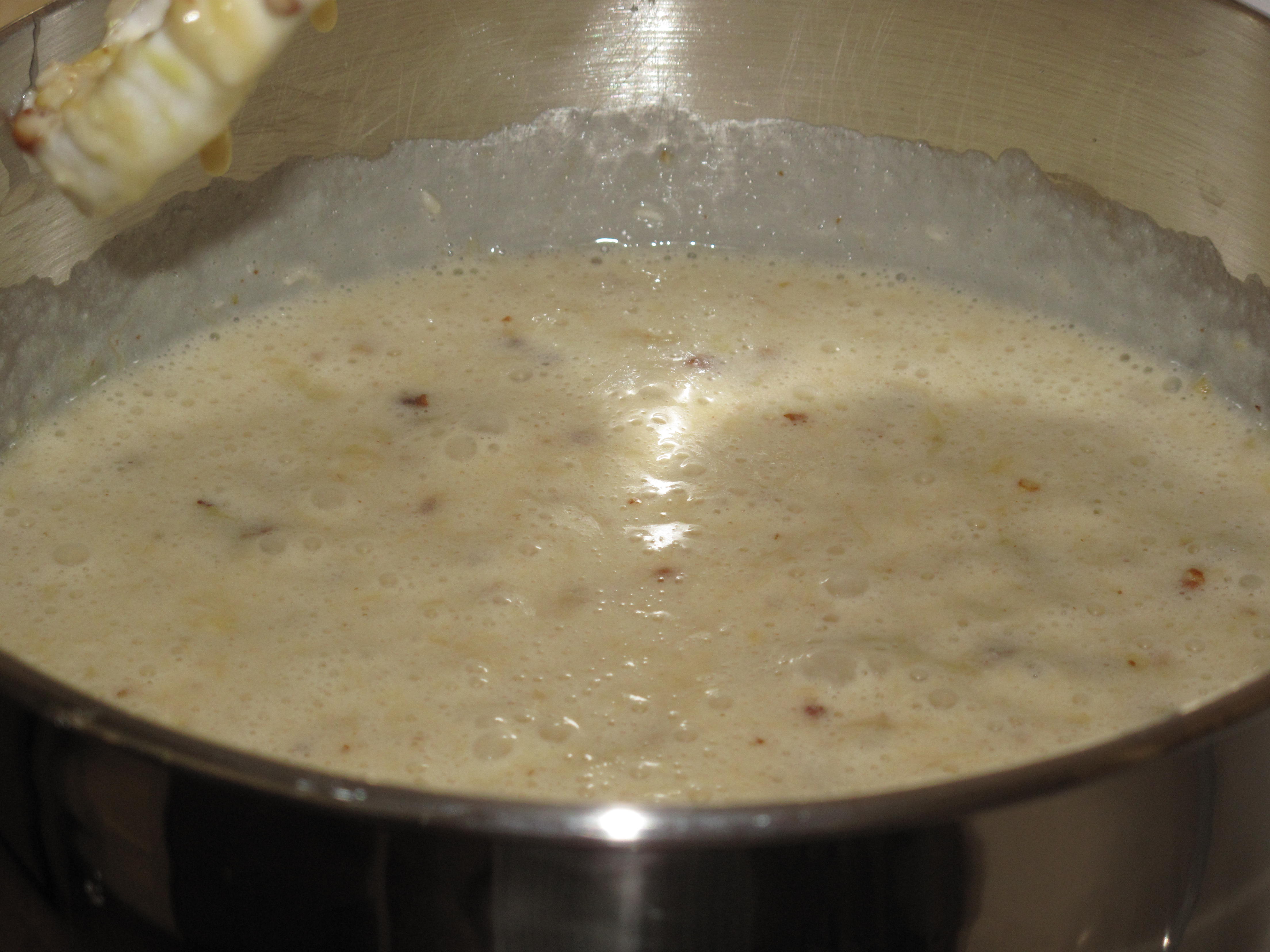
Add to egg mixture; stir until well combined.
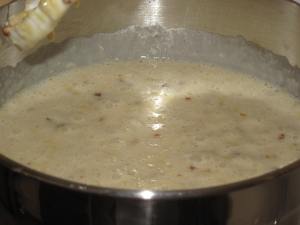
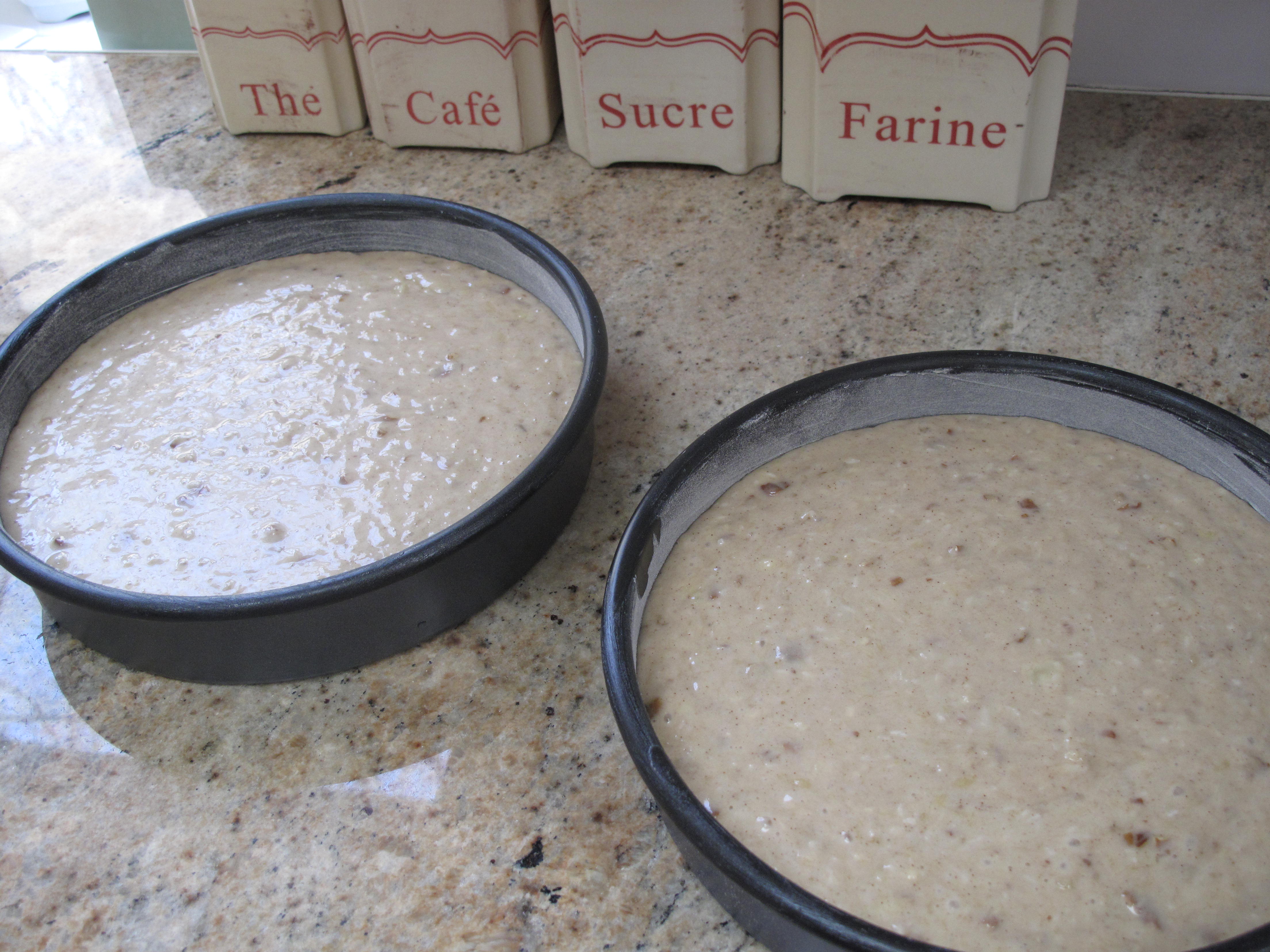
Add flour mixture; blend well.  Divide batter between pans.
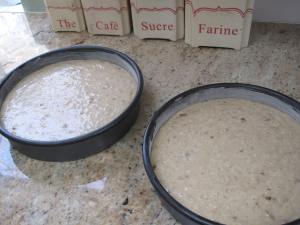
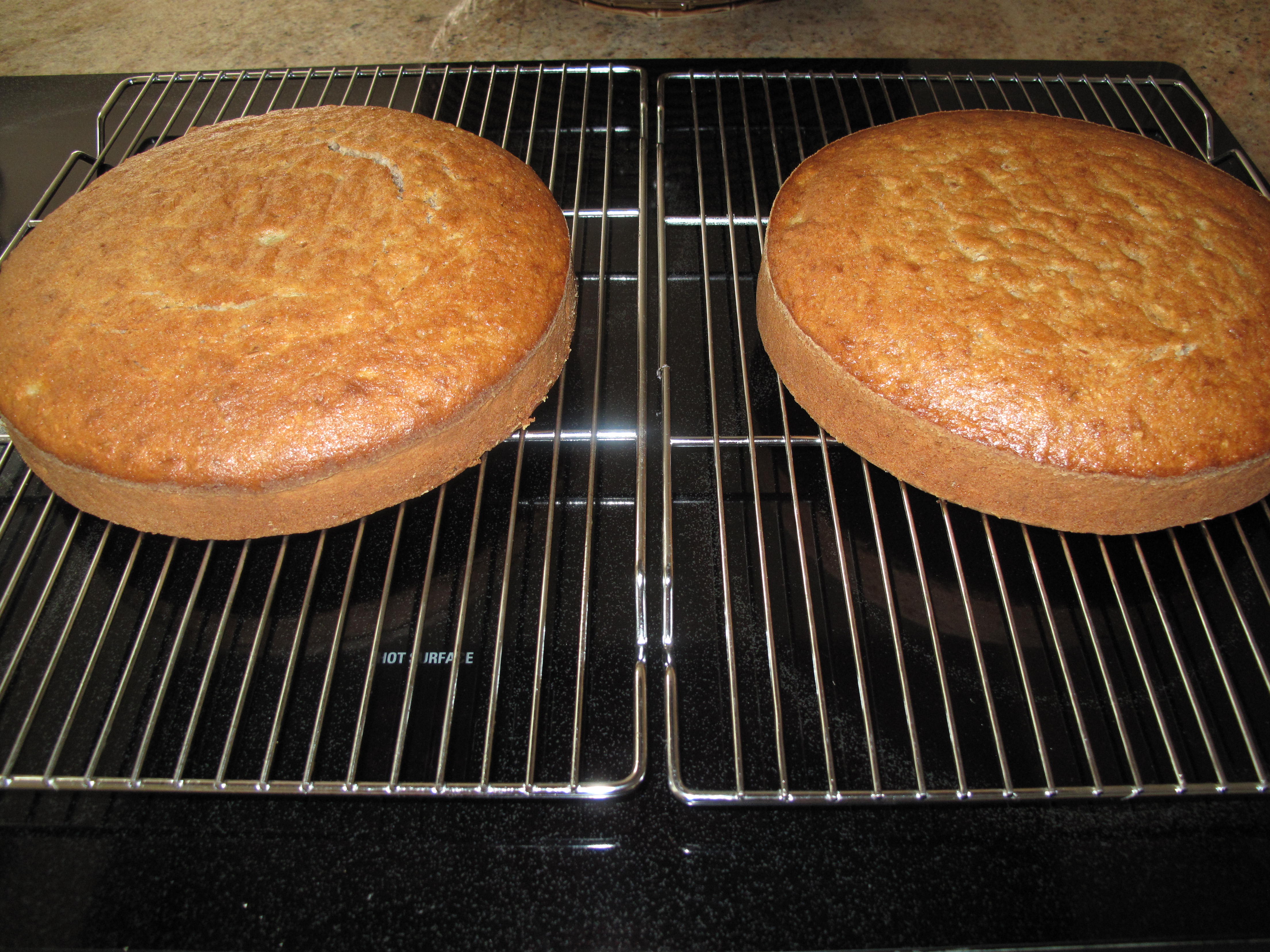
Bake, rotating pans halfway through, until golden brown and a cake tester inserted in the center comes out clean, 30 to 40 minutes.  Transfer pans to a greased wire rack.  Let cool 15 minutes.  Run a knife around edges to loosen.  Invert onto racks; reinvert, top side up.  Cool completely.  Assemble cake, or wrap each layer well and freeze (thaw before using).
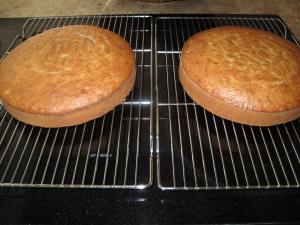
We are almost there.  Let’s finish with making the cream cheese frosting and putting it on the cake followed by the pineapple flowers.

Ingredients:

  • 1/2 pound (8 ounces) cream cheese, room temperature
  • 1 teaspoon pure vanilla extract
  • 1/2 cup (1 stick) unsalted butter, cut into pieces, room temperature
  • 1 pound confectioners’ sugar, sifted

Directions:

In the bowl of an electric mixer, beat cream cheese and vanilla until light and creamy, about 2 minutes.  With mixer on medium speed, gradually add butter, beating until incorporated.  Reduce mixer speed to low.  Gradually add sugar, beating until incorporated.

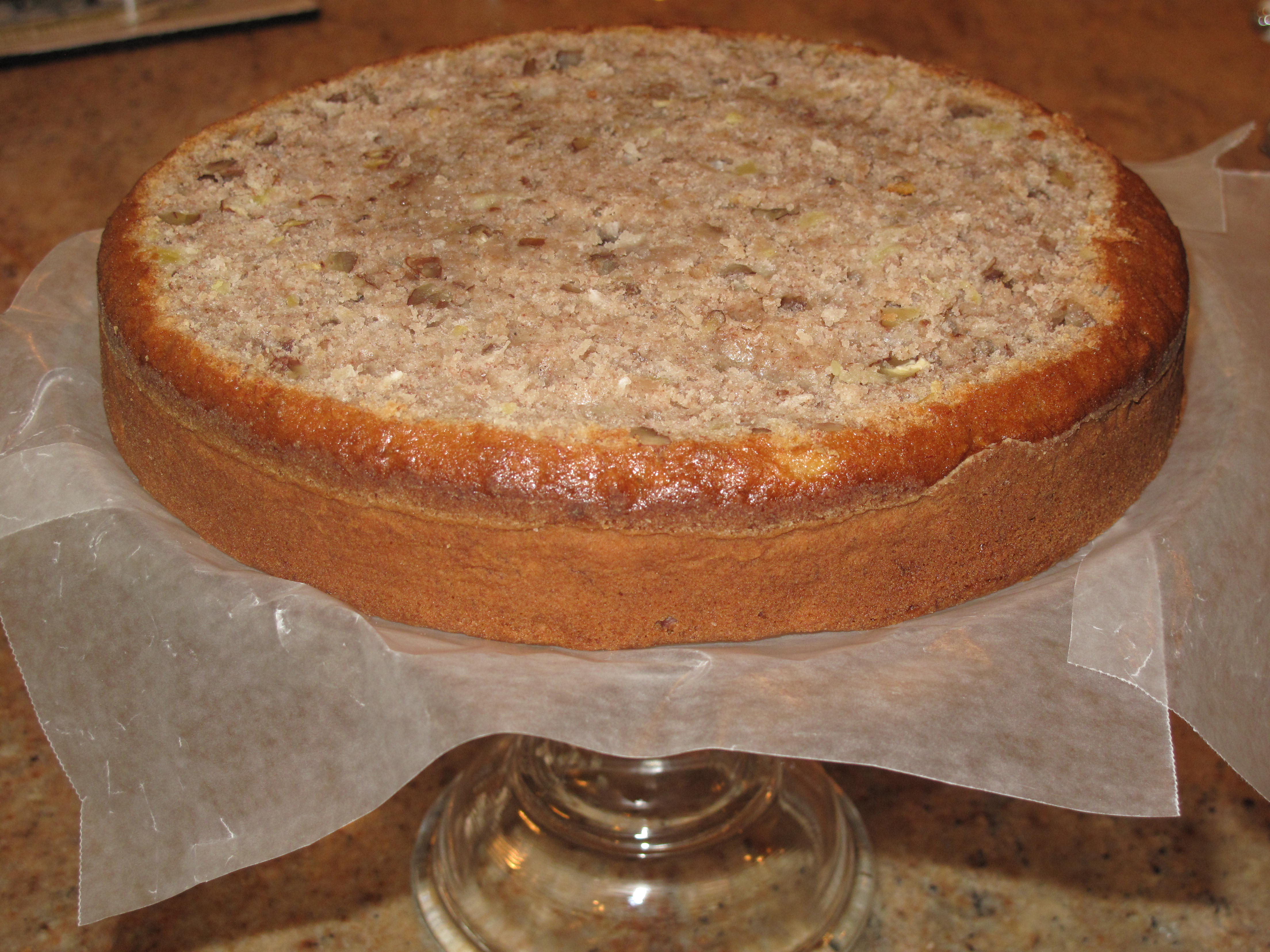
With a serrated knife, trim and discard rounded top off one layer.  Place layer on serving platter.  I like to put the bottom layer on top of small rectangles of waxed paper that hang over the side of the cake stand.  When frosting, the wax paper catches any wayward frosting.  When you are done frosting your cake, pull the wax paper away from the cake/cake stand and you will have a sharp edge on the bottom layer and a clean cake stand.
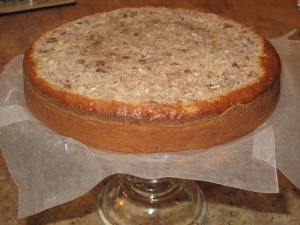
Using an offset spatula, spread top of layer with 1/4 inch of frosting.  Top with other layer.  Frost sides and top of cake with remaining frosting.  Decorate with pineapple flowers, if desired.  Serve at room temperature. Cake can be refrigerated up to 3 days.
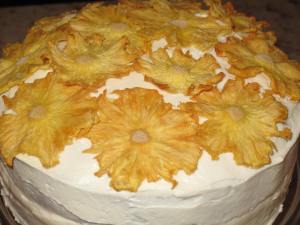
We’re done.  Take a minute to catch your breath and then dig in to a slice of this delicious cake.  You and your friends and family will not be disappointed.  Why not spend some time to salute Spring in the right fashion?  Bake this hummingbird cake and show Spring how much you love her.  We sure are glad that we did.  What other Springtime desserts do you make at your home?

News From The Garden

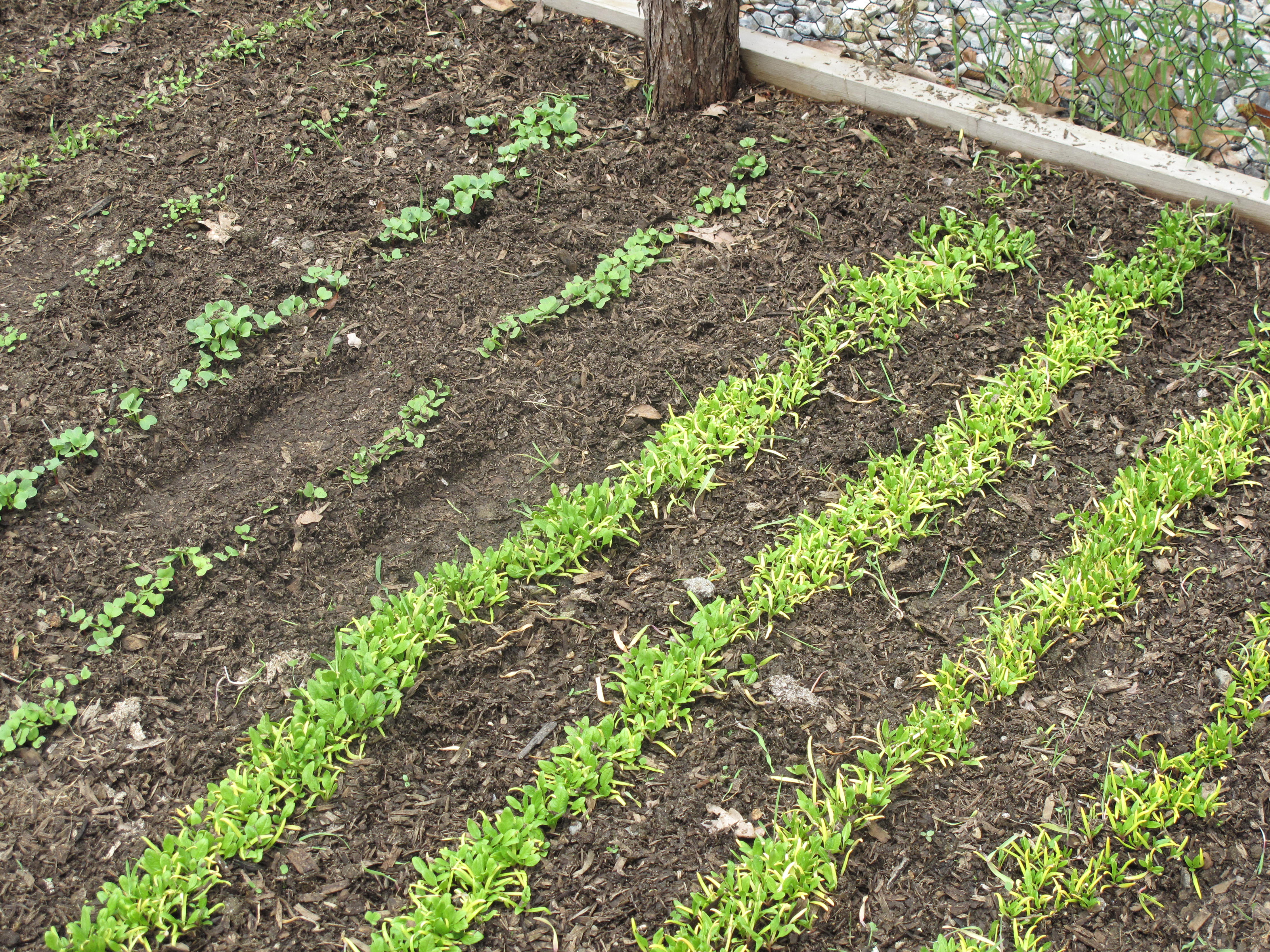
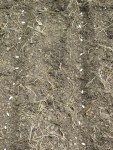
This is a garden update.  Just a little update on all the planting that we’ve done over the last few months or so, both outside and inside.  First off, the raised bed gardens are doing well.  Above, you can see the rows of seeds that are beginning to pop out of the ground.  From the lower right, the first four rows are the spinach rows that we planted on Thanksgiving 2010.  Two flat leaf rows and two savoy leaf rows.  Next is a row of round radishes, followed by a row of French radishes.  They are the long variety of radish.  Next is a row of arugula and then two rows of lettuce mix.  Starting now through the end of the month, we will continue to plant more seeds and plants into the garden.  Our last planting will be tomato plants given that they need to be put into the ground after the chance of frost has past.

Our tuberous begonias have shown their faces from the bulbs we planted.  ‘Picotee’ is a little less bashful than ‘John Smith’.  Remember him, the tuberous begonia with scent?
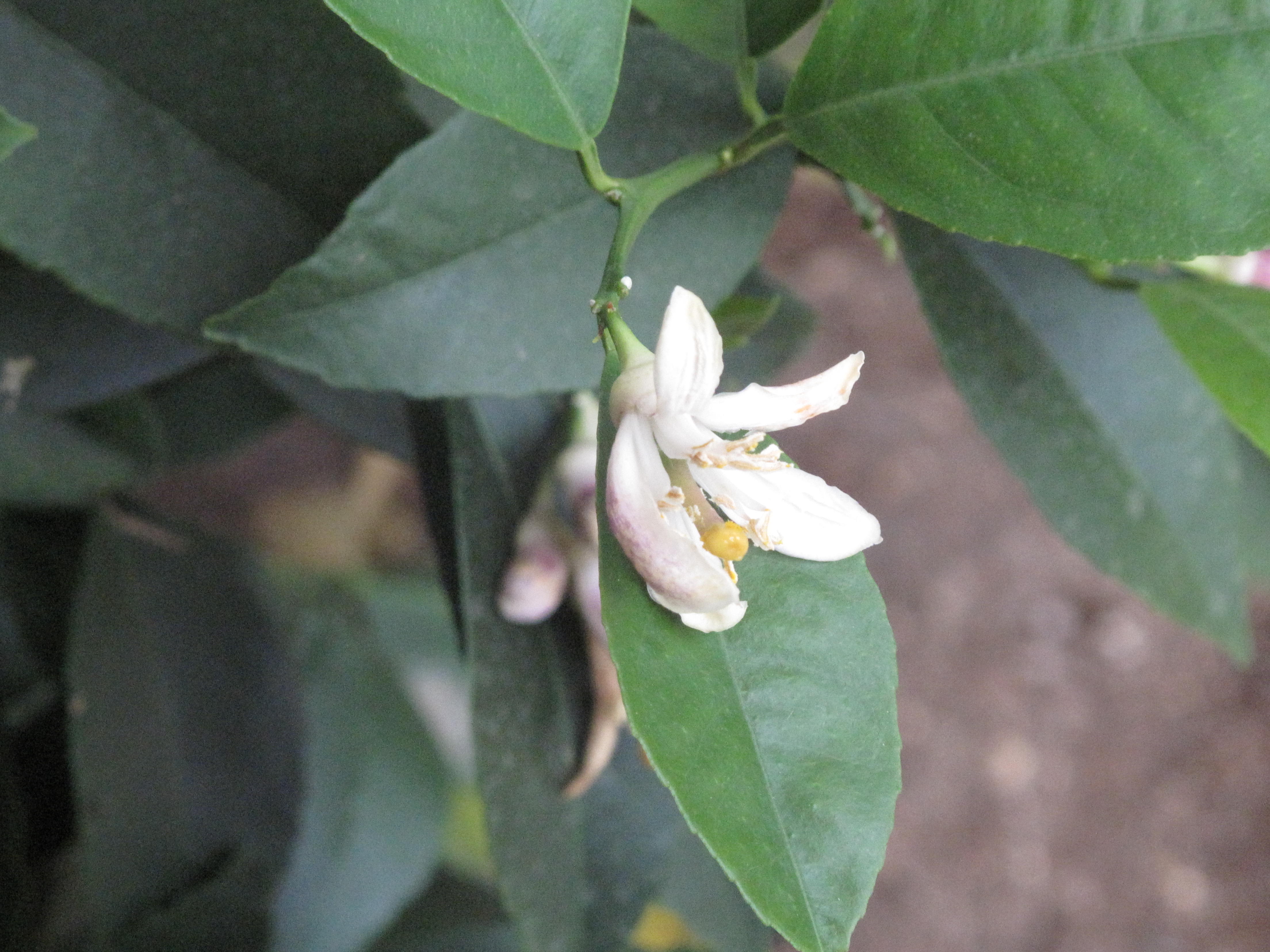
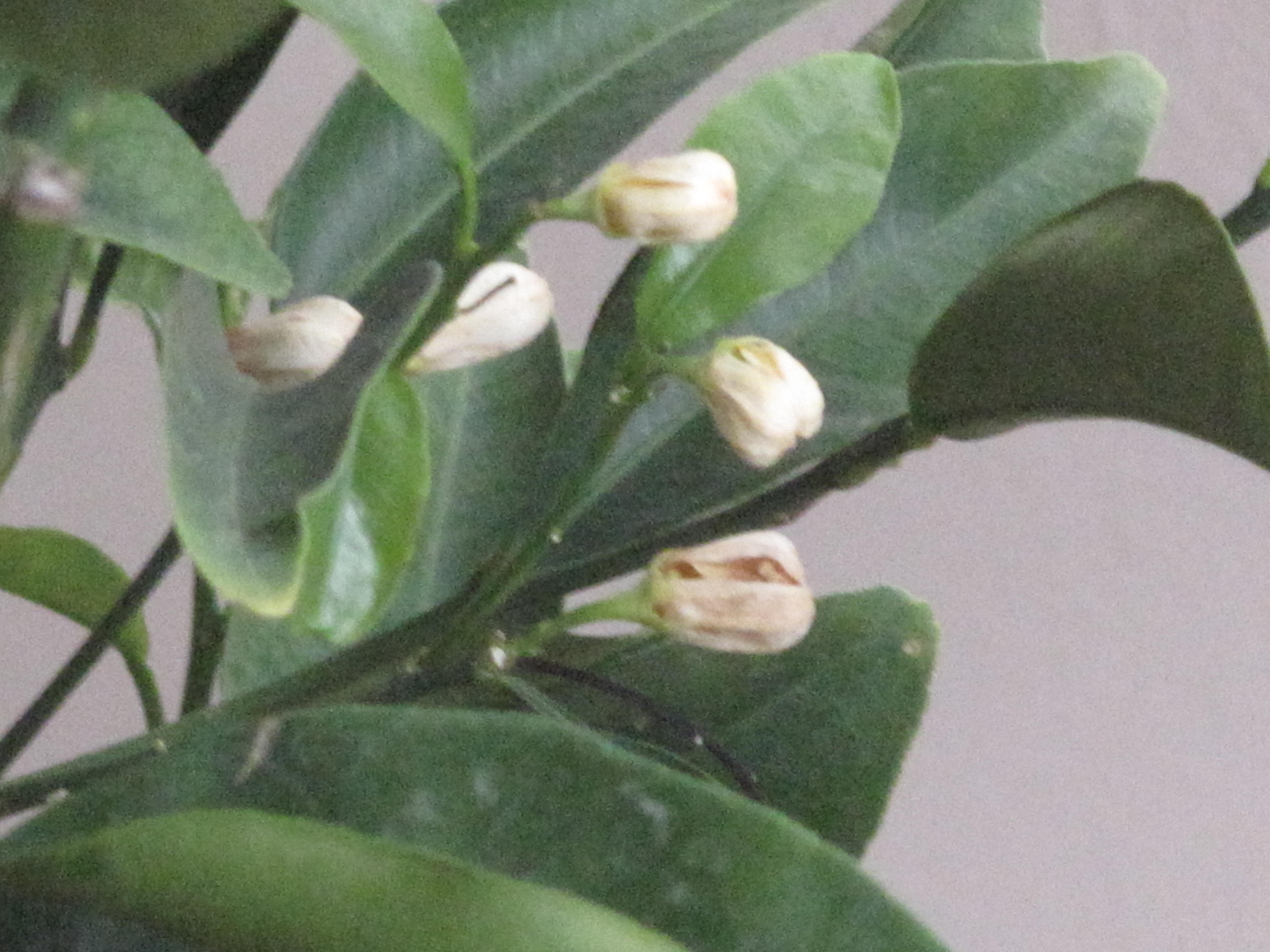
Here are the dwarf citrus trees.  They are blooming so let’s hope that this means fruit is on the way.  That is the Calamondin orange on the top and the Meyer Lemon on the bottom.

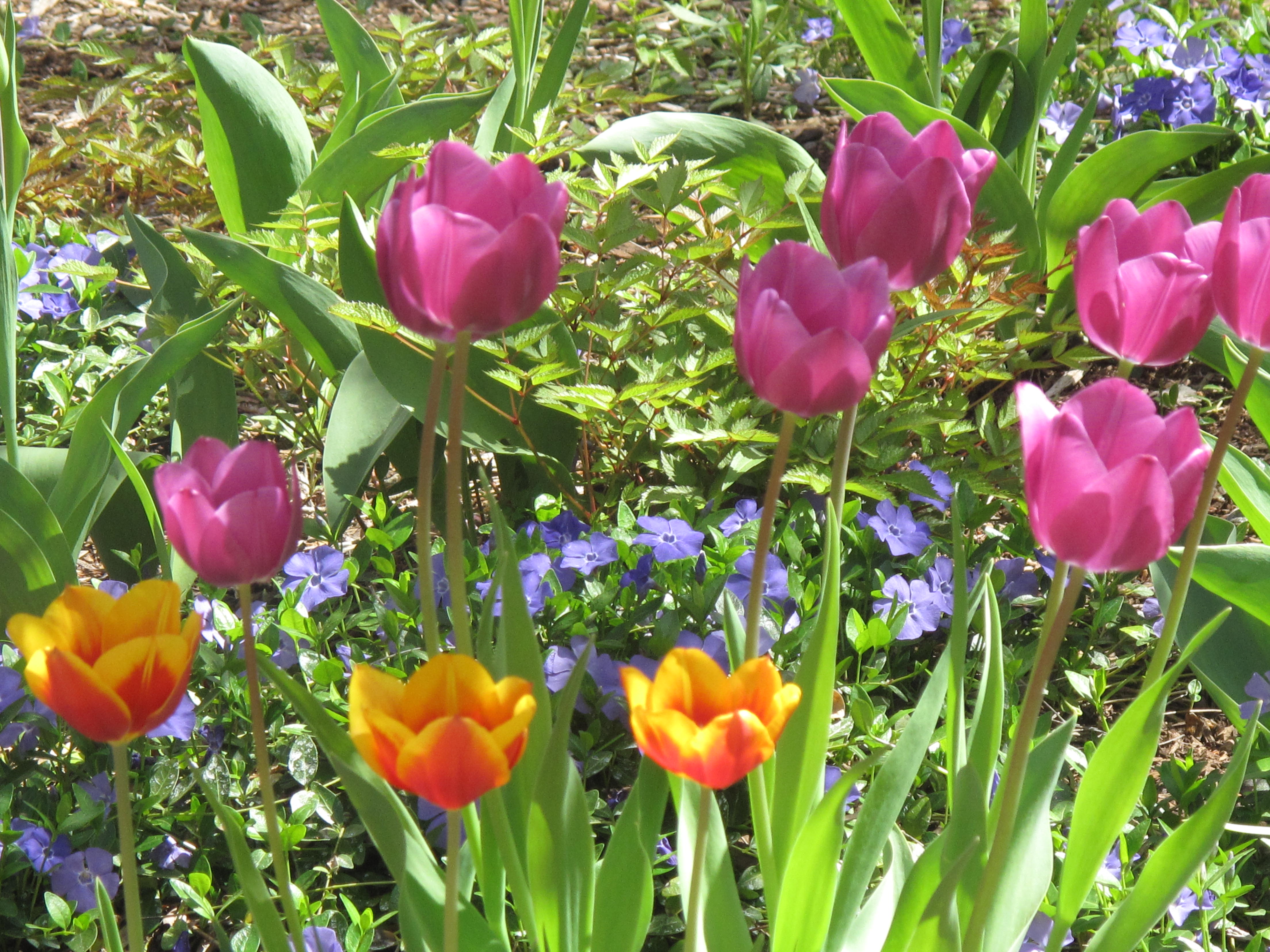
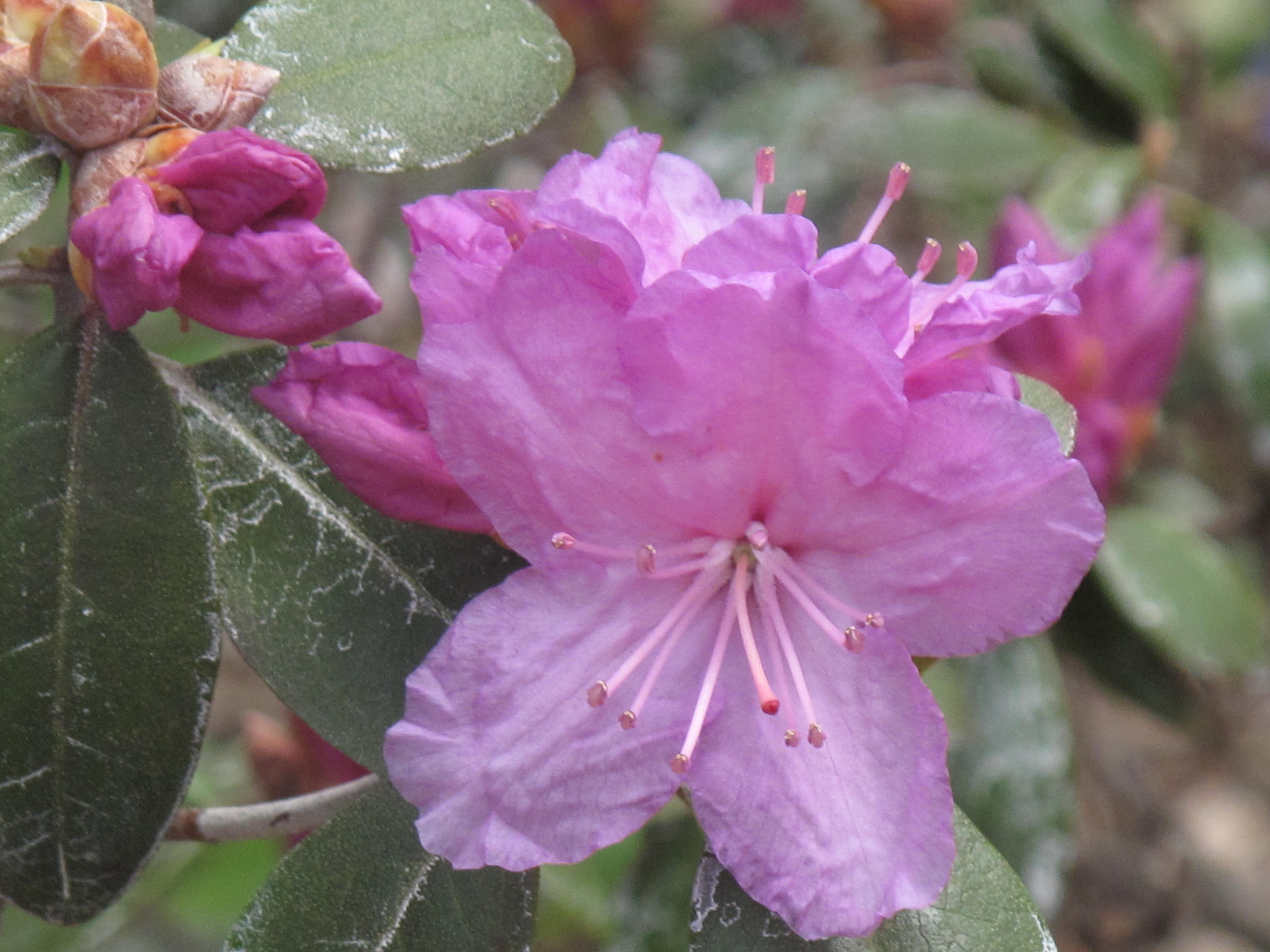
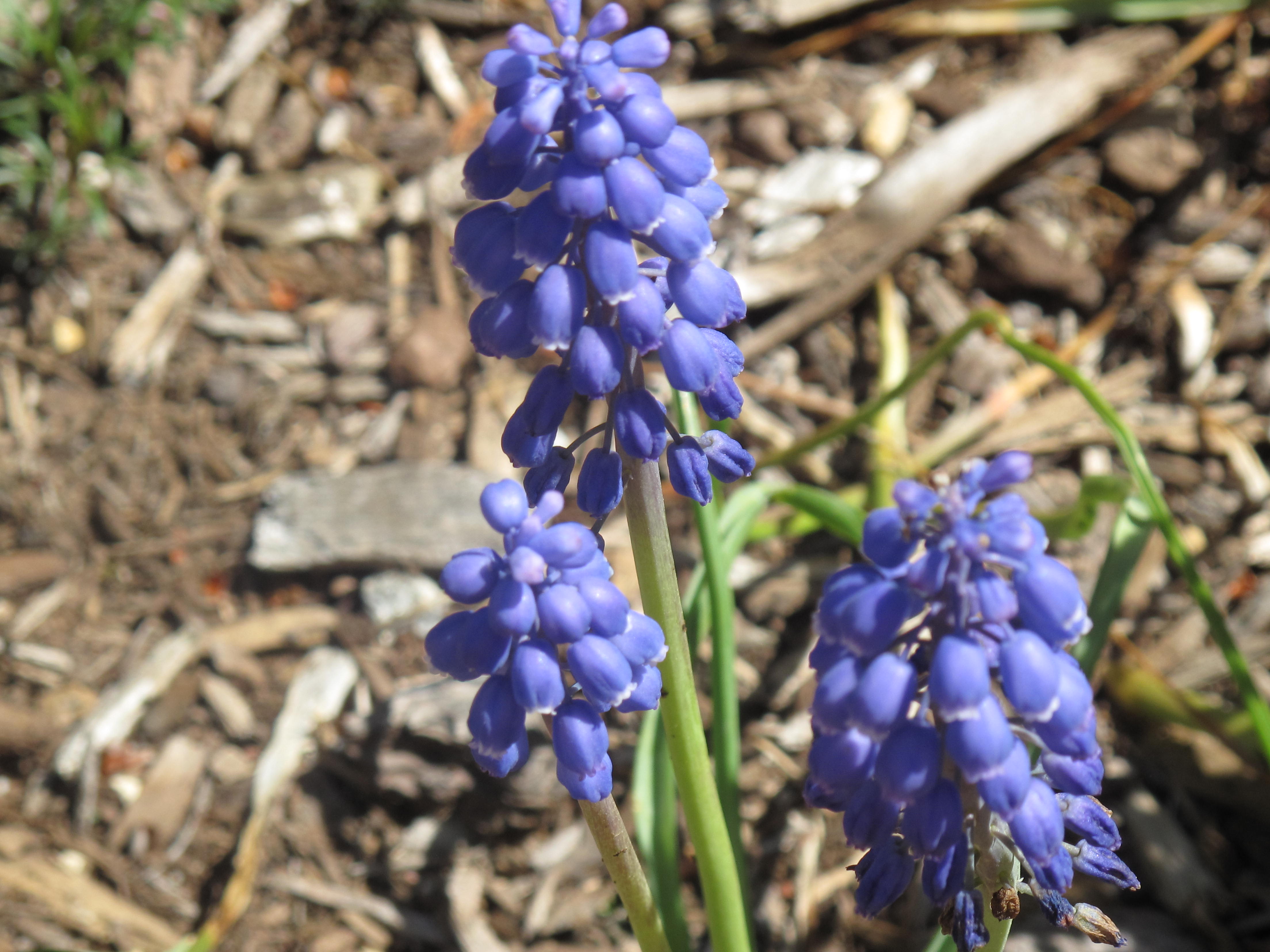
Flowers are popping out all over the yard.  Here are some shots of our Tulips, our Rhododendron bushes and some Muscari armeniacum.  All so pretty.  We wish they would last longer.

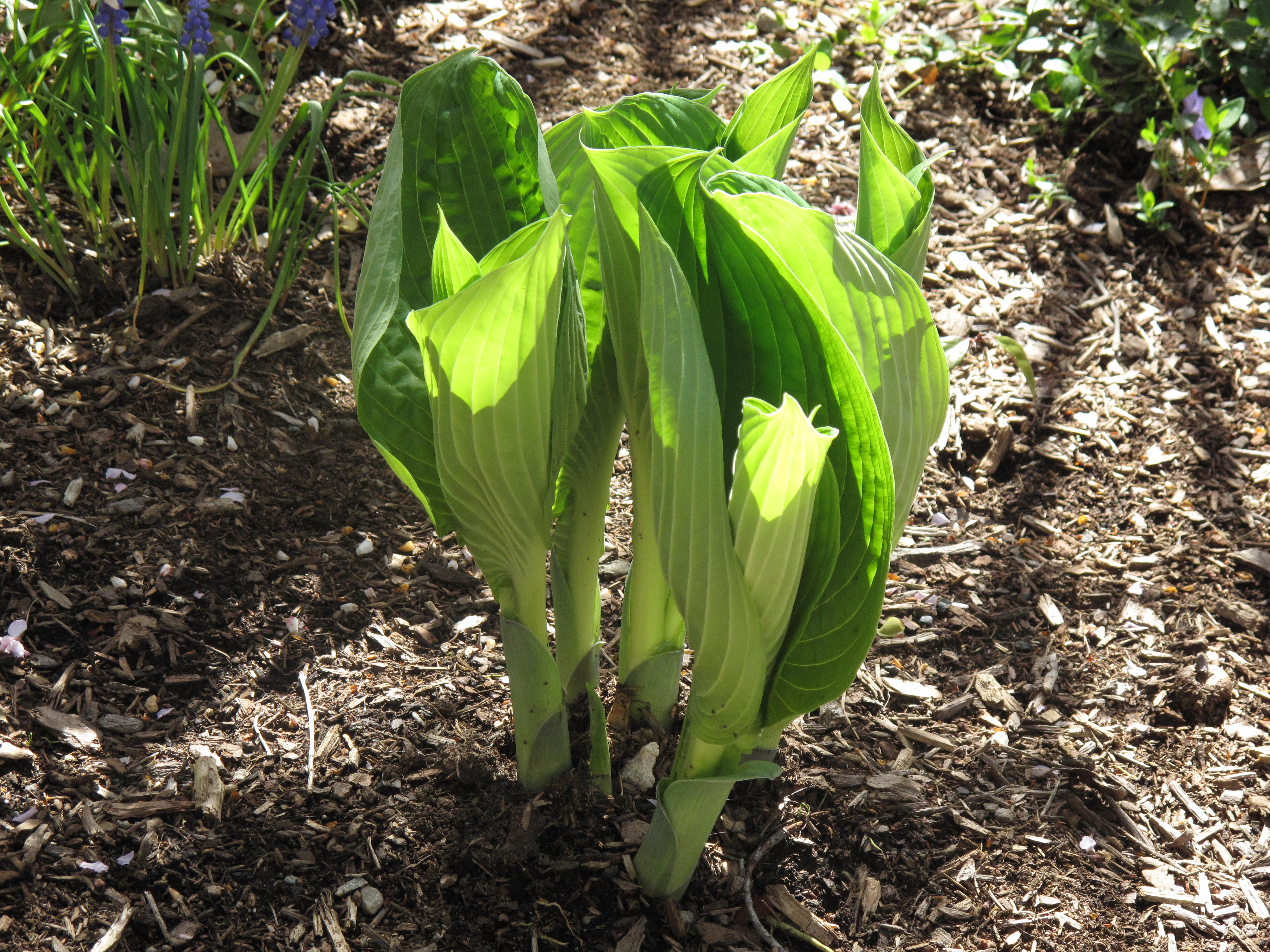
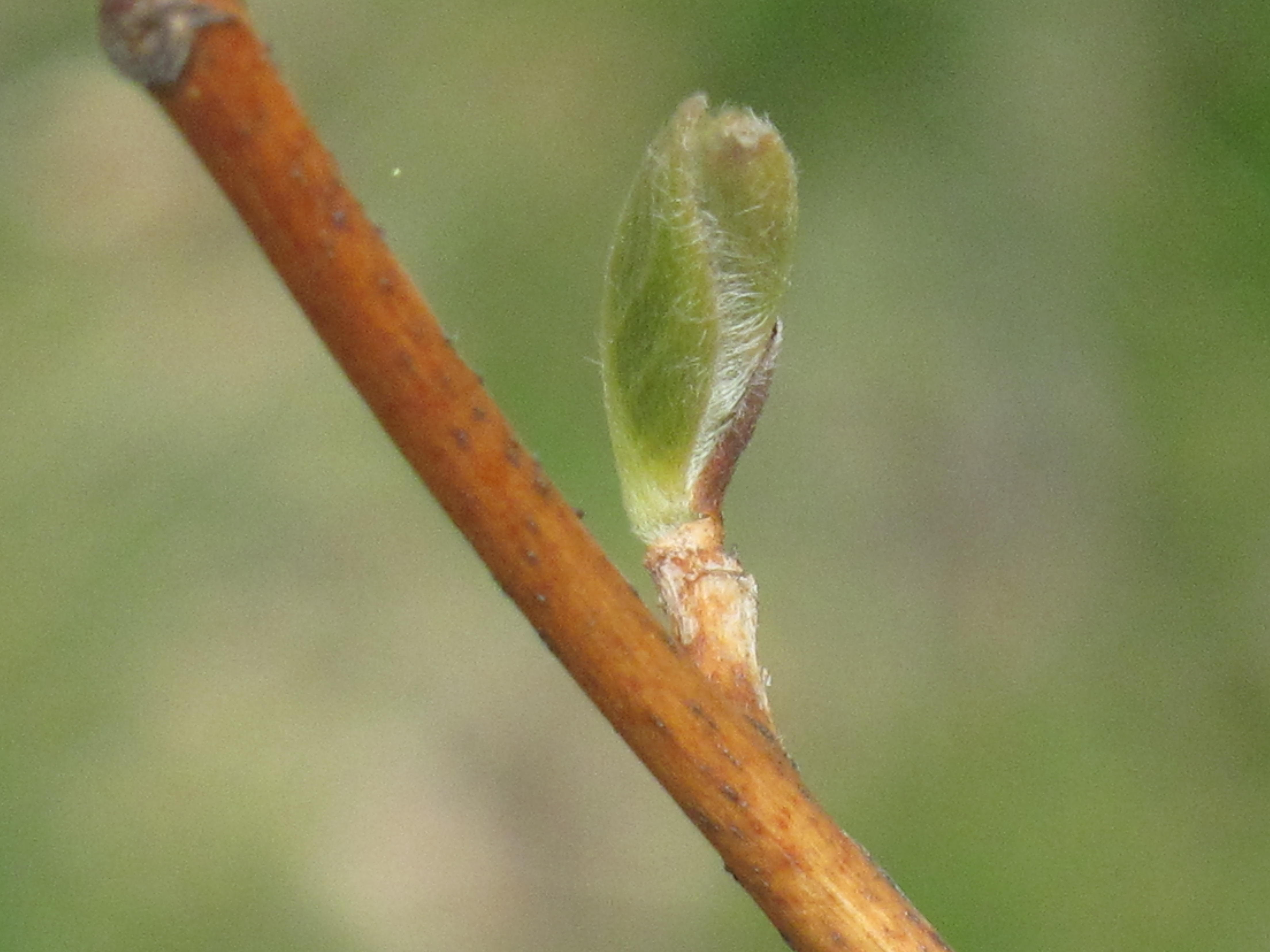
Lots of plants are also showing progress in the garden as well.  Here is a Hosta getting ready to spread its wings and the slow-growing Stewartia pseudocamellia timidly saying hello.

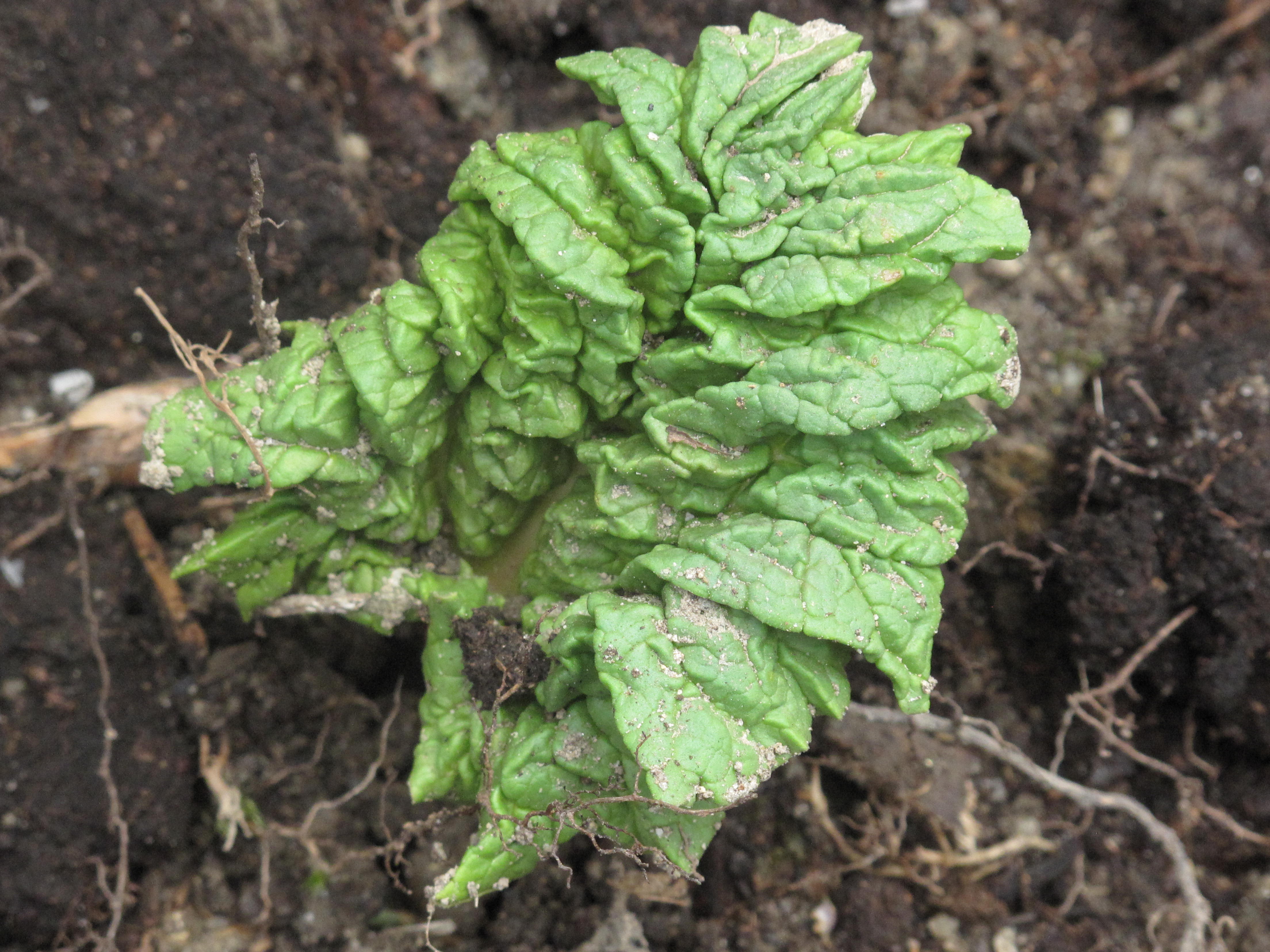
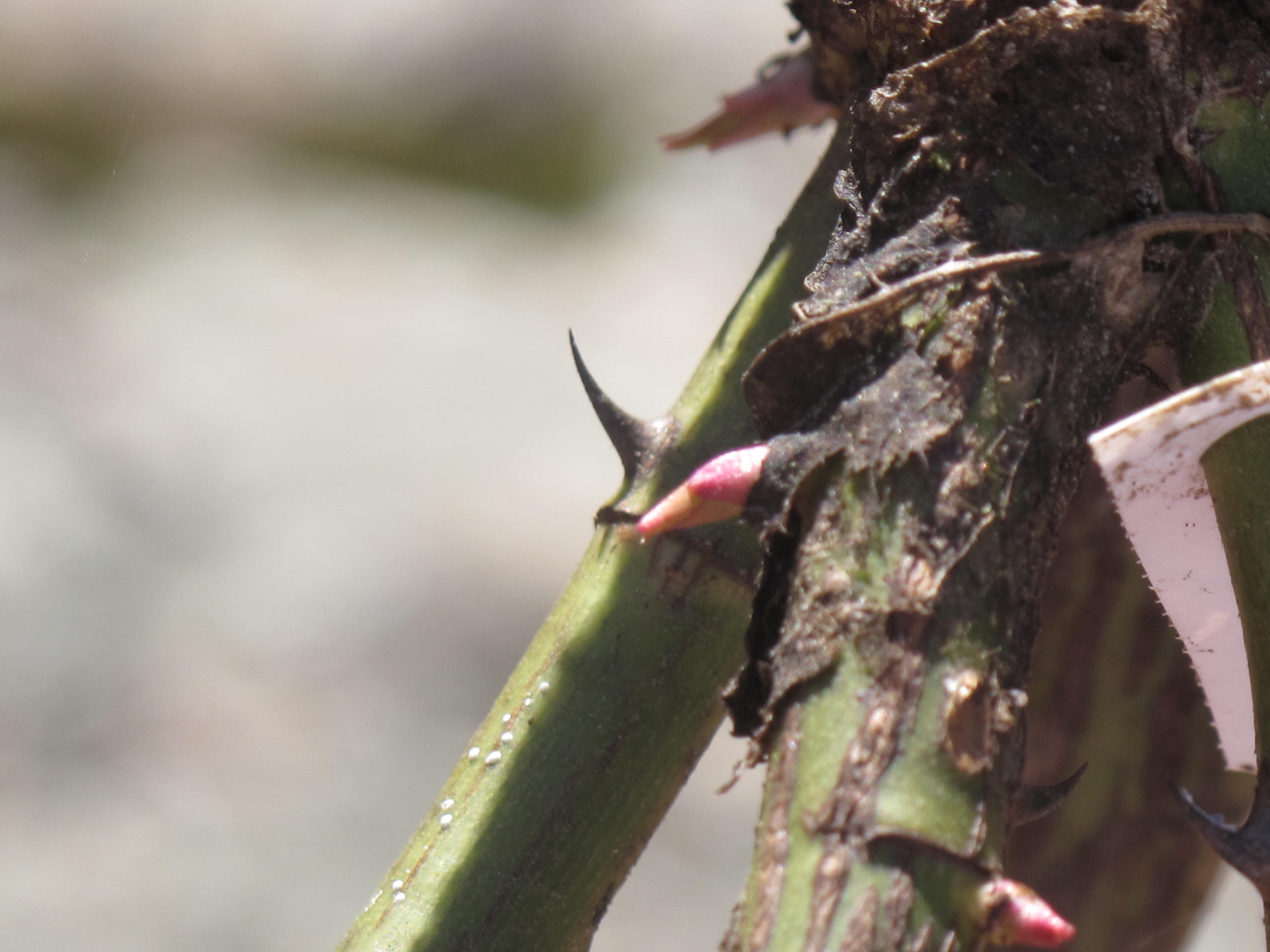
What is most interesting to us is how quickly plants that we’ve put into the ground for only a few weeks are already growing.  Remember the Rhubarb and our princess tree rose ‘Grace Kelly’?  They are already growing and budding.

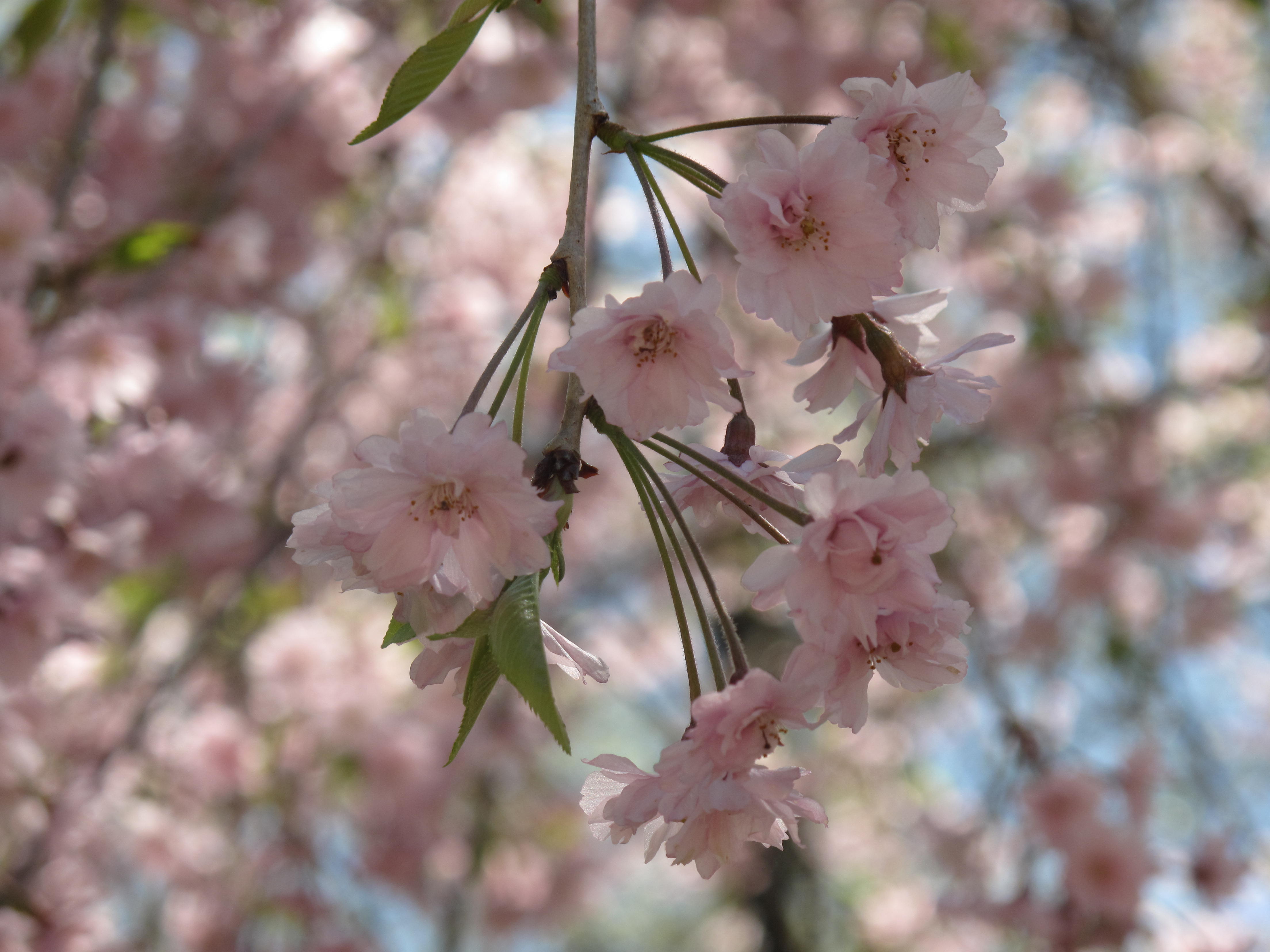
The best sign that Spring is here is the Weeping Cherry trees that we have here on Glen Road.  When the blooms come out in full force, you know that the winter is most likely over.  Hurray!!  Here is a little glimpse of the blooms.  We should hold our own Cherry Blossom Festival here on Glen Road.

So we hoped you enjoyed our little garden stroll and update.  Things seem to be doing well.  We are back outside now to keep things growing on schedule.  From here on out, there will always be weeding, pruning, snipping, planting and picking to do to keep everything in order.  How is your Spring garden growing?