Hot For Horseradish

This is a love story about all things hot.  Not hot like the sun, but hot to your taste.  We love foods that have a little heat to them here on Glen Road.  In fact, we are always taking recipes and putting a little heat into them.  We add cherry peppers into broccoli rabe, we put cayenne pepper into almost anything and there is nothing better than cold clams with tabasco sauce, to name a few.  However, our favorite is freshly roasted beef or a polish sausage with a little side of homemade horseradish.  Funny thing is, we don’t have any horseradish that grows in our garden.  When we want horseradish, we need to buy the root at our local organic produce market.  Well, this is about to change because we have planted a bed of five horseradish roots.  The five little brown stalks appear to be so innocent, but in a year they will produce thick roots that are filled with fire.  These roots were planted down from our newly planted rhubarb patch, right behind the espalier apple trees.  Let’s get the heat started with a little horseradish history from the internet:

Horseradish (Armoracia rusticana) is in the brassica family, which includes turnips, kale, mustard greens, broccoli rabe, daikon radish and many other plants with varying degrees of pungency and a similar taste.  Native to the temperate regions of Europe and Asia, it is an ancient herb.  The Romans carried horseradish to Europe as a medicinal herb and as a flavoring.  It was cultivated in Egypt before the exodus of the Hebrew slaves around 1500 B.C., and is often the symbolic bitter herb at the Passover Seder.

By the 16th century, the pungent root was spreading throughout England, where it was described for  its many uses, including as an aphrodisiac, a treatment for tuberculosis, a mustard plaster and a dewormer.  The common name probably evolved from the German “meerrettich,” which means sea-radish, which was misunderstood by the English, who associated “meer” with “mahre,” an old horse.
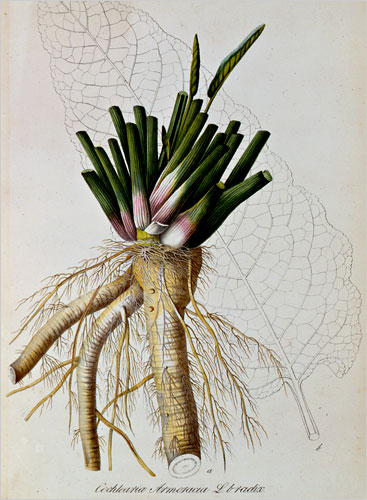
Undisturbed, the root doesn’t have a strong smell or flavor. But crushing or grinding it produces isothiocyanates, a kind of mustard oil, which is what gives horseradish its flavor and heat.  Adding vinegar stops the reaction because it’s an acid.  It also stabilizes the isothiocyanates, so you can still get that flavor a week later.  Tradition calls for grinding the root outside, because the chemical reaction triggered creates a gas that not only makes you weep, but can irritate lungs and nostrils.  This is actually a defense mechanism for the plant if it’s wounded.

We planted our horseradish in a long furrow about six inches deep.  Each root has a top and a bottom identified by the slicing made by the grower.  The top is identified by a straight slice and the bottom is identified by a diagonal slice.  When we placed them in the furrow, we put them in at an angle, with the straight sliced top pointing upwards.  Once in place, we covered the top of the roots with about four inches of soil, pressed the soil into place and watered.  While we won’t harvest any horseradish this year, the roots will produce beautiful green leaves that will make a nice complement to the equally as beautiful rhubarb leaves that we previously planted along the back side of the espaliers.  Next year, we will harvest and grind a few of the roots, add some white vinegar and salt and begin to enjoy some heat.  As my Grandmother used to say, we can only harvest the roots in months that contain an ‘R’ in them.  Months that don’t contain an ‘R’ are too hot and the root will not produce optimal flavor.
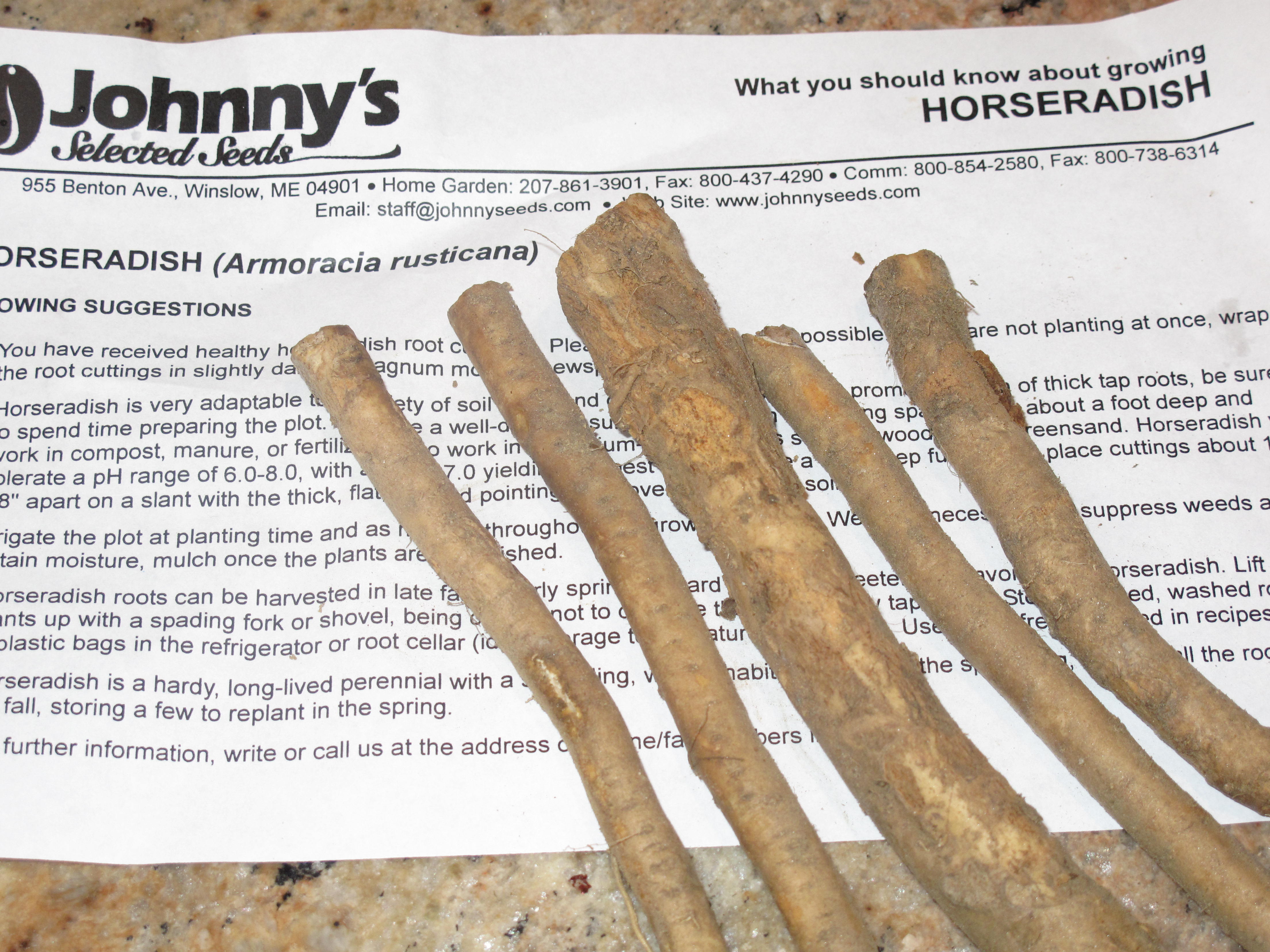
So here’s to horseradish, named “Herb of the Year 2011” by the International Herb Association.  We will look forward to your pretty leaves this year and then the addition of your hotness to our meats, mashed potatoes and seafood in 2012.  We can’t wait.  What hot foods do you and your family like to cook or eat?

Grace Kelly Moves To Glen Road

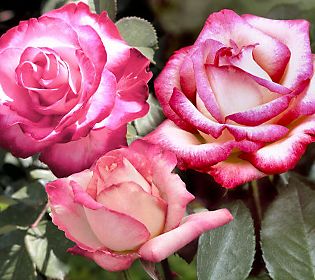
This is Grace Kelly.  As you can see, it is not the actress/princess that you were thinking.  ‘Grace Kelly’ is a variety of tree rose that we planted in a container this weekend so it can begin growing in time to bloom this Summer.  We have had tree roses on the patio almost every year we have lived here on Glen Road.  They have always grown quickly from the dormant tree that we get shipped to us. 

In early Summer, the tree rose begins to bloom and if you are diligent about removing the spent roses, the tree will continue blooming up until the end of the season.  Tree roses are not actually a class of rose, but rather a way of growing them.  A bush or climbing rose is simply grafted onto a straight trunk, giving the desired appearance.  Here is the rose bush that is at the top of the tree we purchased.

Very similar in appearance to a rose bush that you would buy at a nursery, except it is attached to the top of a long trunk.  The roots are about five inches long and we have always just filled a container with organic potting soil and put the tree rose into the soil so that it is covered up to the base of the trunk.  They require very little care other than providing about an inch of water per week and fertilizer every so often.

At the beginning of June, our tree roses have always produced an array of beautiful, full-sized rose buds.  The variety ‘Grace Kelly’ appears as beautiful as the woman it is named after.  Pale pink roses tipped in a dark pink to red.  Here are some pictures of our desired end state.  Grow, girl, grow!

So now Glen Road has had its first celebrity (er, celebrity tree rose) come visit in 2011.  Again, we have always planted these beautiful plants every year on Glen Road.  Since they are a perennial, you can also winter them and bring them back year after year.  To winter in mild zones, you need only wrap in-ground plants in straw or burlap.  To winter in northern zones, you must bend the plants without breaking its roots and cover with soil.  Containerized plants can be moved to an unheated, protected area.  Give a tree rose a try to brighten up your patio this Summer.  They are readily available on the internet and aren’t that expensive.  When’s the last time a princess stayed in your backyard?  Tell us what plants you are planting on your patio and deck this season?

Cardinal Love Is A Battlefield

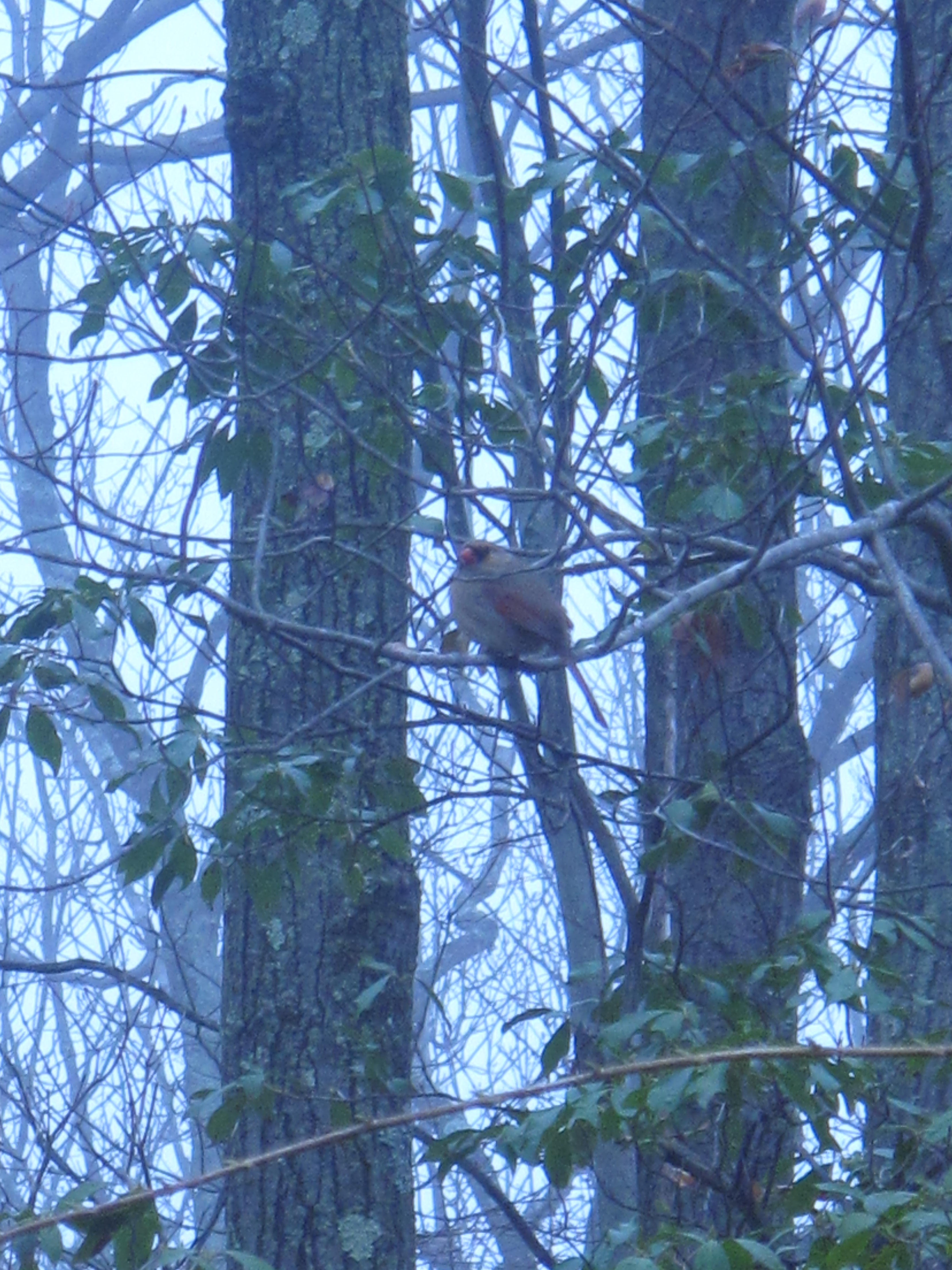
This is how we woke up this morning.  Through closed windows and with light rain falling, we woke up to the sound of super loud bird noises.  First, it was loud beautiful singing.  Next, shrill one-note warbles.  Then back to loud beautiful singing.  Where we live, you never know what you are going to find when you pull back the curtains to take a peek.  Today it was the sight of two male Cardinals fighting for the love of one female.  I thought the fight looked pretty intense so I crept outside to take some pictures.  I’m sure the Cardinals were also quite amazed at the sight of me running around in the rain in a t-shirt, pajama bottoms and no shoes trying to capture some pictures of their Spring love ritual.  This ritual consisted of the female enjoying front row seats and sitting there watching the mayhem.  All morning, one male would fly at the second male.  There would be an in-air or on-branch fight consisting of a flurry of wings and loud warbles.  Then one or the other male would fly off a few hundred feet away and rest and plot the next attack.  First, meet the female.  The object of their affection:

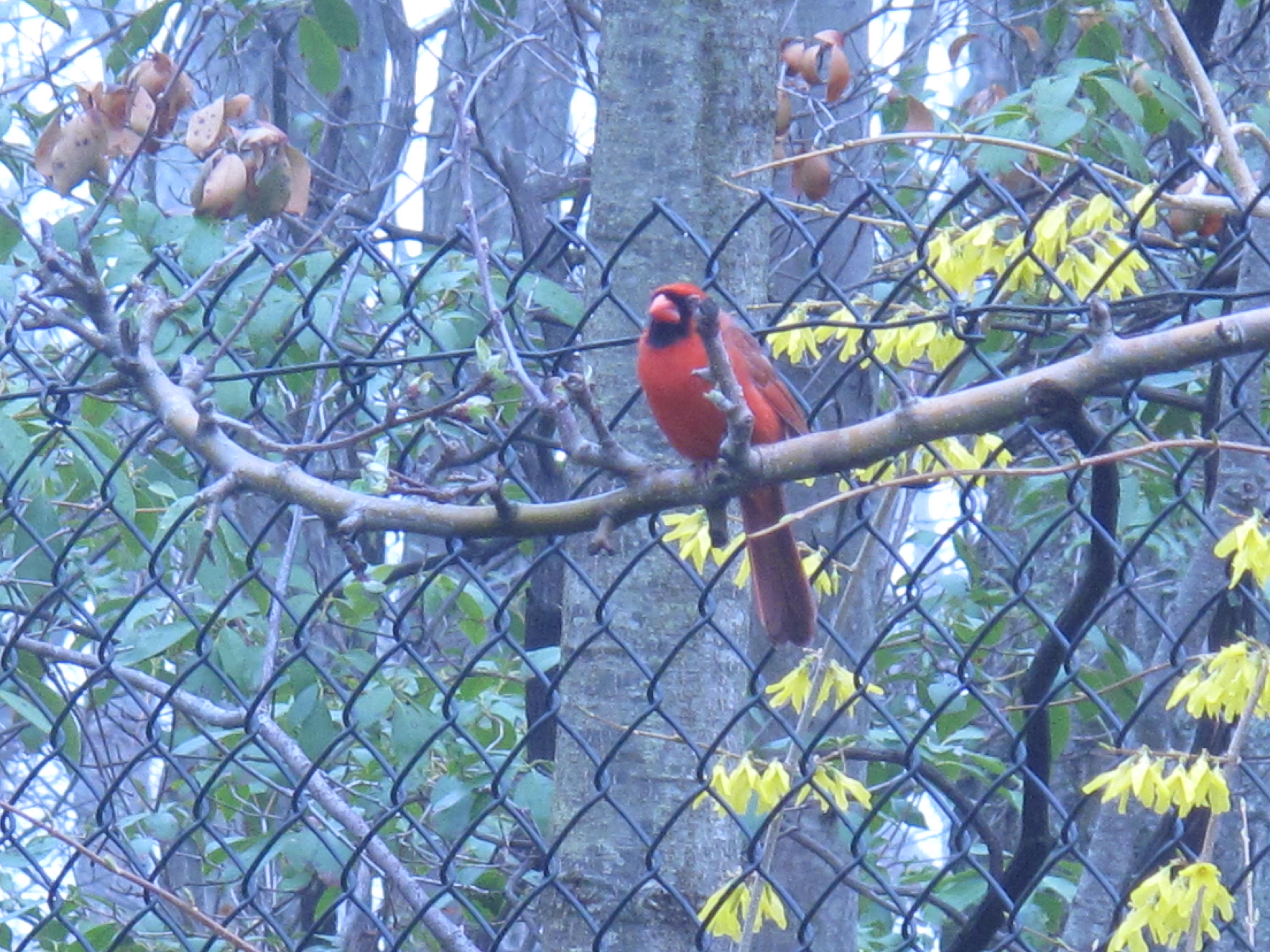
Here is the first male.  Notice how he is a little larger than the other male.  This helped him because, if I was the fight judge, this guy would have won.

Here’s the second male.  Slightly smaller, but he sure is scrappy.

As we left for work this morning, the fight was still raging.  I started to wonder what would happen to the loser.  Does he finish the summer a bachelor or does he go and find another female to marry?  While I think the larger male will win the love of the female, there was also a little piece of me that was rooting for the smaller guy.  I’ve always had a soft spot for an underdog.  While we don’t know the ultimate winner yet, I did find some interesting reading on Cardinal mating on the internet. 

Here is a piece from http://www.birdhouses101.com:

The early spring is the mating season for Cardinals.  These songbirds are known as “socially monogamous” but there are times when they copulate with the others.  There was even one study which found that nine to 35 percent of Cardinal nestlings came from extra-pair copulations.

The mating season begins with pair formation that includes different physical displays of cardinals.  The males show off to attract a female.  They also do the courtship and mate feeding.  Females choose their mates based on the male’s ornamentation such as the size of his black face mask as well as the color of his plumage and bill.  Studies have found that the ornaments of male and female Cardinals provide information on the bird’s condition.  For instance, females with a big face mask shows that they are good defenders of nests but for males, this means that they are not highly successful in reproduction.

Mate feeding occurs when the male Cardinal picks up a seed, hops near the female and the two touch beaks so the female can take the food.  Mate feeding will go on until the female lays eggs and incubates them.  Normally, pairs of Cardinals stay together throughout the year and may breed for several seasons.  This bird lives an average of one year although there have been records of longer life spans.

Did you know that Cardinals sing their best during the love season?  They sing with great emphasis as evident in the swelling of their throat, spreading of their tail, drooping of wings and leaning from side to side as if performing on stage with much gusto.  They repeat these melodies over and over again resting only for a short time to breathe.

This slideshow requires JavaScript.

Who knew we would use words like ‘copulate’ and ‘extra-pair copulation’ here on Acorns On Glen?  All in all, the Cardinal love story was and probably will keep being a great show here on Glen Road.  Nature always proves to be a great theatre if you pay attention to it.  I’m glad we have Cardinals in our backyard and that we took the time to notice them.  What other strange Spring mating rituals are going on in your neck of the woods? 

Meet The Mantis

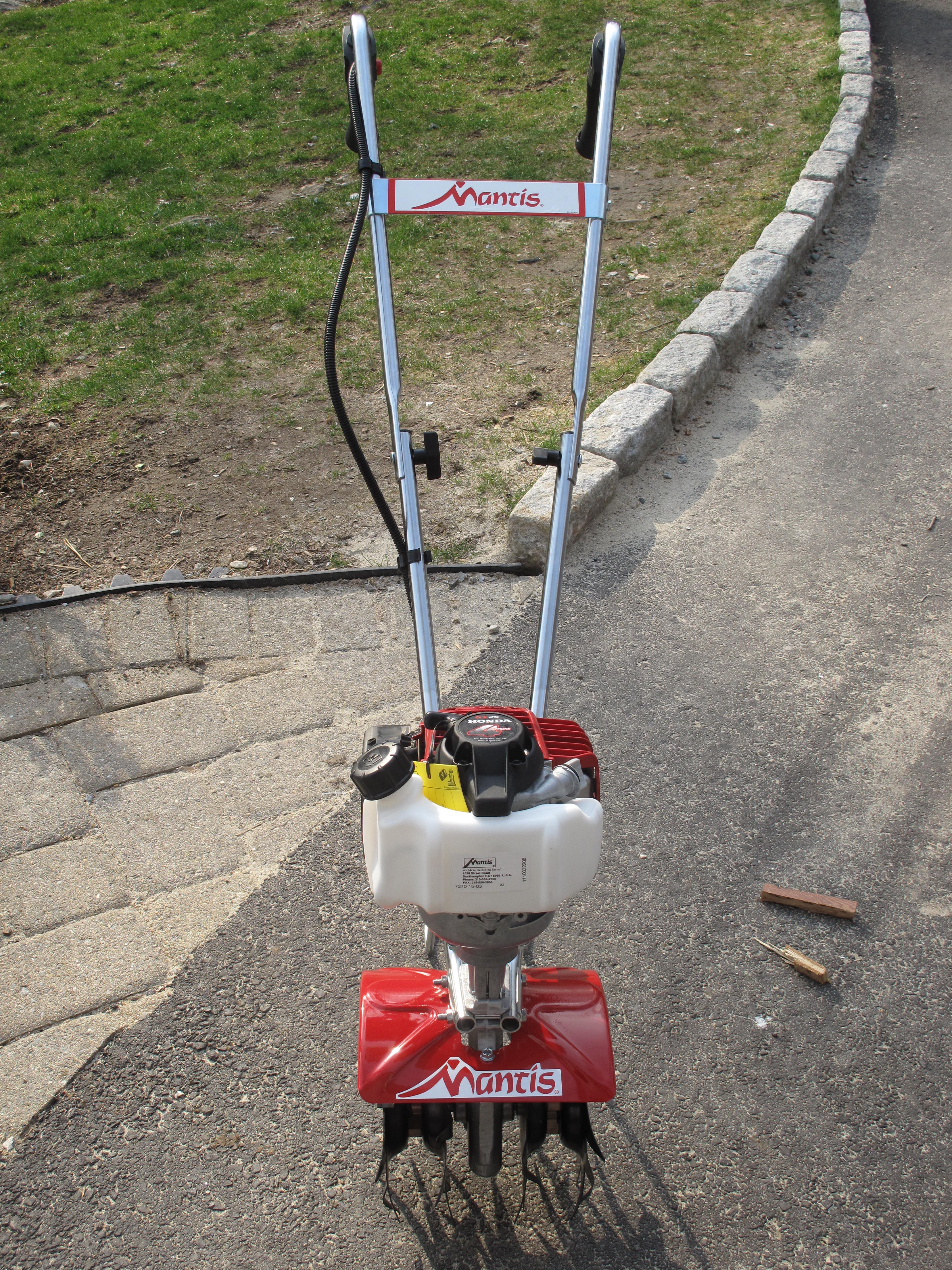
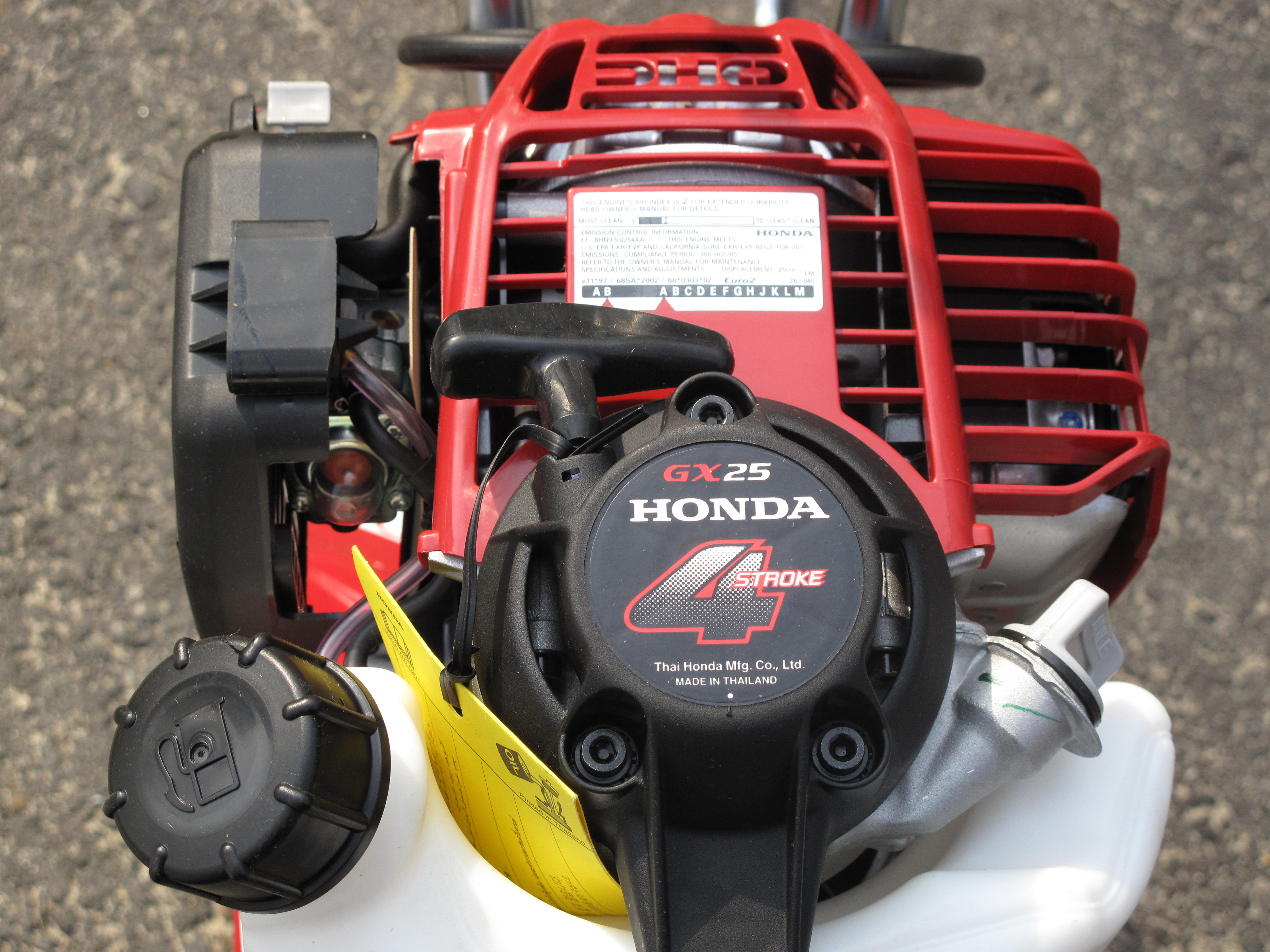
This is my new toy.  It is a Mantis 4-cycle rototiller.  I am going to use it in the raised bed garden to ready the rest of my soil for planting.  It will be great to turn my winter rye grass cover crop into the soil so that it can break down and release needed nutrients into the garden soil.  It will also cut down on my sore back and knees due to the fact that I won’t need to do these chores by hand anymore.  It will up to the Mantis (with a little help from me).

My Mantis weighs only 24 pounds and, given that it only have two tines attached, it is perfect for my small raised bed garden.  The tines can quickly cut through sod, clay, compacted soil or weeds.  It can also dig down 10 inches so my plants can establish themselves in soil that’s cool, deep and water retentive.  I’m hoping to use it all season–to dig my beds and plant my garden and then all the way to the end of the season when I will turn it all under and re-establish a new cover crop.

My Mantis is easy to start and there is no fuel mixing required.  It is 9 inches wide and has fold down handles.  It can run most of the day on one gallon of gas due to its powerful, Honda 4-cycle engine.  It even has a kickstand so I can “park” my rototiller anywhere and the kickstand flips up when I am tilling the soil.

The easy-grip handles include an on/off switch, a lock key that must be released before the rototiller can operate and an accelerator handle to start the tines working.  The tines are guaranteed for life, so I can only imagine how strong they work.  The tines can spin up to 240 rotations per minute, so that is plenty for the garden that I have here in Connecticut.

I can’t wait to get into the garden with my new toy and do some tilling.  I was so happy when I received the box containing my Mantis.  It reminded me of a little kid getting a bright, red wagon.  So watch out cover crop, your days are numbered.  My Mantis and I are coming to till until we drop…or run out of gas, whichever comes first.  What cool gardening tools are you using in your garden?

Raising Rhubarb

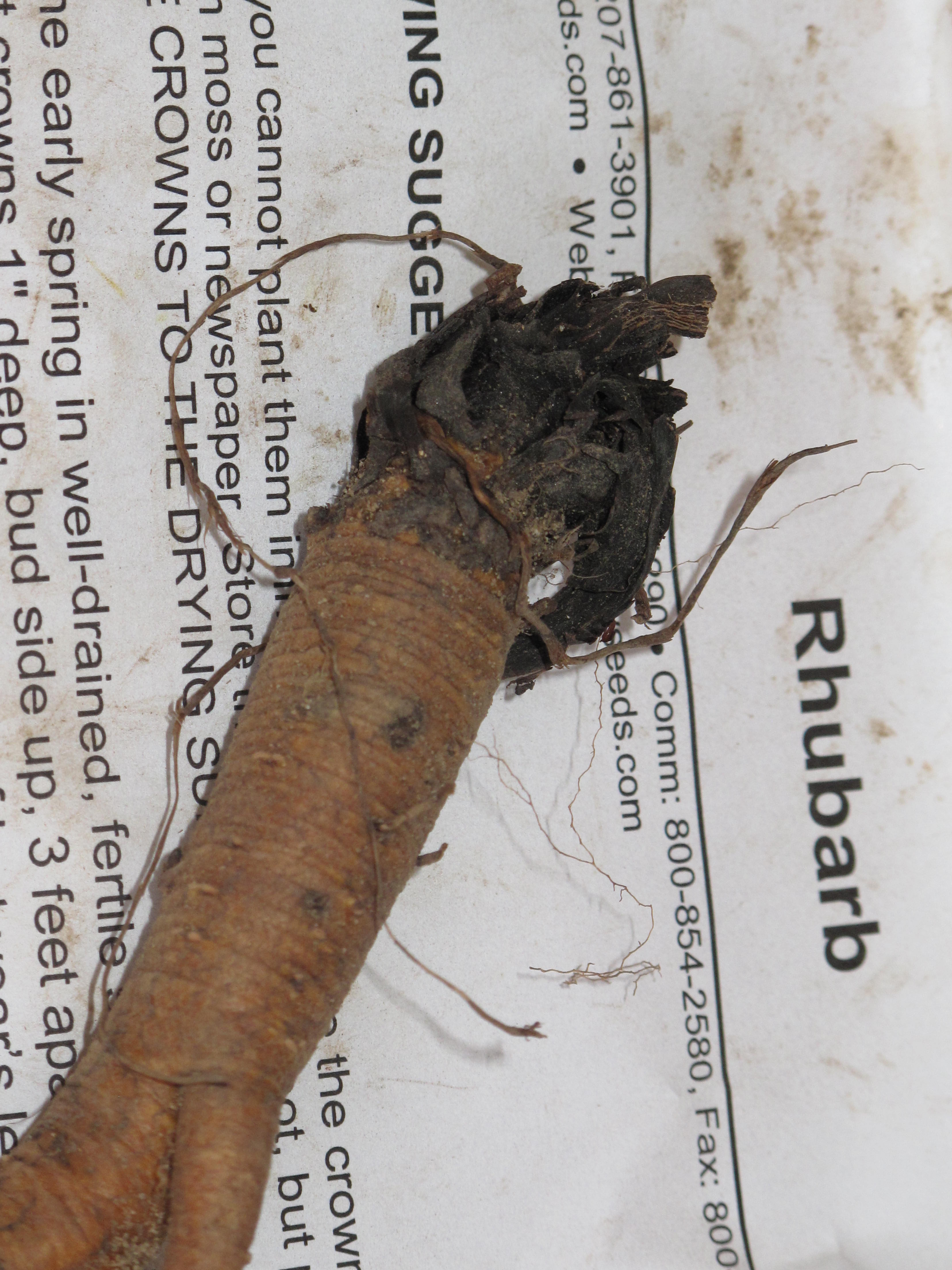
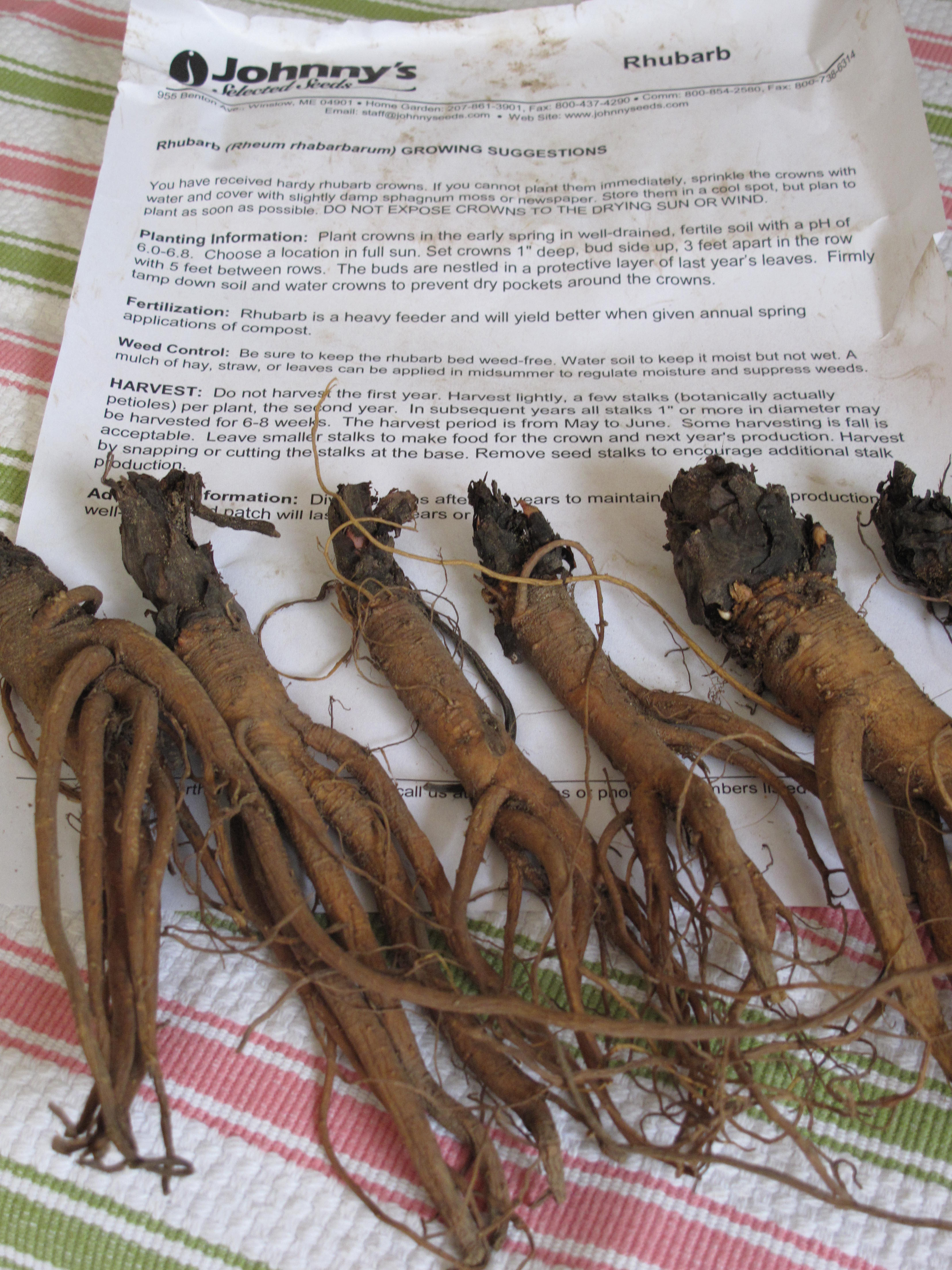
This is what I received this week…some rhubarb crowns ready for planting.  I have been obsessing about planting rhubarb, also know as rheum rhabarbarum, here on Glen Road for quite some time.  I’m sure it has to do with wanting to grow something that reminds me of my youth.  You must all know at this point that my Grandma was a great gardening inspiration in my life.  My Father was also inspirational, but due to my close relationship with Grandma, she brought me slowly into the process and let me get into the garden when I wanted to do it.  She slowly made me value it.  You know how it goes with parents…they want to bring you into it, but many times you feel forced and then you end up crying and rebelling and not wanting to do it.  I guess that is the sad story of all teenage angst…sorry Dad and Mom.  I’ve talked about her horseradish a few times, but my Grandma also had a killer rhubarb patch.  We ate a lot of rhubarb in Spring…rhubarb sauce, rhubarb pie….all of it so fresh and so tasty.  There were times my brother and I would snap off a stalk and chew on the tangy sweet and sour fruit in her backyard.  Do any of you remember the Schwann’s man?  In our town in Iowa, the Schwann’s man drove a pinkish peach truck up the road and you could stop him and buy frozen items.  Grandma bought pizza dough and ice cream.  In the Spring, she scooped this ice cream into whatever rhubarb creation she had made for the night.  How great was that? 

So I wanted to plant a rhubarb patch for a long time and this year, I got my wish.  I planted six crowns this weekend in some well-drained soil.  The patch was in a location that received full sun, just behind the two espalier apple trees.  I set the crowns about a foot apart, which is a little tight, but I’m sure they will be fine.  I watered the crowns very well and then placed a little over one inch of soil on top of them.  Then I firmly tamped down the soil to prevent any dry pockets from forming around the tender crowns.

There will be no harvest this first year.  During the second year, there may be a light harvest, actually a few stalks (botanically, actually petioles) per plant.  In subsequent years, all stalks one inch or more in diameter may be harvested for six to eight weeks.  The harvest period is from May to June.  Some harvesting in Fall is acceptable if we feel the urge.  However, smaller stalks should be left to make food for the crowns and next year’s production.  We will harvest by snapping or cutting the stalks at the base.  We need to remember to remove seed stalks to encourage additional stalks in the next year.  What I also know is that rhubarb leaves from un-harvested stalks are quite beautiful.  Don’t be afraid to plant them in a prominent spot in your garden given their beauty.

After three to five years, we will need to divide the crowns to maintain stalk size and production.  A well-maintained patch will last 10-15 years or longer.  That sounds like such a long time, but as my Grandma used to say, time goes by much quicker the older you get.  Here’s to a few stalks next year.  Do you grow rhubarb in your garden?

When Did I Become Such A Follower?

This is the question I’ve been thinking about since we started Acorns On Glen.  When did I become such a follower?  Not when I was a kid.  In fourth grade, in the comments section of my report card, my teacher wrote that I was good at leading other children towards a common goal…..and that I was a good talker.  I was an officer in one of my grades in high school….I think it was freshman year.  I was editor of my school newspaper for a few years.  All signs were pointing in the right direction.  I was still a leader in college.  I was president of my pledge class at the fraternity.  I was a member of the elite summer orientation staff for incoming freshman.  Again, all signs were a go.   So when, as an adult, did I stop producing original ideas and leadership potential?  My vote…..when my sad ass discovered the internet and that damn do-it-yourself television.

Think back to your grandparents.  How did your grandmother learn to cook something simple, say a meatloaf?  She either learned by word of mouth or she learned by trial and error.  The recipe could have been handed down from generations of hard cooking women in her family.  She could have talked to a sister or a neighbor about making meatloaf and wrote down the ingredients and instructions that they gave her and then began to cook.  She used real, live human interaction versus online social networking.  She could have also gotten the idea in her head and cooked it through several different incarnations making sure to tweak things she didn’t like from the time before and remembering to keep things in it that were good.  Old time trial and error versus instant internet gratification.  With my family, maybe my father, aunts and uncle didn’t like my Grandma’s first shots at meatloaf making, but by the time I was a child, she had perfected her art.

The garden is the same story.  How did my Grandmother know to only dig horseradish and grind it up in months that contained an ‘R’ in them?  She was right.  Months without an ‘R’ produce lousy horseradish…Julys and Augusts are just too hot.  Again, she had an idea and either consulted a real, live person or experimented on her own.  Somehow, she managed to figure things out.  She must have talked with someone on the rules of horseradish or sat down to some sad tasting pulp, but she figured it out.  She accomplished tasks knowing she had done her own research, made all the decisions and had done it her way.  She was her own expert.

Now take me!  I’ll confess.  I look at all of the things that I do to my house, that I cook or bake in the kitchen or that I grow in my garden, and while I’m proud of my accomplishments, they have most likely come from someone else’s original idea.  Ideas from others that I’ve said “Wow, I’d like to do that” and either copied or took the initial idea and tweaked it to fit my lifestyle.  When is the last time I sat down and said I’d like to make a dish in the kitchen that contained a certain ingredient and then added it and other ingredients in a bowl trying to create my tasty little idea?  Never.  If I ever did do that, God forbid if it was bad tasting.  Would I try it again with some new twists or would I just abandon the idea altogether?  If the first time was a flop, would I try to think it through and make it a success a second or third time?  I doubt it.

I’ve made meatloaf and worked in my garden recently, just like my Grandma did years ago.  My meatloaf recipe came straight off the internet from http://www.MarthaStewart.com.  I found the recipe in less than a minute.  As I printed my step-by-step instructions out, I sat there in a panic thinking what was meant by “good” ketchup in the recipe.  What the hell is “bad” ketchup?  In the garden, I decided to plant artichokes this year and see if they would grow in Connecticut.  How did I come up with this idea?  A picture showing them growing in my area off of someone else’s iPhone.  So what was my next step?  I googled “artichoke growing” on the internet and received hundreds of sites with step-by-step growing instructions.  So I then ordered the seeds (off the internet) from a seed company I saw mentioned on a TV show and then planted them in a growing system I heard described on the radio and then put them under a grow light I saw on another internet site.  By the way, the grow light had four and a half stars attributed to it on the internet meaning it was a customer top favorite.  How could I get the one that seemed better, but with fewer stars attributed to it?  Do you see what I’m saying?  Not one original idea in my head.  No leadership; no innovation; no thought leadership.  I’m a lemming just following the leader until I eventually fall off the side of a cliff.

In business today, there must be a slew of followers.  Perfectionist people who scour for innovation and new ideas by reading the internet for hours.  Site by site; post by post.  Anything new and exciting is printed off or typed into their computer.  They search on Google to find exactly how to make the idea a reality.  They tweak the original just a little to call it their own.  Then they introduce the final product to the world.  In fact, aren’t followers in the business world now called great executors?  This new term utilized in order to soften the blow to a group of people trained to follow others versus taking a risk on their own.  An executor, that’s what I am.  Not a leader or a thought provoker, but rather someone who can execute someone else’s idea to perfection.  My meatloaf looked just like the picture in Martha’s recipe; my grow light artichokes are picture perfect. 

Ideas=F; Execution=A+……that’s me. 

I curse you, Martha, Emeril and Ina.  Up yours, Vern and you Design Stars.  May seeds never grow in your Victory Garden, Old Man Crockett! 

So how do people of today change this course?  How do we become thinkers again versus just executing?  If my Grandma were here, I’m sure she could sit down and think up a solution.  Me?  I’m just going to Google it.  What do you think about leaders versus followers in today’s world?

News From The Garden

This is an update on our 2011 garden.  We want to keep everyone up to date on what’s going on outside in the actual garden and inside under the grow light.  This weekend provided some great weather (finally!) to really spend some quality time in the garden.  We started the morning planting the remaining seeds into our last APS 24 growing system and placed them in the basement under the grow light.  Our earlier planting was with seeds that prefer cooler soil temperature.  This weekend, it was seeds that prefer warmer soil temperatures.  Remember, our two batch planting philosophy?  The seeds planted this weekend included three varieties of tomatoes and artichokes.  Yes, artichokes!!  We’ve heard that they can grow and prosper in Connecticut, so we thought this would be our fun garden experiment for 2011.  Can Glen Road enjoy some stuffed artichokes at harvest time?  Keep your fingers crossed.

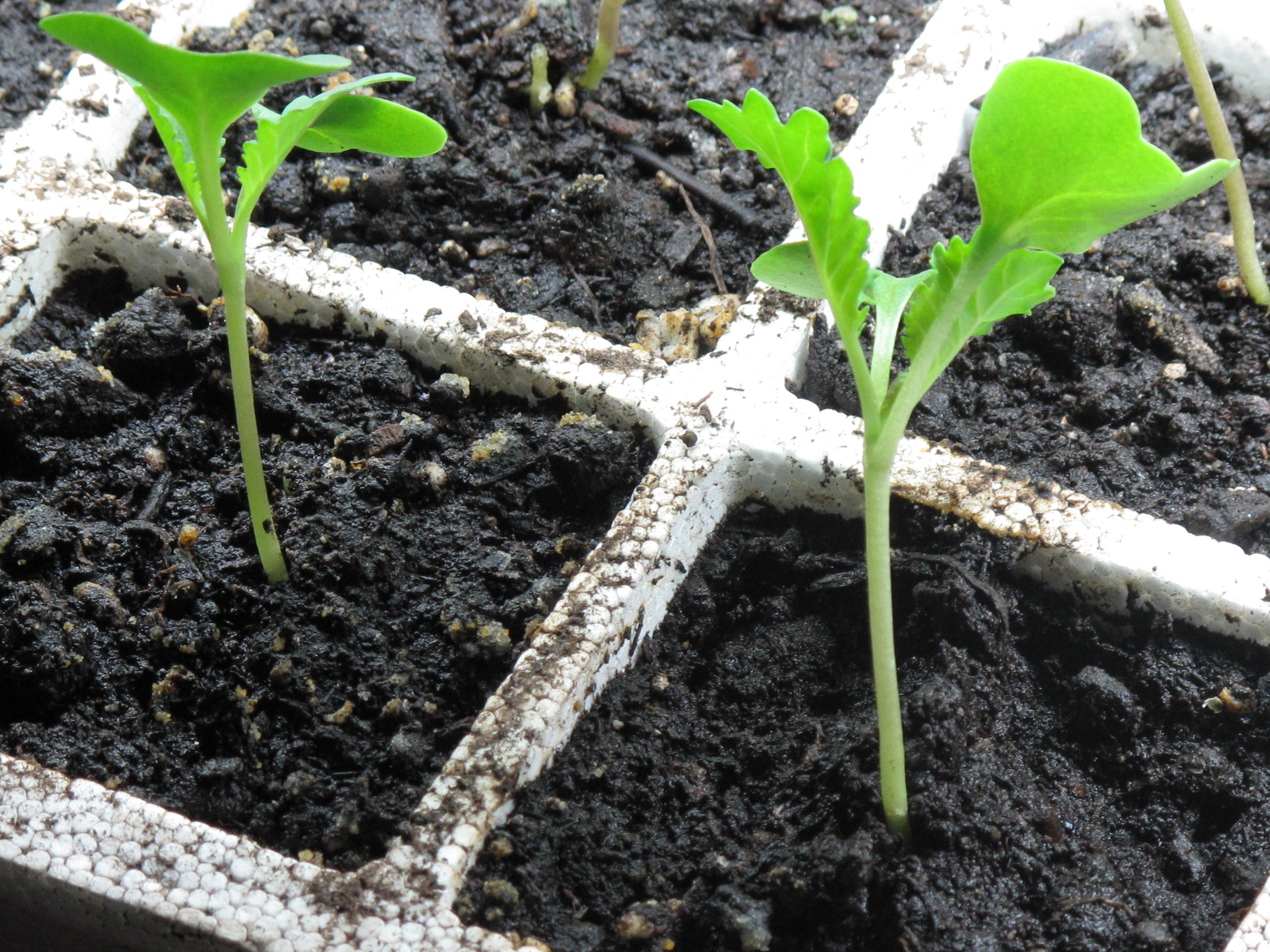
Inside the house, the first batch of seeds placed under the grow light are actually growing quite nicely.  We’re happy to say that all of the seeds have sprouted and we have identified the strongest seedlings and removed the others in the cell.  Only one plant per cell allowed.  The weaker sprouts were removed by clipping them off with a pair of scissors.  While the cabbage, brussels sprouts and cauliflower are over an inch high now, the eggplant is a little smaller and growing more slowly, so we decided to wait two more weeks before we remove their weaker seedlings.  The picture above is a look at our cabbage and here are the smaller eggplant seedlings.

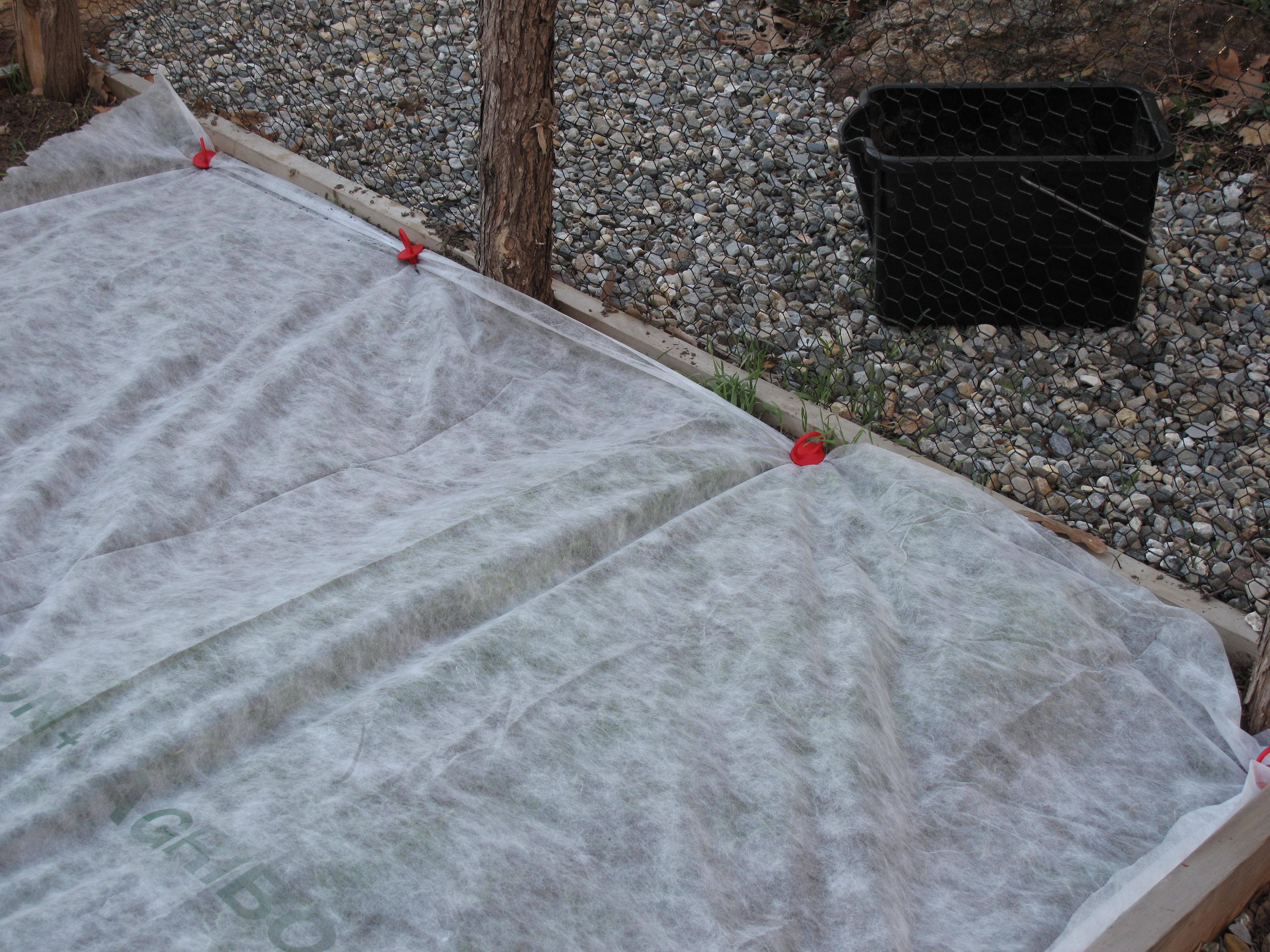
Outside we were able to expand our seed planting to more than just spinach.  Since the spinach seeds have been out in the garden since Thanksgiving 2010, we thought it was only fair to plant six more rows of seeds and grow some friends for the spinach.  First, we turned under the crop cover of winter rye grass so that it would start to decompose and enrich the soil with its nutrients.  Then we planted some seeds that thrive in early Spring’s cooler soil.  This included one row of round radishes, two rows of French breakfast radishes, two rows of lettuce mix and one row of arugula.  After the rows were planted, we stretched out a longer piece of floating row cover and placed it over all the rows of vegetables that are in the garden-the six rows planted today and the four rows of spinach that have been there since last year.

We were wondering when the floating row covers could be removed for good and had gotten some mixed answers, so we decided to consult with an expert and last week asked when the covers could be permanently removed to none other than Martha Stewart on her live radio show.  She told us that the row covers needed to be in place for quite a while longer as it is just too cold to remove them at this time.  She said it was fine on warm days to pull the cover up and let the plants be in the direct sunlight, but that we needed to cover them back up before nightfall.  We also started to talk about a few vegetables that we don’t grow because they spread out too much and take over the limited space we have in our raised beds.  She said we should reconsider our stance on growing such things as cucumbers, zucchini and peas.  So we started thinking and surfing the internet.

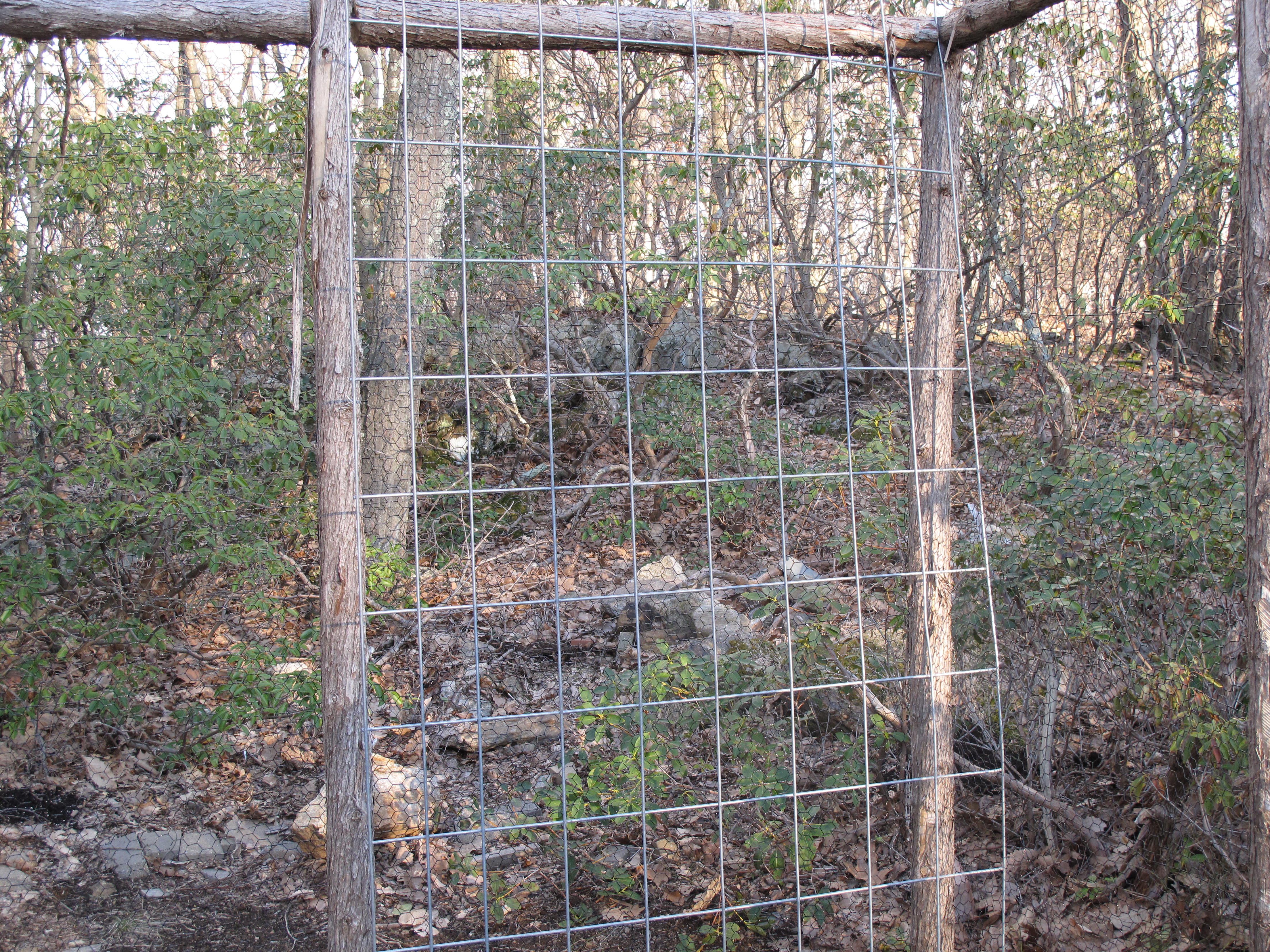
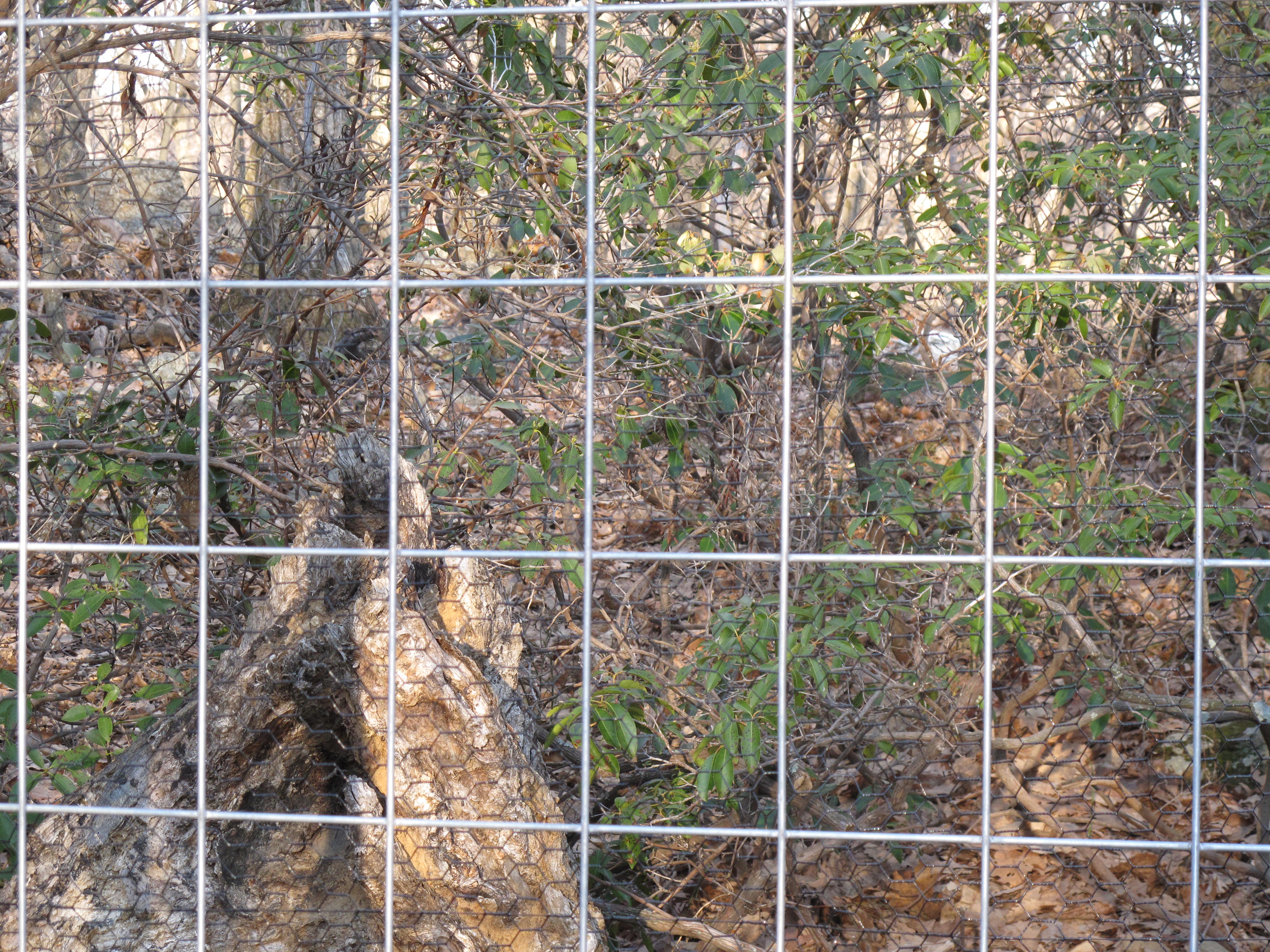
What we found was an idea that we saw on several different gardening sites that we visited.  We took a trip to our local farm supply store and bought a 16 foot livestock panel.  A livestock panel is actually used for temporary fencing on a farm.  In our case, we used a bolt cutter to turn the one piece panel into two, 8 foot panels.  Each panel was then taken into two of the raised beds and the cut ends were pushed into the soil and then the panels was gently leaned up against the garden fencing.


Later in Spring, we will accumulate some dirt into mounds in each of the beds at the base of the fencing and plant cucumbers and zucchini.  We will then train the vines to grow upwards and weave through the panels with the vegetables hanging down from the panels, making them easier to pick.  Since the vines will grow upwards versus outwards on the ground, it means more room for other plantings in our small garden.  We’ve asked whether the vegetables will drop off their vines due to their weight and upward growth and everyone has told us not to worry.  We believe them, but we secretly have our doubts. 

So for the beginning of April, we are feeling that our garden is on schedule and everything is growing as expected.  From here on out, we know that the garden will consume a lot of our time, but the result is worth it.  Nothing tastes better than home-grown vegetables.  Are you working in your garden right now or is it still too cold?