Cardinal Love Is A Battlefield

This is how we woke up this morning.  Through closed windows and with light rain falling, we woke up to the sound of super loud bird noises.  First, it was loud beautiful singing.  Next, shrill one-note warbles.  Then back to loud beautiful singing.  Where we live, you never know what you are going to find when you pull back the curtains to take a peek.  Today it was the sight of two male Cardinals fighting for the love of one female.  I thought the fight looked pretty intense so I crept outside to take some pictures.  I’m sure the Cardinals were also quite amazed at the sight of me running around in the rain in a t-shirt, pajama bottoms and no shoes trying to capture some pictures of their Spring love ritual.  This ritual consisted of the female enjoying front row seats and sitting there watching the mayhem.  All morning, one male would fly at the second male.  There would be an in-air or on-branch fight consisting of a flurry of wings and loud warbles.  Then one or the other male would fly off a few hundred feet away and rest and plot the next attack.  First, meet the female.  The object of their affection:

Here is the first male.  Notice how he is a little larger than the other male.  This helped him because, if I was the fight judge, this guy would have won.

Here’s the second male.  Slightly smaller, but he sure is scrappy.

As we left for work this morning, the fight was still raging.  I started to wonder what would happen to the loser.  Does he finish the summer a bachelor or does he go and find another female to marry?  While I think the larger male will win the love of the female, there was also a little piece of me that was rooting for the smaller guy.  I’ve always had a soft spot for an underdog.  While we don’t know the ultimate winner yet, I did find some interesting reading on Cardinal mating on the internet. 

Here is a piece from http://www.birdhouses101.com:

The early spring is the mating season for Cardinals.  These songbirds are known as “socially monogamous” but there are times when they copulate with the others.  There was even one study which found that nine to 35 percent of Cardinal nestlings came from extra-pair copulations.

The mating season begins with pair formation that includes different physical displays of cardinals.  The males show off to attract a female.  They also do the courtship and mate feeding.  Females choose their mates based on the male’s ornamentation such as the size of his black face mask as well as the color of his plumage and bill.  Studies have found that the ornaments of male and female Cardinals provide information on the bird’s condition.  For instance, females with a big face mask shows that they are good defenders of nests but for males, this means that they are not highly successful in reproduction.

Mate feeding occurs when the male Cardinal picks up a seed, hops near the female and the two touch beaks so the female can take the food.  Mate feeding will go on until the female lays eggs and incubates them.  Normally, pairs of Cardinals stay together throughout the year and may breed for several seasons.  This bird lives an average of one year although there have been records of longer life spans.

Did you know that Cardinals sing their best during the love season?  They sing with great emphasis as evident in the swelling of their throat, spreading of their tail, drooping of wings and leaning from side to side as if performing on stage with much gusto.  They repeat these melodies over and over again resting only for a short time to breathe.

This slideshow requires JavaScript.

Who knew we would use words like ‘copulate’ and ‘extra-pair copulation’ here on Acorns On Glen?  All in all, the Cardinal love story was and probably will keep being a great show here on Glen Road.  Nature always proves to be a great theatre if you pay attention to it.  I’m glad we have Cardinals in our backyard and that we took the time to notice them.  What other strange Spring mating rituals are going on in your neck of the woods? 
Never Met Bread That I Didn’t Like

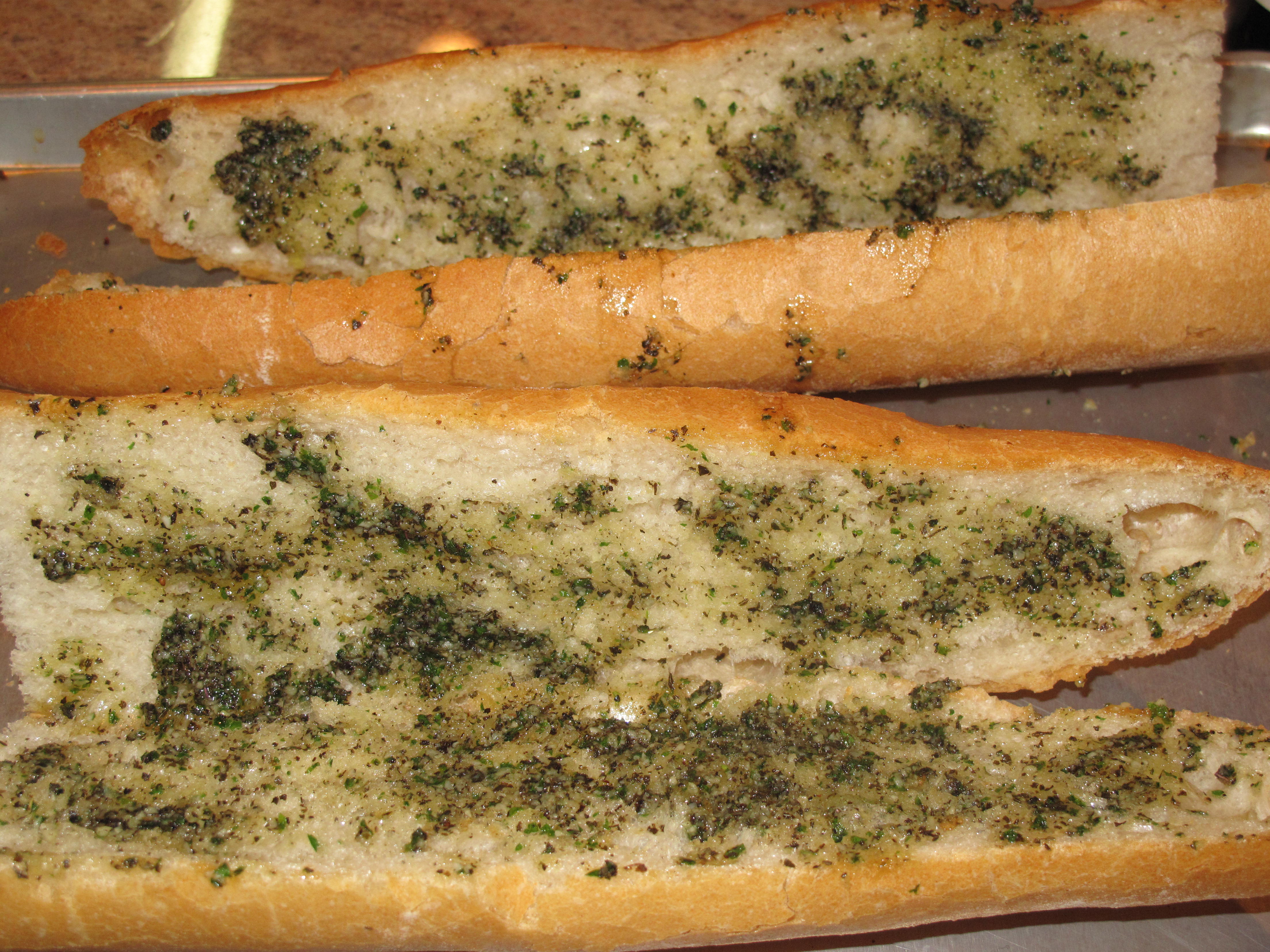
This is a quick recipe.  We eat a ton of Italian food here on Glen Road (have you noticed?).  What goes better with Italian food than garlic laced, herbed bread?  Nothing, trust me, nothing.  I have never met bread that I didn’t like.  Give this garlic herbed bread a try one night at dinner.  You and your family will love it. 

Ingredients:

  • 6 large garlic cloves, chopped
  • 1/4 cup flat-leaf parsley
  • 1 tablespoon fresh chopped basil leaves
  • 1 teaspoon kosher salt
  • 1/2 teaspoon freshly ground black pepper
  • 1/2 cup good olive oil
  • 1 large baguette

Directions:

Preheat the oven to 350 degrees.

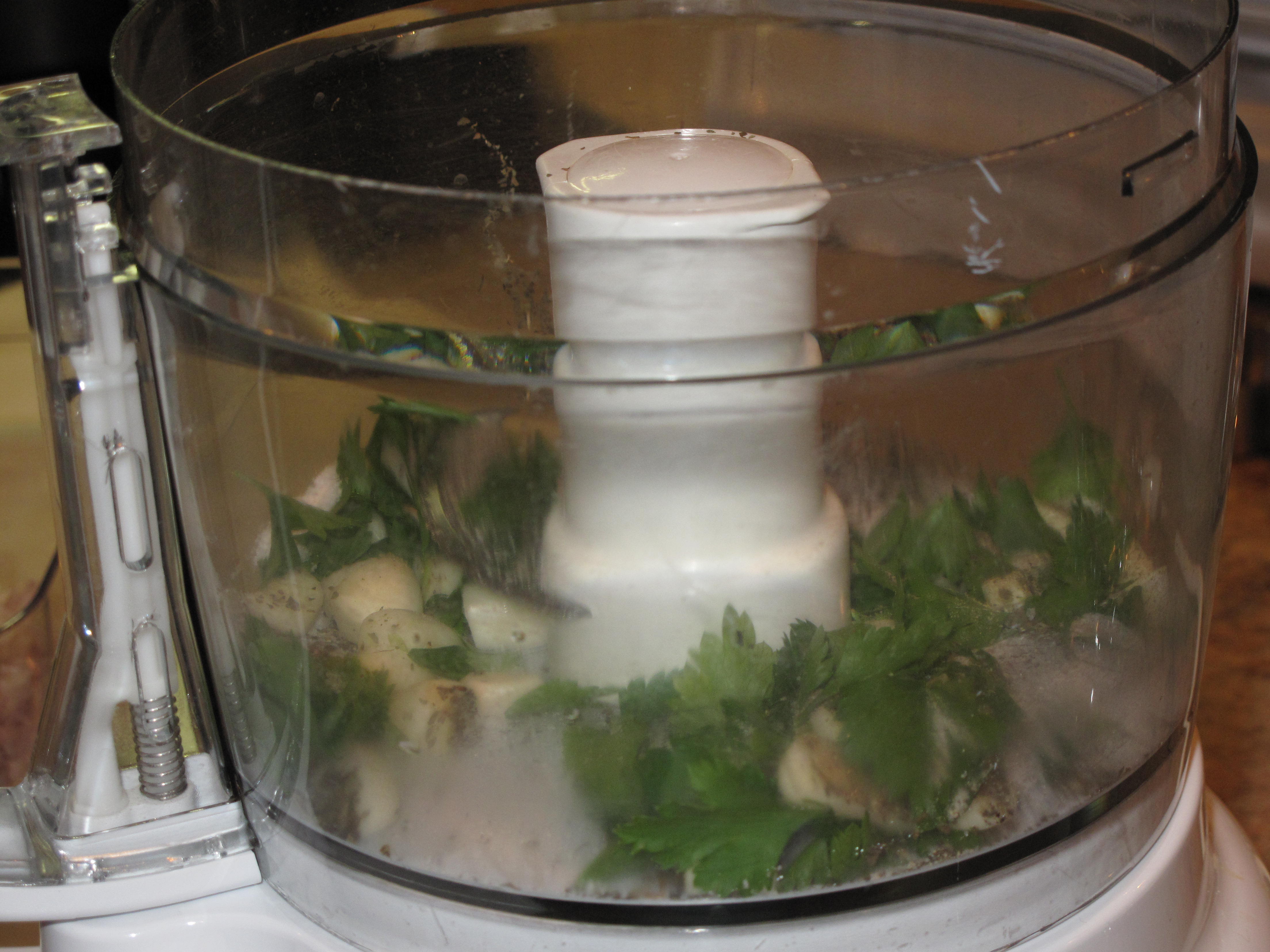
Place the garlic, parsley, basil, salt and pepper in the bowl of a food processor fitted with the steel blade and process until finely minced.

Heat the olive oil in a medium saute pan over medium heat.  Add the garlic and parsley mixture and cook for 1 minute, until the garlic is tender but not browned.  Remove from the heat and set aside.

Slice the baguette lengthwise down the center, but not all the way through, and spoon the garlic mixture into the bread.  Place the bread on a sheet pan and bake for 8 minutes.  Slice diagonally and serve warm.

Super quick and super easy.  The kind of recipe that I like.  If you are in a pinch, I’ve also used dried parsley and basil flakes when I didn’t have fresh herbs on hand.  It won’t yield the same flavor intensity as using fresh herbs, but it does come out very tasty.  Give this bread a try and let us know how you liked it.  What other bread recipes do you have that you can share on Acorns On Glen?

The Brooklyn Italian Grandmother Is Back And Cooking

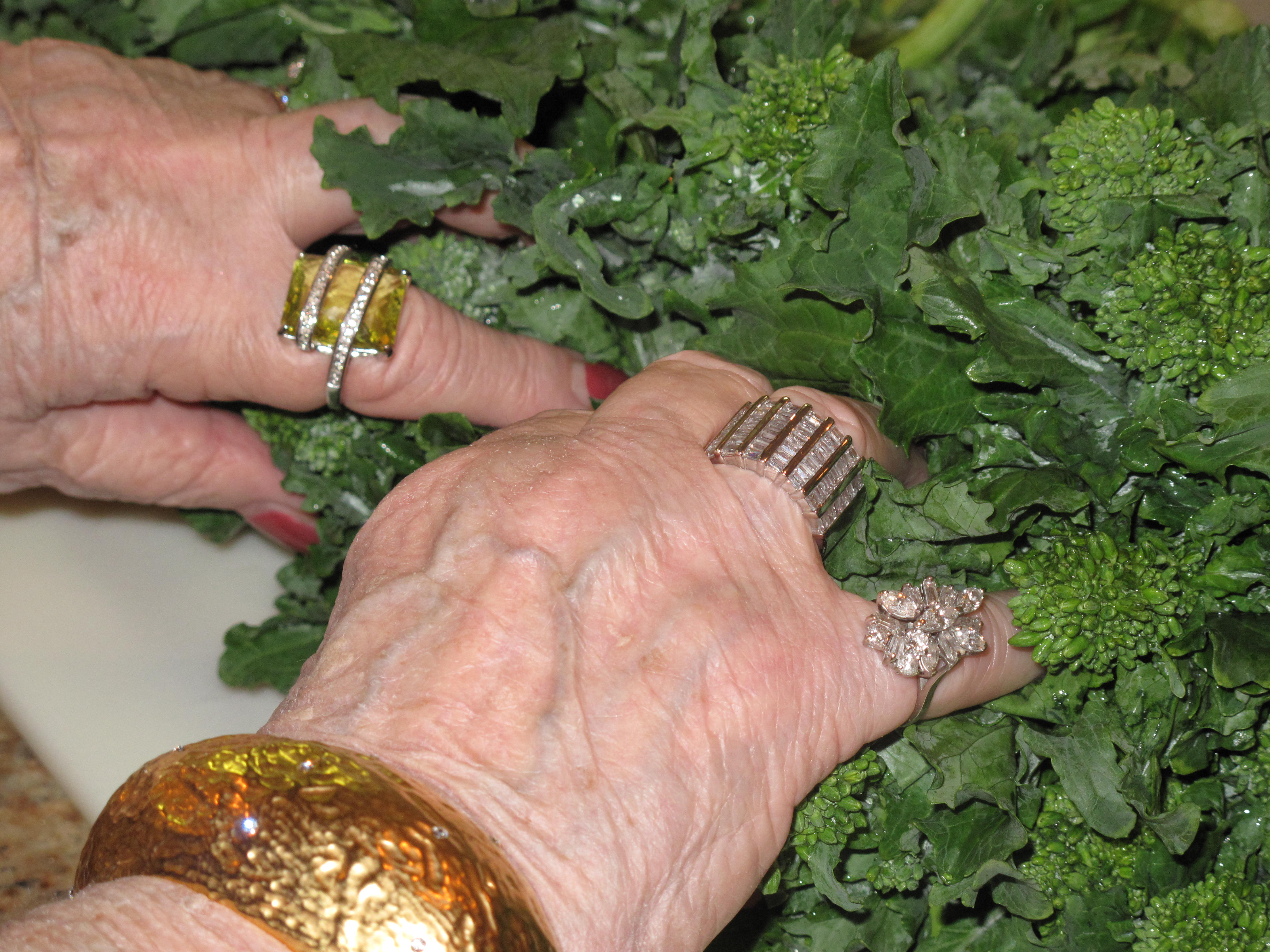
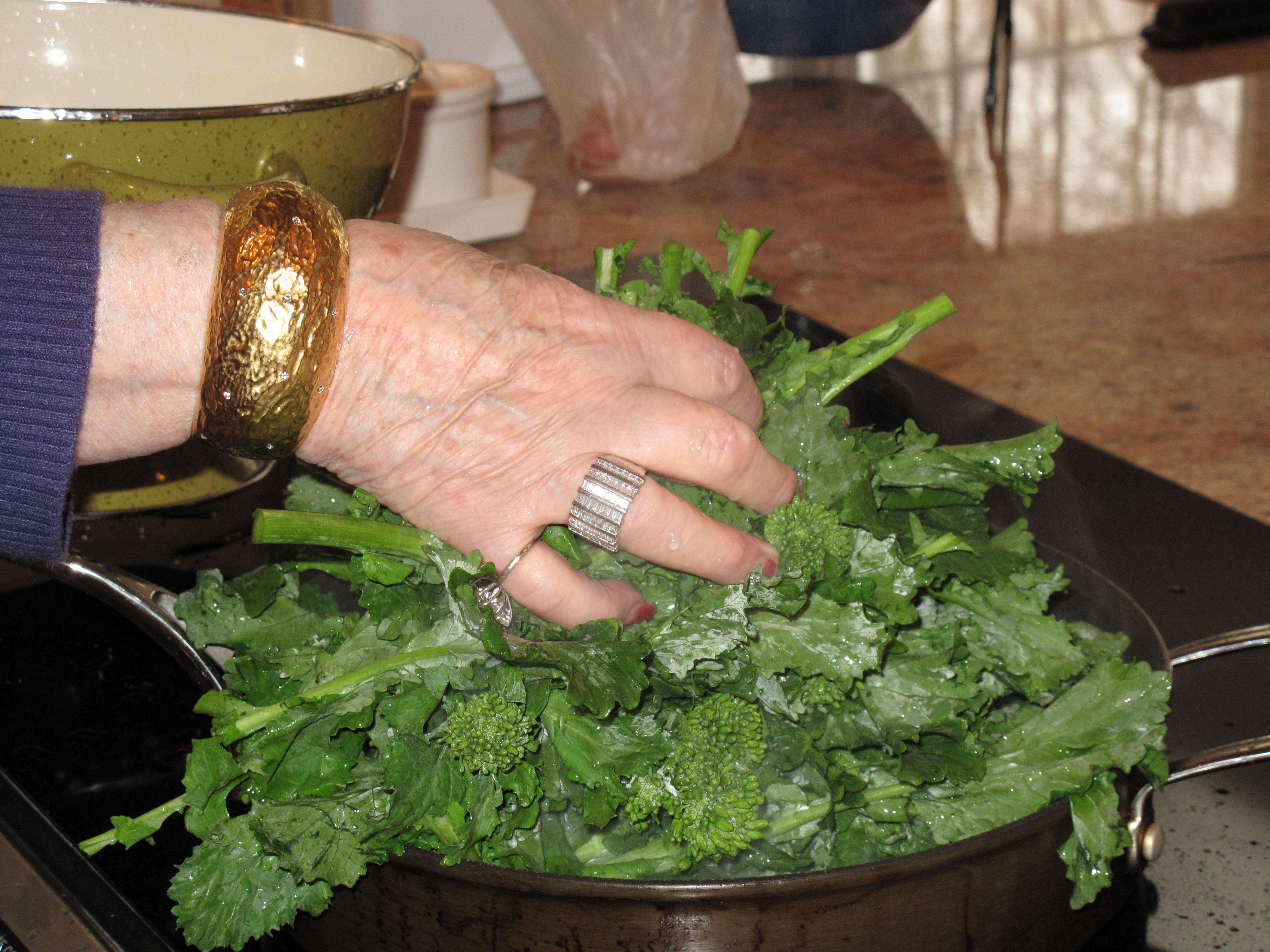
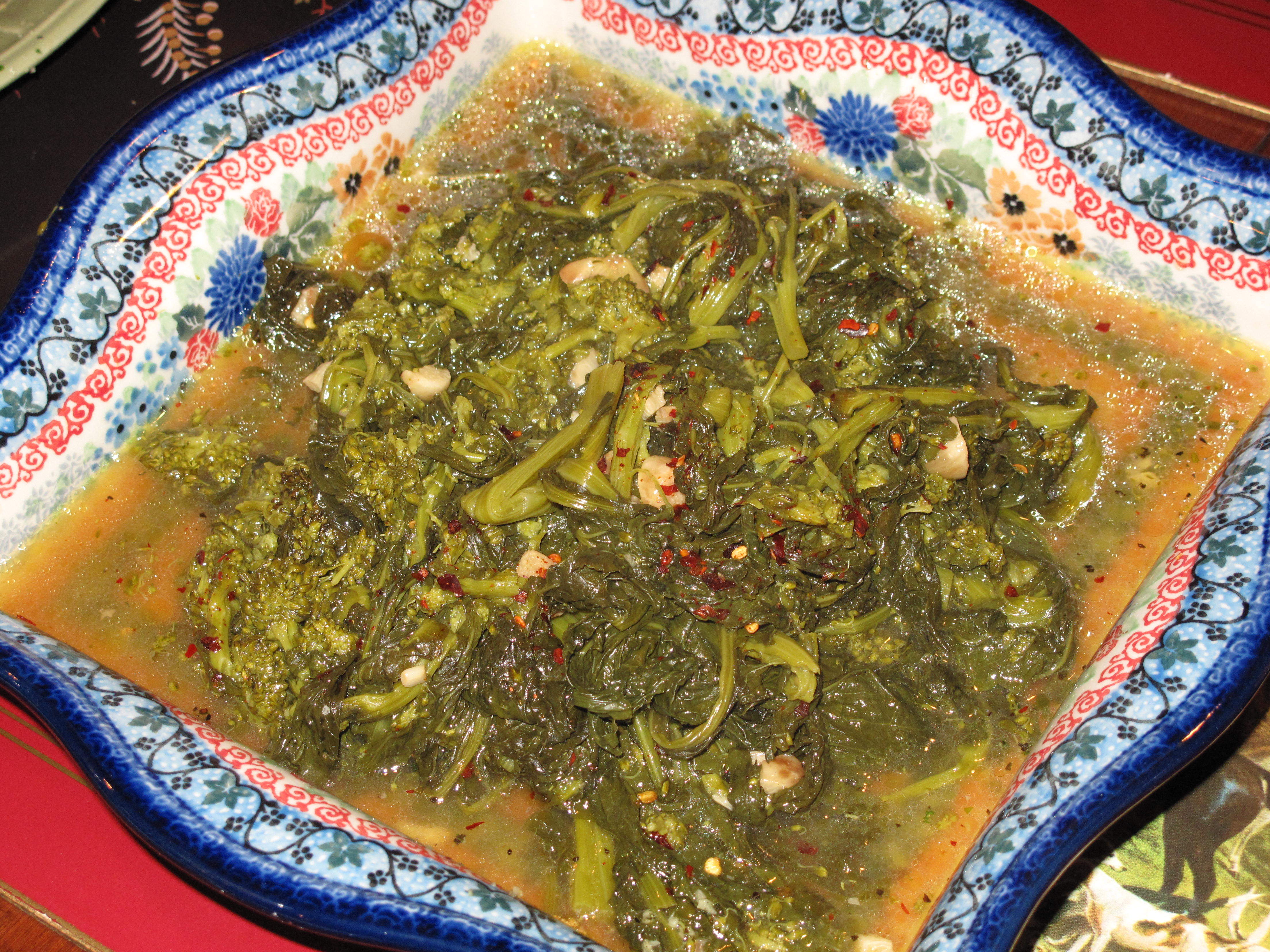
This is our Brooklyn Italian Grandmother back in the kitchen and digging into a pile of broccoli rabe.  Otherwise known as cooking with your fingers only up to the base of your rings.  We can dig that, can you?  What has happened to the world of broccoli rabe these days?  They steam it….good for you.  Yuch, it is tasteless!  They stir fry it.  O.K., but limp and mushy.  They saute it in water.  That’s called boiling it where we come from.  We asked our Brooklyn Italian Grandmother to come back into the kitchen and make it the good old-fashioned way so that we could share it with everyone.  This is a great side dish and is quick and easy.  When you are making an Italian dish, cook up some broccoli rabe and see what the family says.  While many people say it has a bitter taste, we have found that if you cook it up the Brooklyn way, the rabe is soft and delicious.  I’ve held the Brooklyn Italian Grandmother down and measured and forced her to tell me her recipe.   So let’s take what I’ve forced out of her and cook up some broccoli rabe and go jewelry shopping all in one post.

Ingredients:

  • 2 large heads of broccoli rabe.  I found organic and super fresh.  We beg you to do the same.  Your body doesn’t need the chemicals. 
  • 3 tablespoons great olive oil
  • 7 cloves of garlic, roughly chopped.  More or less depending on how much you love garlic.  We adore it so use 7 cloves if you are truly a garlic lover.
  • 1 cup chicken stock, again go organic if you can
  • 1 chicken bouillon cube
  • 1 1/2 teaspoon of kosher salt, or more to flavor to your liking
  • 1/2 teaspoon of freshly ground black pepper or more to your liking
  • 1/2 teaspoon red pepper flakes or more/less to taste.  We like it spicy.

Directions:

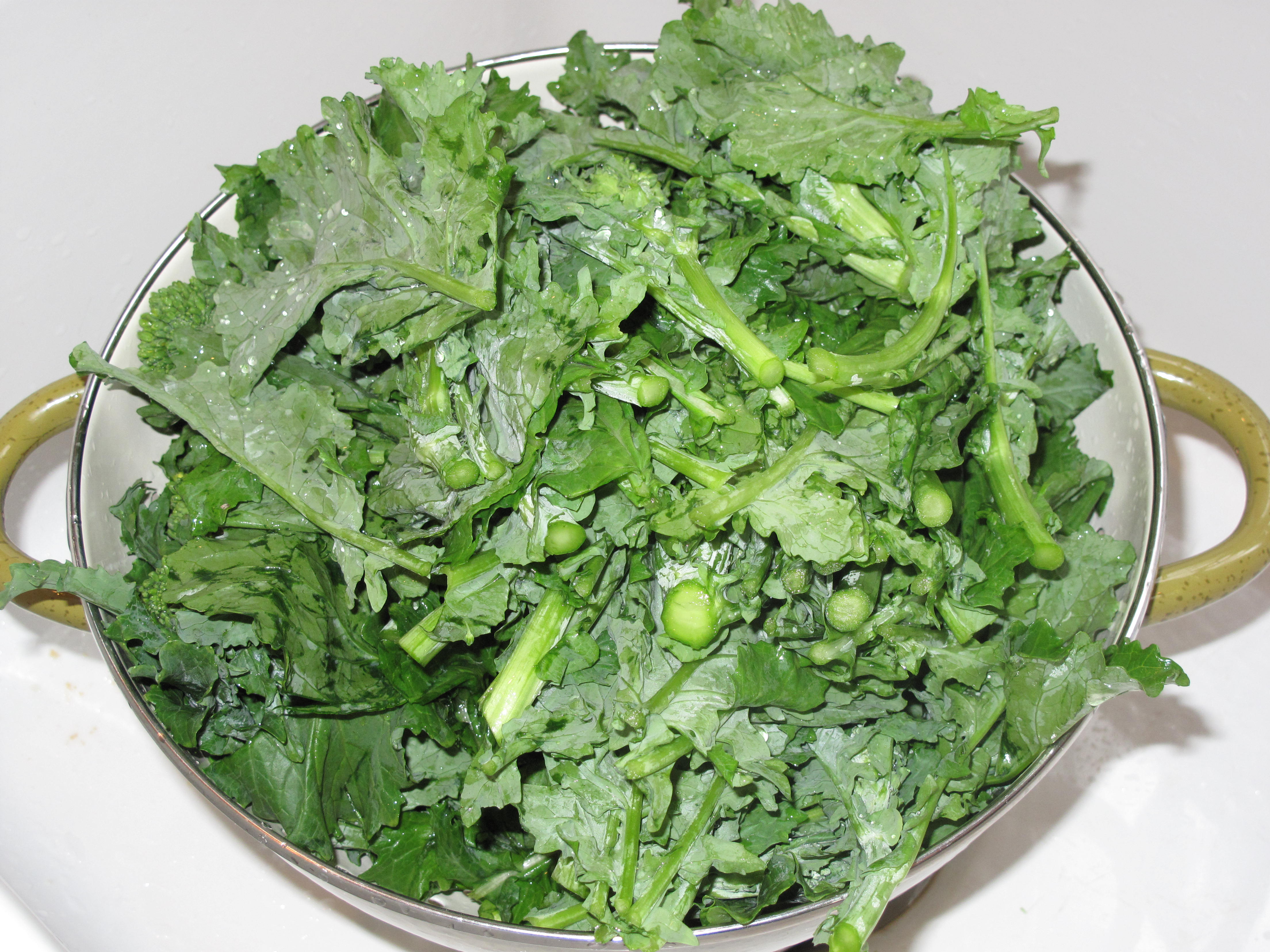
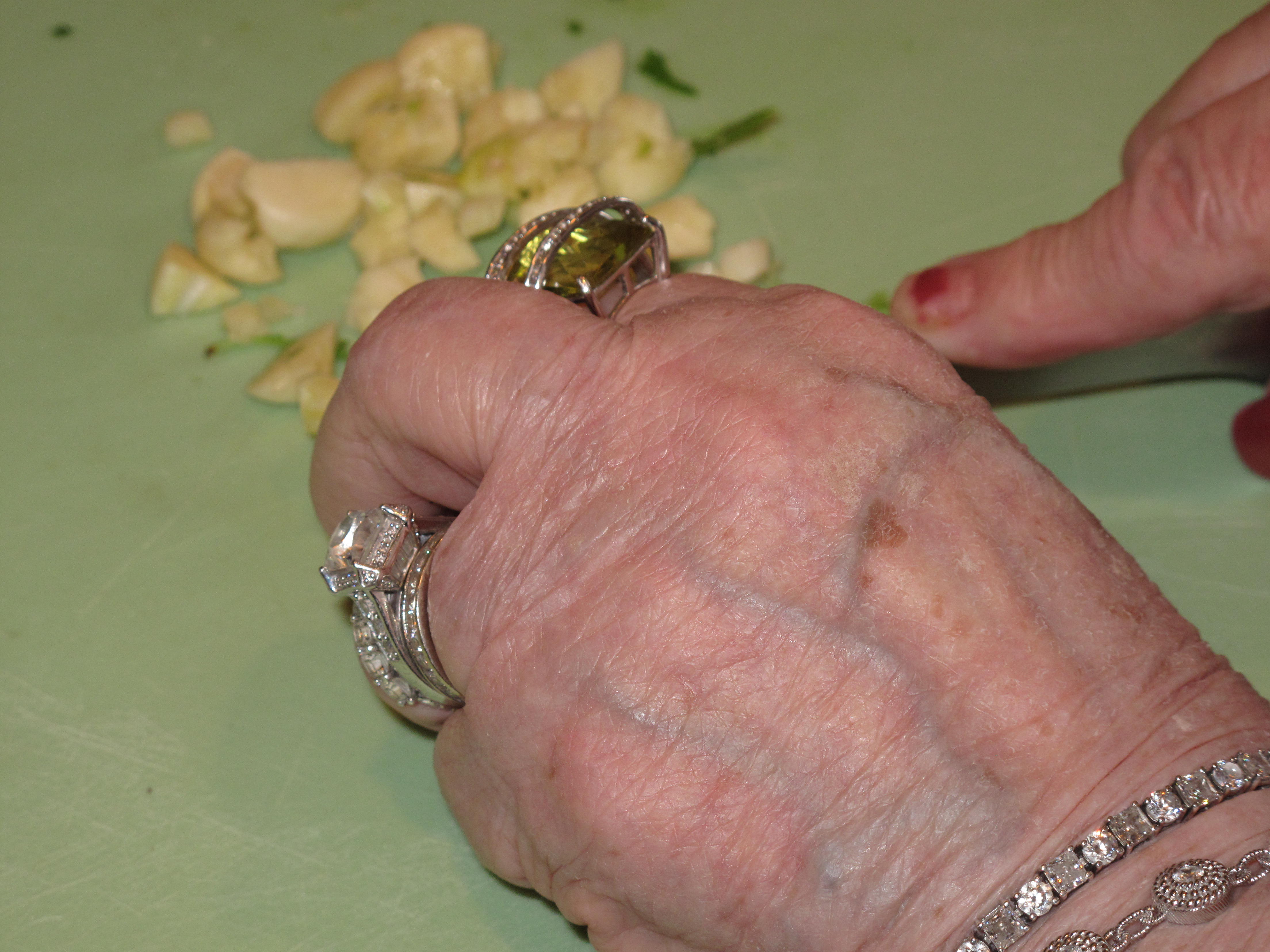
Trim the stalks of the brocolli rabe and rinse under cool water.  Roughly chop garlic cloves.

  Rings always look better with a garlic scent to them.  Multiple bracelets support the wrist during the chopping process.

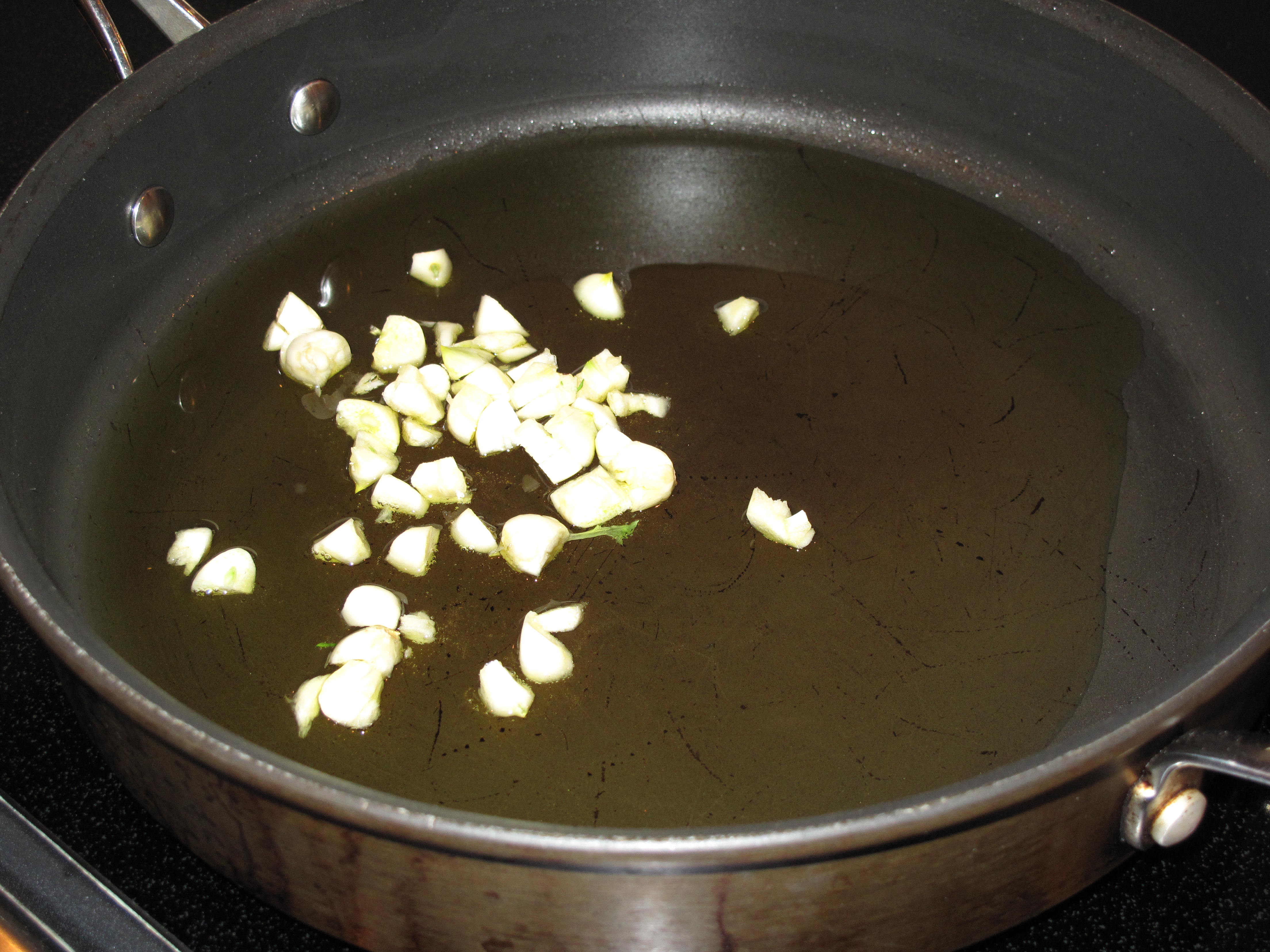
Over medium heat, heat the olive oil and then add the chopped garlic and sautee until garlic is lightly golden in color.

Add the chicken broth and the chicken bouillon cube until they are lightly heated.  Then add the cleaned and rinsed broccoli rabe.  Don’t be nervous if the rabe is stacked high in the skillet.  It will quickly wilt down to a reasonable amount.

  What takes away from beautiful green, organic and fresh rabes more than diamonds and solid gold?

Lightly place a skillet lid on top of the broccoli rabe and continue to adjust it while the rabe wilts down.

  Lid protects jewels from damage but also allows steam to lightly clean the gems.  We call this multi-tasking.

As the broccoli rabe wilts down during the cooking process, raise the lid and add a teaspoon of salt to flavor during cooking.  Place the lid back on the rabes and saute for about 10 minutes.  Lift lid and turn over the broccoli rabe so the bottom is now on the top and place the lid back on for another 10 minutes.  Continue cooking until rabes are al dente, meaning tender but they still possess a little chewiness to them.

   Diamonds are forever….sing it.

When tender, add another half a teaspoon of salt and the pepper or more to flavor the broccoli rabe to your liking.  Add the red pepper flakes to add a little heat.  If you like it hot, add more.  If you can’t take the heat, don’t add any red pepper flakes.  Use your own judgement. 

Come on…have you ever seen such a beautiful and exotic side dish to complement your favorite Italian dish?  Broccoli rabe is not for everyone, but it is for most people that we have served it to in the traditional Brooklyn Italian Grandmother way.  Who needs to light up their life when you can rabe up your life?  Just a little hint–some great bread is delicious when you use it to dip in and soak up the broth from the rabes.  And remember, it also is a great way to clean your jewelry in an organic sort of way.  Give it a try….you won’t be sorry.  What side dishes can you share on Acorns On Glen that would be great with Italian food? 

Meet The Mantis

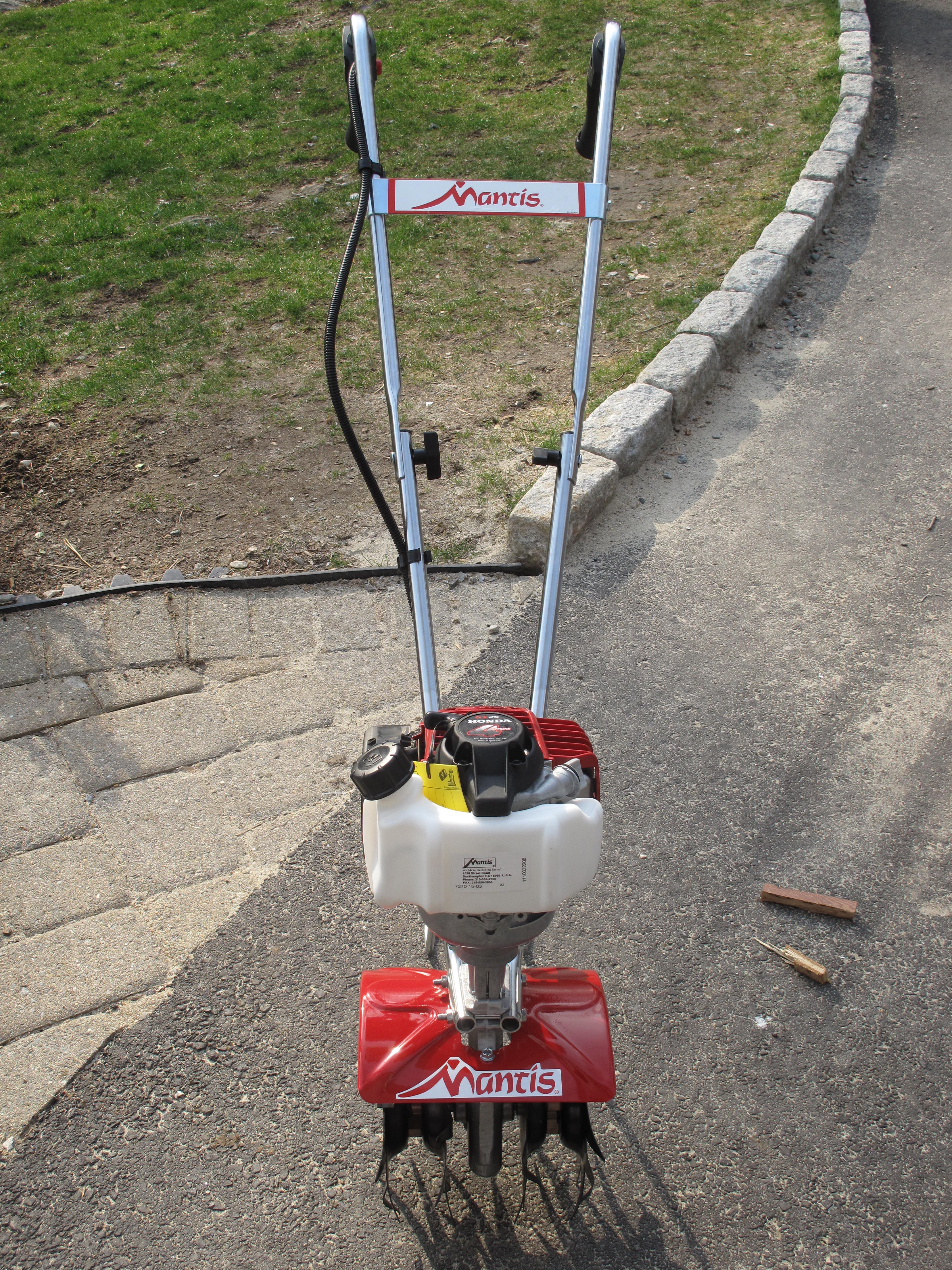
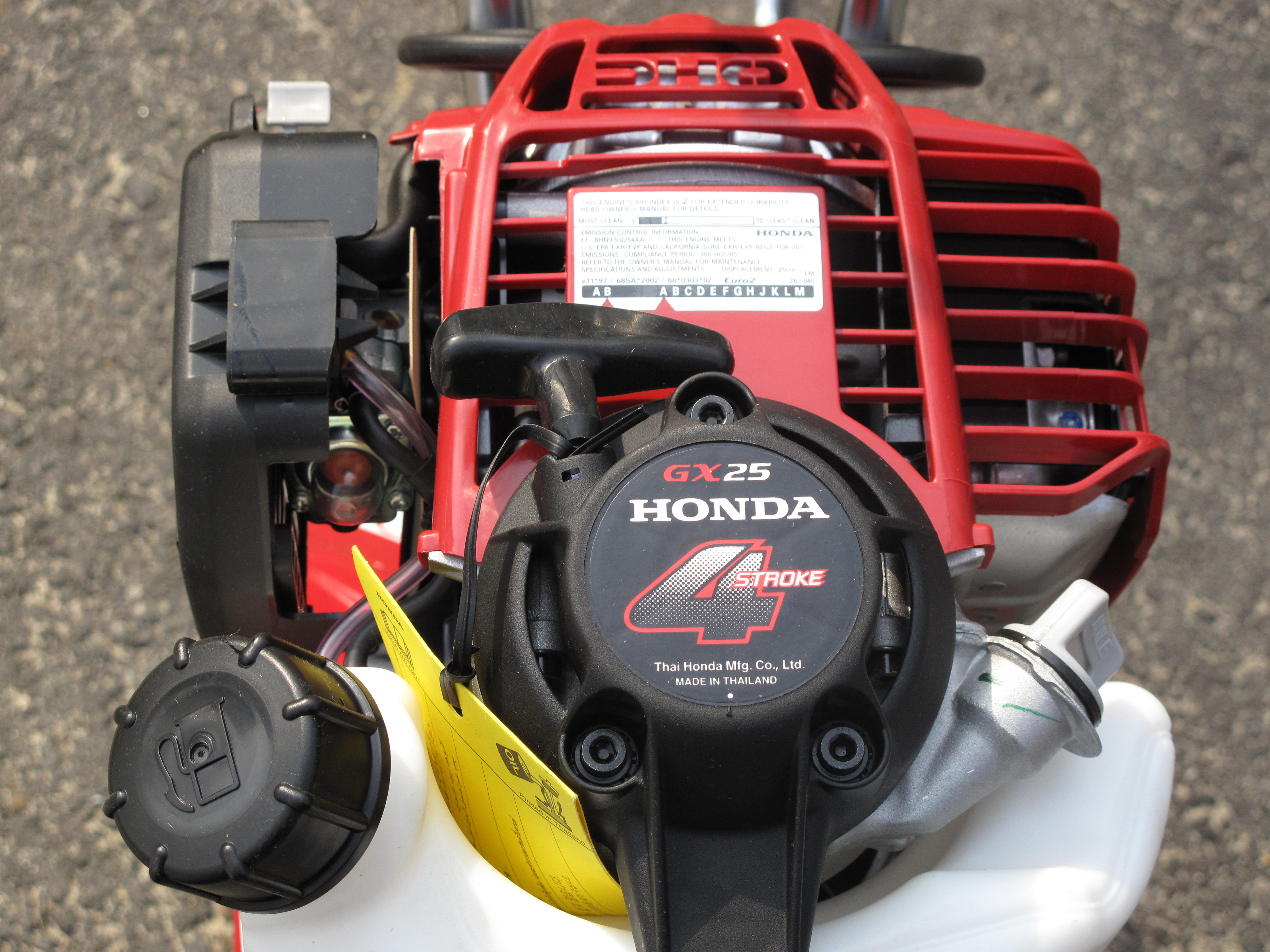
This is my new toy.  It is a Mantis 4-cycle rototiller.  I am going to use it in the raised bed garden to ready the rest of my soil for planting.  It will be great to turn my winter rye grass cover crop into the soil so that it can break down and release needed nutrients into the garden soil.  It will also cut down on my sore back and knees due to the fact that I won’t need to do these chores by hand anymore.  It will up to the Mantis (with a little help from me).

My Mantis weighs only 24 pounds and, given that it only have two tines attached, it is perfect for my small raised bed garden.  The tines can quickly cut through sod, clay, compacted soil or weeds.  It can also dig down 10 inches so my plants can establish themselves in soil that’s cool, deep and water retentive.  I’m hoping to use it all season–to dig my beds and plant my garden and then all the way to the end of the season when I will turn it all under and re-establish a new cover crop.

My Mantis is easy to start and there is no fuel mixing required.  It is 9 inches wide and has fold down handles.  It can run most of the day on one gallon of gas due to its powerful, Honda 4-cycle engine.  It even has a kickstand so I can “park” my rototiller anywhere and the kickstand flips up when I am tilling the soil.

The easy-grip handles include an on/off switch, a lock key that must be released before the rototiller can operate and an accelerator handle to start the tines working.  The tines are guaranteed for life, so I can only imagine how strong they work.  The tines can spin up to 240 rotations per minute, so that is plenty for the garden that I have here in Connecticut.

I can’t wait to get into the garden with my new toy and do some tilling.  I was so happy when I received the box containing my Mantis.  It reminded me of a little kid getting a bright, red wagon.  So watch out cover crop, your days are numbered.  My Mantis and I are coming to till until we drop…or run out of gas, whichever comes first.  What cool gardening tools are you using in your garden?

Raising Rhubarb

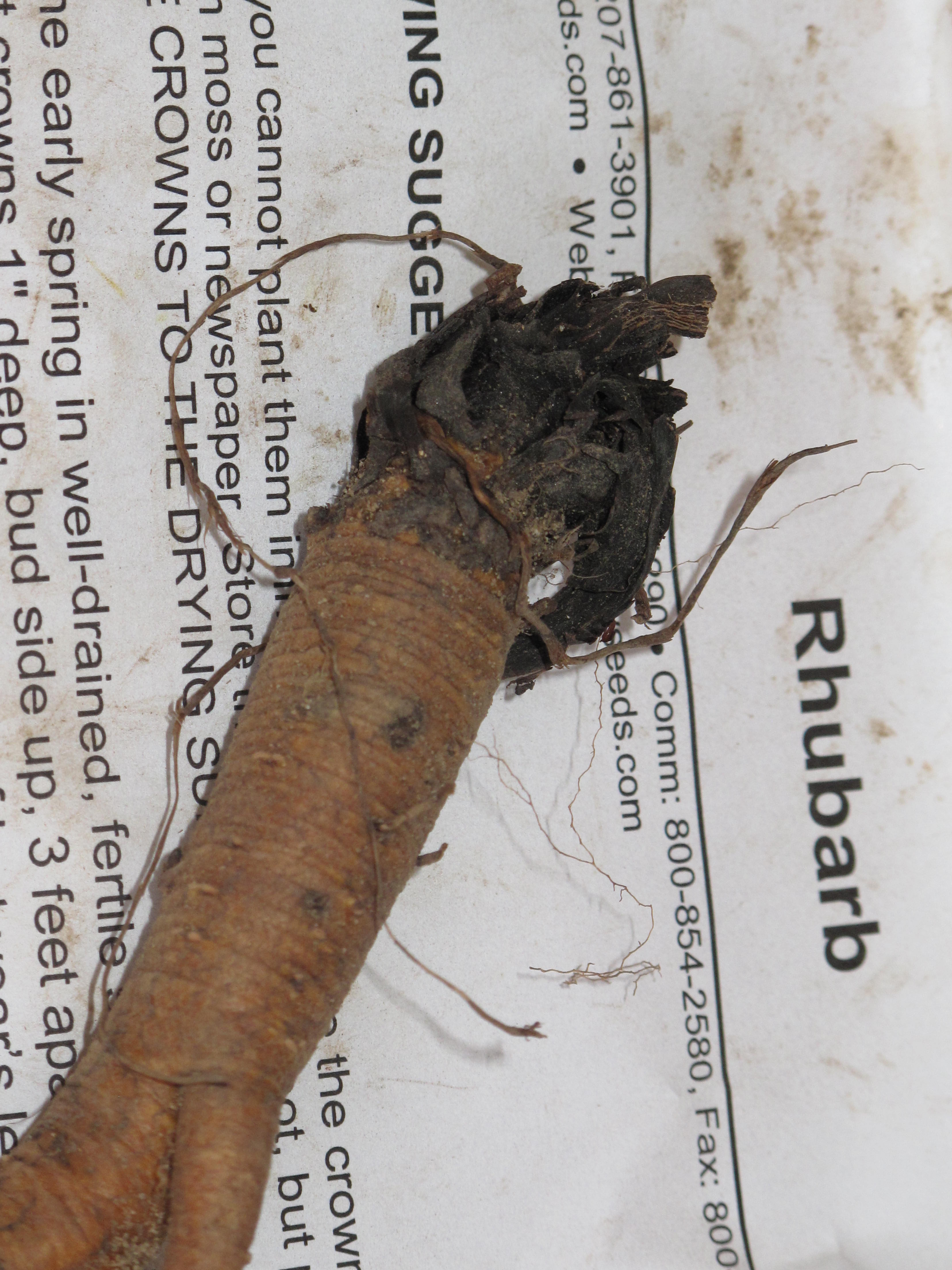
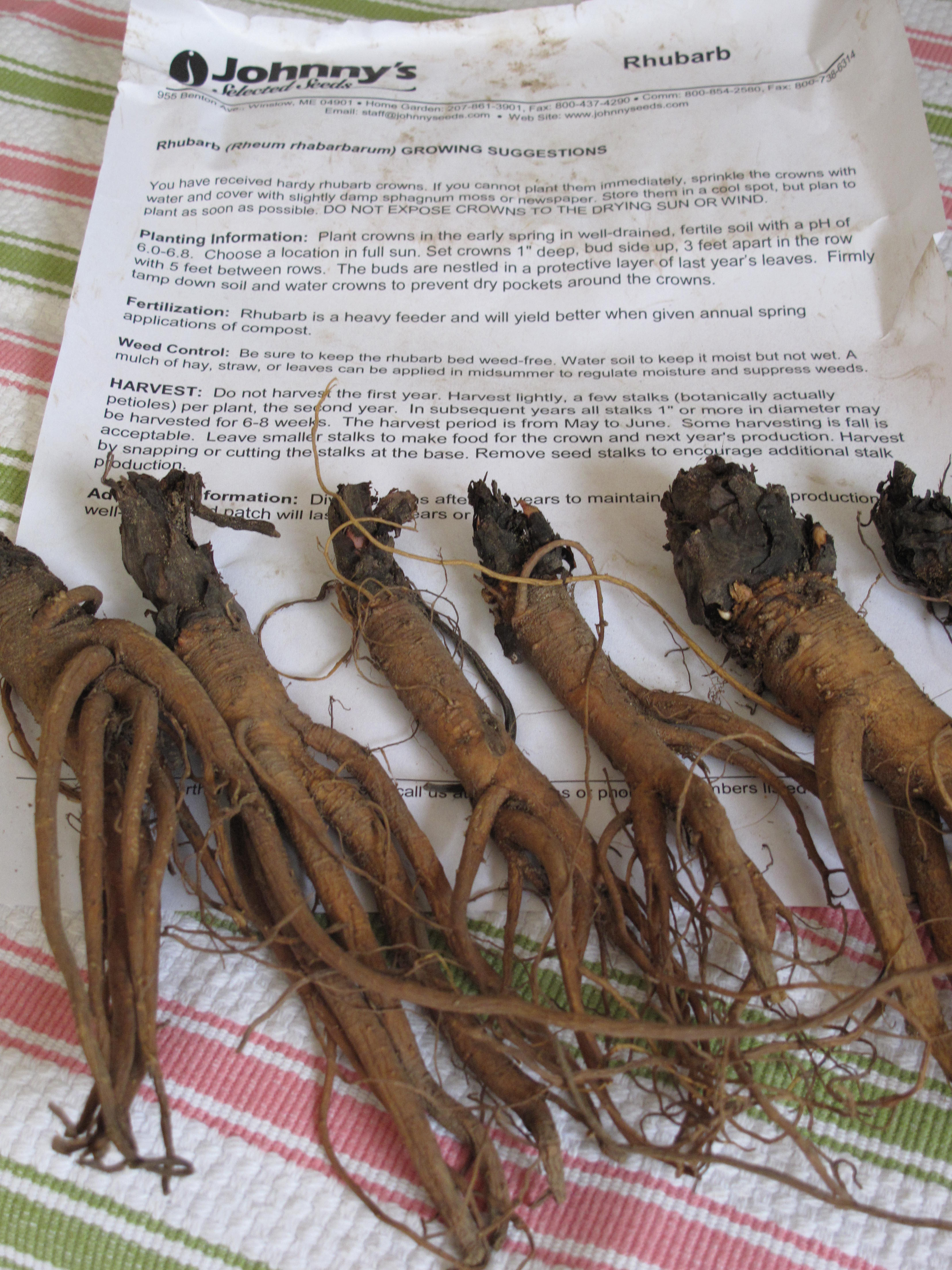
This is what I received this week…some rhubarb crowns ready for planting.  I have been obsessing about planting rhubarb, also know as rheum rhabarbarum, here on Glen Road for quite some time.  I’m sure it has to do with wanting to grow something that reminds me of my youth.  You must all know at this point that my Grandma was a great gardening inspiration in my life.  My Father was also inspirational, but due to my close relationship with Grandma, she brought me slowly into the process and let me get into the garden when I wanted to do it.  She slowly made me value it.  You know how it goes with parents…they want to bring you into it, but many times you feel forced and then you end up crying and rebelling and not wanting to do it.  I guess that is the sad story of all teenage angst…sorry Dad and Mom.  I’ve talked about her horseradish a few times, but my Grandma also had a killer rhubarb patch.  We ate a lot of rhubarb in Spring…rhubarb sauce, rhubarb pie….all of it so fresh and so tasty.  There were times my brother and I would snap off a stalk and chew on the tangy sweet and sour fruit in her backyard.  Do any of you remember the Schwann’s man?  In our town in Iowa, the Schwann’s man drove a pinkish peach truck up the road and you could stop him and buy frozen items.  Grandma bought pizza dough and ice cream.  In the Spring, she scooped this ice cream into whatever rhubarb creation she had made for the night.  How great was that? 

So I wanted to plant a rhubarb patch for a long time and this year, I got my wish.  I planted six crowns this weekend in some well-drained soil.  The patch was in a location that received full sun, just behind the two espalier apple trees.  I set the crowns about a foot apart, which is a little tight, but I’m sure they will be fine.  I watered the crowns very well and then placed a little over one inch of soil on top of them.  Then I firmly tamped down the soil to prevent any dry pockets from forming around the tender crowns.

There will be no harvest this first year.  During the second year, there may be a light harvest, actually a few stalks (botanically, actually petioles) per plant.  In subsequent years, all stalks one inch or more in diameter may be harvested for six to eight weeks.  The harvest period is from May to June.  Some harvesting in Fall is acceptable if we feel the urge.  However, smaller stalks should be left to make food for the crowns and next year’s production.  We will harvest by snapping or cutting the stalks at the base.  We need to remember to remove seed stalks to encourage additional stalks in the next year.  What I also know is that rhubarb leaves from un-harvested stalks are quite beautiful.  Don’t be afraid to plant them in a prominent spot in your garden given their beauty.

After three to five years, we will need to divide the crowns to maintain stalk size and production.  A well-maintained patch will last 10-15 years or longer.  That sounds like such a long time, but as my Grandma used to say, time goes by much quicker the older you get.  Here’s to a few stalks next year.  Do you grow rhubarb in your garden?

Strawberries and Bread

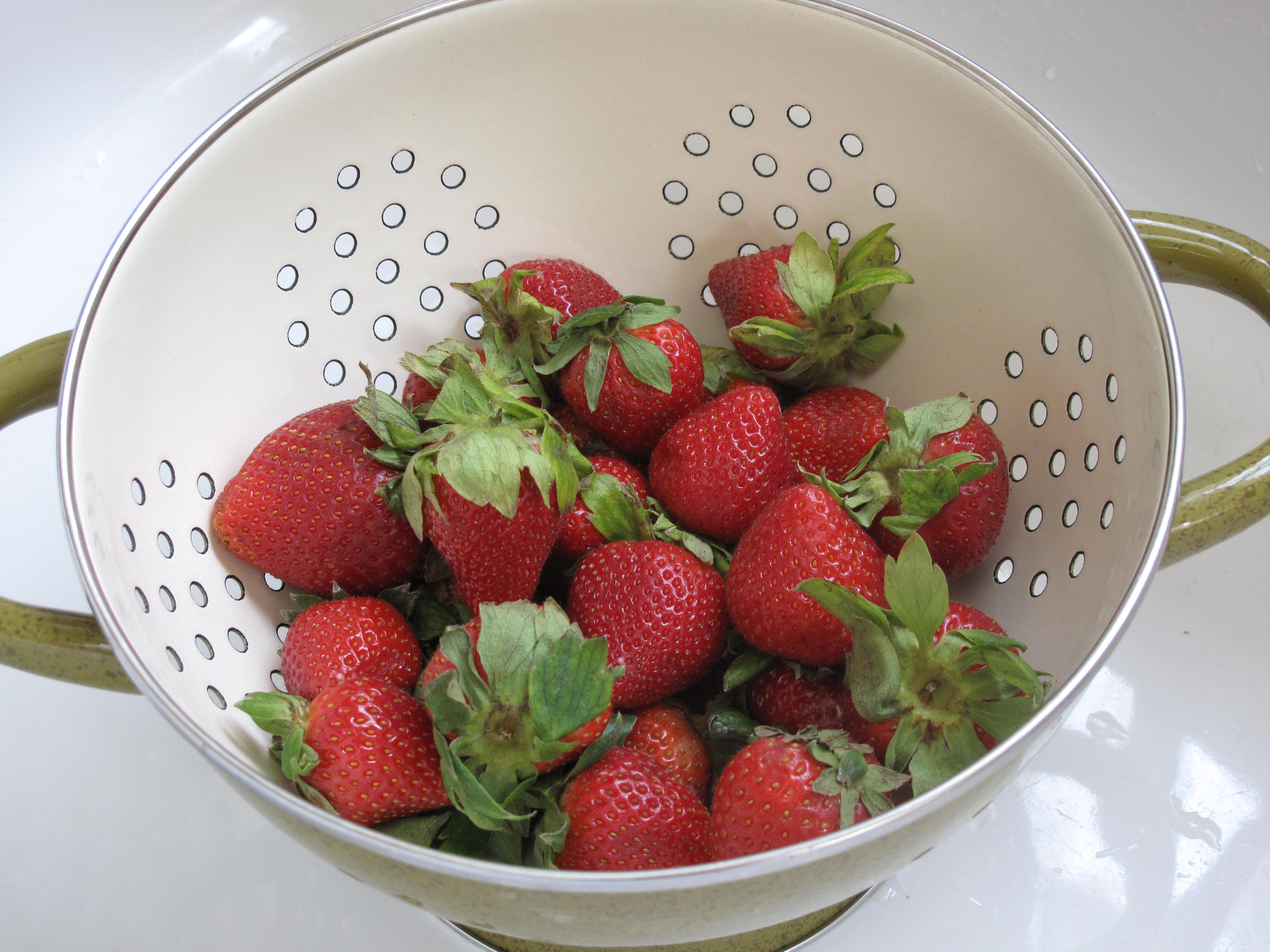
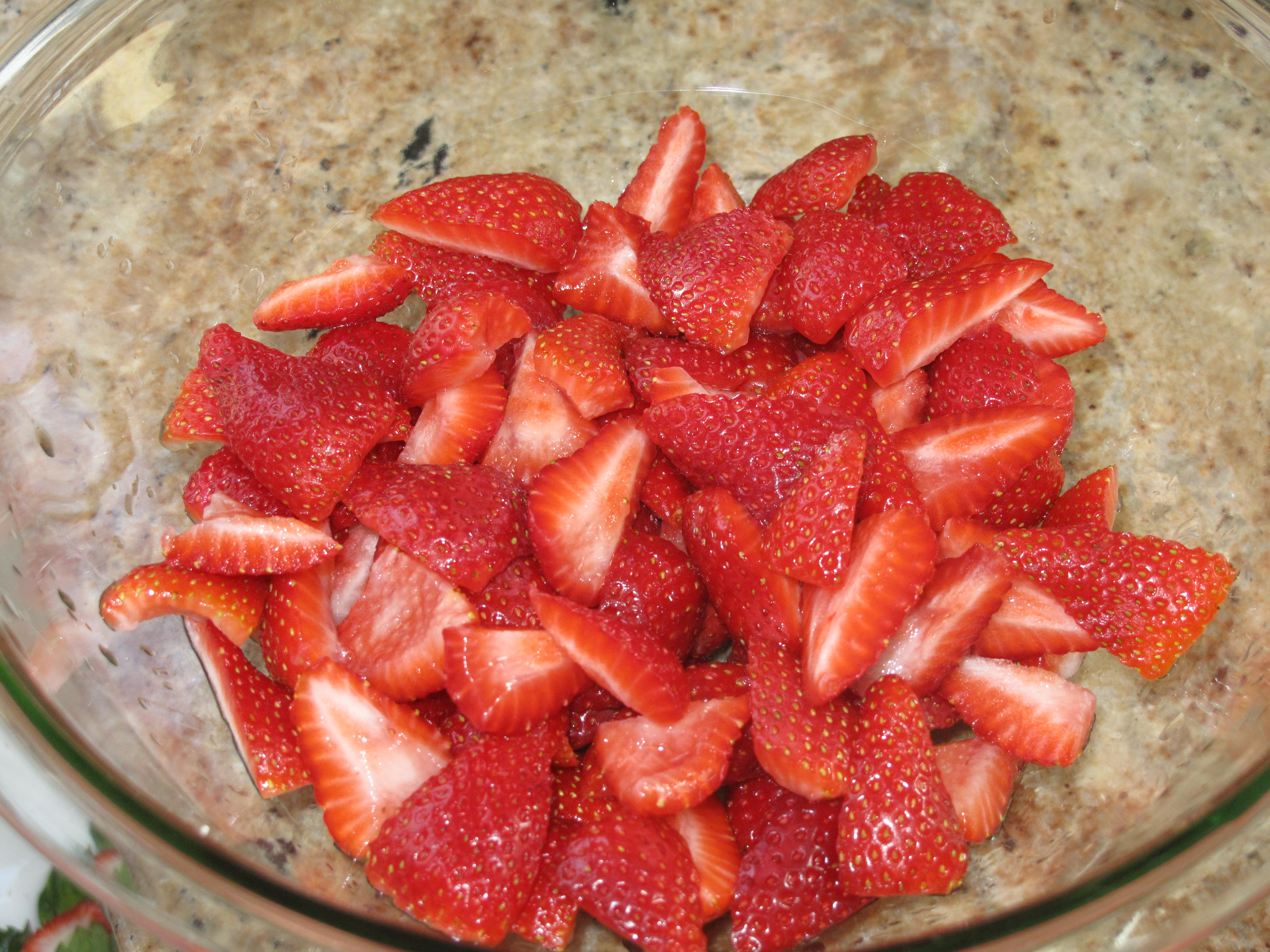
This is a pint of organic strawberries.  I got them at the organic market this week and needed to use them or they were going to go bad.  That’s the problem with strawberries for me.  You quickly need to use them or they need to be thrown out.  I know, you’re saying to me “that’s why them call them fresh”, but I wish they could last a little longer.  You know, like an apple or a pear.  Even given this one downside, the taste of a strawberry is one of my favorite fruit flavors.  So what should I make with them?  Shortcake seemed a little too summer like.  Strawberry ice cream was out given that it is still a little cold outside.  So I decided on making strawberry bread.  This recipe makes a very moist bread marbled with crushed strawberries.  It is a real change of pace and a great way to use those pesky strawberries that seem to lose their freshness way too fast.

Ingredients:

  • 5 tablespoons plus 1 teaspoon unsalted butter softened, plus more for pan
  • 1 pint strawberries rinsed, hulled, quartered, and mashed with a fork
  • 1 3/4 cups all-purpose flour
  • 1 teaspoon baking soda
  • 1/2 teaspoon ground cinnamon
  • 1/4 teaspoon baking powder
  • 1/4 teaspoon salt
  • 1 cup sugar
  • 2 large eggs

Directions:

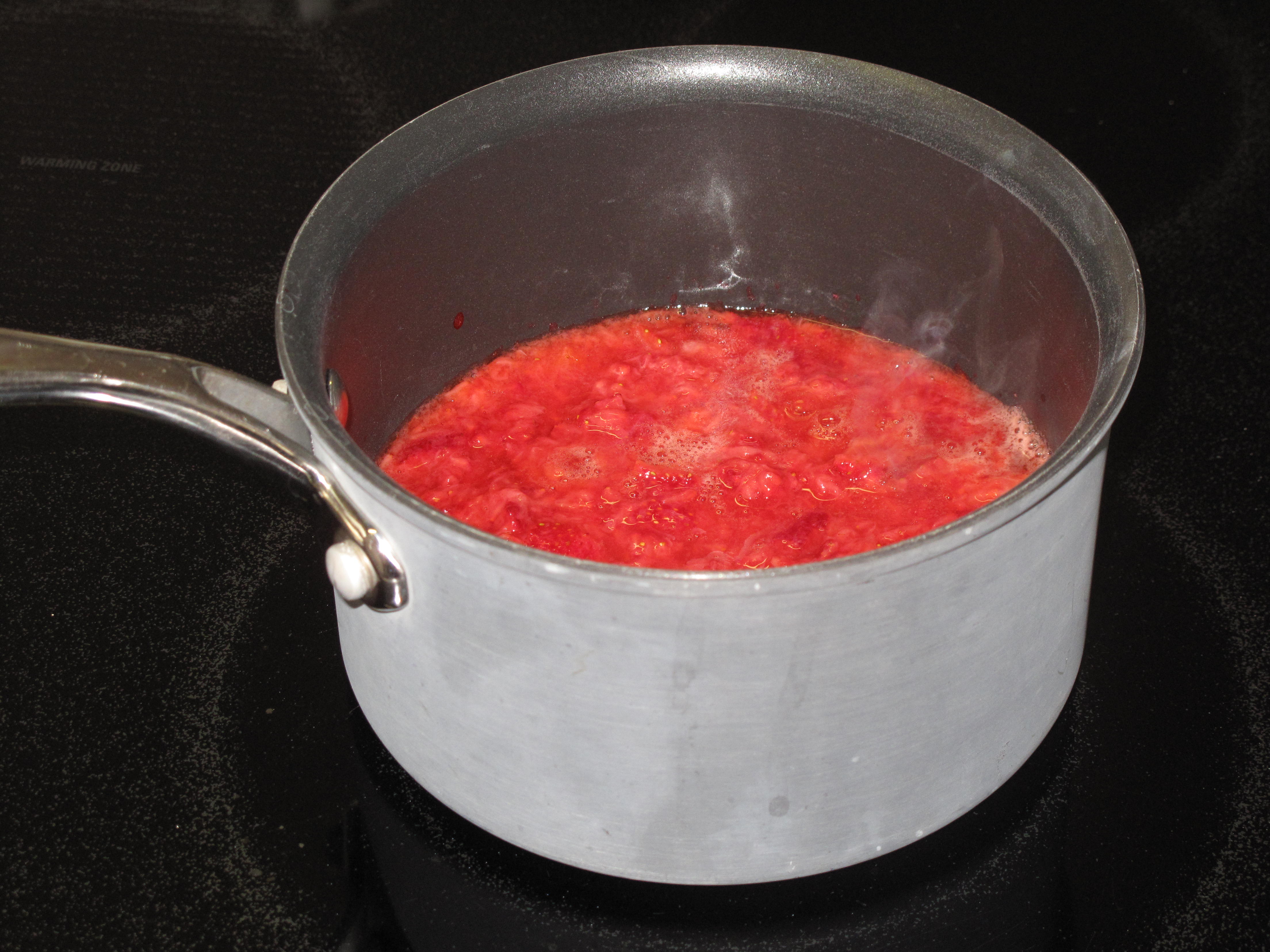
Preheat oven to 350 degrees. Butter an 8-by-4-inch loaf pan. In a small saucepan, bring strawberries to a boil over medium heat. Cook, stirring, 1 minute. Set aside.

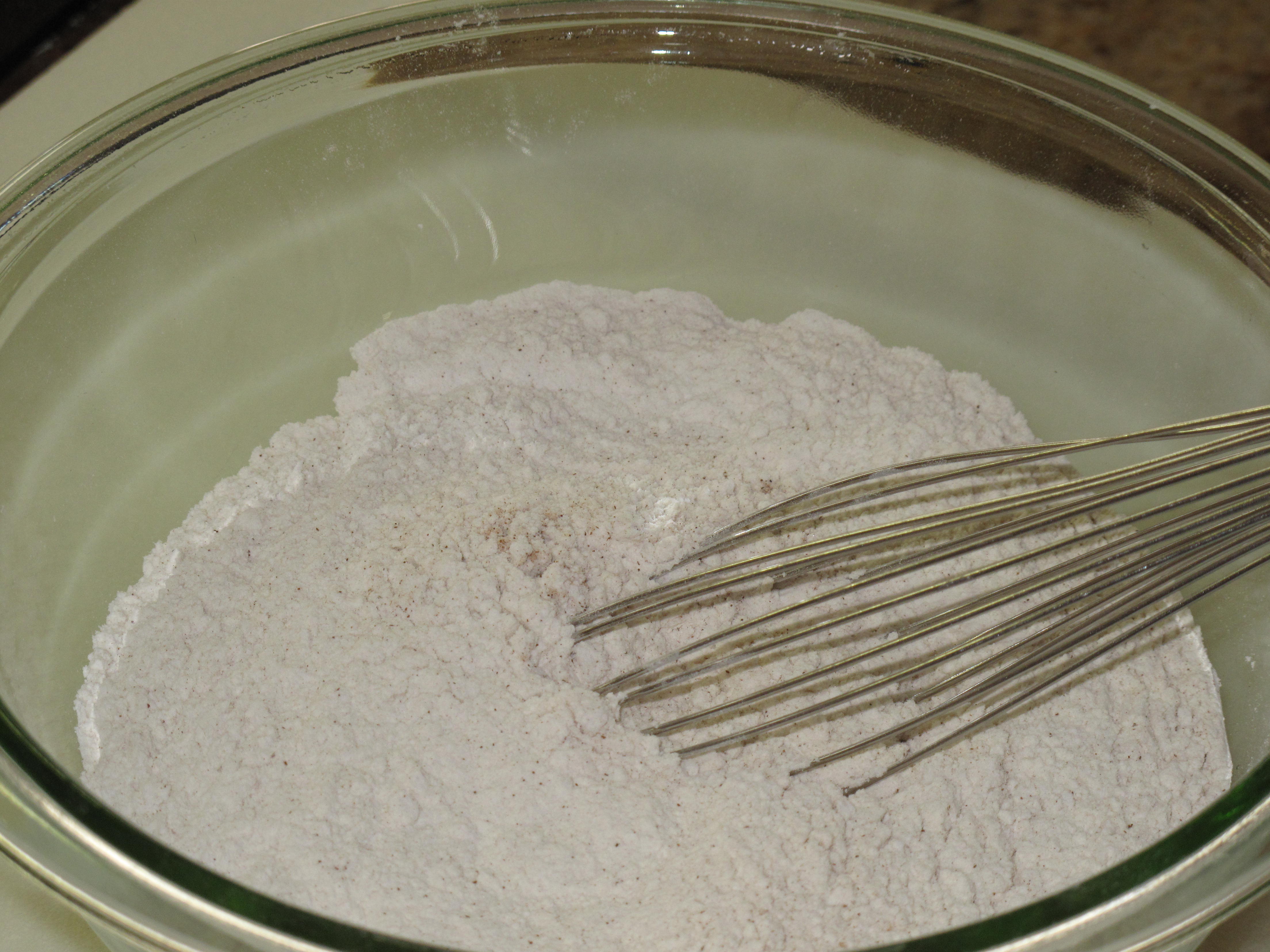
In a medium bowl, whisk together flour, baking soda, cinnamon, baking powder, and salt; set aside.

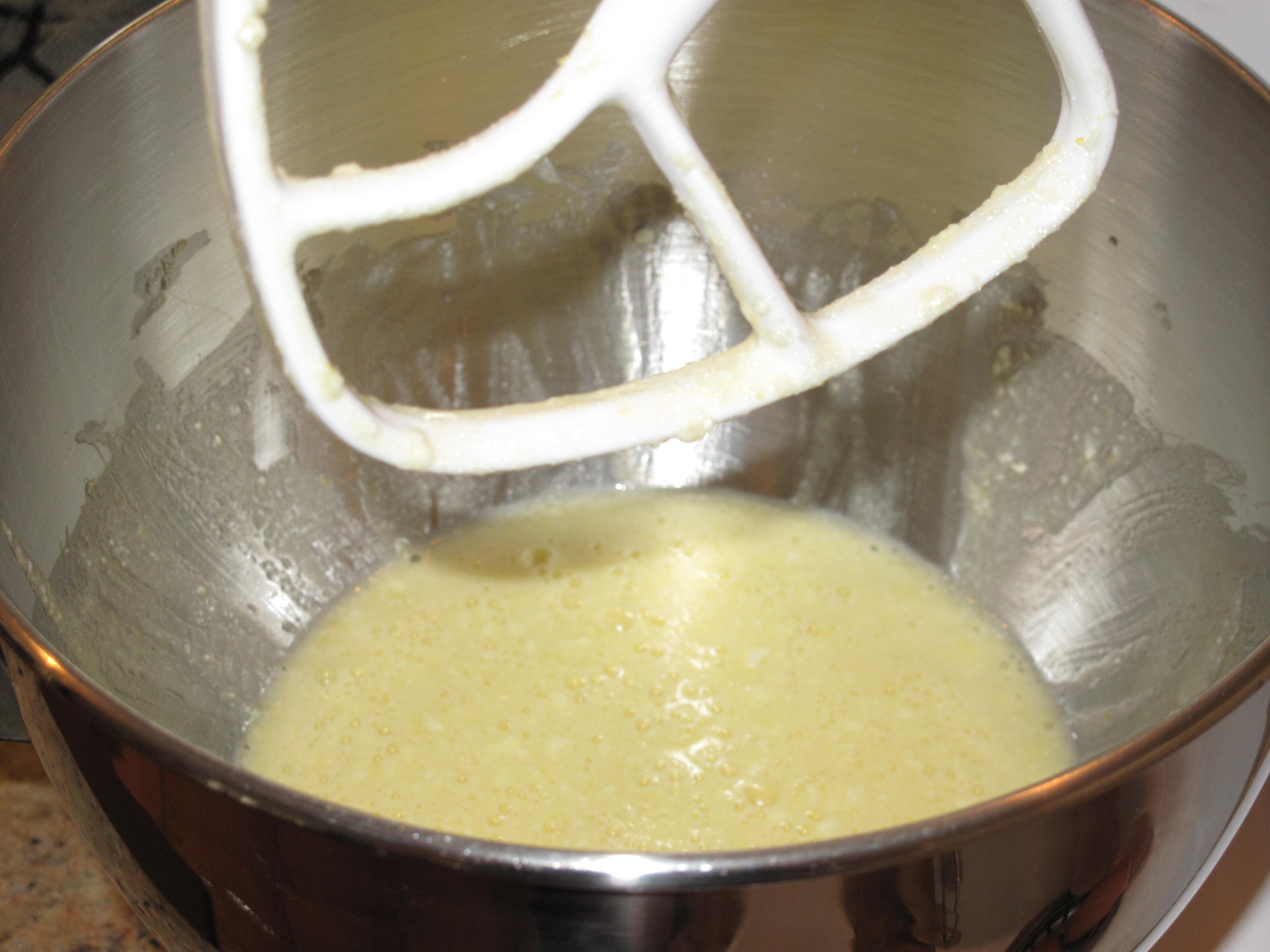
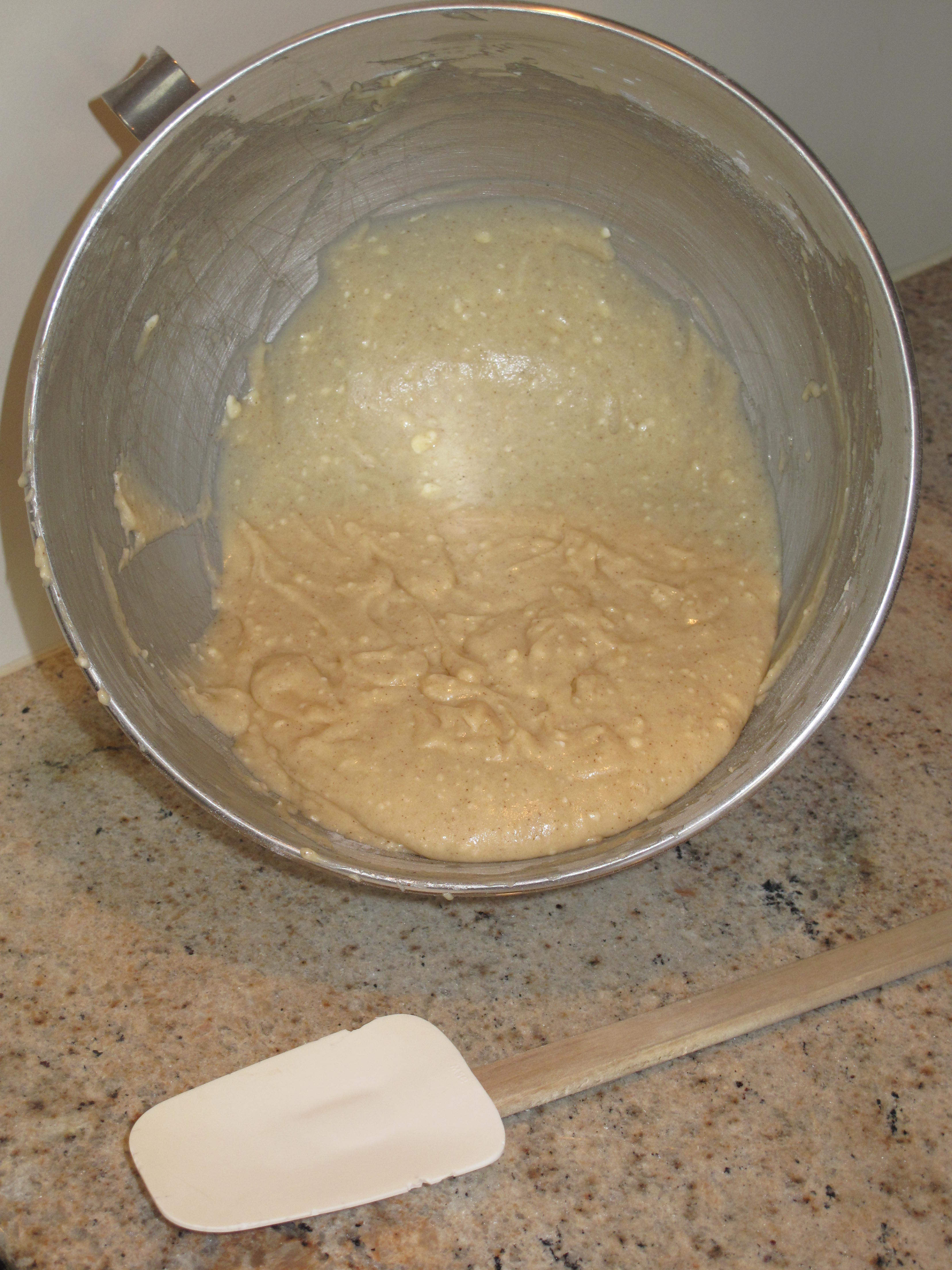
With an electric mixer, cream butter, sugar, and eggs in a mixing bowl until light and fluffy.

Add flour mixture alternately with 1/3 cup water, beginning and ending with flour.

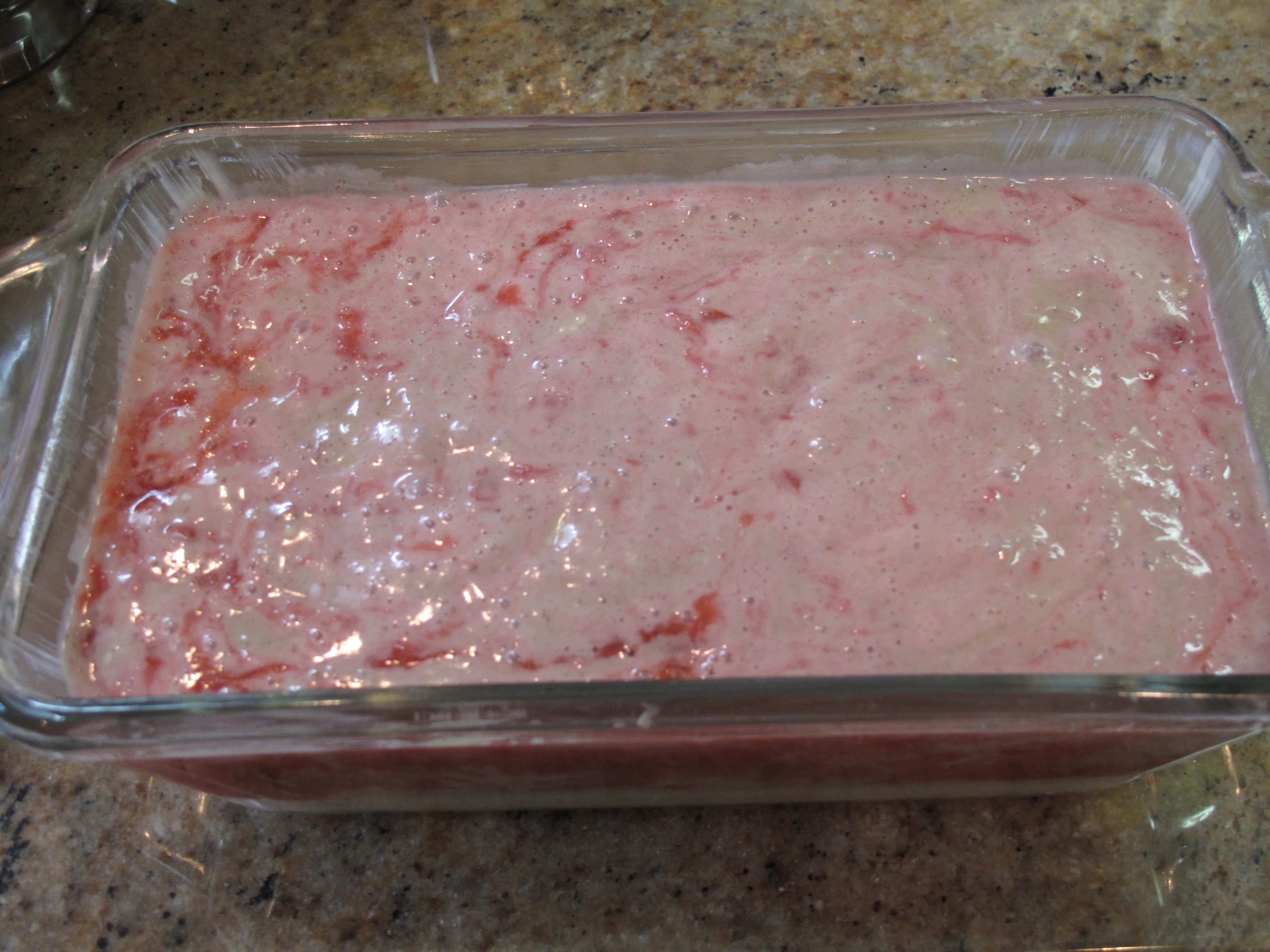
Fold in reserved strawberries.  Scrape batter into prepared pan, smoothing top.

Bake until a toothpick inserted in center comes out clean, about 1 hour (tent with foil after 45 minutes if top is getting too dark). Cool in pan 10 minutes. Run a knife around edges; invert onto a rack. Reinvert; cool completely.

I love that the loaf is so golden brown in color and I wish you could have smelled my kitchen.  The smell of baking bread and strawberries filled the air.  Add a little butter or cream cheese to a slice for an added taste bonus.  This bread is great for breakfast, a snack or any time you need something a little sweet.  Try strawberry bread for a real change of pace.  Your bananas will be jealous.  What have you been baking this weekend?