Friday Dance Party – Workin’ 9 to 5 with Dolly

This is another edition of Friday Dance Party on Acorns On Glen.  It’s the time where we give thanks for living another week.  We give thanks for making it through another stretch of the journey we call life and for being able to celebrate this fact.  People celebrate in all different sorts of ways.  How do we celebrate another week of living here on Acorns On Glen?  We dance.  Are you alive this Friday?  Did you give thanks for that fact?

Good, now let’s dance.

This was a tough week in terms of work.  We were so busy with projects and deadlines at work that it was hard to enjoy the nice Spring weather that has come our way and the fact that all known Mothers are accounted for and present on Glen Road for their big day this Sunday.  We got our wish this week in terms of the weather being mostly sunny with one day of good rain for our plants and our newly seeded front lawn.  Both Mothers are here in Connecticut for us to enjoy Mother’s Day with them.  So life is good!  When we have crazy work weeks like we had this week, we need to remember to take some time to stop every so often, inhale deeply and look around and give thanks for all that’s around us.  It is so easy to get caught up in work and forget to fully live life in the moment and to be happy for the life that we have.  If you don’t stop every once in a while to look around and give thanks for all of your blessings, you can quickly move into a negative state of mind that is not good for you or anyone around you.  So given that it was a tough work week, we thought we’d dance this week to our favorite ode to working.  Yes, it’s the Dolly classic ‘9 to 5’.  Come on, how can you not dance when you see Dolly perform?  So get out your cowboy boots and turn your computer speakers up.  You’ve made it through another week and it’s time to get your dance on today.  Have a great Mother’s Day weekend from all of here at Acorns On Glen!  How do you stay grounded and positive when work presents a tough week for you? 

Salute Spring With A Hummingbird Cake

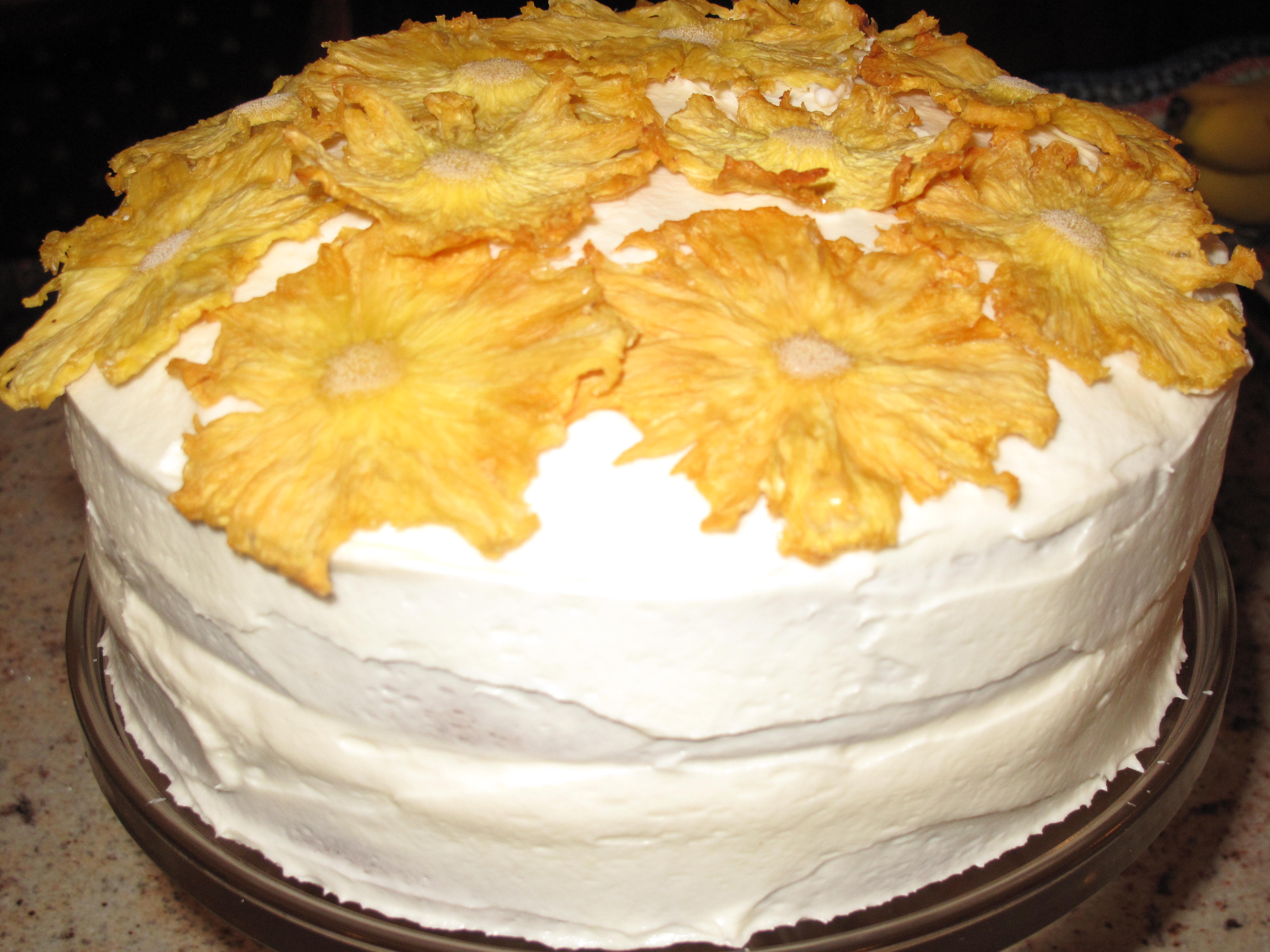
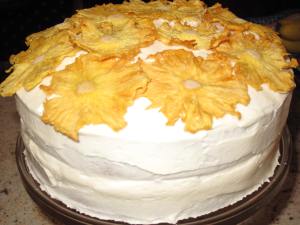
This is a cake to bake when you want to celebrate Spring.  This is a hummingbird cake which is a great way to salute Spring.  I’ve had the recipe for years from an old ‘Martha Stewart Living’ magazine but I had never made it.  This weekend, I was looking at my actual hummingbird feeders and for some reason decided to make the hummingbird cake.  I guess I will do anything to get a hummingbird to come live on Glen Road.  Other than this cake, we have not been given this opportunity in the six years we’ve been here.  I guess the cake will have to do at this time.

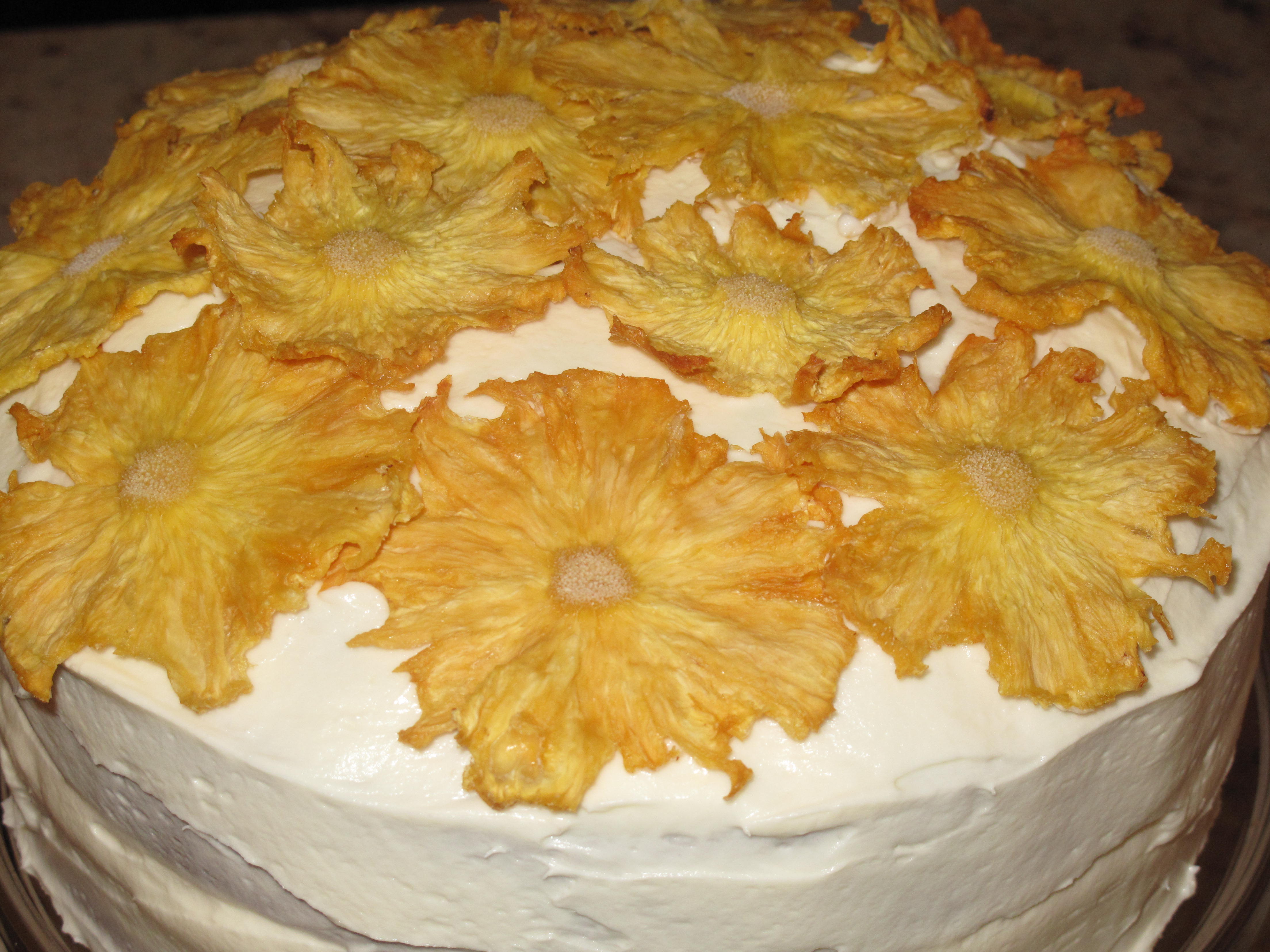
Does anyone know the reason they call this cake a hummingbird cake?  My clipped recipe says that its delicious taste makes people who eat it hum with delight.  It also says that it is as sweet as the sugared water that attracts its namesake.  All I can say is that this is a delicious cake.  The cake itself mixes pineapple, pecans, bananas and coconut into a thick, rich batter.  It is frosted with a delicious cream cheese frosting.  I even took the extra step of making elegant dried pineapple flowers to put on top of the cake.  While the pineapple flowers look difficult, they are actually quite easy.  If you have some spare hours or are obsessed in making an elegant cake statement, the hummingbird cake is for you.  Again, it’s not quick, but it is super delicious.  I wrapped my head around making this cake by thinking of doing it in three stages:  making the pineapple flowers, proceeding to making and baking the cake and then finishing the cake by frosting it.  Let’s start with step one and make the dried pineapple flowers that are used for decorating the top of the cake and are edible as well.

Ingredients:

  • 1 to 2 large pineapples (I used one large pineapple and got about 12 flowers)

Directions:

Preheat oven to 225 degrees.  Line baking sheets with Silpats (French nonstick baking mats) or parchment paper.
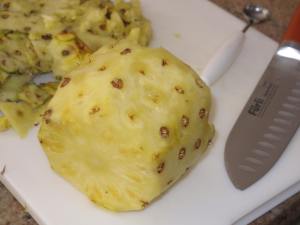
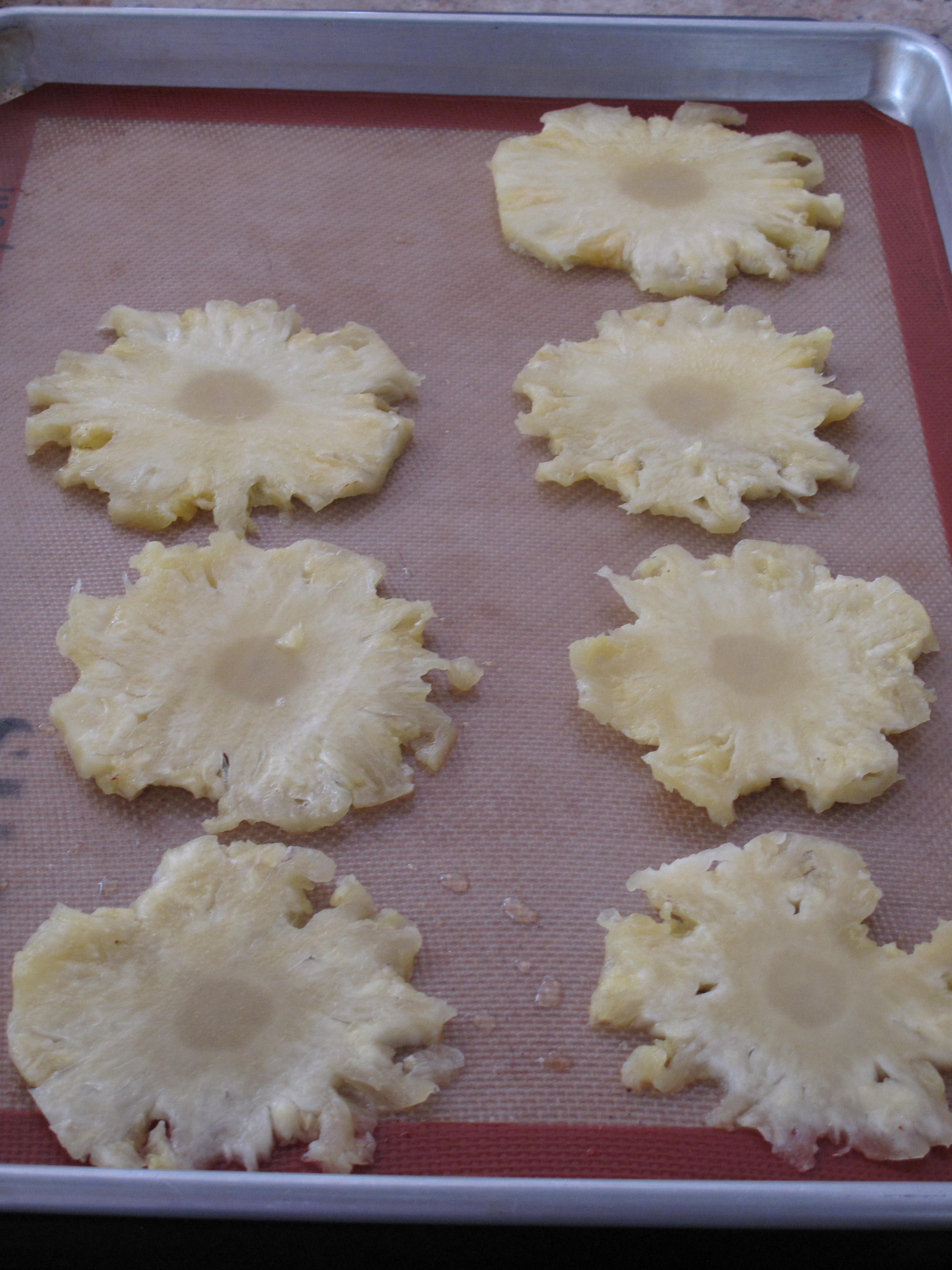
Peel pineapple(s).  Using a small melon baller, remove and discard “eyes”.  Slice pineapple very thin.  Place slices on baking sheets. 
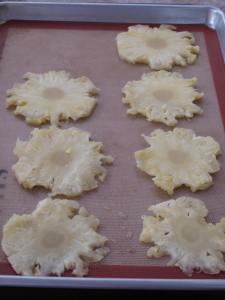
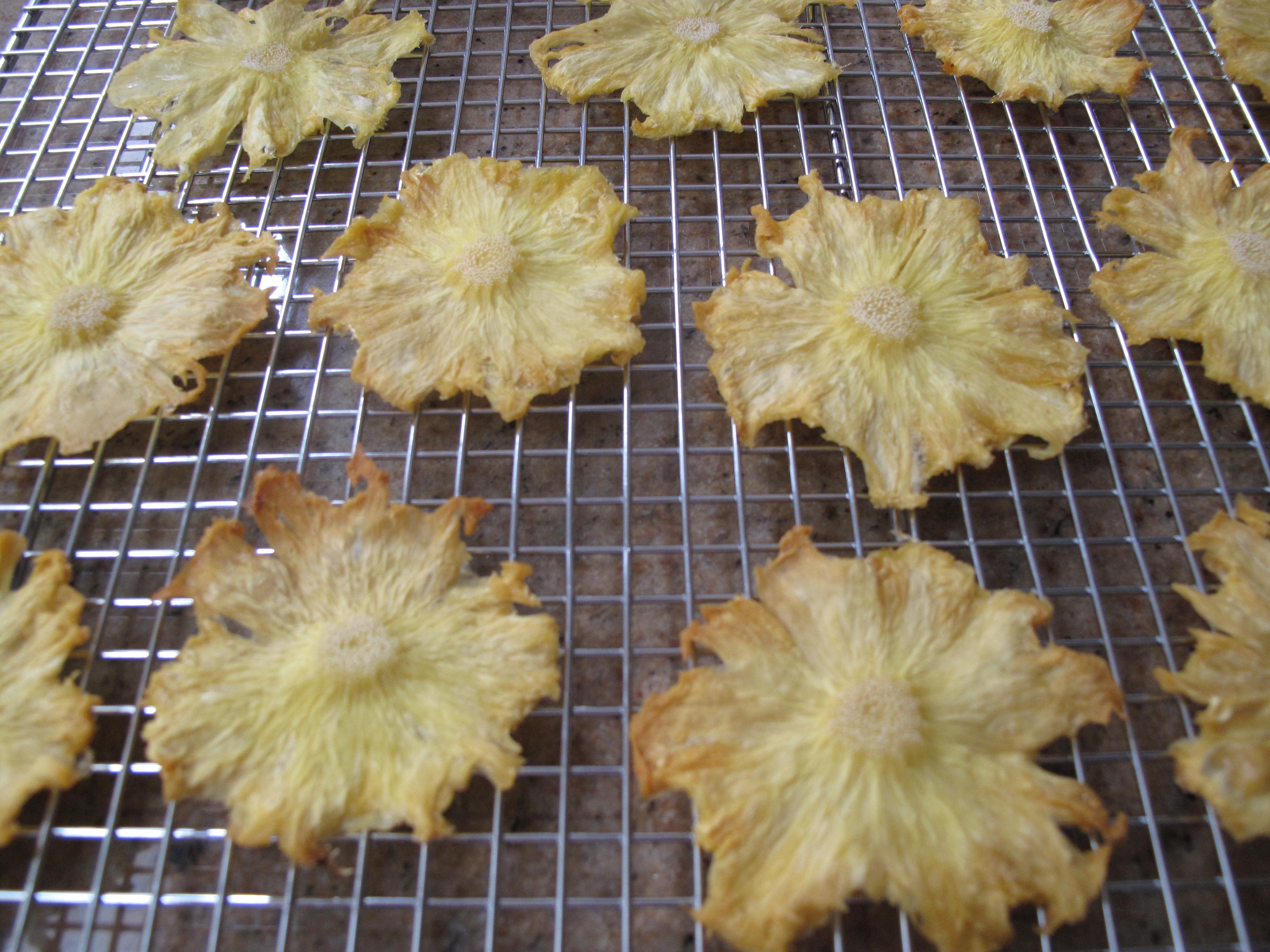
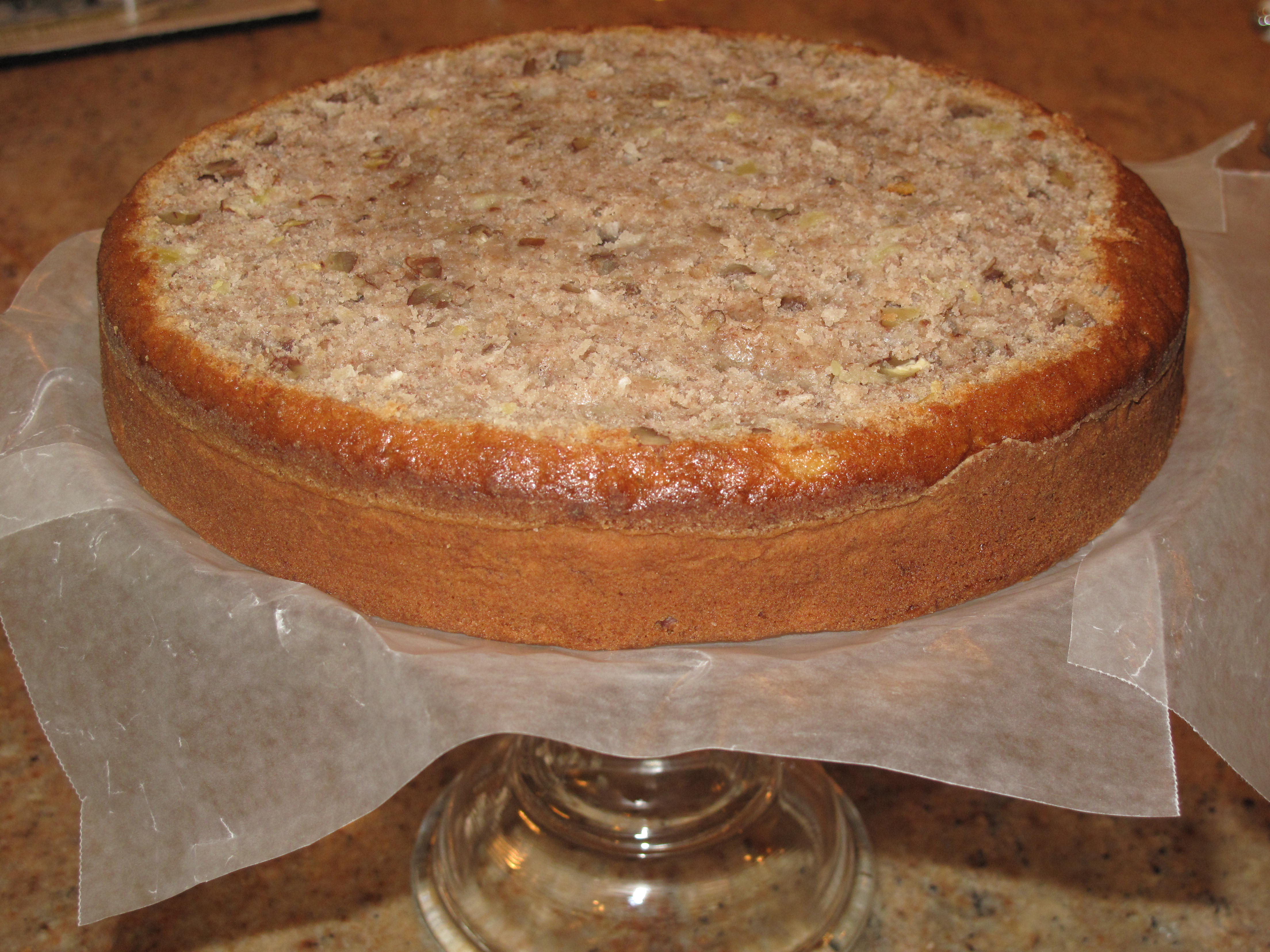
Cook until tops look dried, about 30 minutes.  Flip slices; cook until completely dried, 25 to 30 minutes more.  Cool on a wire rack. You can refrigerate the flowers in an airtight container up to 3 days.  Note:  For me, the cooking process took about twice as long, most likely due to the fact that my slices were not super thin.  Continue baking the flowers until they feel dry to your touch.  If you take them out and they still feel moist, they are not done yet and need to go back into the oven.  Here are the flowers after drying is complete.

Step two, let’s make and bake the cake.

Ingredients:

  • Unsalted butter, room temperature, for pans and racks
  • 3 cups all-purpose flour, plus more for pans
  • 1 teaspoon baking soda
  • 1 teaspoon ground cinnamon
  • 1/2 teaspoon salt
  • 1 cup vegetable oil
  • 2 teaspoons pure vanilla extract
  • 2 cups sugar
  • 3 large eggs
  • 3 cups mashed ripe banana, about 4 large
  • 1 can (8 ounces) crushed pineapple, drained
  • 1 cup chopped pecans
  • 1 cup flaked coconut, unsweetened (I bought mine at the local health food store from the bins.  It is the only place where I can find flaked coconut without added sugar.)

Directions:

Preheat oven to 350 degrees, with rack in the center.  Butter two 9-by-2-inch round cake pans.  Line the bottoms of the pans with parchment paper.  Butter paper and dust the pans with flour, tapping out any excess. Set aside. 

In a medium bowl, sift together flour, baking soda, cinnamon, and salt; set aside.

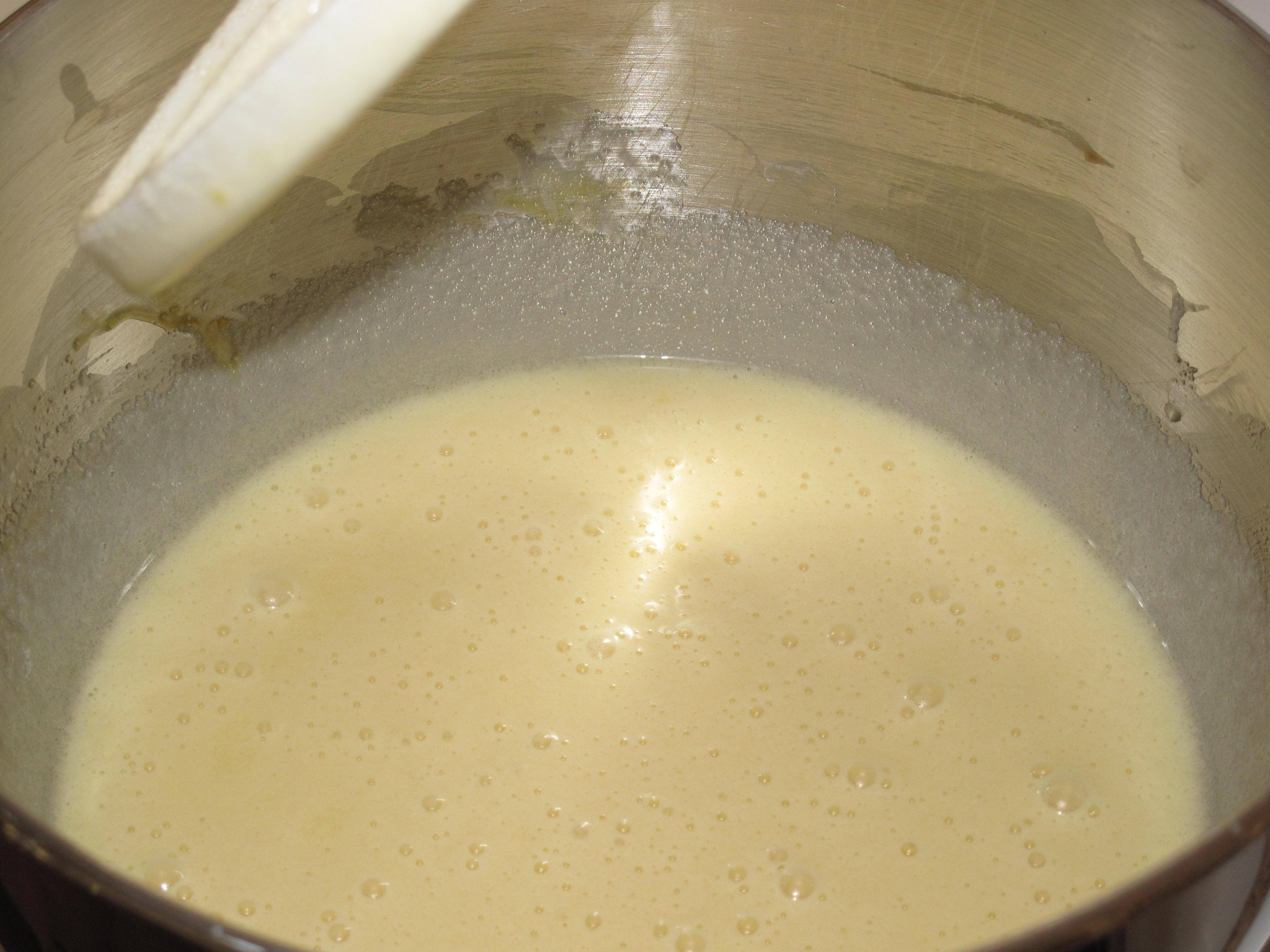
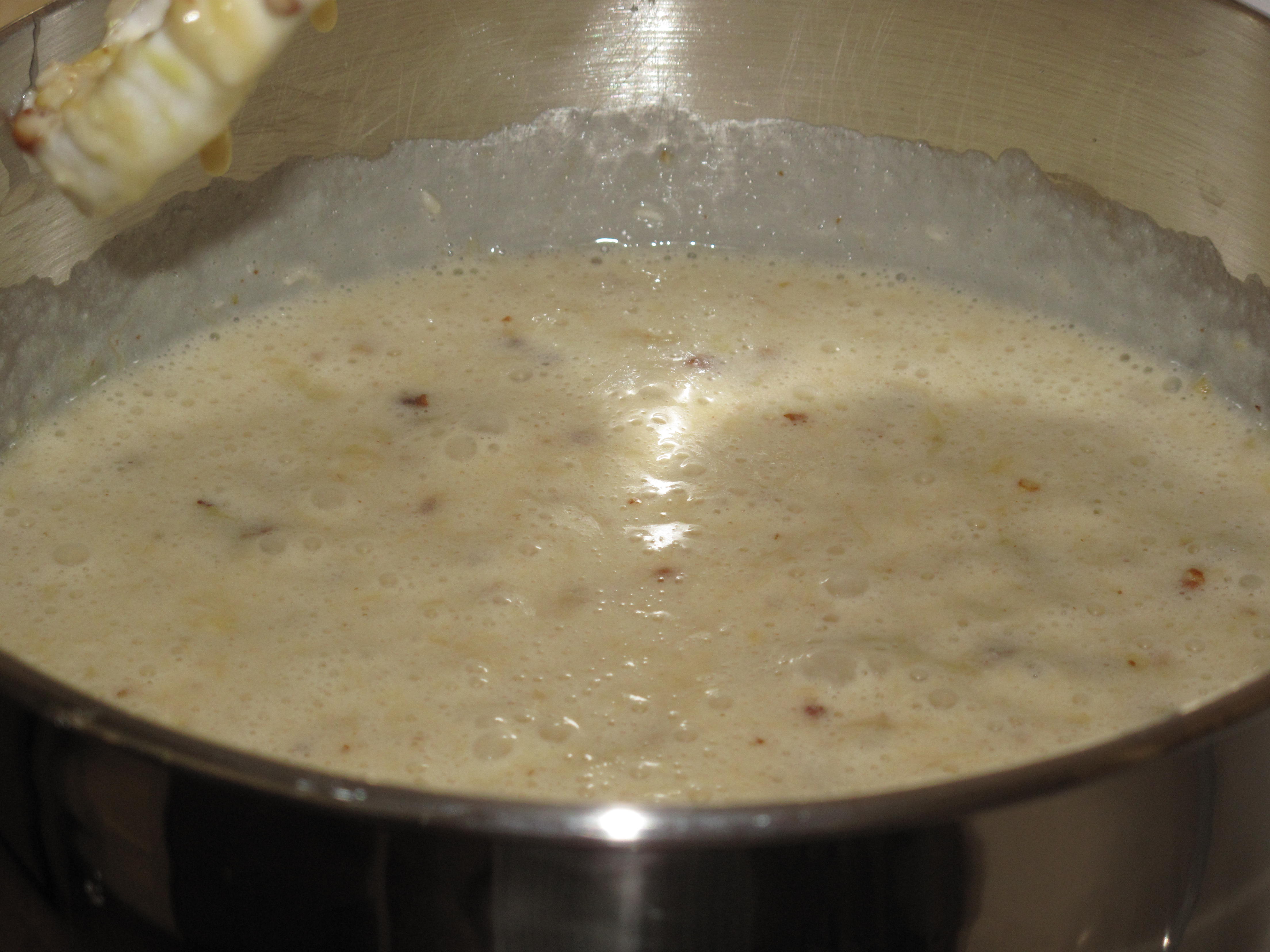
In the bowl of an electric mixer, beat oil, vanilla, and sugar until combined, about 2 minutes.  Add eggs one at a time, incorporating each before adding the next.  Beat at medium speed until mixture is pale yellow and fluffy, about 3 minutes.
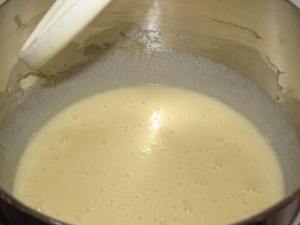
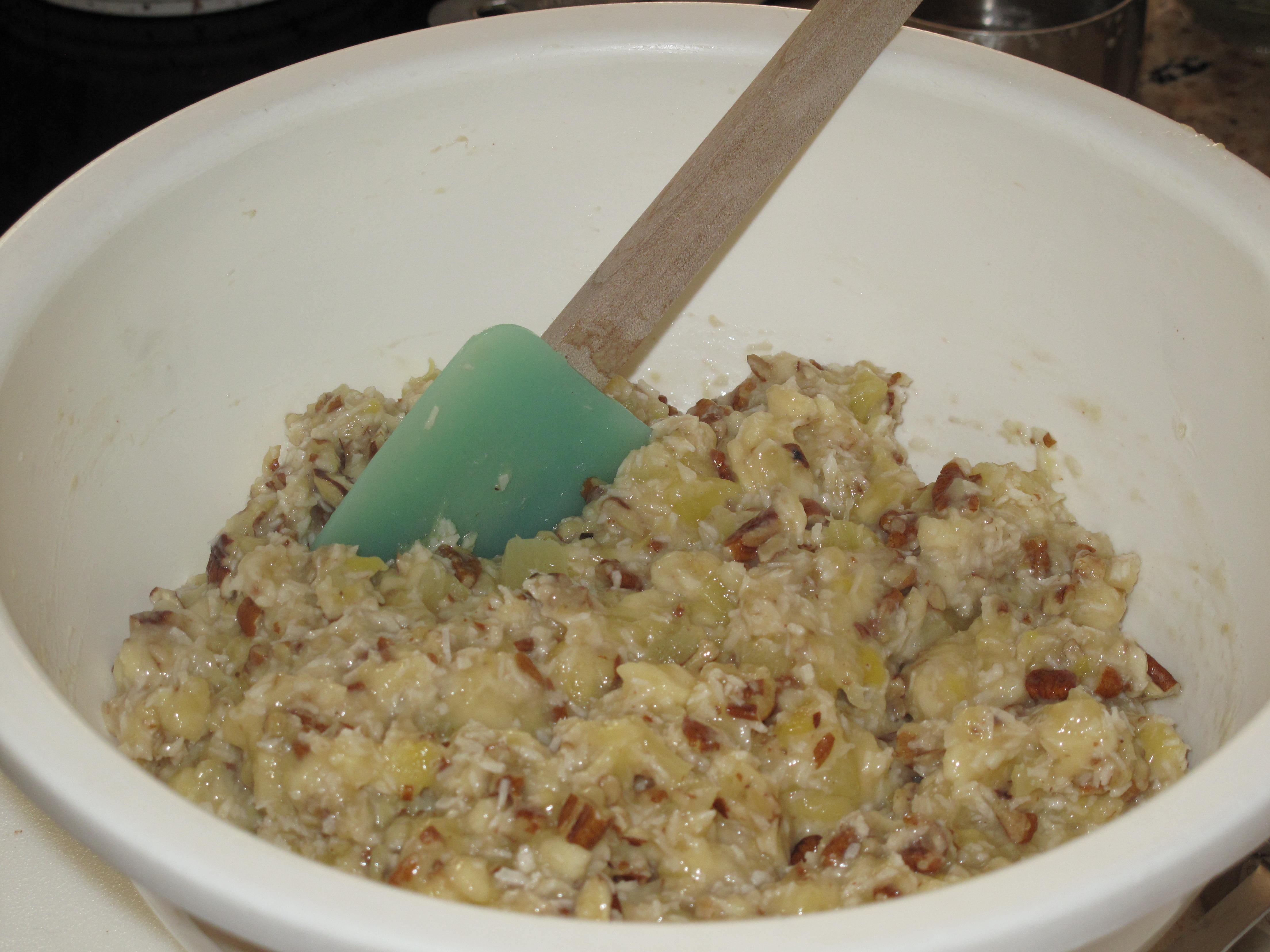
In a medium bowl, mix together banana, pineapple, pecans and coconut.
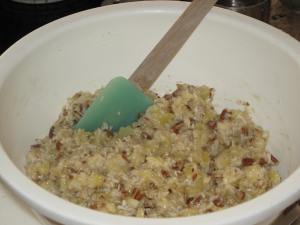
Add to egg mixture; stir until well combined.
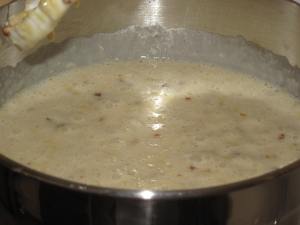
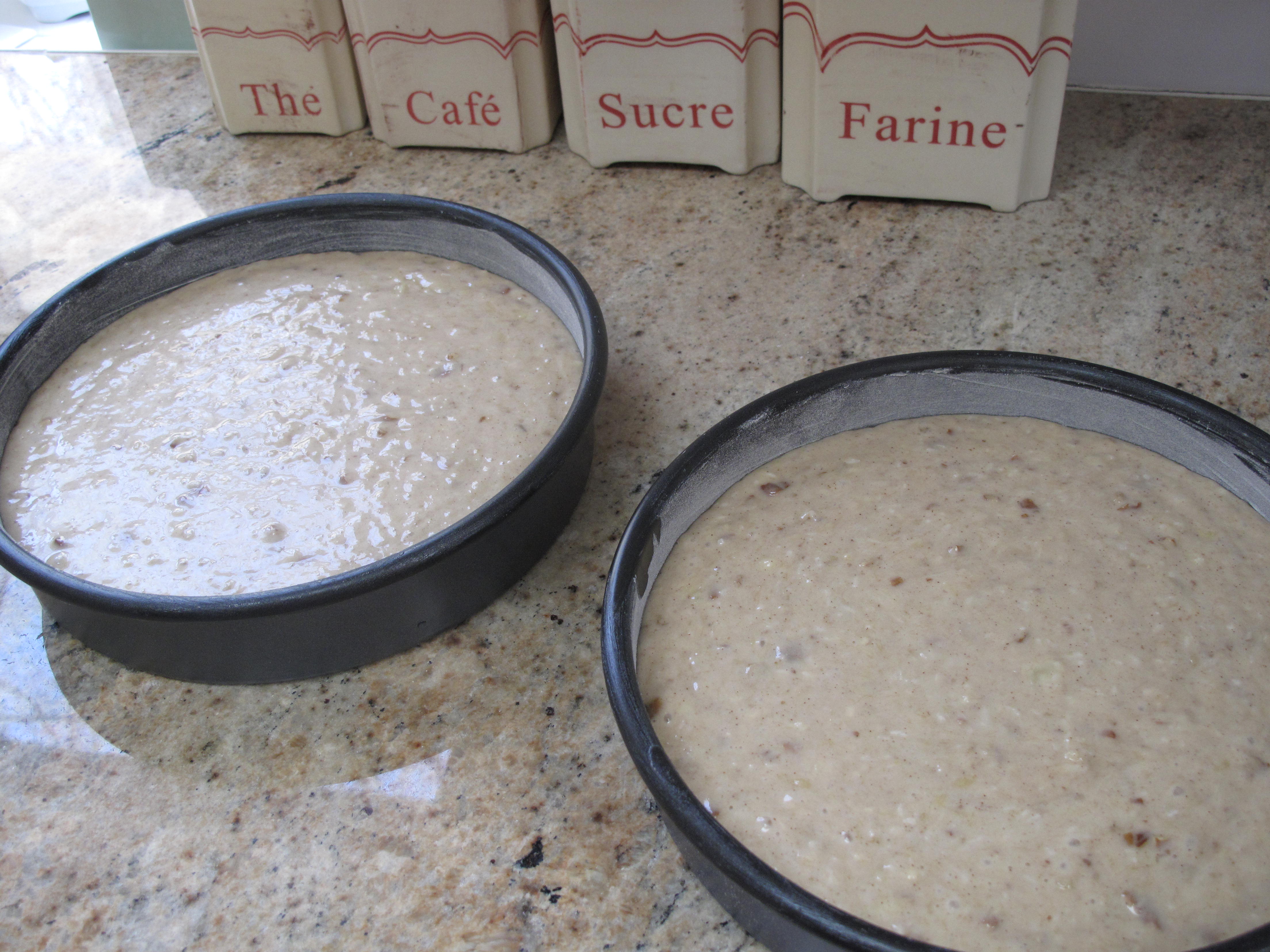
Add flour mixture; blend well.  Divide batter between pans.
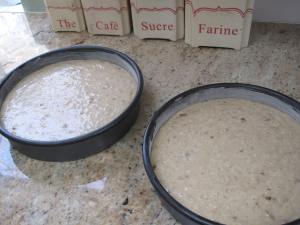
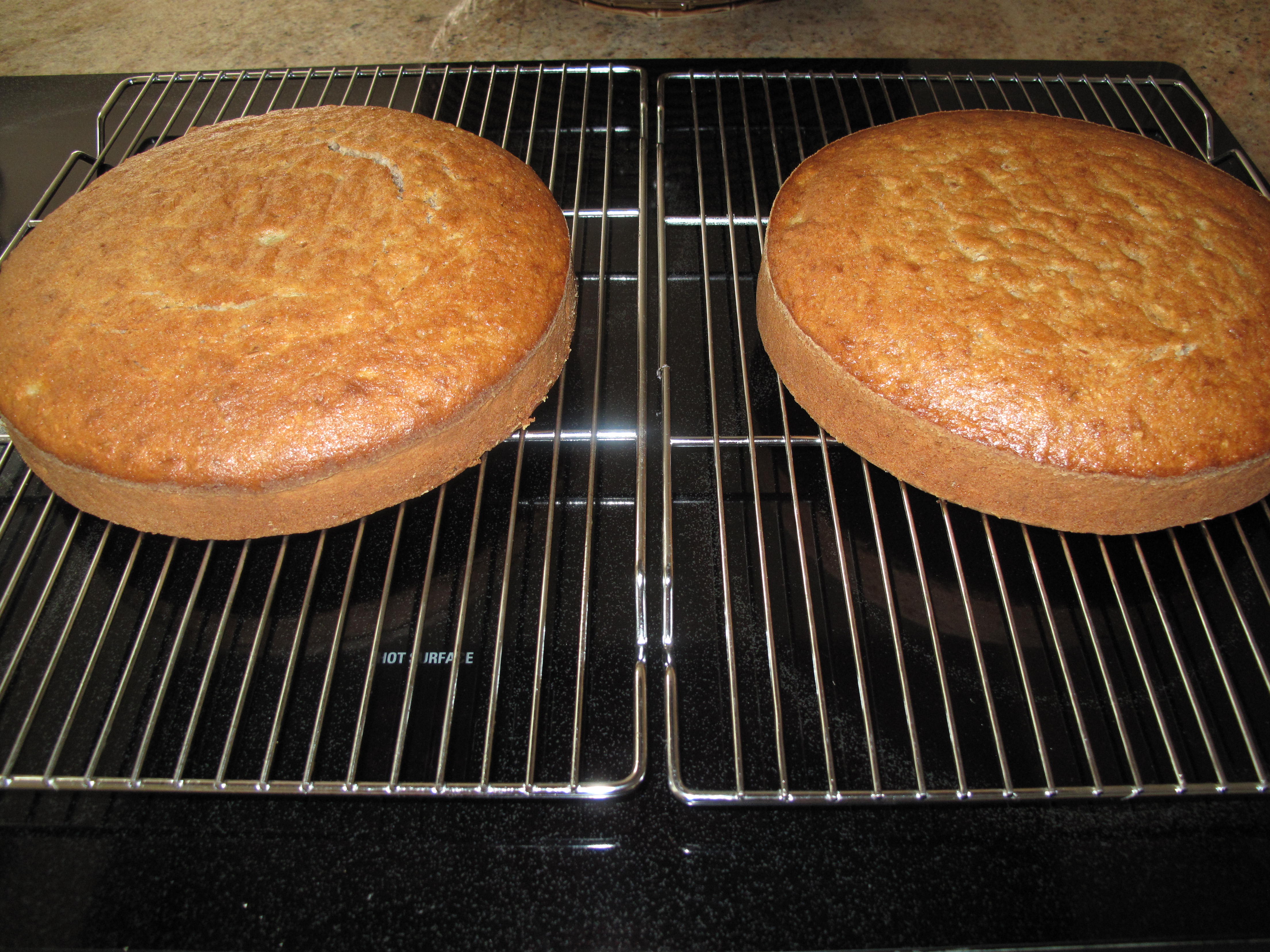
Bake, rotating pans halfway through, until golden brown and a cake tester inserted in the center comes out clean, 30 to 40 minutes.  Transfer pans to a greased wire rack.  Let cool 15 minutes.  Run a knife around edges to loosen.  Invert onto racks; reinvert, top side up.  Cool completely.  Assemble cake, or wrap each layer well and freeze (thaw before using).
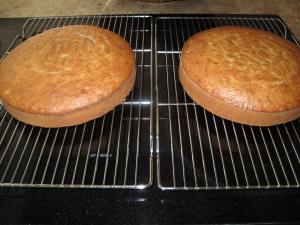
We are almost there.  Let’s finish with making the cream cheese frosting and putting it on the cake followed by the pineapple flowers.

Ingredients:

  • 1/2 pound (8 ounces) cream cheese, room temperature
  • 1 teaspoon pure vanilla extract
  • 1/2 cup (1 stick) unsalted butter, cut into pieces, room temperature
  • 1 pound confectioners’ sugar, sifted

Directions:

In the bowl of an electric mixer, beat cream cheese and vanilla until light and creamy, about 2 minutes.  With mixer on medium speed, gradually add butter, beating until incorporated.  Reduce mixer speed to low.  Gradually add sugar, beating until incorporated.

With a serrated knife, trim and discard rounded top off one layer.  Place layer on serving platter.  I like to put the bottom layer on top of small rectangles of waxed paper that hang over the side of the cake stand.  When frosting, the wax paper catches any wayward frosting.  When you are done frosting your cake, pull the wax paper away from the cake/cake stand and you will have a sharp edge on the bottom layer and a clean cake stand.
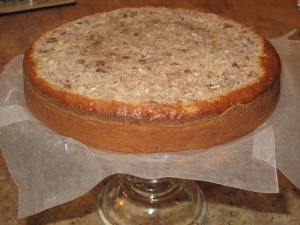
Using an offset spatula, spread top of layer with 1/4 inch of frosting.  Top with other layer.  Frost sides and top of cake with remaining frosting.  Decorate with pineapple flowers, if desired.  Serve at room temperature. Cake can be refrigerated up to 3 days.
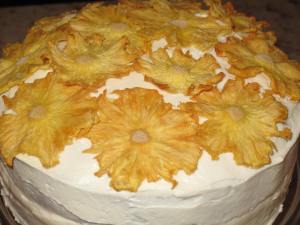
We’re done.  Take a minute to catch your breath and then dig in to a slice of this delicious cake.  You and your friends and family will not be disappointed.  Why not spend some time to salute Spring in the right fashion?  Bake this hummingbird cake and show Spring how much you love her.  We sure are glad that we did.  What other Springtime desserts do you make at your home?

You’re Bugging Me!

This is the downside of gardening.  Bugs, varmints, predators, insects.  They eat your hard work faster than you can hit the back button on your browser.  Squirrels, chipmunks, slugs when it’s wet…they can be fierce at times.  Each Spring, however, this is the first one we deal with….the Japanese beetle.  We’ll start off by giving the beetle some credit.  It’s a pretty bug with its red top.  When we traveled for work, United Airlines used to offer a Japanese bento box for lunch when you sat in business class.  Bento is a single-portion takeout or home-packed meal common in Japanese cuisine.  The bento box on United contained Asian-inspired foods and could be delivered to you whenever you were ready to eat.  Every time we see the beetle, we think of the bento box and its pretty color.  A pretty Asian lacquered red…a beautiful color….just like the color of the Japanese beetle.  The bento box on United Airlines was a good thing.  These Japanese beetles are a menace and must be destroyed.

Every year our lilies come up proud and strong.  We look at them and think that they are fine for another day or two.  They are good enough until we have time to come out and clean them of these beetles and their eggs that can mow our lilies down in a heartbeat.  We should know better.  The next day after we say or think this, we come outside and the lilies have holes all over them.  Guess what did it?  The beetles…these Japanese beetles.  So Sunday was beetle killing day.  We know this sounds rough, but they have to go for our lilies to live.  So we pick them off and squeeze them between a cloth and we also brush their eggs off on the underside of the lily leaf.  What a wonderful way to spend a Sunday.  So we sit there saving our lilies and then remember the fact that these beetles are quite frisky.  Porno beetles!  Get a room!

The only thing more distressing than watching nature porn is discovering the big chunk this couple took out of the lily right below them.  Sorry to all of you who have religion!

Speaking of the eggs the Japanese beetles lay, we sat there for two hours on Sunday brushing them off with a small brush.  Not a great way to spend the day and also one that requires bifocals.  These eggs are small and hard to see!

So this is the start of the crazy fight against the creatures that try to make our garden their meal.  It’s a fight between them and us.  We will tell you this….we’re determined to win.  So, hopefully you are reading this before lunch because it is sort of disgusting, but the fight is on.  It’s Acorns versus the critters.  We will win.  We are determined.  We are armed.  Hopefully, they will get tired before us.  Because WE ARE THE CHAMPIONS….of the world garden.  Are you dealing with bugs and varmints in your garden already this Spring?

News From The Garden

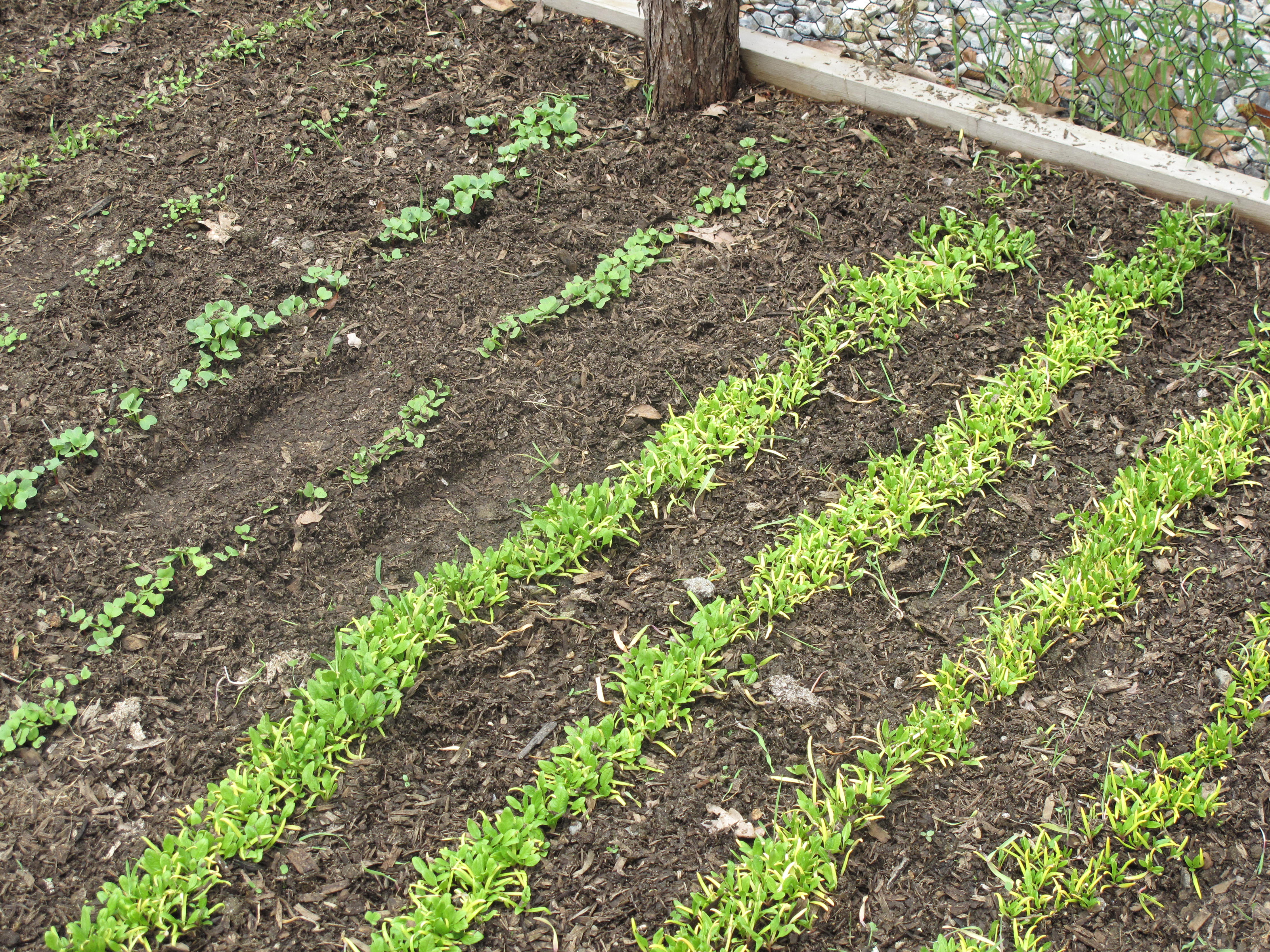
This is a garden update.  Just a little update on all the planting that we’ve done over the last few months or so, both outside and inside.  First off, the raised bed gardens are doing well.  Above, you can see the rows of seeds that are beginning to pop out of the ground.  From the lower right, the first four rows are the spinach rows that we planted on Thanksgiving 2010.  Two flat leaf rows and two savoy leaf rows.  Next is a row of round radishes, followed by a row of French radishes.  They are the long variety of radish.  Next is a row of arugula and then two rows of lettuce mix.  Starting now through the end of the month, we will continue to plant more seeds and plants into the garden.  Our last planting will be tomato plants given that they need to be put into the ground after the chance of frost has past.

Our tuberous begonias have shown their faces from the bulbs we planted.  ‘Picotee’ is a little less bashful than ‘John Smith’.  Remember him, the tuberous begonia with scent?

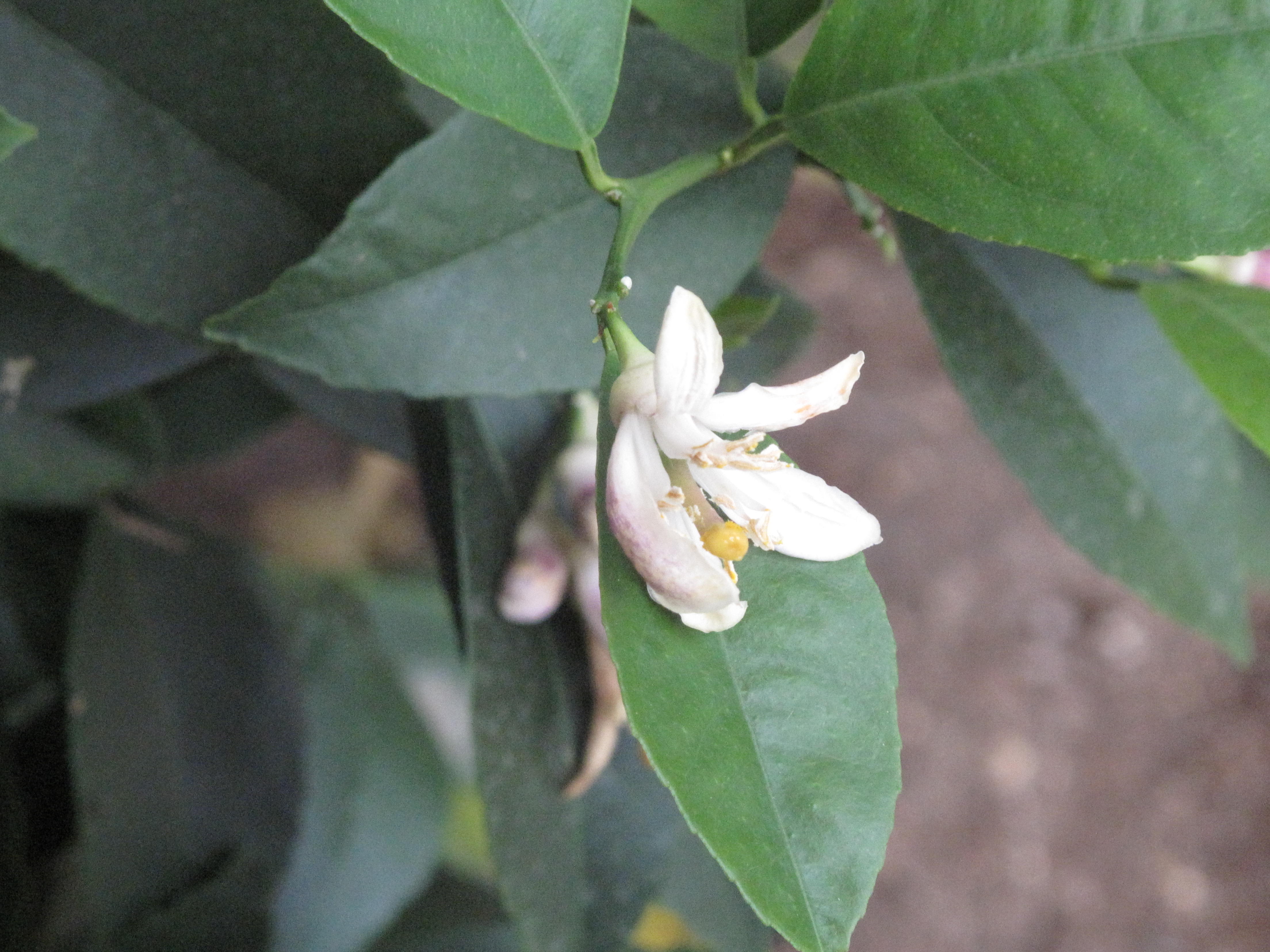
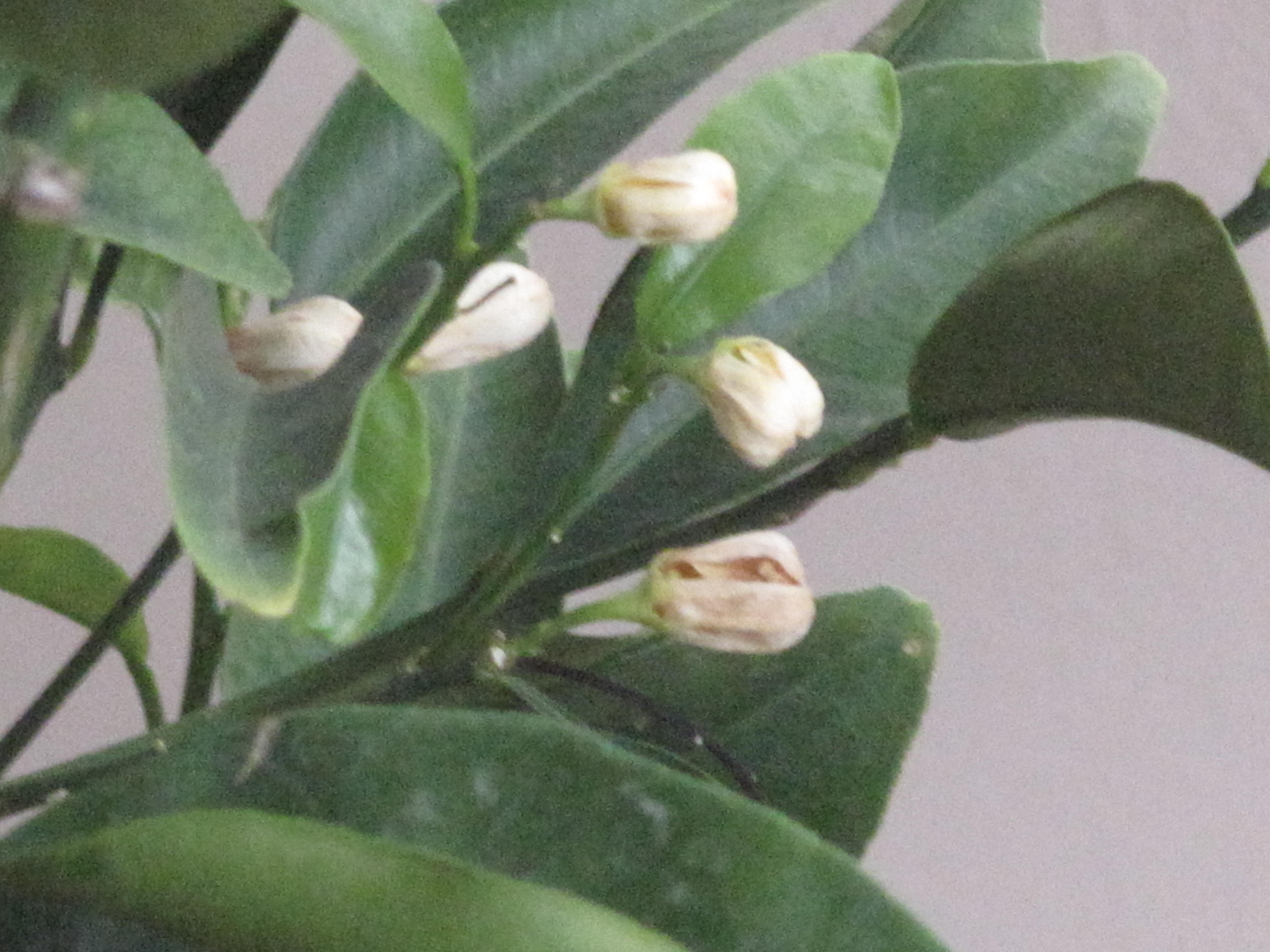
Here are the dwarf citrus trees.  They are blooming so let’s hope that this means fruit is on the way.  That is the Calamondin orange on the top and the Meyer Lemon on the bottom.

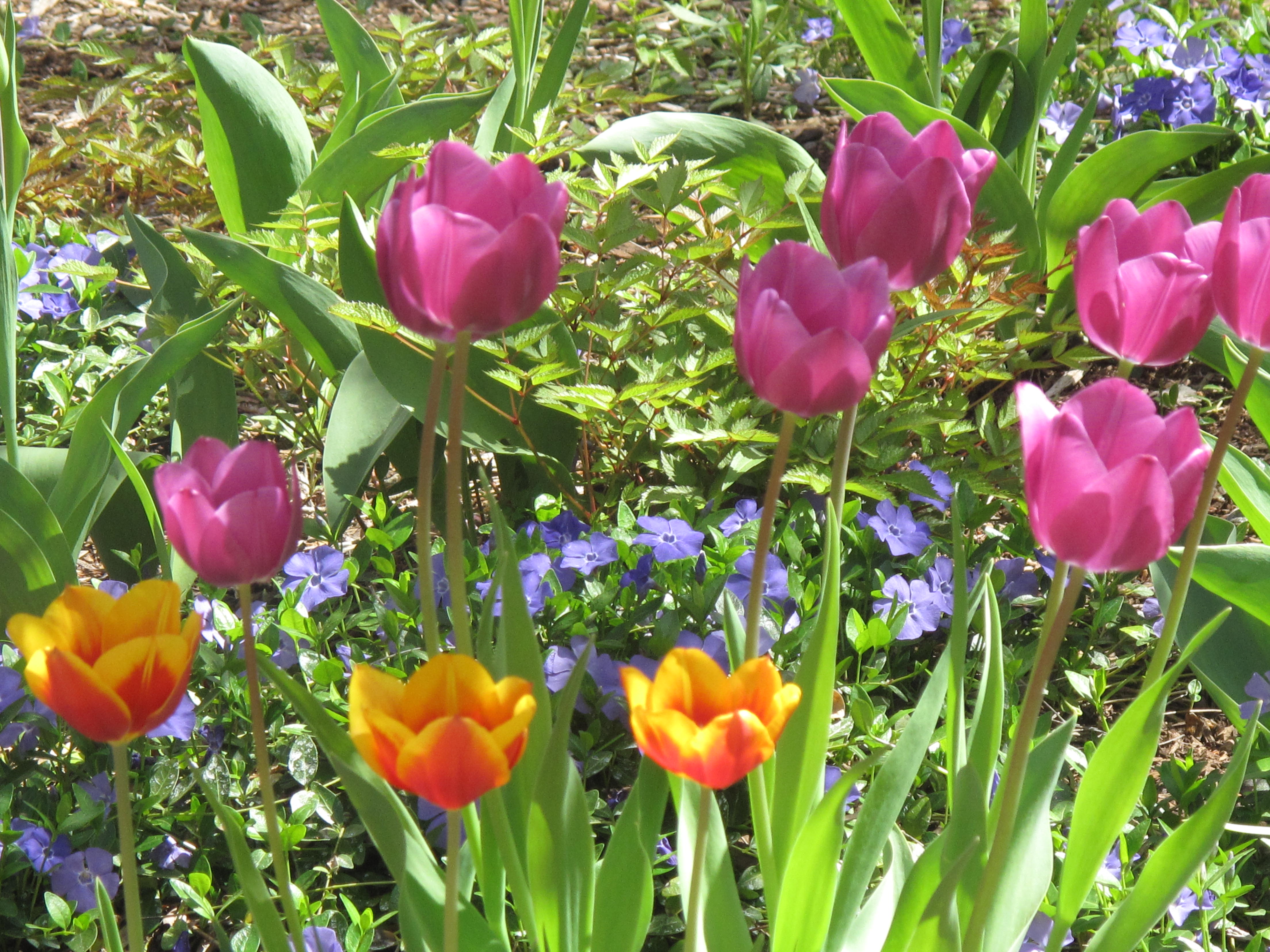
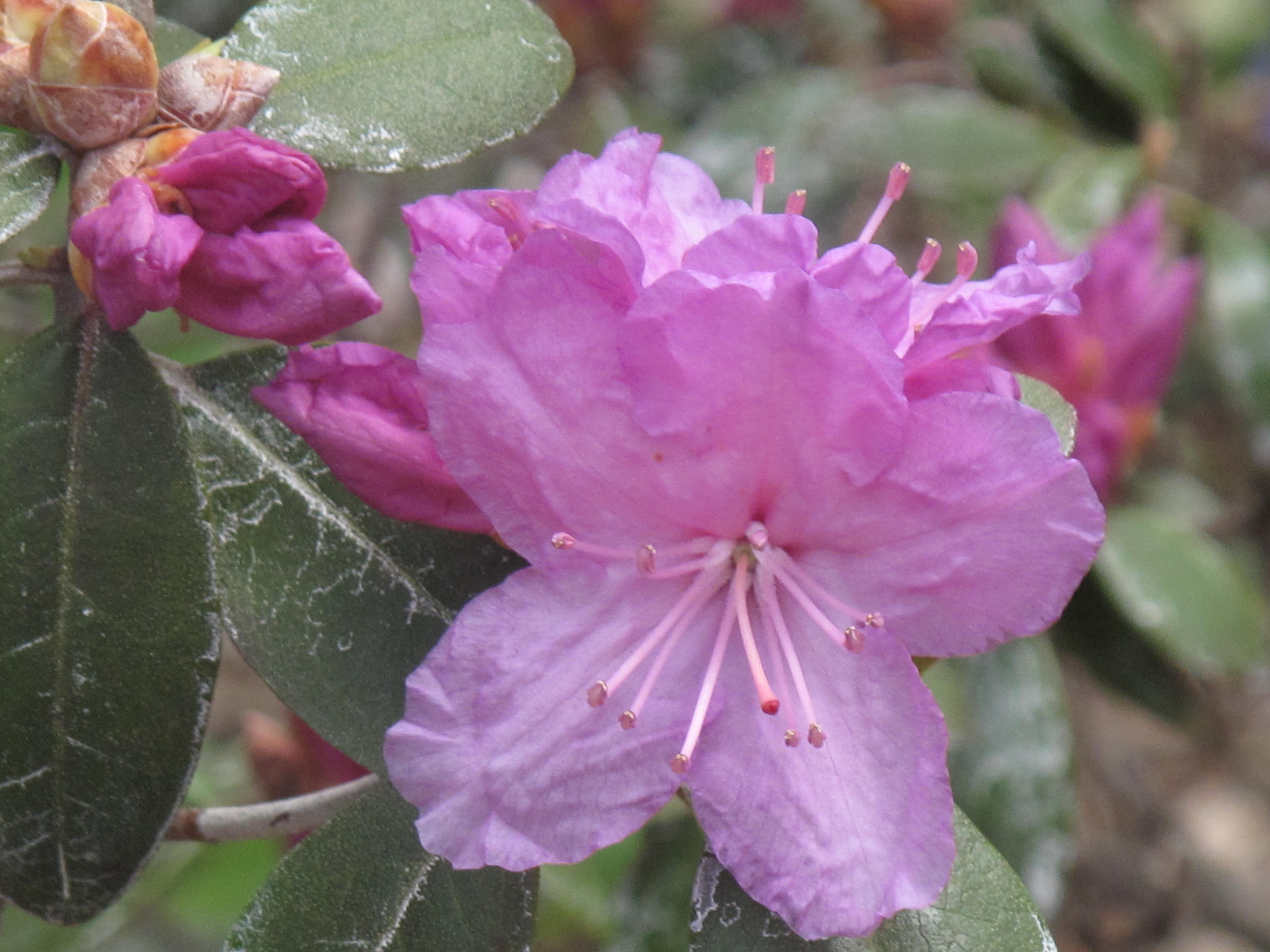
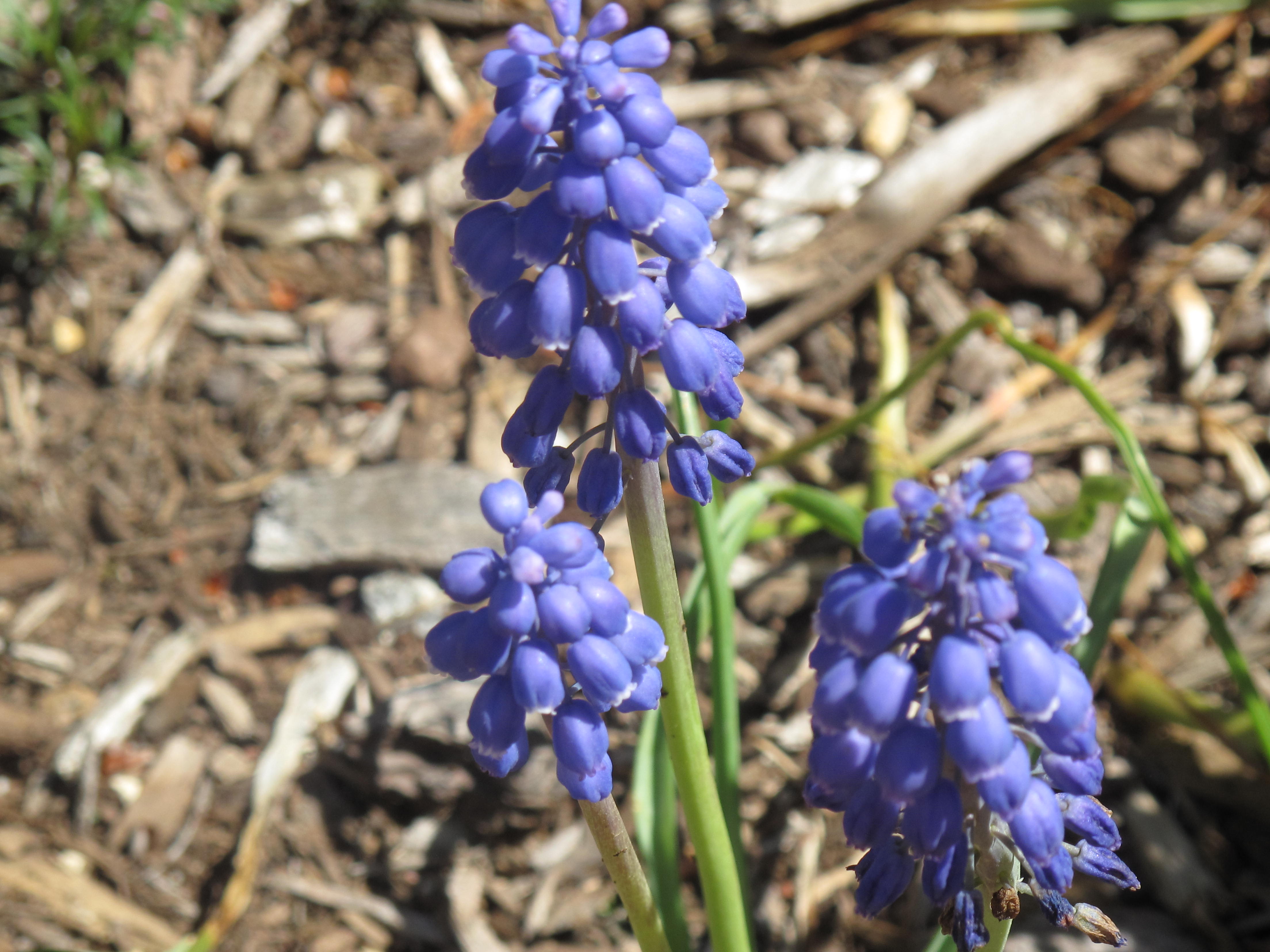
Flowers are popping out all over the yard.  Here are some shots of our Tulips, our Rhododendron bushes and some Muscari armeniacum.  All so pretty.  We wish they would last longer.

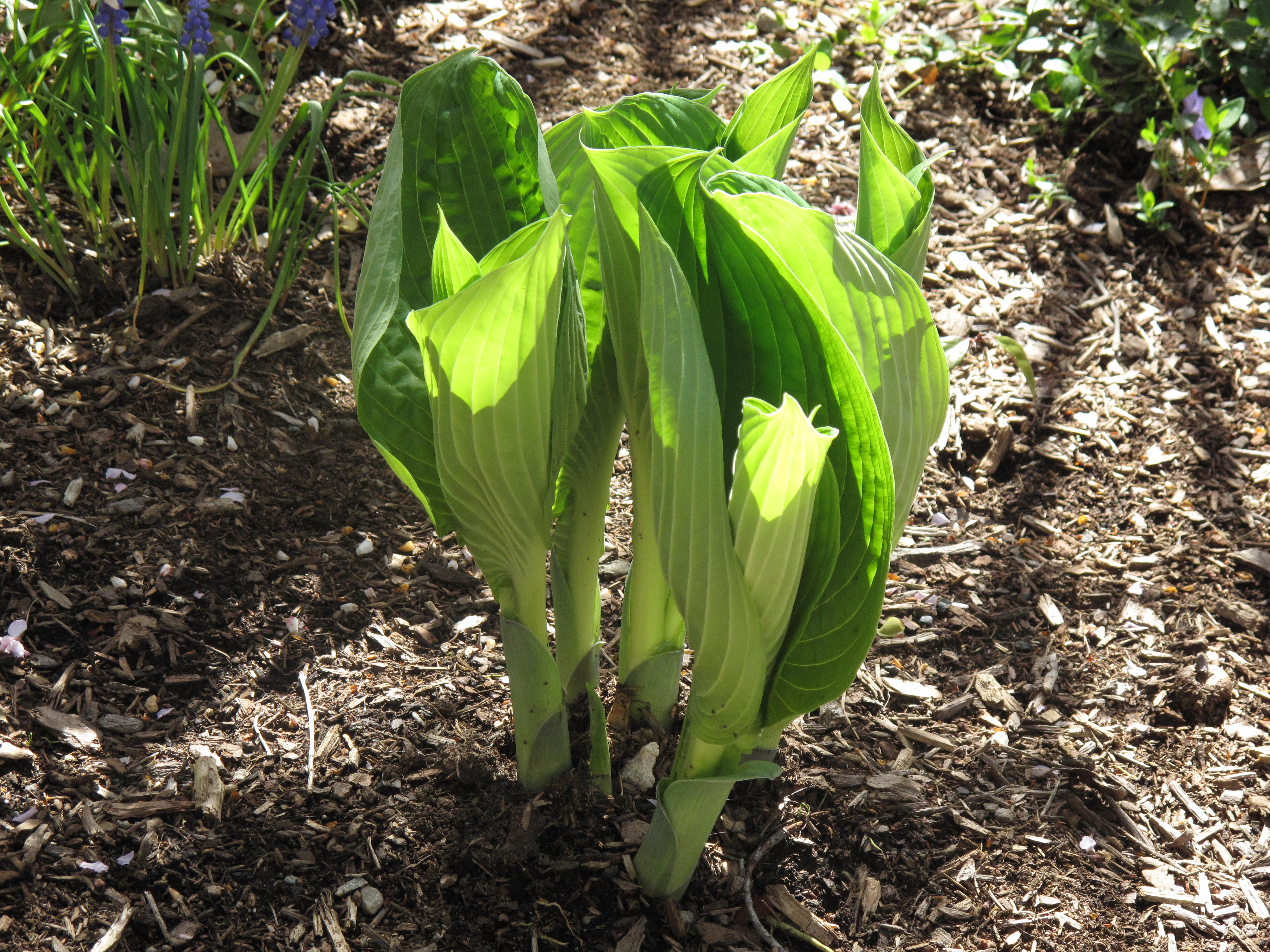
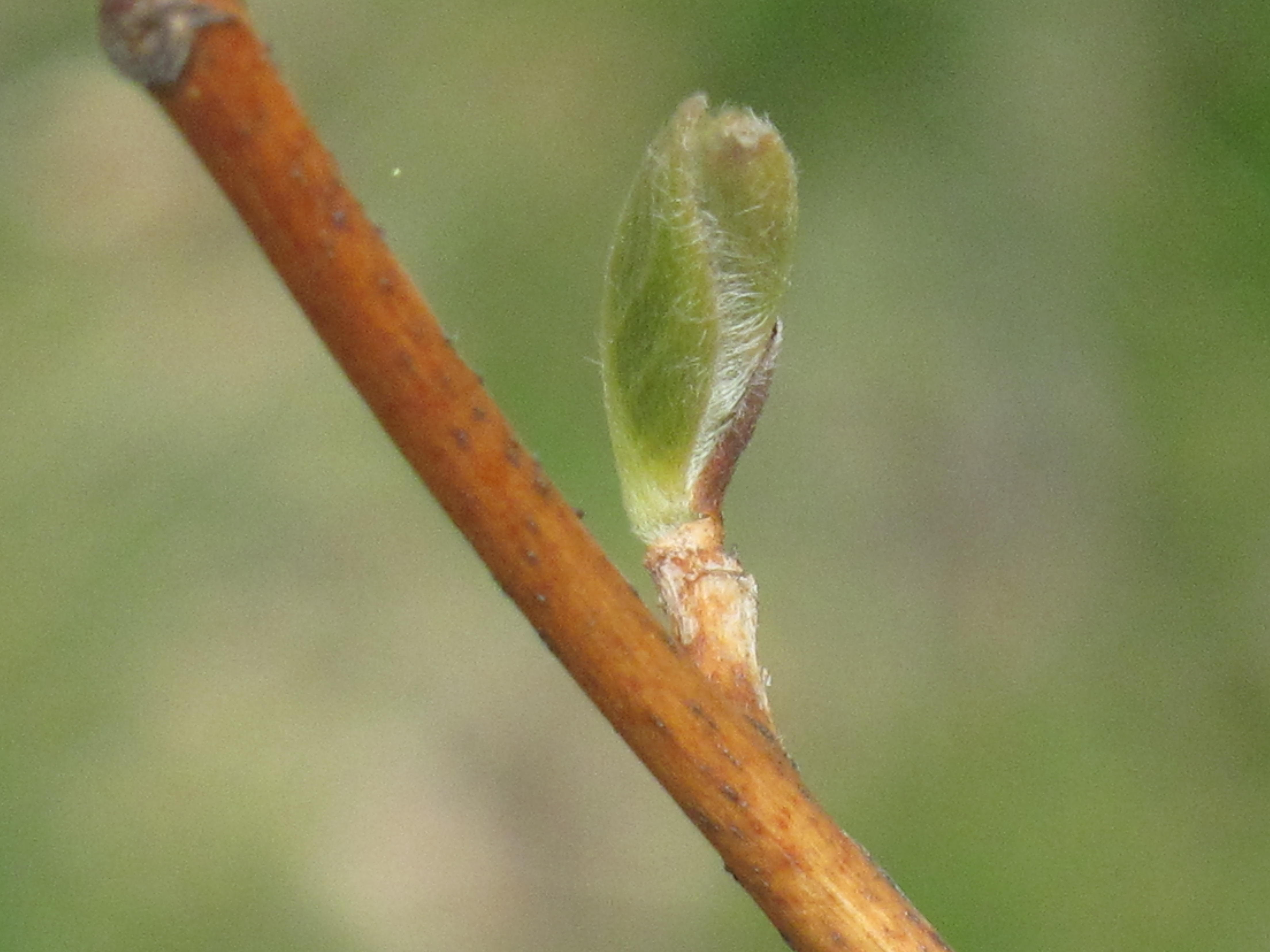
Lots of plants are also showing progress in the garden as well.  Here is a Hosta getting ready to spread its wings and the slow-growing Stewartia pseudocamellia timidly saying hello.

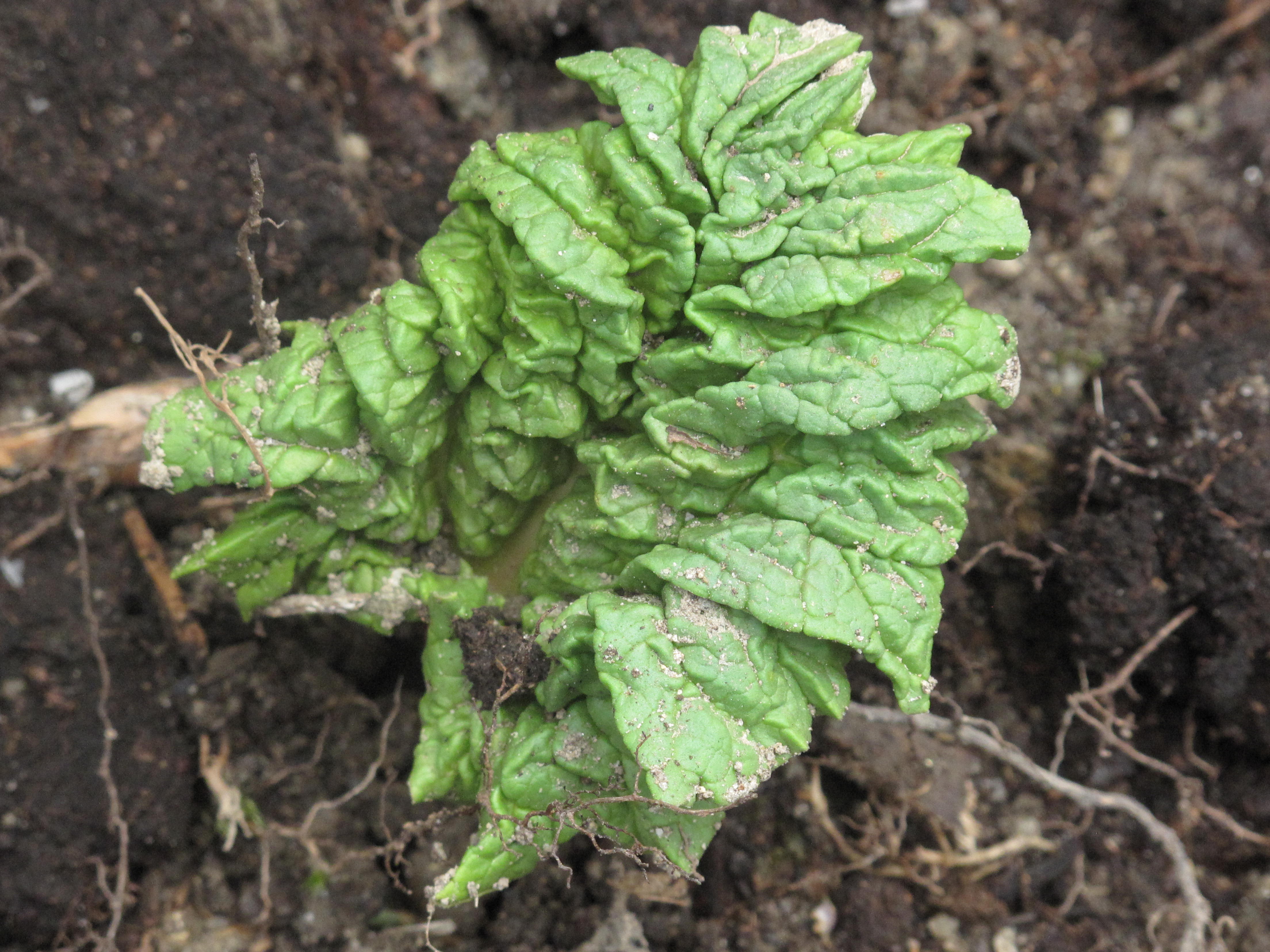
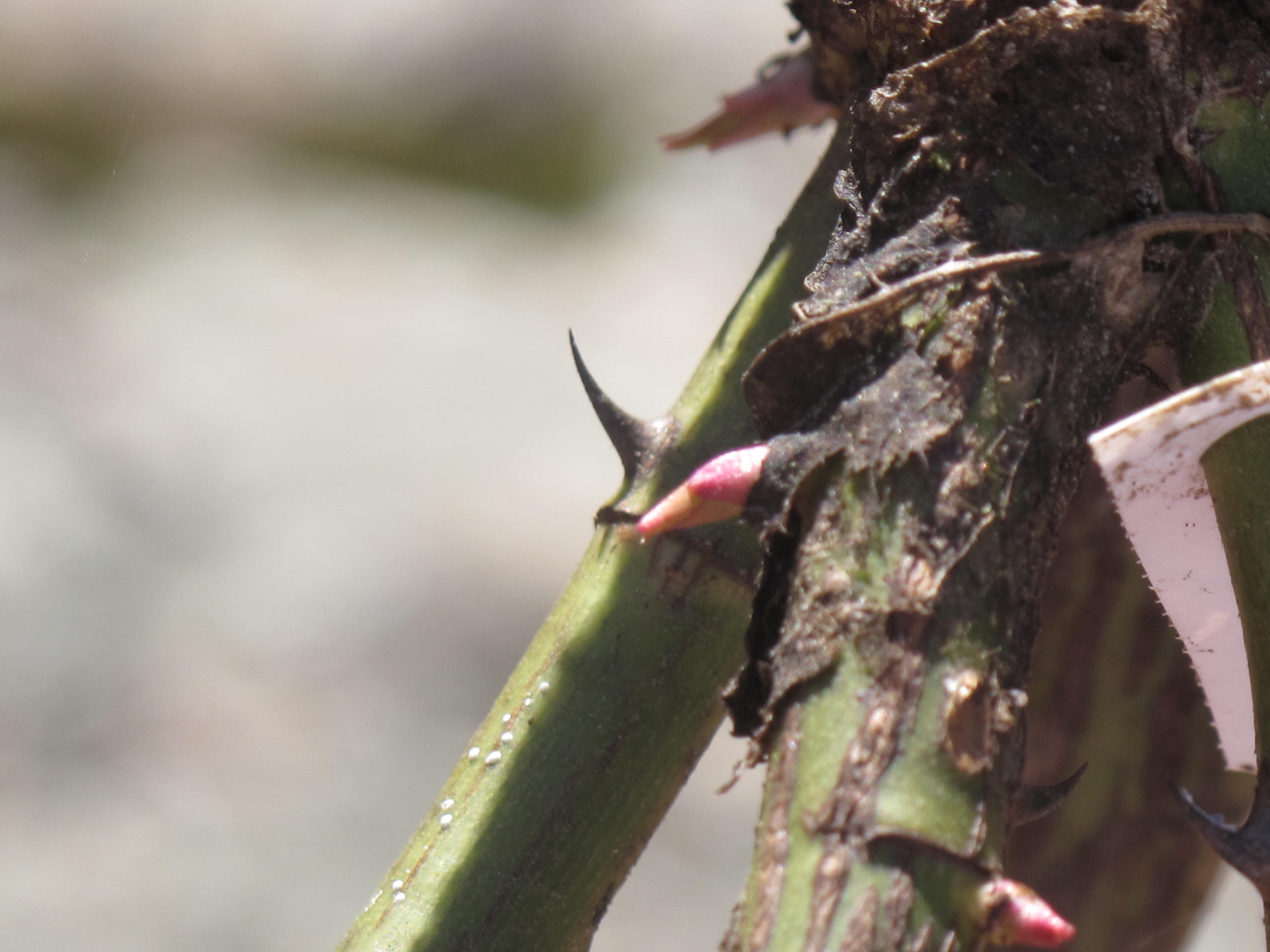
What is most interesting to us is how quickly plants that we’ve put into the ground for only a few weeks are already growing.  Remember the Rhubarb and our princess tree rose ‘Grace Kelly’?  They are already growing and budding.

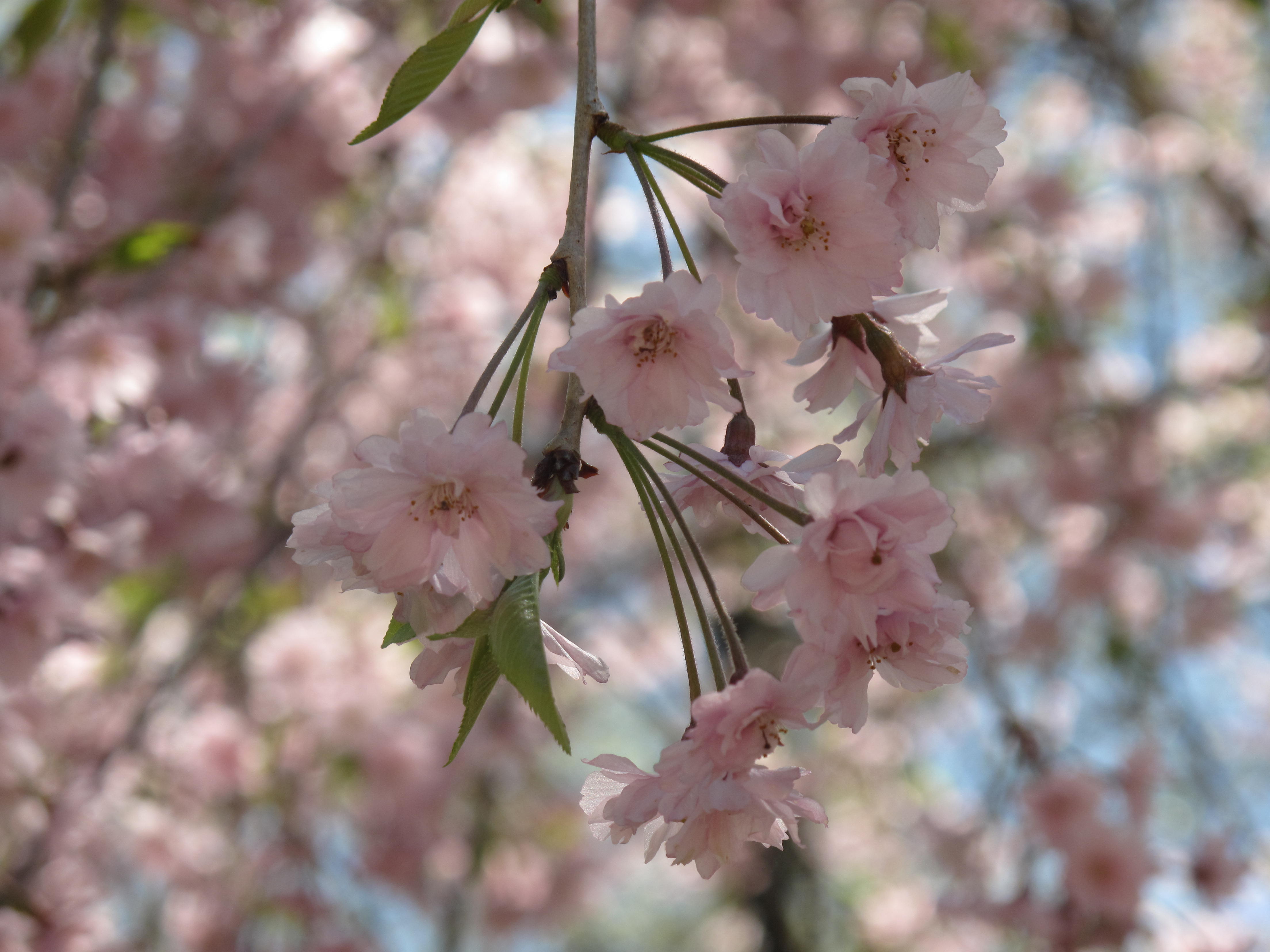
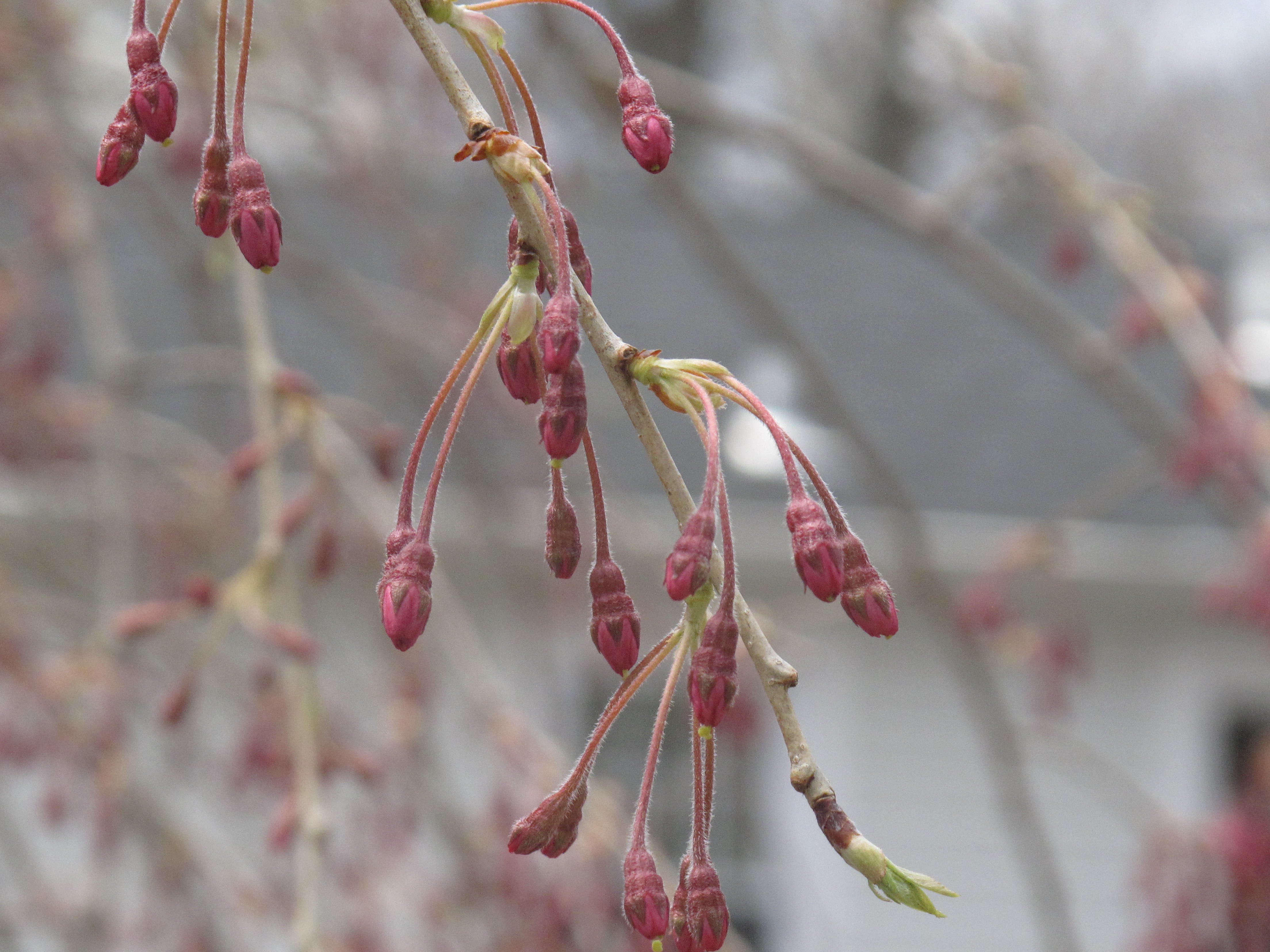
The best sign that Spring is here is the Weeping Cherry trees that we have here on Glen Road.  When the blooms come out in full force, you know that the winter is most likely over.  Hurray!!  Here is a little glimpse of the blooms.  We should hold our own Cherry Blossom Festival here on Glen Road.

So we hoped you enjoyed our little garden stroll and update.  Things seem to be doing well.  We are back outside now to keep things growing on schedule.  From here on out, there will always be weeding, pruning, snipping, planting and picking to do to keep everything in order.  How is your Spring garden growing?

Friday Dance Party – Shania Is Here

This is another edition of Friday Dance Party on Acorns On Glen.  It’s the time where we give thanks for living another week. We give thanks for making it through one more week and for being able to celebrate the fact.  How do we celebrate another week of living?  We dance.  Are you alive this Friday?  Did you give thanks for that?

Good, now let’s dance.

Spring is in full force here.  We woke up this morning and watched the beautiful wedding of the new Duke and Duchess of Cambridge.  How wonderful was that?  They were glowing.  After going outside, we were thrilled that today is pushing 70 degrees, with bright sun and no one walking down the street with a coat on.  This is a first for us in quite a long time.  We are in New York City today and everywhere you look, there are blooming tulips, daffodils and other bright-colored blooms.  The trees are budding and you can help but smile.  You have to love it….and if you don’t, you’re out of here.  So with that being said, it is only fitting that we bring in Shania Twain for our dance party to sing one of her first big hits.  I love this song and like this very modern take on a country song.  So turn your speakers up and get your groove going.  This is a fun one.  Go ahead and dance and if you can do it with some bright sunshine beaming onto your shoulders, even better.  Is it a warm and sunny Spring day where you live?   

Hot For Horseradish

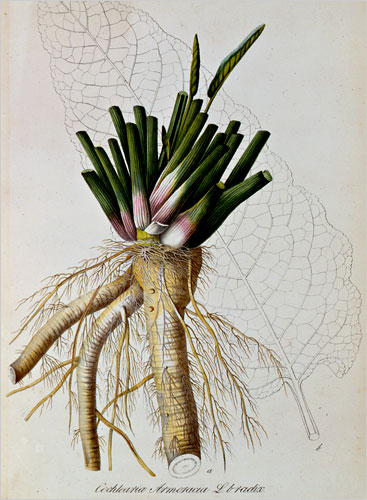
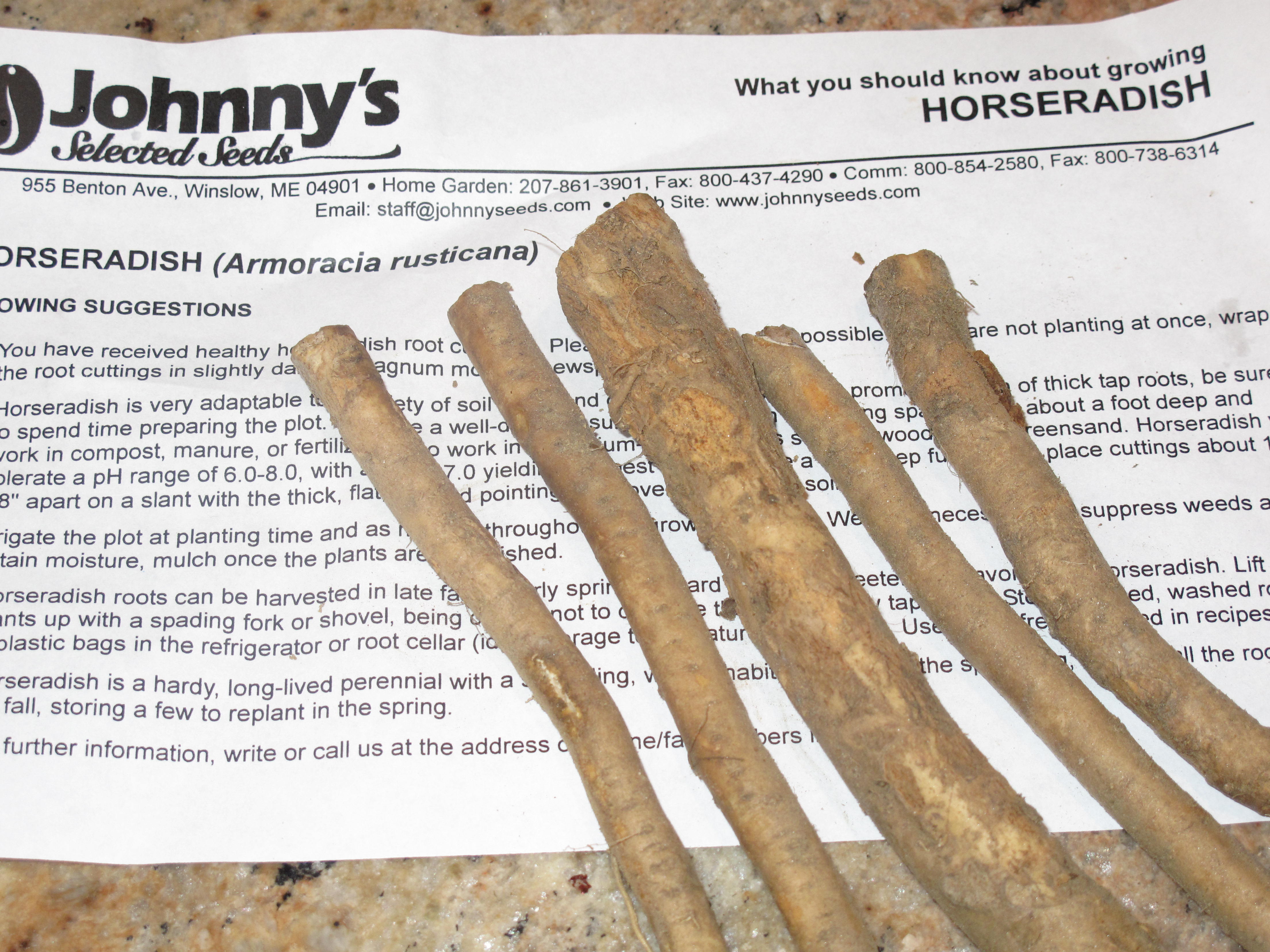
This is a love story about all things hot.  Not hot like the sun, but hot to your taste.  We love foods that have a little heat to them here on Glen Road.  In fact, we are always taking recipes and putting a little heat into them.  We add cherry peppers into broccoli rabe, we put cayenne pepper into almost anything and there is nothing better than cold clams with tabasco sauce, to name a few.  However, our favorite is freshly roasted beef or a polish sausage with a little side of homemade horseradish.  Funny thing is, we don’t have any horseradish that grows in our garden.  When we want horseradish, we need to buy the root at our local organic produce market.  Well, this is about to change because we have planted a bed of five horseradish roots.  The five little brown stalks appear to be so innocent, but in a year they will produce thick roots that are filled with fire.  These roots were planted down from our newly planted rhubarb patch, right behind the espalier apple trees.  Let’s get the heat started with a little horseradish history from the internet:

Horseradish (Armoracia rusticana) is in the brassica family, which includes turnips, kale, mustard greens, broccoli rabe, daikon radish and many other plants with varying degrees of pungency and a similar taste.  Native to the temperate regions of Europe and Asia, it is an ancient herb.  The Romans carried horseradish to Europe as a medicinal herb and as a flavoring.  It was cultivated in Egypt before the exodus of the Hebrew slaves around 1500 B.C., and is often the symbolic bitter herb at the Passover Seder.

By the 16th century, the pungent root was spreading throughout England, where it was described for  its many uses, including as an aphrodisiac, a treatment for tuberculosis, a mustard plaster and a dewormer.  The common name probably evolved from the German “meerrettich,” which means sea-radish, which was misunderstood by the English, who associated “meer” with “mahre,” an old horse.

Undisturbed, the root doesn’t have a strong smell or flavor. But crushing or grinding it produces isothiocyanates, a kind of mustard oil, which is what gives horseradish its flavor and heat.  Adding vinegar stops the reaction because it’s an acid.  It also stabilizes the isothiocyanates, so you can still get that flavor a week later.  Tradition calls for grinding the root outside, because the chemical reaction triggered creates a gas that not only makes you weep, but can irritate lungs and nostrils.  This is actually a defense mechanism for the plant if it’s wounded.

We planted our horseradish in a long furrow about six inches deep.  Each root has a top and a bottom identified by the slicing made by the grower.  The top is identified by a straight slice and the bottom is identified by a diagonal slice.  When we placed them in the furrow, we put them in at an angle, with the straight sliced top pointing upwards.  Once in place, we covered the top of the roots with about four inches of soil, pressed the soil into place and watered.  While we won’t harvest any horseradish this year, the roots will produce beautiful green leaves that will make a nice complement to the equally as beautiful rhubarb leaves that we previously planted along the back side of the espaliers.  Next year, we will harvest and grind a few of the roots, add some white vinegar and salt and begin to enjoy some heat.  As my Grandmother used to say, we can only harvest the roots in months that contain an ‘R’ in them.  Months that don’t contain an ‘R’ are too hot and the root will not produce optimal flavor.

So here’s to horseradish, named “Herb of the Year 2011” by the International Herb Association.  We will look forward to your pretty leaves this year and then the addition of your hotness to our meats, mashed potatoes and seafood in 2012.  We can’t wait.  What hot foods do you and your family like to cook or eat?
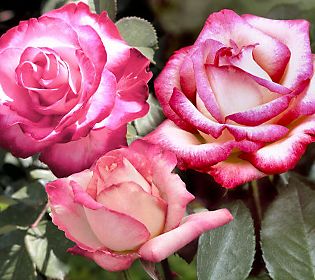
Grace Kelly Moves To Glen Road

This is Grace Kelly.  As you can see, it is not the actress/princess that you were thinking.  ‘Grace Kelly’ is a variety of tree rose that we planted in a container this weekend so it can begin growing in time to bloom this Summer.  We have had tree roses on the patio almost every year we have lived here on Glen Road.  They have always grown quickly from the dormant tree that we get shipped to us. 

In early Summer, the tree rose begins to bloom and if you are diligent about removing the spent roses, the tree will continue blooming up until the end of the season.  Tree roses are not actually a class of rose, but rather a way of growing them.  A bush or climbing rose is simply grafted onto a straight trunk, giving the desired appearance.  Here is the rose bush that is at the top of the tree we purchased.

Very similar in appearance to a rose bush that you would buy at a nursery, except it is attached to the top of a long trunk.  The roots are about five inches long and we have always just filled a container with organic potting soil and put the tree rose into the soil so that it is covered up to the base of the trunk.  They require very little care other than providing about an inch of water per week and fertilizer every so often.

At the beginning of June, our tree roses have always produced an array of beautiful, full-sized rose buds.  The variety ‘Grace Kelly’ appears as beautiful as the woman it is named after.  Pale pink roses tipped in a dark pink to red.  Here are some pictures of our desired end state.  Grow, girl, grow!

So now Glen Road has had its first celebrity (er, celebrity tree rose) come visit in 2011.  Again, we have always planted these beautiful plants every year on Glen Road.  Since they are a perennial, you can also winter them and bring them back year after year.  To winter in mild zones, you need only wrap in-ground plants in straw or burlap.  To winter in northern zones, you must bend the plants without breaking its roots and cover with soil.  Containerized plants can be moved to an unheated, protected area.  Give a tree rose a try to brighten up your patio this Summer.  They are readily available on the internet and aren’t that expensive.  When’s the last time a princess stayed in your backyard?  Tell us what plants you are planting on your patio and deck this season?

When Rhubarb And Strawberries Unite

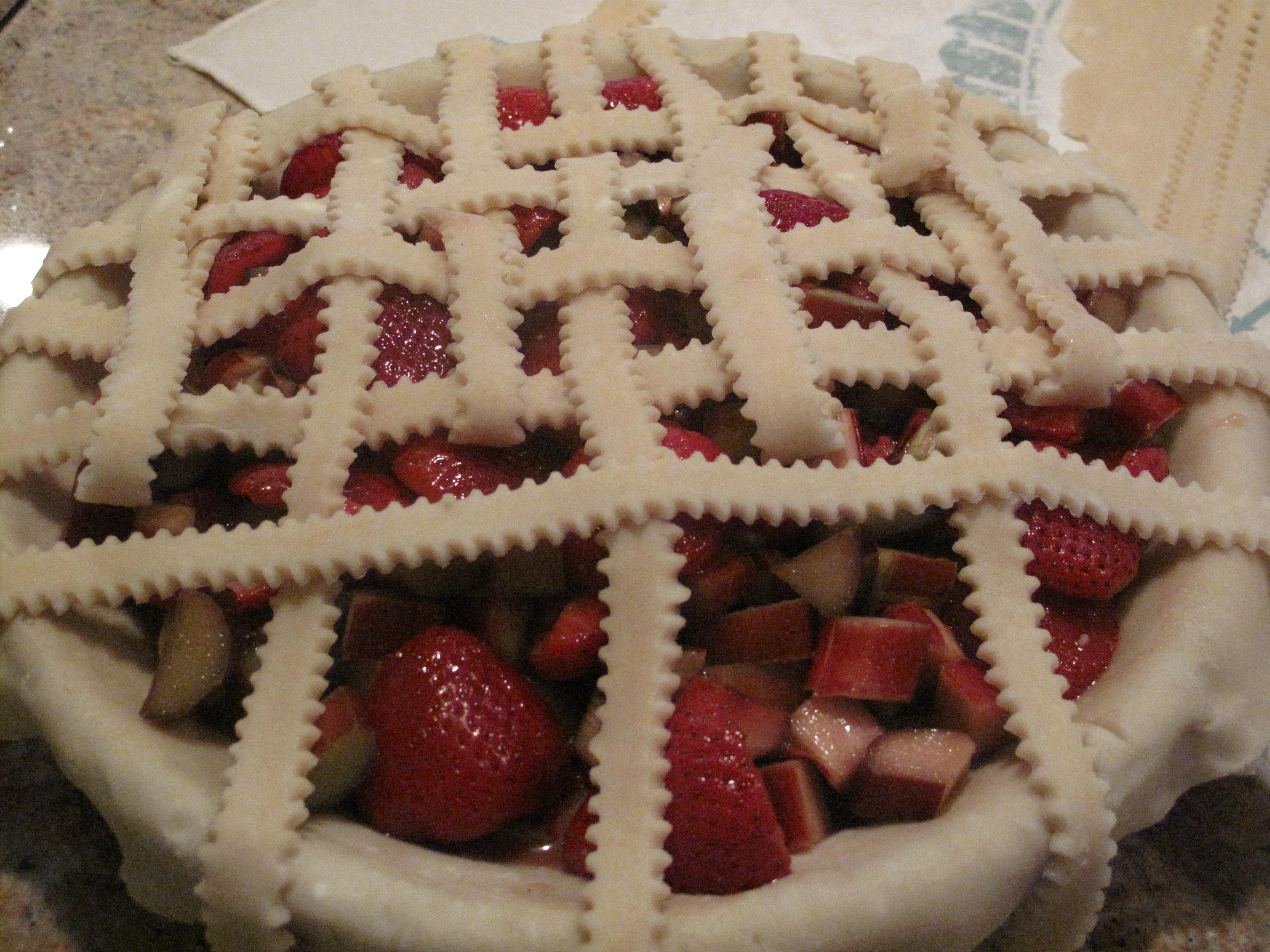
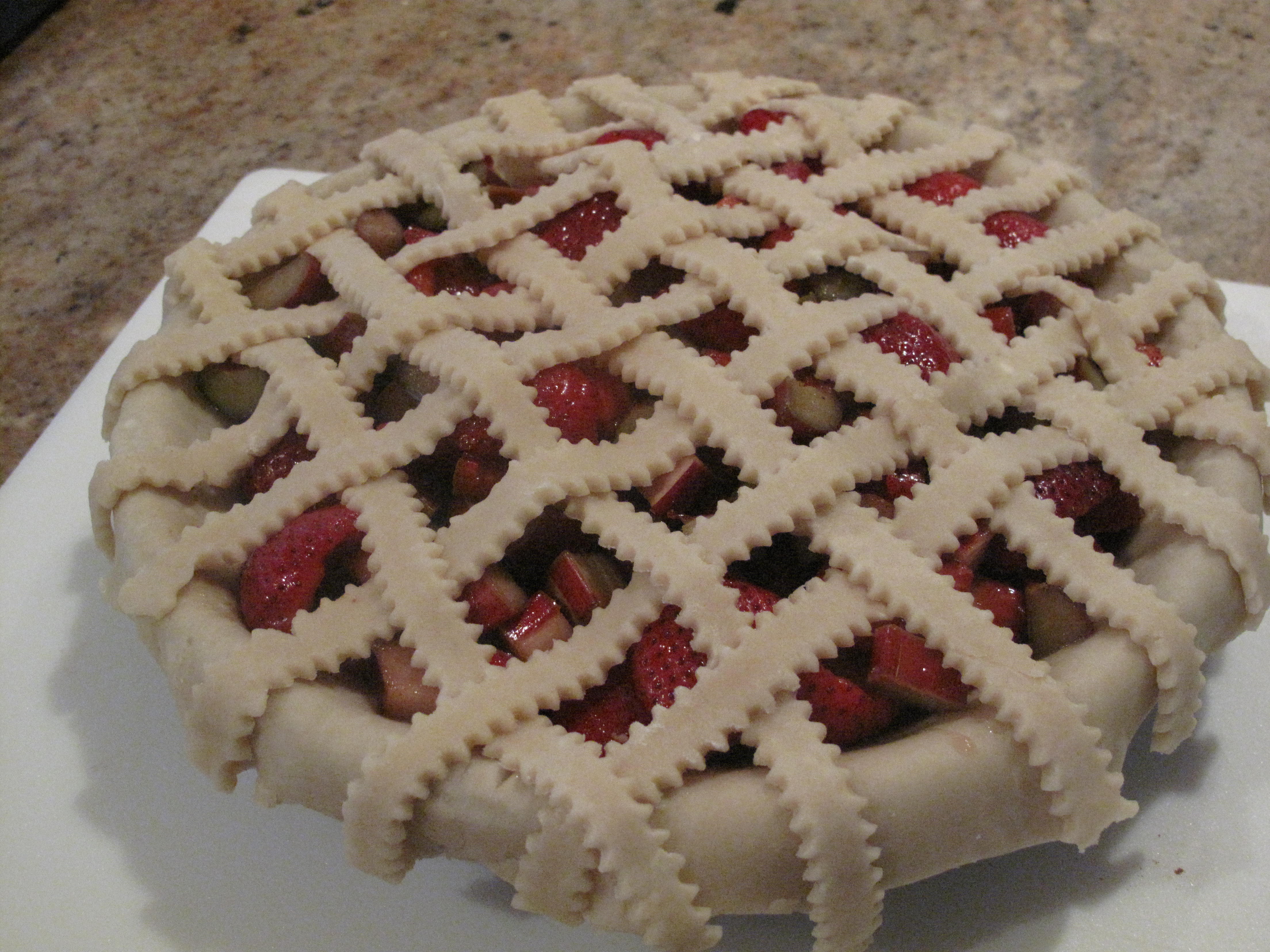
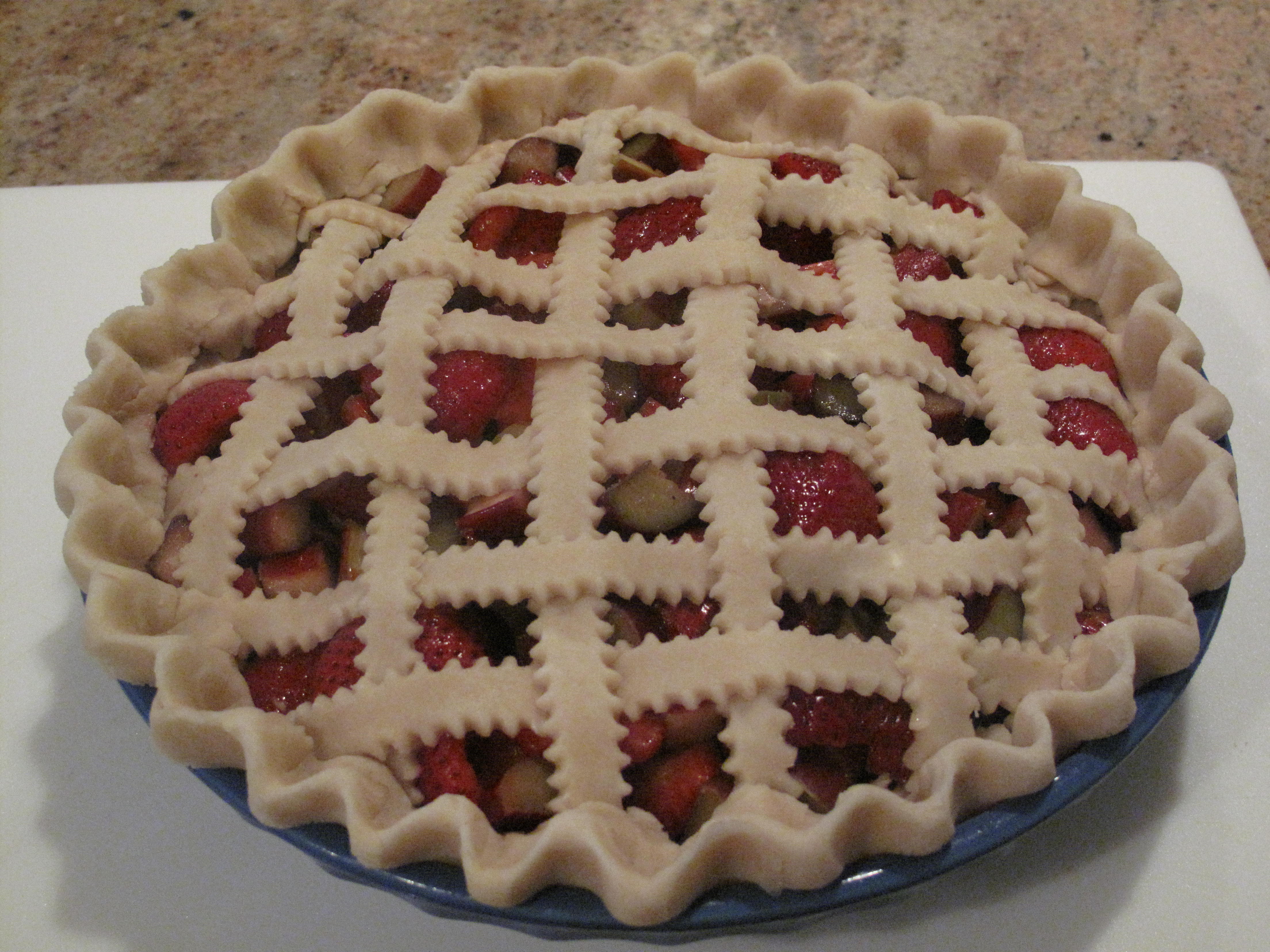
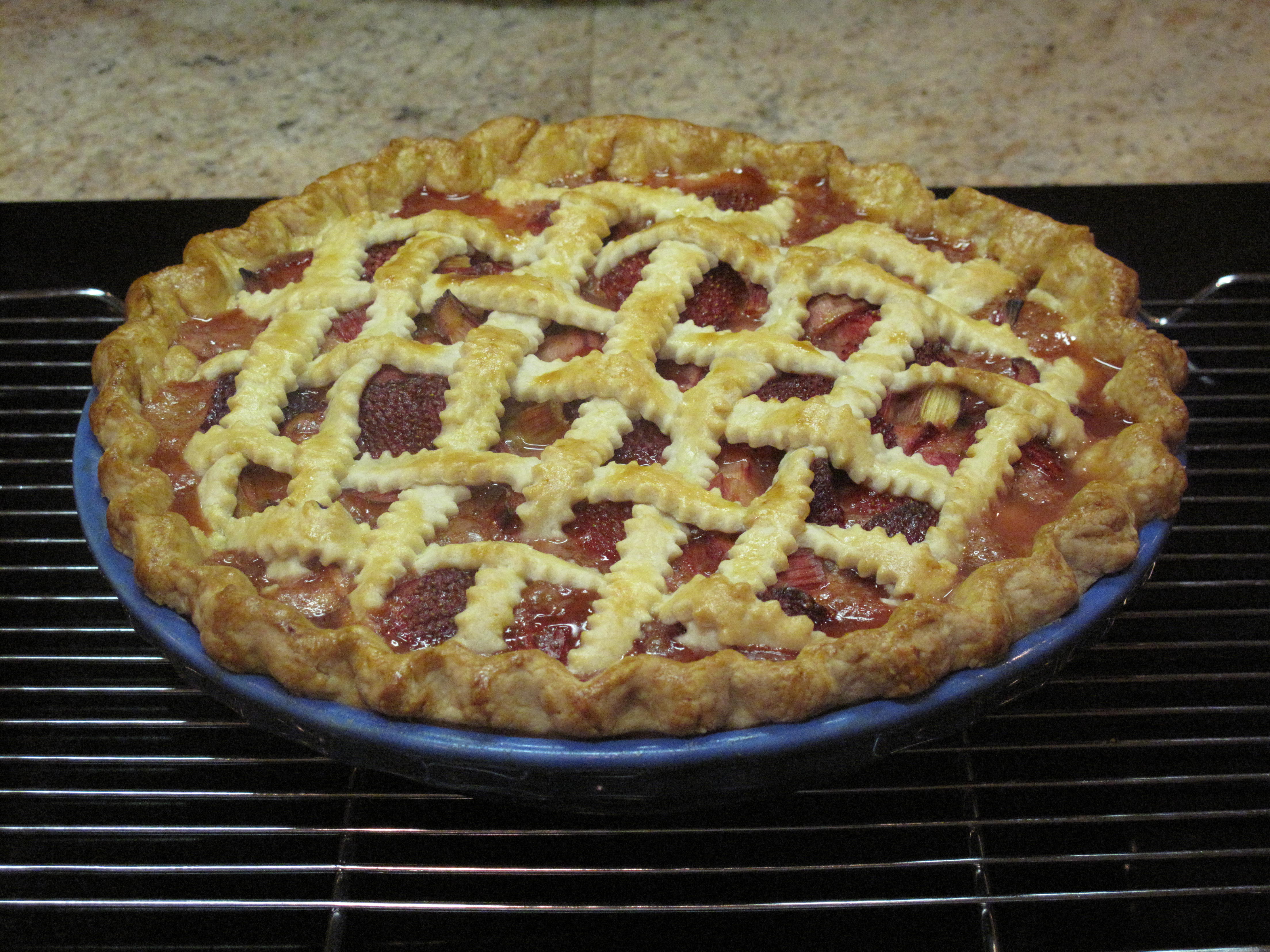
 This pie always reminds me of Spring.  It is a rhubarb and strawberry pie with a lattice top crust.  Making a pie is always intimidating to me.  It’s the crust.  Either I have a problem rolling it out or I have a problem getting it into the pie pan.  A lot of people tell me they have the same issues, but I keep trying to perfect the art of pie making here on Glen Road.  This pie was a surprise in that for the first time in a long time I didn’t have any issues.  I even put a lattice top on it without making myself nuts.  It must have been the deep breaths and the frequent praying.  The idea of rhubarb and strawberries mixed together in this pie was so perfect for Spring.  I couldn’t wait to get a piece.  We’ve talked about rhubarb and strawberries a lot here on Acorns On Glen.  Spring just seemed the perfect time to mix them together for everyone to enjoy.  Let’s get baking!

 Ingredients:

For crust:
3 cups all-purpose flour
2 1/2 teaspoons sugar
3/4 teaspoon salt
2/3 cup chilled solid vegetable shortening, cut into pieces
1/2 cup plus 2 tablespoons (1 1/4 sticks) chilled unsalted butter, cut into pieces
Up to 10 tablespoons ice water
For filling:
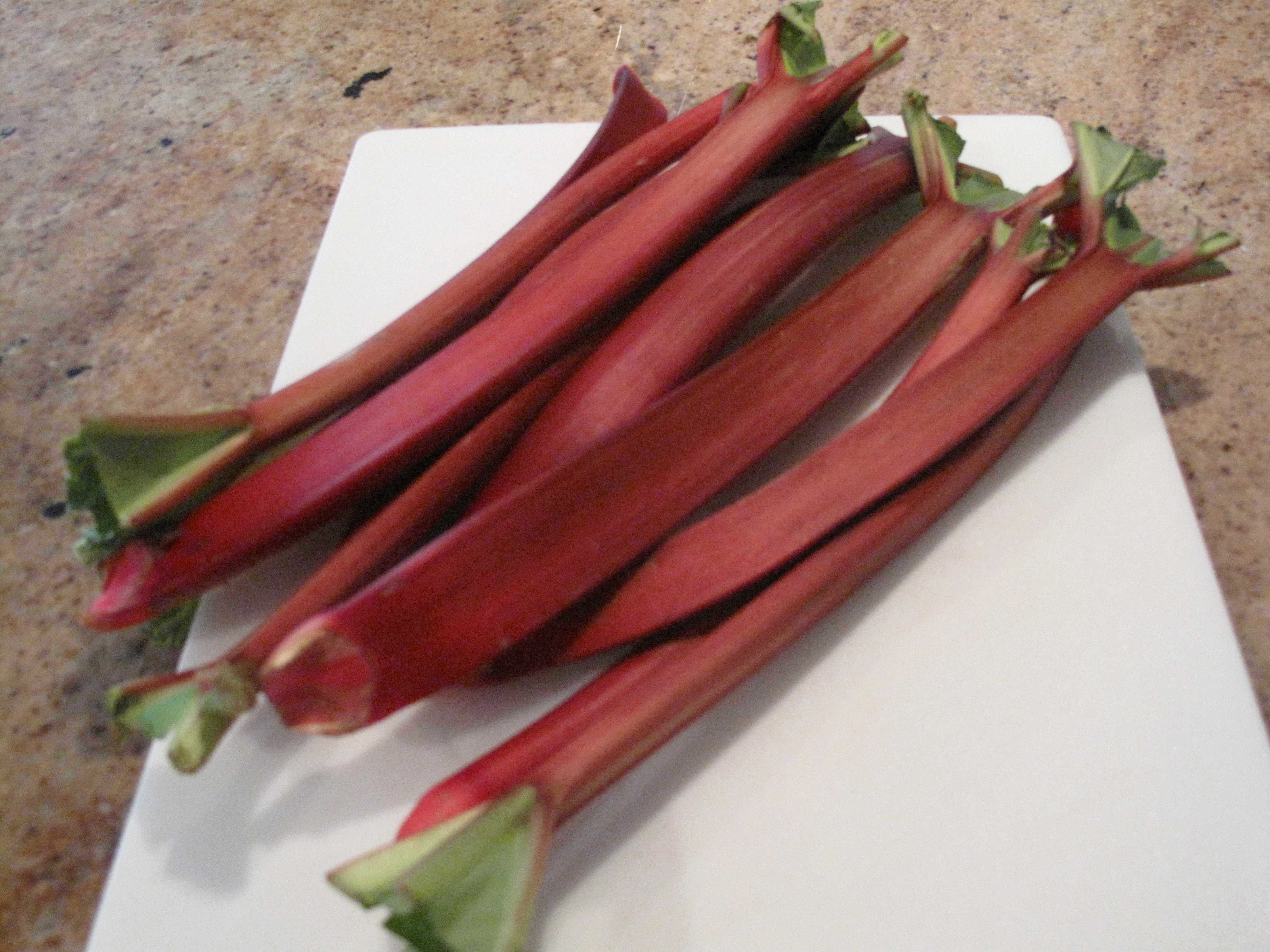
3 1/2 cups 1/2-inch-thick slices of trimmed rhubarb (1 1/2 pounds untrimmed)
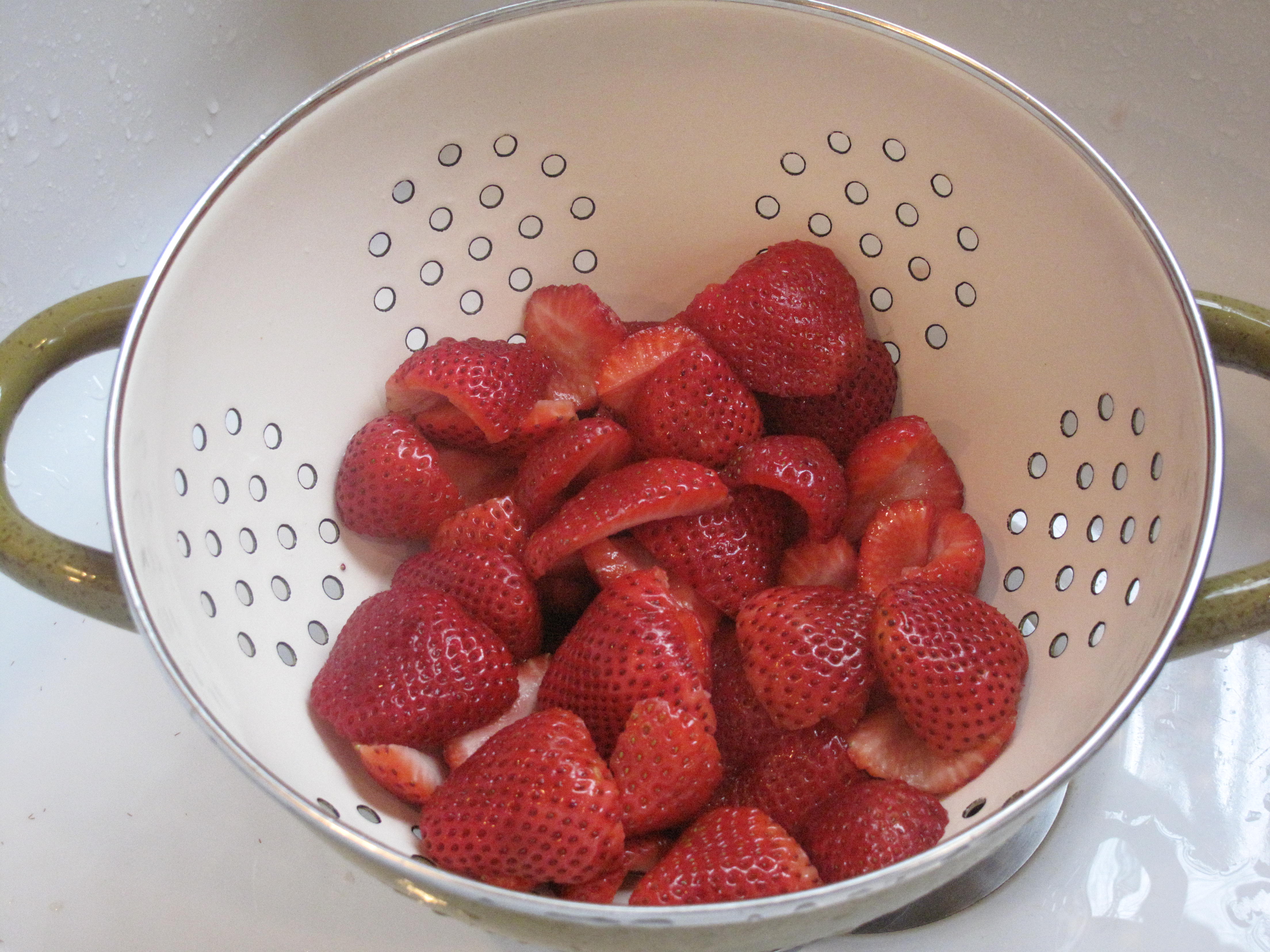
1 16-ounce container strawberries, hulled and halved (about 3 1/2 cups)
1/2 cup packed golden brown sugar
1/2 cup sugar
1/4 cup cornstarch
1 teaspoon ground cinnamon
1/4 teaspoon salt
1 large egg yolk beaten to blend with 1 teaspoon water (for glaze)

Directions:

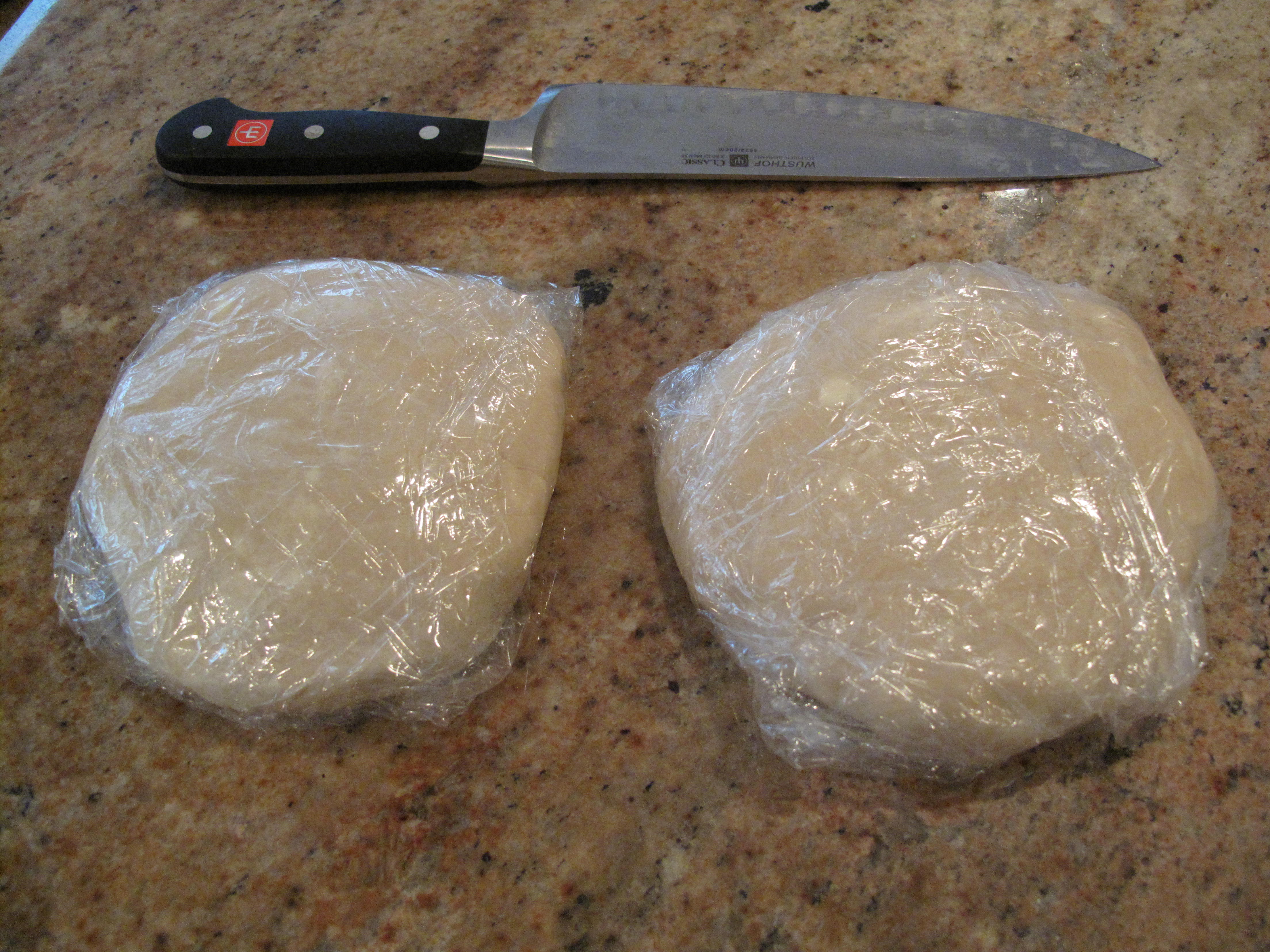
Make crust:  Combine flour, sugar and salt into a food processor.  Using the pulse button, cut in shortening and butter into the flour mixture until coarse meal forms.  Blend in enough ice water (2 tablespoons at a time) to form moist clumps.  Gather dough into a ball; cut in half.  Flatten each half into a disk.  Wrap separately in plastic; refrigerate until firm, about 1 hour (can be made 1 day ahead. Keep chilled. Let dough soften slightly at room temperature before rolling).

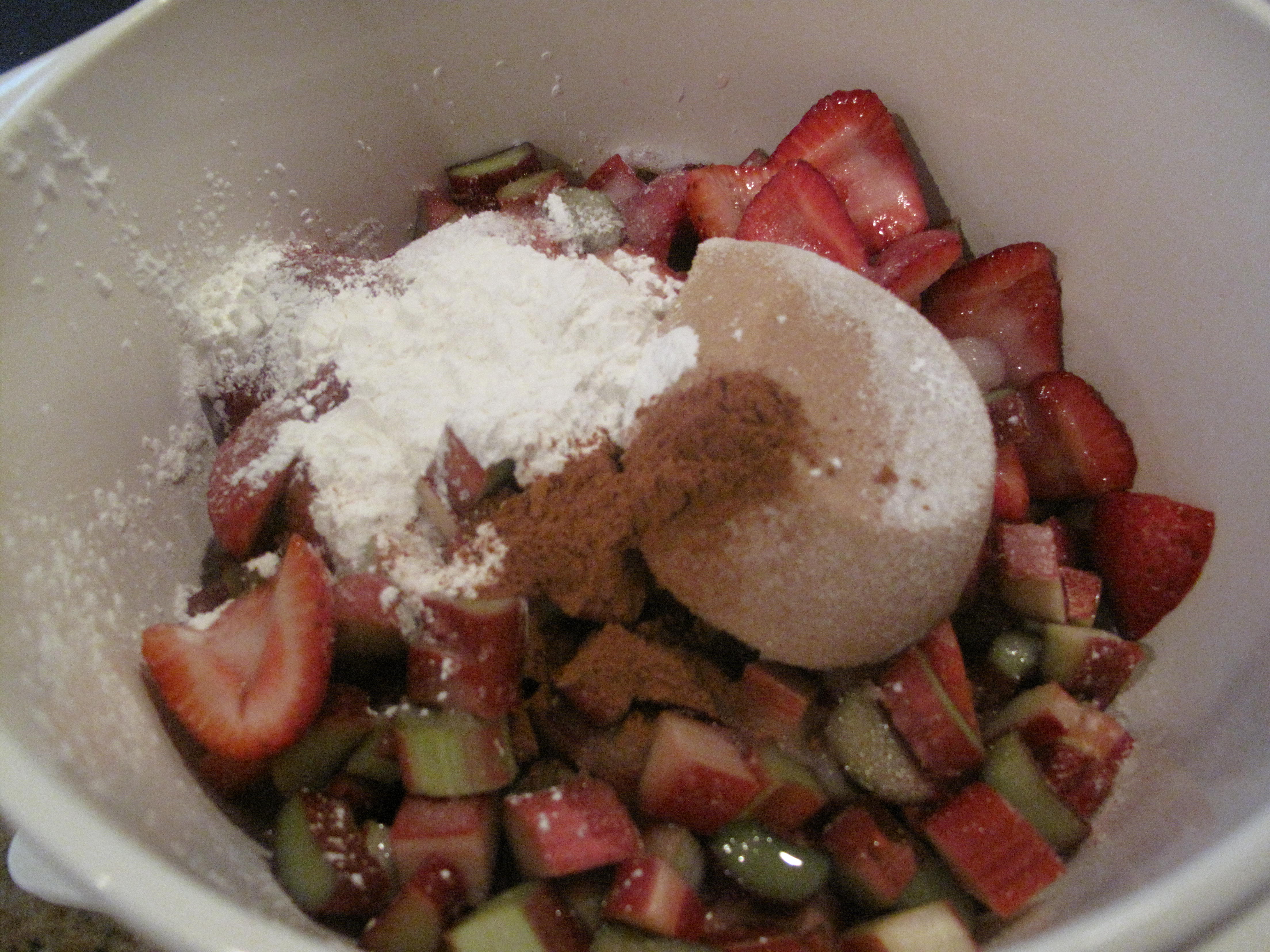
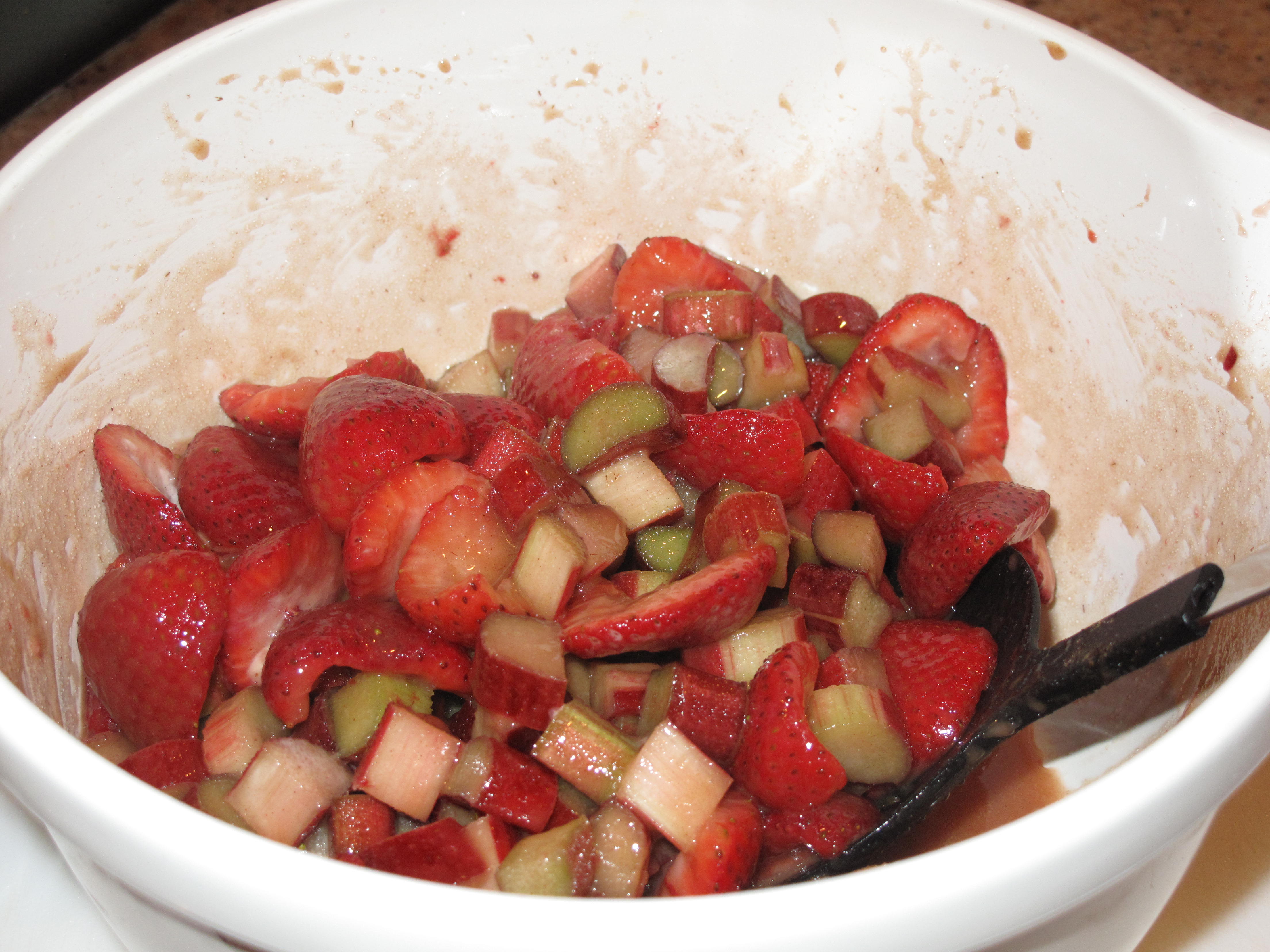
Make filling: Preheat oven to 400°F.  Combine first 7 ingredients into a large bowl.  Toss gently to blend.

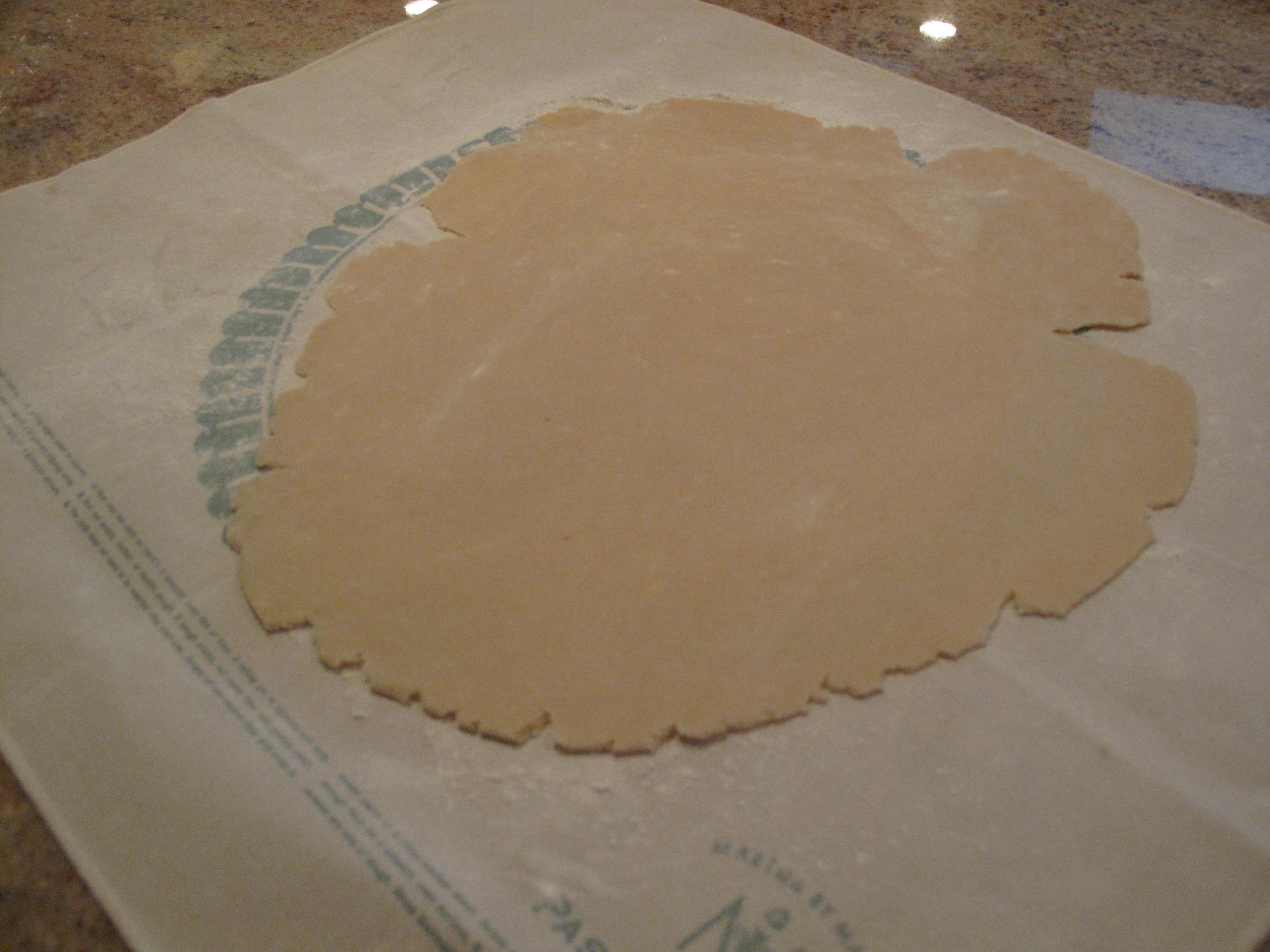
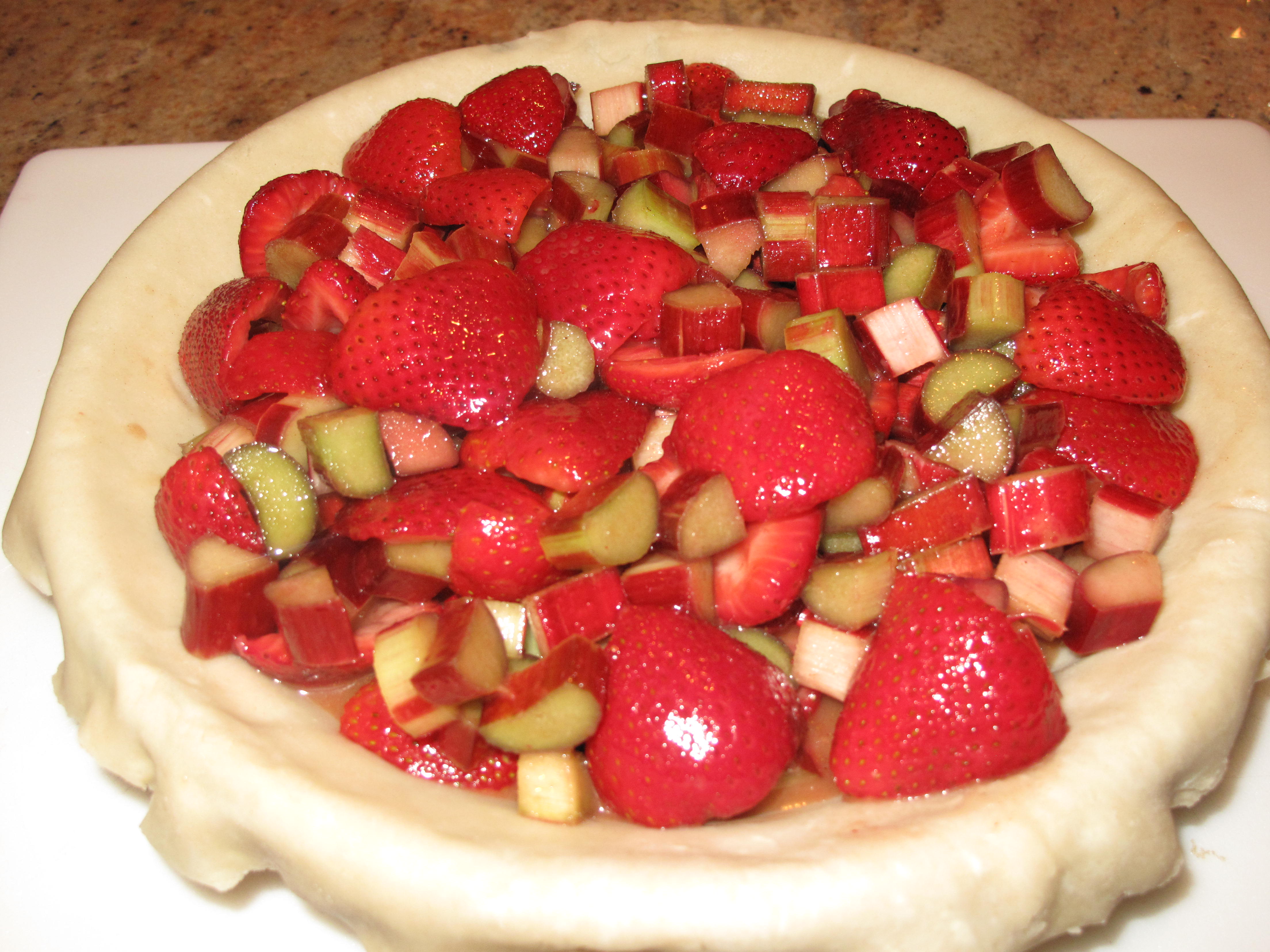
Assemble pie:  Roll out 1 dough disk on floured work surface into a 13-inch round.  Transfer to a 9-inch-diameter glass pie dish.  Trim excess dough, leaving a 3/4-inch overhang.  Place into refrigerator so the crust can continue to chill after being worked with in this step.  Chilled pie dough bakes the best.

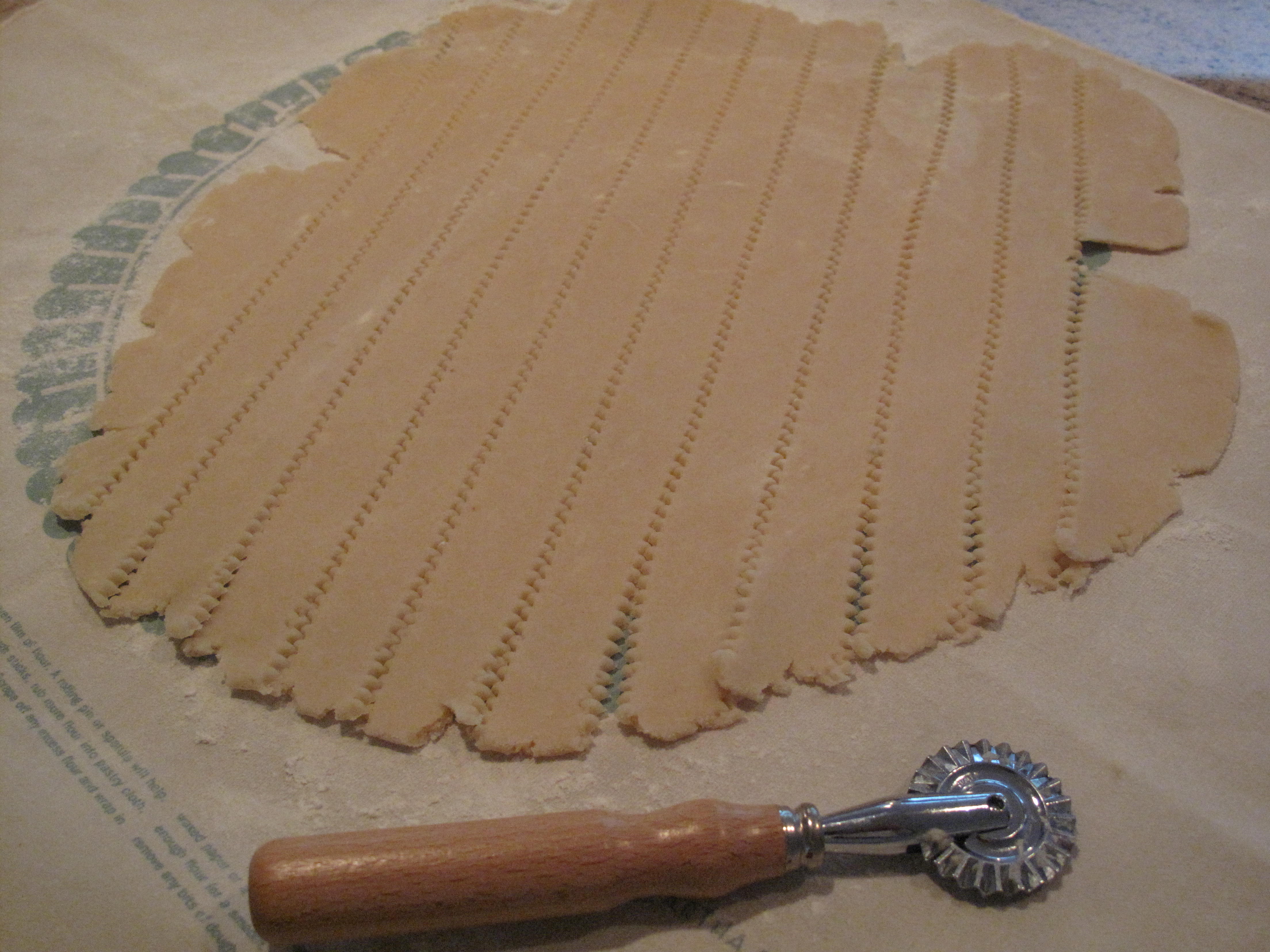
Roll out second dough disk on a lightly floured surface into another 13-inch round.  Cut into fourteen 1/2-inch-wide strips.  Spoon filling into crust.  Arrange 7 dough strips on top of filling, spacing evenly.  Form lattice by placing remaining dough strips in opposite direction on top of filling.  Trim ends of dough strips even with overhang of bottom crust.  Fold strip ends and overhang under, pressing to seal.  Crimp edges decoratively.  Brush glaze over crust.  Place pie back into refrigerator so that it can chill again for several minutes.  Chilled pie dough bakes the best.

Transfer pie to baking sheet.  Bake 25 minutes.  Reduce oven temperature to 350°F.   Bake pie until golden and filling thickens, about another 30-35 minutes.  Transfer pie to rack and cool completely.

During cooking, it is important to keep an eye on the pie and keep baking until the sauce in the pie gets thick (versus watery in form).  This may mean you will need to cover the edges of the crust with aluminum foil or a crust cover to prevent it from burning.  Once the sauce is thick, you know the pie is ready to take out of the oven.  The sauce will continue to thicken during the cooling process.  You can eat this pie plain or with a scoop of ice cream on top.  Eating something fresh and in season is the eighth wonder of the world.  This pie is the right pick for Spring.  I hope you like it.  What other Spring recipes are you cooking in your home?